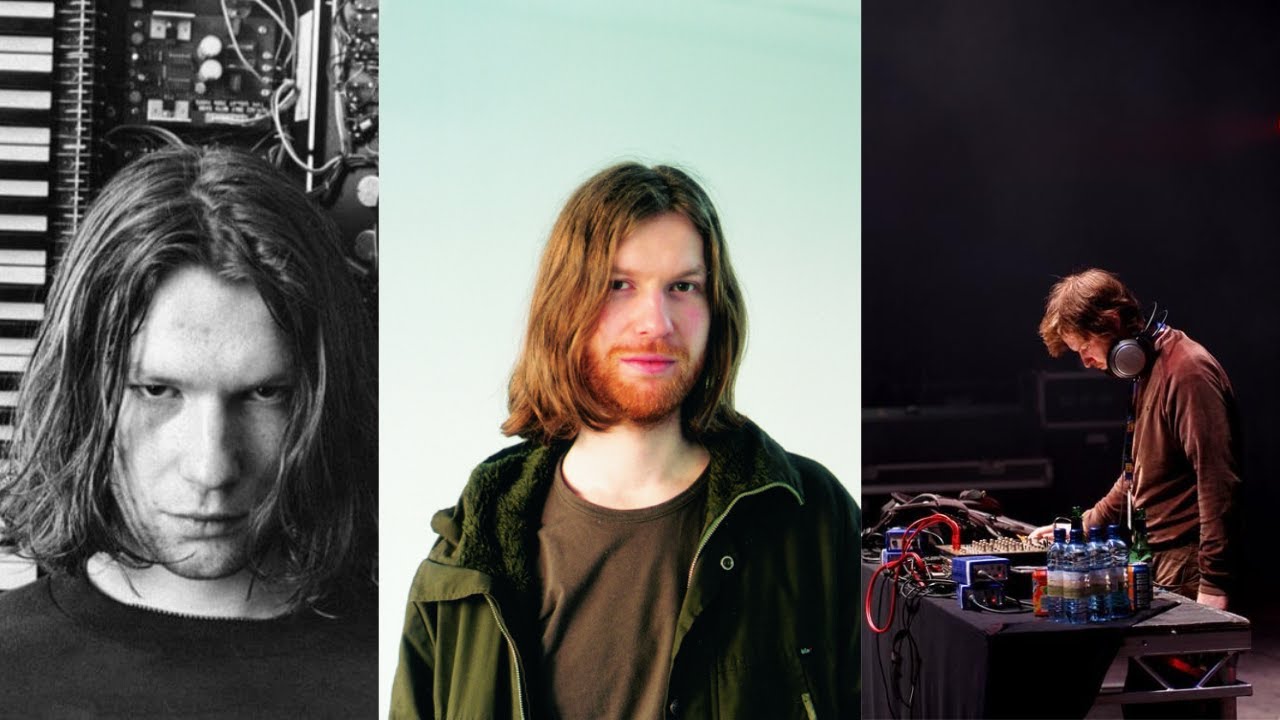
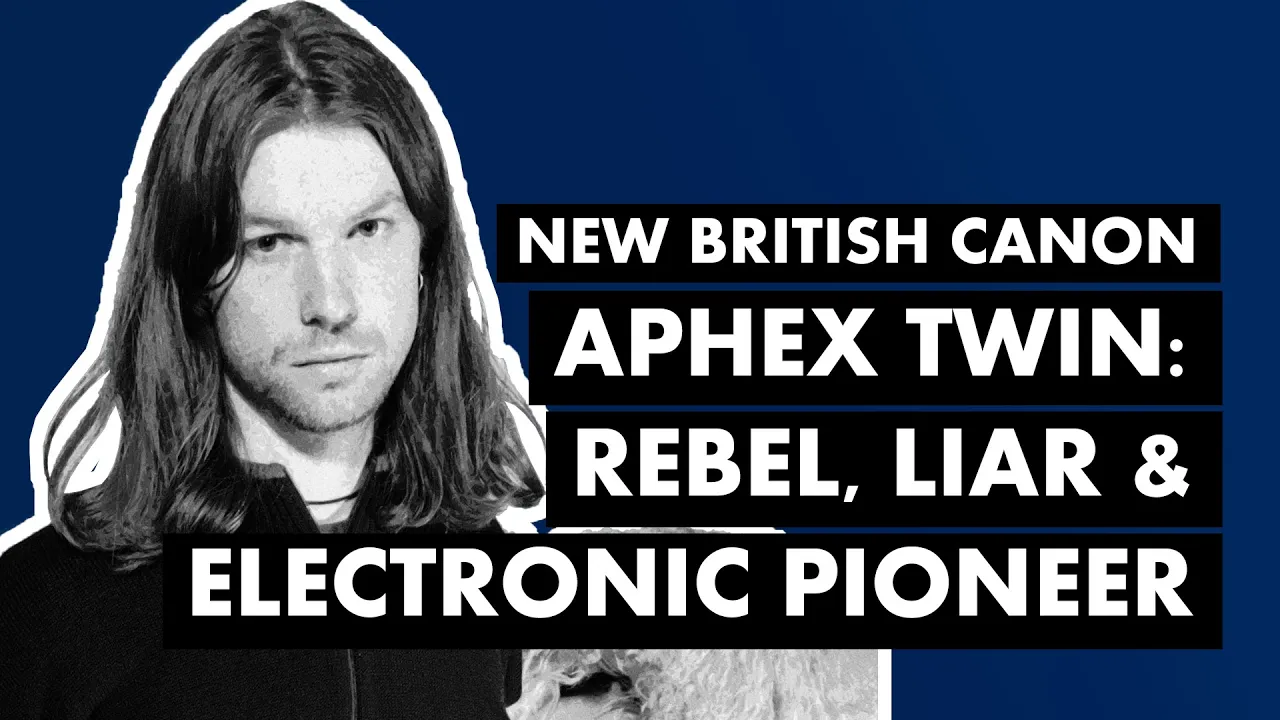
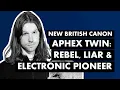
For most of the 90s, Aphex Twin ran counter to what was happening in mainstream dance music. He was messing with low-key ambience during the forceful Eurodance of “Rhythm is a Dancer. ” Moved to harsh industrial noise as Europe was smitten by the dreamy trance of Robert Miles’ “Children.
” And when Prodigy and Chemical Brothers ruled the roost, Aphex Twin was attempting to rupture drum and bass with rapid stuttered software-programmed beats. The Aphex Twin story is similarly antagonistic, filled with fabrication, half-truths and provocation pried from the man himself. Did he own a tank, live in a bank and do a DJ set using solely sandpaper and a food mixer?
Quite possibly, but picking through everything he’s said for the presence of truth is a foolish exercise. The legend is more fun than the bedroom-based music geek reality. This is New British Canon and this is the story of “Windowlicker.
” Born in Ireland, Richard David James grew up in Cornwall, at the isolated foot of England. From a young age he would dabble with the family piano, soon growing bored with its limited sonic range and so augmenting the strings with objects to distort its output. This technique, known as prepared piano, is most associated with avant garde composer John Cage.
James was only twelve, and unaware of Cage at the time - he just knew that he had the power to change sound to his whims. “I bought a synth when I was 12, thought it was a load of shit, took it apart and started pissing about with it. I got really into making things with electronics.
I learned about it in school until I was quite competent and could build my own circuits from scratch. I started off modifying analogue synths and junk that I bought, and got addicted to making noises. “ Since he didn’t start buying records until much later, his early influences were more hardware in nature.
An early touchstone was the game-loading sound for the early home computer, the Spectrum ZX81: “People who had them must have spent hours listening to that. It's more extreme than any extreme noise music. In time you got to know the sound really well: "Oooh, good bit coming up here.
. . " It was always the best, sonically, when it tried to load a picture.
It would be "Iryurrrrrrrrrrrrrghh! " I always wanted to make my music sound like a game. A danceable version of a Spectrum game.
” At first, he was composing for his own pleasure, and to drown out the sounds of his sister’s Jesus and Mary Chain LPs. Later he realised, via local pirate radio stations, that his music sounded like a combination of Chicago Acid House and the Techno coming out of Detroit. But ultimately, his music sounded unlike anything else.
Despite a lack of actual releases, by his late teens, James was well known in the local free party scene, building his beach party sets solely of tracks recorded to C90 cassettes. Early anthem “Digeridoo” was inspired by the stoned travellers that had a habit of playing the instrument at these parties. Rather than sample a Didgeridoo, James spent three days forming the track’s primordial drone himself with his collection of customised equipment.
But the 146bpm track had an intended purpose: “One of the clubs we used to do had this problem in that we had to shut at 2am, but the atmosphere was so mad that no one wanted to go. So I decided to make some music that was so fucking mad that it would blow their minds and they’d be ready to leave. ‘Digeridoo‘ was one of those tracks.
There’s another four that I haven’t released, they’re too mad. ” James was more than happy to keep this music to himself and his friends. But rave promoter Mark Darby pursued James for three months, eventually signing him to his label, Mighty Force, and released “Analogue Bubblebath” in September 1991.
“They made me sign the contract when I was off my face. I was tripping and they're waving this money and a pen at me. It’s a bit clichéd but it's the way they got me to sign.
" “Analogue Bubblebath” was released under the moniker The Aphex Twin. The name was inspired by audio brand Aphex Systems Limited , with the “Twin” added as a nod to his stillborn older brother, after whom he was named. "I feel as if I nicked his identity.
I reckon he looks after me, like a guardian angel. " In his early years James would release music from various other sobriquets: AFX, Polygon Window, Caustic Window, Bradley Strider and Power-Pill. His logic was that each new persona could be signed to a different label, and he wouldn’t have to wait to release something new.
In a way this tied into the anonymous nature of a lot of UK Acid House - no personalities, no faces, just slamming tracks. But as the 90s started, dance producers started getting signed, making LPs and even appearing on the UK charts. The inevitable attention from the music press forced many of these often bedroom-based wunderkids to conjure up something semi-interesting to say to interviewers.
In this regard, Aphex Twin showed himself to be quite unlike anything else that UK electronica had thus far spat up. In November 1992, Aphex Twin would release his first album, Selected Ambient Works 85-92. It’s essentially a greatest hits of his pre-signing period, some tracks supposedly created when he was in his early teens, with the beat-less “i” being the LP’s earliest track.
But compared to the unobstructive and minimalist work of Brian Eno, The Orb’s “Little Fluffy Clouds” and The KLF’s Chill Out, it didn’t really conform as an “Ambient” Work, instead demanding attention, especially on tracks like the squelching “Green Calx” and the nightmarish throb of “Hedphelym. ” Although some tracks feature film quotes, such as “We are the Music Makers” from Willy Wonka and the Chocolate Factory, "We are the music makers and we are the dreamers of dreams" and the Robocop quote in “Green Calx,” James typically shied away from sampling other records. "I don't want to nick someone else's ideas.
I don't take anything from anyone. Some people can shed new light on an old tune by sampling it, but that's not what I'm into at all: I want to create things that are original. I get so much more satisfaction out of sounds I've made up myself.
" The whole album was mastered from the cassettes that James had shared with friends, resulting in a warm analogue glow that stood out from the polished house music that was hitting the charts in 1992. Supposedly, first track “Xtal” has six different points where the tape had warped, thanks to the original cassette being lightly mauled by a cat. The album’s lo-fi nature, along with the mindset of creating an album built for headphones and marijuana rather than a rave, led to it being embraced by students across the UK.
Guitar music had typically been student music of choice, but acts like Primal Scream, The Stone Roses and Happy Mondays had bridged the gap. Aphex Twin was the perfect next step, and the indie press were more than happy to play along. Interviews framed Richard D.
James as one of three archetypes: the bedroom prodigy, the fuck-everything contrarian or the media-savvy mythmaker. In reality, Aphex Twin encompassed a shifting quantity of all three. He could simultaneously produce all his music with self-customised gear, call acclaimed avant garde composer Steve Reich boring and also own a Tank.
All could be true, but rarely would he talk about his music. Because in essence, he didn’t have much to say. “When you do so many [tracks] as I do, like four a day or something then after a few months it’s hard to remember or distinguish what was going on when you made them.
Sometimes you remember certain tracks for certain reasons, like you were pissed out of your head and fell through a window. Basically I can usually remember where I was when I did a track but that’s about it. ” Internet music snobs, however, looking for a term to elevate Aphex Twin over the rest of Acid House and Techno, eventually settled on Intelligent Dance Music or IDM, and looped in other UK producers that were connected socially to James: µ-Ziq, Squarepusher, and Autechre.
James though was dismissive of the label: "I just think it's really funny to have terms like that. It's bascially saying 'this is intelligent and everything else is STUPID. ' It's really nasty to everyone else's music.
Though not charting until twenty-two years later, Selected Ambient Works 85-92 sold steadily, soon growing a reputation as “The Dark Side of the Moon of the 90s,” the UK head album of choice, with its logo emblazoned on dorm room walls and ravers’ t-shirts alike. But his next three albums would take Aphex Twin to a new label and embed himself in the electronic mainstream. After Selected Ambient Works 85-92, the Twin would sign to Warp Records.
The label’s stronger presence in the music industry ensured that the conversely fluid yet industrial “On,” would be Aphex Twin’s entry into the UK Top 40. By this time, James had moved to London, giving him better access to other people’s music. By his account, he enthusiastically consumed it all, memorising thousands of records within a couple of years.
Not only did he own the majority of acid house and techno on wax, but he took a deep dive into his musical ancestors. "Kraftwerk's weirder stuff, Wendy Carlos, Terry Riley, Steve Reich. I probably like Steve Reich best.
But this is music I enjoy. Not influences. I hate the idea of being influenced.
The thought of putting bits of other people's music into my own makes me sick. ” As the 90s continued, dance music had shifted; though techno, house and ambient still held sway, the peaks and valleys of European trance and hard-breakbeat style of UK jungle was making itself known. “I hate trance and I hate jungle, but I'd rather listen to jungle cos at least it makes me laugh.
When I'm in the car, I always put the pirates on for ten minutes – there's about ten jungle stations in my area, and no trance ones – but then my mates and my girlfriend punch me. They hate it! But I can totally see why people get off on jungle.
” His next album was 1994’s double-length Selected Ambient Works Volume II, a sequel in name but sonically more alike to the Music for Airports-ideal for ambient music, two and half hours of floating dreamscapes unsullied by intrusive beats or harsh noise. Though it would hit number 11 on the UK Album Chart, critics didn’t get on with this new release, possibly as a response to James’ left-field assertion that he’d dreamt the whole LP. "This is going to sound really weird but.
. . well, I'm a lucid dreamer, you see.
I can control my dreams. I make tracks in my dreams. Sometimes I'm in my own studio and sometimes in an imaginary studio and sometimes in my real studio but with imaginary equipment.
I reckon I get about 70 per cent of my stuff that way now. ” 1995’s …I Care Because You Do would move away from the ambient sound, with moments of unease verging on noise terror on “Ventolin,” beats that blow right past jungle on “Come On You Slags! ” as well as the almost-pop haircut-percussion of “Alberto Balsalm.
” The latter track was named after a shampoo brand, and it was around this time that Aphex Twin was leasing his music out for advertising, most famously the Caustic Window track “Garden of Linmiri” was used to soundtrack a big-budget commercial for Pirelli tyres. James had no moral quandaries about advertising. He was more than willing to lend a product some credibility and cool by proxy for the right price.
He had submarines to buy, and they ain’t cheap. The only time he said no was when an English private health care company wanted to use his music. As his family had historically worked for the state-funded NHS, he told them where to go.
Extracurricular remixing was also now open to the upcoming producer, which he attacked with his characteristic chaotic manner; the title of his later compilation, 26 Mixes for Cash, clearly exhibited his motivation. It didn’t matter the artist nor the amount of contempt that James had for them, as long as he was paid. Legend has it, he even submitted a Lemonheads mix without any Lemonheads in it.
"I didn't even bother listening to the song because I knew I'd hate it. Then I totally forgot all about it until the courier turned up to collect it. So I ran upstairs and gave him the first track I found.
Strangely, they never released it. They should've been honoured, I reckon. It would have sounded better than any rubbish song they wrote.
" Whereas previous albums had been pieced together with a widening array of synths, sequencers, samplers, drum machines and devices of his own invention, his third album in as many years, the Richard D James Album, was mostly composed on a Macintosh computer. Adapting to new technology and software, the album took longer than the rest, but unrestrained by the linear patterns of drum machine programming, James was free to take his newly glitched beats beyond what was previously thought possible. "Sometimes I just hit the keyboard in a way I'd like the rhythm of the tracks to sound.
Then I'll spend four hours moving all the notes where I want them to go. " Essentially a self-titled album, it was also named in tribute to his stillborn older brother. Preceding its release, the cover of the “Girl/Boy Song” EP would morbidly depict what was allegedly his brother’s final resting place situated in an unknown location in Canada.
“My mum was so upset about it when he died that she kept his name on but forgot about him, thinking "The next boy I have, that'll be him. " So I sort of took his place as if he didn't exist. When you make a record you've got to put something decent on the sleeve and I think this is a decent thing to put on the sleeve.
” “Girl/Boy Song” came about as a challenge from Tom Jenkinson aka Squarepusher, to see if James was able to make something chart-worthy. “My mate was going, it’s alright for all you boys making this jungle but you can’t make a decent pop tune. I go, of course I can…” During this session he also formed the pastoral choir boy filth of "Milk Man," one of the few tracks to feature Richard D.
James singing. Despite having no prior knowledge of the instruments, the violins and cello on the track were played by James himself, though only enough to get a few competent notes, after which he could sample, cut, skew and pitch shift them to fully orchestrate the track. “Girl/Boy Song” would enter the chart at number 64 before dropping out.
Despite remaining as prolific as ever, with only two albums left on his initial contract with Warp, James felt like he might be winding down the whole “record making” part of his career. He was fed up with the music business, having already made more money than he was ever going to be able to spend. The more recent music he had written, he claimed, was too advanced for the public, and so he preferred not to release it as other artists would try and fail to copy him.
But before James retired, he would have two unlikely shots at the mainstream. By 1996, Big Beat had taken over as the dominant populist form of UK dance music. There was the release of Fat Boy Slim’s debut single “Everybody Needs a 303,” The Chemical Brothers returned with their Noel Gallagher-featuring number one “Setting Sun," and Prodigy sent kids scurrying behind their sofas after Top of the Pops aired the video for their number one “Firestarter.
” As the name suggests, this sub genre was all about the drums, not necessarily fast or intricate but bone-crushingly heavy. It was big, dumb and mainstream-minded, and the polar opposite of IDM. Whereas Big Beat was made to dance to, Aphex Twin and his producer friends were taking it the other way, post-jungle with irregular software-developed beats that defied four-to-the-floor rhythm.
It was called drill ’n’ bass, pioneered by Luke Vibert, and like most things with this crowd, a pisstake. Though James had dipped his toes on the Hangable Auto Bulb EP and on the Richard D James Album, he would take this style to the charts with his 1997 single “Come to Daddy. ” Its James-vocal hook had been inspired by a deranged piece of fan mail.
“I did the track in its original form about two and a half years ago. The same day I received this mad letter from this fan that ended with ‘I want your soul, I will eat your soul. ’ I couldn’t make head or tail of it at all, but I thought it sounded pretty good.
” With heavily distorted guitars, and an absolutely unhinged almost blast-beat drum track, James described it as “this crappy death metal jingle,” and it’s aggro-to-the-max nature has been seen as parody of either Nine Inch Nails or Prodigy’s “Firestarter. ” “Come to Daddy” became iconic because of its Chris Cunningham-directed video, a nightmarish HR. Giger trip through a council estate haunted by kids with familiar visages.
James though didn’t like how the video somewhat overshadowed his music. “It was just so detailed, almost to the beat, in the way it pictorially represented the music. This isn't a criticism of Chris, because I love his work.
But if I had a criticism it would be that it's wrong to tie the music down to a single visual image like that. ” Thanks to the outrage and shock that the video was accumulating, “Come to Daddy” was set to do serious numbers on the UK Singles Chart. But James wasn’t having it.
“‘Come to Daddy’ was going to go well massive — not in America, but over here. It got to about 16 in the charts, and it was on the way to the top. I had to withdraw the record for a week, just so it would drop out again.
I just about kept a lid on it. I think it's bad to be really well known, because you end up in people's faces whether they like you or not. That's a really horrible thought.
” Contrary to James’s claim, “Come to Daddy” only ever got to Number 36, the week it peaked if it had hit the top spot it would have denied Elton John’s “Candle in the Wind 1997” its fifth week at number one. Just for reference “Candle in the Wind 97” is still the biggest selling single of all time in Britain. No matter what, Aphex Twin wasn’t going to shift it.
However, his next single, 1999's “Windowlicker” did make it to number 16. With its 6 minute run time and burbling ever-shifting structure, “Windowlicker” doesn’t instantly strike you as something that would fit amongst the “Baby One More Time”s and “Mambo Number 5”s of the UK Chart in 1999. But at the same time, it is full of hooks, though in typically Aphex Twin fashion the main melody line is composed of various contorted orgasmic moans.
But before that hook kicks in is a thirty-second IDM breakbeat breakdown, a bravada piece of software beat programming. “It’s quite similar to guitar solos, only with programming you have to use your brain. The most important thing is that it should have some emotional effect on me, rather than just, ‘Oh, that’s really clever.
’ There’s a lot of melancholy in my tracks. ” The chorus, as it is, seems to be an obscured approximation of the title, but there is only one other lyric in the song, in the bridge James’ french then-girlfriend delivering the line: But what does this mean? Aphex Twin strikes again - it translates to “I like to make dog food.
” It's gibberish. With its slinky synth bass and sexual theming, not to mention the track’s video, many saw "Windowlicker" as James’ deconstruction of modern R&B. However, the song was written originally around the release of the Richard D James Album in 1996, and his inspiration most of the time was himself.
“I could just lock myself away for days and get inspired by myself. That's my favourite way to do it. It's more like a pure form of motivation when it's all on your own.
But you have to wait until you're really bored and you've got nothing to do. That's when it comes out. That's when I reckon it gets good.
“ The same way his debut was a collection of the best of his work so far, “Windowlicker” is a guided tour of the last decade of Aphex Twin, the breakbeat meltdowns of the Richard D James Album, the ambient la-la-la bridge that recalls “Xtal,” the moments of pop euphoria present on “Alberto Balsalm” and the two minute distorted noise coda a la “Come to Daddy. ” All this, while remaining fresh, innovative and years ahead of his contemporaries. The video itself was surprisingly even more disturbing than the one for “Come to Daddy,” rather than James as a dozen ominous children, instead an army of scantily dressed models.
As far back as the cover of …I Care Because You Do and the video clip for “Donkey Rhubarb,“ James had been using his face as an additional logo. Purposely making his visage as grotesque as possible, commenting on dance music being a faceless medium by oversaturating the visuals of his work with his face. Following the videos of “Come to Daddy” and “Windowlicker,” he would take this concept to its logical end point, by literally placing his face into his music.
On the Windowlicker EP track usually referred to as “Formula,” there is a hidden easter egg near its climax. If viewed via a spectrogram, within the frequencies you will see a manic smiling portrait of Richard D. James.
Now that his face was literally everywhere, it was time for him to take some time away from the spotlight. Released in March 1999, “Windowlicker” remains the best selling song released on Warp Records. But as always the mainstream sound of dance music had shifted, Big Beat had given way to French House, Daft Punk had made their name with “Around the World,” while MrOizo’s “Flat Beat” topped the UK charts.
But being the hottest thing in experimental electronica, Madonna sought out James for a collaboration, as she had previously done for Bjork and William Orbit, and later with The Neptunes, Timblaland, DIPLO and SOPHIE. A collaboration he denied her. "I’m not interested in doing it just to make millions, like a lot of other people.
If I did it, that’s all interviewers would have talked about for the rest of my career. Her whole career’s been like, ‘Oh, they’re the trendy person of the moment, I’ll work with them to make me younger. ’ They’re using you.
" After earning his biggest pop hit, the plan seemed to be for Aphex Twin to stop making records for a while. That was until fate forced his hand and Drkqs was released in October 2001: “Basically, I had 180 unreleased tracks on an MP3 player which I left on a plane. That's why I released this album, 'cause all of those were on it.
And I thought, "They're gonna fucking come on the internet sooner or later so I may as well get an album out of it first. "' Though he would release bits and pieces via his alter-egos, fans waited thirteen years for him to release another album as Aphex Twin, 2014’s Syro. But in this relative absence the repercussions of his work made themselves known throughout electronic music and beyond.
Sure there’s the various cerebral takes on electronica of the Warp family, the likes of Autechre, Squarepusher, µ-Ziq, Plug, Boards of Canada and Flying Lotus. Not to mention the Death Grips, Oneohtrix Point Never and the weirdest stuff from Grimes. But dubstep as a genre has his grubby fingerprints all over, both of the underground UK variety and the Skrillex-driven US bro-step mutation.
A. G. Cook of PC Music’s attempt to cover “Windowlicker,” suggests that Twin’s excessively active chops and changes influenced Hyperpop.
But even the more avant garde producers of turn of the century chartpop were cribbing from James through a bubblegum filter, see for example the stuttered, glitchy “Pop” from *NSync or the cut and screw from early Timbaland. And even the acclaimed album Kid A, Radiohead themselves would admit is them attempting to be Aphex Twin. But strangest of all, the soundtrack to Minecraft, at least by James’ ears: “My kids were playing that and I thought that sounds pretty much like some of mine.
And then this guy ‘Notch,’ who made that game bought one of my records on eBay for 40,000 Dollars. My kids loved it. They told all their friends in school.
That was pretty cool. ” As time has progressed, the myths about Aphex Twin have calcified into fact, though he himself is aware of the ripples of what he said three decades ago, he doesn’t think about it too much. Focusing on your own self-aggrandisement is never healthy.
But it all comes down to the form of electronic music: When interviewed by the rock press, James needed to give music without lyrics, without stories, a narrative. As the old idiom goes “Writing about music is like dancing about architecture. ” Richard D James is that concept writ large.
“That's why I love making music so much. You're not limited by vocabulary and words. You will fall into patterns and trends but you can access whatever you want.
You can't do that with language. Yeah, you could look up some more words I suppose but it's infinite with art, with music. That's the best bit about it basically.
” Thanks for watching. So what’s your favourite Richard D James album, song, project, whatever? Let me know by commenting down below.
If you liked this video, like, subscribe and why don’t you also do me a favour and share it with a couple of people. It really does help. I’d like to shout out my new top-tier members over on Patreon: RAEF PAYNE, RACHEL, CHRISTOPHER SPEAKS, JONI KOONTZ, COOLA567 and MICHAEL BRIGGS.
Thank you so very much to all that support me. And I’ll see you in a month’s time for another genre history.



![Woo-hoo!: How Blur Mocked Grunge & Destroyed Britpop ["Song 2"] | New British Canon](https://img.youtube.com/vi/Q29G7YDCq9Y/maxresdefault.jpg)