Welcome to I Am Your Target Demographic and today we’re finishing up our series on the seven wonders of the world, as we cover our latest era, the modern era. This list is much more about changing the way the world works and technical innovation, as opposed to art or beauty. This list was compiled in 1994 by the American Society of Civil Engineers, a worldwide organization and expert in groundbreaking civil engineering.
I’ve decided to use their list to focus on today. We begin our tour in Panama, with the Panama Canal. Before this invention, ships had to travel around the tip of South America and it was dangerous traveling.
Several countries contributed to building an artificial waterway that cut through Panama, starting with the French in the late 1800s. It is said that over 20,000 men died in this attempt from disease and accidents. United States President Roosevelt led the charge of taking over the venture, which was then seen by some as an act of war on Colombia, who controlled Panama at the time.
There’s a lot of story here that I won’t cover but eventually the canal opened in 1914 and is considered the largest construction effort ever by the United States, costing over $9 billion dollars in today’s currency. The canal runs roughly 50 miles and includes several artificial lakes and locks that can be used to adjust water levels and to allow travel through. We now head to the United Kingdom for the Channel Tunnel, nicknamed the Chunnel.
This underwater tunnel connects the United Kingdom with northern France and travels for 31 miles underwater. It was finished in 1994, after many many years of debate. Surveying for this tunnel began back in the mid 1800s but there were always concerns, including how enemy forces could use tunnels like this for invasion.
With the invent of air travel, those concerns dwindled with time. Instead of distance, let’s start looking at height. We first go to Toronto, Canada and look at the CN Tower.
It was the world’s tallest tower until 2009, when it was just recently overtaken. It stands at 1,813 feet high or 553 meters. Today it’s the third tallest tower and the tallest in the western hemisphere.
The tower is lit extensively, often matching up with holidays and other significant events. The function of the tower is to broadcast various things, such as radio and television signals. More recently, cell phone providers have also begun using the tower as well.
There are two modern era wonders in the United States itself. The first being the Empire State Building in New York City, standing at 1,250 feet, or 380 meters. The construction required about 3,000 workers at a time and took only a few years but it resulted in the first building in the world with over 100 stories.
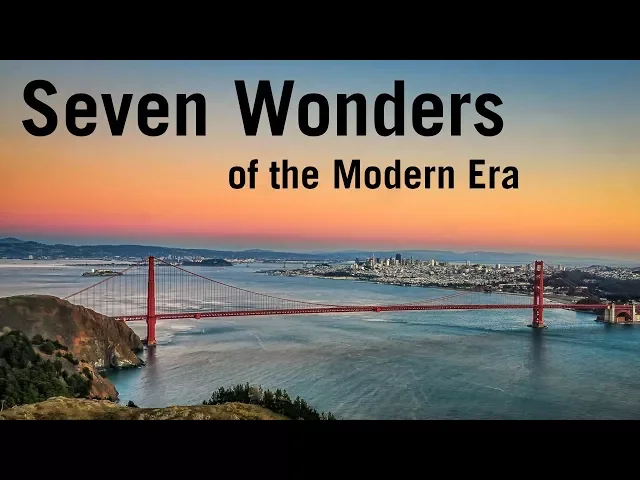
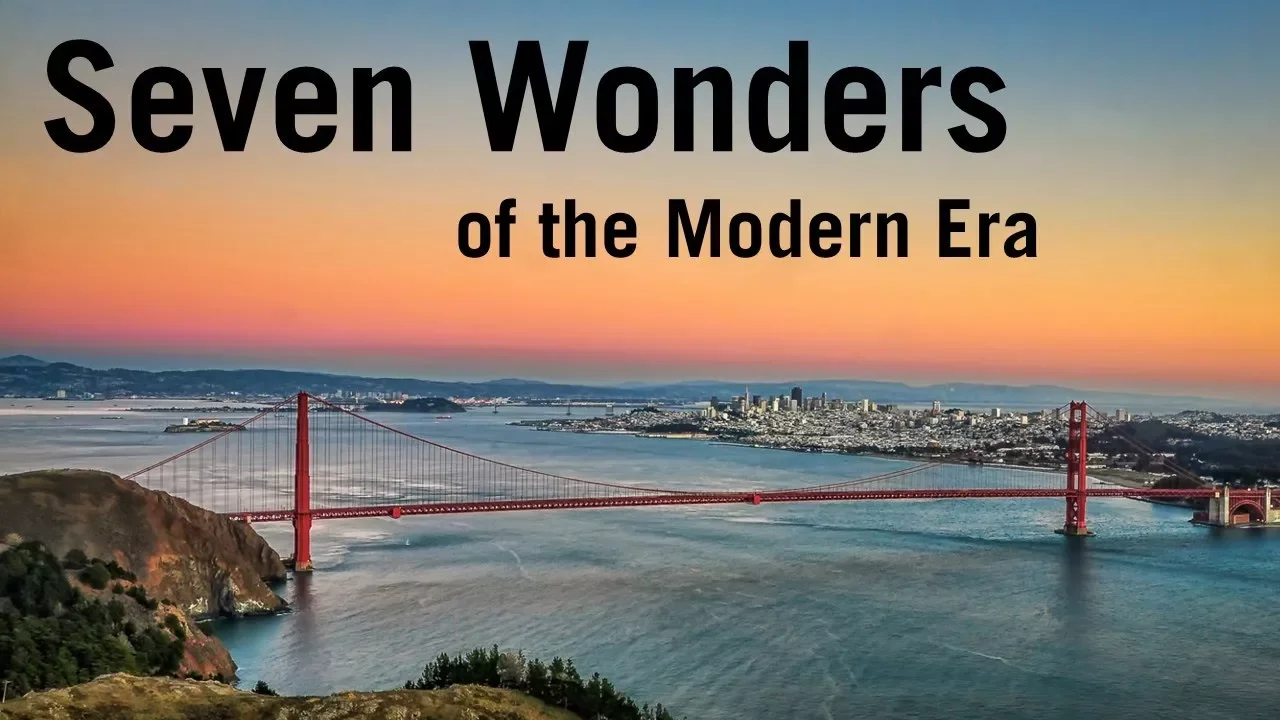
85 of these stories are commercial and office space that is rentable, the above stories are the observation decks and the hollow inside of the spire. Visiting this observation deck is almost required viewing for New York visitors. We now head to the other side of the country to San Francisco in California, for the Golden Gate Bridge.
This bridge, when it opened, was the longest and tallest suspension bridge in the world. It took about five years to build but is still being continuously renovated and repainted. The bridge has also recently been outfitted with moveable barriers that can help manage traffic during peak hours, changing which lanes are dedicated to which directions.
The bridge also unfortunately is known for a high amount of suicides so there are suicide barriers being installed to catch potential jumpers, which will take around 4 years to install and $200 million. We now venture down to the barrier of Brazil and Paraguay, to the Itaipu Dam. This massive hydroelectric power plant creates a massive amount, breaking records in 2016 and producing the most energy out of all the hydroelectric dams in the world.
About 3,000 employees work at the dam, which produces 103 million megawatt hours in 2016. The dam started running in 1984 but a massive expansion in 2007 allowed for more capacity. On the downside, over 10,000 families living in this area were displaced when the dam was constructed.
Our last wonder of the modern era takes us to the Netherlands. There was a historic problem of flooding, with many areas with low coastlines. Two projects were undertaken, the Delta Works and the Zuiderzee Works.
These projects hoped to solve the flooding problems by building dams and by creating new land masses, called Polders, where they would dam an area and then remove the water. This complex process throughout the Netherlands resulted in a unique way to control flooding and remove some serious risks. The Zuiderzee Works began first in the 1920s and lasted through the 60s, while the Delta Works process began in the 1950s and the last project concluded in the 1990s.
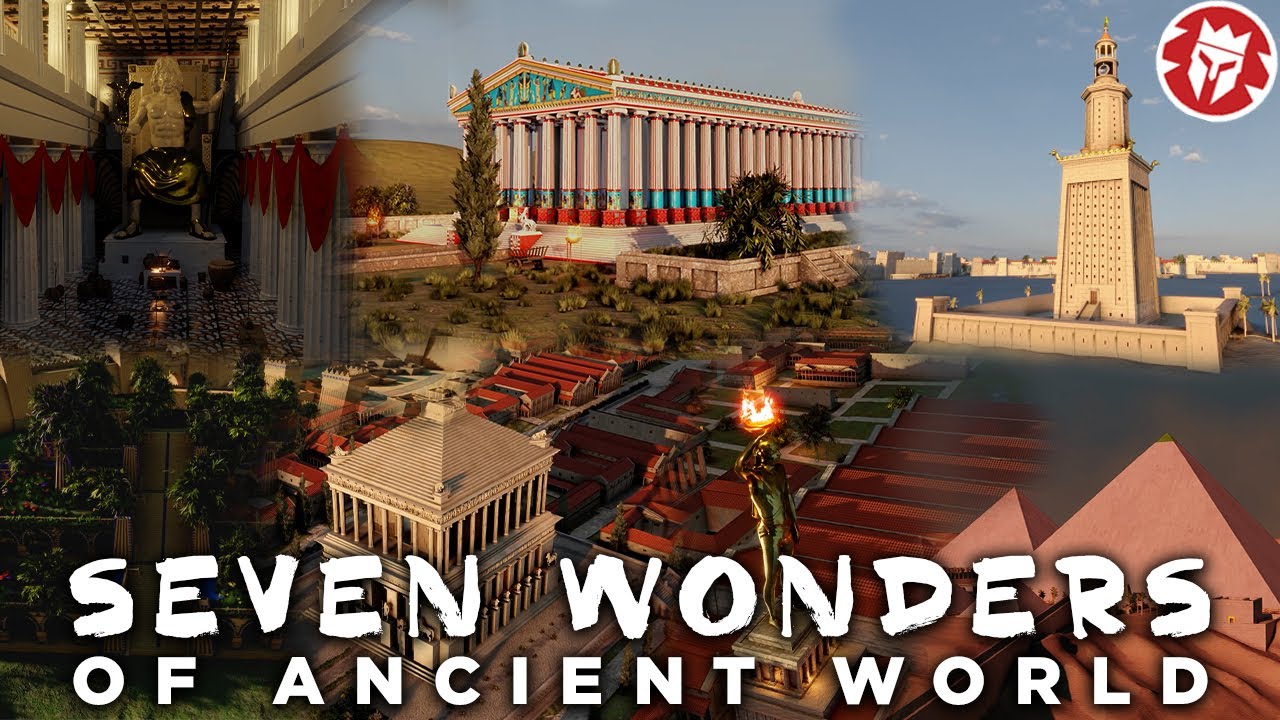
And that's it! Our look through the seven wonders of the world, through both ancient world, middle ages, and then today's modern era. So we've covered a lot and hopefully you found this interesting.
Hopefully you learned about places you've never heard about, you know places that now are on your bucket list, places you wanna check out. If you're new to this channel, I wanna make sure you know about kinda what we do, so check out this What Is playlist for tons of videos that cover different corners of the nerd world and different hobbies and interests. Check that out for more stuff that might interest you.
Thanks for watching!