Hey everyone, welcome to the open question. Once upon a time, humans sat beneath a canopy of stars, gazing upward in awe and fear. Why did the sun rise every morning?
Why did storms rage, floods devastate, and crops fail? Lacking knowledge, our ancestors turned to stories; they imagined powerful beings—gods—who controlled the forces of nature and dictated the fate of humanity. These myths weren't just explanations; they were survival tools, ways to make sense of a chaotic and often hostile world.
In the earliest societies, gods were everywhere—in the rivers, the mountains, the skies. They demanded offerings and sacrifices, and in return, they promised rain, bountiful harvests, and protection from enemies. But as societies grew, so did their gods.
They became more organized, more hierarchical, and eventually, more moralistic. Religion wasn't just a way to explain nature anymore; it became a tool of power. Take ancient Egypt, for example.
The pharaohs weren't just kings; they were gods themselves, bridging the human and the divine. Their authority was absolute because questioning them meant questioning the gods—a dangerous proposition. This intertwining of religion and power wasn't unique to Egypt.
From Mesopotamia to Mesoamerica, rulers claimed divine authority, using it to enforce obedience and maintain control. However, as humans began to ask deeper questions, cracks started to appear in these divine stories. In ancient Greece, philosophers like Socrates, Plato, and Aristotle dared to question the gods.
Why, they asked, should humans rely on myths when reason and observation offered better answers? Socrates, for example, was sentenced to death for corrupting the youth with his radical ideas—ideas that challenged the authority of the gods and the state. Yet his questions planted seeds of doubt that would grow for centuries.
Jump forward to the Middle Ages, and we see religion solidifying its grip on society. The Christian Church dominated Europe, dictating not just spiritual beliefs but also scientific thought, morality, and politics. It was a time when questioning religion could lead to imprisonment, torture, or even death.
The infamous Inquisition stands as a stark reminder of this—a time when heresy, or doubting religious dogma, was a crime punishable by burning at the stake. Yet even during this period, there were glimmers of resistance. Thinkers like Ibn al-Razi in the Islamic world and Giordano Bruno in Europe began to challenge the idea that religious texts held absolute truth.
Bruno, for instance, proposed that the universe was infinite, with countless stars and planets—ideas that directly contradicted Church teachings. For his audacity, he was burned alive. Then came the Enlightenment, a turning point in human history.
Thinkers like Voltaire, Diderot, and Spinoza argued that reason, not revelation, should guide human understanding. They criticized the church's stranglehold on knowledge and exposed the contradictions within religious texts. For example, how could a loving God create a world filled with suffering?
Why did religious texts contain so many inconsistencies and moral failings? These questions undermined the church's authority and laid the groundwork for modern secular thought. One of the most significant blows to religion came from science.
The heliocentric model proposed by Copernicus and championed by Galileo shattered the idea that Earth was the center of the universe. This wasn't just an astronomical discovery; it was a philosophical one. It suggested that humanity wasn't special, that we weren't the focal point of creation.
The church fought back, famously placing Galileo under house arrest, but the truth couldn't be silenced. Then came Darwin. His theory of evolution was more than a scientific breakthrough; it was an existential one.
It demonstrated that life didn't require a divine creator. Natural selection explained the diversity of life, and suddenly, the biblical story of Adam and Eve seemed less like history and more like mythology. Religion, which had once claimed to explain the origins of life, was forced to retreat further.
But religion didn't just lose ground in science; it also faltered in ethics. Consider the moral dilemmas posed by religious doctrines. The Bible, for instance, condones slavery, subjugates women, and prescribes brutal punishments for minor offenses.
The Quran, too, contains passages that justify violence and inequality. Apologists often argue that these texts must be interpreted in context, but why should eternal truths require excuses? Then there's the problem of exclusivity.
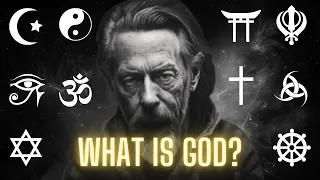
Nearly every religion claims to be the one true faith. Christians believe in salvation through Jesus, Muslims claim Muhammad was the final prophet, and Hindus revere their vast pantheon of deities. But they can't all be right.
If one religion is true, the others must be false. This exclusivity has fueled countless conflicts, from the Crusades to modern-day terrorism. Far from uniting humanity, religion has often divided it.
The diversity of belief itself raises another question: if a god exists, why hasn't this being revealed itself clearly to everyone? Why rely on prophecies and ancient texts—methods prone to misinterpretation and manipulation? Why remain hidden while demanding belief under threat of eternal punishment?
It seems more like the behavior of human authors than an all-powerful deity. Religion also struggles with the problem of suffering. If God is all-powerful and all-good, why do natural disasters, diseases, and tragedies exist?
Theologians offer explanations like free will or tests of faith, but these answers often crumble under scrutiny. Free will doesn't explain earthquakes or cancer, and what kind of test involves the needless suffering of children? These questions point to a troubling contradiction: a loving God who seems indifferent to human suffering.
Finally, consider the progress humanity has made without religion: the abolition of slavery, the fight for women's rights, the recognition of LGBTQ+ equality. These movements weren't led by religion; they were often fought against it. As society has embraced secular values, it has become more compassionate, more inclusive, and more just.
Religion, once seen as a moral compass, now lags behind. So where does this leave us? Religion was humanity's first attempt to explain the world—a noble, if flawed, effort.
But as. . .
We've grown. We've outgrown those stories. Science, reason, and empathy have given us better tools to understand the universe and each other.
The gods of old served their purpose, but their time has passed. The story of humanity isn't about clinging to ancient myths; it's about moving forward, armed with the courage to question and the wisdom to seek better answers. That's our legacy, and that's our future.
If you enjoyed this video and want to support my work, consider joining me on Patreon. Your support helps me keep creating content like this. Don't forget to subscribe and hit the bell icon, so you never miss a video.
Thanks for watching, and I'll see you in the next one!