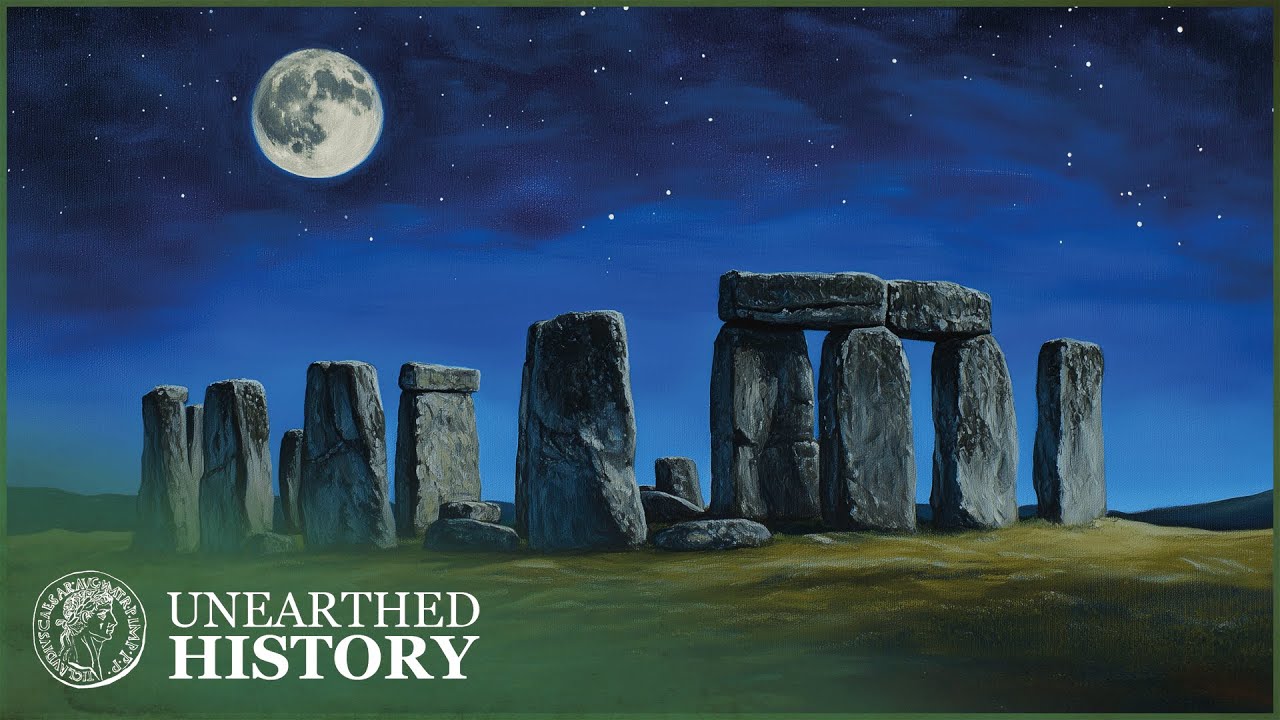
E [Applause] [Music] [Applause] divers working on a submarine project in McDonald Lake in the halberton forest and Wildlife Reserve Ontario Canada discovered a submerged man-made ancient stone structure possibly 5,000 to 10,000 years old for some this is irrefutable evidence of a long lost civilization That inhabited the region before the last ice age one or two researchers have linked the disc Discovery to Canada's Stonehenge a huge 5,000-year Old Stone wheel discovered South of Alberta who were the people who constructed these mysterious monuments and what do they represent the Hal bam forest and Wildlife Reserve limited is
a privately owned Forest comprising 120 square miles in halberton County Ontario Canada the owner and manager of the 25,000 hectar Halburton Forest is Dr Peter schiffen bound who inherited it from his father recently various sources on the net carried a story about a submarine survey of McDonald Lake a popular tourist attraction which apparently took place in 2008 according to the story during the survey divers encountered an ancient stone structure which was thought to be proof of the presence of a mysterious ancient culture in the area life from Central Ontario ancestors staff at the Haliburton forest
and Wildlife Reserve would often see this unusual stone structure balanced on the top of a rock ledge at a depth of about 40 ft below the present lake level whilst in the tour submarine which was in existence for a few years at the site the structure consists of a 1,000lb elongated South pointing Rock sitting on a baseball siiz stone at each side which in turn rested on a massive slab initially the structure was considered a Complex version of a glacial erratic rocks carried by glaciers thousands of years ago and left where they happened to melt
at the end of one of the recent ice ages however when various geologists and archaeologists examined images on the subject some expressed doubts about its natural origin their main objection was that the structure has straight edges rather than rounded which would normally characteriz rocks scoured by glaciers one alternative was that the Mysterious structure was man-made but the problem was how could that be established the halberton forest and Wildlife Reserve limited decided to hire an underwater archaeologist to examine the structure more closely Apparently after a brief examination of the structure this unnamed archaeologists concluded that it
was undoubtedly the result of human activity rather than an accident of nature the company also employed a statistician to calculate the Probability of these seven rocks in the lake falling on top of each other to create what looked like a structure the statistician determined that the probability of seven rocks falling into such positions at the right time and place was almost impossible but if the structure was man-made what was it who built it and when some researchers think it resembled the prehistoric Stone can found throughout the world which serve as monuments burial sites markers for
Ceremonial land or even navigational AIDS others think it may be a burial chamber or perhaps a dolman dolans are a type of single chamber megalithic tomb mostly dating from the early Neolithic 4,000 to 3,000 BC found in a variety of places throughout the world but mostly in Northwest Europe particularly in the region of Britany France Britain and Ireland the thick layer of silt covering some of the surfaces of the structures indicate that they are very old but Beyond that without further Evidence it was impossible possible to say when it was built however when geologists were
consulted on the matter they apparently pointed to a drought which may have hit eastern North America between 9,000 and 7,000 BC at this time conditions were so dry that water levels in the Great Lakes were as much as 165 ft lower and Inland Lakes like McDonald Lake May well have been at least 40 ft lower than their current levels if the structure of the McDonald Lake is a prehistoric Monument of some kind why was it situated in such a remote place one theory is that the sparse local population the time may have been attracted to
the spot by lake trout often described as glacial Relic as they are a hold over from the Ice Age and live mainly in deep cold water habitats one geologist suggested that in prehistoric times McDonald Lake was not a lake at all but part of an ancient river system which made an ideal habitat For the trout but no prehistoric monuments of the Ken or dolman type exist in the USA Canada or anywhere else in the world dated to anywhere near 9,000 to 7,000 BC does that make this structure the oldest in the world or should the
glacial erratic Theory be examined further however attractive these explanations for the Lake McDonald structure being a prehistoric monument are without further Evidence obtained in An independent study or excavation unconnected with the halberton forest and Wildlife Reserve limited such as contemporary artifacts or signs of man-made tooling marks on the stones we cannot say this for sure there are one or two researchers who have linked the underwater structure at Lake McDonald to a mysterious Monument known as Canada's Stonehenge this would make the Lake McDonald prehistoric structure later in date say around 3,000 BC though still Unique to
the area in his 2008 book Canada's Stonehenge astounding archaeological discoveries in Canada England and Wales author Gordon R Freeman puts forward the theory that the ancient structure is a prehistoric calendar a summary of the book on Freeman's website States the discovery of a 5,000-year old Sun Temple and an ancient time machine Stone Age calendar in Canada LED scientist Gordon Freeman to groundbreaking discoveries in Stonehenge during fieldwork and research from 1986 to 2006 Freeman found striking similarities between the Surface geometry of the two sites these similarities push back the boundaries of written history and have far-reaching
implications for North American and European history could the same mysterious ancient cultures have built Canada's Stonehenge and the Lake McDonald structure perhaps they were both related to ancient astronomical Observations Freeman describes what he discovered at the ancient Site of Canada Stonehenge located in Vulcan County Alberta in his book I had found an amazingly accurate year-round calendar in this sun Temple marked with rock lines pointing to sunrises and sets at critical dates I later learned of arguments going on mainly negative about whether Stonehenge contained marked observation lines to the summer solstice sunrise and the Winter solstice
sunset by apply what I had learned in Alberta to observing sunrises and sets through Stonehenge I found that an accurate entire yearr round calendar exists in Stonehenge the term Canada Stonehenge refers to the monument known by archaeologists and historians as major Ville medicine wheel there are between 70 and 150 Native American stone structures known as medicine Wheels spread over the northern United States And Southern Canada though each individual structure is unique the shape of the most common type of medicine wheel resembles that of a wagon wheel lying on its side with a central can from
which lines of cobblestone radiate outwards to a surrounding ring of stones the diameter of medicine Wheels as well as the number and length of their spokes varies the largest so far discovered has a diameter of around 80 ft occasionally there will be a break in The outer Stone Circle to allow a stone pathway or entrance into the center of the structure and sometimes one of the spokes can be considerably longer than the others perhaps signifying the importance of the direction in which it's pointing the dates of these medicine Wheels also vary considerably but it is
acknowledged that the oldest so far investigated is the major Ville medicine wheel which was started around 5,500 years ago there is no doubt that The wheel may have served some astronomical function but it is more probable that this would have been part of a wider ritual use perhaps involving hunting magic or Buffalo fertility this is not to say that Native Americans were not sophisticated enough to build observatories far from it but in one sense to state that the major Ville medicine wheel was built only to make complex astronomical calculations is to apply modern Western ideas
from a 21st century technology dominated era back into the past this explanation reflects our own concerns with timekeeping calendars computers and space not necessarily those of the Native Americans who built and used Canada's Stonehenge fantasy myths ancient Beginnings elevate your historical exploration to unparalleled Heights with a history hit subscription don't miss out on our latest releases where Classicist nasle Haynes travels to Corfu to unravel the story of the Gorgon Medusa one of the most iconic yet misconstrued figures of Greek mythology join Jasmine Elma as she dives into something that people have been obsessed with throughout
history dragons where did they come from what exactly is a dragon finally Dan snow explores the ancient history of the Isles of silly and discovers burial grounds built thousands of years ago discover hundreds Of hours of award-winning documentaries and adree podcasts with history hit sign up for a special offer via the link in the description the ruins of a 2 and a half thousand year old lost ancient civilization were recently found in the lake in kistan some researchers believe that these ancient remains may include an ancient Armenian Monastery where according to Legend the body of
St Matthew one of Jesus's disciples and his Many relics were buried a number of Orthodox Christians have long believed that Matthew was finally laid to rest here long after his death since the 19th century Russian scientists archa ol ologists and researchers from The kgus Academy of Sciences have studied ancient relics around isik co hot Lake one of the world's highest and deepest lakes located in a valley in the high Central Asian mountains in the Republic of kyrgistan isik K lake is 113 M long up To 37 Mi wide and has an area of 2,48 s
Mi it reaches 2,192 ft in depth the lake was first me mentioned by Chinese and Islamic map makers at the beginning of the 8th Century archaeological finds from the site have included petroglyphs and 3,000-year old nomadic burial mounds known as Kens early Christian monasteries and medieval cities the lake has long held a Fascination for researchers as divers have been Exploring its depths since as long ago as the 1860s there was a significant rise in the water level of the lake at the end of the 14th century and the beginning of the 15th as a result
of this the remains of various ancient cultures were submerged including Bronze Age settlements saki usuni burial mounds of the 1st Century BC medieval towns and settlements and turkic monuments since 1985 Professor Vladimir flosi vice president of the kgy Academy of Sciences has been directing underwater surveys and excavations at isik K and in 2010 he joined forces with National Geographic to explore the extraordinary history of the lake in September 2013 scientists and archaeologies from National Geographic began investigations at the lake the team chose this site due to its position at an important location along the legendary
Silk Road with routs Running along its Shores in the past innumerable Traders Caravans and nomadic tribes and armies traveled along the 113m Long Lake leaving next to all ordinary archaeological Legacy behind the Silk Road was an ancient trade route linking China with the West along which goods and ideas were carried between the two great civilizations of Rome and China and later between medieval European Kingdoms in China in the Middle Ages the area surrounding the lake was Fought over by two opposing lines of descendants from Genghis Khan the Eastern Mongols and the city dwelling Islamic Western
Mongols the legendary Western Mongol Le Taman was sent to have fought a battle over the Lake Region in the early 1400s and there are medieval records of a Palace built by the Conqueror on the Lake Shore isik Kul some researchers believe it's the same structure as the 15th century Palace near the town of chalen ATA described by The medieval Arab historian iban Arab shik in December 2007 it was announced that Russian researchers had discovered important ancient remains a previously unknown culture beneath the lake according to reports Russian archaeologists discovered traces of a large city with
an area of several square kilometers in other words it was a metropolis in its time we also found syan berial Mounds eroded by waves over the centuries and numerous Well-preserved artifacts bronze battle axes arrow heads self-sharpening daggers objects discarded by Smiths casting molds and a fast CED gold bar which was a monetary unit of the time in August of 2014 Russian news outlets published a story that divers from T State University had located another previously unknown ancient settlement beneath the lake along with 200 artifacts perhaps the most fascinating find was a piece of large ceramic
pot Which had a stamp on it written in Armenian and Syrian scripts this find may have been supporting evidence for the story that an Armenian Monastery existed on this site in medieval times according to Dimitri gor who led the diving team the inscribed pot fragment was truly unique he added experts are now working on the identification of the writings of the stamps but it's supposed to be Armenian Syrian script if this proves to be correct it will be further Evidence that there was an Armenian Monastery on isik Kul in the 14th century where according to
the legends relics of Matthew were stored there is indeed a tradition that a monastery on this remote Lake was the last resting place of evangelist St Matthew one of the 12 Apostles of Jesus intriguingly when the Russian traveler PP seof was in Venice in the 1850s He Came Upon a copy of the Catalan Atlas from 1375 in this work he found a drawing of a Lakeside Monastery with a caption the spot is named isol here is a Monas of Armenian Brethren which is rumored to possess the relics of St Matthew the Apostle and evangelist the
extraordinary Catalan Atlas is a perpetual calendar and thematic representation of the Known World produced by the mean cartographic School the creation of the atlas has been attributed to Abraham KES a Jewish cartographer from Palma Mayorca seov believ that the monks probably chose a site on the kti bay as the site was protected from rough water and Rich with fish after visiting isik K in 1856 to 57 seof wrote kmen Bay meets these conditions but I fortunately did not find on the shore nor in the drifts of the neighboring Shore any object supporting my supposition 50
years later a Russian Orthodox Monastery was built in the area however many Christians believe that Matthew the Apostle's Remains were discovered in salermo Italy in 1080 and are now in solerno cathedral which is dedicated to the Saint apparently St Matthew's relics had been brought to the town in 954 ad St Matthew also called St Matthew the Evangelist and St Matthew the apostle was one of the 12 Apostles of Jesus Christ and the traditional author of the first synoptic gospel The Gospel according to Matthew according to the calling of Matthew in the biblical Book Of Matthew
he had been a tax collector before being called to follow follow Jesus as Jesus went on from there he saw a man named Matthew sitting at a tax collector's Booth follow me he told him and Matthew got up and followed him while Jesus was having dinner at Matthew's house many tax collectors and sinners came and ate with him and his disciples when the Pharisees saw this they asked his disciples why does your teacher eat with tax collectors and Sinners on hearing this Jesus said it is not the healthy who need a doctor but the sick
but go and learn what this means I desire Mercy not sacrifice for I have not come to call the righteous but Sinners according to tradition Matthew's missions later brought him to the east perhaps Ethiopia and Persia stories differ as to whether he died a natural death or that of a martyr according to another tradition he died as a mar in Syria and his relics were kept there for 150 years apparently his followers later fled from persecution to the depths of Asia bringing the relics of the Apostle with them yet another tradition holds that St Matthew
died while traveling to India and established several Christian communities on his way one of which was isik Kul it's known that a thriving Christian Armenian Community existed in kyrgistan since the 1st Century ad many artifacts were found in Chu Valley a large Valley located in North chanan Including an engrave Stone stone with a cross carrying an Armenian inscription Jesus our lord ass Syrian inscription under the cross stated this is the grave of Johan The Armenian bishop and a date 772 in Armenian chronology corresponding to 1323 ad in medieval times two Armenian monasteries stood near one
of the villages on the shore of the lake SLE Miss bright Cape more evidence that the remains of St Matthew may have ended up in an Armenian mon monry on the lake Comes from the late 19th century when Baron kbar Russian general and Explorer of Central Asia traveled to the site he wrote it is worth noting that not far from the Trinity Monastery at the Confluence of rivers TI up and kisu ruins of an ancient town are found underwater the town hosted The Armenian Monastery guarding the relics of St Matthew archaeological investigation of the kery
settlements began in 20 5 when an exploratory team visited the site of The monastery and settlement finds from the area include bronze crosses a signate ring with ornamentation colored beads and more than two dozen crucifix necklaces only ongoing continuous archaeological Expeditions and detailed historical research can solve the mysteries of isik Cole nevertheless some people are convinced that this site is indeed the location of the lost Armenian monastery and possibly the remains of St Matthew the maltes archipelago consists of five islands in the central Mediterranean Sea positioned 60 Mi to the south of Sicily only three
of these islands are inhabited Malta Island which is the largest along with oo and Camino Malta has a long history going back at least 7,000 years with a wide range of archaeological remains from the megalithic temples and underground chambers of prehistory to the baroke architecture of the medieval Period the most spectacular and enigmatic of the ancient remains on Malta are the Neolithic temples and tombs built 1,000 years before the pyramids and Malta has the oldest free standing Stone buildings in the world one of the most fascinating and mysterious of these megalithic structures is known as
the hall sofle hypm a hypium is a Subterranean Rock Cut chamber of an ancient building and there are a number of these type of monuments Spread across the Mediterranean in southern France Sicily Sardinia and cre the hall soflen hypium is an underground tomb and Temple complex extending for around 5,380 Square ft and is located in the town of paa which is in the south of Malta Island the site was discovered by accident in 1902 when workers digging systemns for new houses above broke through the roof of one of the chambers The first excavations at the
site were performed by father Emmanuel MRI of the Society of Jesus and later continued by Dr Tami zamit the first curator of malta's Museum's Department between 1905 and 1911 zamit excavated a fascinating collection of archaeological material from the complex including human remains Pottery beads amulets and figurines and he wrote a series of reports of his work at the site that was published from 1910 onward the hypm was first open to the Public in 1908 while excavations were still taking place the tall softly en hypogeum consists of a series of oval Chambers halls and niches set
on three levels one underneath the other incredibly the underground structures were all carved out of solid rock and semi Darkness allegedly using Stone mallets and antler piics and later smoothed over using Flint implements the upper level of the complex consists of a hollow with a Central passageway with burial Chambers cut into the natural caves on each side this is the oldest level of the hypm in use from 3600 BC to 3300 BC and is similar in planned to earlier Rock Cut tombs found Elsewhere on the islands such as the Shem Shia tombs which date to
around 4,000 BC the middle level 3300 to 3000 BC was cut into the subsurface rock as an extension of the up level of the structure this level exhibits Exquisite Stone workking skill in the Elaborately carved trons which are a construction with two upright posts with a horizontal one set on top the trons are set in Imitation of the built masonry of the above ground megalithic structures found Elsewhere on Malta this level also contains some of the most important features of the hypogeum monument such as the main chamber the Oracle room and the holy of the
holies most of the wall surfaces in the main chamber originally had a wash Of red ochre tracing out spiral and honeycomb designs some of which are still visible today the famous Sleeping Lady a 12 cm long reclining terracotta figure with traces of red ochre was recovered either from here or a nearby room which is known as the snake pit believed to date from around 3000 BC this corpulent ceramic figure is naked to the waist and wears a fringed skirt she appears to be in a deep tranquil sleep on a bed with a Rush mattress along
with other similar figurines from the Neolithic sites on Malta and elsewhere in the Mediterranean the Sleeping Lady has been used as evidence for the theory of universal peaceloving mother goddess or Great Goddess Worship in prehistory propose by a number of researchers one interesting Theory regarding the Sleeping Lady whether goddess or not is that either in a trance or asleep she may represent a place in the hypogeum where dreams or Trans Visions were interpreted by priests or priestesses such a dark Subterranean context would have been ideal for the stimulation of such States as it would induce
dreams and Visions alternatively because the area was used for bar the statue may be a representation of Eternal sleep the enigmatic Sleeping Lady figurine is now on display at the national museum of archaeology in Veta the capital city of Malta also on the middle level the roughly rectangular Oracle room has an elaborately decorated ceiling of ochre painted Spirals and a fascinating side chamber which has the property to amplify and Echo a deep human voice this is referred to as a resonance chamber whether this intriguing effect was intentional or not is difficult to say though the
possibility that these strange Acoustics were utilized in some religious ceremonies performed in the Chambers is an intriguing one the chamber resonates at an intriguing 111 Hertz which is known to be a healing frequency immersing yourself in this frequency can help increase the healing process of internal and external wounds the holy of the holies is perhaps the most elaborately decorated room in the whole complex with its triathon door frame and Pierce stone or port hole entrance reflecting the architecture of malt's fre standing Neolithic Monuments the third and lowest level at the hypo gum is 35 ft
below street level and has been dated to 3150 to 2500 BC it consists of a maze of Chambers which were filled with water when discovered in the early 1900s as there have been no finds of either bones or artifacts from this level it has been suggested that these Chambers here may have been designed as storage for water or Grain water storage Has also been put forward as the possible function of the hypogeum at noos onr dated between 2150 and 2000 BC the primary function of the hypogeum site was certainly as a cemetery as around 7,000
skeletons have been found in the chambers ranging in date from 3600 to 2500 BC in other words spanning the life of the site itself this amount of human remains is significantly higher than the tombs could have housed at any One period indicating along with the dates of the skeletons that the complex was used for burials over over several centuries the fact that no human remains were discovered in some rooms such as the holy of holies would suggest other functions for these parts of the site perhaps they were used for ferary rituals involving priests contacting the
ancestors an interesting clue to one of the original functions of the hypogeum is the resemblance of the site to Natural caves the near darkness of the original Subterranean Chambers and passageways is a little difficult to imagine nowadays with the brightness of the artificial lighting at the site but originally whoever was allowed to venture down into the depths of the hypogeum would only have had the dim light of animal fat lamps to help them through the Maze of rooms passageways and niches perhaps what took place inside the hypogeum involves some kind Of procession or ritual initiation
through the disorienting Labyrinth structure which included past passing through port hole entrances into particularly restricted shrines such a mysterious Subterranean structure as the hypm is bound to generate its own Legends and folklore indeed there are a host of legendary Tales associated with the hypogeum from disappearing parties of school children to Subterranean monsters and underground Alien bases the majority of these stories can be traced back to an article by Richard wal in the August 1940 edition of the National Geographic magazine entitled Wanderers a wheel in Malta this wartime piece discusses the various underground passageways on Malta
being used as part of the fortifications and defense system of the island it also states that at one time it was possible to Traverse the island using these tunnels but the Government closed the entrances to these tunnels after school children and their teachers became lost in The Labyrinth while on a study tour and never returned apparently the parents of the children claimed they could hear cries of the children for weeks afterwards coming from under the ground in several parts of the island as if some strange phenomena was beckoning others to their Doom in this single
article from the National Geographic lies the origin of a Host of contemporary folklore about disappearances and secret tunnels underneath the hypium which has been mostly built up on the Internet the problem is that the original National Geographic article cites no sources for the tale and no contemporary accounts of the tragedy have ever been discovered the hypm is not mentioned by name in the article so we are not even sure if the alleged incident even occurred there the story has the Ring of local folklore Perhaps a tale concocted to keep children away from the dangerous tunnels
it also brings to mind the mysterious disappearance of the Australian school girls in Joan Lindsay's novel Picnic at Hanging Rock 1967 for many years believed to be a true incident despite the protestations of the author of the novel thanks to a number of stories published first in the 1960s and copied on the internet over the past decade or so the folklore of The alleged hypm disappearance has taken on a life of its own according to these stories which conveniently don't site any sources 30 children vanished with their teachers while on a study tour of the
hypogeum new elements with no foundation in fact whatsoever were added to the archaeology of the hypm site itself to make the supposed disappearance more lurd so we have 30,000 bodies discovered by archaeologists in the chambers not 7,000 and the remains were all human sacrifices to some underworld God in the best traditions of the modern folklore of underground archaeological sites the tunnels underneath the hypm are said to stretch for hundreds of miles all the way to the catacombs underneath Rome improving on the original National Geographic article we are told that a British Embassy worker or in
some accounts an American Tourist called Miss Lois Jessup discovered a series of Tunnels underneath the lower level of the hypogeum and in an unexplored Cavern she encountered several large hairy creatures with strange Powers apparently she later learned that this was the same Cavern where the children and their teachers had disappeared sometime in the 1940s after which the entrance of the hypogeum was sealed off and nobody was allowed to investigate the site from working at the British Embassy Miss Lois Jessup went on to be become Secretary of The New York Flying Saucer information Bureau the sources
for these bizarre stories include a 1960s printed lecture by one-time director of Borderland Sciences Research Foundation Riley crab called the reality of the cavern world and a chapter Malta entrance to the cavern World in a 1966 book entitled enigma fantasti by W Gordon Allen essentially a reprint of the crab article there is one element of these bizarre legends about the hypm That has some truth to it however the site was indeed closed for a number of years between 1992 and 1996 though not because of Any mysterious Disappearance in its tunnels the reason was that major
conservation work was being carried out due to the damage being done to the Limestone Walls by years of visitors exhaling carbon dioxide in the enclosed space to protect against this damage numbers are now restricted to 80 pre-booked visitors per Day and a microclimate has been installed above the underground Chambers to regulate air temperature and humidity in 1980 the fascinating Hall sof Leni hypm was added to unesco's world heritage list strangely enough when now visiting the hypogeum VIS visitors are not permitted to photograph film or even take audible recordings while security guards watch over a controlled
small group of 20 visitors many researchers Ponder why is That and is there something that is being kept away from the public Recent research in Brazil has revealed the discovery of an ancient megalithic observ built at least five centuries before the European conquest of the Americas began this finding along with other archeological fascinating discoveries in Brazil in recent years which include giant land carvings remains of fortified settlements and complex Road networks Are challenging the earlier views that the Amazon had been Untouched by humans except for small nomadic tribes nearly all the discoveries were made after
a period of widespread deforestation in the Amazon in the early '90s through to the mid 2000s the archaeology of the Amazon for decades the Amazon was thought by archaeologists to have been almost uninhabited rainforest but recently were made after a period of widespread Deforestation in the Amazon in the early '90s through to the mid 2000s for decades the Amazon was thought by archaeologists to have been almost uninhabited rainforest but recently researchers have been finding new evidence that the area was in fact a hive of human activity and home to millions of people in March 2018
a study funded by National Geographic and the European research Council project ped reveal details of 81 sites in the Previously unexplored territory of the Amazon's upper tapujos Basin settlements discovered in the area ranged from small villages of around 100 ft wide to a large site covering 19 hectares the sites were first discovered by satellite imagery of the area revealed by deforestation the remains of the settlements are represented by ditches enclosing the sites for fortification sunken roads and Earth platforms on which houses would once have stood Dr Jonas gregoria dza from the University of exitor was
the first author of the study he said regarding the findings and the distribution of the sites the idea that the Amazon was a pristine Forest Untouched by humans home to scattered nomadic populations we already know that was not true the big debate is how populations were distributed in pre-colombian times in the Amazon the idea was that in the areas that are located further away from the main Rivers populations maybe were actually smaller and they had a negligible impact on the environment we demonstrated that these regions may have had pretty large populations as well as in
the past wood charcoal associated with Pottery fragments from one site was carbon dated to between 1410 and 1460 ad which fits in well with the dating of many of the sites previously discovered in the southern rim of the Amazon which showed a peak of activity between 1250 and 1500 Models based on the team's research indicate that at the time the southern rim of the Amazon alone could have had a population of between 500,000 and 1 million people however this population was soon to be decimated by the arrival of Europeans according to duza diseases traveled much
faster than people and probably this population was already weakened by diseases brought by Europeans even before the Europeans set foot in the area the solsis Archaeological park is located near the city of calone in amapa State Northern Brazil the site contains a megalithic stone circle and is often referred to as the Amazon Stone Henge or the Brazilian Stone Henge the megalithic site which is located on a Hilltop on the bank of the rioo Grande River consists of 127 upright blocks of granite each of up to 13 ft in diameter and weighing several tons standing evenly
paced in a circle measuring over 98 ft in diameter after Conducting radiocarbon testing and carrying out measurements during the winter solstice at the site some scholars in the field of archeoastronomy determined that an indigenous culture arranged the megaliths into an astronomical Observatory about a thousand years ago or five centuries before the European conquest of the Americas began and 3 and a half thousand years after the building of Stonehenge archaeologists theorize that the site referred to in academic sources as apca 18 was constructed by sophisticated indigenous people for astronomical ceremonial or burial purposes or even a
combination of all three one of the stones at the site has a circular hole carved into it during the winter solstice The Sun Shines directly through this hole onto another rock supporting the idea that the Amazonian Stonehenge was used as an Astronomical site according to the New York Times the site was discovered by cattle rancher named Le Alan Camilo de apparently DVA was removing trees in the late 1990s to make land for his cattle to gron when he discovered the stones in reality D Silva already knew they were there having initially found them in the
60s but he said he had avoided the sight because he felt that it was sacred recently hundreds of huge Earthworks known as geoglyphs have been discovered In Western Brazil revealing the last remnants of land used by ancient societies before the dense foliage of the Amazon rainforest concealed them centuries ago the peak period of forest burning to clear land happened between 2300 and 1400 years ago during which the first Earthworks are believed to have been constructed while the form and extent of these sites can be determined using aerial observations researchers are still not sure what the
original Purpose of the sites was many of the structures are unlikely to have been Villages as excavation at the sites has not revealed the substantial amounts of cultural artifacts which would be expected if they had been habitation sites the layout of the sites also suggests that they weren't built for defensive purposes one explanation which has been put forward is that the areas were used for ritual Gatherings of some kind and so would have been visited only Intermittently by those who once lived in the area archaeologist Jennifer Watling has compared the layout of the sites with
England's Stone Henge saying it's interesting to note that the format of the geoglyphs with an outer ditch and inner wall enclosure are what are classically described as henge sites the earliest phases at Stonehenge consisted of a similarly laid out enclosure in November 2020 it was announced in the press that one of the World's largest collections of prehistoric rock art had been discovered in the Amazonian rainforest the discovery described as the cine Chapel of the Ancients consisted of tens of thousands of paintings of animals and humans created up to 12 a half thousand years ago on
Cliff faces stretching across nearly 8 miles in Colombia the date of the artwork was based partially on images of now extinct Ice Age animals such as the Mastadon a prehistoric Relative of the elephant that had been extinct in South America for at least 12,000 years there are also depictions of paleo Lama an extinct camed as well as giant sloths and Iron Age horses all seen at firsthand and painted by some of the very first humans ever to reach the Amazon other images include fish turtles lizards and birds as well as people dancing and holding hands
with one figure wearing a mask resembling a bird with a Beak the incredible Discovery was filmed for a major Channel 4 series called jungle mystery lost kingdoms of the Amazon the document entes presenter archaeologist and Explorer Ella al-shamahi said of the extraordinary findings this site is so new they haven't even given it a name yet the discovery was made by a British Colombian team funded by the European research Council the researchers team leader a professor of archaeology at Exter University and a leading expert on the Amazon and pre-colombian history said when you're there your emotions
flow we're talking about several tens of thousands of paintings it's going to take generations to record them every turn you do it's a new wall of paintings we started seeing animals that are now extinct the pictures are so natural and so well-made that we have few doubts that you're looking at a horse for example the Ice Age horse has a wild Heavy face it's so detailed we can even see the horse hair it's fascinating the site of the discovery is so remote that after a 2-hour Drive a team of archaeologists and filmmakers had to track
on foot for around 4 hours to find it even after arriving at the site the team found that some of the paintings were placed so high up that they could only be viewed with drones Al shamahi remarked on the incredible depiction of Ice Age life in the Amazon As suggested by the newly discovered paintings one of the most fascinating things was seeing Ice Age megaa because that's a marker of time I don't think people realize that the Amazon has shifted in the way it looks it hasn't always been a rainforest when you look at a
horse or masteron in these paintings of course they weren't going to live in a forest they're too big not only are they giving clues about when they were painted by some of the Earliest people that in itself is just mindboggling but they're also giving clues about what this very spot might have looked like more Savannah like the Imperial library of Constantinople was believed to be the greatest in the world outside the Vatican the library which at one stage consisted of over 100,000 manuscripts survived for almost a thousand years before it was supposedly destroyed in The
Fourth Crusade of 124 when Norman Crusaders Devastated the city however there are rumors that the library survived largely intact and was somehow spirited out of the city to its eventual destination in modern Moscow it became known as the library of Ivan III and some researchers believe it lies there still in vaults beneath the Kremlin building waiting to be discovered standing on a triangular Peninsula between Europe and Asia modern Istanbul formerly Constantinople ancient Byzantium is the largest city and Principal Seaport in Turkey the city's original name Byzantium possibly derives from that of Bas as leader of
the Greeks from the city of magara West of Athens who according to Legend captured the peninsula from pastoral thran tribes and constructed the town around 657 BC in 196 ad the Roman Emperor Septimus seis burned the town for opposing him in a civil war afterwards rebuilding it and naming it Augusta antonina in honor of his son later emperor Constantine wanted To build a new capital of the Roman Empire on the site of ancient Troy but changed his mind and located his new city at the site of old Byzantium claiming in 330 ad that it was
a new Rome Nova Roma soon afterwards however it was renamed Constantinople after the emperor the great City would be Christian but governed by Roman law and adopt Greek as its primary language due to its unique geographic location spanning Europe and Asia it would soon Become a Melting Pot of peoples and culture cultures in 337 ad Constantine died leaving the empire in confusion and the question of his successor up in the air finally his son constantius II defeated his brothers and all other challenges to become the Roman Empire's sole Emperor constantius II expanded the governmental bureaucracy
adding quers praters and even tribunes according to most historians he's credited with building the first of three year Sophia's the church of Holy wisdom in 360 ad the great church was later destroyed by fire in 404 ad after which it was rebuilt by theodosius II it was destroyed and rebuilt again under Justinian in 532 ad Constantinople was the heart and capital of what became known as the Byzantine Empire the eastern half of the Roman Empire the Empire survived for a thousand years after the Western half centered in Rome had crumbled into Various feudal kingdoms only
to fall to ottoman Turkish attacks in 1453 about 357 ad constantius II concerned about the deterioration of a large collection of early texts written on Papyrus roles began the formation of what was to become the Imperial library of Constantinople he ordered manuscripts including the judeo-christian scriptures copied from Papyrus onto the more permanent Med medium of parchment or Vellum the person in charge of the library under constantius II is believed to have been a man named festius who supervised a team of scribes and Librarians who copied the texts on Papyrus roles onto parchment or Papyrus codices
It is believed by some researchers that this Library preserves some of the texts that survived the burning of the Library of Alexandria though the historical accounts of the various periods of Destruction at Alexand ran are not clear on this the 12th century epitomist Johan zonaras relays was quoted as stating that in 475 when the Imperial library of Constantinople was damaged by fire contained 120,000 volumes which suggests that the library grew steadily during the first century after its founding in fact the majority of Greek Classics which exist today are known through Byzantine copies originating from the
Imperial library of Constantinople The theodosian code informs us that in 372 the emperor Valance ordered the employment of seven copyists four for Greek and three for Latin texts and some assistance to maintain and repair the books at the Imperial Library thus we know that the library housed both Greek and Latin texts but not necessarily in separate libraries as was the practice in Rome it is known that the library was burnt in the year 473 though ancient sources reported that constantius the Second Theus and the scribes working at the library managed to save and recopy many
Works before they were completely lost to the fire some historians believe that part of the collection housed in the library was later obtained by Emperor Charlamagne in the 8th Century though there is no solid evidence to support this what is beyond doubt is that the imperial library is known to have been at least partially destroyed in The Fourth Crusade in 1204 when Norman Crusaders sacked Constantinople almost completely destroying the city the Imperial library was set on fire probably destroying much of its collections It is believed that Crusaders may have sold some rare bantine manuscripts to
Italian buyers at Constantinople shortly before the city fell to the ottoman Turks in 1453 we get a glimpse of what may have been the last remaining part of a great Library there from a Spanish visitor to The city who sought a reading room in the Imperial Palace at the entrance to the Palace beneath certain Chambers is an open lodia of marble with stone benches around it and Stones like tables raised on low pillars in front of them placed end to end here are many books and ancient writings and histories and on one side are gaming
boards the palace that this visitor saw has disappeared and we don't know if it was part of the Great Library at Constantinople or in a Private collection zoee paleo loina who later changed her name to Sophia around 1449 the 7th of April 1503 was a Byzantine princess who became Grand Princess of Moscow as the second wife of grand Prince Ivan III known as Sophia of Byzantium she was the niece of the last two byzantian Emperors and her marriage was proposed by Pope Paul II in 1469 either in the hope of strengthening the influence of the
Catholic church in Russia or of unifying the Orthodox Catholic Church some researchers believe that when Sophia and her Entourage left Constantinople and traveled to Moscow she carried with her as her dowy some of the treasures of Byzantine among which were the remains of the Imperial Library the Vatican and many other wealthy inhabitants of Rome apparently offered to purchase the whole collection but Ivan III realizing its value kept it but worried about the power of Rome Ivan had the manuscripts hidden away in a secret Lo location this location became known as the vaults of Liberia Liberia
comes from the Latin word Liber meaning book it is believed to have been located underneath Moscow possibly in a large tunnel Network beneath the Kremlin The Collection was subsequently expanded by Ivan IV the terrible who sent his men all over Europe to collect rare folios and manuscripts after his death in 1584 the library seems to have disappeared without a trace the the earliest Reference to the Lost Library comes from 1518 when scholar and translator mik tripolis known as Maximus the Greek was in Russia and came into contact with Moscow Grand Prince vasel III the son
of Ivan III in a meeting between mik and vasel it is said that countless multitudes of Greek books were shown to mik by vasel III the rest of History apart from a few lines in European Chronicles from the 16th to the 18th centuries is mostly silent on the Subject however in the 19th century an Estonian historian named Christopher Von dabov claimed to have seen a list of folios from the missing collection though he never provided proof of this but the majority of scholars believe that the library of Ivan IV is nothing more than a legend
even if the library of Ivan the Terrible had existed it would probably have been destroyed by now perhaps in one of Three Fires which ravaged Moscow during the 16th and 17th Centuries there are of course some researchers who believe that the Kremlin is hiding the existence of the library indeed every few years Believers apparently acting on leaked secret information undertake clandestine excavations in the Russian capital in the hope of chanting upon the long lost library of Ivan ivth Nan madal is located near the southern side of the Federation ated States of Micronesia and is the
only Ancient city ever built on top of a coral reef the ruin city is one of today's great archaeological Mysteries and is sometimes interpreted as the remains of one of the Lost continents of Atlantis lamuria or Mew in fact Nan madal was one of the sites James churchwood identified as being part of the lost continent of me in his book The Lost Continent of Mew motherland of man the ruins of the ancient city complex of nanmadol located on a coral reef and a Lagoon on the minuscule town of temwen close to the eastern shore of
the island of pomp in the federal States of Micronesia nanmadol is composed of 92 artificial Islands spread over 200 Acres surrounded by water on three sides with a stone wall enclosing the complex the city complex is sometimes referred to as the Venice of the Pacific although there is evidence of human activity at the site dating back to the 1st or 2 Century BC the construction of artificial Eyelets did not begin until around the 8th and 9th century ad the majority of the megalithic structures were built from the 13th to the 17th Centuries by the selers
descendants of Two Brothers possessed of magic powers who founded a religious community in the 6th Century ad based on the worship of the sea the focus of the whole megalithic complex is the Royal Mory of the iset of nandas with its 20ft high walls surrounding the central tomb Enclosure throughout its 500e existence the city was a political and ceremonial seat of power serving as a religious Center a royal residence a fortress an Open Marketplace and the seat of local government the population of Nan madal during its Heyday was probably over a thousand people the majority
of whom were commoners serving the nobility the beginning of the 13th century ad the island of ponpe is thought to have been conquered and Unified by the mysterious Soder Dynasty and it was then that the spectacular complex was constructed as a ceremonial and political seat for a new Royal line the sordillo line was brought to an end in the 1500s by exiled pompeian Warrior ISO kelel the new Chiefs known as namaki occupied nanmadol for a couple of hundred years but by the 1800s when the first Europeans arrived the site was deserted why remains one of
the many mysteries of this incredible Site there are certainly Mysteries surrounding nanmadol some of the stones and columns at nanmadol are so substantial that no one has been able to work out how the site was constructed the pompeians set nothing to fix the stones together like concrete nor are they known to have had diging equipment so it's a mystery how they sank the heavy stones into the Lagoon a clue to how the transportation of the great megaliths were moved May lie in Crystal Basal columns discovered at the bottom of the lagoon near Tenn Island and
on the shores of other eyelets in the area which would suggest that the stones were transported by raft according to local Legend the stones used in the construction of Nan madal were magically flown to the site by the two brothers who supposedly founded the complex although archaeologists have located several possible Quarry sites on the main island The exact method of transportation of the construction material has still not been determined but the site of Nadol has been linked with much greater enigmas than the method of its construction one controversial Theory connects a site with lost continents
beneath the Pacific Ocean l IA and Mew are interchangeable names given to the Lost land believed to have been located somewhere in either the Southern Pacific or Indian oceans This ancient continent was apparently the home of an advanced and highly spiritual culture perhaps the mother race of all mankind but it sank beneath the waves many thousands of years ago as a result of a geological cataclysm of some kind the thousands of Rocky Islands scattered throughout the Pacific including Easter Island Tahiti Hawaii and Samoa have been claimed by some to be the only surviving remains of
this once great Continent lamura the alternative name for the Lost Continent also originated in the 19th century Ernst Hinrich heel from 1834 to 1919 a German naturalist and supporter of Darwin proposed that a landbridge spanning the Indian Ocean separating Madagascar from India could explain the widespread distribution of lemur small primitive tree dwelling mammals found in Africa Madagascar India and the east Indian archipelago more bizarrely HK also suggested that lemur Were the ancestors of the human race and that this landbridge was the probable cradle of the human race other well-known scientists such as the evolutionist th
Huxley and the naturalist Alfred Russell Wallace had no doubt about the existence of a huge continent in the Pacific millions of years previously which had been destroyed in a disastrous earthquake that submerged it between the waves much as Atlantis was thought to have been Drowned before the discovery of continental drift it was not unusual in the mid late 19th century for scientists to propose submerged land masses and land bridges to explain the distribution of the world's flora and FAA in 1864 the English zoologist Philip lutley scatter from 1829 to 1913 gave the hypothetical continent the
name Lura in an article the mammals of Madagascar in the quarterly Journal of Science and since then it is Stuck the theory of a lost continent in this area has been put forward by many different people most notably in the mid 19th century by scientists in order to explain the unusual distribution of various animals and plants around the Indian and Pacific Ocean the idea of lamuria as something more than a physical place or at least somewhere which had been inhabited by non-human entities before the appearance of man derives from the writings of a Colorful Russian
occultist Helena Petrova blavatsky from 1831 to 1891 blavatsky was the co-founder together with lawyer Henry steel Alcott of the theosophical society in New York in 1875 the Society was an esoteric order designed to study the mystical teachings of both Christianity and Eastern religions in the late 19th century a cultist madame blavatsky reincarnated the idea of lamuria as a lost continent spiritual Homeland and influenced a host Of subsequent occultists and Mystics including well-known American psychic healer and Prophet Edgar Casey the popularization of lamura muw as a purely physical Place began in the 20th century with ex
British Army Officer Colonel James churchwood and the idea still has many adherence today the L civilization of lamura muw was brought dramatically back to public attention in 1931 with the publication of Colonel James churchwood bizaar the Lost continent of Mew the first in a series of five books by churchwood about the lost continent in the book he claimed that the lost continent of Mew had once extended from an area north of Hawaii southwards as far as Fiji and Easter Island according to churchwood Mew was the original Garden of Eden and a technologically advanced civilization which
boasted 64 million inhabitants around 12,000 years ago Mew was wiped out by an earthquake and submerged Beneath the Pacific apparently Atlantis a colony of Mew was destroyed in the same way a thousand years later all the world's major ancient civilizations from the Babylonians and the Persians to the Maya and the Egyptians were the remains of the colonies of Mew churchwood claimed he received this Sensational information when as a young officer in India during a famine in the 1880s he became friendly with an Indian priest the priest told Churchwood that he and two cousins were the
only survivors of a 70,000 yearold esoteric order which originated on Mew itself this disorder was known as the naal Brotherhood the priest showed churchwood a number of ancient tablets written by the naal order in a forgotten ancient language supposed to be the original language of mankind which he taught the officer to read churchwood later asserted that certain Stone artifacts Recovered in Mexico contain parts of the Sacred inspired writings of Mew perhaps taking ideas from Augustus Leong and his use of the Trana codex to provide evidence for the existence of Mew it was churchwood who first
posited the theory that the cyclopedia ruins of Nan modal represent the remains of one of the Seven Cities of ancient Mew Lura however radiocarbon dates and Analysis of pottery from Nan madal revealed the construction of the site Began around 1200 ad though the area may have been occupied from as early as 200 BC such dates would certainly preclude any connection with churchwood lemurians or their descendants indeed churchwood never produced any evidence to back up his exotic claims and he never published translations of the enigmatic naal tablets though they still have many followers today churchwood books
are perhaps better read as entertainment rather than factual studies of Lamuria a second Century map of gmania by the ancient Egyptian Greek scholar Tommy has always baffled Scholars who have been for centuries unable to relate many of the places depicted to known settlements but recently a team of researchers based in Berlin has managed to crack the code revealing that half of Germany's cities are at least 1,000 years older than previously believed toy was an Egyptian scholar of Greek descent who flourished in the city of Alexandria During the the 2 Century ad he was an astronomer
mathematician and geographer and a large part of medieval astronomy and geography were built on his ideas his astonishing world map published as part of his treaties geography in the 2nd Century was the first to use longitudinal and latitudinal lines Tommy based his Maps mainly on the maps and writings of marinas of Tyre but 100 AD of whom however he was highly critical Tommy did use other sources which have Not been rced and also added more current information available to him at the time mainly concerning the Asian and African coasts of the Indian Ocean he would
also have made use of astronomical and geographical specialist literature available in The Great Library of Alexandria tomm is also well known today for his geocentric or Earth centered model of the universe now known as the toic system in Toy's great 13 volume work the syntaxis also known as the Almagest Tommy made some startling observations when compared with modern astronomical tables some of them are so accurate that Isaac Newton claimed he couldn't have made them with the instruments he said he used frustratingly some of Tommy's other observations are full of Errors Tommy also wrote a treaties
on astrology called astrological influences in which he stated his belief that astrology was a legitimate science which describes the Physical effects of the heavens on life on Earth to's geography was written around ad 150 in eight volumes and contained 26 maps in colored ink on dried animal skin it was essentially what today would be called an atlas though unfortunately his maps have subsequently disappeared and nothing remains of the work but his index his work was painstakingly copied by hand at the time and redistributed but many of his Maps were not redrawn when copies Were made
the majority of copies known to exist today do not include Tommy's original drawings instead the books include Maps made hundreds of years later based on his descriptions however over the years various Scholars have been able to redraw Tommy's Maps accurately from the longitudes and latitudes in degrees for roughly 8,000 locations on his world map so in essence what we have in to's map is a clear and thorough picture of the world as it was Known by an inhabitant of the Roman Empire at its height this vast World extended from the shett and islands North of
Scotland to the sources of the Nile in Uganda in the south from the Canary Islands in the west to China and Southeast Asia in the East toy believed the world as it was known then covered about a quarter of the Earth's surface and in this he was fairly accurate like numerous ancient books and scholarly Works especially those housed at the now Disappeared library at Alexandria tm's geography was lost for over a millennium to Western scholarship but towards the end of the 1400s during the Renaissance period his work was rediscovered and translated ated into Latin the
language of Western Scholars at the time the work became popular once again and over 40 editions were printed in fact it wouldn't be going too far to say that the new addition caused a sensation challenging the very Foundation of Medieval mapmaking which had been that map makers up until then had based the sizes of countries and cities on their importance rather than on mathematical calculations therefore the more important a country was perceived as being the larger it would appear on the map Toy's geography is an astonishing achievement when one considers that for over 15 centuries
it was the most detailed Topography of Europe and Asia available and the best reference on how To collect data and draw Maps the most authentic copy of Tommy's map still in existence is an addition produced around the year 1300 and kept by the Vatican to's incredible Atlas was in the news again recently when a new study of it was made by a team of classical philologists mathematical historians and survey experts at Berlin technical University's department for geodesy and geoinformation the early histories of the majority of German towns east of the Rin an area that the
Romans were never able to occupy permanently are largely unknown and the places themselves are not stated in documents until the Middle Ages logically this should mean that the cities date back no more than 500 years or so however the researchers from Berlin Technical University science have been able to challenge this assumption by producing ing an incredible map of Central Europe as it was 2,000 years ago based on tm's geography one of to's maps Was Germania Magna a territory that must have been completely unknown to someone living in the distant Egyptian city of Alexandria on an
estu of the N according to Tommy this area is bordered by the r in the west the North Sea and the Baltic Sea in the north the danu in the South and the Vistula and the Western Carpathian Mountains in the East curiously Tommy lists 94 settlements in gmania while the far more accessible three provinces of Galia had only 114 Settlements in total toy also doesn't attribute any of these Germanic settlements to a tribal group though he notes their latitude and longitude accurately to within a few minutes if this was unknown non-roman territory where was Toby
getting his information there's also the major problem that if the toic coordinates of a place are compared to its coordinates in the modern Geographic reference system they usually completely different there are a Number of reasons for this but among them is the different zero meridians of the toic and modern reference systems there are also various errors in the toic coordinates furthermore the majority of the place names in Germania Magna occur nowhere else that are only handed down by Tommy not by any other ancient writer so although to's map provides us with the most comprehensive topographical
description of ancient Germania because of these aforementioned Problems it hasn't been possible up to now to reliably locate even a few of the places he mentions it's known that Tommy never took his own measurements in northern and western Europe and certainly not in the Germanic lands researchers believe he may well have drawn on long lost Roman Traders travel itineraries and sailor notes or even consulted Maps used by Roman Legions operating in northern Europe in the form of War reports and Maps but the answer To the puzzle of germania's ancient settlements has never been found until
now that is for the first time a team of experts combining skills in the field of surveying and mapping came together to try and solve one of Tommy map's many Mysteries the Berlin base team examined the data on Tommy map of Germania Magna for six long years developing a so-called geodetic defamation analysis that would hopefully correct the map's Mistakes one of the results of their work is the pinpointing of the hometowns of the legendary Germanic figures zigfried and arminius to Within 6 to 12 miles the team even produced a book gmania and the island of
Tula about their fascinating project although the copy of to's geography held by the Vatican is thought to be the oldest the Berlin team was somehow able to get hold of copies of a parchment which had been tracked down to top cppy Palace in Istanbul Turkey once the residents of the Ottoman Sultans the Priceless document consisted of Unbound sheepkin pages with writing in Roman capital letters this is now believed to be the oldest edition of Tommy's work ever discovered using the newly discovered map the team discovered that even minor German towns such as sou scotton or
lendorf had existed for at least 2,000 years they found the trer located at the Confluence of the Elba and ala Rivers Was the precursor to Hamburg and that leig was known as Aralia in essence these discoveries show that half the cities in Germany are now 1,000 years older than previously believed another fascinating aspect of of the research has been the fact that a large amount of toames coordinates for ancient German settlements often turn out to coincide with sites where archaeologists have previously found Gothic or tonic houses and large elaborate tombs erected for Tribal princes what
more secrets awaiting Discovery lie in the coordinates of tm's maps [Applause] [Music] [Music] [Music] [Music] w [Applause] [Music] w [Applause] [Music] [Music] [Applause] [Music] Randy Hass an anthropologist from the University of California was working with his colleagues at a high altitude site in the area known as Willam paja in southern Peru when they found six burials dating back almost 9,000 years which contain the remains of six Individuals during their work the team collaborated with the local Amar Community teenage female Huntress buried with her tools one burial pit was not like the others based on the
hunting toolkit found with the deceased the team initially thought that the burial was of a male Hunter however the bones were very slender light and appeared to be those of a female science quotes one of the team members bioarchaeologist Jim Watson is saying I think your Hunter might be female indeed the grave contains the remains of a young woman who died between the ages of 17 and 19 her gender and age were determined based on an analysis of proteins in her teeth Anthropologist Randy Hass has told Sky News that the female Hunter had been buried
with stone projectile points for felling large animals a knife and flakes of rock for removing internal organs and tools for scraping and Tanning hides the Stone points would have been attached to shafts and used as spear throwers and H at animals with great force a pigment chunk was also found with her which was used in the treatment of hides was the discovery an outlier the female Hunter was found near the grave of a male who was also buried with a hunting toolkit the team of researchers also found evidence of animal bones in the sediment of
the burial ground including andan deer and vuna hastel Science news that these two animals were the main targets of Ancient Hunters in that part of the Andes however many belied that the find was a one-off and that the female Big Game Hunter was an outlier science quotes Meg coni an archaeologist who didn't take part in the study as stating that Skeptics may say it's a oneoff moreover the presence of hunting gear in a grave does not necessarily mean that the deceased was a Hunter H and his team set out to prove That there had once
been other female hunters in the Americas Hass and his colleagues were prepared for this and conducted an exhaustive study of the research literature on 107 burial sites in the Americas all of these sites are between 6 and 12 1 half thousand years old in total the researchers found 10 women who had been buried with hunting toolkits their research has led them to conclude that women routinely participated in big game Hunts the researchers wrote in science advances that the findings are consistent with non-gendered label practices in which early Hunter gather of females were big game Hunters
based on their study of other sites the research team believes that females accounted for between 30 and 50% of ancient American big game Hunters reports Science News they're convinced that the evidence is strong for their Theory the researchers also consider That archaeologists did not recognize that females were big game hunters in the past because of sexism Gizmodo quotes the researchers are saying that modern gender constructs often do not reflect past ones in other words just because women in the recent past were not big game Hunters this does not mean that they weren't any female big
game hunters in the Americas 9,000 years ago up until recently the man the Hunter hypothesis was widely accepted according to science this held that women did women's work and that males engag Ed in activities such as hunting and as a result with the dominant gender this was based in part on modern studies of hun gather a group such as the haer of Tasmania inspired by their groundbreaking discovery in Peru the researchers argue that this was not the case big game hunting would have Required teamwork a group of people working together and a great deal of
Labor therefore women would have had to have cooperated with men to ensure success in hunting Expeditions quoted in Gizmodo the researchers argue that there was a broad participation from both females and males in the hunting of big game Ashley Smallwood of the University of Louisville in Kentucky tells science news that it's time to stop thinking of Ancient female large game Hunters as outliers the discovery of the ancient female Huntress in Peru could transform our knowledge of gender roles in the past if women hunted this would imply that there was more equality between the genders in
prehistoric societies however some have argued against these findings and state that the researchers cannot prove their arguments about female hunters because the sample that they investigated is Simply too small however the research is aligned with recent discoveries that challenge the traditional assumptions about gender roles in prehistory archaeologists have found evidence of a 5,000 year old female warrior in California while other finds suggest that there were female fighters in both Mongolian and Viking Societies in the distant past a team of Spanish researchers theorizes based on grooves and Nicks on the teeth of Neanderthals The gender roles
among that species were similar to gender roles of modern Homo sapiens Neanderthal men prepared the cutting tools and weapons while women saw to the leather garments and clothing but there was at least one duty that men and women may have shared the Andor women these researchers think hunted big game with the men almadina esterich a research at the Spanish National Museum of Natural Sciences said we believe that the specialization of Labor by sex of The individuals was probably limited to a few tasks as it is possible that both men and women participated equally in the
hunting of big animals another researcher on the project Antonio Rosas along with the museum told f.org the study of Neanderthals has provided numerous discoveries in recent years we have moved from thinking of them as little evolved beings to know that they took care of the sick people buried their deceased ate seafood and even had Different physical features than expected there were red-headed individuals and with light skin and eyes so far we thought that the sexual division of labor was typical of Sapien societies but apparently that's not true a study of ancient DNA by other researchers
showed a mutation that may have resulted in red hair and light skin among neanderthals according to the Smithsonian Museum of Natural History an article on the smithsonian's website Says two neanderthals one from Spain and one from Italy had a mutation in a gene controlling skin and hair color the mutation changes an amino acid making the resulting protein less efficient modern humans have other mcr1 variants that are also less active resulting in red hair and pale skin the less active Neanderthal mutation probably also resulted in red hair and pale skin as in modern humans f.org says
that one of the main conclusions of a study of 99 in Sizes and canines of 19 Neanderthal people showed that their communities divided work according to sex the study by the Spanish National research Council was published in the Journal of human evolution the Neanderthal teeth came from sites at El cidron asoria Spain spy Belgium and La France the study said grooves in the teeth of women appeared to follow the same pattern the pattern of the grooves in women's teeth differed from that in men's analysis shows that All neanderthals regardless of age had grooves in their
teeth this is due to the custom of these societies to use the mouth as a third hand as in some current populations for tasks such as preparing The Furs for chopping meat for instance the researchers found that the grooves in men's teeth were longer than women's and made the Assumption from this that the tasks the two Sexes performed differed also they found tiny Nicks in the enamel indenting of the upper teeth Of men and in the lower teeth of women researchers are unable to make rock solid conclusions about which tasks men performed and which task
women performed but they said in modern hunter gatherer Society women typically prepare Furs and other garments and Men retouch the edges of stone tools they say this may have been how it was among the Neanderthals they [Music] studied the remains of an ancient Domesticated dog that spent its life with humans has been Unearthed in an Italian cave believe it or not this ancient domesticated dog is now considered to be Europe's earliest pet dog and might be 20,000 years old how wolves became wolflike and then our early friends the only ancestors of gry wolves canis lupus
were a group of carnivores named the creodont that roam the Northern Hemisphere between 100 and 120 million years ago about 55 million Years ago this ancient species gave rise to the caracals a group of wolf-like animals that had specialized jaws and razor sharp teeth for tearing and eating meat one member of this family makis is thought to be the common ancestor of Po present day wolves Bears raccoons weasels and dogs researchers hope this incredible Discovery in Italy will provide new information on how and when dogs diverged from wolves and became domesticated human pets Dr Franchesco
Boskin heads the team of archaeologists from the University of Sienna in Italy that published the study on the Italian canid and wolf remains found in the caves according to an article in scientific reports he stated it might be the oldest ever remains of a domesticated pet dog found in Europe the animal remains were expected to be somewhere between 14 and 20,000 years old this was a time when humans and canines first began a mutually Beneficial relationship that eventually made our dogs our best friends solving the hous and wise of early canine domestication for millions of
years humans and wild wolves shared the same hunting Landscapes while it's unknown exactly when domesticated dogs canis familiaris evolved from the great wolves we do have some important scientific Clues a 2009 study published in the molecular biology and evolution Journal Cites an analysis of ancient dog mitochondrial DNA that suggests they evolved alongside wolves over a 100,000 years ago thus many experts believe canines began Scavenging due to a lack of food and that humans slowly developed a bond with these animals that also acted as an early warning if larger creatures approached a campsite or entered a
cave some scientists believe wolves and early humans hunted together and this is how the relationship was Formed the latest study by Dr bosin and his team focused on bone fragments from ancient canines and wolves found at two Paleolithic caves in southern Italy the piki cave and the romanelli cave these ancient animals according to the research are the first dogs to live alongside humans as a pet furthermore according to an article in the Daily Mail the ancient canine human connection offers a definitive answer to the long-standing question of how and when Dogs first became pets anyone
who has a dog or has experienced losing one knows the depth of uniqueness of that special bond but why and when in the history of our planet did this love affair between humans and dogs begin discover the history of dogs and human interaction the earliest known ancestors of gray wolves a major figure in the history of dogs are called creodont they roam the Northern Hemisphere between 100 and 120 million years ago by 55 million years Ago these pack hunting carnivores gave rise to the carnassial wol like animals that had Jaws for tearing and devouring meat
one member of this family known as massis existed between 60 and 55 million years ago and is thought by mainstream scientists to be the common ancestor of all present day wolves dogs bears and raccoons about 45 million years ago up to around 2 million years ago a massive species known as bear doogs roed across North America Europe Africa and Asia Sharing hunting planes with CIS Loop one of the closest relatives to the modern gray wolf around 25 million years ago a species called codius split in two evolutionary branches resulting in African hunting dogs and Eurasian
wolves and dogs at this time in North America the plans were dominated by The Fearsome tomarctus equipped with Razorsharp claws a powerful biting jaw and a long tail for balance while hunting and fighting up until 2010 most experts Believed domestication occurred about 14,000 years ago but studies of dog mitochondrial DNA strongly suggest they evolved alongside each other a 100,000 years ago supporting this new paradigm in 2009 several richly buried dog skulls were discovered in a cave in the Czech Republic which dated to 30,000 BC furthermore in 2011 a Paleolithic dog skeleton dated to 30,000 BC
was found biting a large mammoth bone and its brain had been carefully removed Sometime after death suggesting it held ritual significance another dark skull dated to 31,000 BC was found buried with a human body in a cave in Siberia not only telling archaeologists that the man had domesticated hunting dogs but they had played an important role within his Supernatural belief system the relationship between humans and dogs was cemented at the dawn of farming when people realized just how quickly a wolf Could be domesticated with starch having sharp teeth strong jaws and speed semi- tamed wolves
were used to protect small hunting stations in return were rewarded with companionship protection shelter and a reliable Food Source by 6,000 BC dogs were been trained as effective Farming tools and weapons used at times of intertribal fighting and these inherent tensent skills are still evident today in different dog breeds for example Le guard dogs police dogs Military dogs sheep dogs and rat catchers the rise of organized religions led to the ritualization of dogs and they were generally associated with the human Soul's journey in the afterlife canine deities were woried in ancient China Egypt and South
America where they were carved into statues and temples and featured centrally in mythologies and legends evidence of the ritualization of dogs was found in the skeleton of a male Husky likee dog that lived 7,000 years Ago in Siberia that had worked alongside humans throughout his lifetime ate human food and was richly buried as though it were a human what is more a wild wolf was ritualistically buried nearby perhaps once perceived as protecting human Souls on their Journey Through the afterlife around 2,000 BC the iron AG saw Romans Egyptians Greeks and Britain increasingly using dogs in
Warfare blood Sports and violent entertainment larger breeds such as the Mastiff and Wolfhound Were found to be effective in war and the ancient Roman history strabo reported in 38 ad of large British dogs which were bred in their homeland of Britannia to hunt dangerous game as wargs in 43 ad at the Roman conquest of Britain a procurer called sini was recorded as selecting dogs for exporting to Rome to either compete in the amphitheater or to joined the Roman army as War Dogs he mentioned a Widemouth giant dog that surpassed the Roman Molossus dog what does
the future have in store for dogs and us today like in so many aspects of Life dogs have become extremely polarized and we have specially trained medical dogs that detect Cancers and smell when diabetic patients are suffering hypoglycemia low blood sugars this is all happening as astronaut dogs are being trained in space programs and search and rescue dogs leap from helicopters and Speedboats not to mention military dogs that can detect explosives and locate injured bodies in places deemed too dangerous for soldiers a highlight in research for this article was learning that in 1943 during World
War II the American Army began a war dog training program which parachuted puppies into war zones to sniff out enemy tunnels and bunkers what on Earth will dogs be doing in the future in the modern police and army dogs that are trained to bite often Suffer from broken teeth which are now being replaced with sharp titanium fangs at a cost of between $600 and $2,000 a tooth is this the beginning of a new evolutionary path for canines like us will we soon be able to syn our dogs with our computers and smartphones in conclusion the
evolution of dogs that has span nearly 45 million years is far from complete and although we have altered its course ireverse verly with mass breeding over the last 200 years so Far no other animal has evolved to live alongside humans as harmoniously as dogs [Music] have scientists have uncovered decorated artifacts dating from between 40,000 and 75,000 years ago from Tanzania and the southern tip of South Africa that show that man developed the capacity for symbolic thought long before previously believed the discovery of these artifacts could present huge problems to conventional thinking about human History the
earliest kind of decoration used by humans was probably ochre which we know was used over 200,000 years ago in the Middle Stone Age and middle Paleolithic the earliest evidence of its use in Africa dates back 285,000 years Oka is an umbrella term for a range of earthy iron-rich rocks composed of ion oxides or oxyhydroxides such as shells sandstones mudstones and specularite in Africa ochre is still used for protection from the Sun and Against insects such as mosquitoes it has also been scientifically proven to inhibit the effect of UV radiation and also has many other uses
fascinatingly Oka appears in the archaeological record around the same time as anatomically modern humans and became more frequently used from about a 100,000 years ago at many Middle Stone Age sites one of the most often debated questions in the study of early man is When did the origins of modern human behavior begin when and where did our common ancestors first begin to behave in ways similar to ourselves although it is well known that homo sapiens were anatomically modern by 200,000 years ago in Africa there's never been evidence to support the idea that these humans could
be capable of modern behavior but all that changed with the discovery of the blombos heads on the 24th of April 2004 by a team of scientists led by Dr Christopher henselwood a South African archaeologist affiliated with the University of Bergen in Norway and the State University of New York at Stony Brook the discovery was made at blombos Cave on the shore of the Indian Ocean 200 mil east of Cape Town Arch ologists now believe that due to these and other findings most ancient symbolic traditions in Africa date back at least 100,000 years years after these
Amazing Discoveries new discoveries relating to Early Homo sapiens cognitive abilities are still challenging mainstream views the archaeological site at blombos Cave contains Middle Stone Age archaeological deposits including hears bone Stone Marine shells and sand in discrete layers dated to between 100,000 and 72,000 years ago this is seen by many researchers as probably the most important period in the early development of modern human behavior published results from blombos cave Indicate that some aspects of modern behavior evolved during the early late Pline after 100,000 years ago in Africa excavations at the cave match recent and older findings
from a number of African middle Stone AG sites that date to this time period the discoveries at the cave show that people apparently had the intention to make a statement about themselves with jewelry about 30,000 years earlier than any previously identified personal ornaments used by Our human ancestors this was the conclusion of the archaeologists who discovered a collection of tiny shells pierced with holes as if they had been prepared for stringing as primitive beads the 41 piece size shell beads run covered in groups arranged by sizes and shade each cluster probably representing a single piece
of jewelry according to researchers the strings of bead represent the oldest well-dated examples Of people making and wearing jewelry this can be interpreted as further evidence that these people possessed a language capable of sharing the symbolic meanings of these objects two years before the discovery of the beads Dr henselwood reported the discovery of other evidence of possibly complex symbolic Thinking by the inhabitants of blombos cave including abstract Engravings and finally worked bone tools and weapon points the shell beads of Blombos cave were from a small snail-like mollusk which must have been brought by the group
from Rivers more than 10 miles away all the recovered shells from blombos cave were carefully pierced around 75,000 years ago using a bone tool to create a keyhole per perforation these were then strung and worn as a personal ornament archaeologists discovered signs of repeated rubbing on the beads a sign that they had been rubbed against one Another and against the cord resulting in discrete Ed wear surfaces on each bead such patterns of wear are not present on the shells in their natural environment microscopic residues of ochre discovered inside some of the beads probably resulted from
deliberate coloring by the wearer or perhaps by transfer when worn henel wood and other researchers believe that this small but growing record of very early artistic artifacts From Africa a vital evidence that modern behavioral traits such as the use of external symbols developed slowly over a couple of hundred, years not abruptly after our ancestors emerg from Africa as some archaeologists have suggested however not all researchers agreed with Dr henwood's interpretation that these mysterious artifacts were expressions of a modern type of creativity indeed a few of them have even questioned whether the shells were actually used
as beads Archaeologist rantal white of New York University for example does not believe that humans made the holes in the snail shells saying I'm disturbed by the fact that there are no tool traces up until the discoveries in blombos cave the earliest African personal ornaments with 13 ostrich eggshell beads from Kenya dated to 40 to 45,000 years ago other slightly more recent evidence includes a 43,000 year old perforated teeth from Bulgaria and 41,000 Ye Old Marine beads from Turkey discoveries in Tanzania in 2000 archaeologists reported finding ostrich eggshell beads as well as ochre pencils and
Fishbones at a site in the serengetti National Park of Tanzania the archaeologists were not able to date the two carved donut-shaped pieces of ostrich shell precisely but they came from the same layer as tools from the African Middle Stone Age between 280,000 and 45,000 years ago for some reason the Mysterious Discovery was not announced until 4 years later in March 2004 at the palean anthropology society meeting in Montreal despite the uncertainty over their exact age one of the archaeologists who discovered the beads Curtis Marian from The Institute of human Origins and Department of anthropology at
Arizona State University stated that they were unambiguous examples of symbolic Behavior what is modern human behavior but why do Decorated beads mean that we may have discovered the earliest examples of modern human thinking research has shown that symbols cannot exist in isolation but generally form a part of Interlink systems modern human behavior is usually defined as behavior that is caused by socially constructed patterns of symbolic thinking actions and communication the capacity for symbolic thought is not the main defining factor for modern human behavior but rather it Is the use of symbolism to organize behavior that
defines us so early humans were first behaviorally modern when symbols became an inherent part of their daily lives in basic terms this means that people were using the artifacts that they made to organize their social World in a similar way as we do today within each group of people such as those at the Blom Bloss caves artifacts may have had meanings that could be understood only By members of that group a good example is the design of the bead necklace discovered in the cave which may have carried a significant meaning that was not understood by
people outside the group The findings from bombos cave and from Tanzania and the subsequent reanalysis and excavation of other relevant sites have resulted in a clear change in our understanding of the timing and location of the development of modern human behavior archaeologists Believe that these discoveries undoubtedly reflect the acquisition of completely modern cognitive abilities by Southern African populations at least 100,000 years ago although scientists are aware that these are vastly important discoveries in terms of early man they still seem to be a little reluctant to believe very early dates Randall White commented if the dates
hold up We Now seem to be seeing a trail of representational objects that is Increasingly older as we move back from Europe into [Music] Africa a skeleton dubbed Littlefoot discovered in South Africa in the 1990s is claimed to be the most complete ancient hom in in the fossil record the results of recent analysis into the skeleton have caused controversy as researchers claim that Littlefoot actually lived some 3.67 million years ago about a million years earlier than Previous claims and that the fossil probably represents a previously unknown species related to humans in 1994 Ronald Clark a
paleoanthropologist at the University of wit Waters Rand in Johannesburg South Africa was exam in boxes of fossils at a field laboratory at the St fontine caves about 25 Mi Northwest of Johannesburg The Collection had previously been thought to contain nothing but ancient monkey bones when he came Upon A group of small bones in the Collection he immediately realized that they belonged to an early homin Clark later established that the bones seemed to have belong to an ancient species of apik hominins that were present in Africa between about 4 million and 2 million years ago go
before the human genus homo became dominant in 1997 Clark Came Upon more bones from the skeleton at a nearby medical school and decided he would search for more of the Littlefoot skeleton in the cave itself But it was to take until 2012 to locate and remove all traces of Littlefoot from the cave study researcher Robin Crompton a musculos scalo biologist at the University of Liverpool in the United Kingdom said that the excavations proved much much more difficult than at first thought this was mainly because the bones themselves were softer than the rock surrounding them once
in possession of the remains though even more difficult work lay ahead Clark said of The recovery of the skeleton we used very small tools like needles to excavate it that's why it took so long it was like Excavating a fluffy pastry out of concrete in December 2018 it was finally revealed that after 20 years of Excavating in South Africa researchers had completely recovered and cleaned the most complete skeleton of an approximately 3.67 million year old hominin nicknamed Littlefoot initial theories were that the Littlefoot fossil Is a female who exhibited some of the earli signs of
human like bipedal walking fascinatingly she may also belong to a distinct species that most researchers haven't previously recognized the nickname little foot came from the small size of the footb that were among the first parts of the skeleton to be discovered the newly discovered little foot specimen is more than 90% complete which far exceeds the amount of remains of its more famous Cousin Lucy whose skeleton is about 40% complete the skeleton's relatively small build and certain skull features suggested to the researchers that it was probably a female of advanced age with a brain size of
about 408 cubic cm about 1/3 the size of modern human brains the woman seemed to have suffered a forearm injury early in life and her comparatively long legs in proportion to her arms means that she had similar proportions to those of modern humans Littlefoot is the oldest known hominin to have this feature which suggests that she probably walked upright more than she swung through trees researchers stated that Littlefoot was probably 4' 3 in tall and also vegetarian according to Robin Crompton my analysis of her Skeleton shows that she and the rest of the local population
of her species at that time were under active natural selection for an ability to walk efficiently fully upright on the ground Over medium to long distances examination of the skeletal remain showed that Littlefoot had sustained an arm injury early in life however this injury had healed long before she fell into the cave where she was found and died the Fatal fall may have been during a struggle with a large monkey as the skeleton of one was found very close to her said Crompton based in part on the examination of her teeth and hips researchers believe
Littlefoot Represents a new species the name had previously been given to a hominin skull fragment found in South Africa in 1948 but it was withdrawn after researchers decided that the skull probably belonged to an unusual Africanus however Le Burger an archaeologist at the University of wits waterand who was not involved with the latest research into the skeleton but is working on Publications about Littlefoot stated that if Littlefoot is actually a Newly identified species which he is far from convinced is the case then she should have a new species name and not reuse an old undefined
one but Crompton disagreed after the ostra lautus Africana specimen was properly named Clark began using that name brother bone fragments found in the cave he said on the naming issue it's a bad practice and against the international code of Zoological nomenclature to create new names where a valid name already exists A no good argument for separation into a different species exists so as Professor Clark did not have evidence that Littlefoot was part of a different species and he continued to use that name for the fossils in the published scientific literature it was entirely appropriate that
he used the existing and valid name Burger is also concerned about the lack of solid information in the recently published papers on the little foot skeleton he believes there Should be more detailed measurements of the fossil bones for instance there's no data there are almost no measurements of the fossils he says Burger hopes one day to provide the missing data in his own Publications although he is still at an early stage of the analysis the researchers suggest that these specimens are po potentially an ancestor of a group of hominins called the paranthropus four which coexisted
with early homos species for about a million Years much more controversy has arisen over the dating of the Littlefoot fossil based on the age of these sediments around the fossil the researchers have dated Littlefoot to around 3.67 million years ago about a million years earlier than previous dates for the skeleton this would mean Littlefoot was alive about 500,000 years before Lucy in Ethiopia the date would mean that our ancient ancestors were almost certainly scattered across Africa some researchers are unconvinced that the skeleton itself is as old as the sediments in which it was found Fred
grin a paleoanthropologist at Stony Brook New York equipped We buried a dead squirrel in our backyard in November 2014 but I think the sand surrounds it dates back to the last glacial Retreat on Long Island he argues that m ions of years after these sand crystals washed into the cave a larger opening could have formed allowing an ancient human Ancestor to fall in D Granger however is aware of the dating problems dating cave sediments and their fossils is difficult we know so much about the timing of homonid evolution in East Africa because there are many
datable volcanic ashes associated with the fossil sites in places like South Africa there are no volcanic Ashes to date the cave said sents themselves can be very complicated with sediment falling into multiple entrances collapsing into lower sections And overlapping each other in March 2020 it was reported in the media that a highresolution microct scanning of the skull of Littlefoot has revealed some aspects of how this species used to live more than 3 million years ago the work was undertaken by University of witz waters ran team which included lead researcher Dr am budha Day by comparing
the little foot with other fossils from South and East Africa as well as living humans and chimpanzees The team showed that it was capable of head movements that differ from modern humans in the summary of the paper the doctor States in particular the nearly complete atlas of little foot has the potential to provide new insights into the evolution of head mobility and the arterial supply to the brain in the human lineage our study shows that it was capable of head movements that differ from us this could be explained by the greater ability of them to
climb And move in trees however a southern African specimen younger than Littlefoot probably younger by about a million years may have partially lost this capacity and spent more time on the ground like us today one aspect of the new research appears to contradict to some extent earlier conclusions about littlefoot's movement the new study found that the overall dimensions and shape of the at Atlas the topmost bone sitting just Below the skull of Littlefoot are similar to living chimpanzees more specifically the ligament insertions and the morphology of the facet joints linking The Head and the neck
all suggest that Littlefoot was moving regularly in trees rather than mainly on the ground as was previously [Music] believed ancient hominin bones discovered in Northern Spain's atap mountains have pushed back the arrival Of humans in Europe to roughly 1.2 million years ago around 500,000 years earlier than once believed fascinatingly only about one tenth of the site's total area has been excavated which means there may be many more important discoveries in store one mystery of the site the archaeologists have so far been unable to solve is how the remains of 32 individuals accumulated at the bottom
of a narrow cave shaft at the site the discovery of atua atua is the Site of a number of limestone caves near Burgos in Northern Spain known for the Abundant fossil record of the earliest human beings in Europe dating back almost 1 million years the sites at atap Pua have been known since the end of the 19th century but it was not until the 1950s that any details of the site became known when the adelice caving Club ECC of Bergos Northern Spain began to catalog and map quaa at ataba in 1962 ECC members reported fossils
in the Railway cutting to the local authorities a decade later the ECC discovered the gallery of flint and in 1976 they located hominid skulls in the pit of Bones paleontologist Emiliano aguera began investigating sites at atua soon afterwards and in 1978 put together a research project for the first excavations there which he led until 1991 when he retired and handed over the leadership of the atap Pua research project oldest European in March 2008 it Was announced that Spanish paleontologists had on Earth the remains of a 1.2 milliony old humanlike inhabitant of Western Europe in the
caves at atua according to the researcher the fossil find demonstrates that members of our genus homo colonized this region far earlier than previously believed the Primitive homin is represented by a fragment of Jawbone bearing a few teeth although stone tools of a similar age to the fossil jawbone From about 1.2 to 1.5 million years old had previously been discovered in France Italy and Spain this is the first verifiable human material of this date this lend support to the theory that the tools found in the vicinity were made by primitive humans according to Chris Stringer of
the Natural History Museum in London when combined with the emerging archaeological evidence it suggests that southern Europe began to be colonized from Western Asia not long After humans had emerged from Africa something which many of us would have doubted even 5 years ago the pit of Bones one of the sites at atua Grand Delina contains human remains which have been dated to about 800,000 years ago as well as some of the earliest tools ever found in Western Europe but perhaps the most fascinating Discovery at atap Pua was a cave called the pit of Bones where
43 ft down more than 1,600 human fossils including several nearly complete skulls Were found the materials in the pit dates back to between 600,000 and 300,000 years and represents about 28 individuals whose sizes are within the range of both neanderthals and modern humans this represents the world's largest collection in any one place of ancient human fossils compared to modern humans these people were short stocky and had smaller brains it has been estimated males were about 5' 7 tall and weighed around 170 lb whereas females Stood around 5'2 and weighed 125 lb the skeletons exhibit a
number of characteristics unique to neanderthals including a projecting midface long and narrow pubic bones and thick finger bones however unlike later neanderthals they do not fully Express the characteristic Neanderthal form the site also contained a 430,000 year old fractured skull which has been interpreted as the earliest evidence of interpersonal violence in Homo also discovered in the pit where the bones of Cave Bears it's believed that the Bears fell down the shaft by accident probably while seeking places to hibernate but what the human bones were doing there can only be imagined no signs of tool Butchery
or other food remains were discovered and a single Stone handaxe was the only tool discovered in the pit fashioned from a type of stone not known in the area researchers have proposed various Hypothesis to explain how the fossils got there according to one Theory the bodies may have been per purly dropped by their relatives in some kind of ritual burial this would push back the origin of Mory practices in humans substantially thus far the earliest accepted burials only occur after 130,000 years ago among neanderthals and Homo sapiens however other researchers believe it is more than
likely that the bodies were deliberately dropped there After meeting violent ends the hominins may also have been dragged there by carnivores carried by flood waters or even been trapped after venturing too far in August 2016 a study of the human remains from the pit of Bones was published in the Journal of archaeological science it identified trauma on eight skulls from the pit part of the abstract of the study reads the fractures found in 17 crania from sh display a postmortem fracturation Pattern which occurred in the dry bone stage and is compatible with Collective burial assemblages
nevertheless in addition to the postmortem fractures eight crania also display some typical perimortem traumas interpersonal violence as a cause for the perimortem fractures can be confirmed for one of the skulls Cranium 17 and also probable for Cranium 5 and Cranium 11 for the rest of the crania although other causes cannot be Absolutely ruled out the violence related traumas are the most plausible scenario for the perimortem fractures if this hypothesis is confirmed we could interpret that interpersonal violence was a recurrent behavior in this population from the middle PL Scene It would appear from the results of
this study that at least some of those in the pit suffered a violent end at the hands of other members of the population in the area however this still doesn't Explain how and why the dead bodies were taken into the cave chamber perhaps the perpetrators wanted to hide their victims or maybe relatives interred the corpses in the pit we shall probably never know for sure DNA evidence in December 2013 it was revealed that a thigh bone from the pit of Bones had yielded 400,000 year old DNA by far the oldest human DNA ever sequenced previously
the oldest human DNA sequenced Came From Bones that were Less than 120,000 years old astonishingly the results suggested that the th bone belong to a previously unknown human species which some researchers believe may even be a missing link between neanderthals and their mysterious cousins the Dennis ens paleontologists believe this result brings us nearer than ever before to understanding who our own common ancestor within neanderthals was according to Chris Stringer the genomes We have up until now are really very recent this takes us at least a few hundred thousand years back towards our common an Sor
with other hominins the researchers had expected the DNA to resemble Neanderthal but it proved to be quite distinct most closely resembling that of the mysterious Dennis ens a species known only from a finger bone and two teeth discovered in a Siberian cave Stringer admitted that they were somewhat baffled by this result and There is no evidence that the Dennis ens ranged anywhere near ataba one possibility considered by the researchers is that the fosil belonged to the common ancestor of Neanderthals and Dennis ens and some of their descendants later traveled East and became the Dennis ens
The genome recovered from the pit of Bones is particularly relevant as it is from a period that is extremely close to the origin of our human line the Archaeological evidence indicates that these early humans were developing important new ways of Behaving though they were still using fairly primitive stone tools like the crafted handex which researchers have nicknamed Excalibur that was found in the pit but the bones also suggest more sophisticated traits one of these traits is the use of the pit as an early burial site part of a very simple funeral right Chris Stringer has
even suggested that Excalibur may have been some kind of tribute to the Dead the discovery in the pit of the deformed skull of a girl who lived to be about 12 years old also reiterates this more modern behavior suggesting that the tribe can for her there's a hint of something human caring for the disabled says Stringer latest research in March 2016 a paper was published in the journal Nature describing a DNA study which to the surprise of many identified the remains Of the pit bones as Neanderthal using this information the researchers were able to push
back the date when the separation between our family branch and that of Neanderthals to sometime between 550,000 and almost 800,000 years ago in 2019 a comparative study was published of the dental evolution of a number of human species including the Neanderthals of the pit of Bones these results revealed that the Divergence between modern Humans and Neanderthals must have occurred at least 800,000 years ago [Music] the question of when and how the continent of Australia was first populated has always been a bit of a puzzle to archaeologists but recently some new has been shed on the
problem an international team of archaeologists geographers ecologists and computer scientists mapped the probable super highways that led to the first peopling Of the Australian continent around 50,000 to 70,000 years ago the team generated a fascinating map which reveals these migration super highways traversed by early humans in Australia which mysteriously bear striking similarities to Australia's modern highways and stock routes some researchers have also suggested a connection between these newly discovered super highways and the Mysterious Aboriginal dreaming Tracks over the years there have been many theories about where the indigenous ancestors first settled in Australia tens of
thousands of years ago but evidence for this activity is extremely scarce only a very small number of archaeological sites date from these Early times when sea levels were much lower and Northern Australia was joined by a land bridge to present day southern New Guinea and Eastern Indonesia and people and animals were able to walk at Various times across to Tasmania from the mainland this Mega continent known as sahul was 30% larger than Australia is today one of these early archaeological sites was at the now dry lake in Western New South Wales here in 1968 Earth
scientist Jim bowler uncovered the crated remains of an Aboriginal woman in an eroding June close to the Shoreline of the lake in 1974 the ancient remains of a man were found nearby both of these remains now Called lady and man were found to date back to staggering 40,000 years thus doubling scientific estimates of how long Aboriginal people had lived in Australia the amazing discoveries at Lake reveal that Aboriginal history stretched back at times so remote that the only humans in Europe were neanderthals and people had not yet reached America by about 70,000 years ago modern
humans Homo sapiens began moving into Southeast Asia where they would probably have encountered existing groups of archaic humans like Homo erectus Homo florensis often referred to as the hobbits and possibly also the mysterious Dennis ens in May 2021 it was announced that researchers had use supercomputers to simulate 125 billion possible travel routes and reconstruct the most likely super highways the first humans to arrive in Australia used to navigate across this new land more than 65,000 Years ago the international team of scientists who undertook the research was led by researchers from the Australian research Council center
of excellence for Australian biodiversity and Heritage kabah and recently revealed some of their methods to the Press they said we think people navigated in new territories much as people do today by focusing on prominent land features protruding above the relative flatness of the Australian continent to map these Features we built the most complete digital elevation model for sahul ever constructed including areas now underwater we use this digital elev ation model to understand what was visible to early Travelers essentially from each point in the continent we asked what can you see from here this moving window
calculates the largest viewshed map ever created when our virtual Travelers move they reorient based on visible terrain everywhere they Go for their work the researchers created an imaginary traveler a 25y old woman carrying 10 kg of supplies to Traverse the landscape they collected all the various pieces of data they accumulated into a mega model known as from everywhere to everywhere fet and created over 125 billion possible Pathways from every spot on the continent to everywhere else each route represented the easiest way to move from one location to another obviously the Researchers could not possibly examine
every path of the 125 billion Pathways that they had created so they reduced the number by by comparing all plausible Pathways with the distribution of the oldest known archaeological sites on the ancient continent providing weighted possibilities for each path this work produced a scale of Pathways going from the most likely to the least likely chosen paths the most likely Pathways in the map above are what the researchers Called the super highways of the first indigenous populations on the continent the team's conclusion drawn from their computer generated Maps is that the early population spread across the
now submerged wide Plains on the Western and Eastern margins of the continent and through to the region that now forms the Gulf of carpentaria the large shallow sea which now connects Australia to New Guinea the nagging question of whether there was evidence That anyone had actually used these computer identified highways in the remote past were soon answered by their research a large number of archaeological in Australia known to be at least 35,000 years old were located on or near these super highways and many tracks also coincided with ancient trade routes known from the oral histories
of the indigenous people or agreed with genetic and linguistic studies used to trace early human Migrations but these super highways May well have been much more than roots used for the initial peopling of sahul a number of these super highways identified by the research team follow well-known Aboriginal trade routes which cross the country these include the route from Cape York to south Australia via birdsville used by Traders of pituri native tobacco and the trade of Kimberly Baylor shell into Central Australia there are also obvious similarities Between the researchers map of ancient highways and the most
common trading and stock routs used by early Europeans which is not surprising as they followed established routes long used by by the Aboriginal peoples the researchers groundbreaking work on the super highways has impressed the archaeological Community archaeologist Kyle binsky of the University of Montana missula said this is a really compelling illustration of The power of using these simulation techniques at a huge Continental scale to understand how people navigate Landscapes it's impressive extreme Computing one intriguing aspect of this new research is is that it has revealed major routs that cut across several dry areas in Australia's
Center and in the northeastern state of Queensland the existence of paths in such locations would appear to challenge The long-held View that the earliest people on the Continent avoided the deserts kabar deputy director distinguished Professor sha ol from James Cook University commented on the importance of the research team's work in revealing the significance of landscape to the native inhabitants of the continent he said Australia is not only the driest but also the flattest populated continent on Earth our research shows that prominent landscape features and water sources were critical for people to navigate and Survive on
the continent in many Aboriginal societies landscape features are believed to have been created by ancestral beings during the dreaming every ridg line hill River Beach and water source is named stored and inscribed into the very fabric of societies emphasizing the intimate relationship between people and place the landscape is literally woven into people's lives and their histories it seems that these relationships between People and the country probably date back to the earliest peopling of the continent this quote brings in a question of a connection between these newly revealed super highways and Aboriginal dreaming tracks to the
aborigin dreaming track or song line as it is also known is a route taken by ancestral heroes in the dream time in which all Aboriginal culture has its roots and before which in their minds the Earth did not exist as with the Ancient super highways these mostly invisible paths or tracks usually connect Aboriginal sacred sites in the dream time groups of ancestral beings journeyed across the land performing Mighty deeds and creating the living species and features of the desert landscape the adventure of these ancestors also referred to as totemic ancestors are chronicled in sacred songs
stories and rituals these totemic ancestors also Establish the rules of Aboriginal religion law moral systems and social life in the mind of the aboriginally dream time is a true record of how the landscape was formed a landscape which is still inhabited by the spirits of their ancestor beings by reenacting the myths in the dream time in song story and ceremony the Aborigines keep their ancestors rules believe some relationships with the landscape alive the massive rock form of Air's Rock uru in the local anigu language is an isolated Sandstone outcrop Rising 1140 ft above the red
desert plain in the Northern Territory of central Australia 208 M Southwest of Alice Springs this sacred place is seen by the anangu as a living record of the Dreamtime activities of their ancestors and the appearance and origin of every feature of the giant rock is present on the mental map carried around by the anangu people of the area one reason why The local anangu population prefer tourists not to climb the rock is that the hiking path crosses one of the many traditional dreaming tracks on the site hopefully future work on possible connections between these fascinating
super highways and Aboriginal dreaming tracks might reveal important insights into the spiritual nature of both [Music] [Music] [Music] [Music] [Music] the many stone megalithic structures all around the world have fascinated human beings since their construction dates that regardless of official estimates were not entirely certain of perhaps above when these respective Stone monuments were built is why and how there result of the idea to consider that many of these Stone megalithic monuments and structures at least parts Of them are quite literally data storage units many ancient sites are known to use stone with a particularly High
Crystal content and why there could be and are various potential reasons for this it's claimed by some researchers particularly those in ancient civilization and Astronaut circles the crystal was a known means of storing data to those in Antiquity if we look at the Pyramids of Giza for example we know that quartz Crystal is featured heavily in the stone used there have been various reasons put forward for this not least of which is perhaps strength however might it be that within this Mammoth structure is a whole host of data just waiting to be discovered and Unleashed
into the public Arena the Hall of Records for example has long been considered to be near the pore of the Sphinx might it be that this apparent Hall of Records in fact is a chamber made from Stone containing Crystal perhaps it even holds various Crystal tablets that just might hold information from a long bygone age in much the same way that Crystal storage chips work now and will work in the future staying with ancient Egypt for a moment we might note the connection of aidas where Alabaster Crystal and the place of the Gods although it
is said that portals exist here and that they would allow the pharaoh to communicate with the gods might it be that this Crystal was some means of advanced communication system with entities from elsewhere as we have already seen it appears very likely that advanced civilizations did once exist on Earth and perhaps Clues as to this advancement reside in one of the most mysterious and iconic sites on the planet it is perhaps also worth noting that stones that make one of the oldest and well-known if somehow overlooked constructions on the planet Stonehenge in Salsbury England These
Mammoth blocks of blue stone are comprised of sand-sized quartz grains which make up an interlock Mosaic of quartz crystals this is important as it once more fits in with this potential Collective and widespread knowledge of the Ancients while it is known that this structure of the stones is what makes them so impervious to crumbling or erosion might there have been another additional reason that such Stones were Used might it have been so that storage could be stored here or so that communication with entities from elsewhere could be achieved might it even be evidence tentative and
speculative as it is like other ancient sites a potential portal can be activated there a portal that might have been activated many times in the distant past taking that idea a stage further and given that many of the points that these ancient sites exist on connect With each other through alignment might these portals perhaps created through the manipulation of naturally occurring energy with crystals be able to trans sport someone from one such site to another for example from Stonehenge to the Pyramids of Giza might this also explain why civilizations that history tells us have never
met share many of the same creation stories and astronomical knowhow there might also be another Thing to consider with regards to the use of crystal in many of the megalithic stone structures around the world and what more if there was any accuracy to the suggestion that could explain how such huge structures were built in the first place researcher David Hatcher chis addressed this in the book the disinformation guide to Ancient Aliens lost civilizations astonishing archaeology and hidden history in which he told of a telephone conversation he Had in the early 2000s with the idea that
quartz crystals when connected in a series and given high voltages will bend essentially if quartz crystals are put under significant pressure even by being struck with a large hammer it will result in a pazo electric force that makes the stone become weightless as such it is able to be moved as if it was nothing more but a cardboard box of air might the electrification of the crystal content inside these Mammoth pieces of Rock allow them to be moved as if they had no weight whatsoever many legends from around allude to this very notion many of
ulated that this might have been achieved using some kind of ancient sonar type technology however might it be the physical makeup of the stones themselves that was the key we might note that there have been signs of electrification noted in the Great Pyramids of Giza and while this has been suggested by perhaps rightly so That is an indication that these ancient structures were in fact ancient power stations it might be that this elect ation was used to bring the pyramids together in the first place that so many of the megalithic stone structures sell such Crystal
content within them at least make such a suggestion reasonable and possible and furthermore we might consider if the location of these sites essentially along lay lines and energy vortexes might have also played a part In this electrification resulting in weightlessness might that be why such ancient sites all lie along these lines because the energy there is required to build such huge monuments and buildings to begin with it is perhaps worth examining some of the Legends and suggestions of how some of the ancient megalithic stone sites might have been constructed and how that might tie in
with such intriguing writings as the voic manuscript several stories exist Around the world over time when rocks or stone could be made soft using the sap from a certain plant many Legends of the Inca civilization for example contain many Legends of melting Rock so as to make it workable writing in the book the disinformation guide to Ancient Aliens lost civilizations astonishing archaeology and hidden history David Hatcher chus relats how hyam Bingham the person who discovered the Incan site Matchu pitu was told of a plant whose juices softened Rock so that it could be worked into
tightly fitted Masonry it wasn't just Bingham who heard such accounts of this apparent long lost knowledge of making it possible to Fashion rock and stone as easily as you would clay childis in the same book goes on to tell how Colonel forcet also heard the same stories while in Peru of a liquid that softens Stone to the consistency of Clay once more foret son Brian would tell of his own account in the footnotes of his father's book exploration foret while editing it according to Brian a colleague of his who was working in central Peru discovered
an ancient sealed jar in an Incan grave at first he believed the jar would contain some kind of drink possibly containing alcohol however before he had the chance to see the jar was knocked onto some rocks and liquid Spilled Out unbelievably when Forcett's friend looked down at the Rocks they were now as soft as wet cement elaborating it was as if the stone had melted like Wax under the influence of heat although he wasn't certain he would claim that the plant in question had dark red colored leaves might the plant he be referring to be
somewhere in the voic manuscript might such a plant have existed in ancient times that when the ground and its liquid released onto the stone made soft It could be manipulated and if so might that plant be somewhere in the vinic Manu script might this book indeed contain past wisdom from ancient times we might consider just how many plants fruits and even animals that will have become extinct and will remain completely unknown to us simply because there were no records of their existence at least none that have been taken seriously and if this plant has long
since ceased to exist might scientists Be able to recreate its effects in the laboratory might such know how not only may help in potentially explaining just how such huge Mammoth structures were built in the past but also assist in the construction of buildings in the future ones like the ones of ancient times have such structural Integrity that they last thousands of years largely undamaged from the [Music] elements there are many examples of Technological knowhow and advanced engineer ing in ancient times and these range from magnificent megalithic structures to intricate designs of musical instruments and even
medication there is perhaps no better place to start when looking at technological achievements of the ancient world than the Pyramids of Giza not least as we still have no real idea just how these massive structures were built or why even when experiments have Gone ahead to try to explain these perplexing buildings all have failed to provide a solid explanation and as well they might given that the pyramids are made up of millions of huge stone blocks each weighing multiple tons and much more the sheer Precision with which these stones have been placed only makes their
construction all the more mysterious whether the truth of just how the pyramids were constructed ever comes to light remains to be seen for now Though they remain a complete mystery across the Atlantic Ocean on on the outskirts of kusco in Peru light Inca ruins some of which are just as perplexing as the Pyramids of Giza in particular a fort named saxan which is made up of equally huge stones that weigh around 100 tons each furthermore the precise nature with which these stones have been placed are equally as advanced as the stone placements at Giza even
more remarkable is the fact that These Stones appear to have been treated so they have a smooth poish surface something that could only realistically have been achieved in a huge Kil much larger than has ever been known to exist much like the Pyramids of Giza there have been many theories put forward to explain how the stones were positioned and treated none have been able to show conclusively that they are correct and the fort's construction remains unexplained if we cross back over the Ancient lands of Europe there is the antia mechanism which was discovered off the
coast of the Greek island of antia in 1901 upon examination it appears clear that the device is some kind of Advanced Mechanical reproduction of the solar system this device is said to date back to around 200 BC leaving those who have investigated it completely at a loss as to how such a device was built almost 2,000 years previously in total almost 40 separate intering gears are contained within the device which is entirely accurate in its workings and is truly a peak into the past and the technological knoow that was clearly present in Antiquity although it
is something that has been well documented between the years of 600 and 1200 a weapon of the Byzantine Empire known as Greek Fire still cannot be replicated today according to the many reports of this deadly weapon pipes were fitted to the Mass of Warships which when activated fired a thick fire at enemy ships and soldiers and what more this strange fiery substance was able to continue to burn for some time on the surface of the water suddenly however at some time around the 1300s the deadly weapons simply disappears from history it's not clear why this
happened with some suggestions being that the ingredients required to make the substance became suddenly unavailable all that the Knowledge of how to blend the required ingredients simply became lost as the Empire itself weakened what makes the lerus cup is so intriguing its remarkable decorations around its side is that nobody is entirely certain as to what the cup is made from what is further interesting about the lerus cup is that the glass within it is dichroic which means that when a light is Shone behind it it shines red however shining a light in Front of it
will make it appear green what makes this so interesting is that this effect is achieved by changing the structure of gold and silver nanop particles something that modern science only managed to achieve in the 1970s just how this was achieved in an item thought to date back to Roman times is beyond explanation although some people have put forward that this could have been completely unintentional and achieved purely by Chance it would appear from the many writings speaking of it that ancient Egyptians and ancient Greeks made use of a drug that was an ancient equivalent of
an anti-depressant known as npen it translates to anti- sorrow and was seemingly given to those who are feeling sorrowful or sad what we would call in the modern world depressed although there is documentation of its use it's not certain exactly what the drug is whether it's a single plant or herb or An ancient combination of different ingredients some researchers have suggested such drugs as cannabis or opium to be the true nature of nepen however both drugs were widely known and used in the ancient world and we would assume that they would simply be referred to
as such whether npen contained a mixture of cannabis opium and other such drugs remains a mystery perhaps one of the strange mysteries from history is that of the stradivari Violin widely considered to be the finest violins ever built the stradavar family produced these masterful instruments throughout the 17th and 18th centuries it is thought that around 600 still exist today however there is no one who knows just how to make or recreate them meaning their numbers will continue to dwindle and it's unlikely an exact replica will ever be reproduced although they can't be reproduced some scientific
studies of These instruments suggest that the wood they are made from is particularly dense which is likely to contribute to their unique sound another substance that the modern world has collectively forgotten how to produce is Damascus steel a particularly hard and strong metal used in the Middle Ages throughout the Middle East its ability to be shaped into particularly sharp edges made this metal ideal for making blades for swords and other Weaponry like these stradivari violins although there are plenty of examples of these blades made from Damascus steel in the modern world the knowledge to make
the metal itself has been lost and despite several attempts to recreate it all have fallen short while this knowledge was likely lost as Empires fell and demographics changed there was also likely an element of keeping such knowledge secret meaning even in the Middle Ages only a select few would have Been privy on how to produce the metal in 1940 in the United Kingdom an experiment was set up that is largely referred to as the Oxford electric Bell which which involve two brass Bells being buried beneath two dry piles and then sealed this apparent makeshift battery
then produces enough power to create an electrical charge that swings a hammer of sorts that Chimes the Bell what is particularly amazing about this is that this battery has remained Charged ever since and continues to chime the Bell today scientists are not certain when the charge will run out if indeed it will as they don't wish to interrupt this generational experiment by Del beneath the dry pile they will have to wait until the battery runs out before they can examine it further without a doubt one of the most remarkable technological achievements of the ancient world
is Da Vinci's tank otherwise referred to as Leonardo's Fighting Vehicle when we examine the designs and blueprints of this vehicle it's clear that da Vinci was light years ahead of his time both in this design and in general perhaps what makes this vehicle even more intriguing is that the gear system appears to have been designed and placed in reverse order this could be one of the quirks that truly makes Da Vinci unique and one of individual it could though particularly if we subscribe to such Notions as being Able to look into the future or even
time travel to explain this Advanced knowhow of some kind of reverse engineering indeed the ancient world remains a mysterious Place indeed Port momak Monastery in eastern Scotland is believed to have been built by the ancient pxs a mysterious ancient people who once inhabited the north and east of Scotland Recent research has revealed that the construction of this Monastery appears to reflect the Golden Ratio or Divine proportion as it became known during the Renaissance hundreds of years later this formula was originally identified by the ancient Greeks but academics now struggling to understand how a relatively isolated
tribe in Northwest Europe discovered this supposedly secret architectural formula the ancient pics were a mysterious and enigmatic race about who little is known for certain by the time the Old Norse or Viking sagas were being compiled in the 13th century the memory of the pics as real people had almost vanished completely and they had become a semi mythical race of fairies indeed um popular tradition perhaps because of the low roofed or underground structures they built they were supposed to be small who were confused with fairies gnomes brownies and similar supernatural creatures much of the uncertainty
surrounding the pics is due to the fact that they left no written records the Name picked may come from the Latin which means painted and may refer to their custom of body painting or possible even tattooing alternatively they may have referred to them as PE the world for ancestors one theory for their Origins comes from the historian bead writing in 731 who said that the pics had come from Mainland Europe possibly Scandinavia to Northern irland to ask for land but the Irish had refused and sent them onto Scotland at the time of the Roman invasion
of Britain in the 1 Century ad Scotland was inhabited by a number of different Celtic tribes including the people who would l to become known as the pigs from the accounts of Britain written by ancient classical Greek and Roman authors it appears that by the 3rd Century ad the predominant peoples of Northern Scotland were all known as the pigs the earliest surviving mention of the pic dates from ad 297 in a poem in Praise of the Roman Emperor constantius chlorus the aitor umus mentioned the semi- naked picked and hiber Irish as enemies of Rome indeed
the pxs war with the Romans during the occupation was almost continual it was a war which they ultimately won a Scotland never fell to the armies of Rome despite numerous attempts to invade the pictish nation seems to have comprised of several federations each with its own leader or King and by the 7th Century there was United picked land which was already partly christianized in 843 Kenneth mccalpin King of the Scots also became king of the pics United their two lands in a new kingdom of Alba which eventually evolved into Scotland after 900 ad no further
mention is made of the pics no one is sure what happened to them why they suddenly vanished from history however many researchers believe that they may have merged with the southern Scots and the Two cultures became one from then onwards this unification of the two cultures was also influenced by the danger po Ed by the Vikings whose raids along Scotland's Northeastern Coast were becoming more frequent the golden ratio the golden ratio symbolized by the Greek letter V is a special number approximately equal to 1.618 which appears often in Geometry art architecture and other areas the
golden ratio is found when a line Segment is cut into two pieces of different lengths so that the ratio of the whole segment to that of the longer segment is equal to the ratio of the longer segment to the shorter segment in the hugely influential ancient mathematics textbooks elements written by uclid of Alexandria around 300 BC the definition reads a straight line is said to have been cut in extreme and mean ratio when as the whole line is to the greater segment so is the greater to the Lesser the golden ratio is also known as
the golden section golden mean or Divine proportion while it has always existed it's not known exactly when it was first discovered and used practically researchers believe that it has probably been discovered and rediscovered on numerous occasions throughout history which may explain why there are several names to describe it it has been conjectured that the ancient Egyptians may also have used both pi and Fe in the Design of the Great Pyramids the classical Greeks are also thought to a base that is design of the pathon on this proportion though there is some debate about this many
researchers claim that if a rectangle is drawn around the face of Leonardo da Vinci's Mona Lisa the ratio of the height to width of that rectangle is equal to the golden ratio some also think that da Vinci also used it to Define all the basic proportions of his painting The Last Supper although There is no proof to show Da Vinci consciously used the golden ratio in his work it is known that he was a close personal friend of Luca pacoli who published a three volume discourse on the golden ray show in 1509 entitled Divine proportions
indeed Da Vinci was responsible for the illustrations used in this work it's certainly possible that not only Da Vinci but other Renaissance artists use the golden Bean In their paintings and sculptures to achieve balance and Beauty but what does all this talk of divine proportions have to do with an ancient Scottish tribe described by the Romans as primitive and half Savage in fact the pics were skilled in farming and possessed a sophisticated culture which included seagoing trade and the elaborate and carving of paintings and Stones PTO momac is a small fishing Village on the shore
of dorok fth in Northeast Scotland between 700 and 1100 Christian ptic monks lived in a monastery on the site the pictish monastery was one of the most important archaeological finds for decades when it was discovered in the mid90s an ongoing work on material excavated there is still revealing fascinating information about its inhabitants and the monastery itself so far various sculptural fragments have been discovered as well as pictish burials and a viking horde Dating to around a th000 ad which have been secreted away in the wall of a church there are also traces of burning in
parts of the site evidence that Viking Raiders attacked the community at some point according to experts but it's the dimensions of one particular structure known as The Smith's hall within the monastery complex that has attracted the most discussion according to experts this horseshoe shaped building was constructed with an Incredible symmetry that went Way Beyond what was necessary for such a building when investigated further the ratios of blends of different walls and Bays inside the window were incredibly found to conform to the principle of the golden ratio Jean goens former chairman of the archaeological Heritage Society
of Scotland confessed her astonishment to learn that the pics had been using the golden section it's really absolutely fascinating it's mind-blowing Stuff this is staggering to hear but I'm not totally surprised I think they were pretty sophisticated when you think of all the pictish stones and the wonderful carvings that they made a lot more sophisticated than perhaps they given credit for in public perception but how did the pic obtain such archaeological prowess and mathematical knowledge Martin Carver a professor of archaeology at York University in the UK who has worked on The site since the mid1
1990s said the most important Stone piece the site has a Latin inscription that's as common as muck in the Mediterranean but extremely rare in Scotland it says this is the Cross of Christ in memory of Rio and the rest is broken away unfortunately the key bit the name of the person is missing it means there's someone around there who knows how to write in the 8th Century that itself is a revelation this indicates that at least Some of the monks at the site had an extremely sophisticated education for the time but this alone would not
be enough to account for for the use of the golden ratio at the monastery he says the pics have always been an attractive lost people they one of the most interesting lost peoples of Europe the big question is what happened to them and did they ever really make a kingdom of their own they were the most extraordinary artists they could draw a Wolf a salmon an eagle on a piece of stone with a single line and produce a beautiful naturalistic drawing nothing as good as this is found between Port momak and Rome even the Anglo-Saxons
didn't do stone carving as well as the PS did not until the post Renaissance were people able to get across the character of animals just like that the recent discovery of Roman coins during excavations of a castle in Japan Have prompted the question of how in the world they got there perhaps Rome's Empire stretched much further than previously believed or orther were Romans trading with the ancient inhabitants in Okinawa 1800 years ago numerous ran coins have also been discovered in Southern India and Sri Lanka that are evidence of direct links with the Roman world could
there have been direct links with Japan too could the Roman Legions themselves have even Traveled that far east the vast Roman Empire was at its maximum extent in the 2nd Century a from the anonine wall in central Scotland to the deserts of Arabia in the Middle East and the Sahara in North Africa but the commercial and diplomatic influence of the Roman Empire reached far beyond the physical borders of the Empire this trade was absolutely vital to ancient Rome the Empire cost a huge sum of money to run and trade brought in a large Amount of
money the population of the city of Rome at its height may have reached 1 million people and such a vast population required new numerous amounts which could only be obtained via trade with other areas it's no exaggeration to say that trade was such a vital part of the success of the Roman Empire that once the Empire collapsed trade throughout the lands that had once made up that Empire collapsed too a very obvious sign of such trade is the Presence of Roman coins indeed coins are the most durable example of such contacts Roman coins were first
produced in the late 4th century BC in Italy and continued to be minted for another 800 years across the vast lands of the Empire it was recently announced in the media that Roman coins had been found in an extremely unusual location a medieval castle in central Okinawa honto in the middle of the yatsu peninsula from 2013 a team of archaeologists from Irma City's local Board of Education had been Excavating cater and Castle the seat of Lord Amari in the 15th century a couple of years later tashio sukamoto a researcher from gang GOI Temple cultural properties
Department was visiting the excavations examining the finds when he spotted something strange in his own words I come to analyze artifacts like Japanese Samurai armor that had been found there when I spotted the coins I'd been on excavation sites in Egypt and Italy and had seen a lot of Roman coins before so I recognized them immediately but the news was greeted with disbelief in the archaeological Community when archaeologist hero yiki mayagi heard of the 10 Roman and ottoman Turkish coins had been Unearthed from the ruins of a medieval castle in Okinawa he first thought it
was a hoax I couldn't believe they'd found coins from the Roman Empire in castan Castle I thought that they were replicas that had Been dropped there by tourists however when Miyagi later examined the coins using x-ray technology he changed his Minds you can see the Engravings on the coins clearer when you use x-rays he said myagi found that the ottoman coin contained an inscription that dated it to 1687 but the Roman coins appear to be much older from 3 to 400 ad one of the Roman coins has been identified as a copper alloy coin of
Constantius II from 337 to 361 ad the son of Constantine the Great the published images of the other Roman coins are not as clear but experts believe them to be of roughly the same date from about 320 to 370 ad how on Earth did coins of the Roman Empire find their way to Japan was there some kind of connection between the Empire and the Far East could the Roman Legions have traveled that far ceran Castle was built in the 13th or 14th century ad and was Occupied until the 15th century so the coins cannot represent
Direct commercial links between the inhabitants of the castle and the Roman Empire which had fallen many hundreds of years earlier furthermore other finds from excavations at the site include pottery from the same geological layer as the Roman coins which dates to the 14th or 15th century much later than the coins other f from the castle such as coins and Ceramics suggest trade links With China so it's possible that the coins arrive there indirectly through trade with China or southeast Asia masaki Yuko a spokesman from uruma City's Board of Education said that he didn't believe the
Roman coins indicated direct trade saying we don't think there's a direct link between the Roman Empire and caturan Castle but the discovery confirms how this region had trade relations with the rest of Asia Most Japanese archaeologists are of the Opinion that the Roman coins ended up in the castle after passing along different trade routes that linked the west to Asia some have suggested that Roman coins like those found at curan Castle may have been in circulation as currency among Merchants at the time as many used Chinese coins but hoki Miyagi believes that this could not
have been the case East Asian merchants in the 14th to 15th centuries mainly used Chinese currency a round coin with a square hole in the Middle so it's unlikely that the Western coins were used as a means of currency another mystery connected with the coins which attracted much less publicity than the possible Roman Empire connection with Japan is the presence of the Ottoman coin this dates to 1688 long after the castle was supposed to been abandoned in the 15th Cent Century what was an ottoman coin doing at an abandoned Japanese Castle links between Rome and
the Far East numerous Roman Coins have been discovered in Southern India and Sri Lanka that may well have been evidence of direct links with the Roman world and direct trade with these areas has been proven some fascinating Recent research has shown that it's possible that Merchants from the Roman world may have traveled to Southeast Asia from at least the second centur Cur ad if this is the case perhaps they traveled as far as Japan as well another possibility is that the coins at katsur And castle made their way there via southeast Asia fascinating archaeological evidence
from the ithos of CRA on the Thai Peninsula includes imported materials from both Han China and the Roman Empire it's known that gold pendant imitating Roman gold coins were used in the ancient Thailand and Vietnam and a stone mold for casting such objects has been discovered in southern Thailand but these pendants copy Roman gold coins of The first and second centuries much earlier than the examples from katsur and castle one genuine Roman coin has been discovered in this area a third Century coin of the Gallow Roman usurper victorinus 268 to 278d minted in Cologne Germany
Roman coins from the third and fourth centuries have been discovered to site in Cambodia but none of that period have so far been found in southern China there is one particularly interesting Recent discovery from java in 2017 a large group of ancient coins was said to have been discovered in the abantis river near truan in the Indonesian province of East Java the finds were not made by archaeologists but by local gold panners and include 10 Roman coins and a number of medieval coins from China this find of Roman coins in Java is as puzzling as
the one from katsur and Castle how did these coins travel to Eastern Java and how and why did they End up in the branas river together with several much later Chinese coins another important point about the Roman coins from East Java and those from katsur and Castle is that they were not high value in silver or gold but small copper alloy coins that were fairly low value in the Roman world this only adds to the mystery of their presence at these sites further studies of the artifacts discovered that with these Roman coins and of the
archeological context in Which they were found is obviously needed hopefully then we'll be able to understand how and why they ended up in the Far East before the age of collectors and mass transport the antia mechanism is an ancient Greek mechanical model of the solar system and has been described as the oldest example of an analog computer as it's the only one of its kind its Origins are a complete mystery however Recent research has Indicated that the antia mechanism might in fact be the famous planetarium made by the Sicilian astronomer engineer and mathematician Archimedes however
ancient sources mention that Archimedes made two of these machines which means that the other one is out there somewhere waiting to be discovered at Easter 1900 elas statos and his party of Greek sponge fishermen were fishing off the coast of the tiny Rocky island of antia between The southern Greek mainland and cre surfacing after one of his descent statos began babbling about a heap of dead naked women on the seabed further investigation by the fishermen revealed the 164 ft long wreck of a sunken Roman cargo ship over 140 ft down the buried objects from the
ship included first century BC marble and Bronze Statues the dead naked women coins gold jewelry pottery and what looked like lumps of corroded bronze which broke into several Pieces shortly after being brought to the surface the Shipwreck has subsequently been dated to 70 to 60 BC the fins from the wreck were later examined recorded and sent to the national museum in Athens on the 17th of May 1902 Greek archaeologist Spirit on sty was looking through the odd lumps from the Shipwreck covered in Marine growth from 2,000 years Beneath the Sea when he noticed that one
piece had a gear wheel embedded in it and what Looked like an inscription in Greek there had been a wooden case associated with the object but this as well as the wooden planks from the ship itself had subsequently dried out and shriveled up further examination and meticulous cleaning revealed additional pieces of the mysterious object and soon an elaborate geared mechanism made of bronze and measuring about 33 by 17 by 9 cm was revealed sty believed the strange mechanism to be an ancient astronomical Clock but the prevailing opinion at the time was that it was too
intricate a device to belong to a wreck dated by the pottery on board to the early first century BC many researchers thought that the mechanism was the remains of an astrolabe an astronomical device for observing planetary movements used for navigation the earliest known example of which is from 9th century ad Iraq but no General agreement on the date or purpose Of the artifact was reached and the Enigma was soon forgotten in 1951 English physicist Derek do Sola price became fascinated by the complexity of the Shipwreck mechanism and began what was to be 8 years of
detailed study using x-ray Photography in June 19 59 the conclusions of his analyses were published as an article in Scientific American entitled an ancient Greek computer X-rays of the mechanism had Revealed at least 20 separate gears including a differential gear previously thought to have been invented in the 16th century the differential gear allowed for the rotation of two shafts at different speeds as used on the rear axle of automobiles price deduced from his research that the antia find represent presented the remains of a great astronomical clock which had close ties to a modern analog computer
these Conclusions met with some unfavorable reactions from Scholars at the time a certain Professor refused to believe in the possibility of such a device and hypothesized that the object must have been dropped into the sea in medieval times and somehow made its way into the wreck the discovery and reconstruction of the antia mechanism has also persuaded Scholars to look at descriptions in ancient texts of such devices in a different light Roman Orator and writer Cicero writing in the first century BC and living at the time of the antio Shipwreck mentions an invention of his friend
and teacher posidonius Cicero notes that posidonius had recently constructed a device which at each Revolution reproduces the same motions of the Sun the moon and the five planets that take place in the heavens every day and night cisero also mentions that the Sicilian astronomer engineer and mathematician Archimedes about 287 BC to 212 BC is said to have made a small planetarium apparently Cicero saw it in the first century BC and said the invention of Archimedes deserves special admiration because he thought out a way to represent accurately by a single device for turning the globe those
various and Divergent movements with their different rates of speed the moon was always as many revolutions behind the sun on the bronze contrivance as would agree with the number of days it Was behind it in the sky some researchers have even proposed that it was an astronomical device designed and built by Archimedes that was rescued from the antia Shipwreck credited with the first calculation of pi the volumes of spheres and the distance from the Earth to the Moon Archimedes May well have had the skill and knowledge to craft something like the antia mechanism but could
the antia mechanism have been been designed built or even owned by Archimedes a number of other ancient writers also refer to Archimedes planetarium both in pros and in verse the ancient Greek mathematician papus of Alexandria who lived in the 4th Century ad wrote that Archimedes wrote a now lost manuscript entitled on sphere making papus also states that it was the only manuscript written by Archimedes on practical matters could this manuscript contain a description of or even instructions for Using the antia mechanism the latest dating of the antia mechanism puts its construction at around 200 BC
so it was already well over 130 years old when the ship sank for some researchers this new datea after the death of Archimedes means that he couldn't have played any part in its creation however it was created just a decade or two after his death which surely means that it's possible that the device May well have been designed by Him and survived long after he was gone other researchers consider it unlikely that Archimedes built the device because it utilizes certain findings on the movement of the Sun and Moon which are attributed to Greek astronomer geographer
and mathematician hipparcos around 150 BC long after Archimedes had died however mathematician Tony free believes that the original form of the astronomical computer came from aredes and the antia device represents a later Version of this design a study published by an Anglo Greek team of scientists in the journal Nature in March 2021 put forward a believable theory for the functions and appearance of the antia device the conclusion of their paper States the antia mechanism was a computational instrument for mathematical astronomy incorporating Cycles from Babylonian astronomy and the Greek flare for geometry it calculated the ecliptic
longitudes of The Moon Sun and planets the phase of the moon the age of the Moon the CTIC phases of the planets the excluded days of the metonic calendar eclipses possibilities times characteristics years and Seasons the helical risings and settings of prominent stars and constellations and the Olympiad cycle an ancient Greek astronomical compendium of Staggering ambition it's the first known device that mechanized the predictions of scientific theories and it could have Automated many of the calculations needed for its own design the first steps to the mechanization of mathematics and science our work reveals the antia
mechanism as a beautiful conception translated by superb engineering into a divis of Genius it challenges all our preconceptions about the technological capabilities of the ancient Greeks without doubt one of the most amazing and intriguing artifacts of the Ancient world the original antia mechanism is currently on display in the bronze collection of the national archaeological Museum in Athens accompanied by a reconstruction there is also a replica of the ancient device displayed at the American Computer Museum in Boseman Montana the discovery of the antia mechanism has challenged our perception of the scientific and technological capabilities of the
ancient world in no Uncertain terms Derek d price commented that the civilization who possessed the technology and the knowhow to construct such a mechanism could have built almost anything they wanted to unfortunately most of what they created hasn't survived the fact that the anti-a mechanism isn't mentioned in any of the ancient texts that have come down to us proves how much has been lost from this important and fascinating period in European history in fact if it wasn't for the Curiosity of Greek sponge fishermen over 100 years ago we wouldn't even have this elegant proof of
the advanced scientific achievements of the Greeks of 2,200 years ago the Vikings were one of the most mysterious and brutal groups known in history they kept few historical records but passed down their Tales of battle and bravery through oral Traditions Legends of Viking artifacts Norse gods and horrific methods of torture still Intrigue modern Minds today one of the most mysterious Legends in the Vikings is the existence of the illusive Sunstone the stone has been mentioned in countless stories passed down through generations it's believed that seafaring Vikings would have used the stone to guide them on
their voyages to this day today we don't know precisely how this Stone would have worked while roaming the Seas the Vikings likely use several methods of navigation some researchers believe Vikings would have used the Sun as well as the paths of migratory animals such as birds or whales to guide their way these animals most likely would have helped guide them to Iceland Greenland and as far as North America the recent discoveries also suggest that they may have also use Sund dials or other rudimentary inventions to navigate But none of these methods have captured the interest
of Viking researchers as much as the Sunstone the original stories of this mystical Stone date back to the reign of Norwegian King Olaf II the many stories about the stone suggest that it would have harbored some sort of magical power however it's possible that the stone may have simply been some sort of crystal used to manipulate light one Theory claims that the stone could have been a Special cut of calite crystal in modern times replicas of these crystals have become popular for their ability to split light into several wavelengths creating a rainbow effect if this
is true the Vikings may have used the sun's rays and the color spectrum to guide themselves around the ocean when there was no land in sight this may also explain why people throughout history thought the stone was magical to primitive people the properties of the Sunstone seemed impossible to explain this could be where the stories of the mysterious Sunstone originated people simply couldn't understand how light could be projected from a stone in such an incredible way maybe the mysterious Sunstone is not so mysterious after all the weapons of the Vikings are legendary one particular particular
style of Sword known as the UL birts was especially unique the craftsmanship applied to these weapons Was hundreds of years ahead of its time the privilege of having such a sword belonged exclusively to the elite because an UL bird sword unparalleled strength could only be had at high cost the sharpness and durability of the blade made it possible to cut through bone or a lower quality weapon with one blow the quality of these swords was so remarkable that other societies would not be able to forge such a weapon until over 700 years later scientists have
Been mystified as to where these swords were created until recently when new information became available a previous Theory held that the swords may have their origins in the Middle East or Asia but surprisingly it seems that the materials were sourced closer to where they were found in Central Europe a sword found in 2012 was studied for its chemical composition and it was revealed that this sword had a high manganese content which implied that it Didn't come from the East the guard was made of iron with a high arsenic content which suggests it may have originated
from a European deposit the pommel was covered with a sheet of tin Le alloy it was determined that the pommel plate lead had come from a site in the tornis region just was north of Frankfurt Germany the lead would not have likely been mined and transported Elsewhere for processing since the deposit was already largely depleted in Roman times this Suggests that the sword was forged close to the source bringing researchers One Step Closer To The elusive alberd sword in addition to being known for their sea voyaging and advanced Weaponry the Vikings were Infamous for their
brutality one particular Infamous method of punishment is the blood eagle a glory ritual Vikings are said to have performed on their most loathed enemies the ritual involved carving the victim's back open and cutting their ribs away From the spine before the lungs were ripped out through the wounds the fluttering of the lungs sped out on the outspread ribs would supposedly resemble the movement of a bird's wings giving the horrific practice its name for years research es have dismissed the blood eagle as a legend as the Vikings themselves kept no record no archaeological evidence of the
ritual has ever been found however the Vikings pass down their history via oral Tradition in spoken poetry stories and songs Legends of the blood eagle have been dismissed by researchers as improbable and the reflection of Christian writers desire to portray their Viking attackers as barbaric however one team of researchers has taken a new approach to the study of this mysterious ritual a team made up of medical scientists and a historian bypassed the long-standing question of did the blood eagle ever happen and Instead posed the question could it have been done their answer was a resounding
yes using modern knowledge of anatomy and physiology along with a thorough reassessment of the nine medieval accounts of the ritual the researchers studied what effect a blood eagle would have had on the human body what they discovered was that even with the technology of the Viking era the procedure itself would be difficult but not impossible to perform the team Studied nine maneval accounts of the blood eal ritual and discovered that Barbed or lugged Viking spearheads could have unzipped the rib cage quickly from the back the researcher stated if the blood eagle ritual was ever actually
performed it was reserved as a demonstration of elite power in the Viking age the whole Affair of cutting bones and removing organs would have been a blood soaked Gore Fest however the victim's screams would have silenced Soon after the soft tissue was stripped from their backs an event which the scientists said would have been audible over a significant distance the brutality of this Elite ritual seems to be in alignment with the character of this violent cultural group the researchers also said Viking rulers had no quals about displaying the dead bodies of humans and animals in
special rituals including during spectacular executions the Vikings routinely used Fear to establish dominance and the scientists concluded that the anatomical realities of the blood eagle make it clear that the procedure would be attention grabbing to say the least so what happened to this brutal and Powerful culture according to Welsh historian Gwyn Jones The Viking age did not end suddenly the downfall was the result of a combination of factors principally a string of debilitating defeats in battle and the rise of Christianity between 950 to 1050 ad Christianity experienced rapid growth in Europe Christians went from being
targeted by Scandinavian Vikings to successfully converting The Villages from the religion of North paganism to the faith of Jesus Christ the results were a complete transformation of the region because according to Jones nothing was more characteristic of the northern lands than the old Norse religion the Norse worldview slowly Faded from the region with every new convert many of the new Viking converts were baptized and some eventually Rose to leadership positions in their local churches many vikings adopted biblical values and a new way of life in accordance with the teachings of the Gospel The Disappearance of
of the Vikings can also be attributed to the decline of slavery years of raiding and killing their European neighbors created a lack of people to take back to their Homeland to enslave the Viking Scandinavian Farms relied on forc labor to function without this labor pool Viking Sons were forced to remain home and do more work on Family Farms the Viking way of life was proving to be unsustainable Christianity also preached that the slave trade was immoral as Vikings converted to Christianity the practice of slavery diminished so after centuries of pillaging torturing and murder you could
say the Vikings simply Settled down to a quiet Christian agrarian life maybe they got tired and just didn't have much fight left in them after all that Violence by the 13th century the Viking way of life was practically non-existent and for that we can literally thank Jesus is [Music] [Music] researchers believe they have uncovered the first clear example of a treasure the ancient Egyptians brought home with Them from the legendary lost land of Punt it is a 3,300 year old baboon skull a remnant of animal that was revered in ancient Egypt but was not native
to the land of the Pharaohs the Legendary Treasures of punt the ancient Egyptians wrote about the Land of Punt and depicted it as a prosperous location from 2450 BC to 1155 BC they went to punt which they referred to as God's land to acquire gold African and Blackwood ebony ivory aromatic Raisins wild animals and slaves one of the most famous artworks created about this location is the punt colonade on hap Sheet's Temple at dear albari demonstrating that her people brought her merries gold Ivory Panther skins and apes back from punt the travels to pun for
Treasures also demonstrate the ancient Egyptians nautical skills Nathaniel Dominy a primatologist at Dartmouth College and Lead author of the new study explained that the Long-distance seafaring between Egypt and punt two Sovereign entities was a major milestone in human history because it drove the evolution of Maritime technology trade in exotic luxury goods including baboons was the engine behind early nautical Innovations archaeologists believed that the land of the punt was a real place however there is still a debate about where it was actually located Ethiopia Eritrea and Somalia are just a few of The proposed locations this
is why researchers have taken a particular interest in the 3,300 year-old baboon skull if this baboon really did come from Punt and they could identify its Homeland the mystery may be solved Domin States in a press release many scholars view trade between Egypt and punt as the first long Maritime step in a trade Network known as the spice route which would go on to shape geopolitical fortunes for Millennia other Scholars Put it more simply describing the Egypt punt relationship as the beginning of economic globalization baboons were Central to this Commerce so determining the location of
Punt is important for over 150 years punt has been a geographic mystery Domin says our analysis is the first to show how mummified baboons can be used to inform this enduring debate analyzing the baboon skull even though there are records and artwork Listing and depicting the goods Egyptians took from punt Science magazine reports that archaeologists have found little hard evidence for Treasures from punt to date Domin and his colleagues believe that their research will change that they identified a hammer drook Boon skull tucked away in the British Museum's archives and think that the fossil that
was discovered in thieves Luxor in the 19th century came from punt the results Of their study published on eif explains that they studied the chemical Isotopes in the baboon's tooth in anal to try to pinpoint the animal's birthplace isotopic analysis is a useful tool for this endeavor because different places have distinct ratios of strontium Isotopes in the soil on water and this isotopic signature of the place where the animal lives the first years of their life is seen in their tooth enamel thanks to the water they drink and the Foods they consume no matter where
the animal lives later in life the homeland's isotopic signature remains in their tooth enamel unaltered by time the results of the chemical analysis of the baboon skull show that the animal wasn't born in Egypt in their paper the researchers write that it came from a region that it encompasses much of present day Ethiopia Eritrea and jibuti and portions of Somalia and Yemen they write that this region cooperates The balance of scholarly conjecture on the location of Punt and also is a testament to the tremendous reach of Egyptian seaf fairing during the second millennium BC domy
says that this implies the baboon is the first known pontite treasure according to Science magazine Katherine Bard an archaeologist at Boston University said that the baboon skull study provides another piece of evidence on where punt was located Bard Believes that punt is either in Eritrea or Eastern Sudan she also tells Science magazine that this isn't the first example of a treasure from punt because her excavations at meraadi goasis Unearthed obsidian ebony fragments which she asserted came from punt Domin disagreed saying that ebony for example was widely distributed across Africa so B's Discovery was not necessarily
a treasure from punt the ancient Egyptians linked Amadas baboons to their god of wisdom and the creator of hieroglyphics tho and amanra the sun god they considered the animals sacred and depicted them in their sculptures reliefs and paintings even though they're not native animals to each Egypt egyptologist Dr Geraldine pinch has also noted that baboons were connected with duat the underworld in ancient Egyptian religion saying the image of the th baboon beside a wedg at high occurs on magic ones as early as The 20th century BC two baboon form of the god cons control the
book of the end of the year these contain lists of those who were destined to die and those who would live anal Balaji has written that baboons were associated with ancient Egyptian kings too for example King n is shown as being transformed into a baboon known as the great white one as part of a Rejuvenation Festival scene maaji noticed that some Scholars are P that The title of this God is derived from the silver gray man of a dominant hamadryas and individual ancestors were ritually deified in the form of baboons and received cultic offerings when
our theologists were Excavating a dried up lagoon known as Mera goasis they discovered traces of an ancient Harbor that had helped launch early voyages like hapet suits onto the open ocean man-made caves in the area contain Timber rigging Limestone anchors Steering ores Reed mats cedar planks and the remains of one of the oldest seagoing ships ever discovered these artifacts have offered proof of the Egyptians nautical skills and also provided important Clues to the location of Punt a more recent discovery adds weight to the evidence that punt was located somewhere in Africa and not on the
Arabian Peninsula science in Poland reports that archaeologists and ornithologists have Identified a depiction of a bird on the Portico of punti in the temple of hapet as a Secretary Bird Sagittarius serpentarius a very large bird of prey found only in Africa particularly around Coast Al regions in Sudan for centuries the Land of Punt has been delegated to the realm of myth and folklore with more and more recent findings are making it clear that punt was not a mythical place it's a real location that is still waiting to be Found a spectacular recent find from Kenya
by me leaki of the national museum of Kenya and her colleagues has caused controversy in the scientific world the find a damaged but almost complete skull and face is claimed to be 3.5 million years old and belong to an entirely new breed of early human however many scientists have objected to this identification due to apparent damage to the fossil and the debate over whether it is indeed a new species is still Continuing born on the 28th of July 1942 in London English paleoanthropologist Dr me Ley is part of a family that has gained worldwide Renown
for decades of pioneering homine research in Eastern Africa she is the daughter-in-law of Lewis and Mary leaky and wife of Richard leele the famous paleontologists who have made several significant homonid finds in the last 50 years in 2002 me leiki along with her daughter Louise was named an explorer in Residence by the National Geographic Society in 2007 leaki was a lead author of a study in the journal Nature that went against the predominant view of the ancestral lineage of homo sapiens namely that the species Homo habilis evolved into Homo erectus in linear succession currently Dr
lley is a research professor in the department of anthropology Stonybrook University New York director of pleo heene research at the tucana Basin Institute Kenya Explorer in Residence at The National Geographic society and co-leader with her daughter Louise of the KUB for research project the kfrp in 2011 me and her daughter Louise and colleagues reported on the discovery of a 3.5 million year old skull that they believed belong to a previously unknown homin genus and species the Kenyan flatface research assistant Justice Eris had made the find two years earlier while working with members of The Leaky
family near The lqu river in northern Kenya the almost complete skull was battered and weathered but for the Leaky cleverly represented in New Breed of early human it is the oldest near complete human skull ever found for the previous two decades scientists had believed that a species better known as Lucy named after the partial ethiop opian skeleton discovered in 1974 was our single common ancestor me and Louise's Discovery apparently Demonstrated that humans did not descend from Lucy and that rather than a neat ancestral line linking us to chimps there were likely numerous species of hominids
living at the same time according to me the find was significant because it showed us that the situation was a lot more complex than we thought whilst Lucy was able to walk upright she had an ap-like projecting mouth and heavy brow the newly discovered skull the only one of its kind so far Identified however has a much flatter face and raised cheekbones the brow is smaller and teeth are intermediate between typical human and typical ape forms with fairly small molers compared to Lucy and her later relatives Dr leaki said of the huge importance of the
find this shows persuasively that at least new lineages existed as far back as 3.5 million years the early stages of human evolution are more complex than we previously thought Kenyan flat-faced man still had a long way to go in terms of brain power however possessing a brain cage no bigger than a modern chimp the new find is said to come from a completely new genus though this new group May According to some researchers already have two members they have noted that that the features exhibited look very similar to those of a skull discovered in 1972
on the eastern shore of Lake toana In the Kenyan Rift Valley By Me lei's husband Richard the skull named 1470 man had a very humanlike face flat rather than protruding like an ape and with small teeth the age of 1470 man was controversial for many years it's believed by most researchers to be around 1.8 million years years old and is assigned to the species homo rudolphus usually regarded as a very primitive member of our own lineage however a few people believe the skull Should not be attributed to homo rudolphus and needs to be reexamined in
leaky studies of the finds published in 2012 she stated that the specimen from Lake turana is a different species from the early homo varieties previously known to have inhabited the area these were homo habis handyman the assumed tool user conventionally seen as the earliest known homo species and Homo erectus the upright man thought to be a direct ancestor of our own species According to leaki with these news fossils we can definitely say there are two groups of non- erectus living side by side at Lake toana as opposed to other species of homo which had rather
protruding faces what would have struck you was how flat and Broad the face was their brain case is beginning to get a little bit of a forehead because it's quite a big brain in there but nothing like the brain of homo erectus which likely arose later the study team wanted To avoid the previously proposed names from the flatface species homo rudolphus as the relationships between the fossil specimens and the species names is still uncertain the study team wanted to avoid the previously proposed name for the flatface species homo rudolphus as the relationships between the fossil
specimens and the species names is still uncertain one fascinating question is how the three early humans would have coexisted without friction over food Supplies for example existing between them according to physical Anthropologist William Kimble given the facts that they were all terrestrial bipeds of one sort or another differences in how the three species made a living and where they chose to live would have come down to diet as opposed to say climbing ability perhaps it may just be that these early human species simply had no problems getting along with each other modern primates Are generally
very good at living together leaky commented you can see troops of monkeys composed of at least two species if not more the study of the origins of man is understandably a controversial and complex area since me Le's initial Discovery the picture has been complicated even more by the the identification in 2000 of a honin now called or Ronin chinensis this creature could represent an entirely new group of hominids and is Claimed to be the oldest humanlike creature known to science taking our lineage back to an astonishing 6 million years ago in 2000 the research team
of Bridget Senate and Martin pford discovered fossil material consisting of a partial humorus femur and mandible a distant thumb bone and some teeth in the tuen hills of Kenya the MERS were covered with thick enamel like those of later homonyms and were small like our own the Discovery was nicknamed at the time Millennium man due to its Discovery date and was dated to 6 million years ago and given the taxonomic classification aorin tugan Enis original man from The tugan Hills initially paleoanthropologists were skeptical of the find with many remaining so to this day especially as
the fossils were not made available to the scientific Community although there is still a heated debate over the fossil it is increasingly presented in Published texts as honin Millennium man lived around the time when genetic analysis suggest our oldest homin ancestor split from the oldest ancestor of the great apes this means there's a chance that aorin tugenensis could be the fabled missing link or at least one of them in March 2003 paleontologist Tim White of the University of California Berkeley questioned the heritage of me ley's find he argued that it was more likely to be
A Kenyan variant of Lucy white based his assertion on the fact that the cranium was cracked and distorted when discovered making it possible that some of its apparently unique features including its flat face and Tall vertically oriented cheekbones could have been caused by geological processes frit Spore of the University College London who was part of the team that found the Kenyan flatface man fossil disputed such objections and made a new Detailed study of the skull from examining computed tomography scans Spore concluded that the upper jaw had suffered much less Distortion than the rest of the
cranium so he focused his studies on that bone correcting for the Distortion present and concluded that leley and her colleagues had been correct in designating the fossil a new species a mysterious small clay figurine of a human found in 1889 at NAA Idaho has remained a controversial artifact Since its Discovery as the figurine was found at a depth of 300 ft in a geological stratum that dates to around 2 million years ago some researchers believe the culture that created it must have flourished at the same period but according to Conventional chronology this is simply not
possible in 1887 five gentlemen James a peny Nathan Fork Joseph peralt John Bernard and Ma Curts formed a company to locate Arium water at the new town of Nampa Southwest Idaho By July of 1889 their sand pump had reached a depth of over 300 ft according to Mr CTS he was at the sand pump checking the contents coming out when in his own words he had the clay image in his hand and supposed it was a twig I dipped it into a barrel of water standing near washed it off and saw at once what it
was the tiny baked clay artifact was about an inch and a half long in the shape of a human American amateur geologist George Frederick Wright later wrote about the discovery in his book The Origin and Antiquity of man the record of the World shows that the had penetrated first about 50 ft of soil then about 15 ft of basal and afterwards passed through alternate beds of clay and quicksand down to the depth of about 300 ft when the sand pump began to bring up numerous clay balls some of them more than 2 in in diameter
densely coated with iron oxide 2 million years Old Wright went on to describe the mysterious figurine it was a female figure and had the light likee lineaments in the parts which were finished that would do credit to the classic centers of art American archaeologists at the time noticed that the apparent similarities between the NAA figurine and those of upper Paleolithic Europe but how had the figure ended up in a geological formation from the pine pine transition Dating to approximately 2 million years ago the oldest known example of a depiction of a human being is the
Venus of H FS from a cave in the suabian Alps of Germany which is dated to between 40,000 and 35,000 years ago does the incredibly ancient NAA figurine challenge The evolutionary scenario as some independent researchers have suggested what mysterious culture existed in North America 2 million years ago who could have been sophisticated Enough to craft such an object perhaps the figure shows that intelligent humans might have existed on Earth far earlier than originally believed by science the NAA figurine has been held up by as a perfect example of an out ofpl artifact objects found in
context that are way out of sync with the accepted chronology of human history for some researchers such artifacts place a huge question mark against what we think we know of the world in its history some Argue that these discoveries offer persuasive evidence that in remote antiqu ity mankind was significantly more advanced than we could ever imagine they insist that at various times in prehistory we have reached a high level of civilization only for it to be subsequently destroyed Without a Trace by natural or man-made catastrophes two well-known examples of such out ofpl artifacts are the
supposed fossilized human Footprints discovered In the 1880s at the summit of big hill in the cumin mountains in Jackson County Kentucky and an apparently man-made object enclosed in rock known as the Costco artifact which to all intents and purposes resembles a modern spark plug the Koo artifact was initially believed by some to be more than 500,000 years old and belonged to an unknown impossibly old civilization however later Research into the object concluded something entirely different two Researchers believing the object to be relatively modern Enlisted the help of the spark plug collectors of America they sent
letters and copies of the x-rays of the artifact to four different spark plug collectors who had no knowledge of the case and had never seen the pictures before the collectors independently came to the same conclusion they were certain that it was a 1920s era Champion spark plug one that probably powered a Ford Model T and had Been modified possibly to serve the mining operations in the Koo mountain range the amount of decay in the artifact was an almost perfect match for the rates of Decay that would occur in a spark plug from this era so
the Koo artifact had been lying on a mountain for no more than 40 years and had not been encased in rock at all but in a material composed mainly of hardened clay with a mixture of organic matter understandably members of the Scientific Community do not support the extreme date for the NAA figurine for example Michael brass in his 2002 book The Antiquity of man artifactual fossil and Gene records explored notes that such a small fragile clay figurine would have undoubtedly been destroyed by the drilling equipment upon retrieval as it was brought up to the surface
other researchers have pointed out that there are a number of ways by which the figurine could have worked its way into The pyosin pine clay through fishes through mining activity or even by being pushed there by the drill the presence of the clay balls found at the same general depth close to the solid Bedrock this might suggest that a variety of materials had descended fairly rapidly through the deposit by a mechanism currently unknown the reliability of the work of George Frederick Wright which is so critical for those who believe that the Figurine is really 2
million years old has also been called into question and revealed to be highly suspect wri's contempories were highly critical of his writing and did not take his work seriously as science DJ Brinton wrote a book review of Wes man in the glacial period in the journal science in 1892 in this review he States Dr Wright's last example is the feeblest of all the NAA image a beautifully formed clay image of a female said to have been Brought up from a depth of 300 ft in the huling of an artisian well at nampo Hyo it is
sad to destroy Illusions but when this same image with its story was laid before a well-known government geologist and he had once recognized it's a clay toy manufactured by the neighboring Pocatello Indians the person displaying it replied with engaging frankness well now don't give me away as if that were not enough the well-known government geologist was in fact JW Powell who Wrote in Popular Science monthly in 1893 in the fall of 1889 the visited boy City in Idaho while stopping at a hotel some gentleman called on him to show him a figurine which they said
had been found in Sinking an Arium well in the neighborhood at a depth of more than 300 ft it was claimed that this figurine had been brought up from the bottom of an artisian well while the men were working when this story was told the writer Powell he simply gested with those who Claimed to have found it he had known the Indians that live in the neighborhood had seen their children play with such figurines and had no doubt that the little image had lately belonged to some Indian children and said the same while stopping at
the hotel different persons spoke about it and it was always passed off as a Gest and various comments were made about it by various people some of them claiming it had given them much sport when poell Later read George Frederick Wright's book he was extremely surprised to discover that Wright had obtained the Lampa figurine and that he had actually published it as evid of the great Antiquity of man in the valley of Snake River a certain Mr MCG also attacked the honesty of the supposed discoverers of the ancient artifact kurts and doof in the 1894
second edition of man and the glacial period George Frederick Wright repeats McGee's assertions it is a fact Says McGee that one of the best known geologists of the world chaned to visit NAA while the boring was in progress and the figurine and the pretty fiction laid before him he recognized the figurine as a toy such as the neighboring Indians give their children and laughed at the story whereupon the owner of the object enjoined secrecy pleading don't give me away I fooled a lot of fellows already and I'd like to fool some more what does the
NAA figurine Represent in the years since its Discovery a lot of research has been done into the culture of the Native Americans local to the area where the figure was found the these Studies have found as JW Powell stated 120 years ago that small fragile Clay figurines like the ones discovered were common to these Native American tribes in the late 19th and early 20th centuries the evidence overwhelmingly points to the NAA figurine being a hoax perpetrated at a Time when such stunts were popular and people enjoyed their brief notoriety [Music] the scientific discovery of fossilized
trees dating back more than 260 million years has shocked the scientific Community together with other recently discovered fossilized plant and tree discoveries on Antarctica these finds suggest something that should not be that the world's coldest driest continent was once green and forested Amongst other things scientists have had to come up with an explanation of how trees were able to survive within a few degrees of latitude of the South Pole itself where it's dark for 6 months of the year but what does all this mean for scientific theories about Antarctica will they have to be changed
an ancient forested Antarctica over a hundred years ago Royal naval officer and Explorer Robert Falcon Scott's ill fad expedition to Antarctica discovered fossils of plants on the beard Moore Glacier less than 300 10 miles from the South Pole the expedition's chief scientist Edward Wilson recorded these remarkable findings in his diary writing that most of the bigger leaves were like beach leaves in shape and venation at the time these discoveries were dismissed by scientists as mistaken or exaggerated their significance almost completely ignored for over 100 Years however over the last decade or so a few scientists
have begun to suspect that Edward Wilson may have been on to something even so when proof was finally discovered they were as shocked as anyone the fact is that Antarctica has not always been a forbidden land of ice millions of years ago when the continent was still part of the huge southern hemisphere landmass called gondwana forests grew near the South Pole from around 400 million to 14 Million years ago the southern continent was a very different and much Greener place than Antarctica is today with a much warmer climate the warmth came from the size of
the land mass itself with gondwana land keeping away the cold currents that encircle Antarctica today Professor Jane Francis of the University of Leeds in the UK has spent 10 field seasons in Antarctica collecting fossil plants and received The polar metal from the queen in 2002 she is still in awe at the thought of a green Antarctica I still find the idea that Antarctica was once forested absolutely mindboggling we take take it for granted that Antarctica has always been a frozen Wilderness but the ice caps only appeared relatively recently in geological history one of the professor's
most important fossil discoveries was made in The trans Antarctic mountains where high up on glaciated Peaks she and her team found a sedimentary layer packed full of fragile leaves and twigs analysis showed that these fossils were the remains of stunted bushes of beach dating back to Mere 3 to 5 million years old consequently they were some of the last plants to have lived on Antarctica before the Deep Freeze set in but other fossil discoveries from the continent reveal the incredible fact that truly Subtropical forests existed on Antarctica during much earlier times during the Age of
Dinosaurs according to Dr Vanessa Bowman who works with Francis at the University of Leeds go back 100 million years ago and Antarctica was covered in Lush rainforests similar to those that exist in New Zealand today we commonly find whole fossilized logs that must have come from really big trees but the strangest and most Inexplicable characteristic of these polar forests was their adaptation to the Antarctic light regime close to the pole in Winter it is always night while in the summer The Sun Shines even at midnight Professor David beerling of the University of Sheffield explain the
problem that these Antarctic trees must have faced during prolonged periods of warm winter Darkness trees consume their food store and if this goes on for too long they will eventually starve to Understand how these Antarctic trees survived against such seemingly insurmountable odds Professor Bing investigated the types of plants that once grew on Antarctica what we did was grow seedlings of these trees in blacked out green houses where we could simulate Antarctic light conditions we also raised temperature and CO2 concentration to match ancient growing conditions we found that trees made so much food During the Summers
that this eventually caused photosynthesis to slow down as a result they couldn't fully take advantage of the long hot summers for photosynthesis so Professor bering's experiments demonstrated that trees were able to cope extremely well with the highly unusual environment these Hardy ancient trees were also able to withstand alternating months of pure sunlight and darkness before eventually succumbing to History's Greatest mass extinction the discovery of fossil trees in 2016 Eric G Bronson a Paleo ecologist from the University of Wisconsin Milwaukee and his team discovered the oldest polar Forest on record from the southern polar region although
the forest has not yet been precisely dated go Bronson believes it probably flourished about 280 million years ago before being swiftly buried in volcanic ash which fortunately preserved it down to the cellular level In Gold Bronson's words they're actually some of the best preserved fossil plants in the world the fungi in the wood itself were probably mineralized and turned into stone within a matter of weeks in some cases probably while the tree was still alive these things happen incredibly rapid you could have witnessed it firsthand if you were there ancient fossil trees that date back
100 million years can also be found in a small part of Alexander Island on the West coast of the Antarctic peninsula with logs up to 23 ft High still standing upright incredibly the roots of these coniferous trees are still attached to the carbonous soil deposits today scientists from Rice University in Houston Texas undertook research on fossilized from the Antarctic Peninsula and were extremely surprised to discover that the region was covered in tundra up to 12 million years ago the continent's gigantic ice sheets began forming about 38 million years ago with the the Antarctic Peninsula the
last area to be covered in ice there has always been controversy in the scientific Community about how quickly this glaciation took place scientists have now determined the exact species of plant that existed on the Antarctic Peninsula 12 million years ago and concluded from fossil record that there was a long gradual process of glaciation over the peninsula in 2018 more new forests were Discovered by researchers from the University of Wisconsin Milwaukee on the the Frozen slopes of the transantarctic mountains here they discovered gray rocks containing fossils from Antarctica's ancient forested past the team discovered fossil fragments
of 13 trees that are well over 260 million years old showing that this Forest flourished at the end of the pyan period before the first dinosaurs walked the Earth then came the pyan Extinction many geologists and paleoecologists believe that the peran extinction occurred over the course of 15 million years during the latter part of the peran period 299 million years to 252 million years ago what caused this great Extinction of 90% of the world's species at the time is still shrouded in mystery that we know it was triggered by a volcanic event however the team
from the University of Wisconsin actually Discovered five new fossil forests that would have lived into and Beyond the peran extinction interval these forests may give us Vital Information about this m mysterious Extinction event according to Eric Gil Bronson these new findings tell us how these organisms were reacting or responding to the climatic or environmental changes that were taking place during the extinction crisis having a fossilized record of the Extinction interval is our only understanding of how life on the planet goes through such an event a rainforest during the age of dinosaurs in April 2020 it
was revealed that scientists had discovered the remains of temperate rainforests which flourished in Antarctica around 90 million years ago fossil remnants of this Forest were discovered on the ocean floor and the Alon sea off the coast of West Antarctica the significance of the Find lies largely in its location as 90 million years ago this West Antarctic Forest would have been a mere 560 mi from the then South Pole or salsman a professor of paleoecology and paleoclimatology at the North Umbria University in the UK com Ed the numerous plant remains indicate that 93 to 83 million
years ago the coast of West Antarctica was swampy landscape in which temperate rainforests grew similar to the forests that can still be found Say on New Zealand's South Island in order for such a landscape of dense vegetation to have existed in Antarctica there would have had to have been little or no ice sheet present and carbon dioxide levels would need to have been higher than previously thought and this exactly is what scientist now believe was the case 90 million years ago on the continent Antarctica continues to provide the scientific world with Surprises which must surely
mean they have to constantly update many of their theories about its history and prehistory who knows what other Revelations about this strange continent lie in weight researchers in Turkey are about to embark on an excavation at the ancient site of karahan teepe and they believe it's much older than gockley teepe the famous zero point of world history if you were to ask any professor of history Or even a self-respecting armchair archaeologist to name the oldest Monument ever discovered they would have all said gockley teepe but now that answer might be karahan teepe and this is
created a lot of excitement in archaeological [Music] circles karahan teepe is said to be much older than gockley teepe archaeologists have been working at the carahan teepe site which is often called the sister Site of goly tee since 1997 the site is located near yag mulu and roughly 35 km east of the 12,000-year-old gockley tee site over the years archaeologists have made a series of amazing discoveries at the karahan teepe site in particular tons of buried t-shaped obelisks similar to the ones carved with wild animals at gockley teepe have led researchers to conclude that karahan
teepe is much older than its younger sister gockley tee head of Excavations at karahan teepe Dr nesi Karu said that that 12 spots estimated to be in the same period as gockley teepe are now known in the region one of which is the karahan teepe speaking at the 10th International Resort tourism Congress culture and tourism Minister mhet NRI esoy said that an intensive and Rapid excavation program continues in garahan Tepe which to date has yielded 250 obelisks featuring animal figures esoy claims that planned excavation s Will prove the settlement at karahan teepe will be much
older than the 12,000-year-old gockley teepe a 2016 National Geographic article recounted the fascinating story of the discovery and preservation of gockley teepe Professor CLA Schmidt a German archaeologist who led excavations at the site argued before he died in 2014 that a vast labor force needed to build the enclosures and that this construction project pushed people to develop Agriculture as a way of providing predictable food and perhaps drink for workers at the 2015 World economic Forum in Davos Switzerland turkey's dogus group announced that they plan to spend $50 million over the next 20 years in partnership
with the National Geographic Society on the gocke site and dogus group chairman feret EIC said in a press release that the reason so much cash was being spent on gbec Le teepe was because because this prehistoric Temple was the Zero point in time karahan teepe May well be gockley Tee's older sister while gcle tee holds the world record in media headlines and elsewhere as the earliest Temple of its type ever discovered there are several other contenders for this Crown in Turkey according to Jen's notro an archaeologist at the German archaeological Institute who is working on
gcle tapy site smaller versions of the pillars symbols and architect cure carved into stone at gockley tee have Been found in settlements up to 125 mes away including karahan tee Professor notro told National Geographic that gockley teepe probably served the region as a cathedral and therefore the surrounding sacred sites were like Parish churches the scientist also thinks hunter gatherers traveled long distances to meet worship and help build new Monumental structures through vast Community projects that included Grand feasts to display Wealth returning to karahan Tepe according to a report in Daily Saba many more years of
excavations and research must be conducted to determine what exactly it was used for however while it does happen scientists seldom make big claims without equally big proof and in this instance the researchers think that when they ultimately get to karahan te's excavation Center it will be much older than 12 12,000 years the archaeologists at karahan Tepe are also convinced that They have a new zero point in world history the mayor says the site will become a priority in place of gockley teepe and it will become a new focus of national archaeological and tourist attention karahan
Tey is the sister to the enigmatic gockley teepe that sits around 23 mies southeast of gockley upon an elevated Limestone Ridge it has many striking similar arities to gockley firstly it consists of t-shaped pillars 266 of them that mostly form parallel Rows the pillars have relief carvings and the site appears like gockley to be deliberately buried under a great artificial Mound although this could be natural as after 10 a half thousand years of accumulation of dirt combined with high winds could have covered it back up the comparisons do not end there it also has serpent
relief carvings strange Rock indentations large cup marks port hole stones and an unfinished t-shaped pillar still in the Quarry the Focus of this [Music] article carahan teepe was first discovered in 1997 and was surveyed in 20 and again in 2011 like gockley tee it's located within the boundaries of sanley fura ancient adessa the birthplace of Abraham around 30 mi from the city it's not an officially recognized tourist site so they had to plan their trip carefully as it was on private land upon the te Tech mountains Fortunately a well-placed probably modern standing Stone marked the
entrance to the track that led to the farm that is located behind when Collins visited there in 2004 the person who showed him around was warned he would get a beating if they found anyone had visited there 10 years later and the owners welcomed the occasional visitor with tea and information no beatings entailed just sweet hot beverages and conversation after the morning visit the Dating of the site is impressive as it stated to 8 a half th000 BC contemporary with the now submerged navali Corey and the later stages of gockley tee there are obvious similarities
to these and other sites in the vicinity but we've heard that there was a quarry on site where an unfinished t-shaped pillar still sits within the Bedrock Kevin fish diligently searched for it with only one clue that it was directly to the west of the main enclosure as mentioned in the 2011 report Kevin eventually converged at the impressive monolith it lies on a rock phase sloping 30 ° towards the Setting Sun at 18 ft long it would probably be the largest monolith at the site the site is not excavated yet so this can't be confirmed
and weighs in at around 30 to 40 tons its downward angle on the slope on natural exposed rock face may have been why this was a preferred spot to Quarry from as archaeologist bahattin celic explains This is quite a practical technique with roughly chiseling on the side of the rock to produce a t-shape whilst carving the other side 40 cm wide and 1 M deep the solid pillar separated from the Bedrock with this technique and can easily be removed from the Quarry with the help of a slope Andrew Collins decided to measure it and discovered
it was indeed 18 ft 5.5 m in length with a maximum width of 6.6 ft 2 m across its t-shaped head this is similar in size to The twin monoliths at the center of beckley's enclosure C and D the weathering was very bad much like the exposed parts of the pillars on the main Hill however what lies underneath could be as well preserved as gockley teepe altogether karahan teepe is a fascinating site that begs excavation as the significance of the nearby gockley Tey has now hit the headlines after leaving the site the visitor wondered if
the location of the Choice of rock was significant was the direction of the Quarry from the main Temple an indication of a tradition that existed as far back as 10 and a half thousand years ago Andrew Collins discussed the possibility that indeed it could be the case as bringing quarried stone from the West to the east may represent bringing it into the light Sunrise from Darkness the sunset however the remaining 14t pillar still on the Eastern Slope had further Avenue Slightly further east of it so again it showed a possible west to east movement alternatively
it could also represent an east to west direction from the smaller Quarry to the main enclosure after searching through some Masonic texts a reference was found to a ceremony where the initiate had to move in that direction east to west why this is perhaps could represent facing One's Own Death as initiation rights such as these are often about facing Dee rooted Fears whether this was on the minds of the Builders of karahan Tepe will never know unless of course the site gets excavated and evidence emerges from now we can only speculate another aspect that grabbed
Andrew's attention was the fact that the parallel rows appeared to be serpent like weaving up or down the main Hill or from the main enclosure in his initial report Andrew stated it's even possible that these zigzagging pairs of stones Making up the stone Avenues located on the the northern eastern sides of the Tepe signify the path of snakes which are seen to descend like living energy into the valley below this idea is given Credence through the fact that carving on the stone seems directed up the hill as if the direction of movement is downwards through
the various sets of gateways after coming to this conclusion Andrew dreamt of snakes their tails tied together each one trying to break free Of its bondage all of them Rising about in the process with this Dre came the impression that the snakes represented the containment flow and energy of the stones Avenues at karane an interesting concept did nothing else Earth Energy Springs to mind as it has been found in ay Britany and Cornwall that stone Avenues Mark the path of toric Earth Energy currents with a crossing point often at the center of the complex which
would naturally congregate on a Hilltop More research needs to be carried out to confirm this hypo ithis but with the serpent symbolism at such a remote sight it could even reveal the origins of geomancy and Earth Energy science when they go back in September they will have some equipment to take readings and dowsing rods to find out if this is the case a woman's skull the oldest known human remains ever found in Antarctica discovered lying on yamama Beach at Cape sheriff in Antarctica's South Shetland Islands has become one of the continent's biggest mysteries no surviving
documents have ever been discovered to explain how or why a young woman came to be in Antarctica during this era but now new evidence may have finally been found to solve the case Antarctica is about 5.5 million square miles in size and thick ice covers about 98% of the land the Continental ice sheet contains about 7 million cubic miles of ice making up About 90% of the world's ice and 80% of its fresh water although Antarctica has a fascinating history of human activity in the region extends back only about 200 years indeed the majority of
what is known about Antarctica has been discovered in the last few decades remote inaccessible and hostile Antarctica was the last continent to be discovered and acknowledged if the South polar region was collected slowly the real nature of Antarctica was shown for The first time as long as the 18th century by the second voyage of the English Navigator Captain James Cook Mariners who followed cook into high Southern latitudes of the icy continent did so because of his reports of huge numbers of whales and seals on the 16th and 17th of November 1820 American seal hunter Nathaniel
Brown Palmer then 21 years old commanded the 47t long Sloop hero which entered the Orleans straet and came very close To the Antarctic Peninsula Palmer and his men became the first Americans and the third group of people to discover the Antarctic Peninsula while there Palmer met Russian Captain thadius Belling shaen on a major national Expedition that circumnavigated Antartica Eastward the highly controversial question of who was first to sight land in Antarctica has never been resolved British Russian and US ships were all present in the Antarctic Peninsula area in the early 1820s when the first sightings
occurred however the first documented Landing of the continent was not until decades later on January 24th 1895 when the Norwegian whaling ship Antarctic landed a party at Cape Adair on the Northern Ross Sea from the late 18th to the mid 20th century Whalers and sealers operated in the rich Seas surrounding the continent from the mid 20th century onwards scientific investigation replaced Wailing and ceiling is the primary year-round human activity in Antarctica these days around 1200 people spend the winter in Antarctica all of these are scientists and their support staff yamana Beach is an ice-free Beach
located on the west coast of Cape sheriff in the north extremity of the eoes palis to Peninsula Livingston island in the south shetlands of Antarctica sometime in 1985 human remains were discovered by Chance the Remote Antarctic beach by Chilean biologist Dr Daniel torus according to TUS on the afternoon of January 7 1985 I was doing a census of mammals and also collecting Marine refuges on Cape Sheriff Livingston Island on the beach I saw a big plastic container and an enormous plastic orange buoy I went to the buoy first to collect it and as I headed
along the beach I noticed that among the very dark volcanic Stones There was one very white stone but when I got closer I saw that on the surface of the stone there was a series of lines that looked like a human skull obviously I stopped and went up closer and I was able to establish that it was a human Cranium half buried in this very thick volcanic sand 40 m away from the shore I started very slowly separating the Pebbles until I could pull out the top part of the cranium and as the upper jaw
bones were missing I was looking for the Other remains until I found them subsequent analysis of the skull at the Chilean Antarctic Institute revealed that it belongs to a young woman of 21 at the most but who was she and what was she doing in this remote spot in January 1987 part of a human femur was found Inland from yamana Beach and in January 1991 another part of a femur was found close proximity to the site of the earlier 1987 find it was later revealed that the remains were of An indigenous female from southern Chile
who's believed to have died between 1819 and 1825 this makes the woman's Bon the oldest known human remains ever found in Antarctica but how did she get there the traditional canoes of the indigenous Chileans could not possibly have managed such a long Voyage Through extremely rough Seas fascinatingly the girl's dates match up with the first known Landings On Antarctica though the location of the discovery was unusual at a beach camp made by sealers female sealers were absolutely unheard of at the time one theory is that the girl was an indigenous guide trans translator or navigator
to the sealers traveling from the Northern Hemisphere to the Antarctic Islands but women taking part in such expeditions to the far south in the early 19th century was unlikely though not impossible another much darker Theory is that the girl was taken by force from her home in what is now southern Chile by Steelers and abandoned in the area where her remains were found 175 years later perhaps we will never know there are no surviving documents explaining how or why this young Chilean woman woman came to be in Antarctica at this time her bones marked the
start of human activity on Antarctica and were a hugely significant Discovery for archaeology but they are also of vital Importance to the history of Antarctica as a whole as they could be proof that Chile which lies about 620 Mi away from Antarctica made the first known Landings on Antarctica it must be added that this is disputed in some quarters some researchers believe that in 1819 officers soldiers and seamen of the storm damaged Spanish ship santelmo the flagship of a Spanish naval squadron Bound for Peru may have been the first people to land on Antarctica if
any crew members survived the initial sinking of the santelmo north of Livingston Island and managed to get to Antarctica they would have been the first humans in history to reach the continent indeed some remnants and signs of wreckage were later said to have been found on Livingston island in the South Shetland Islands by the English Captain William Smiths on board of Brig Williams who arrived at the island of Livingston in October of the Same year the Antarctic treaty system was first signed in 1959 but in 1998 a protocol on Environmental Protection was added stating that
Antarctica is to be a natural reserve devoted to peace and Science and forbids all activity relating to the Antarctic mineral resources except as is necessary for scientific research but significantly this is the part of the treaty that could come under some review in 2048 50 years after it was signed on that date the prohibition on mining resource extraction could be changed or scrapped completely according to CLA dods professor of geopolitics at Royal Holloway University of London there is a huge political storm coming connected with Antarctica lots of people just don't understand that there's a darker
side to Antarctica what we're seeing is great power politics play out in a space that a lot of people think of as just Frozen wastes the reason 2048 looms large is because if certain countries feel that the prohibition on bable exploitation is no longer to be respected people worry that the whole thing could unravel Seven Nations laid overlapping claims on Antarctic land when the treaty was adopted Argentina Australia Chile France New Zealand Norway and the UK the treaty holds all these claims in place and prohibited any new ones from Being being established the treaty also
puts any expansions to territorial claims to Antarctica on hold but the big players usually China and Russia are thinking about this particular episode around 2048 and planning ahead of course when human remains like the Chilean girl or objects are found in the ice it ignites feelings of territorial naturalism if Chile could use these remains to demonstrate that it had people living in Antarctica earlier than Other nations making land claims well then they would be in a much stronger position in negotiations a number of countries are now subtly trying to help their claims in Antarctica in
differing ways such as financing scientific research historical investigation and constructing research bases around the continent it looks like the future of this remote icy continent may be more complicated and controversial than anyone could have Ever imagined [Music] [Music] [Music] archaeologists are preparing to launch the third major excavation of an important site on the girof plain in the halil river of southeast in Iran the konar sandal remains were exposed after flooding in 2001 near girof in Iran Sheltering by towering rugged mountains on three side this hidden Jewel was Revealed to be a sprawling Bronze Age Urban
settlement built by a magnificent kingdom whose existence had been previously excluded from the annals of History the discovery LED some experts to hypothesize that the long lost year off culture was actually the Cradle of civilization before the emergence of Suma or Mesopotamia the excavated area in Iran's Kerman province has been named Kar sandal its Central feature is a pair of Massive burial mounds separated by a distance of approximately 1 mile 1.6 km which have been designated as konar sandal a north and konar sandal B South the site is located near Gira in Southeastern Iran but
beneath mount a archaeologists found a stone structure they believed was used for religious purposes under mount B they found the remains of a two-story fortified Citadel anchored to a base that covered more than 33 Acres 13.5 hectares at the foot Of the Mounds deeper digs have revealed the presence of many smaller buildings and it's believed that similar structures will eventually be Unearthed in the space between the two mounds and elsewhere in the Subterranean surrounding environment in addition to the excavated structures konar sandal has also yielded a plentitude of stunningly attractive and finely crafted artifacts revealing
the existence of a culturally Sophisticated people who created and resided in an indisputably advanced Society unlike the first two Explorations which were carried out by International Teams this new excavation will be strictly an Iranian Affair sponsored by the country's Research Institute of cultural heritage and tourism the demarcation project is aimed to determine the legal boundaries of the prehistorical site explained the Kerman provincial tourism Chief who referred to The konar Sandal site as one of the most important Bronze Age cities in Southwest Asia this is a strong contention but in fact this assessment may be unduly
modest the first section of the giraff plain site in Acropolis was discovered in 2001 heavy flooding of the halil river washed away tons of top soil that had previously covered it exposing a complex of ancient tombs no one had ever expected to find impressive Halls of Bronze Age jewelry Ceramics tools Drinking cups board games and a variety of decorative items inlaid with semi-precious stones were recovered from the Unearthed Cemetery unfortunately the initial discoverers were looters and antiqui black marketers who stole and sold many valuable artifacts before law enforcement and the military finally arrived to secure
the site after this initial Discovery the first official excavation at jirof began in 2003 under the leadership of the Iranian Archaeologist Dr Yousef Majid it ended in 2007 and he published his team's findings shortly thereafter based on radio car dating the archaeologists concluded that the xiro civilization that built the integrated Urban complex had reached the peak of its power and prosperity at around the year 2500 BC however signs indicated that initial construction on the complex may have begun as long ago as the fifth millennium BC during this excavation and during another that was launched in
2014 archaeologists continued to find many valuable and intriguing artifacts inside the Mounds and beneath the surrounding landscape most notably they also found four tablets inscribed in two different languages one of which was composed entirely of geometrical figures and could not be compared to anything that had been found before so just how significant was the discovery of this Long lost literate Kingdom in O Bleak desolate area of Iranian desert significant enough to throw the identification of Mesopotamia as the cradle of civilization into question Jean perau a French archaeologist with previous excavation experience in Iran was invited
to inspect the site and its contents during the earli stages of the first excavation when asked to share his Impressions he stated the following an area we formerly Regarded as resided only by Nomads and their cattle was the heart of an incredibly Advanced civilization in this area people lived with a social hierarchy these people had an explicit view of the world which distinguishes them from the Sumerians henceforth we must consider girof as the origin of civilizations and refer to all other civilizations as pre or post girro civilization there may be a bit of hype in
this statement since Sumerian Civilization can be traced back at least as far if not farther than the jir of civilization to the fifth and sixth millenniums BC but given that mesom matania and Southern Iran are separated by only 600 mil 1,000 km there exists the possibility that the girof civilization shared a common ancestor with the Sumerians and that perhaps the two split following the chaos confusion and destruction caused by the great floods that occurred at the end of the Last ice age at the very least it's reasonable to assume that the peoples of Mesopotamia would
have interacted with their girian neighbors to the east perhaps to a significant enough extent that each culture was influencing the development of the other in fact many of the artifacts discovered at Kar sandal are decorated with mythological imagery that seems to link its culture with that of Mesopotamia the grro civilization Specialized in the creation of pottery using a semi-precious mineral known as chlorite and examples of this containing strikingly similar iconography have been found at various archaeological sites throughout the Middle Eastern Asia including sites identified with Bronze Age [Music] Mesopotamia different interpretations of the exact identity
of the Lost geov civilizations have been offered Dr Majid Zida believes that he and his colleagues may have discovered the site of the legendary land of Arata a glorious Atlantis likee Kingdom from the Bronze Age that mysteriously disappeared from the pages of history in the far distant past however knowledge of Arata comes primarily from Sumerian poems which has led some to question whether such a place ever existed at all an alternative Theory suggests that the newly discovered Iranian civilization may be The ancient Kingdom of mahashi which was located in southern in Iran and is known
to have been involved in conflicts with the Mesopotamian Kingdom of aad in the 3D millennium BC a final answer to the riddle of the giraff civilization may never be found but the fact that it existed at all is forcing archaeologists and historians to reassess everything they thought they knew about the Primacy and importance of Mesopotamia to world history Mesopotamia has not been Diminished but going forward it may have to share the title cradle of civilization with its cousin from the East [Music] after the tsunami struck the coast of Southern India in 2004 massive underwater ruins
were discovered which experts believe dated back to the 3rd Century ad almost immediately there were rumors that archaeologists had Unearthed the Famous six L pagodas described in local folklore there was also controversy about the official dating of the site one or two researchers believe that geological evidence combined with a centuries old local tale about the destruction of a city by a great flood suggest a date of 10,000 years ago for some of the recently revealed ruins ancient mahab bip purum the small coastal town of mahab bip perum in TAMU Nadu 30 Mi south of Madras
In Southern India is famous for its temples and monuments built by the palivan Dynasty in the seventh and 8th centuries during the reign of this dynasty it became an important center of art architecture and literature the most important of the surviving ancient structures on the site is known as the shore Temple a complex of beautifully constructed shrines built of cut stones rather than carved out of caves as our neighboring structures this five-story Building has its entrance through a barrel vaulted Gateway and is decorated with intricate bass reliefs and sculptures it contains two shrines one dedicated
to Shiva and the other to Vishnu the roof of the shrine has been fashioned to resemble a pyramid According to some accounts due to the coomes at the top of the structure reflecting the sun's Rays it acted as a nautical guide for approaching ships at Sea one curiosity at the site is that Early European explorers in the area talk about seven pagodas named for the pagoda-like style of Hindu temples in this part of India rather than one local Legend also mentions the seven pagodas which once lined the shore saying that they were so beautiful that
the gods destroyed all but one the shore Temple which survives today these myths were recorded by British traveler Jay gingham who visited the South Indian coastal town in 1798 but hundreds of years earlier the 13th century account of the Venetian explorer Marco Polo's travels described his travels in Asia in this book the book of the marvels of the world written around 1300 Marco Polo also gives a detailed description of seven pagodas or temples that loomed so large on the Indian Shore that he could see them from many miles distant Indian tsunami reveals ancient ruins in
December 2004 a deadly tsunami devastated hundreds of Miles of Shoreline across Asia thousands of lives were lost and millions of dollars of damage was caused but while the tsunami created substantial damage to the existing ancient structures at mahab Bell perum though not surprisingly enough the shore Temple and left the town water locked for days it also Unearthed some long lost treasures during the chaos and destruction magnificent ancient ruins were revealed in the area of mahab perum the ancient Monuments were revealed when the flood waters receded and the force of the water removed sand deposits that
had previously covered the structures which experts believed to belong to a Port City built in the 7th Century ad archaeologists had in fact been investigating the area for 2 years before the tsunami hit in April 2002 an expedition team jointly sponsored by Great Britain's scientific exploration society sces and India's natural Institute of oceanography discovered submerged ruins off the coast the divers uncovered the foundation of walls broken pillars steps and many scattered stone blocks after the 2004 tsunami some local fishermen claim to have seen at least six vanished temples when the waters fell back one of
these a young man said there must have been at least 20 we had no idea there were so many out there another fisherman said you could see the destroyed walls covered in coral and the Broken down temple in the middle my grandfather said there was a port here once and a temple but suddenly we could see it was real we could see that something was out there but archaeologists dismissed Talk of the discovery of 20 temples the head of excavations at the site for the archaeological Survey of India said that the fishermen believe every stone
is as a temple but while these 20 temples were not discovered archaeologists did Identify several Stone sculptures buried in the sand close to the shore Temple these were predominantly around 6 ft tall and had elaborate Engravings of the type found in the Rock Hune mahab Bell pum Temple the sculptures included an elaborately carved head of an elephant a galloping horse and a reclining lion a doctor of the archaeological Survey of India said that the discoveries that they may be part of the small Seaport city which existed here before the water Engulf them they could be
part of a temple or a building we are investigating the archaeological Survey of India ASI and the Navy conducted sonar searches underwater after the tsunami and discovered two more Temple complexes and a cave Temple while these do not confirm that there are actually seven pagodas the search is ongoing in the area alter ative theories a few researchers believe that the site dates much farther back than historians and Archaeologists think indeed the town was already a thriving sea port on the Bay of Bengal long before the paliva Empire a large number of coins and other artifacts
have been excavated from this region which indicate trade relations with the Romans 2,000 years ago but could it have been even older than that one of the local legends about the destruction of the ancient site by a flood leaving the shore Temple as the only evidence that this remarkable City Had once existed has inspired researchers to push back the day to its submergence by Millennia there are some who think that mahab bip perum suffered from a great flood between 10,000 and 13,000 BC and was submerged beneath the waves Arthur gra Hancock was one of the
main members of a team of divers from the Indian National Institute of oceanography and the scientific exploration Society based in Dorset in the UK who surveyed the ocean bed in 2002 unsurprisingly considering the nature of the books he's written hanock is firmly behind the theory that the City was destroyed in a great flood more than 10,000 years ago hanock said I have long regarded it because of its flood myths and fisherman sightings as a very likely place in which discoveries of underwater structures could be made and I propose that a diving Expedition should be undertaken
there I have argued for many years that the world's flood Myths deserve to be taken seriously a view that most western academics reject but here we have proved the myths right and the academics wrong Hancock also said that darham University geologist Glenn mil informed him that the site could be 6,000 years old though he himself believes it's thousands of years older even than that if hok's Theory were true it would be an unheard heard of development in World archaeology as there is no previous archaeological Evidence for a culture in India 6,000 years ago capable of
building anything even remotely resembling the temples supporters of this Theory point out the fact that after the tsunami there were reports that a long straight row of large rocks had emerged from the water just before the waters rushed back again unfortunately when these Waters returned these mysterious features were once again submerged Ed recent discoveries more than 10 years later archaeologists Discovered remains which appear to support to some extent what the fishermen claimed to have seen in 2004 in 2016 a 10-man team of scientists and divers discovered the ruins of what appeared to be one of
the six lost Pagoda temples a 33t long wall A short flight of stairs and cutstone blocks scattered over the seabed just over a third of a mile from the door Marine archaeologists and head of the diving team Rajiv negam said of the discoveries That though some of the remains were badly damaged due to strong underwater current and swell and covered with thick aquatic growth they could make out that they were part of a building complex the structures are thought to be around 1100 to 1500 years old though the team also identified older brick structures typical
of the sangam period 300 BC to 200 ad apart from hanok etal and their hypothesis that a 10,000 year old flood Destroyed an Atlantis type civilization there are two main theories as to what destroyed the site some archaeologists believe that most of the temple complex was probably destroyed in a previous tsunami in the 13th century others however mainly geologists point to the severe Coastal fluctuation in the area over the last 5,000 years and suggest that the site quite simply eroded away over time and slipped into the ocean work is ongoing at the site with a
Strong possibility of identifying more important structures and their purpose as well as obtaining a better understanding of the history of the city as a whole the myth of the seven pagodas May one day prove to be more than just a story a new scientific study of an ice cor sample from Greenland has demonstrated how the Central American IL Pango Mega eruption wiped out an entire Maya area 1590 years ago Oxford University archaeologist and Lead author Of the new research paper Dr Victoria Smith told AR Technica that her radiocarbon analysis confirmed El Salvador's ilopango Mega eruption
occurred in 431 ad she said that the resulting ejection was 50 times bigger than the May 18th 1980 mounts and Helens magga eruption in Southwestern Washington USA which is one of the greatest volcanic explosions ever recorded in the Americas the ilopango mega eruption Cooled the entire planet today lake ilopango is a Crater Lake situated about 6 mies from Modern Day San Salvador the volcanic crater belongs to El Salvador's volcanic Arc of 20 active volcanoes representing one of the most seismically active regions in Central America a 2019 paper featured in Science magazine said that the ilopango
mega eruption caused an 18-month period of global cooling around 536 ad marked by Cloudy Skies crop failures and famines as far away as China however Dr Smith's new research established that this catastrophic eruption occurred more than a century earlier than previously thought the ilopango mega eruption was successfully dated after ice cor samples from Greenland were compared with samples of charred mahogany trees discovered in Ash deposits around the volcano this enabled the team of archaeologists to date the massive ilopango volcanic explosion to the year 431 ad using 3D modeling the Researchers were able to estimate that
the ilopango mega eruption plume Rose some 28 mi into the upper atmosphere and that air currents carried it as far as an Antarctica more than 4,300 M away The Gods Must Have Been Furious that day 431 ad millions of tons of white ash from the ilopango mega eruption spread across more than 770,000 Square mil 200 million hectar of Central America the event was called The Tiara Blanca yoven Spanish For young white Earth the eruption was so destructive that it would have darkened the entire region for at least a week and if this weren't enough for
one Armageddon likee event the ilango explosion also caused a series of climatic events that led to a strange 18-month era of global cooling according to the latest paper a report in the Daily Mail gives a graphic description of the days leading up to the ilap Pongo Mega eruption that immediately destroyed Every lifing thing within 25 Mi of the blast and rendered an area twice that size un habitable for more than a century the rising Lava Lake within the mountain would have created bizarre sounds across the immediate environment and the pitch of these sounds would have
increased with Rising pressure as the magma channeled up the mountain to the surface then as the magma neared the surface of the mountain vent in the hours before the eruption a series of Tremors and earthquakes would coincide with a pressure decrease in the volcano causing sulfur dioxide and a host of other toxic gases to to escape and then as if the gods themselves were at work the local Meers would have witnessed the mountain changing shape as it swelled cracked and sunk as magma collapsed the Mountain's internal geological fault lines the ilopango mega eruption a rare
Paradigm changing event the researchers involved in the Latest study examined numerous major Mega eruptions and concluded that the ilopango seismic events volume of its pyroclastic flows which are fast moving currents of gas volcanic ash and pmus were 10 times that of Mount Vesuvius when it buried Pompei and that it killed every living thing within a 25m radius and rendered an area twice that size uninhabitable for a century and a half the ilopango mega eruption was undoubtedly one of the most violent Earth shattering events in Maya history you would imagine such a catastrophe would have destroyed
all of Maya civilization but luckily the Myers had by that time spread across southern Mexico Guatemala and Northern Biz however what did affect global civilization at the time was Dr Smith's observation that ilopango Mega eruption probably lowered summer temperatures for a few years in the southern hemisphere which would have Required an entire overhaul of agricultural drainage and watering systems which lay at the pulsing heart of this indigenous Society following Julius Caesar's assassination in 44 BC extreme climate changes led to crop failures which in turn fueled the increasing social unrest in Rome adding greatly to the
social disruption caused by the civil war that brought the Republic to an Empire the string of events caused the collapse of the Roman Republic but now a recent study suggests that the cause of the climatic change was a volcanic eruption of Mount okmok over 9,000 km away in Alaska a new paper published by pnas by environmental researcher Joe McConnell of the desert Research Institute which is affiliated with the University of Nevada Reno explains how ancient Roman writers described short growing seasons caused by cold weather resulting in crop failures and famine in Northern Italy And Northern
Greece between April 43 BC through 36 BC in what was already a turbulent time erupting volcanoes eject sulfur dioxide High into the Earth Stratosphere where it reflects solar radiation blocks the Sun's light and sharply decreases the temperature on continents sometimes a long way away from the epicenter of the eruption scientists have never been quite sure which volcano caused the natural disasters in Rome until now just Before Caesar's death in 44 BC Mount etner exploded and and it's known that this caused some of the climate changes described by writers in that year but the new study
of Greenland ice cores from North Central Greenland found volcanic ash and sulfuric acid in the ice layers of snow that had been laid down in the early winter of 43 BC and for the next 2 years which suggested the historic blast came from Mount okmok in modern day Alaska Dr McConnell told ARS Technica that his team found the okmok to sulfur Fallout in every Arctic Ice core record that they had access to including five from all over Greenland and one from academi NOC in the Russian Arctic furthermore the geochemistry of the Frozen sulfur infused Ash
match layers of tefra rock fragments associated with an ancient eruption of Mount okmok II which the researchers say was one of the largest eruptions of the last few Thousand years and that the results of this ction are comparable to Mount Pinatubo in 1991 kakoa in 1883 or Tambora in 1815 analyzing geochemical fingerprints testing their suspicions Connell and his colleagues created computer simulations of the okmok 2 eruption and their models predicted summer temperatures in the years after the eruption would be 2 to 3° Centigrade cooler than usual across most of the Northern hemisphere and this matched
The observed climatology described by the ancient writers McConnell told ARS Technica that geochemically fingerprinting the ash samples was the key to identifying the volcanic source and that this knowledge underpinned their detailed climate monitoring the Oar thei eruption lasted from 43 to 41 BC while the Roman Republic was already rotten at its core with the violent power struggles Following julus Caesar's death the paper explains that natural disasters are known historically to create a state of exception in which business as usual becomes unfeasible and political and cultural norms are suspended therefore providing room for rapid and social
political change wrote McConnell survival in ancient Egypt depended greatly on the Nile summer floods fertilizing the fields along its banks while Mediterranean Coastal Farmers most often dealt with too much rain and the an writers say that in 43 and 42 BC the floods didn't come but that a terrible famine occurred in those years and the reason for this according to the new paper is because Mount okmok II cooled the Northern Hemisphere short circuiting the weather system that produces the Nile's annual flood McConnell explained that differential cooling shifts equatorial rain belts north or south and when
eruptions occur In high Northern latitudes like at okot II in 43 BC failures in East African summer monsoons result in drought in the headwaters of the Nile and so a failure in the all important summer flood thus McConnell and his team have successfully analyzed ancient ice samples gathered on another continent to illustrate the events leading up to the collapse of ancient Rome in the book Forbidden Archaeology authors Richard Thompson and Michael Creo essentially stated that academic science was engaged in a massive coverup regarding the history and origins of the human race on Earth nonsense perhaps
not working under a grant from the National Science Foundation in 19 1966 Dr Virginia Steen McIntyre and her team had been commissioned to date two archaeological sites in Mexico namely hu latco where the very Sophisticated Stone tools had been Unearthed and El horno where other interesting if less Sophisticated items had been discovered initial estimates dated the sites 20,000 years old which according to thinking of the time would have put the sites close to the dawn of human civilization at least in the Americas Dr Steen McIntyre used four clear and accepted methods to test the sites
every time the results came back they were the same and they were a long way off the estimates according to Dr Steen McIntyre's tests the sites were closer to 250,000 years old her results went against everything accepted science stated it new however instead of being applauded and hailed for having made such a breakthrough in our knowledge of human history bearing in mind she had solid results to back up her Theory she was instead ridiculed and her character vilified she struggled to maintain steady work in her field after making her claims a warning to others over
a 100 years earlier when Gold was discovered in abundance at Table Mountain in California following the digging and Mining that went thousands of feet down into the Earth hundreds of Stone artifacts and even human fossils were discovered the age of the site and the remains according to then California state geologist JD Whitney was anywhere from 9 to 55 million years old like Dr Steve McIntyre Whitney offered an abundance of evidence and in-depth reports on the fines However despite this he was dismissed and his findings almost erased from the record and history books the site was
sealed almost as if nothing had ever been found perhaps even stranger are some of these South African mines where for decades minus have brought to the surface from deep inside the mines themselves hundreds of small metallic spheres each within circling parallel grooves the site itself and the level at Which these spares are found are anywhere up to 3 billion years old despite these remarkable finds mainstream science refuses to acknowledge them and no seriously funded Studies have been carried out on them or their Origins one of the most controversial theories put forward to and ultimately rejected
from mainstream Science and History was that of Emmanuel velikovsky Emanuel velikovsky seemed to outrage Mainstream thinking in 1950 when he released his book worlds in collision and stated that cataclysmic disaster recorded in the Bible and echoed in other ancient writings such as the ancient Egyptians the Meers to name just two were convulsions of the universe that our ancestors deep in Antiquity witness firsthand including Venus and Mars being dragged into orbits too close to the Earth velikovsky stated that Venus was once part of the planet Jupiter until around 4,000 years ago when an explosion catapulted it
into space blazing brightly and trailing a slipstream of dust and gases as it went he further stated that the Earth moved into the outer edges of the slipstream around the 15th century BC which resulted in a red dust covering the rain that fell belovsky cited the book of Exodus which reads all the water that was in the Nile turned to blood This Was Then followed by Showers Of meteorites as Venus passed which valovi said was documented clearly in the Mexican annals the sky reigned not water but fire and red hot Stones as Venus passed on
its way Earth was pulled off its access by the gravitational pull and hurricanes and massive floods took place on Earth the kinu of Brazil wrote that heaven and earth changed places and Persian records state that three days of light was followed by Three Days of Darkness Vosi even went on as far to say that it was at this moment in time when Moses led the Israelites across the sea of Passage whose Waters had parted he claimed due to gravitational and electromagnetic forces between the two planets and for the same reason they came crashing back to
their rightful place covering the seabed Venus swung past Earth again in the 14th century BC bringing with it equally destructive effects before Finally settling into its current orbit in the 8th Century BC however Venus this time came too close to Mars and pushed it into an orbit that clashed with that of Earth and did so every 15 years until 687 BC when it finally settled into its own orbit again velikovsky offered proof of these accounts from the Bible an ancient writings including the following from the Chinese bamboo books that stated the Stars fell like rain
and the Earth shook He also pointed to the fact that it seemed to be around this time in history that Mars replaced Venus as The prominent most powerful God in both Roman and Greek cultures indeed even the scar on Mars was cited as being the result of electromagnetic energy between the two celestial bodies that had Orit collided Wild claims that they were disregarded and mocked in equal measure was he right we will probably never know for sure but let's take a quick look at Some of his then wild claims and then have since been proven
and accepted by mainstream science as now fact for example he argues that Venus was incandescent in ancient times and would essentially still be a planet with soaring tempates lovsky was scoffed out for this claim conventional wisdom at the time said proof stated Venus was freezing due to thick Cloud however in 1962 NASA's Mariner 2 satellite showed the surface Temperature to be 800° F enough to melt lead it was then discovered that actual temperatures on the planet were in excess of 1,000° f he also claimed that Jupiter the planet that he had stated projected what would
become Venus into the solar system emitted radio noise by 1960 it was proven that Jupiter had a radiation belt that emitted over a thousand times more energy than Earth's van Alum belt another key claim especially given his claims of the Venus Slipstream was that some cometry tails and meteorites contain hydrocarbons around a year after his wild claim it was proven to be exactly right and before the end of the 1950s it was confirmed that hydrocarbons in meteorites were made of many of the same compounds as those on Earth if there is evidence and proof that
differs from our accepted version of History more than if it is being covered up from the general population we should ask why why would This knowledge want to be hidden from us is it because they feel that the organized religion would suffer and essentially be made irrelevant should we discover that our history on Earth is not as we've been taught is it simply to save the embarrassment and laborious task of having to rewrite our history as though we knew it enough evidence is there to Warrant serious study into these and many more claims that suggest
we have only gotten a piece of the story Might there perhaps have been civilizations that existed here on Earth Millions perhaps billions of years ago and was simply wiped off the face of the planet and over time have literally been forgotten what would happen to us if a cataclysmic event wiped out the human race over the thousands of years that it might take for life to start again what would happen to our infrastructure our records we may become just as forgotten and life may start again entirely from Scratch and one day that they would think
that their race was the first civilization and before that there was nothing how wrong could they be for centuries there have been Tales of beings some human and some not living in the vast cavities that exist deep beneath the surface of the Earth but exactly who or what these beings are and what they want is open to question sometimes these Tales are based on half remembered rumors and there has Seldom been anything definite but there are also ancient structures such as the necropolis called the Hal Salini hypium in Malta that helps corroborate such Tales the
strange Subterranean construction which dates from around 4,000 BCE is one of Europe's only known Neolithic underground dwellings elsewhere there are several others including daring kuyu in Turkey the underground city of naaz in northern France and of course the fascinating and Hauntingly beautiful City of Petra in southern Jordan strange indeed but at least we know they exist however there are others that are more questionable particularly those that hint at the existence of long lost Technologies one of these is the legendary city of shin aav that is said to lie deep below Death Valley a vast and
Barren area that straddles the California NADA Border in the USA this strange Hidden City whose name means God's land or Ghost Land is thought to have contained many anomalous and out ofpl artifacts that should not belong to the era in which it was supposed eily built there are two versions of how this underground city came to being although they may be closely interl one version implies that it is linked to a race that existed at the dawn of time and had a presence worldwide they were called The Serpent people in India they were known as
the Naga or snakes and at the Gat Totico or plume serpent in ancient Mexico the ancient Egyptians called them the Jedi in the the Chinese knew them as lung or dragons in ancient Britain they were called adders or the serpents of wisdom appropriately enough the name Adda is also given to a species of poisonous snake that is indigenous to areas of the UK it doesn't seem to matter which race encountered them because they were invariably woried and regarded as Helpers and Prophets all of the legends that say this mysterious race could either take human or
reptilian form and as is the way with reptiles and snakes lived below the surface and created underground cities worldwide under the guidance of these serpent people Dragon cultures developed which normally involved the construction of huge pyramids and other structures covered with serpent motifs these cultures were and ruled by Benevolent Dragon Kings and even today signs of vanished races are still evident in fact these Legends associated with the peute tribe resonate strong ly with other Native American tribes notably the Hopi and Zuni peoples whose creation Legends also tell of their ancestors emergence from the dark Subterranean
world it is unlikely that at the dawn of time these people would have direct contact so it's strange how closely their Legends have become Intermingled for many centuries the legends of the peute tribe of North America have told of this lost city also referred to as the Ghost Land according to Legend shin Al a was formed when a young God Shino avactis was asked to take a sealed bag across the desert and only open it when he got to the other side but because he was young and he felt movement inside the bag the god
became curious and opened it allowing the contents in this case hordes of Human beings to escape these people who eventually became known by the name of the god shav sought some mountains in the distance and ran towards them one of the older Gods saw this and demanded to know why he had done this and a furious R developed according to the legend the people heard the heated exchange would could see nothing so they became afraid and dug a tunnel and hid in it which is how the underground city was created these events became part of
peot Creation Legends and were adopted into their belief of an afterlife another part of this Legend tells of how many centuries later the wife of a peute chief died in childbirth and in his grief he wanted to be reunited with her so travel to the Land of the Dead this involved passing through a miles long underground passage and on his journey he was attacked by The Fearsome creatures that live there finally he got to the end of the passage and found Himself standing at the end of a narrow bridge carved from the solid rock the
bridge crossed what he looked like a bottomless Chasm he crossed the bridge and finally arrived in the Land of the Dead which was ruled over by shav one of the inhabitants met him a strangely beautiful female with snake-like Fe teers who took him into a huge open area here he saw thousands of dead members of his tribe dancing he asked if his wife was with them his guide told him she was And that once he had found her they must both immediately leave the valley and common with Lot's wife in the Bible should not any
account look back for any reason the chief promised to do this and he watched the dancers for several hours until he saw his wife he called out to her and she turned and saw him she left the dancers and ran towards him and they promptly fled to the Rock Ridge leaving from shiv oav to the cavern and the world above however he forgot his Promise and turned to take one look back at where he had been and as he did so his wife and the city immediately disappeared once he had recovered from the shock he
made his way out of the cavern and rejoined his tribe he spent the rest of his life describing the peace happiness and beauty that he had found in the underground land let like this were forgotten until in 1947 they resurfaced when an article appeared in the San Diego Union Tribune the article Mentioned that several years previously the remains of an ancient civilization had been found in the desert these remains included an underground city containing gigantic skeletons and mummies wearing leather clothing and the walls of the city were covered with strange carvings and images this article
also stated that in 1931 an archaeologist had Loc located tunnels leading to the city underneath Death Valley and he intended to excavate and Explore his find he said that work had already started removing the skeletons from the caverns most of which were between 8 and 9 ft long the article also suggested that out ofpl artifacts had been found indicating that there was a level of Technology present that was unlike the rest of the find like the mummies the skeletons were still clad in garments but these were made of hair and the garments were of medium
length comprising a jacket and kneelength Trousers initial testing suggested that the remains were in the region of 80,000 years old it was also stated that another Cavern had been found this Cavern which they called the temple had apparently been used for ceremonies or rituals and it contained objects and strange markings familiar to those used by the Freemasons a long tunnel from this area led to another room containing the remains of dinosaurs saber to Tigers elephants and other animals which were Displayed in alos in the walls the men got the impression that some catastrophe had occurred
above ground and people had taken refuge in this elaborate Cave System the dwellings were well equipped and among the Articles found were objects that they could not recognize and it was not until after 1947 that they were found to be microwave ovens furthermore it appeared that the city had been lit using a form of Gaslight liting which had been fueled by sources Of natural gas elsewhere there were huge Stone doors that seemed to have been operated using a complex system of counterweights this took the form of hundreds of globes dotted around the cave system the
Globes contained pieces of stone that was found to be mildly radioactive and is thought that at one time may have provided a light source in addition to this other totally out ofpl devices resembling radio sets were also found however a few days after the first Article appeared in the San Diego Union Tribune another article entitled Expedition reports 9- foot skeletons appeared in another Nevada newspaper the now defunct hot citizen some view this as no more than something created by a reporter While others believe the evidence is there and is being kept from the general public
One account from the early 1900s alleges that two men were traveling through Death Valley and one of them alleged ually fell into an old Min shaft at a place called winggate pass fortunately he was not badly injured and could see odd shapes nearby he called out to His companion who climbed out to join him they found themselves in a cavern which they claimed to have followed about 20 miles into the heart of the Panamint mountains they claimed to have found themselves in another Cavern containing a huge ancient underground city they continued exploring and discovered that
they had Climbed some distance into the mountains and although still underground they could see openings some distance above the ground that led outside they looked and realized that the valley below had once been underwater and that the openings appeared to have once been designed to allow vessels to more alongside they realized that the valley was once underwater and eventually came to the conclusion that the arched openings had been ancient docks for Seagoing vessels the area around Windgate pass where the discoveries were made l became part of the US Navy weapons testing facility at China Lake
and is now off limits to the public and is currently impossible to check if any of these claims are accurate however governments will always conceal inconvenient evidence from the public they've done this for decades and this practice shows no signs of stopping Anytime soon according to Hindu Legend there was once a mystical Kingdom located in the middle of the sea the city was home to 900 palaces all made of gold and was supposed to have Arisen out of the waters on the command of Lord Krishna recently underwater archaeologists claim to have located what some believe
to be the foundations of this fabulous Lost City off the coast of modern Daka in Western India chardan literally meaning the four abodes or seats are the names of four pilgrimage sites in India that are widely revered by Hindus it comprises of badrinath Daka purri and roram Daka is often identified with the dwarka kingdom the ancient Kingdom of Krishna and is believed to have been the first capital of garat according to Legend Krishna founded the city in gujarat's West Coast after he defeated and killed his uncle ker at mathura in Indian epic literature The ancient
city is also known as Daka traditionally Daka is identified with Daka ancient Daka is supposed to have sank into the sea in remote history the ancient and modern city now known as dwka is located on the western tip of the surra peninsula in Gujarat Northwestern India in the 14th century the town's original temples were destroyed by the Delhi Emperors but the most important of them jagat Manda was subsequently rebuilt jagat Manda also Known as the dades temple is a Hindu Temple dedicated to God Krishna who is worshiped here with the name of dadish or the
king of dwarka the five-story Sandstone edifice is supported by 72 pillars and was constructed in the 15th to 16th centuries in the chaluka style it covers an area of 69 by 88.5 ft with its Spire a dizzying 257 ft High the temple is visited vised by thousands of pilgrims every year ancient dakra is mentioned in a number of Indian texts Including the mahabarata the shimr and the Bava Gita the map harata describes Daka as having 900,000 Royal palaces all constructed of Crystal and silver and decorated with emeralds the ancient city was connected by an elaborate
system of boulevards roads marketplaces assembly houses and temples archeological investigations in the city of Daga and offshore in the Arabian Sea have been undertaken by the archaeological Survey of India since the 1960s over the past decade or so underwater excavations have uncovered interesting remains at a depth of 120 ft in the Gulf of cambay off the western coast of India some reports claim these discoveries could be over 9,000 years old and cover an area 5 m long and 2 mi wide Marine archaeologists have used a technique known as subbottom profiling to reveal that the building's
remains stand on enormous foundations One news report in the new Indian Express from August 2018 stated sensationally Marine scientists say archaeological remains discovered 36 m 120 ft underwater in the Gulf of cambay of the western coast of India could be over 9,000 years old it's believed to predate the oldest known remains in the subcontinent by more than 5,000 years carbon dating on debris recovered from the site including construction material Pottery sections of walls beads sculpture and human bones and teeth put it at nearly 9 and a half Thousand years old making it older than the
Sumerian civilization by several thousand years it's also older than the Egyptian and Chinese civilizations the city is believed to be even older than the ancient haraan civilization Sandstone walls and a grid of streets and other evidence of a sea port 70 ft underwater alongside artifacts dating back to 7,500 BC have convinced some researchers that finally the legendary city of 900,000 Royal Palaces has been located the archaeological explorations of the coast of Daka have also brought to light a large number of stone structures these are semicircular rectangular and squar stone edifices scattered randomly over a vast
area besides these structures many varieties of stone anchors have been uncovered alongside the structures as well such findings suggests that the ancient Daka was once a busy Port though these Structures are thought to date to comparatively late in the site's history probably belonging to the late medieval period indeed various Indian historians have stated that that the stone anchors match those used in the Indo Arab trade from the 8th to 14th century ad however this recent date has not stopped some from claiming that the remains represent the legendary lost city of Daka and so must beat
9,000 years old the lead archaeologist of a number of excavations At the site the late Dr Sr REO described the town plan of early Daka based on his team's discoveries there were two 4 ation walls one on the lower Terrace and other in the middle Terrace these walls which extend over a length of 4 km on the Eastern Shore are mostly destroyed by Sea action the walls of the lower Terrace are of massive dress Sandstone blocks while that of the Upper Terrace are of rubble the houses and other public buildings built of smaller size Stones
within the enclosures are all destroyed and leveled up by the encroachment of the sea these structures lie at a depth of 7 to 10 M below the present mean sea level indicating a rise of 10 m in sea level during the last 3,600 years in the opinion of some researchers the rise in sea level mentioned by Dr R seems to indicate that ancient Daka was destroyed by a great flood indeed for some archaeological proof of the existence of the Daka and Its submergence perhaps in the second millennium BC reflects the truth of the descriptions in
the mahabarata for them the finds would make the mahabarata not merely a book of myths and legends but to some extent a genuine account of past events in September 2019 it seemed that final proof for the wonderful architectural achievements of ancient Daka have been discovered underwater of modern Daka a Twitter user going by the name at jik shared four Sensational Photos showing ornately decorated underwater sculptures and structures with one resembling a temple Tower there was a claim accompanying the image which stated Shri kishna Daka the sunken city in garat as described in the Mahabharat it
is real yet the Christian world says there is no proof the Tweet was retweeted over 1500 times however subsequent Research into the four Images revealed the falseness of the claim one image showing the Sculpture of a lion with its left pore resting on a ball was traced to an underwater Memorial Reef near ke biscan in Miami Florida it is the largest man-made Reef in the world and contains two statues of lions to Mark the entrance to the site it is a photo of one of these Lions which was used on Twitter as proof of new
discoveries from ancient DEA the three other images were also traced to various other online sources including various photoshopped Composite images using various Temple remains collected from all over the world consequently it's obvious that the images used on Twitter have no connection whatsoever to ancient dvaraka indeed the whole claim of a submerged civilization off the coast of Daka dating back 9,000 years rests on extremely shaky grounds in the medeor accounts of the discoveries the claim of the city being 9,000 years old is based entirely on one radiocarbon date from a Single piece of wood but this
piece of wood could very easily have belonged to a tree that existed prior to these underwater remains no other object from the excavations has actually been dated experts have pointed out that the area in which remains have been found has huge tidal movements which would have moved artifacts and even structures around perhaps many miles from their original locations furthermore many of these Stone objects found seem to be Geoa rather than artifacts that is natural objects made by water and sand erosion the argument that there's a submerged 9,000 year old Daka in the area is based
on the premise that a submerged Coastal settlement could only have been built when sea levels were much lower a few years ago when officials in Turkey went to investigate flooding in the neev sh here Province they uncovered a vast massive network of underground Tunnels Recent research has revealed that these tunnels from a Subterranean City May date back 5,000 years the massive web of man-made tunnels and Cavs extends 3 mil underground and contains three stories of homes places of worship and areas for Mass congregation it's now believed to be the biggest underground city ever built fascina
a inly it is only one of perhaps 200 mysterious underground cities in the capid doia region of turkey recently an Announcement was made in the media that shocked the archaeological world the world's oldest underground city had been discovered in Turkey partly submerged underwater the discovery of the ancient city was made in the province of nesia in cadosia a semiarid region of Central turkey it took place when around 1500 houses in 11 neighborhoods around an ancient bantine Citadel in central neir were being demolished by the Housing Development Administration Toki to start A new Urban project the
director of toi meet uran Turan said we stopped the construction we were planning to do on these areas when an underground city was discovered initial examination found roughly 4.3 Mi long underground city of three floors consisting of houses tunnels churches wine cellers food storage areas and galleries the mayor of neir haah unva commented on the huge importance of the find he said the underground city was found in the 45 Hectares of the local 75 hectare area that is within the urban transformation project we applied to the cultural and natural heritage preservation board and the area
was officially registered it has a 7 km Road dotted with churches Galleries and other structures it's estimated that the city dates back to the era of the Hittites similar to other underground cities we're now working to make it open for visitors we will build walking platforms inside and a large Park will be built on the surface the other underground cities in neir's various districts do not even amount to the kitchen of this new underground city realizing the immense importance of the discovery of the neir city authorities abruptly halted the housing project and called in archaeologists
and geophysicists who began investigating on the site Osan kakia an associate professor at the canal kale 18th March University who was involved in the Excavations believe that the tunnels at the site were used to carry agricultural products he said we believe that people who were engaged in agriculture were using the tunnels to carry agricultural products to the city we also estimate that one of the tunnels passes under neere and reaches a far away water source indeed most academics believe that the huge network of underground houses and tunnels was home to thousands of people who were
part of a farming Community that existed around 3,000 [Music] BC local folklore talks of an underground city in the area which people call Gore which translates into English as enter and see geophysicists from nire University conducted a detailed survey of the site and found it to cover almost 5 million square ft the survey also suggests that the underground corridors May reach down as deep as 371 ft which would make it the Largest of all underground cities mayor Hassan unva commented on the results of the extensive archaeological work being carried out at the site he said
we have reached 7even kilometer long galleries Unearthed a normal living space as well as a 12th century Rock carved Church a 6th Century Monastery and mosque likee religious places which date back to the seljuk era we've also found horse bars where military horses had been cared for in addition we found four oil houses and Hundreds of tobacco pipes made of mam everything here is under our control the newly discovered site at neier Lies Beneath the Byzantine era Hilltop Castle in an area which is home to countless Subterranean settlements of varying sizes and possibly of varying
dates as well the largest of these is in the daring cuuu District just over 18 mi from neier and goes down to a depth of approximately 197 ft equal to the height Of an eighth story building and large enough to accommodate around 20,000 people the the massive underground city has thousands of ventilation shafts and water channels which provided fresh air and water to each level of the site daring cuu was probably first established around the 7th or 8th Century BC most likely as protection against invading forces the city was protected by doors which consisted of
massive Stone wheels that could be Rolled into place to block an entrance one of Daring kyu's most interesting features is a large room with vaulted ceilings which is believed to have been a religious school with a separate study room Daren cuyu was also connected to other underground cities in the region through a sophisticated network of tunnels these enigmatic underground cities in cadosia were carved into the soft volcanic rock thousands of years ago but as stone is non-organic it's Difficult to accurately date these cities they may have been originated During the hittite period from 6 00
to 1200 BC or even earlier they're often attributed to the frians an ancient people of West Central Anatolia whose most famous King was Midas of the golden touch the state of friia arose in the region in the 8th Century BC since ancient times turkey has been a major trade Hub between Asia and Europe and thus has been invaded and conquered Repeatedly by different peoples over thousands of years consequently the purpose of these underground cities is usually connected with concealment from Invaders the most active period of inhabitation of these Subterranean worlds was during the Byzantine period
from 395 ad to 1453 ad when regular invasions by Foreign armies forced locals to hide underground many of these cities continued in use right up until the 20th century when people hid there To save themselves from persecution during the Ottoman Empire in fact it was not until 1923 after the population exchange between Greece and Turkey that these underground cities were finally abandoned and not rediscovered until 1963 at the moment daring kuyu is the largest excavated underground city in the world but many believe that when neir is fully excavated that title May well change Hands there
are staggering 200 or more underground towns and cities in campon IA many of which are wholly or partly open to the public one of the best known of them is Kai mackley underground Town located about 12 mi from neier and built under the hill known as The Citadel of K mackley it's connected to daring kuu by miles of ancient tunnels and was open to visitors as early as 1964 the Subterranean Town consists of eight floors four of which are open to The public today the spaces in the undergound around town which are organized around ventilation
shafts were made into Stables storage rooms Wineries and kitchens archaeologists believe this underground Village could have been a temporary home for up to 3,500 people on the third level of the settlement archaeologists discovered an unusual block of andesite which was used by the ancient inhabitants for cold forming copper the ancient name of the town was Enob and experts believe Construction may have begun by the Frans in the 8th to 7th centuries BC it was used much later in the Byzantine era for protection against Muslim Arabs during the Arab Byzantine Wars of 780 to 1180 ad
the modern Village on the site is built almost around 100 tunnels of the underground city these tunnels are still used today by The Villages as storage areas stables and cellers accessed via the courtyards of the houses in the Village there is actually an astonishing eyewitness account of these underground capid Doan cities which gives us a vivid idea of what they must have been like it was written in 370 BC by the ancient Greek professional Soldier and writer xenophon and tells of the expedition of a large army of Greek mercenaries hired by Persian Prince Cyrus the
younger to help him Seize the Throne of Persia from his brother during their travels They Came Upon a strange Village somewhere in Anatolia modern turkey which xenophon describes as follows the houses were underground with a mouth like that of a well but spacious below and while entrances were tunneled down for the beasts of Burden the human inhabitants descended by ladder in the houses were goats sheep cattle fowl and their young and all the animals were reared and took their fodder there in the houses here were also wheat barley and beans and Barley wine in large
bowls floating on the top of this drink were the barley grains and in it were straws some larger and others smaller without joints and when one was thirsty one had to take these straws into his mouth and suck it was an extremely strong drink unless one diluted it with water and extremely good when one was used to it [Music] [Music] [Music] [Music]