Today we're talking about storytelling. If you want your content to perform better, you have to learn how to tell better stories. And here's the truth that may surprise you.
Every great story uses the exact same storytelling framework. Whether you're Christopher Nolan making movies or Nolan Christopher around the fire, this one super simple framework will 10x your stories automatically. And after watching this, I guarantee you will think differently about the way you write scripts and make videos.
By the way, I'm Callaway. I have a million followers. I've done billions of views.
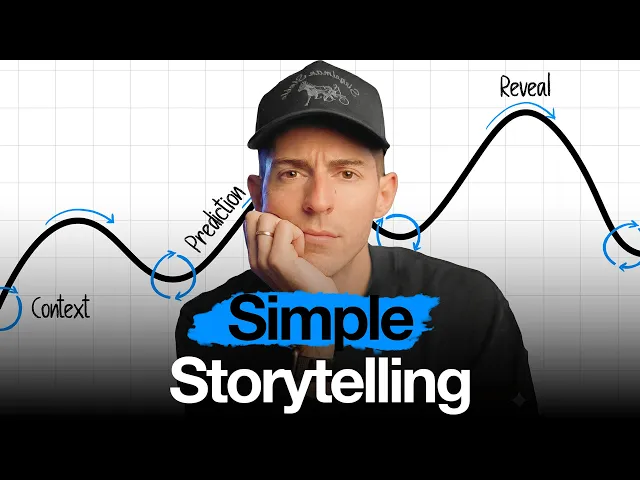
And this stuff is all I do all day long. Now, when you think about storytelling, you probably imagine this shape. This is the traditional story arc.
You've got introduction, rising action, climax, falling action, and resolution. It's what all our first grade teachers taught us about storytelling. And broadly, this is the path that most great stories follow.
But here's the problem. If we all know that arc is how most great stories are constructed, why is storytelling still so hard? It's hard because that broad arc doesn't actually give you the guidance on what to say or how to say it to keep a viewer interested.
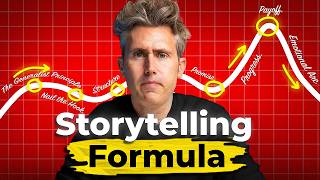
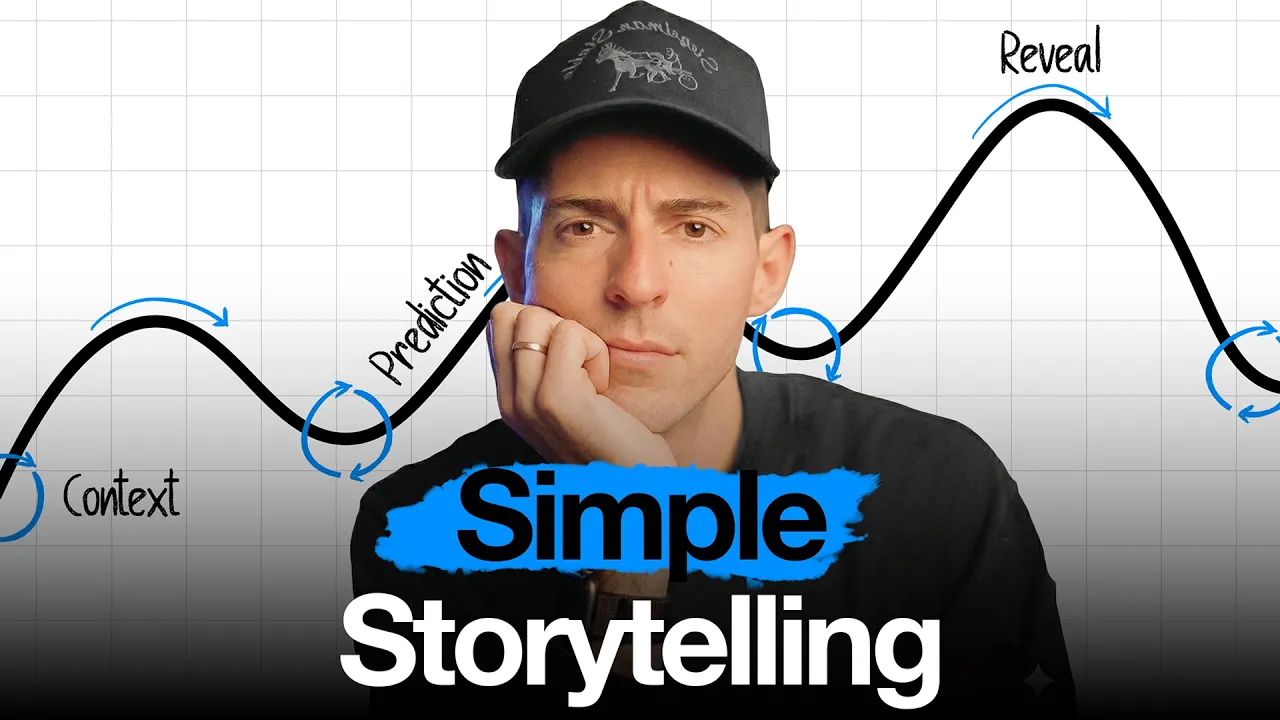
It's a nice framework, but it's actually not that helpful tactically. Here's what is helpful. If you metaphorically zoomed in to that story arc, you would notice a series of cascading loops.
These loops create many rise and fall actions that keep the viewer engaged through the broader arc. I call these story loops. Think of it like mini hills before the roller coaster hits the mega drop.
Instead of one giant up and down, all the great stories have tons of mini up and downs that live within each loop. You string together enough loops and you've got yourself a compelling story. And so, if you're trying to get better at storytelling, the million-dollar question really is this.
Is there a framework for figuring out exactly what to say in each loop so that a viewer can't stop watching or listening? And it turns out there is. If you understand this one fundamental framework, story loops, you could become a master storyteller literally overnight.
And I'm telling you, this doesn't just apply to nursery rhymes, and Disney movies. Every single type of story, public speeches, YouTube videos, sales presentations, emails, even campfire stories. They all get better when you understand how to think in story loops.
So, in this video, I'm going to break down how the story loops framework actually works, a few different examples of it in action, and then I'm going to share my tactical steps for how you can apply it in your own content. All right, let's dive in. Every story loop is made up of just two parts.
The first half is the opening of the loop. This is the context. And the second half is the reveal, the closing of the loop.
So the loop gets open with context and closed with the reveal. As soon as one loop closes, another loop opens. And this continues for the entire story.
Now, here's how these loops actually work in the viewer's brain. This is super important. First, you say or show something to set context.
This can be an establishing fact, an opening question, or a declarative detail. Once the viewer hears or sees that context, their brain tries to process what it means. At this point, once the initial context has been communicated, one of two things is going to happen.
Either the viewer doesn't understand the meaning of what was said. They get bored, they get confused, and they churn out. Or the viewer does understand the meaning of what was said, they get curious, and their brain starts predicting what they think will happen next.
So, this first half of the loop is all about clarity and understanding. Did you say or show context in a way that the viewer can understand it or not? For example, let's say I started a story with something like this.
The bear parked quickly. The unicycle flew in the air. The red cabin swayed in the wind.
Trees rustled. The hollow was still. Now, these couple sentences I just said make zero sense.
You're listening and trying to connect what those sentences mean and how those details connect together. The bear parked what? What does a bear in a unicycle and a red cabin have to do with each other?
Do these things even go together? You're asking yourself questions, but these questions are because you're confused. The point is that was an example of a bad story loop intro.
If a story started out this way, you would lose interest almost immediately because you're completely confused as to what this means and why those sentences were strung together. Now, instead, imagine I started that same story like this. There was a red cabin swaying in the wind.
A bear walked out of it. He got on his unicycle and started riding into town. Now, this is a lot more clear.
If you're curious, you're asking yourself, why is there a bear riding a unicycle? what is he going to do when he gets to town, etc. These are questions, but not from a lack of clarity, from a source of curiosity.
And that's the big difference. Viewers only have so much leash for confusion in a story. The context part of the loop has to be clear enough so they can get curious in the first place.
So, it sounds pretty simple, but this is the first half to all story loops for every story. This fundamental clarity point is so critical. Okay, so the context has been set, the curiosity has been peaked, and the viewer is interested in finding out what comes next.
Here comes the second half of the story loop, and this is really where the money is made. Once that initial context is set and clear, the viewer's brain is going to start predicting what it thinks will come next. That proactive prediction is curiosity.
If you're good at telling a story, the viewer will keep themselves focused because they're so interested in what's going to come. Now, once you set the context and you get into the second half of the story loop, there's only five different scenarios that could happen. A.
The reveal is worse than expected. B. The reveal is about neutral or equivalent to what was expected.
C. The reveal is better than expected. D.
The reveal is unexpected but in a confusing way. And E. The reveal is unexpected but in an intriguing way.
So, you set some context. The viewer predicts what will happen. And then you make some reveal.
And these are the five types of reveals. Now, here's what actually happens in each scenario. And I promise this will be a light bulb moment as soon as you hear it.
When the reveal is worse than expected, the viewer will tune out and stop paying attention immediately. When the reveal is about equal to what was expected, the viewer won't bounce, but their attention will start fading quickly, and so it needs to be recaptured as soon as possible. When the reveal was better than expected, dopamine releases in the viewer's brain, and they keep paying attention.
When the reveal was unexpected but confusing, the viewer tunes out and stops paying attention immediately. And when the reveal was unexpected but intriguing, dopamine releases in the viewer's brain and they keep paying attention. So, for our example with the bear and the unicycle, let's go through each of these five scenarios and think which of the five would be interesting enough to keep you watching.
Remember the first half of the loop, the context was this. There was a red house swaying in the woods. A bear walked out of it.
He got on his unicycle and started riding into town. Now, I want you to pause the video for just a second and ask yourself, what do I expect to happen next in the story? Cuz this is really what people are doing in their brain when they watch or listen to a story.
They hear something and then their brain predicts what they think will happen next based on the context they heard. So, pause the video and just think, guess what you think will happen. Okay, now that you have that in your head, I want you to compare how interesting your scenario is against the five different scenarios that I'm going to walk through.
Okay, so first scenario, imagine this is where the story went. This is what the reveal was. There's a red cabin in the woods.
A bear walked out of it. He got on his unicycle and started riding into town. As the bear pedal, he noticed some potholes on the ground.
He tried his best to avoid them, but the wheel kept bouncing up and down and it made for an uncomfortable ride. Now, this is an example where the reveal would be worse than expected cuz you're probably thinking, "Who cares at all how bumpy the road was? These are unnecessary, boring details.
This story sucks. " So, you get bored, wonder why you were wasting your time listening to that, and you'd bounce. Okay, scenario two.
Imagine if I said this. As the bear got to town, he approached a large black building. It was ominous.
The sign on the door said, "Honey. " The bear parked his unicycle and walked in. This is an example where the reveal is about in line with what you'd expect.
Based on the context I gave originally, most people would assume the bear would go into town and visit some place or some person. In this case, you're kind of interested in what's coming next, but it better be compelling or your interest will be fading fast. Okay, scenario number three.
Now, imagine that I said this. As the bear started pedaling, he noticed he was under attack. There were wolves that started chasing him on bikes that came out of nowhere.
They were throwing fireballs at him, and so he was pedaling as fast as he could, racing through the woods. Now, this is an example where the reveal is better than expected. It's still in the realm of possible outcomes, but you probably didn't see that coming.
And because of that, your interest is now more peaked and you're curious to figure out what's going to happen next. All right, fourth scenario. Imagine if I said this.
As the bear started pedaling, he quickly stopped and pulled out a fifth of Jack Daniels whiskey. He cracked the top, drank calmly, and slowly emptied the bottle into his stomach. Now, this is an example of an unexpected result, but one that's confusing and out of place.
An alcoholic bear. Who could have seen that coming based on the unicycle and the woods? It just doesn't make sense to have those details come next.
In other words, it's unexpected, but it's confusing. And because of that, you'd probably stop watching, think it was stupid, and bounce. All right, last scenario.
Imagine if I said this. As the bear started pedaling, he clicked his heels together, and suddenly the unicycle flew into the air. Immediately, the forest became small beneath him, and he was soaring through the clouds.
After flying for a while, he looked down and could see a castle in the distance as he started descending towards it. Now, this is an example of an unexpected reveal that is also intriguing. I guarantee nobody expected a flying unicycle and a magic bear that was going to go fight at the castle.
But since that was revealed, compared to the other five, you're now on the edge of your seat trying to find out what's going to happen next. As you can see, there are certain reveal paths that lead you to churning from the story automatically. And those are the ones where the reveal is worse than expected or it's unexpected but confusing and you don't want to keep watching.
There are also certain reveal paths that lead you to get super curious and want to keep watching at all costs. And those are when the reveal is better than expected or it's unexpected but also intriguing. And then the remaining path, the fifth one, is a neutral one.
It doesn't really kick you out of the story automatically, but your attention is going to start fading fast. And so the next loop better be one of the good ones. Now, these loops happen fast within a story.
Sometimes fully open and close in just a couple sentences. And this loop structure, context to reveal, is actually how stories progress under the hood. They're just a series of microl loops stitched together to create that big arc.
And when you zoom out, you can't tell the difference. Now, you may be thinking that bare example was kind of silly, but it turns out this fundamental framework holds true for every single type of story. Whether you're a business owner making a YouTube video, a creator making a Tik Tok, or just an average person telling stories around the fire, your ability to hold attention will come down to how well you can build your story loops.
And the macro point really is this. If the reveal of the loop is confusing, or a letown, the viewer is going to stop paying attention and bounce. If the reveal on the loop is exciting, interesting, or curiosityinducing, the viewer will keep paying attention because they're curious as to what's going to happen next.
It really is that simple. Now, to help make sure this video is actually tactical for you and not just strategic theory, I'm now going to walk through my exact tactical process for how I write scripts using this story loop method. And I'm going to share a couple different examples in wildly different categories so you can see how this process works in any niche.
By the way, guys, if you like how I think about this stuff and you want me to help you grow your business faster using these principles, I've got a bunch of links in the description for you to check out. All right, here we go. This is the exact process I use when writing scripts to make my video so good that viewers cannot stop watching or listening.
All right, the first step is just to look at a story and try to understand what are all the facts or takes I have at my disposal that could be interesting. And this process could be slow or fast depending on how much you know about the topic already. Now, second, I pick which of those facts that I think are most interesting that I want to include in the story.
And I do this by asking myself what things if I told the viewer would beat their expectation. These are the second halves of the story loops. These are the reveal facts.
Basically, I look at all the pieces that could make up the story and I ask myself, what would shock me if somebody told it to me? For a short form video, you've typically got three to four loops total to work with in the 45 to 60 seconds. So, I'm just looking for three to four interesting facts that would shock me.
For a long form YouTube video, you've probably got eight to 10 different story loops, maybe a few more because every point is its own loop. So, you have a few more to play with. Now, third, and this is really important, I take those interesting facts, the second half of my loop, and I work backwards to figure out what context would I have to provide to a viewer so that when they got to the loop, it connected and everything made sense.
It's kind of like starting at the end and working backwards. That's how you really build a story loop that is cohesive. And then lastly, once I have these loops built, I've got my first and second half kind of dialed, these separate loops, I figure out what order should I string the loops together to make one cohesive story arc that the viewer can follow.
And my whole goal when I'm stringing those together is to make sure the full story makes sense. Now, what do I mean by make sense? If there are details in a given loop that are required for someone to understand a later loop, those details have to come earlier, obviously.
So that's why most stories are explained top down with the broadest context first and the narrowest last. The broad context serves as a bedrock that you can use to explain more specific points later. So that's step four is me organizing.
So just to go through step one, look at all the points. Step two, figure out what's most interesting, aka the second half of my loop. Step three, figure out what context facts do I need to add so that when I do reveal those interesting pieces, they make sense.
And step four, how do I organize those different loops? So the holistic story also makes sense. So let's take a look at one of my short form videos where I ran this exact same process.
This one is called the future of home design. It's featuring this software called Zuru where it's almost like a video game drag and drop software with people can use to design their house. This video got a million views on each Instagram and Tik Tok certified banger.
And the process I used was literally word for word what I've explained here. So let's go through it. This is the future of home design.
It's called Zuru. and their AI software makes building your dream house feel like you're playing a video game. It's pretty wild.
Now, on the platform, you can literally drag and drop any component you'd want in your home. Walls, doors, windows, archways, high ceilings, staircases, whatever you want. Everything is completely customizable, and it feels like a video game because they literally built the entire platform on top of the same game engine as Fortnite.
But here's really why this is so powerful and unique. Because the software is built with AI, all of your design choices are automatically pressure tested for real building codes. The structural support, compliance, energy efficiency, weather patterns, it's all automatically checked and incorporated while you're designing.
And the plumbing, the light switches, the electrical, it's all done for you in a single click. This means literally anyone, even a 5-year-old, could design a real home that could actually be built safely anywhere in the world. But the thing is, the design alone is only half the story.
Because on Zuru, once you design the home you want, you can just press print and their robot factory will build and assemble the entire thing for you. And this was the part that really blew my mind. For every home or building, Zuru creates a digital twin of every single component and then feeds it into their fully autonomous factory.
And by fully automating the manufacturing, they're bringing the cost of home building down significantly. People are going to be able to build homes for 75% cheaper than normal. And get this, Zuru bought up a bunch of the Malibu beachfront property that was on sale from the wildfires.
And so their next project is to use this technology to rebuild the California coast. Okay, like I said, step one, research the story and try to figure out all the possible facts you could reference. I'm not going to list those here.
There's a lot. I'll link below if you want to watch the source video that I watched. It's like a 15-minute video.
There's a collection of things. There's a lot of facts, right? So, that's step one is to just look at all the facts.
Step two, extract out what the most interesting facts would be. aka what would drive the most shock if a viewer heard it and they were able to contextually relate. So, these are the four facts that I pulled out that I thought were most interesting.
The first one is that this software makes designing a home feel like a video game. The second one is that this software is so simple, literally a 5-year-old could design a full house that could actually be built. I thought that was super interesting.
The third one is that this software was built on the same video game engine as Fortnite. I thought that was pretty interesting. And the fourth one, the way this software actually does their manufacturing to build the houses make these houses 75% cheaper than all other building methods.
So all four of those are really interesting facts, right? And if told to the right viewer, that would really peique their interest, exceed their expectations, and make them keep watching. So think of those as the second halves of my four story loops.
Now I've got like what the reveal should be. So now I have to figure out what context facts do I say so that when I reveal those pieces, they make sense to the viewer. Okay, so we've got four different loops.
I'm going to break down each one of those loops in detail, the exact context that I included and why I included it. Okay, so for loop one, the payoff or reveal is that this home design software makes designing a home feel like a video game. So the context I wrote that came before that in the script was this.
This is the future of home design. It's called Zuru. Now, why did I write that sentence before the big payoff that this was a home design software that made designing a home feel like a video game?
In this case, in order for that reveal to make sense, I had to first set up context that something futuristic in the home design category was coming next. And so, that's why I said the future of home design. So, as the viewer, when you hear this, this is the future of home design, you start predicting what you think the future of home design might mean.
That's that context kicking into the prediction. Now, when I closed that loop and revealed the future of home design is like a video game, that either exceeded your expectations or was unexpected based on what you came up with. Either way, you're now really intrigued.
And so, that's all I had to do for the first loop. You see how I started with the end, I wanted to say it was like a video game. But in order to get that to be on target with your brain, I had to first say, "This is the future of home design to prime you directionally so that when I gave you a futuristic scenario, you understood what that meant.
" All right, let's keep going. Now, the second loop, the reveal, again, the second half of the second loop was anyone, even a 5-year-old, could fully design a home that could be built automatically. Now, the context that I had to include before I gave that payoff in the second loop was this.
Because the software is built with AI, all the different design choices are automatically tested against real building codes. The structural support, compliance, weather patterns, energy efficiency, it's all automatically tested and applied. and the plumbing, the light switches, the electrical, it's all added to your home design in a single click.
All of that, those three sentences were context required before I can make the claim that a 5-year-old could design their house and actually have it be built. Inherently, I knew that 5-year-old thing was really interesting. But in order for me to say that, and you actually believe it's viable, I had to add enough context before so that you knew, well, the things the 5-year-old wouldn't know about home building were taken care of automatically.
That's why I added all that context before. All right, loop number three. The reveal I wanted for the back half of loop number three was that this software was actually built on the exact same game engine as Fortnite.
Again, I thought that was a really interesting cool tidbit and takeaway that would exceed the viewers's expectation. But like the others, I needed some context before that so that when I said that, it could prove to be true. And so before that, I said and showed on the platform you can literally drag and drop any component you want in your home.
walls, doors, windows, ceilings, archways, staircases, it's all customizable. Now, again, the only way to make that claim that this was built on the same thing as Fortnite possible is by showing and saying video game like behavior so that you could see it and then my claim would stick. Again, it requires the context so that the reveal connects in a clarity perspective.
All right, in the last loop number four, the thing that I wanted the reveal for the second half was that people are going to be able to build their homes for 75% cheaper of any other method. And again, in order to make that claim seem viable, that's a big claim. In order to make that seem viable, I had to add a ton of context right before.
And the context I added was this. Once you design your home, you can literally just press print and a robot factory will build it for you completely automatically. For every home, Zuru creates a digital twin where they first print a 1/4 replica to test and make sure it's structurally sound before ultimately sending it to their fully autonomous factory to build the full thing.
Now, again, in this case, I knew that claim of 75% cheaper would exceed the expectations of anyone watching, but I had to first qualify it with the right context, or else it wouldn't map in their head. Okay, so hopefully this makes sense seeing it in action. All content, especially short form and YouTube videos, all map back to these loops.
That's basically contextual promise and then reveal judging back against that promise. Is it clear and possible, viable or not? If those details are too disconnected, people won't believe the reveal or claim you make.
Okay. Now, the fourth step in the overall process for how I do this, the last step, this is pretty easy, is figuring out how to sequence those loops. What I just went through, I have four different loops that we now need to sequence together in order to make a cohesive story.
Typically, the hook loop or the first loop needs to be the broadest possible thing that doesn't require any previous context because you can't start a story that requires previous understanding or it's not going to flow. So, that means loop number one, the one I went through, has to go first. From here, you have three choices.
You could either go with next, the 5-year-old being able to design the house, the platform being the same video game platform as Fortnite, or the manufacturing process being 75% cheaper. You have your pick between those three loops. So, which one do you go with next?
Well, in this case, if I wanted to use the 5-year-old piece, I would have to first explain how easy the platform was so that it would make sense. That means we need to go with the video game platform piece before the 5-year-old designing it. If we first establish that this is built on the same platform as a video game and that it is drag and drop, then it will make sense when we say, "Oh, it's so easy a 5-year-old could use it.
" Those don't work the other way. So, that means loop number three has to come next. First loop one and then loop three.
Now, we've got two loops left. We've got the 5-year-old thing or the manufacturing. If you think about holistically in the story, the 5-year-old thing has to do with designing the house.
Manufacturing has to do with making it. If you think in order of building houses, first you design and then you make it. So logically, the story should flow loop one, loop three, loop two, which is the 5-year-old thing, and then finally at the end, the manufacturing piece.
And this was word for word the exact order that I structured this video in. That order got 2 million views. Now, I know that when people watch these videos, the hardest part is trying to take the example that I give and translate it into an example that makes sense for you.
If you make short form tech, I literally just gave you the answer. But if you do anything else, I know and empathize that it can be difficult to listen to the framework and extract it. So, what I want to do is go through a completely different example, completely different sphere, and show you how that applies to this story loops framework as well.
All right, let's take the opening scene from The Dark Knight by Christopher Nolan. If you haven't seen this movie or this scene, it's the Joker, the Batman villain, and his gang of clowns robbing the bank, which sets up the entire rest of the movie. The first piece is Christopher Nolan, the director, had to figure out what his total super set of puzzle pieces were that he could use as interesting reveal points in the loops.
Now, because this is a madeup movie, those things could literally be anything. He's not researching. He's kind of coming up with these narrative arcs, and that's where the creative element in the storytelling really comes in.
What are those interesting reveals or interesting head fakes that you want to use? If you're writing a movie or a book, these could literally be anything. If you're making an educational piece of content, usually the set is a little bit more discreet, so it's easier to find all your options.
So, that's step one is to list the possibilities. Now, step two is to come up with what you think are most interesting. Now, after watching the intro of Dark Knight, Christopher Nolan used three reveals or three loop back halves that I want to feature.
The first one is the Joker and his team robbing a bank. The second one is the reveal that the bank is actually a mob run bank. It's not a normal bank, it's a mob run bank.
And the third, the real big one, the macro one, is that the Joker is a criminal mastermind. So Christopher Nolan basically said, as we come off the intro, if the viewer is aware of these three things and they believe they make sense based on the context we've set up, we will have won the intro and they will be intrigued to continue watching. And really those first two points, the fact they're robbing a bank and the fact that it's a mob bank, both kind of fuel the third macro point, which is the Joker is a criminal mastermind.
But just for sake of argument, keep with me. Okay, so that's step two in the process. Pick the interesting reveals.
Okay, so what does Christopher Nolan do now? Now he has to figure out what context does he show and say before those reveals so that when the viewer gets the aha reveal moment, it makes sense and exceeds their expectations. So, for the first loop, the fact that he's revealing the Joker and his team are robbing a bank.
This is all the context that he shares leading up to that moment. He starts off the scene with the Joker holding the clown mask. And then he gets into a car and he sees the clowns and they're cocking the guns getting ready.
Then he cuts to the scene where the two guys are ziplining across also wearing clown masks. At this point, you don't know they're robbing a bank. You just know they're going to do some job and you're guessing.
The brain is predicting what it thinks they're doing. He doesn't actually reveal that they're robbing a bank until 52 seconds in. So, this is the first kind of micro loop.
All that context visually in the movie is meant to try to get the viewer guessing as to what they're doing. You're asking questions. Why are they wearing clown masks?
What job are they doing? Will they be successful? That's the first kind of micro loop in the movie.
Now, the second loop is him subtly revealing that the bank they're robbing is not actually a normal bank. It's a mob bank. And this one doesn't fully close until after the intro later in the movie, but it's worth still discussing.
Anyways, in this case, Nolan's dropping some subtle contextual hints that you really wouldn't notice unless you were really looking for them. This is meant to be one of those, ah, like light bulb, I didn't notice that the first time I watched it, kind of reveals. So, when they're first trying to hack the phones on the roof, one of the clowns goes, "Oh, that's weird.
The outgoing call wasn't to 911. It was to a private number. " It's almost like a throwaway line, but that's adding context to the reveal that this is actually a mob run bank.
The other thing he does is he gives the bank manager a shotgun, which is very atypical for a bank manager. And then finally, the more clear one is when the bank manager comes out and says, "You have no idea who you're robbing. You have no idea who you're messing with.
" Again, all three of these are meant to be context clues that lead you to have the epiphany, "Oh, this is actually a mob run bank. The Joker really is crazy. " Now, the third loop, as I mentioned before, really is the big one.
And this reveal is that he wants the viewer to come away with the fact that the Joker is a criminal mastermind. He's unique. He's atypical.
He's a psychopath. And to do this, he adds a ton of context during the robbery that leads you down this path. For one, he shows the clown accompllices shooting each other as they complete the jobs.
Again, that's atypical for a robbery. Number two, he shows the Joker strategically using the bus to run over the guy that has the weapon pointed at him, which is like clever and shows this like sophistication and criminal mastery. Third, when the Joker leans down to talk to the bank manager, he pulls his mask off to reveal real face paint and real scars.
Again, leading to this idea that like this guy is wild. He does his own jobs. He's a crazy person.
Fourth, the grenade that the Joker puts in the bank manager's mouth is connected via a string to his suit, which also shows this guy's crazy. Who would do that? And then when the grenade finally pulls, it's not explosive.
It's a smoke grenade. Again, shown that he is manipulating people mentally. Again, the point of all that context is so that it leads the viewer to the reveal that the Joker is a psychopath mastermind.
And that all happens over time in the intro as those context clues are revealed. All this was in the first 5 minutes of the movie. You could say it's only one loop, but really it's three loops in the first 5 minutes.
By the end of the 2 and 1 half hour movie, there are dozens and dozens of microl loops that have all stacked together to map the full arc of the movie. And this is how great storytelling works. You start with the interesting reveal points and you work backwards to figure out what context do I need to show so that when a viewer gets to that reveal, it exceeds their expectations or they have an aha moment.
All right guys, that is all I've got for this video. As a recap, the base building blocks of storytelling, really the only framework that matters are loops. Each loop is just a context opener and a reveal closer.
If you want to improve your storytelling, you first have to understand what the actually interesting reveal facts are and then work backwards to figure out what context you need to add so that when a viewer gets there, the reveal makes sense. The most common mistake I see with storytelling is that the context provided is disconnected or unclear when related to the interesting fact. So you say something, reveal something else, but the connection isn't clear.
When that happens, the viewer doesn't have the epiphany moment. If you think about stories in these terms, through story loops, I guarantee your storytelling will 10x immediately. As always guys, I'm really trying to push the envelope with respect to content strategy and storytelling.
You can hear in my voice, my voice is completely gone. I've been working all day on this video. If you're trying to grow faster on social media and YouTube and you want to use advanced strategies that are not obvious to the average person, this channel will be the best one you could watch.
And if you're a business owner, make sure you join Wavy World. I have a link in the description. It's a completely free community for entrepreneurs.
We have 65 free trainings, 38,000 other entrepreneurs, all working together to improve their content on social media and YouTube. If you're looking for a cohort or a peer group to get feedback from, and you also want to learn the advanced stuff that I'm teaching, it's completely free. There's a link in the description for you if you want to join.
All right, guys. We will see you on the next video. Peace.