Technology has the power to transform student learning. But what happens when it doesn't? What happens when that class set of iPads is nothing more than a class set of really expensive digital worksheets?
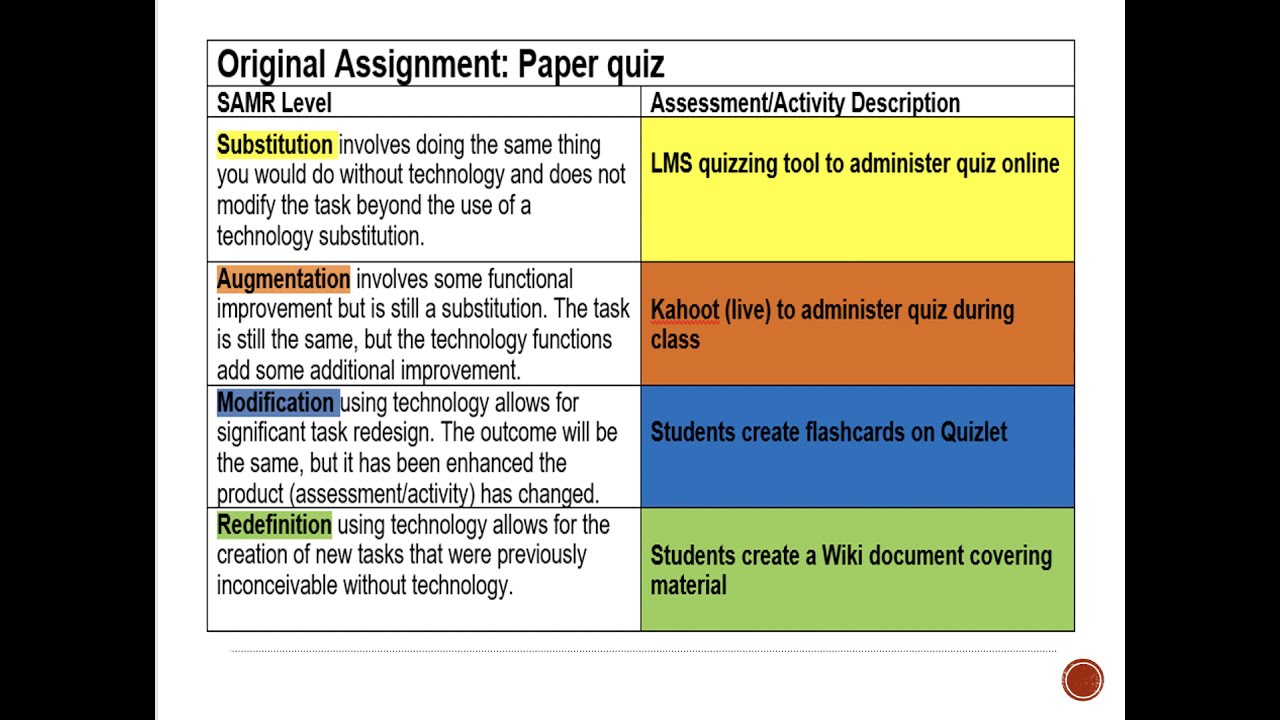
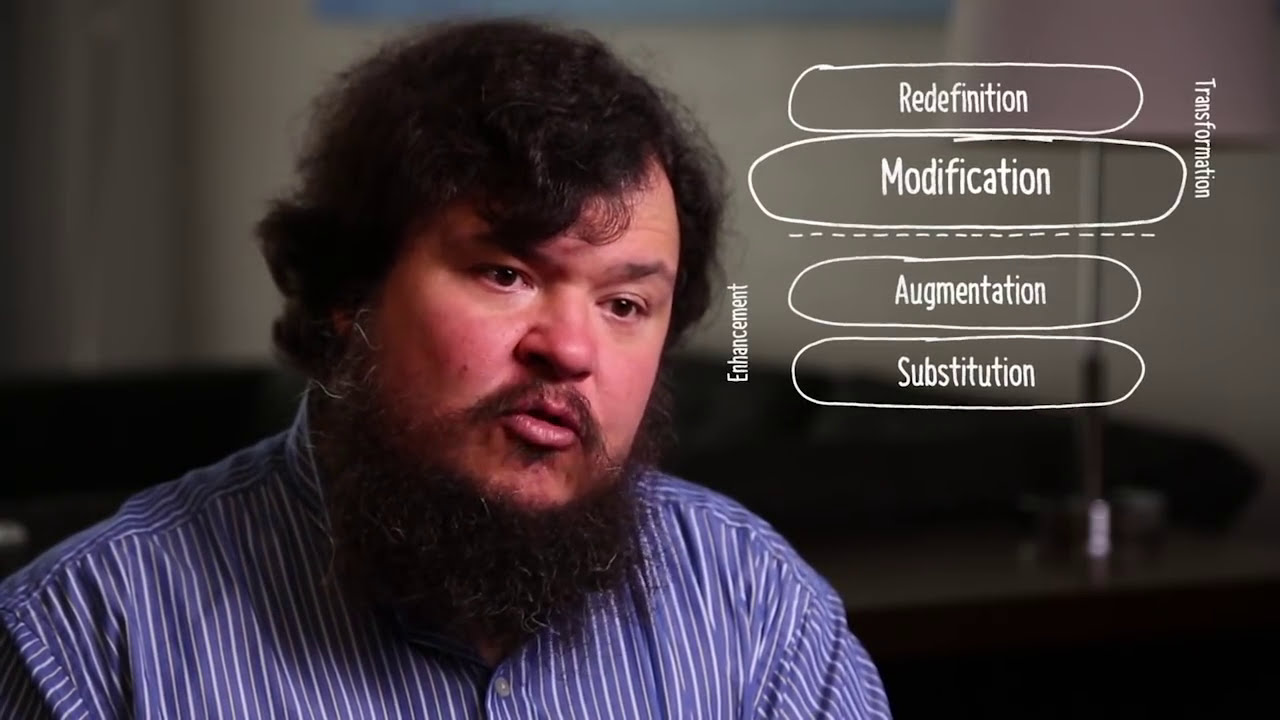
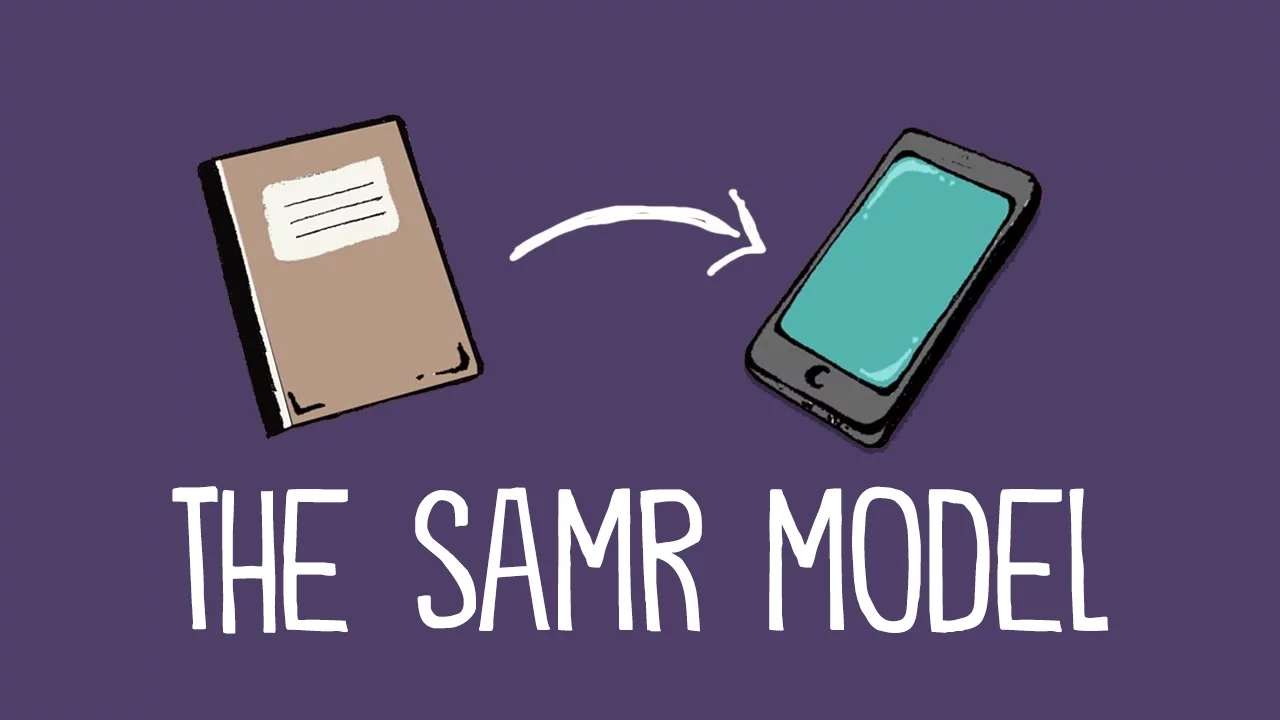
The SAMR model tackles these issues with a focus on the intersection of technology and pedagogy. This model has four different layers with the first two focusing on enhancing the learning task while the next two layers focus on actual transformation. With substitution the technology acts as a direct substitute with no significant change.
A student typing an essay on a computer is merely swapping out paper for a laptop. With augmentation the technology acts as a substitution with some functional improvement. So that same essay is now done on the google document with the ability to have classmates leave comments on one another's work.
With modification technology allows for significant task redesign. So that same essay is now a blog post. Students are doing research online, editing on a shared document, and publishing to an authentic audience.
It is no longer an essay. It is an article crafted for the world. With redefinition the technology allows for new tasks that were previously inconceivable.
So that same essay is now a multimedia package. Students are not only researching online but connecting with experts through video conferencing. They are co-writing their posts with a digital blogging cohort from around the world.
They are producing not only a blog post but also a corresponding podcast and an edited video. Notice that the higher up you move through the SAMR model the more transformative the technology task becomes both in terms of multimedia content creation and in terms of communication with the rest of the world.