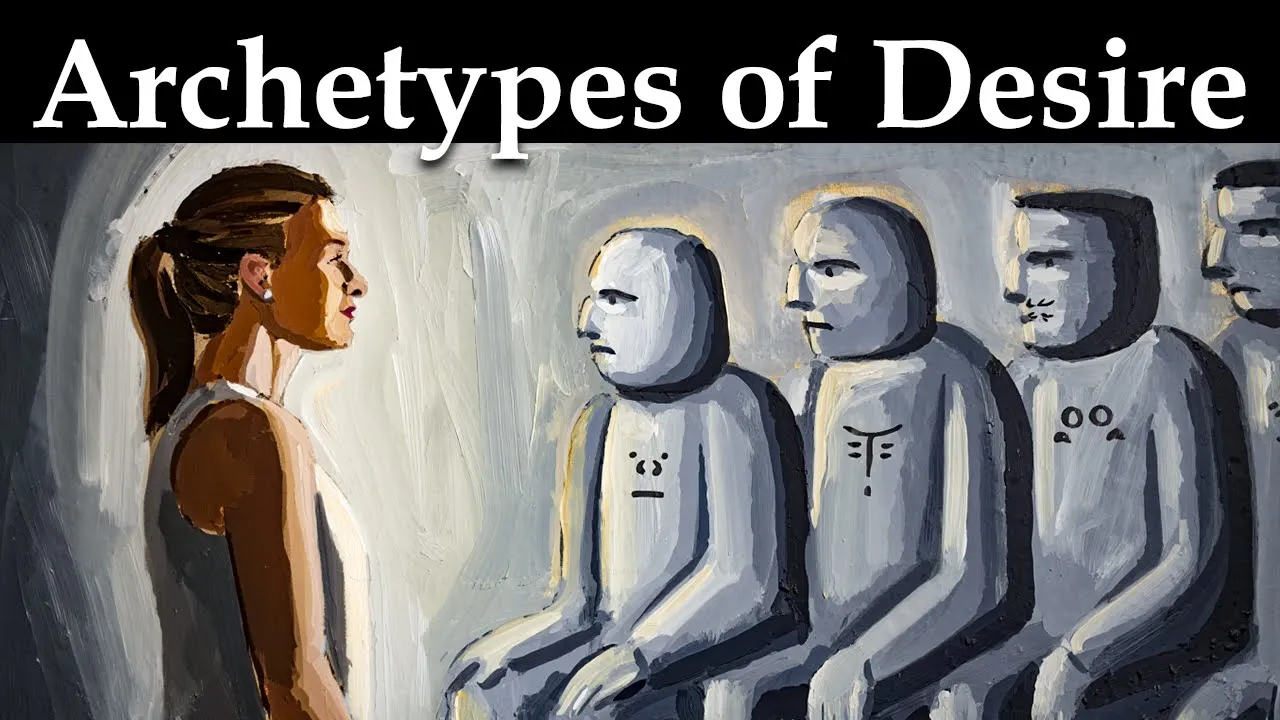
Attraction has never been about beauty. Not really. Beneath the surface of glances and gestures lives a far older intelligence, one that does not seek a face, but a symbol.
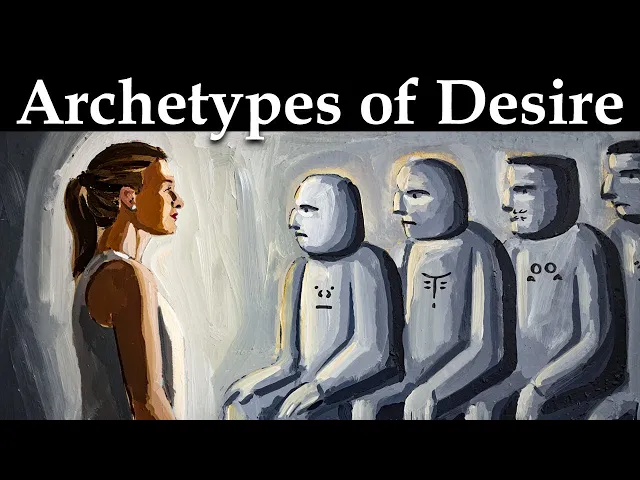
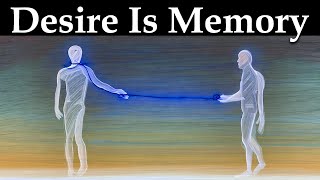
When a woman feels drawn to someone, it is not the person she meets first. It is her own forgotten energy mirrored through another. Jung called this the animus, the inner masculine, the spirit that lives inside the feminine soul, shaping her desires, ideals, and boundaries.
She does not fall for a man. She falls into conversation with the unspoken man within herself. This is the first brutality to realize that what feels like love is often recognition.
The psyche seeing its missing half in human form. When a woman says, "I don't know why I'm drawn to him. " What she means is that her unconscious has recognized itself before her ego has had time to understand.
The body leans forward before the mind can intervene. If this feels familiar, stay with me because this attraction isn't random. It's coded.
Each woman's animus carries the imprint of her early encounters with the masculine. Father, authority, voice, presence, distance, the way he looked at her or didn't, the way he made her feel powerful or small. These early energies form the architecture of her internal masculine.
Later in life, she meets men who awaken those inner structures. Some mirror the protective animus, the man who brings direction, reason, stillness. Others trigger the tyrant animus, the man who dominates, withdraws, critiques.
Either way, the attraction is not between two people. It's between two halves of a single psyche reenacting an ancient ritual of healing and control. This is the brutality Yung saw in love that the heart is often just a theater for the unconscious.
When a woman feels safe with someone, it is usually because he reflects a familiar pattern, not necessarily a healthy one. The psyche does not prioritize happiness. It prioritizes recognition.
What feels like chemistry might actually be repetition, the comfort of the known pain. This is why attraction can be so confusing. The body responds as if it's meeting destiny, while the soul might just be circling an old wound.
Young said, "Until you make the unconscious conscious, it will direct your life, and you will call it fate. " A woman's attraction then is both a compass and a trap. It points toward her own unintegrated energies, what she has suppressed, denied, or disowned.
When she falls for a man who seems emotionally distant, it might be the part of her own psyche that has become numb to feeling. When she falls for a man who is powerful and certain, it may be the lost confidence she has never allowed herself to embody. When she craves the mysterious one, it is often her own mystery asking to be lived, not observed.
Every attraction carries a message. This is you unseen. The tragedy is that we often chase the messenger instead of the message.
She tries to possess the man instead of integrating the energy he symbolizes. And so she becomes trapped in the endless cycle of attraction and disappointment because the psyche keeps sending the same lesson in different bodies until she understands it is not about them. It is about her.
But here's the paradox. The animus can be cruel. It doesn't care about comfort.
Its goal is wholeness, individuation. It will lure her toward experiences that shatter her illusions of love so that she can meet the raw truth beneath them. That's why the most powerful attractions are also the most painful.
They pull her into the fire of transformation. They demand that she outgrow her fantasies of being saved and instead become the one who saves herself. And in that furnace, something happens.
The projection begins to burn away. The man she once idealized becomes human again. Flawed, uncertain, real.
And in his fading glow, she begins to see what she was really searching for. Her own authority, her own voice, her own animus, matured and internalized. This is the psychological death Yung described.
The moment when love ceases to be worshiped and becomes mirror. At first she mourns. Then she sees.
She realizes that every man she was drawn to was a chapter in her dialogue with the inner masculine, a correspondence between her soul and its counterpart. To love consciously is to read that correspondence instead of acting it out. And yet few manage this without loss.
Because to stop projecting is to stand alone. To feel the vast silence where fantasy once lived. The animus no longer lives outside of her.
And that absence can feel like emptiness. But it is not emptiness. It is spaciousness waiting to be filled by her own presence.
That is the second brutality. To discover that love's real purpose was not to complete her but to reveal her incomp completion. Still the psyche does not evolve through theory.
It evolves through heartbreak. Each attraction that fails in outer form succeeds in inner purpose. Each loss returns another piece of her energy back home.
But she doesn't see that yet. Not at first. She only feels the ache, the unbearable silence after the projection dissolves.
She calls it heartbreak. Young would call it initiation because something in her is beginning to wake. a new relationship not with a man but with the masculine principle itself.
The power to act, to decide, to speak. And in that awakening lies the seed of something rare, a woman who no longer needs the reflection to feel whole. But before she reaches that state, the unconscious still has more to teach her.
There is another layer to attraction, one older than the animus, older than the personal psyche, a mythic layer, a cosmic pattern. And it is there that the real brutality begins. Attraction at its deepest level is a ritual of opposites.
It is not a meeting between two people, but between two archetypal forces that have been divided since the beginning of time. [clears throat] The feminine longs for the masculine, not because she lacks it, but because her nature is to unify. In Yungian terms, this is the dance of the conunctio, the sacred union of opposites.
The woman who feels Derusa magnetically drawn to a certain man is not obeying emotion but mythology. The psyche uses him as a living symbol, a gateway toward her own evolution. But the path is brutal because the psyche does not differentiate between pleasure and growth.
It will choose whatever awakens her. Sometimes what awakens her is pain. The archetypal feminine represents receptivity, intuition, creation, the womb of life.
But without the animus, this energy can drift, dream, dissolve. It needs structure to channel its power, purpose to give form to feeling. So the unconscious sends her the image of a man who embodies that structure, the disciplined, directed, rational energy she has not yet claimed.
At first this feels intoxicating. Finally she feels grounded. But slowly she realizes that what she admired in him must be built within her or she will forever orbit his light.
The psyche in its merciless wisdom ensures that every attraction that begins in imbalance ends in collapse. It does this not to punish but to integrate because the feminine is not meant to remain passive. The union she seeks is not external.
It is internal. A merging of feeling and action, intuition and logic, chaos and clarity. And yet few understand this.
They think attraction is about compatibility, chemistry, timing. But archetypally it is about wholeness trying to find itself. To be drawn to someone deeply and inexplicably is to be summoned by your own unconscious, to confront what you have exiled within yourself.
That's why the most magnetic people are often the most dangerous. They awaken what has been sleeping. The psyche does not care if the person is right.
It only cares if they are potent enough to stir transformation. And so the woman finds herself torn between fascination and fear, drawn toward what she cannot control. The closer she gets, the more her inner world destabilizes.
The shadow surfaces, old wounds reopen. The mind rationalizes, but the body knows something ancient is being invoked because the archetypal masculine is not gentle. It demands sacrifice of illusion, of comfort, of dependency.
To unite with it, she must give up the safety of innocence. This is why attraction feels like danger. The unconscious knows that love, real love, annihilates who you were.
And yet she moves toward it anyway. Because beneath the fear is a deeper instinct, the call to wholeness. Thema and animus do not seek romance.
They seek reunion. They use love as a disguise to lure the soul into evolution. And in that disguise lies the cruelty and beauty of human connection.
She may think she is searching for the one, but the one she seeks lives within, waiting to be recognized. Still, the journey continues because even when she awakens to this truth, attraction does not disappear. It transforms.
It becomes less about possession and more about reflection, less about needing and more about knowing. But that knowing has a cost because once you see through the projection, you can never fall in the same way again. You can love, yes, but never unconsciously.
And that changes everything. Attraction when seen through this archetypal lens is not a romance. but an initiation.
The psyche stages encounters not for comfort but for confrontation to bring the hidden into light. Every powerful attraction is an initiation disguised as a person. The woman thinks she is stepping into love, but she is actually stepping into herself.
Jung understood this as the path of individuation. the slow, often brutal process through which the psyche becomes whole. To individuate is to stop seeking completion in others and begin embodying the opposites within.
But first, the opposites must collide. When the feminine encounters the masculine energy that mirrors her own unconscious, it provokes chaos. The Animus awakens.
Opinionated, assertive, sometimes ruthless. It stirs thoughts she never dared to speak. Ambitions she repressed to stay likable.
Anger she buried to remain gentle. The early stages of this awakening can feel like madness. She begins to argue with herself, question her values, doubt her instincts.
What she doesn't realize is that she's finally meeting her own authority. This is the stage Yung described as animous possession. The inner masculine, long ignored, suddenly takes over.
She might become excessively rational, critical, detached, mirroring the very qualities she once projected onto men. It's an overcorrection, a necessary swing of the pendulum before balance can be restored. Every inner integration begins in extremity.
The psyche exaggerates what has been suppressed so she can finally see it. But this possession, painful as it is, has meaning. It reveals that attraction was never about the man.
It was a summons from her own depths. The man was merely the key. The door was always internal.
To integrate the Animus, she must first wrestle with it. She must confront her own inner voice of command, the one that tells her who she should be, who she must please, what she must sacrifice. For many women, this voice sounds like patriarchy.
But beneath that, it is something older. The archetypal masculine distorted by fear. Integration is not rebellion.
It's reconciliation. She begins to realize that the masculine is not her enemy. Structure is not oppression.
Direction is not dominance. The true animus does not suppress the feminine. It serves her.
It takes her intuition and gives it form. It takes her empathy and gives it boundaries. It takes her chaos and shapes it into creation.
When this understanding dawn, attraction begins to change. She no longer seeks the man who overwhelms her. She seeks the one who reflects her clarity.
She is no longer magnetized by the ones who withhold love because she no longer withholds it from herself. Her body no longer confuses danger with excitement. The old ache for rescue fades, replaced by curiosity.
A subtler, quieter draw toward those who mirror her wholeness, not her wound. This is the alchemy Jung called the sacred marriage. Hi Gamos.
It is not a fantasy of eternal romance but the psychological union of opposites. The inner marriage between the feminine and masculine, between being and doing, feeling and knowing, surrender and control. But before that union, there is always the descent.
The psyche cannot integrate what it idealizes. It must first destroy the fantasy. The woman who has worshiped the masculine must face its shadow.
The manipulator, the tyrant, the silent one. Only then can she see the masculine as human, both dark and light. This confrontation often happens through heartbreak.
The man she loved disappoints her, betrays her, or simply withdraws. Her image of him shatters. [clears throat] But in that shattering, the projection collapses.
She no longer sees him as God or devil, just man. And in that moment of disillusionment, the Animus returns home. It is a violent grace.
Every heartbreak is a reclamation of energy once projected outward. What she thought she lost in him, she gains in herself. The voice she once waited to hear from another begins to rise within her.
The feminine becomes whole not by finding the perfect masculine but by remembering that she carries him inside her. This is the secret brutality of attraction. It gives but only after it is taken.
It destroys illusion to reveal essence. And yet many resist this stage. They cling to fantasy, chase another mirror, reenact the same pattern.
The psyche, patient and relentless, repeats the lesson until it is learned. Each attraction grows more intense, each heartbreak sharper, until she finally asks the only question that frees her. What is this trying to show me about myself?
When that question appears, the transformation begins. She begins to notice the deeper rhythm. The way every attraction has been leading her inward.
The way every relationship has been a chapter in herself becoming. The psyche uses love as its language. Desire is its vocabulary.
Attraction its syntax. Through them, it tells the story of the soul's evolution. But few translate it.
Most only feel the heat. Never hearing the message beneath. The woman who begins to listen transforms her pain into meaning.
She starts to see that every person she has ever loved was a mirror reflecting an inner fragment. The nurturer, the critic, the protector, the wanderer. And when she gathers these fragments, something extraordinary happens.
She begins to feel full. Not perfect, full. From fullness, love no longer feels like hunger.
And that changes everything. Once she reaches this stage, attraction becomes a choice, not a compulsion. She can admire a man's strength without collapsing into it.
She can feel chemistry without surrendering consciousness. She can love without losing the boundaries that define her. This is what Yung meant when he said the goal is not perfection but wholeness.
Wholeness is the capacity to hold paradox to contain both need and independence, tenderness and power, vulnerability and authority. In this state, attraction becomes sacred again, not because it saves, but because it awakens. Yet even here, the psyche continues to test her.
The deeper she integrates the animus, the more she encounters its counterpart, the shadow. The shadow is everything the conscious self denies. For the feminine, it often hides behind sweetness, empathy, or patience.
The culturally celebrated masks of goodness. But beneath them live the disowned instincts. Rage, desire, competitiveness, hunger for control.
Attraction often carries the scent of the shadow. We are drawn not only to what completes us, but to what we suppress. A woman who denies her aggression may find herself drawn to men who embody it.
A woman who hides her sensuality may obsess over those who flaunt theirs. The psyche uses attraction as a smuggling route, slipping forbidden parts of the self into consciousness through fascination. This is why certain people feel radioactive, both irresistible and terrifying.
They hold our shadow traits like a mirror we cannot look away from. If she dares to look, to really look, she realizes the truth. The man who unsettles her most is carrying the part of her she was taught to fear.
And here lies the final brutality. To see that love is not between opposites, but between reflections. Every person we fall for is an echo of something unclaimed.
When she meets the shadow consciously, the polarity shifts again. Attraction loses its violence. It softens into recognition.
The electric charge of obsession dissolves into calm understanding. She can now look at what once ruled her and simply say, "I see you. " That sentence quietly spoken within is liberation.
Because the moment you see the unconscious pattern, it can no longer control you. From this place, love becomes a mirror, not a maze. The feminine, now integrated with her inner masculine, stands as both ocean and shore, fluid yet defined.
She no longer seeks the storm to feel alive. She becomes the weather itself. Her attraction now carries discernment.
She no longer asks, "Who will complete me, but who will meet me? " In this shift, she steps out of mythology and into maturity. But maturity does not end the myth.
It rewrites it. Because the psyche never stops creating. Even when she reaches wholeness, life will send new mirrors, new symbols, new lovers, each carrying another nuance of her unfolding.
Wholeness is not a destination but a rhythm. Expansion, collapse, integration, expansion again. And through it all, attraction remains the teacher.
To feel drawn towards someone is to stand at the edge of self-discovery once more, to resist the urge to possess and instead observe the reflection. That is the art of consciousness. Jung knew that the gods of love are merciless.
They do not reward comfort. They reward awareness. Every soul that dares to love deeply becomes an apprentice of its own unconscious.
And so the woman walks on, no longer as seeker, but as knower, no longer begging love to define her, but allowing love to reveal her. The animus within her has matured from tyrant to guide, from voice of judgment to voice of direction. The masculine now serves her intuition rather than silencing it.
Together they form an inner union that radiates outward, quiet, grounded, magnetic. People sense it. They call it confidence, but it's something older, integration.
She has become her own polarity, receptive and directive, yielding and firm. [clears throat] And because she has made peace with her inner masculine, she can finally meet the outer masculine without illusion. She no longer needs him to play God, savior, or teacher.
She meets him eye to eye. Two souls, two mirrors, two evolving centers of consciousness. Love in this form is not the loss of self, but the meeting of selves.
It is no longer the brutal pull of projection but the gentle recognition of presence. Yet even here the psyche whispers there is more because consciousness is infinite and wholeness is not a finish line. It is a horizon that moves as we move calling us further into our own mystery.
And so even in understanding the brutal psychology behind attraction, there remains wonder, that eternal curiosity that keeps the human heart open. Perhaps that is the quiet truth Young wanted us to discover. That love was never meant to save us.
It was meant to wake us. And the waking never ends.