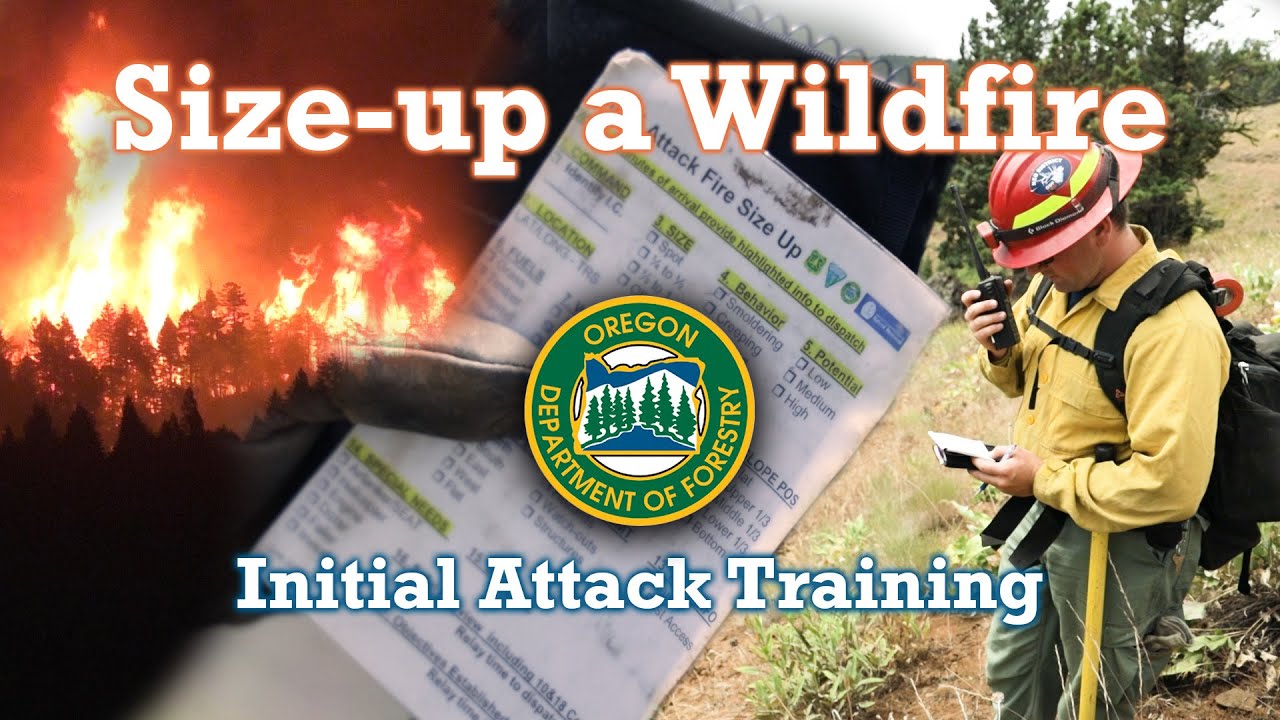
[Silence] [Music] In this video you will learn about fire behavior and why an understanding of fire behavior is critical for fire managers. You will learn, one, how is fire behavior related to the fire environment, two, what are the basic measures of fire behavior, three, what are the parts of a fire, four, what are the types of fire and their associated fire behavior five, what are the three types of crown fires. One, how is fire behavior related to the fire environment?
The three principal environmental elements affecting wildland fire behavior, which are found in the fire environment triangle are fuels, weather, and topography. The changing states of each element and how they interact with each other determine the behavior of a fire. For example, wind-speed influences how fast fire will spread, and the amount of fuel available to burn influences how hot a fire will get.
Two, what are the basic measures of fire behavior? To understand the relationship between the fire environment and fire behavior, we first need to understand some basic measures of fire behavior. I will introduce four basic concepts in this video that are used by fire managers to describe fire behavior: rate of spread, fire line intensity, flame length, and flame height.
Let's start with rate of spread. Rate of spread is basically how fast the flaming portion of the fire is moving. This is expressed as an average distance over time such as feet per minute or chains per hour.
A chain is a popular and convenient unit of measurement used to describe distance with one chain equal to 66 feet, 80 chains equal to 1 mile, and 10 square chains equal to 1 acre. The rate of spread is different for different parts of a fire which is explained further later in this video. All parts of the fire environment triangle can influence the rate of spread.
For example, high wind speeds, steep slopes, and low fuel moistures can lead to rapid rate of spread. More details on fire environment are introduced in other videos. There are several ways to measure the intensity of a fire but we will only introduce fire line intensity here.
It describes the rate of heat transfer per unit length of the fire line which is expressed as kilowatts per meter or BTU's per foot per second. A BTU, or British thermal unit and how it is used in intensity equations is further discussed in later videos. Characterizing the intensity of both prescribed and wildland fires is important information for fire managers to prepare for expected fire effects and suppression planning.
Again, all legs of the fire environment triangle can influence fire intensity. For example, low relative humidity and heavy fuels can lead to high fire intensity. The last two concepts i will introduce are flame lengths and flame height which are commonly used as surrogates to describe fire line intensity because they're easier to observe and measure in the field.
The flame length is the distance between the flame tip and the base of the midpoint of the flame at ground level. Flame height is only measured at the leading edge of the front of the fire and is the average maximum vertical extension of the flame. All legs of the fire environment triangle can influence the flame height.
For example one would expect high flame lengths on steep slopes with tall vegetation, high winds, and low relative humidity. Three, what are the parts of a fire and how do they behave? Most wildfire start at a single point called the origin and spread most rapidly in the direction of the wind or uphill, generally forming the shape of an ellipse.
The fire perimeter is the edge or boundary around the fire. The fastest spreading part of the fire is called the front or head and a fire spreading with the wind is called a head fire. The slowest spreading part of the fire opposite the head is called the back or rear.
Backing or heel fire is normally moving into the wind and/or downslope. The sides of the fire or flanks will spread at intermediate rates and burn outward at right angles to the wind or slope and this is called a flanking fire. It is important to note that the behavior of backing or flanking fires can change quickly with a wind shift, changing the slow rate of spread flanking fire into a fast rate of spread head fire.
Fires can take other shapes depending on fuels, topography, and weather. Fingers are the long, narrow extensions of a fire projecting from the main body. The unburned indentations in the fire perimeter formed by fingers are called pockets.
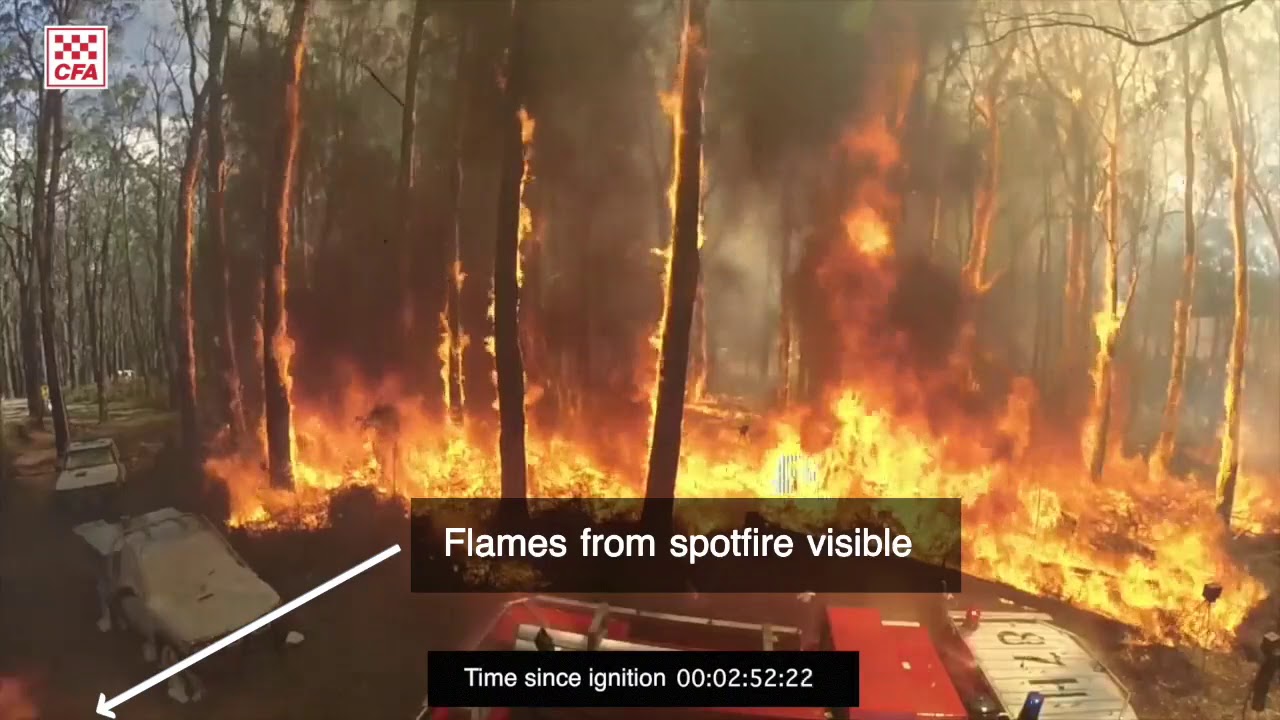
An island is an area of unburned fuel inside the fire perimeter and a spot fire is a new fire ignited outside the main fire perimeter. Four, what are the types of fire and their associated behaviors? There are three types of fire, ground, surface, and crown.
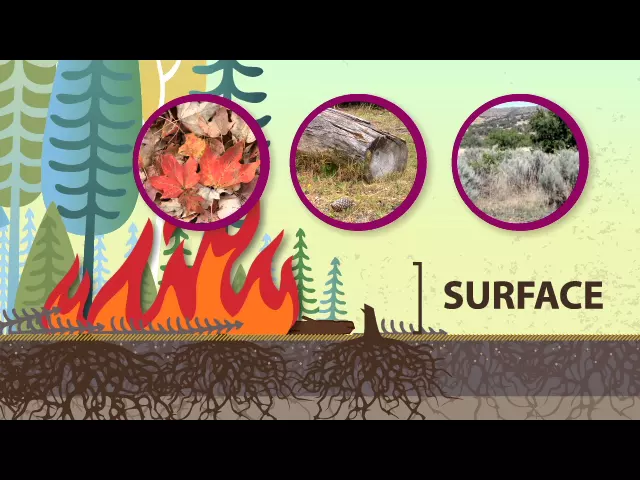
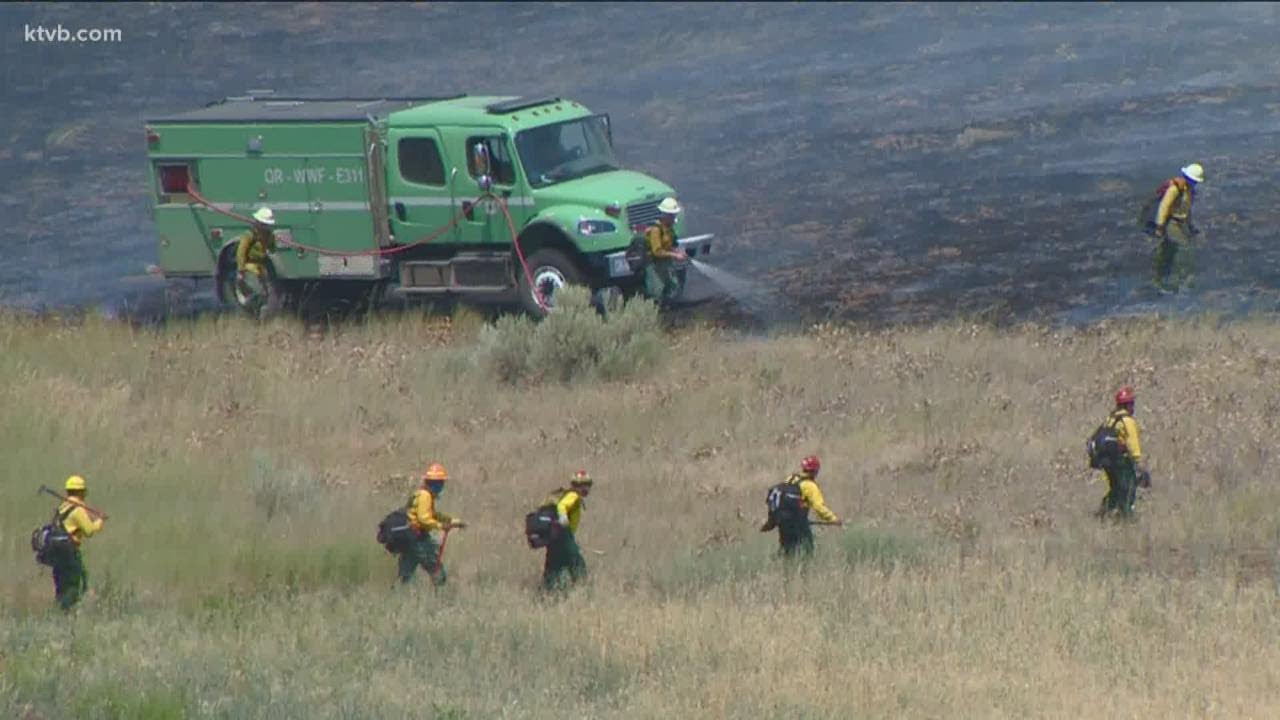
Ground fire spread primarily by smoldering combustion through subsurface fuels including deep duff, peet, roots, rotten buried logs and other organic material. Most fires have a ground component to them when duff burns. Ground fires have a slow rate of spread.
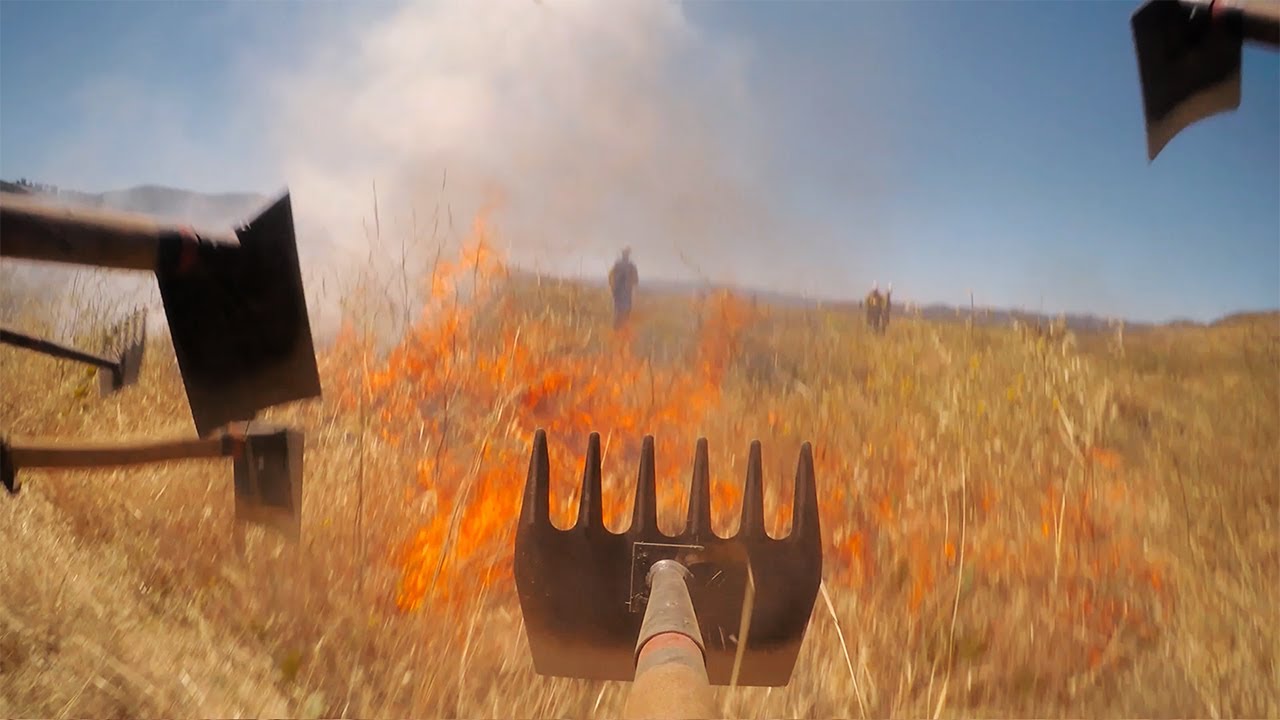
An ecosystem that supports ground fires is swampland in Florida. Surface fires spread by flaming combustion through fuels at or near the surface including needles or leaves, grass, woody debris, small plants, and shrubs. Surface fires have a higher rate of spread then ground fires.
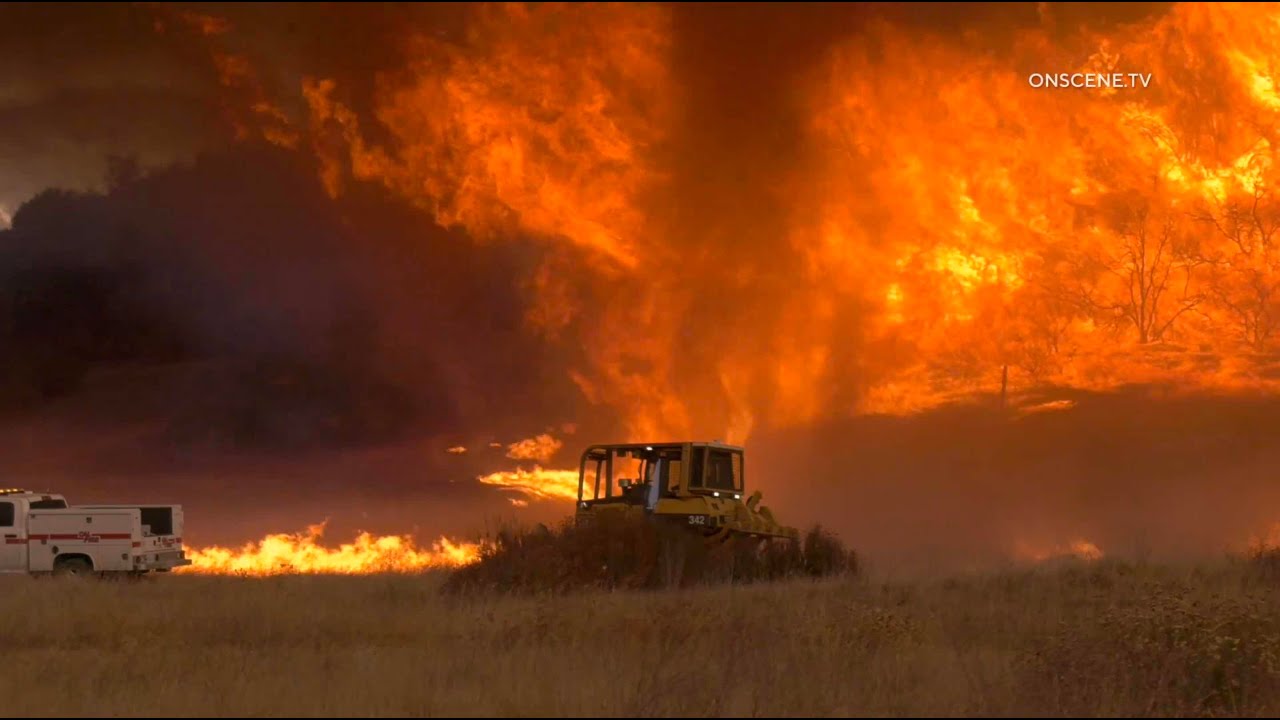
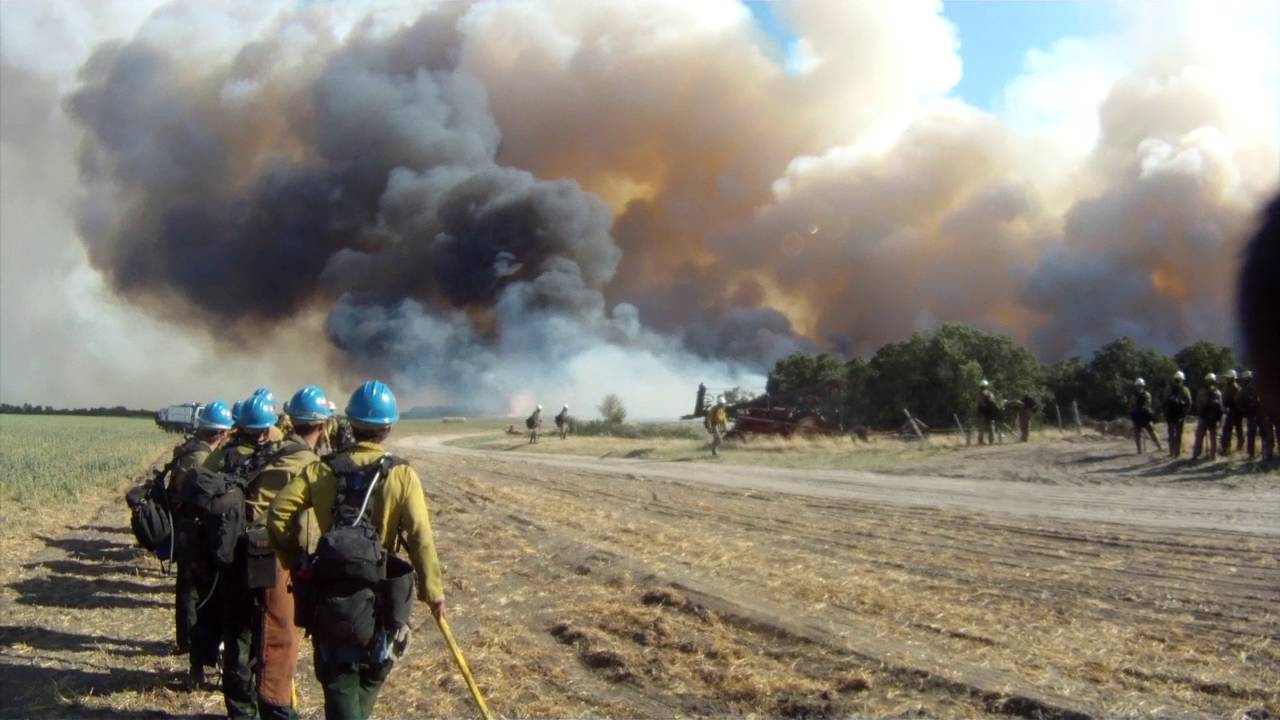
The ponderosa pine forest type supports surface fires under normal conditions. Crown fires burn through shrub and tree crowns and canopies. They are fast spreading and release an enormous amount of heat and energy over a short period of time.
Ecosystems that support crown fires include chaparral, lodgepole pine, and spruce-fir forests. It is important to note that these fires generally do not occur in isolation. For example, a surface fire will often burn through surface and ground fuels, and in a crown fire all three fuel strata will often burn simultaneously.
Five, what are the three types of crown fires? There are three types of crown fires, passive, active, and independent. A passive crown fire involves the burning of individual trees or small groups of trees.
An active crown fire moves consistently from crown to crown and is sustained by the intensity and speed of the surface fire below it. An independent crown fire spreads through the crown fuel layer without the aid of a supporting surface fire. However, it is thought that independent crown fires rarely occur.
No matter the type of fire, the rate of spread intensity and flame height will be determined by the three legs of the fire environment triangle, fuels, weather and topography. And now, let's review. One, the 3 principle environmental elements affecting wildland fire behavior are fuels, weather, and topography.
Knowledge of these elements is critical to understanding how fire will behave on the landscape. Two, the four basic measures that describe fire behavior are rate of spread, fire line intensity, flame lengths and flame height. Three, the front, flank, and rear of a fire behave differently and fire behavior can change quickly with a change in wind direction or slope.
Four, the three types of fire are ground, surface, and crown. Five, there are three types of crown fires, passive, active, and independent. To conclude, the behavior of all types of fire is controlled by all elements of the fire environment triangle.