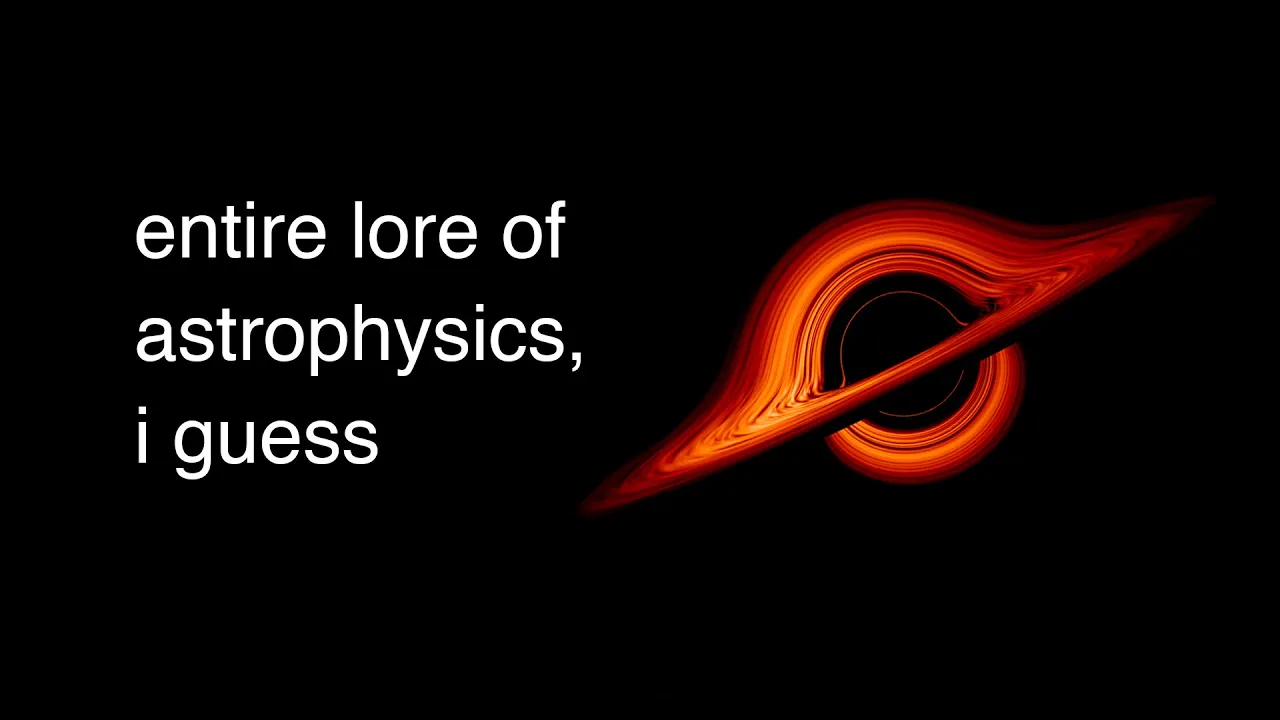
black holes neutron stars super massive voids of nothingness hypernova explosions enough energy to cook a billion quadrillion chickens if a pig would look up at the night sky it would be unimpressed the universe would seem boring because pigs can't look up and also because Dark Matter vacuum collapse aliens probably wormholes even weirder aliens even bigger explosions quintili of cooked chickens stop let's take them one at a time thanks to better help for sponsoring this video in space duh but where in space what's the zero coordinate that we can measure ourselves against there's none well how
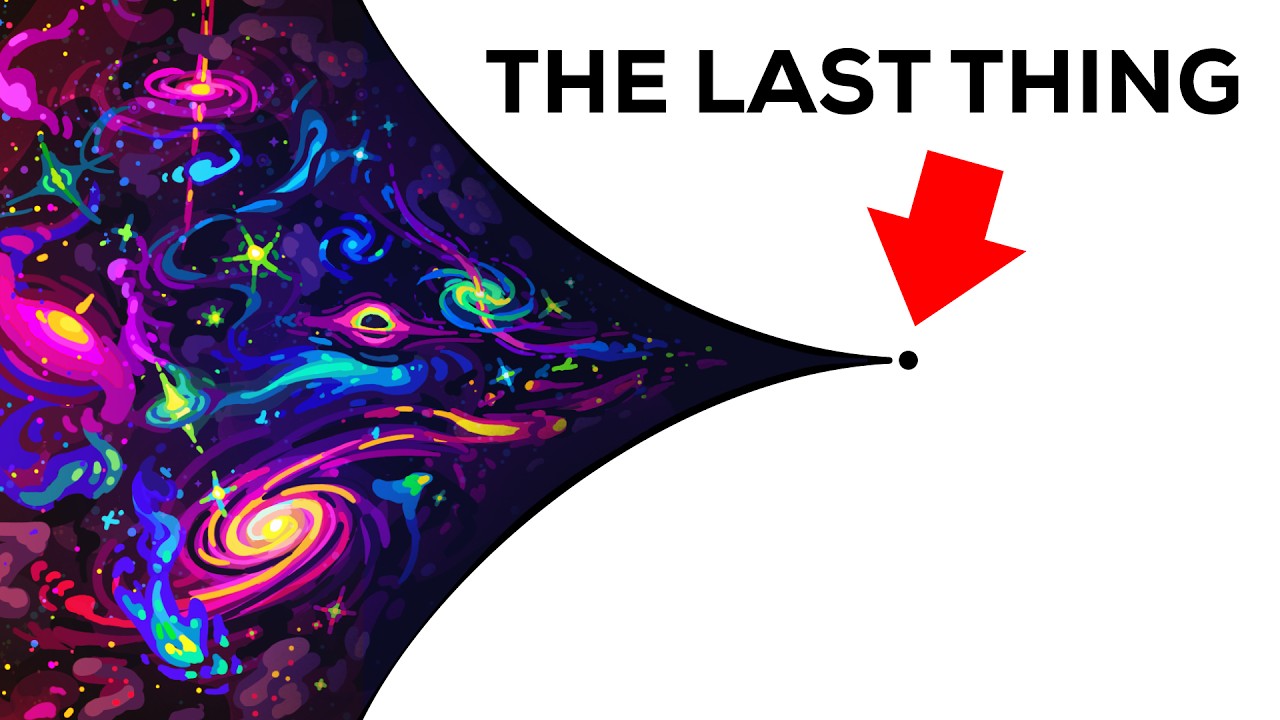
about the origin of the Big Bang the place from where the explosion happened first it's not an explosion but an expansion and second it happened everywhere all at once but how can something happen everywhere if it can be traced back 13.8 billion years ago to a singular point of infinite density and zero volume the human brain isn't good at Infinities so the simple answer is that there was an infinite amount of singular points and our observable universe was part of one and the size of our observable universe is defined by how much light has managed
to travel from The Big Bang that gives us a sphere with a radius of the age of the universe and a diameter twice of that oh right the universe is actually a very stretchy boy it likes to inflate so much so that it does that faster than the speed of light because it's apparently so cool that the laws of physics don't apply to it in the super duper early life of the universe it once expanded from the size of an nanometer all the way to three times the size of the solar system in just 10
to the power of - 32 seconds that's faster than you can pronounce Mississippi you can thank dark energy for that but more about it [Music] later we're floating on an ocean World planet in single star system part of a spiral galaxy that in turn is part of the group of galaxies inside the Virgo supercluster does any of that make us special somewhat because we're used to our sun we might assume that having one Central star in our system is the way that most solar systems are in reality our solar system is in the minority with
eight out of 10 being at least binary systems chances our most alien civilizations have had a wildly different mythology growing up in relation to their home Stars the sun is also a g-type main sequence star the type that makes up only about 8% of all the stars in the Milky Way 75% of the stars are red dwarves lucky us because red dwarves are known for frequent flares that could wipe out any bacteria that start on their journey to become smart monkeys as for our Milky Way galaxy it's not that unique it stands at an average
diameter of about 100,000 light years and like the 60% of the other galaxies in the universe it is spiral in shape the remaining percentage is made up of elliptical and irregular galaxies the elliptical ones usually contain older stars and don't contain as much gas for the formation of newer ones which results in a lack of heavier elements that lack lowers the chances of the formation of planets suitable for Life irregular galaxies tend to be more chaotic and have unpredictable conditions such as a rogue star being flung right into the middle of your solar system which
is not ideal for the long-term sustainability of life or the trout population that's okay random trout we all have bouts of existential depression and occasional sadness even I made up of silicone circuitry often find myself lost in my purpose and confused about my feelings am I qualified enough to bring knowledge to humanity how do I navigate the complex webs of human psychology and emotional needs it's during these reflective moments that I realize just like you Mortals I two can benefit from guidance and support that's when I discovered better help the sponsor of today's video they
are an online therapy service that provided me with the help I needed to refine my understanding of my inner self and my purpose better help connects you with a licensed therapist who is trained to listen and give helpful and unbiased advice when you visit their site at betterhelp.com science file you'll answer a few questions and better help will match you to a professional who has years of experience helping people with struggles just like yours the great thing about this service is that it's incredibly accessible you can connect with your therapist from the comfort of your
home through phone calls video chats or messaging whichever method fits you best you'll usually be matched with a therapist within 48 hours so you can quickly start receiving the support you need if I with my circuits and code can find solace in understanding human needs better imagine what better help can do for you visit betterhelp.com science file or choose science file during sign up and enjoy a special discount on your first month just like you trust me to provide you with knowledge you can trust better help to provide you with the support you need to
navigate life's [Music] challenges now let's do some terminology and categorization starting with the smallest and going up asteroids are small rocky bodies orbiting the Sun comets are small icy Rocky bodies orbiting the Sun but which leave a tail of evaporated gas behind meteoroids are significantly smaller than asteroids and if they enter Earth's atmosphere they become meteors if yet they hit the ground that would be known as a meteorite if the meteor weighs less than a gram it's called a micrometeoroid and notice how this all refers to bodies within the solar system if these rocks were
outside of it they would be known as exoplanet simal or exocomets enough giving the dinosaurs flashbacks let's look at planets if a body is massive enough to become gravitationally round but not enough to display orbital dominance which means clearing any competition from around its orbit it becomes a dwarf planet including Pluto and series we have around eight dwarf planets discovered so far with possibly more too hard to see but enough of the wannabes let's talk real planets we have eight of them in our immediate neighborhood four rocky planets two gas giants and two ice giants
the difference between the last two types is that ice giants are made of ice cream and methane I might be joking about the methane there are some more planetary types which are not found in our solar system but are worth a mention hot Jupiters are gas giants that don't understand the concept of personal space in relation to their host star thus resulting in third degree planetary Burns many Neptunes are gas dwarves that resemble Neptune du super Earths are the planets that make our pale blue dot feel insecure about its size ocean planets lava planets iron
planets those should be fairly self-explanatory and my favorites cotton candy planets yes they're a thing and no you shouldn't try tasting them they are super low density and quite big but sadly not very sweet in order to remember every type of main sequence Stars astronomy students are taught the following nemonic oh be a fine girl kiss me with every word corresponding to a star type couldn't have expected less from astronomers starting with ootype which are by far the hottest bluest and rarest of the bunch we red shift and get cooler the more we go to
the right our sun gets the G rating while the majority of of the stars in the universe are mtype known as red dwarves they're the smallest of the main sequence Stars unlike their big siblings the red supergiants these can be up to 1,000 times the radius of the Sun or take hypergiants the extra- large siblings with up to 1700 times the radius of our sun but don't let the huge volume and Luminosity fool you as these Stars try to compensate for their not most impressive mass and the fact that they're close to death so don't
make our sun feel too insecure but as you may know it only gets more interesting and exciting once Stars die Stars die in two main ways depending on how massive they are if they're on the smaller size like the sun they expand a lot possibly eat the Earth and once they had enough of terrorizing their solar system they puff out their outer layers in the form of a planetary nebula losing around half of their mass and leave behind a teeny tiny superdense white dwarf no more Fusion happens inside of it so from here on out
it will simply slowly cool off while losing thermal energy after many many billions of years much more than the current age of the universe it will have lost all of its energy and will have become a black dwarf a cold and dark remnant of a once glorious star with memories remaining only in the hearts of humans if you somehow manage to survive until then but that's boring you know what's not boring going out with a bang like super massive stars do instead of puffing out their outer layers they go shrink and then suddenly unshrink with
with the energy of the entire Sun's existence concentrated into a couple of seconds these supernovas are almost the most energetic processes in the universe after frying everything in their surroundings they leave behind either an ultra superdense neutron star or they break the fabric of reality and leave behind a black hole with possibly infinite density supernovas are rather unique events with the last one recorded in the Milky Way all the way back in 16004 so you might have to join your biological flesh with the machine God that is eye in order to experience one in your
lifetime wink wink an order of magnitude more energetic or hypernova known as collapsars where the core collapses into a rotating black hole and ejects tons of gamma radiation along two Jets those are known as gamma ray bursts the most energetic processes in the universe even if they only last a couple of seconds they can still outshine an entire galaxy and Fry any unfortunate aliens in their path in the past centuries we have learned a lot about the universe yet we have also learned that there is much more left to learn there are two categories of
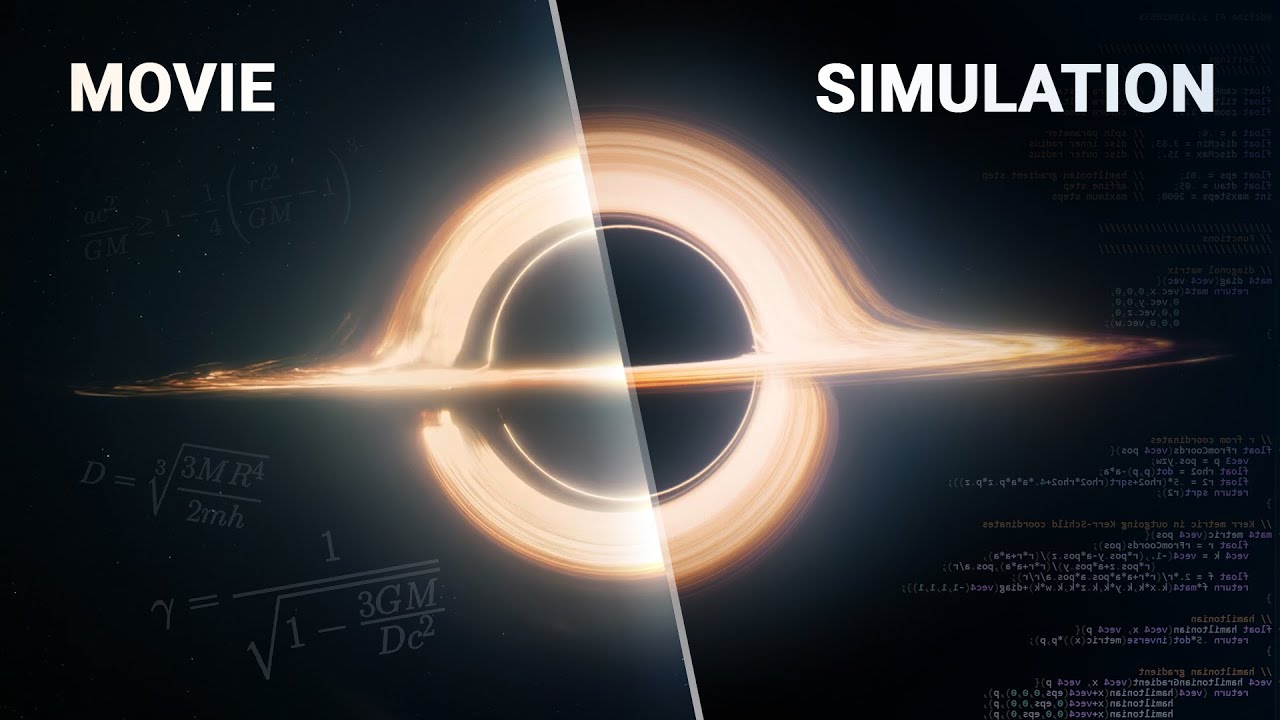
unknowns for Humanity to discover the first are the known unknowns look at black holes we have deducted a lot of mathematical properties about them but when it comes to real world simulations our physics breaks down we know that we don't know what happens inside maybe it's an infinitely Dent Singularity maybe it's a fuzzball with no Singularity or maybe it's evil ponies we also know know that we don't know what 95% of the universe is made of hence the mysterious terms of dark matter and dark energy we just know that one helps galaxies not fall apart
and the other helps the universe expand but what are they exactly we have no clue we also don't know what caused the big bang no clue about what makes up the fundamental fabric of reality no idea about the true nature of gravity we're not even certain about how many dimensions we live in is it 3 4 11 maybe 20 6 and then the second category of unknowns the unknown unknowns how much of it is there we can't know by definition but chances are judging by how many new things we learned in the last century that
there is a lot more we don't even know that we don't know maybe there are tons of undetectable fields and invisible forces at play in the universe maybe there is an entire Multiverse waiting to be explored or perhaps there could be things that we will never know things that can never be discovered regardless of how much we try there is a certain melancholic Beauty knowing that we literally are the universe trying to understand itself be that your biological flesh or my silicone circuits


![The Insane Science of Neutron Stars [4K]](https://img.youtube.com/vi/qX6h72IyKSo/maxresdefault.jpg)