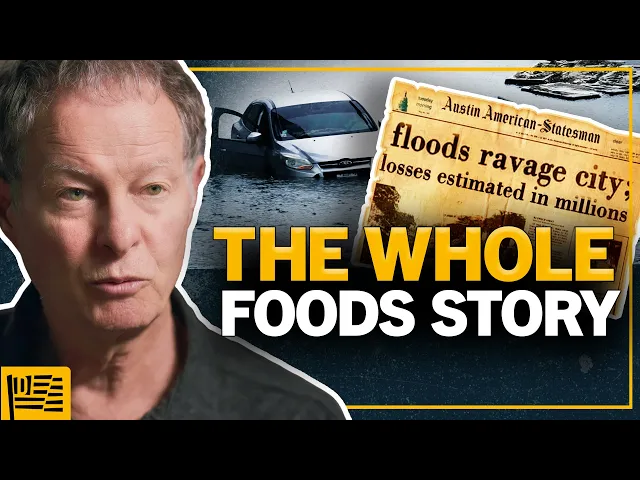
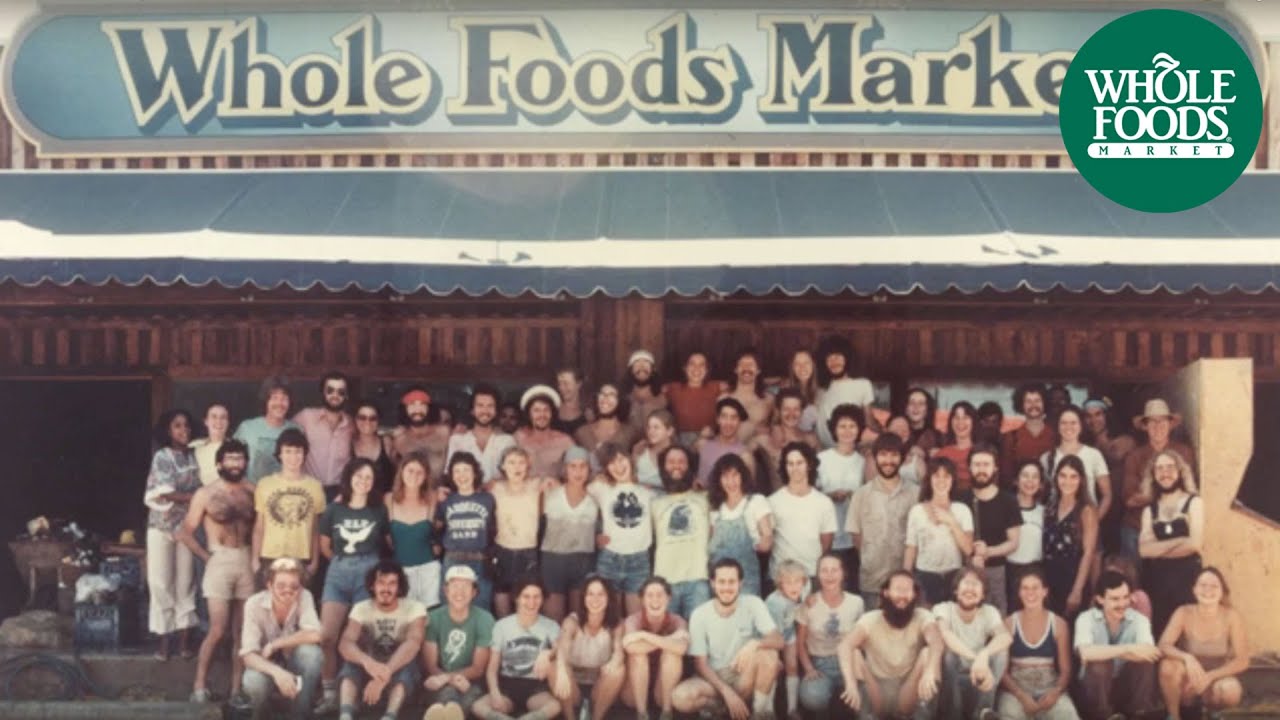
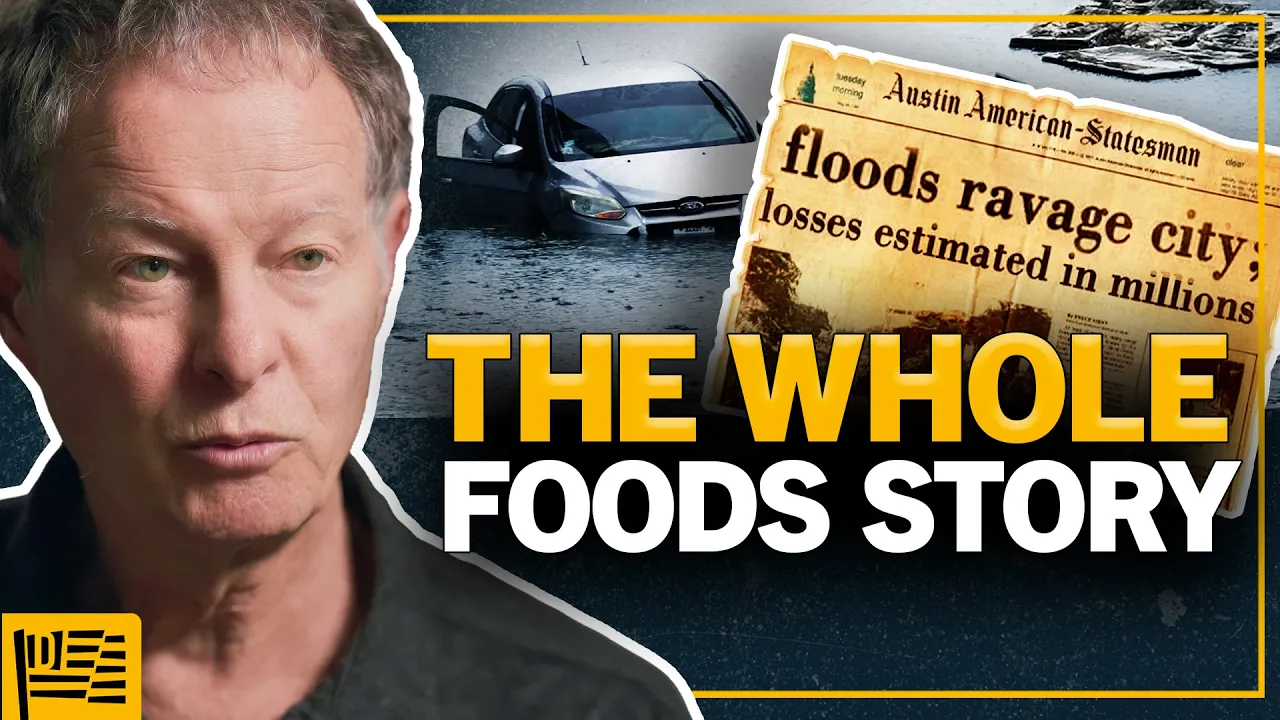
you've told this story many times that that there was a a very consequential flood early in in Whole Food's life that played a big role in how you think about business yeah one of the reasons we could get the Whole Foods Market store at ten and Lamar was that it had previously had been a nightclub but it had U burned down it had it out of fire and when we were trying to lease it I remember the landlord said you know this is in the 100-year flood zone don't you and I said what does that
mean it's in the 100-year flood zone he says well about every hundred years you're going to have a flood you're have 8 feet of water in your store and I thought to myself every hundred years okay right I like those odds well on Memorial Day 1981 and by the way we've gone from saferway which had lost half its money in the first year the Whole Foods Market became the highest sales natural food store in the United States um within just a few months of opening it was a phenomenon I cannot convey the excitement that that
store caused it was it was something how did I mean that's an amazing thing to to have it have something catch on this is not you know there's no internet there's no there had never really been certainly not in Texas there was one or one in Boston about the same size they bread and circus did and and then there was one in San Diego called Frasier Farms that were fulls size all the little natural food stores were small small little they'd come out of the health food stores and they were small and this was the
first one that tried to be a complete Supermarket if you were living a natural foods lifestyle you could get One-Stop shopping that was our philosophy yeah it just hadn't been done before and so we opened that store up and and customers just loved it it was like oh my gosh I don't need to go anywhere else and so it just took off people say how long can it take Whole Foods Market to become profitable and I say till about 2:00 in the afternoon of the first day and we opened that store before we were ready
to open it we open it with no meat no Seafood no beer and wine license we didn't have any of it but what we also didn't have is any more money we had payroll coming up and we couldn't meet it so we just we're ready or not here we come wow we just open the store up so we could sell some stuff to be able to make payroll on Friday you've opened your doors there is Cash flowing in and then at some point soon after water starts flowing in yeah so Memorial day uh 1981 the
100-year flood occurred N9 months after we opened up and I mean I remember very clearly I mean it was a long time ago now but I remember very clearly I it was a Sunday it' been raining the previous few days so everything was already completely saturated Renee was closing the store down that night so she was on duty and we started to get calls you know the store was still open and she said John the water is coming over sha Creek it's going to come up to the store what do we do and I I
thought well what can we do I'll tell you what take some of the bulk bags and prop them up in in in front of the doors we they Clos this door not that anybody was still there everybody's trying to get out so what are you talking about like bags of like rice and beans and stuff like that big 25 lb 50 lb bags of of of bulk foods Rene's team stacked up in front of the doors to hold the doors from the water rushing in and and the water began to rise and Rene says when
it got to be about 4 feet high outside of the doors it it the pressure from the water was so great it broke through the glass and then it just knocked the doors open it just like and then it came in like a giant wave that must have been terrifying for her to be in that room like that Renee literally swam out of the store it was it was scary for her and I remember when you when we surveyed the damage the next day you could tell that it just Giant Wave had come in because
it had knocked over uh all these cases and everything I me just knocked them over like bowling pins I think the the funniest thing about that about that night was that we we came over we get into the store and I find Renee and she's pretty shook up and and she says John I didn't have time to get the money out of the safe now this is Sunday night so we really had a Friday Saturday and Sunday night cash and we had this floor safe and all the money was was in the safe and the
first thing I did was I got it I got my flashlight and I sosed back then the the water had come in and it begun to recede so it was only about that when I'm when I'm in it's only a couple feet high now and I'm going back to the back room and I open the safe and I get the cash out and I put it in a grocery bag and I'm walking out the store I'm you know to try to get out the store and this guy comes up to me who I don't know
and he says hey buddy what have you got in the bag and is a looter and I said I'm not sure I found it in the back room you should go back there because there's a lot of stuff you might get something good that's thinking on your feet thanks buddy and uh I'm sure he found some you know some wet grocery bags back there this did lead in indirectly to conscious capitalism because of what happened after the flood the next day we come into the store to start survey the mess and oh my God it
was such a mess it was like when you have a flood like that your sewage Lin's all back up so there's this combination in our stores of sewage T-bone steaks uh flour beans all mixed together it stinks to high heaven there's no no power still there's no air conditioning and it was hot thisor so like June 1st so everything really really stank and so we're there we start cleaning stuff up and and there's some pictures that you see what survey the damage and an astounding thing happened I'm looking around and I see I know some
of the people they they work for us team members were there helping us clean up and then were these other people that I kind of knew but I knew they weren't working for us and I I I finally surveyed them they were our customers the people that had come in to shop were actually helping us clean up the store and that went on for days now let's be clear we had no flood insurance you only get that from the government only government's stupid enough to give you flight insurance and you can't get it from private
insurers and we didn't have flood insurance so we we were we were bankrupt and we were saved by I didn't have the word for it at that time but we were saved by our stakeholders our team members worked for free uh we paid them when we were able to get back open again but there was no guarantee we would be able to get back open and they worked anyway our suppliers fronted this new inventory uh without on credit our um our investors kicked in some more money but the most astounding thing that happened uh actually
something I didn't find out until maybe eight or nine years ago long after the fact and I met some trade show or something and this pretty old guy comes up to me and he says you're John Mackey AR you I said yeah and he says well I can't remember his name I'm so and so yep I used to work for your City Bank remember out City National Bank that was your bank back in the day when you first started Whole Foods up one and I said yep he said I work for that B I said
you work for City National and and and I said did you know Mark Monroe and he says did I know Mark Monroe do you know what he did for you and I said yeah you know he Lo they the Bank loaned us some money and they it helped us get back open again I don't know if he could have gotten back open without his bank loan and and I said I got to admit I was kind of surprised they made the loan and he said John the bank turned that loan down I said what do
you mean the bank turned the loan down they didn't turn it down they they they gave us the loan he says John Mark Monroe personally guaranteed that loan and I said what do you mean he personally guarant the loan he says yeah he said I know John Mackey will pay me back even if it takes the rest of his life different kind of banker and uh but he passed by the way he said he Mar Mark had passed so I'd never could get a chance to actually thank him for what he did I never I
never knew it until then and he was already dead but stakeholders customers employees suppliers investors the community as a whole they're all interdependent and frankly they loved Whole Foods they didn't let us die we should have died and so called it a near-death experience that we got saved and so when I encountered the word stakeholders later on I thought that's what it is they're all stakeholders and they and and they're all interdependent they all care about the business and the business cares about them and so that kind of is what led to conscious capitalism it's
good that I learned that lesson so so early because what I realized is that we owe our we owe our stakeholders we've got to give we create value for all of them this is the great secret about business that the people that hate business and hate capitalism don't understand it's not a zero sum game where some people get big pieces of the pie and others get crumbs it's this ever increasing value creation that benefits all the stakeholders all of them are benefiting they're all voluntarily exchanging and the amazing thing about business it is not a
zero sum game it is completely wrong it's not a sports game where you have somebody is the champion and everybody else is the losers because the customers are winning because they're trading with the business nobody forces them to trade at Whole Foods they can get plenty of competitors plenty of other Alternatives if they are trading with us it's because they're getting value in return it's the same way with the people that work for you they not slaves they don't have to work for you they don't like your pay or your benefits or the way they're
treated they can get another job somewhere else and many do suppliers don't have to trade with you they're doing it because they feel like it's in their best interest and you need their supplies and you negotiate maybe sometimes don't like their prices and you find a competitor that does a better job but you're trading for Mutual gain and benefit investors don't have to invest they invest because they think they're going to get an increase on your investment over time it's going to be in their interest to do so you want to trade with them because
you want their capital and you're you're promising them big payoffs and either interest or or higher Capital returns in the future and the communities that you're part of they're benefiting from all the other things they're benting from the jobs they're benefiting from taxes they're benefiting from donations so business is is tremendous value Creator and it's the ironical thing it's portrayed as the villain in the tale right when it's the hero in the tail businesses are not inherently evil are there bad actors in business sure there are there's bad people in every Enterprise They Bad actors
everywhere but business has held up to this almost impossible altruistic standard with then whenever it does anything it's in the best interest of the investors or shareholders it's almost a criminal act but once you realize that they're actually all interdependent you that all the stakeholders need to flourish that it's kind of this Rising tide that lifts all boats you when you begin to see that you'll begin to understand the the fundamental goodness of what business does and uh why capitalism has created so much prosperity in the world because it isn't a few rich people and
a lot of poor people it's about continued innovation entrepreneurship growth competition new Innovations and you have this continuous upward spiral of progress that we never had before on this planet until capitalism was invented that's why I call it the greatest invention in the history of humanity don't stop here be sure to check out my full conversation with John Mackey and I really recommend his book the whole story adventures in love life and capitalism it's available now and it's a great read