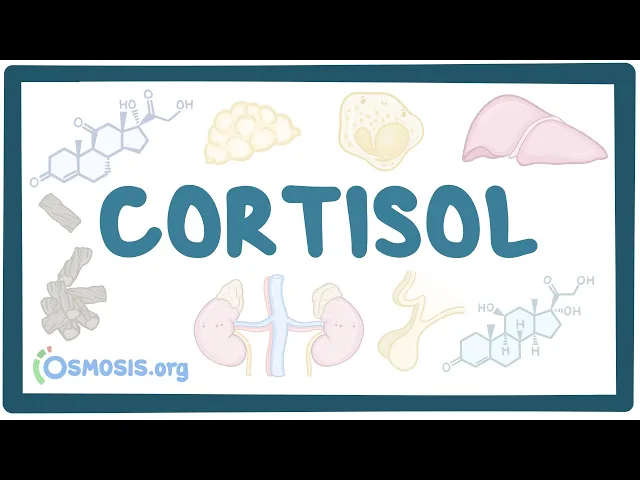
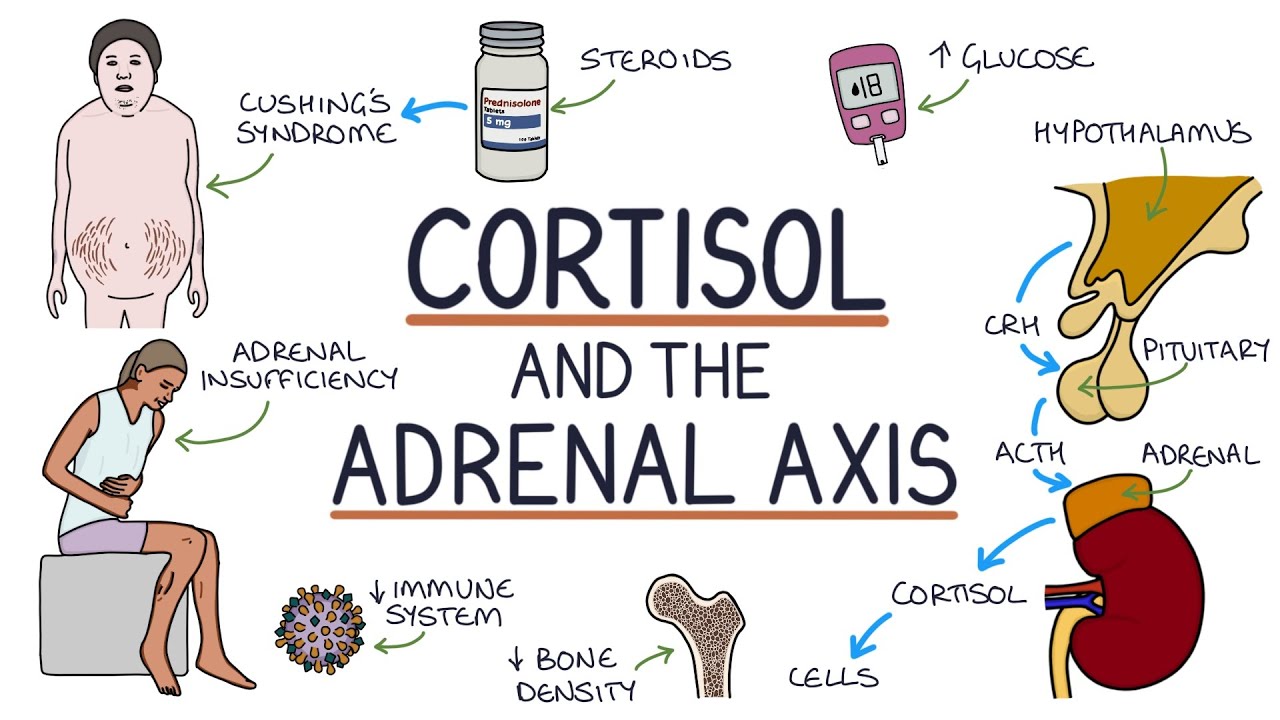
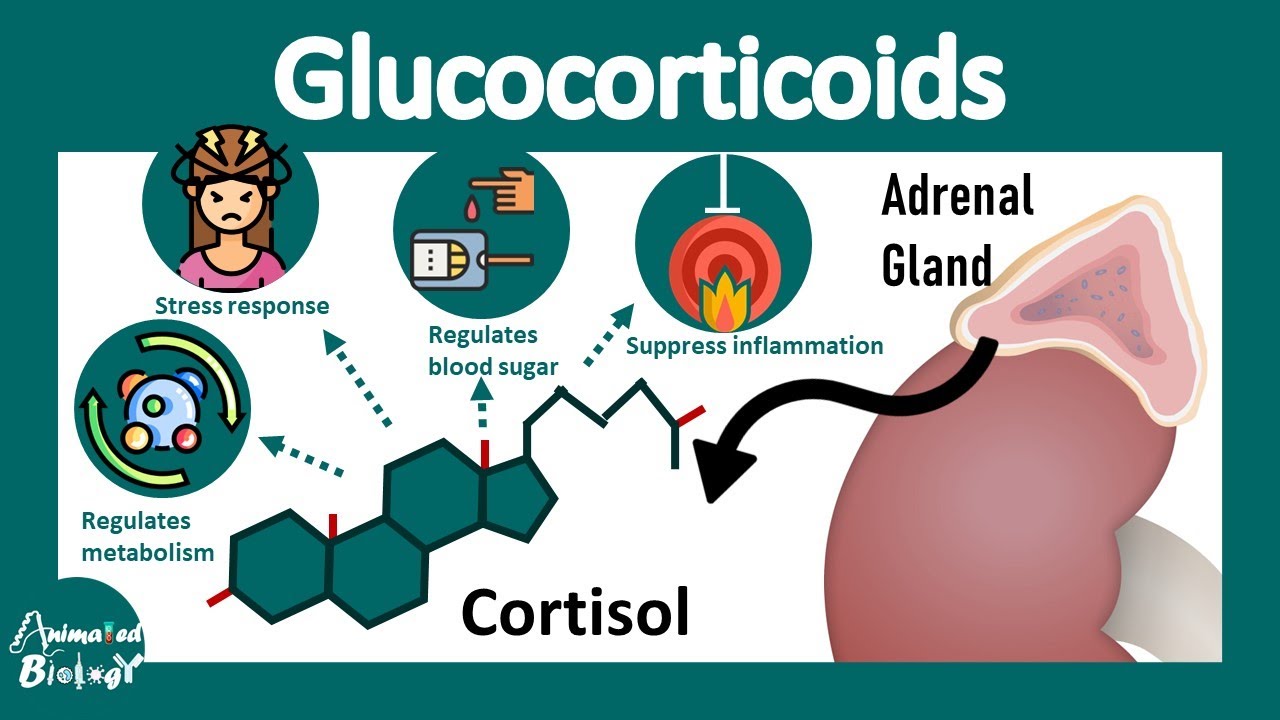
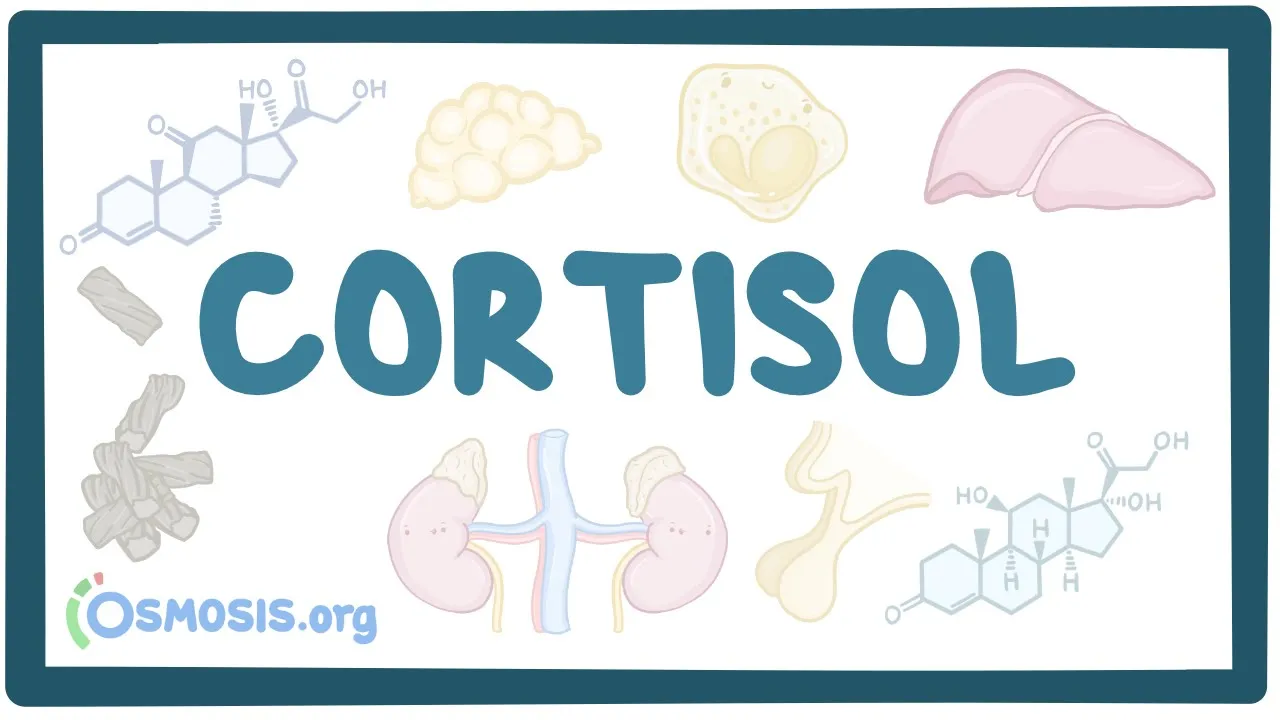
cortisol is a steroid hormone that helps regulate the metabolic and immune Pathways of our body cortisol belongs to the glucocorticoid class of hormones produced by a pair of adrenal glands which are located above each kidney each gland is made up of an inner medulla which secretes catacol amines and an outer cortex the adrenal cortex itself is divided into three zones each one secreting a different steroid hormone the the outermost zone is the Zona glomerulosa which secretes mineralocorticoids next there's the Zona facul which secretes glucocorticoids cortisol being the most important one and finally there's the Zona
reticularis that secretes androgens cortisol production is controlled by the hypothalamus pituitary axis the hypothalamus which is at the base of the brain secretes corticotropin releasing hormone which is sensed by the anterior or front part of the pituitary gland in the anterior pituitary the corticotropin releasing hormone binds to a surface protein on a group of pituitary cells called corticotrope cells and stimulates them to release adrenocorticotropic hormone or act into the bloodstream adrenocorticotropic hormone then travels to the adrenal glands binds to receptors on the cells of the adrenal cortex and makes them take up cholesterol from the
blood the cells of the Zona facul contain the enzymes needed to convert cholesterol into cortisol cortisol is structurally derived from cholesterol which is a lipid molecule and can slip in and out of cells relatively easily as a result cortisol isn't stored it gets secreted as it's being produced normally cortisol secretion is pulsatile throughout the day peaking in the morning around 6:00 a.m. but cortisol is also secreted in response to various stressful stimuli including hypoglycemia or low blood sugar infections caffeine sleep deprivation and psychological stress like getting in a fight with your best friend once it's
made cortisol travels via the blood and binds to The glucocorticoid receptors which are generally intracellular receptors within nearly every cell in the body cortisol helps to regulate both the immune response as well as cellular metabolism with regard to the immune response cortisol promotes an overall anti-inflammatory state by inhibiting the two main products of inflammation prostaglandins and lucot trines as well as inhibiting interlukin 2 production of white blood cells in adapost tissue cortisol triggers lipolysis which is the breakdown of fats for energy which can be used by other cells throughout the body in the liver it
promotes gluconeogenesis which is the production of new glucose molecules cortisol also increases insulin resist resistance in tissues which means that insulin becomes less effective at moving glucose into cells leading to an increase in blood glucose levels The increased glucose level also stimulates the release of more insulin and because this is similar to what happens in people with diabetes this effect of cortisol is called diabetogenic in the muscles cortisol stimulates proteolysis which is the breakdown of proteins into amino acids which then serve as substrates for glucon ogenesis cortisol also plays a role in maintaining blood pressure
levels since it upregulates alpha 1 adrenergic receptors in blood vessels which causes Vaso constriction cortisol increases brain performance and mental alertness it also stimulates memory of emotional events while it inhibits retrieval of already stored long-term memory that's why if you dunk your arm in ice cold water while trying to memorize a fact you're more likely to remember that fact but there are easier and more comfortable ways to remember things cortisol also decreases bone formation in a few ways by inhibiting new bone production by osteoblasts suppressing calcium absorption in the bowel and decreasing the production of
type 1 collagen which is fundamental for new bone matrix cortisol also inhibits fiber blasts which leads to poor wound healing as you can see it affects every organ system some tissues like the kidneys and colon can convert cortisol into the inactive metabolite cortisone through the enzyme 11 bet hydroxysteroid dehydrogenase 2 this creates a usable cortisol Reservoir that travels in the bloodstream the enzyme 11 beta hydroxysteroid dehydrogenase 2 is actually inhibited by Licorice and that's why eating lots and lots of licorice can cause high blood pressure then some tissues like atopos tissue the skin and the
liver have the ability to convert cortisone to cortisol through the enzyme 11 beta hydroxysteroid dehydrogenase 1 finally cortisol is involved in a few negative feedback loops to control its own secretion first cortisol signals the hypothalamus to stop secreting corticotropin releasing hormone which in turn decreases anterior pituitary secretion of adrenocorticotropic hormone second cortisol signals directly into the anterior pituitary to stop the release of adrenocorticotropic hormone all right as a quick recap cortisol is released by The Zona facul of the adrenal glands under control of adrenocorticotropic hormone which is released by the anterior pituitary cortisol has a
wide variety of functions it promotes an overall anti-inflammatory state of the body as well as stimulating metabolic pathways like lipolysis gluconeogenesis and proteolysis to help maintain normal concentrations of glucose in blood cortisol also helps maintain blood pressure increase brain brain performance and decrease bone formation helping current and future clinicians Focus learn retain and Thrive learn more