In 1978, Space Invaders was a monster hit. But while the games industry at large was laser focused on copying Taito’s success, one designer decided to try something completely different. .
. Toru Iwatani joined Namco in 1977. He was obsessed with pinball machines, and so he made pinball-style arcade games like Gee Bee and Cutie Q.
But the young game designer was dispirited when he saw that the arcades where his games were played, were dingy, smelly places that seemingly only attracted boys and men. He said, “all the computer games available at the time were of the violent type - war games and space invader types. There were no games that everyone could enjoy”.
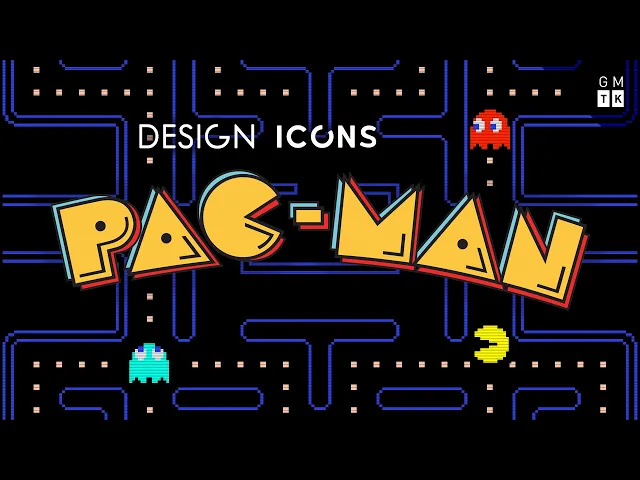
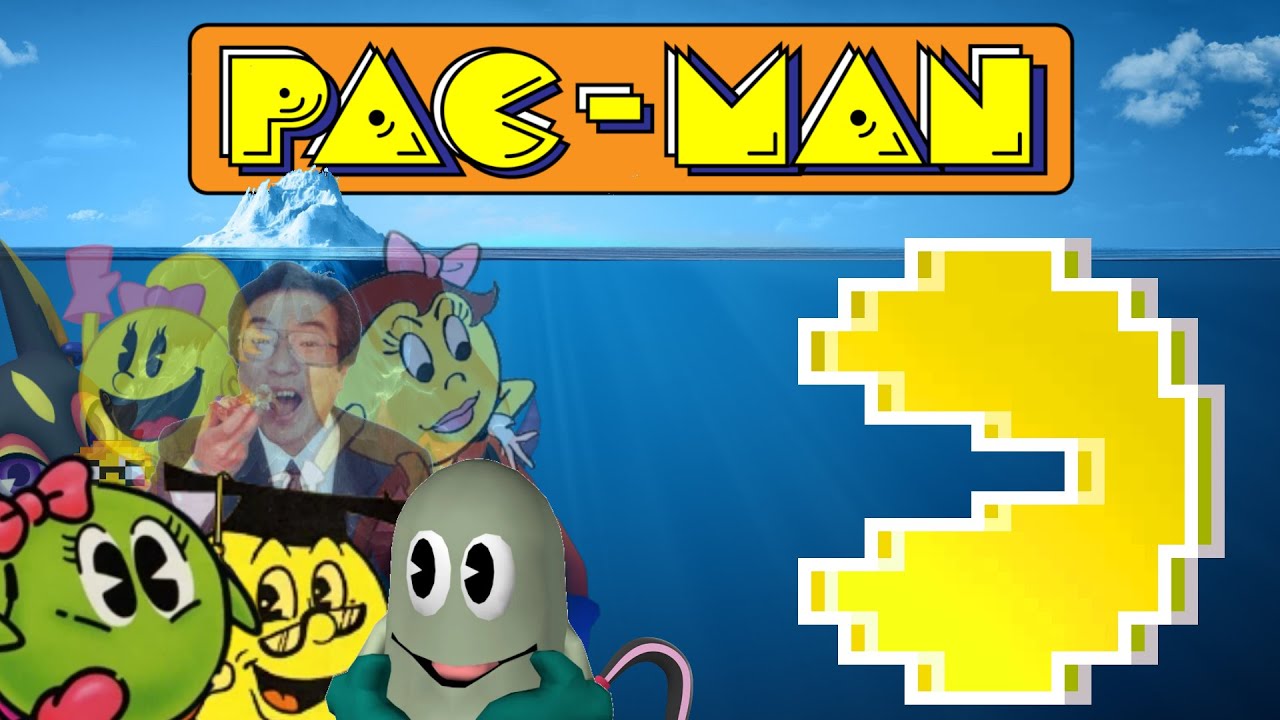
And so, he thought he could make a game that would appeal to women and couples, by using cute graphics, bright colours, and a non-violent theme. And so, in the Summer of 1980, Iwatani and Namco would give the world Pac-Man. Toru Iwatani started the project with the concept of eating.
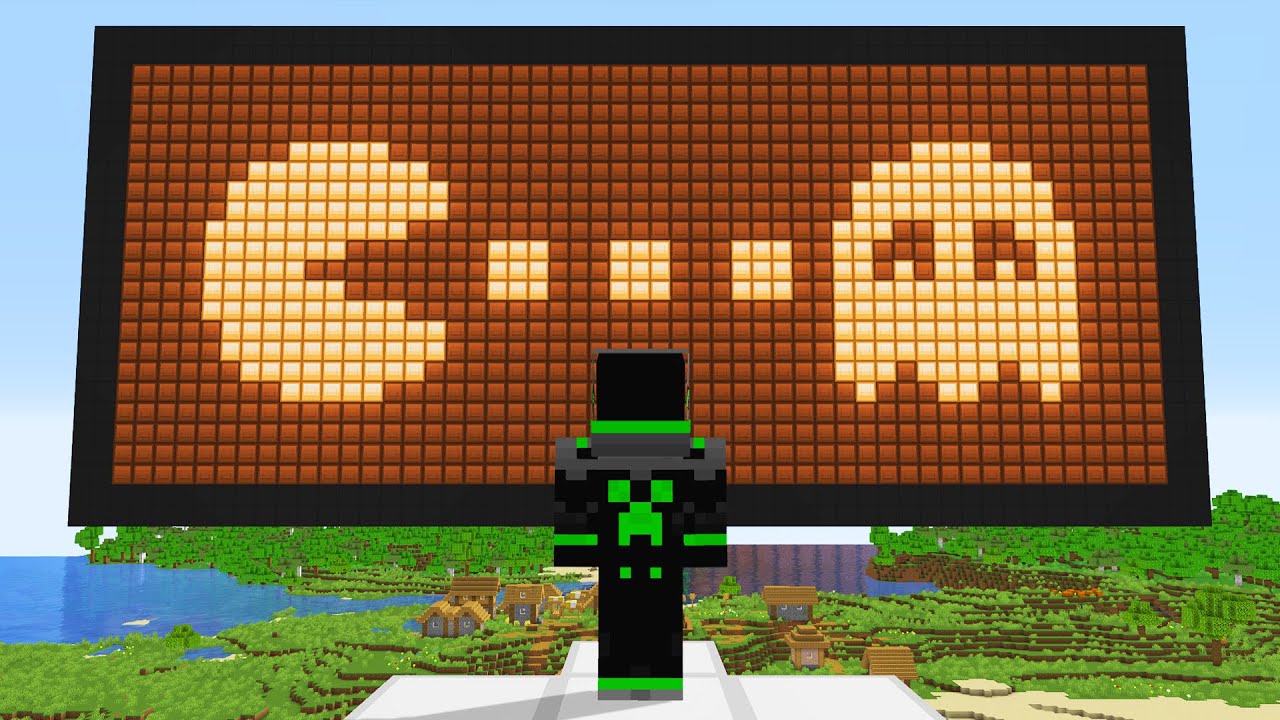
Pac-Man is an amalgamation of the Japanese word for mouth turned on its side, a pizza with a slice missing, and the term Pakku Pakku - which is an onomatopoeic word for eating something. In the game, Pac-Man explores a maze and eats dots, giant cookies, and even bonus fruit pick-ups which appear in the centre of the screen at certain intervals - similar to the UFO in Space Invaders. Then, Iwatani introduced enemies.
They were ghosts, but friendly, colourful, and full of personality. The goal, now, is to simultaneously eat dots, while avoiding ghosts. Until, that is, you get the power pellet and turn the tide in your favour.
The ghosts are probably Pac-Man’s most inventive feature. In play, they seem like they’re really intent on chasing you down. They don’t just simply follow Pac-Man, but they’re not moving randomly either.
They’re smart enough to work in teams, and unleash tactical manoeuvres. This was because Pac-Man had a remarkably sophisticated artificial intelligence system for the time. Consider the simple side-step movement of Space Invaders, or the predictable movement of the butterflies in Frogs.
These ghosts were something else. For starters, the ghosts shift between three different modes: they’re either in chase mode, where they hunt Pac-Man down. Scatter mode, where they give up and head to a corner of the screen.
Or frightened mode, where they run away from Pac-Man when he has the power pellet. We’d now call this a finite state machine, which is when an AI character shifts between distinct states of behaviour. Think of Batman Arkham Asylum, where enemy guards are either idle, reacting to suspicious behaviour, actively engaging Batman, or nervously hunting for him.
It’s the same basic idea. Looking at these three states more closely, though, gives up a greater understanding of Pac-Man’s ultra intelligent design. Let’s start with chase mode.
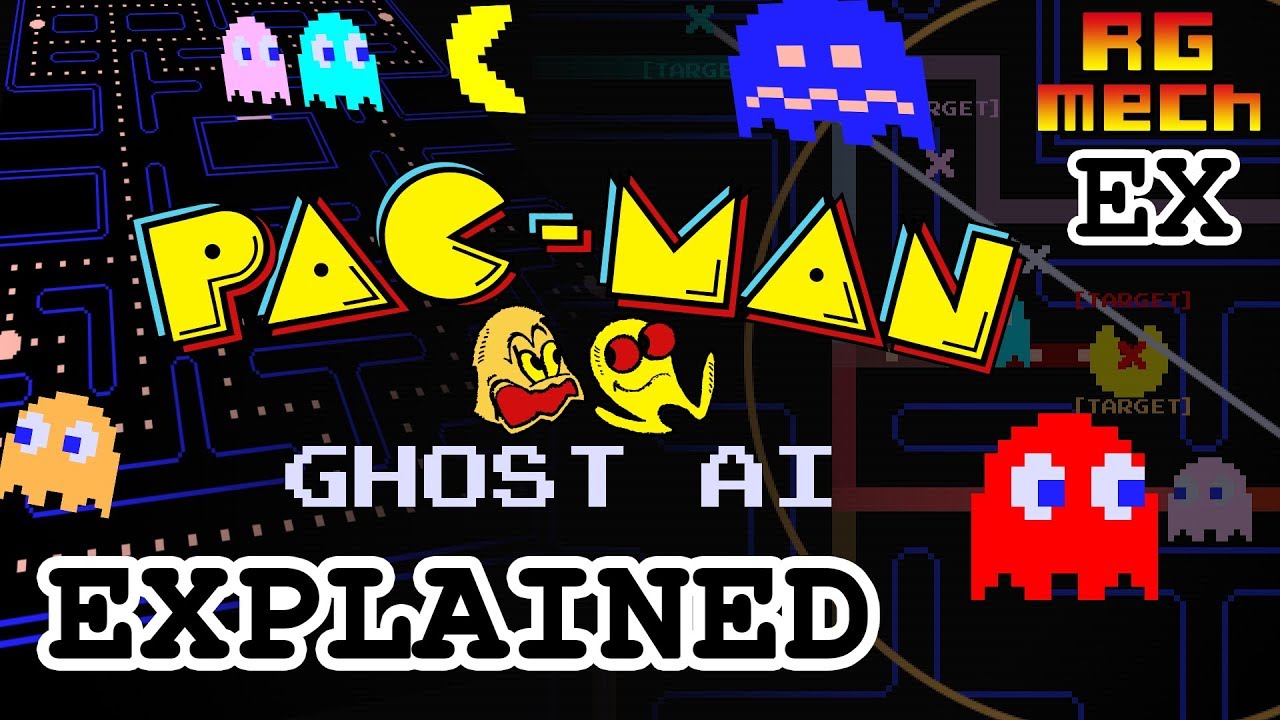
Here, each ghost has a unique way of chasing Pac-Man. All four ghosts have their own target, and they are continuously trying to find the shortest route to their goal, by making decisions at every intersection. To help us visualise it, let me show you the grid system that Pac-Man’s code operates on.
So, the red ghost, Blinky, targets Pac-Man himself - making it the most aggressive and predictable enemy. Pinky tries to get in front of Pac-Man, by targeting the spot four tiles in front of where Pac-Man is heading. The blue ghost, Inky, targets a special spot that can be found by extending a line from Blinky, to a spot two tiles in front of Pac-Man, and then extending the line again, the same length.
And finally, there’s Clyde, the orange ghost. This shy spectre heads towards Pac-Man, but when it gets within an eight tile radius, it gets scared and scatters away to its corner in the bottom left. It’s a fascinating system that ensures the ghosts are hard to read and predict, but not impossibly random: you can still learn the ghosts’ behaviour over time and create strategies and tactics.
It also makes the game endlessly replayable because, unlike Space Invaders, the game is completely different every time you play. What’s most clever, though, is the way the ghosts seem to work together, with the red and pink ghosts appearing to create a pincer movement as they come up behind, and pop up in front of Pac-Man. And then the blue and orange ghosts operate on the periphery.
AI actors in games still struggle to convincingly work together, and either use a complex blackboard system to share information between units, or create a special entity to distribute commands to an entire squad of foes. Pac-Man achieved an effective illusion of cooperation decades earlier, with really simple rules. Next, there’s frightened mode.
When Pac-Man grabs one of the four power pellets on the map, he’s suddenly able to defend himself - and the ghosts become scared. Pac-Man can now touch a ghost to eat it - sending the enemy back to the central pen, and rewarding the player with points. The idea of finally being able to defeat an invincible and unstoppable opponent is a potent one, and is still seen in games like Resident Evil 2, where the joy of finally downing MrX after a game’s worth of running away, feels magnificent.
Today, the power pellet might seem quite standard. But at the time, it was a revelation - because this was one of the earliest power-ups in games. It might even be the very first one.
Defined as a collectible object that adds temporary benefits or abilities to a player character, the power-up quickly became a staple of game design. We’d see it in Donkey Kong, where grabbing the hammer momentarily turned you into a barrel-bashing maniac. And Super Mario Bros.
, where the mushroom and fire flower gave Mario more power, until he got hit. We get temporary buffs when smashing computer screens in Sonic the Hedgehog, and collecting the Beserk sphere in Doom 2016. There’s only four power pellets on each map, so they must be munched judiciously to maximise their effectiveness, and point gain.
And the pellet also gives the game a wonderful back-and-forth rhythm, of power and powerlessness. A constant shift of pace, that we also see when looking at the ghost’s final state: scatter. Every now and again, the ghosts are told to stop their incessant chasing of Pac-Man, turn on their heels, and scatter into the corners of the board.
The idea here was to ensure that the game gave you a chance to rest, and broke up the constant feeling of tension, with welcome moments of relief. “I felt it would be too stressful for a human being like Pac Man to be continually surrounded and hunted down,” says Iwatani. “So I created the monsters’ invasions to come in waves.
They’d attack and then they’d retreat. As time went by they would regroup, attack, and disperse again. It seemed more natural than having constant attack.
” This sort of modulation would be seen much later in Left 4 Dead, where an AI director decides when to bombard the human players with zombies, and when to let off, to create an undulating wave of tension and relief. It’s also one of the ways that Iwatani tried to make Pac-Man more forgiving. In another case, the player can turn a corner, even if they move the control stick when Pac-Man is a few pixels past the intersection.
It’s similar to coyote time, where platformer heroes can still jump, even if they’ve just run off the edge of a platform. “Creating a fun game is not about satisfying yourself as a developer,” explains Iwatani. “It’s all about the people that actually play the game.
The most important thing to think about when designing a game, is to understand that person who plays this game, and how that person will feel, how they will react. It’s really understanding how their mind works”. Combine the dynamic of chase and scatter, with the back-and-forth of power and powerlessness, and Pac-Man has an endlessly changing pace of play that stops the game from ever feeling repetitive.
And that’s not taking into account the difficulty curve. Just like Space Invaders, Pac-Man’s challenge rises throughout the course of a level. The red ghost, Blinky, increases its speed after you eat a certain number of pellets.
And when just 20 dots are remaining, it no longer enters scatter mode, and instead always chases you. All of the other enemies scatter for 7 seconds the first two times they enter this mode, then 5 seconds the next two times, and then stick to chasing indefinitely. And, again, like Space Invaders, each level is more demanding than the one before it.
The ghosts are frightened for shorter and shorter periods of time. Pac-Man moves faster, making him harder to control. And the ghosts leave the central pen more quickly.
In this way, Pac-Man perfectly captures the difficulty curve we explored earlier in this series. Between stages, Pac-Man gives us another revolutionary feature: the cutscene. These charming animatics were one of first times that a developer had put non-interactive movies in the middle of gameplay, and would be the precursor to every story segment in video games thereafter.
Despite grumblings from his colleagues that this was a waste of time and resources, Iwatani was certain that Pac-Man needed these moments of downtime, which he called coffee breaks - they gave you a chance to rest your hands, provided a moment of calm after a tense level and, most critically of all, added a sense of character and story to proceedings. You see, you could argue that Pac-Man’s real legacy is that he was truly the first video game character. Before this game, you played as lifeless space ships and cars, geometric pong paddles, and random, nameless humans.
But now, here was a main character with a name, a face, and a personality. He was gaming’s first ever mascot, long before Q*Bert, Mario, or Crash Bandicoot. Ultimately, it’s not that surprising that a studio from Japan was responsible for adding a character into games, given the country’s obsession with mascots, inhuman proportions, and animation - both from Japan and abroad.
So the knockabout antics of Pac-Man and the ghosts was inspired by Tom and Jerry. Eating a power pellet and turning the tables on the enemy was inspired by Pop-Eye downing spinach and becoming super strong. And the ghosts were inspired by the manga Little Ghost Q-Taro and the American cartoon, Casper.
Iwatani has said “In North America at the time, the games were about car races or warfare. They wanted games that simulated the real world, whereas Japan wanted fairy tales. ” The game was first released on May 22nd, 1980, in a movie theatre in Tokyo’s Shibuya district.
It was called Puck-Man at release, and was met with a pretty lukewarm reception in Japan. Gamers there mostly preferred Namco’s other game: the familiar, Space Invaders-inspired shooter, Galaxian. Over in the US, Midway was looking for a new arcade game to publish after the success of licensing Taito’s Space Invaders, and so picked up both Galaxian and Puck-Man.
Though, they changed the name of the latter to Pac-Man, to avoid brats vandalising the machine. A piece of trivia that literally everyone in the world knows, but I had to include it to stop people saying that I forgot to mention it, in the comments. You’ve been on YouTube, you know how it works.
RAMONA: Yeah, that's amazing Pac-Man, then, was released in American arcades in October of 1980 - and it quickly became a tremendous success. Over 100,000 Pac-Man arcade cabinets were sold within the first year, and players plonked a billion dollars worth of quarters into those machines. There was a Pac-Man song on the billboard charts, Pac-Man merchandise in shops, and he even had his own TV show.
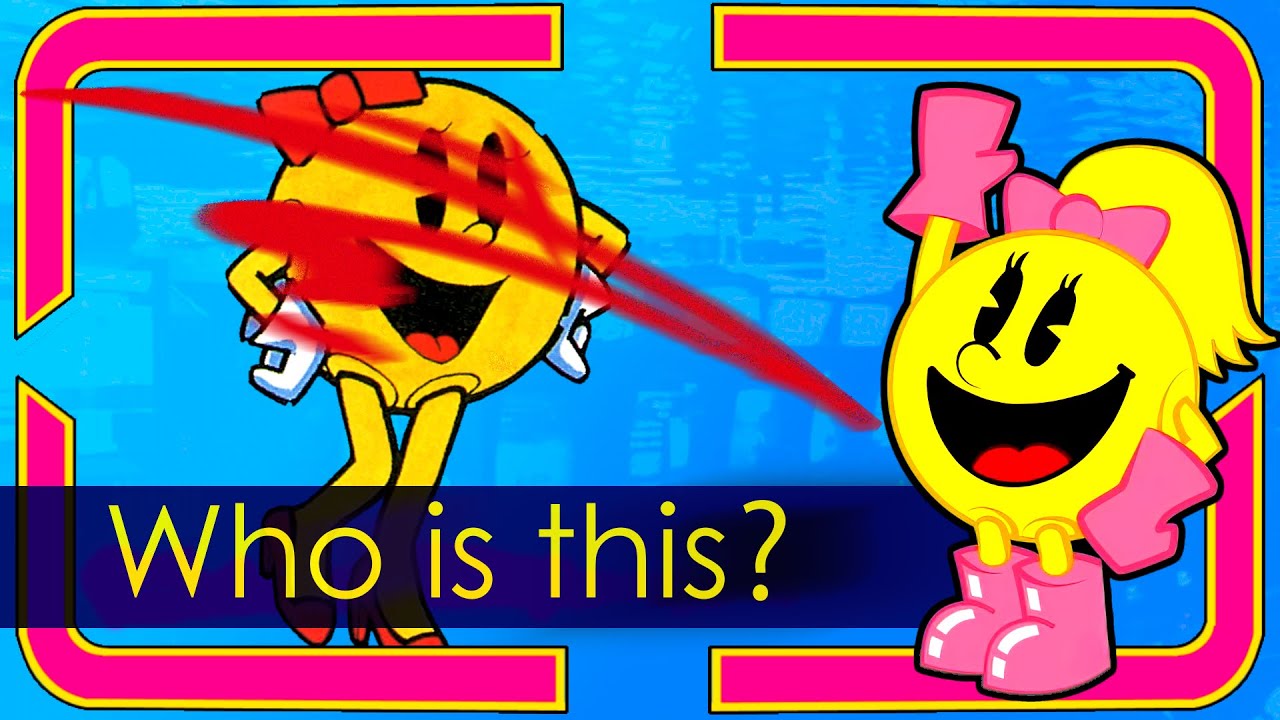
And just like Space Invaders, Atari scooped up the rights to make a Pac-Man port for the 2600 - though, this one was pretty abysmal. It’s hard to know whether Iwatani was truly successful in his quest to make games more gender neutral, but the book How to Win at Video Games puts the gender split for the game at 60% female, 40% male, and Iwatani himself says the game was popular with women. That’s probably why Midway made Ms.
Pac-Man - a semi-sequel to the game, possibly made without Namco’s approval, that gave Pac-Man new gameplay and even better AI - but also a bow, lipstick, rosy cheeks, high heels, and eyelashes. MS. PAC-MAN: I'm more than Pac-Man with a bow… Many other sequels appeared, including the platformer Pac-Land, which actually predates Super Mario Bros.
The 3D-ish Pac-Mania. Bizarre story-based Pac-Man adventures on consoles. The addictive Pac-Man 256.
And the awesome neon-dipped overhaul, Pac-Man Championship Edition, which was overseen by Iwatani himself. And just like with Space Invaders, there were certainly plenty of Pac-Man-style games released in the ensuing months and years. Look at Ali Baba and 40 Thieves by Sega, Nibbler by Rock-Ola, Lock 'N' Chase by Data East, and Lady Bug by Universal Games.
There was also the strikingly familiar K. C. Munchkin!
for the Magnavox Odyssey, for which Midway and Atari won a lawsuit for copyright infringement - one of the first in games. So maze-based games did have a brief surge of popularity: but Pac-Man didn’t establish a lasting genre like Space Invaders and its shoot ‘em ups. That being said, its legacy can be found in surprising locations - Namco’s The Tower of Draga was as a fantasy Pac-Man that ran on the same hardware - and was a critical influence on The Legend of Zelda.
John Romero cites Pac-Man as an influence on the level design of Wolfenstein 3D and Doom. And Hideo Kojima has noted the similarities between Pac-Man and his game about evading threats, Metal Gear. Looking back at Pac-Man, one of the things it really had going for it was its simplicity.
Iwatani says, when talking about good arcade game design, “The player should immediately get the point. When you watch golf for the first time, you know that the ball is supposed to go into the hole. It’s the same with Nintendo’s Super Mario Brothers or a pinball machine: You know what to do.
” And so it’s the same with Pac-Man. Eat the dots, and avoid the monsters. It was immediately obvious when looking over someone’s shoulder, and didn’t require words or cultural iconography.
So the game lured in players - male and female - with its cartoon artwork, colourful graphics, and funny cutscenes. These people felt confident that they could play, because the rules were obvious and the controls were simple. But once they started, they became hooked - thanks to a revolutionary artificial intelligence, push-pull dynamics, and a pitch-perfect difficulty curve, that all made the game hard to put down.
This led to Pac-Man becoming a worldwide phenomena, one of of the most recognisable video game characters of all time, and quite easily, a design icon.