everyone loves a Cheeky Monkey playful social and intelligent primates are fun and fascinating to watch but there is a greater draw perhaps because they bring out the inner primate in us through Africa South America and Asia our wild cousins are far more diverse than you might think ever adaptable masters of survival we enjoy watching their lives but in doing so we might learn a little bit about ourselves deep in the heart of Africa lives a close-knit family and today is special a new member joins the eastern lowland gorilla Clan like a human baby the tiny
primate curiously reaches out exploring with its hands totally dependent on his mother's care proud family members gather all eager to get a glimpse of their new sibling in their society as in ours babies have great appeal they all want to greet the new arrival everyone seems deep in thought their faces are almost a reflection of our own though the troop leader the Silverback male seems agitated it's his job to protect the family and they are never more vul vulnerable than with a child the leopard a deadly jungle Hunter huge and Powerful gorillas are almost impervious
to predation unless they are very young the leopard is a master of stealth but the Silverback spots its track the display threat he advertises his immense strength a warning to intimidate any foe and it works in this way the gentle Giants can avoid direct conflict most of the time the biggest of primates he stands as tall as a man and weighs more than 150 kg he's truly the king of the jungle under his watchful eye the family can relax it's tiring being the center of attention the gorilla's kingdom is the dense dark tangle of rainforest
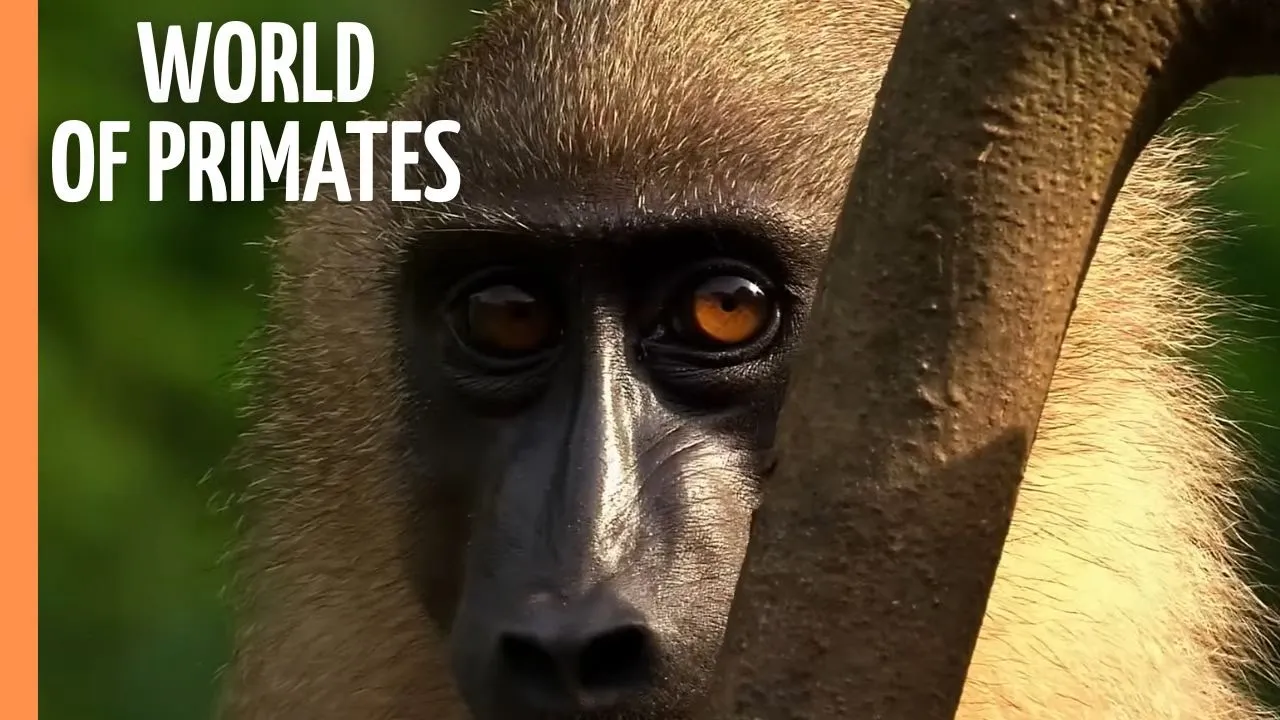
that stretches across much of central Africa this is where our first primate ancestors evolved and it remains a monkey Mecca to this day the canopy is alive with their calls and the patter of their distinctly primate pores more than 20 species of monkey share the gorilla's Homeland because there are so many living in the same area each Sports its own unique markings making it easier to recognize their own kind the bold black and white of the cabus contrasts with the earthy Browns of agile mangabe the mustached monkey and the most spectacular mandril its smaller cousins
the drills are not as dramatic but still watched over by one huge dominant male genetics suggest primates appeared just before the demise of the dinosaurs around 85 million years ago though the oldest fossil from Northern Africa is only 55 million years old from here they spread around the world no one is too sure how primates reached South America during a time of Shifting continents they somehow made it from Africa to South America and here they thrived and diverged there are now around around 160 species again all recognized by an extraordinary array of colorful design known
as the new world monkeys all have unique nostrils that open to the sides instead of straight down like everywhere else the tiny species like cotton top tamarinds give an idea of what our earliest ancestors might have looked like their bird-like CHS allow the group to stay in contact so that no one gets lost in dense jungle having good communication and friends to watch your back is very useful there are many dangers in the rainforest when it comes to voices there is one clear champ red howler monkeys use their vocal gifts to Proclaim their teritory and
keep their Clan together the new world monkeys made the most of their vast new home but primates from Africa also spread throughout Europe and Asia one of the weirdest of our distant cousins still lives in the Lush vegetation of Borneo this rainforest is home to a very unusual and distinctive looking primate found here and nowhere else the honking hooa is a male prosis monkey his Gruff calls unite and reassure his group his harim of half a dozen females and they're young always stay close in the canopy to enhance the leader's calls he has the biggest
nose one of his females has an infant just a few weeks old she's dependent on the bigger male to keep her safe though he spends most of his time munching leaves they are not the only primates enjoying the canopy the longtailed or crab eating maacs have a broader diet than the prosis and aren't so dependent on the trees but seem to enjoy the larger monkeys company though sometimes they seem to enjoy it a little too much the proses spend a lot of time grooming each other a young MAAC watches intently she seems fascinated by the
little baby for the first few months of Life the baby will cling to its mother's side there is a long drop and she doesn't yet have the head for Heights the monkey plucks up the courage to make its move mom's not keen on passing her baby around this sort of mixed species interaction is extremely rare though it has been witnessed in several species of primate being social is a family trait still dad keeps an eye on the wbe babysitter the macac tries squeezing itself between mother and child play time's over much to the maac's dismay
but this is one persistent primate it can be hard living with a monkey on your back while the big noses of Borneo enjoy their Lush Mangrove other species have adapted to much more arid environments Bonnet maacs take advantage of the buildings of other primates which now abandoned offer great shelter and a vantage point to look over India's hot dry forest The Troop can sleep up here in relative safety and warm themselves in the morning sun this is the perfect time to groom combing through one another's fur to remove any parasites the females hang out together
meaning their babies have lots of Playmates their own age by playing together they can learn how to be monkeys climbing and foraging and above all learning the complex hierarchy governed by communication and body language that must be observed throughout their lives it's thought these societies first formed so that groups could better protect their resources from the competition a key step in our own behavioral Evolution as well warmed spruced up and with the babies fed the troop go in search of breakfast the older animals in the troop have a spectacular knowledge of their patch and know
when different foods come into season as they travel the younger animals will learn the ropes at the moment the dish of the day is jack fruit the biggest fruits grow on trees Jack fruits are packed with sweet flesh high in fiber and delicious to us as well as our fellow primates once they found a ripe fruit the monkeys look Shifty wanting to keep the treasure from their neighbors they can defend them from other troop members but some diners are harder to turn away they are forced to surrender the table to the next customer sloth bears
have fiery tempers and prefer their own company so he sits down to dine alone the gang head home to digest what little fruit they got the maacs are a diverse group of monkeys thanks to their adaptability they are widespread in Asia the Arid open home of the bonnets contrasts with the seasonal forests of the Japanese MAAC though they can climb like all monkeys the maacs do a lot of foraging on the ground in true primate style the young are full of mischief the little ones too small to join in are watched over by their moms
the social status of a mother will be handed down to her daughters and must be adhered to throughout their lives higher ranking animals will eat first first hang out in the best spots and mate with the highest ranking males there is so much for the little maccs to learn even at 5 weeks old he's already experimenting with solid foods over 200 species of plants can be on the menu so there's lots to remember in another Fortnight he'll be wanding further from his mother's side and will be able to join in the games of the other
youngsters some are on the mountains of Japan is a time of Plenty and the whole family seems relaxed the Central African rainforest sits right on the equator and stays hot and productive year round one reason it's so rich in monkeys but in some areas the forest gives way to Plains and right now it's getting hot baboons are grassland Specialists perhaps the most adaptable of all primates baboons roam the plains eating everything from seeds to Young Antelope baboons have been shown to suffer from stress as a result of their complex social politics but it doesn't seem
to dampen the mood for their mischievous youngsters the communities are based on related females who are joined by several unrelated males big groups are important for survival on the dangerous Plains the Impala often hang around the baboons making the most of dropped fruit it seems like paradise here but it has dangers of its own this is a 3M tooth lined mother crocodiles lay their eggs in scooped out nests in the sand and do their best to stand guard there are egg thieves everywhere eggs are packed with protein the perfect meal and the monitor lizards steal
as many as they can their Antics give the brainy baboon an idea the lizard has already opened the nest he just has to wait until the crocodile is distracted by the thieves and then he makes his move other troop members copy his lead high risk but High reward though the banquet is shortlived as the undergrowth gets thicker other primates are less worried about their next meal gorillas are less predatory than baboons but why shouldn't they be their Forest Home is of Vegetarian Paradise though they don't spend as much time in the trees even the huge
silver back is capable of reaching the canopy to brows the big male needs to eat around 18 kilos of food per day his home range is spread out over 6 km so when one patch of leaves gets a bit thin he'll still have access to Fresh grazing when the best leaves have been stripped from one area they'll simply move to the next and where he goes the family follows the baby gorilla is now hanging out with older cousins and they follow the silver back wherever he goes he's a strong leader so perhaps an aspirational role
model like the hi Piper of primates The Troop leaders have a great accumulated knowledge of the forest something that will rub off on the youngsters if they focus not surprisingly the rainforest receives a lot of rain and it fuels a vast network of rivers and streams as a general rule it's believed that many Prim don't like getting their feet wet and gorillas especially are not the best swimmers but in this habitat the odd paddle is hard to avoid the little male's lucky he gets a piggy back across the silver bag knows that if they want
to get to the best food they must cross the streams boldly the little male tests the water older kids take a break from following dad to play the little male even joins in though he does his best to avoid a dunking from an older cousin not everyone's as comfortable in the water holding onto a branch gives little security so the hydrophobe tries an alterate route tapping his inner satnav the Silverback leads his young followers to a very special place this clearing has been made and maintained by Forest elephants digging the wet ground to flush out
minerals their bodies need there is not much cover left so the gorillas hold back making sure the coast is clear respectfully they wait until the Giants leave because the elephants keep it clear of trees the sun can reach the ground here and in the light tasty succulent grasses Thrive The Troop fans out to make the most of his sun-kissed salad it's not long before bellies are bulging suddenly one of the females stands upright she spotted something alarm spreads through the group little ones return to their mothers ready for a quick Escape it's the leopard but
the gorillas keep their cool out in the open the spotted cat would have little chance of stalking up on them nonetheless the Silverback decides it isn't worth the risk he summons The Troop after all the excitement it's Siesta time the Silverback has the responsibility of leading his group and keeping them safe it's tiring work though this should be quiet time for The Troop the young are restless the little male gives his mother the brush up so he can play with his older siblings but the big boys play rough and our little male soon running back
to his mother gorillas are not the only great apes in the jungle the paler male that leads this pack is not a Gentle Leader like the Silverback he gets them to follow his lead through bullying and beating mothers with tiny babies flee when he goes on the war path once he's made his point the mood lightens a little chimpanzees are our closest living relations they share more than 94% of our genes this is a community dominated by aggressive male they can be a quarter heavier than the females after a fight a good deal of time
goes into grooming it's a chance to kiss and make up or at least try and win some favors to keep out of trouble in the future the young stay close to their mothers time for the troop to catch up on some much needed rest most chimps try to get their heads down for about 9 hours a day there is a new baby in the heart of the group like humans chimps have long maternal periods not weaning their offspring until they are around 4 years old there is a challenging life ahead for this little one a
life of violence and politics but also a close family bond the troop's Tyrant leader is a mature male well into his 20s he's been their leader for several years the secret of his success lies in his allies he has a team of henchmen who will back him up in a fight but beating of rival males is not the only threat to his crown although the males lead the group they have an obligation to the females if the females are not happy with the food resources they are getting under his leadership they might OU him which
means his role in defending their home patch is never done for all their anger management issues chimps are undoubtedly among the most socially complex of all animals they are also undeniably one of the most intelligent time and time again they showed their ability to solve a problem in this case bobbing for apples without getting their feet wet in the mangroves of Borneo prosis monkeys take a gentler approach to life the dominant male looks bored as he surveys his patch but he's waiting waiting for the tide to go out as the sea water re seeds it
exposes the tangle of Mangrove fruits but also of fresh shots growing among them only exposed twice a day they are a treat the monkeys wait for eagerly they make their descent the mother seems concerned and keeps her young baby out of the way of the Stampede soon everyone's down and stuffing their faces their Pot Bellies are huge fermentation tanks to help process their leafy diets but to help the male does his best to select fresher easier to digest leaves and shoots it's risky business coming down to earth there are more Predators like large lizards and
snakes but there is another threat too the rising tide the monkeys aren't too concerned they are good swimmers and the male has a simple solution find a higher perch no need to get his feet wet eventually he finds himself surrounded by a mo one last bite for the road and then it really is time to go now they'll rest they've got some serious digesting to do another troop that's not afraid to make waves are the Japanese Macs they'll turn their hand to just about any food source the gang heads out for a beach party the
sea washes up all sorts of treasures seeds seaweeds even shellfish and the Rocks lining the beaches are coated in tasty Barnacles though trying to pry them off can be hell on the teeth the trick is to stay just above the water line others find different ways to enjoy the beach the maacs eat just about anything they can find back in the African rainforest another primate is on the move it looks like a chimp but appearances can be deceptive these enigmatic animal an were long considered small chimpanzees but are in fact a distant species the bonobo
though superficially the same in Behavior bonobos are the polar opposite of chimps chimpanzees settle everything through violence if there is tension in the group it's bound to lead to a fight but when bonobos get anxious and tense they have a different outlet they have sex anything goes Boys on girls boys on boys girls on girls they even keep it in the family these are the true Kings of the swingers like humans they are one of few known animals to use sex for pleasure and not just reproduction while chimps are very male dominated bonobos have leading
ladies in this gentle close-knit tactile Community babies are cared for like all the great apes they take a long time to mature though they mostly feed on Plants there is one trait they have in common with their two closest relatives The Chimps and human beings they eat meat and can be surprisingly accomplished Hunters though it's rarely observed they can pack hunt to chase down and trap mammal prey is it coincidence that the fruits they drop attract DOA tiny Forest Antelope its every move is carefully monitored from above appearing casual some members of The Troop wonderer
quietly into the antelope's Escape path and then the Trap is sprung the doker could easily outrun an ape but it can't outthink it this time brain power wins out the body is shared around the group the rainforest lives up to its name rain brings life to the forest but Apes don't seem to appreciate it even the fiery tempered chimps grind to Halt to sit out the storm storms a common place across the tropics and on the other side of the world Borneo takes a drenching more soggy primates curl up to let the rain run off
but in a heavy shower like this it doesn't take long to become water locked there are no towels in the jungle but the prosis have a few moves the tropics get monsoon season with heavy rain but that's about as bad as it gets but in other regions the seasons can be far more punishing summer is a distant memory for the Japanese maacs their mountainous home is draped in snow drinking water takes on a different appearance and now those dextrous hands are used to dig for buried vegetation no other monkeys have what it takes to endure
this cold their coats have become extra thick to shut out the biting wind gone are the days of lush green shoots now even twigs and bark have to do despite the tough conditions the youngsters don't lose their sense of play after a few hours of Chilly feeding a good snowball fight will warm them up The Troop has one other trick to beat the cold geothermal Springs bring hot water bubbling up from underground a natural spa and the perfect place to warm up and relax again the rules of hierarchy apply the highest ranking monkeys have the
best spots submerged in the hot tub lower rankers cling to the edges with body parts sticking out in the cold like all wood saers this is the place for a rub down and massage it's pampering that soaks away the hardships of winter primate Ingenuity at its best there is only one other species of primate that has moved into the temperate regions of the world us about 4 million years ago our ancestors separated from the other apes and around 200,000 years ago the first distinctly human creatures appeared from Africa we went on to colonize the globe
and with profound effects on the environment there are now 7.3 billion of us and the numbers growing fast amazing leaps in culture art and Technology Now set us apart from our wild cousins but our success comes at a cost we need resources to fuel our growth Forest is being destroyed at more than 10 million hectares per year that combined with hunting is pushing primates to the brink there are 425 species of primate and half of them are endangered luckily there are a few but dedicated people devoted to saving our wild cousins some go into the
last remnants of habitat to survey and study wild primates Before It's Too Late by building up a comprehensive knowledge of how they use their homes what they eat and how much space they need researchers can better Lobby to protect important areas from development hunting and loss of habitat result in orphaned animals for fortunately some find their way to rescue centers where they can be rehabilitated and sometimes even released primates clearly respond to human kindness and the passion of their carers can speed them on the road to recovery these are Western lowland gorillas less than 100,000
still exist so every individual counts but sharing their facility another kind a single female Cross River gorilla she is especially important she's one of less than 300 remaining the rarest of Apes we are losing our wild cousins rapidly but the passion and perseverance of conservationists might just give them a chance education is the key the more people who know and care about primates the better their chances of survival neb learning to live alongside our wild family really would be something to celebrate and it shouldn't be too hard to connect after all we are not that
different large brains the use of fire tools and language set us apart but we still have other traits hands for climbing great coordination good eyesight All Things We inherited from them all things that now enable us to enjoy being human and sometimes that means we go ape it can feel pretty good to unleash our inner monkey