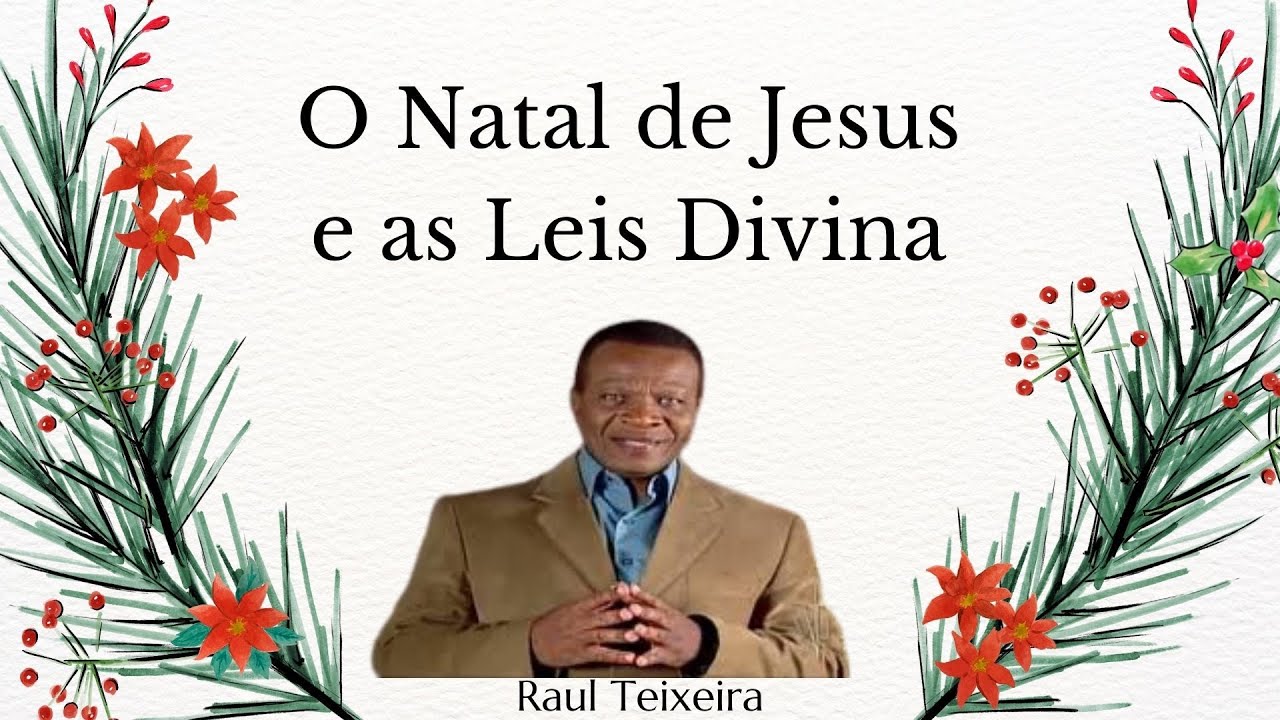
Life and Values Jesus and his Christmas In ancient times, we find a very curious festival held in Western Europe. It was a festival in honor of the god Apollo, which officially marked the beginning of the winter solstice. This festival was scheduled on the twenty-second of December, when the European winter officially entered into force.
And this was a party that brought together a lot of people, especially in Rome, because the temple of Apollo, in Rome, took many people, from all the regions dominated by Rome, in its surroundings, to the festival that took place in the Capital. This was a festival that today we call, and historians call it an eminently pagan festival, because, for three days, people were united around the figure of the god Apollo, who represented the sun. At the time when the European sky was clouding over, when the snow began to fall and the sum disappeared, people used to make processions, evoking the presence of the sun, which always passed in Apollo’s chariot.
It was Apollo driving the sun in his chariot. And, in Western Europe, it was common for people, especially housewives, to put the fruits of different seasons to dry, to dehydrate, so that they could eat them in the winter. They prepared bread, some piece of fabric, so that, on that day, they could exchange among themselves, the neighbors, the family members.
This happened only among the ladies, and, alongside all this, the solstice was honored. It was thanks to this festivity, in honor of Apollo, that Christmas was born. Jesus’ Christmas.
Because, as we all know, no one has ever found out for sure what date Jesus was born, since after His birth, there was a change in the calendar. We came to live under the calendar of Dionysius Exiguus. And Dionysius, or Dionysius Exiguus was that calendar that placed two new months in the existing calendar: the months of July and August, both with thirty-one days, in honor of Emperor Julius Caesar, the Emperor Augustus.
And as the two were months in honor of the two great Emperors, one could not have more days than the other. Two days were removed from the month of February, which now has twenty-eight days. Well, in this calendar work, no one has ever found what the actual date was when Jesus was born.
Some peoples of the East admit that He was born in October, others in December. But this is of little importance. The date that we honor Christmas today is a fictitious date, is a traditional date, it’s a false date, stitched together by the Church; And how did the Church decide to choose that date?
The Catholic Church understood that, since Jesus Christ is a Great Lord, and that He deserved a great homage, such homage should be done on a day when the greatest number of people would gather in Rome. It should be an already existing festival, to bring, to attract to Rome, a huge number of visitors. And exactly that solstice party was thought of, which brought many people to Rome.
For three days people ate, drank freely, around the temple of Apollo, in the famous stalls, which are not current things, they are not modern things, they are very ancient things. And because Rome had several vomitories around the city, people ate, unloaded, to eat again. And for three days, it was a truly pagan feast of limitless food and drink.
Now, on the third day of the feast of the solstice, the twenty-fifth of December, the great procession took place, with the image of the god Apollo, which surrounded the temple and returned to its altar, to the ovation of the excited, drunken people, happy, on their own way, on that remarkable feast of the solstice. From there, the feast of Jesus Christ was held on the winter solstice, in December in Western Europe. Since then, the Christian world has come to admit that Jesus Christ was born on the twenty-fifth of December.
It’s a symbolic date for us, it’s not truly on that date that Christ came to Earth, that Christ came into the world, but we are used to that date, it has already taken place in our depths, in our cultural consciousness. Because of this, there is no problem in choosing any date to honor the coming of our Master to the planet. You’re watching Life and Values From the moment we know that the date of Christmas is a symbolic date, which we have already introjected into our Christian psyche, it’s worth thinking that Jesus Christ is born in us, He is born in each creature, in different periods of His life.
A notable writer from São Paulo wrote, in one of his short stories, in one of his works, a page entitled: “Where and when was Jesus born? ” This page was signed by Vinicius, who was the pseudonym of Pedro de Camargo. And in this message, he tries to situate, for example, in the life of Mary of Magdala, when Jesus was born to her.
He wasn’t born on any December twenty-fifth, He was born on the day he took her out of prostitution, to give her a remarkable life, of respect, of self-respect. If we asked Simon Peter, for him, when was Jesus born, surely, he could answer that Jesus was born after he had denied it three times and realized the mistake, and when the Master appeared to him, opening his arms, as if nothing had happened, in the name of love and forgiveness. Jesus is born for each of our human creatures, for each of us, at a different time, at a time of pain, death, financial difficulty, the illness of a relative, of a child, in a time of despair or in a moment of great tenderness and immense peace.
Therefore, it’s important that Christmas is more than a celebration in honor of commerce and end-of-year sales. It’s important that, for us, Christmas is a celebration of intimacy, of heart, of family, of love. It’s natural that we can take advantage of this Christmas date, which the world celebrates, which the Church has instituted, to bring our family together.
Any dates we can use for good will be a good date for good. Gathering the family, having dinner, exchange treats, no problem. What we should be careful about is not turning Christmas into an exchange of gifts.
Let’s not convert Christmas into a table full of food and drinks. No, this is not Christmas. We make use of the Christmas date to make this fraternization, aware that the most important thing than all the gifts we exchange, all the food we have, the drinks we drink, the most important thing is to open our intimacy, our grotto of the heart, so that there, then, Jesus can be born.
It would be valid for each of us to ask ourselves: In the life I lead, the way I lead it, is Jesus already born for me? Does Christ correspond to an experiential reality for me or is He still a myth revered on the altars, hanging on the pendant? What is Jesus to me?
So, in these times of so many adaptations, when the world today has converted Jesus Christ into a salable product, into a buyable product, every authentic Christian, every Christian aware of how much the message of the Nazarene represents for them, can ask themselves: Have I already allowed Him to be born in my heart? Is it possible that Jesus Christ already exists in me? And when we are aware that Christ has already been born in our intimacy, despite all the demands surrounding that date, sales, purchases, new furniture’s, a new house, gifts, food, drinks, if, in spite of all this, and in addition to all this, we have already managed to make Jesus Christ nestle in our hearts, we have already managed to enthrone Him in us, our life will have gained quality.
Because it’s necessary, as John the Baptist established, according to the notes of John the Evangelist, 3:30: It’s necessary that He increases and that I decrease. As we allow Christ to grow in us, through us, from us, it’s natural to admit that we are growing with Him. When we want to grow, without the presence of Christ in our lives, we grow like an animal’s tail, we grow downwards and, naturally, we become unhappy people.
Jesus’ Christmas can’t be a mere commemoration of tables and commerce, exchanges and fun, but it must be the moment of deep reflection, penetration, introjection to verify if we are already capable of converting ourselves intimately, in the beginning, in the cradle in which the Celestial Friend was born.