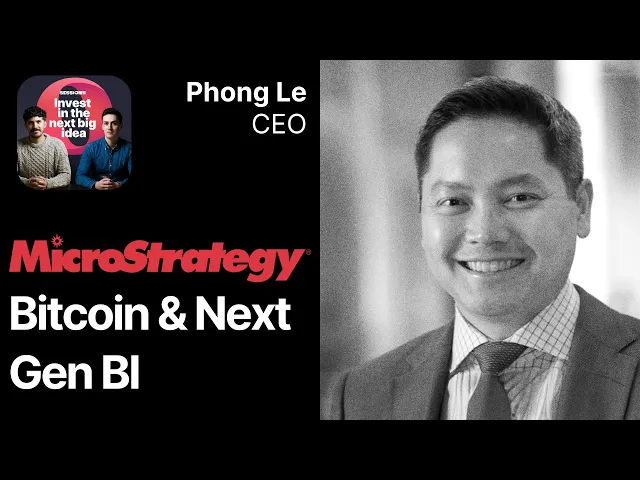
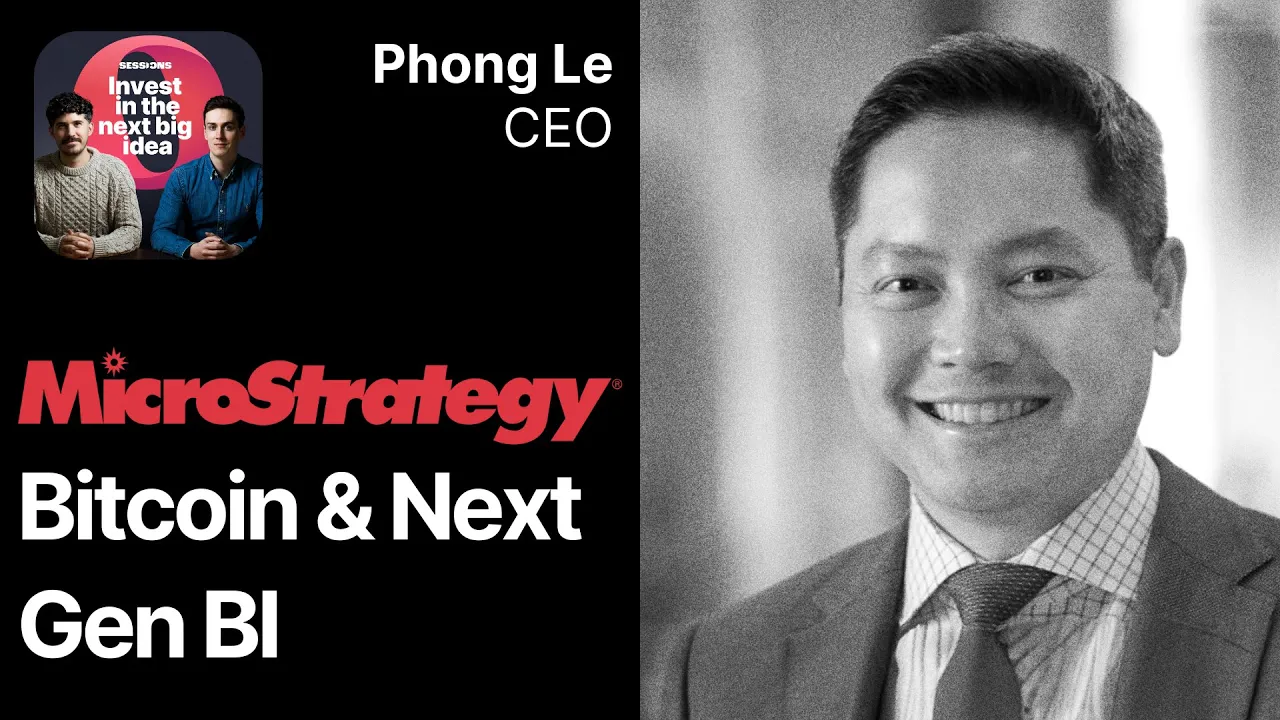
[Music] Paul always suspected king crab was more of a title than a name and he wants to be the first human to bend the claw because one day the Crustaceans will rise and only Paul will be spared foresight's a wonderful thing invest in Innovation and including 3D printing with opto hello everyone and welcome to another episode of opto sessions we're thrilled to have thong Lee on the show today president and CEO of micro strategy micro strategy was one of the first bi platforms maybe even one of the first I you f can update me on
that providing AI powered business intelligence software today it's also well known for ad opting a bit Bitcoin as its primary treasury Reserve asset how are you today Fong I'm doing well thanks for having me Ed is it the first was it one of the first or the first bi platform do you think we were there there were depends on how you define bi but we were one of the first we launched a company in 1989 started offering analytics on relational databases in '92 we were the first to do that yeah uh we offered analytics in
the web in 98 we were first to do that right so browser based analytics which how most people consum it today we're the first to offer analytics on mobile devices in 2008 one of the first in the cloud in 2012 you mention it we were the first to offer fully integrated AI capabilities uh last year was 2023 so yeah we're we're one of the first if not the first with most of the technological innovations in bi and analytics that you know and use and love today yes and and it's obviously a much bigger because a
lot of people would know Market strategy because of its relationship to to bitcoin but it's obviously there's a there's another company there well it's the same company obviously is but that you know it's been around 30 years or longer than that is it do you say over 30 years and you know long history in uh innovation in inbi so it's great to have the opportunity to go over that where are you based from are you are you where's the head office today do you I'm based in uh in Northern Virginia in United States so uh
consider this a suburb of Washington DC yeah okay and is that head office there or do people work remotely or yeah this is our headquarters we have uh about 1,800 employees worldwide the majority uh sit here in North America where our headquarters is in the DC area but we have large offices and Development Centers in uh Poland in uh China in India and Argentina and then we have field offices as an example in London we have a pretty sizable SE field office office uh in London also brilliant um great well I mean I think we
could start just for those people who don't know everything about M what micro strategy does in bi if you could provide an overview of of what it is today where your focus is size of the company key Industries served Etc that would be really yeah and I I'll I'll start with just describing the company as a whole cuz cuz you ALS also mentioned our Bitcoin strategy we're the first company public company to to put Bitcoin on our balance sheet in a major way uh we said it's our primary treasury Reserve asset that we did that
in 2020 and I mentioned all those things together all those Innovations because we're a technology company we we we constantly push the edge of Technology Innovation whether that be in bi or in Bitcoin we're well known for both of those things uh in the bi software space we primarily serve the large Enterprise so think about companies greater than $500 million in revenue and and if you think about the Fortune 500 about half of them are our customers we have about 4,000 customers worldwide millions of people using micro strategy uh and we're proud of that Heritage
and a history the types of companies that use us span the gamut across every single industry retail is our largest industry I'm sure you folks in the UK know SSB well they're one of our largest customers but you know if you look across Europe Schwartz which is you know owns the Leal brand is a large customer of micro strategy Starbucks is is large customer micr strategy that sort of f fills in sort of that uh retail sector in the farmer healthc care sector nine out of the top 10 farmers are micr strategic customers so think
like fiser Astro zenica companies like that um large governments are using micr strategy large part of the the US government but government uh institutions in uh the UK and France and Switzerland and Germany are are micro strategy customers too so uh we're fairly well distributed across industry what do people use this for the terms business intelligence analytics decision support systems often get used interchangeably but I like to think of it as they are empowering Frontline and corporate workers with data and we're that touch point right we're the actual application people are using if you think
about the data space you have data you have you have Source applications you got data warehouses you have analytics tools the analytics tools are what people are touching right whether it be a dashboard that sits in a browser that gives them different information to analyze their business but more so a Frontline workers using a mobile application so I go back to sainsbury you walk into sainsbury people are walking around with iPads or handheld devices with micro strategy sitting on top of those right giving them real-time inventory information traffic information you walk into a Starbucks the
manager there every single day looks at micr strategy understand how much they've sold how many Grande lattes they've sold or you walk into a McDonald same thing right so you have people out there that you're interacting with as a customer using micr strategy to understand performance of their business and make day-to-day decisions right do I need to order more oat milk because there there's been a run on oat milk that's happening in myicr strategy and then they're actually making those transactions too so it's not just like sometimes people think of analytics as pretty dashboards yeah
that's just scratching the surface I'm talking about actual applications just like you have a consumer application on your phone right like now think about a business application that has analytics has workflow has actions that are taking place that's what we're doing very embedded into businesses and and you can imagine every decision someone makes every single day has data involved in it right so you need you need something that brings in the data helps Drive the decision and allows you to make that decision that that's what we do and so when people think about your product
Suite is it mainly is it quite custom is it for you know for each business Enterprise you bring on board you're basically working with them to build or put the data in the applications that help them solve some use cases rather than an off of shelf SAS sort of platform is that correct yeah I like to think we're the best in both world so we're first of all we're a data platform yeah right so you put micro strategy in and then you build application so so it's it's to your point it's not something that you
just plug in and day one it works that said we're we're SAS right we we're cloud-based you can deploy on Prem too but we're cloud-based and we're low code meaning you don't need to have someone who knows seq and as a coder doesn't hurt but you could deploy in weeks right like this is not a it takes you a year to deploy something you can literally deploy something and start using in a weeks because it's cloud-based and it's a low CL code platform and very easy to use and is it possible to dig into a
few more examples of the insights that some of these firms are getting from yeah so so think about let's take a pharmaceutical company like fizer right like and if you know how that business works you basically have people going sales people going door too to visit hospitals to visit doctors right to uh sell more of their Pharmaceuticals and if you're a salesperson walking into a hospital before you walk in that door you need to know everything that you can about that hospital you need to have external data about the number of patients and turnover you
need to have data about what did that who did I talk to last and what did they purchase and what is their purchasing frequency you need to know who are the 18 people that influence the buying decision in the hospital uh you need to know the current price of the drug that you're trying to sell you know how much inventory you have if you think about all that that doesn't come from one place it's not a CRM system it's not a Erp system it's not and then maybe you get 30 minutes you need to be
prepared right when you walk in that door and then when you get out you need to know exactly what action take what to do and if the doctor asks you a question about a something that he or she bought three years ago you need to have that information right then and there to make that deal to make that sale that's really just a complex analytic problem that brings in data from multiple places and you almost want something that then coaches the individual uh far pharmaceutical rep what to say what to do what to offer how
to place the order right and so some might say well that that that sounds like a traditional CRM system but CRM only has certain data sources right and crm's good if you're sitting at your desk right but if you're out in the field you want something that sits on a nice iPad or an iPhone or a mobile device right and so you're walking in there you have all the data at your fingertips you want to look at this and that you want to place this order you might even turn it around and show it to
this doctor and say let me show you something that is a custombuilt mobile app using micro strategy for most pharmaceutical companies and that's where the power comes in right being able to build a custom app very quickly and update it constantly right it's real time that data is coming in that that's what we're used for and and you can imagine the more the person is interacting with a customer on the front line the less you want them fiddling with the data and you more you want to support their ability to have a conversation right so
that that's an example you walk into a hotel you walk into a Hilton hotel the people behind the desk you know the managers you know hey ad nice to see you again you know beyond just hey I I notice you're a diamond tier customer right like thank you for this is your 15th stay at this hotel I noticed that you like adjoining rooms and I also noticed that last week you were uh in Paris how was your stay in Paris nice okay well I just prepared an enjoining room for you here and I also noticed
that you like to order breakfast so can I go ahead and place that order for you ahead of time all of that is happening in micr strategy yeah and how has the focus at mic strategy evolved in recent years with the devel M of AI Etc yeah AI is has been very useful internally because it speeds up our development process products like GitHub co-pilot right like I have a developer who's writing code and if now can complete the code for him or her it speeds up their development process it takes the some of that stuff
away and they can focus on the design and and and the application itself so internally it has provided some efficiencies for the company and we keep pushing and pushing and pushing on that and then on an external basis we have now built it into our platform to provide a lot of what happens in micr straty to be AI accelerated and what happens is now you can interact with our platform using natural language so take the example that I just gave you with a pharmaceutical salesperson now the next thing they want to do is they want
to ask a question of the data or maybe the doctor they're meeting with has a question well now they just type in the question right like if the data if the report historically the report didn't give you the information you needed you either had to go back and ask your analyst to update the report or you have to have the capability to selfs serve and run a pivot table or move things around now you could just ask questions of the data and it gives you the answer right and so we were the first company really
in the bi space to do that right at scale and we've learned a lot from it right about how do you get the data that answer more accurately if you think about geni the use cases in gen I are primarily working on unstructured textual data or or pictures or videos right that's actually an easier problem to solve because when you predict something using a gen that's textual it's okay if it's a little bit wrong and a little bit creative right like and so but what we've done is we combined gen with the ability to ask
the data question so now we're talking about numerical structure data it's not okay if the answer is just sort of okay you want the answer and the same every single time when I ask you know this particular employee that I met with last week what his or her compensation needs are for the next you know six months or where do they rank in the cor tiles of company of people in the the company and compensation I don't want a different answer every time I want the same answer every single time so that's the problem that
we have been working on solving or solving is the predictability of the answer the accuracy and predictability of the answer using J and I mean that's a really interesting point because people are used to this the hallucinations of AI how do you go about minimizing that issue is that just oh you tell me yeah yeah so so if you think about what is Gen AI good at it's good at interpreting the question and it's good at interacting in Rich language and it's good at taking the answer and producing it in a nice format right so
that's what we're using gen AI for you asked me a question right like what is the you know this particular employee in the company where does he or she stand in terms of compensation rank versus everybody else in the past you had to go call up an analyst or run your own an analytics and maybe it take you two days to get a response maybe it take you two hours if you do it yourself uh we can do it for you in in you know 10 seconds right and so how do we do that the
hard part is interpreting the question and so we use the Gen AI to say okay this is what that person meant when they asked that question and the Gen I doesn't just tell us what they meant it tells us what is the query we should run right the SQL if you will and then we take that query and we run it against our data so when you take that query run against the data it's going to give you the same answer every single time so there is no hallucination and then we take the answer and
we say okay now package this in a nice format give it a nice graph then so we're not asking the Gen to actually answer the question we're asking it to interpret the question and then we answer the question right and so think about what it's doing it's taking the role of an analyst in your company and it's now playing the role of analyst right and what does the analyst do they they interpret they're the business analyst they understand the question being asked but then they run the question against the data they're not sitting there and
guessing the answer they're actually running the question against the data the query against the data yeah that's very interesting and I had of a question actually because you mentioned that you've been sort of incorporating this into your internal processes GitHub co-pilot Etc what sort of percentage increase in efficiencies are you seeing today and and how how much do you think it's going to impact it moving forward just from your perspective what you've been seeing today just it' be interesting to know yeah we've seen it depends on the role right so in areas like uh software
engineering the actual coding uh we can see a 15 to 20% increase in efficiency right like somebody in marketing who's creating uh nice designs right like uh creative backgrounds right we can see even more than a 15 to 20% increase in that particular job right uh with copy right whether you're an attorney or whether you're a writer right we can see some efficiency in in editing comparisons Etc right you know maybe even more than 15 to 20% um but uh it can also be distracting in some cases right like you know people say hey I
like it to summarize my my emails right like and and people like the use case it's cute but it hasn't really added to productivity so far right in in that kind of an area so it it's been it's been great you know as a company who both uses it to help revenues externally and and sells it and uses it internally it's it's nice to be able to match those things up and uh keep pushing uh the technology faster and faster the other thing we've done that has been very effective is we've created bot for support
cases right so you be somebody that's using micr strategy has a question about how to work on something or thinks that there's an error and that they need help uh that they would log a support case with us right and we'd help answer and now we've been able to deflect 20 to 30% of those cases because the first thing uh a lot of the folks will do is they'll just go ask the AI about we call it auto uh expert uh it actually sits in the bottom right side of our our website someone goes in
they log in and they can start asking questions that's that's been very helpful right because if we're not answering the basic questions that someone can get just from asking questions of a knowledge base and the bot's able to interact and actually the bot will log a case for you if it indeed finds there is a defect or something that needs to be worked on enhancement then then those those folks no longer have to answer the simple questions to get to work on the complex ones yeah it's PR exciting to see how it's developing uh really
good to hear it lots of companies are trying to adopt it as quickly as possible yeah yeah just going back now to some business strategy questions it'd be interesting to know what your your current growth plans are for the next you know 12 months what what are you focusing on to increase revenues yeah uh so we started this conversation that we're Tech uh company we're inventors we're innovators so you know I told you every 5 to 10 years we invent something that no one else has done before right and it started off with analytics became
analytics in the web became analytics on mobile devices ltic in the cloud we invented this technology we call hyper intelligence which is zero click analytics you know you brow you sort of mouse over something on on a website uh and it gives you the information right then and there just pops it up we met that in 2019 uh and uh you know we we we included AI would call that an invention into our bi platform we invented the idea of putting Bitcoin on the balance sheets for me we're product Le Growth Company you know sure
are we going to grow via um you know entering new markets adding more sales folks be more effective at our marketing sure but we're all about product but growth so we're going to invent the next thing and we have something we're going to release likely in May of next year it's going to be the next evolution of bi or maybe even beyond that I would say maybe a brand new product category so we're very excited about that and this solves this problem the next problem we're trying to solve is is with AI and with Analytics
you have to know the question that you want the answer to before you get the answer and that is actually daunting right like everything in AI right now is about prompt engineering and knowing exactly how to ask a question and if you're a Frontline employee you don't like you're busy you know working at uh a Starbucks right like do you really want to be able to perfectly phrase the question before you get the answer or do you want to be told the answer to the question you didn't even know to ask that's what we're working
on next and I think that's a beautiful combination of bi and gen AI coming together not to force you to get the question perfectly right but to not even force you to ask the question at all that's the problem we're going to solve next so I had another question about what you believe the future of bi is and I suppose Yeah you sort of encompassing it here how how far does that go do you think it will be taking actions without someone having to interpret results is it you know to that length that it you'll
that would be the goal right and then it's a business decision whether you want to do that but if I know all of the context of an individual or of a company let's start with an individual if I know go back to a pharmaceutical sales rep right or or a front desk manager at a hotel or a field manager at a fast food Ching right like if I know all the context of that person's schedule that day I know what his or her role is I have all the applications they go into I know what
their schedule of their employees looks like I know what the foot traffic into that store is or into the hotel I know everything about the doctor the person is about to meet and that's all there you already know all that you probably do know what the question the person wants to ask is and if you know the question and you know the answer then could you program it to take the action too you could do you want to maybe you know on on a lower risk transactional thing right and then you've just automated away the
mundane task of that employee so he or she can spend more time with the customer right um and that's I think more exciting if you think about most employees they're spending you know 60 70% of their time looking for the data the answer to the question as opposed to spending their time with the customer right like how often do you as a consumer do you walk into a retail store a or something and all the people aren't don't have time to attend to you because they're busy doing something in the back room or the back
office right like by the way that's not what they want to do either they'd rather be talking to you that's why they got into this job not to be fig like messing with a report to send to their manager or their inventory folks to know what to order next that's not what they want to do so if we can automate all that gives the customer a better experience gives the employee a better experience too and as another example things such as ordering the manufacturing inputs to some product that's I don't know they might have forecasted
that they've seen a trend rising and the demand for it is it this the predicting these things and taking actions is that another example of what you you sort yeah that's that's exactly an example right and and right now you've probably got a team of analysts looking at that but if you can automate that then you move faster there's less error so is a great thing yeah it's I've always because we have to deal with a lot of data here as well and it's there's always too much data for some a human to interpret everything
going on right it's just it's just it makes sense for a machine to or software to to make that task a lot easier if you yeah you don't you want you don't want the analyst to rule the world and make all the decisions you want the computer to rule the world to make the decisions those types of decisions and you want the individuals who are interacting with customers to have time to to do yep definitely well thanks for that um just moving on to touch on bitcoin a little bit can you elaborate on micro strategy's
Bitcoin treasury Reserve strategy just for those who might know and you know why does it exist what the plan is yeah I'll start sort of big picture what is micro strategy micro strateg is defined as a Bitcoin development company we do two things we buy and hold and advocate for Bitcoin and so that's that's sort of our Bitcoin strategy and we run a profitable growing software business right that that primarily sells and services business intelligence that's what we do so the two things now we talked a lot about the bi side the Bitcoin side first
and foremost is the most revolutionary monetary technology ever identified uh it was invented in 2008 by satosi Nakamoto who no longer exists he experimented with it he played with it gave it away to to to to the world uh and realized that there was importance in a that the next digital asset the next digital currency if you want to call it that uh to have no founder have no Corporation have no country have no CEO it's the Apex Digital asset there really are no other digital assets that matter which is why we're Bitcoin only company
we decided in 2020 rather than continue to invest our cash and we had about one times revenue and cash $550 million uh into Bitcoin I've been in finance for a long time I was CFO at that point in time now the CEO and I'm a technologist too but you know it's always been common for corporate treasuries to say Do no harm right uh in fact uh you have nothing to better to do with your cash start with number one putting in short-term treasury bills right which is what a lot of companies do back then they
were gaining two and a quarter percent now they're gaining more than that but still less than the inflation rate so if you're making less on your corporate treasury with short-term Treasury bills and your inflation rate you're actually diluting the company's Capital so that's strategy number one right strategy number two is do something with it invest back into the company and we do that we take our our certain parts of our excess cash flow and we we innovate we we invest more into new technology so it's great that's a good thing to do uh you have
to have a high hurdle rate for that right like it depends on what your alternative is if inflation is 7% and your Investments back in the company you're only gaining 5% you're actually still diluting the company's Capital base right you're not even clearing inflation a third strategy a lot of companies do is m&a right they go buy something um I think that works in certain spaces maybe like manufacturing where you get economies to scale but in software and Technology they can be considered to be very dilutive dilutive to the customers and to the technology our
biggest competitors in 2005 were uh business objects which was bought by sap and further by now you know they declared an end of life cognos which was bought by IBM no longer the platform it used to be and Obie which was owned by seil in bought by Oracle and that's also now been replaced with uh new generations of software my experience is technology Investments are more often than not good for the shareholder sometimes bad for the employee bad for the customer bad for the tech base so taking your excess treasury reserve and doing dilutive in
the technology space is not a great thing either so the last thing you can do is you can give it back to your shareholders in the form of either dividends or in the form of uh stock buy bucks and that means you're DEC capitalizing the company means you've got nothing better to do with your money than to give it back to the shareholders who will then decide what to do most company most people invest in a company because they believe in its leadership they believe in its strategy so if you come up with something better
than the shareholder can you should and then you don't decapitalize the company so you still have the capital so long story short the best thing to do as a corporate Treasurer is to find the highest return asset and invested and that's what we did we found Bitcoin which on average at that point in time was growing uh about 40 to 50% a year uh I think to this day it's still a 43% a year and if you can find a 43 % a year growth asset and invest your cash into it and it's perfectly liquid
it is very volatile why wouldn't you do it and that was the strategy we came up with we were the first public company to decide that Bitcoin should be our primary treasury Reserve uh asset and it's been very successful it has caused us to be the number one performing stock in the S&P 500 in the world um so it's been an extremely successful strategy and when you combine the Bitcoin develop vment company and buying and holding Bitcoin with what we've done on the bi and the software space an operating company that uh produces excess cash
flows and profits we have something that is unique and no one else in the world's yeah incredibly forward looking so got in that early and it's uh working out very well today I had a question a lot of people ask about uh just basic accounting just so you could sort of make the opaque account and stuff a bit bit clearer for people how do your your balance sheet how does how do theit coin purchases affect how you know your balance sheet is is um visualized basically yeah it's it's it's confusing right like uh the uh
original accounting for Bitcoin when we launched uh the strategy 2020 was to treat it Asin definite intangible asset what that means is you treat it like art if it goes up you don't get to show it on your balance sheet or on your income statement unless you sell it okay if it goes down you have to take the loss on your balance sheet and your income statement so every single Bitcoin that we have in our balance sheet is currently valued at the lowest price in the existence of that particular Bitcoin so you only recognize the
losses and you test for the losses every single quarter so if I bought Bitcoin at uh $63,000 and last week Bitcoin went down to 53,000 at the end of this quarter I will have to show that Bitcoin on my balance sheet at $53,000 and I would take that $10,000 loss when the Bitcoin goes back up to 63 or to 73 or 83 I don't show it on my balance sheet wow so you only get to recognize the losses uh obviously that's confusing so the SEC decided uh in December of 2023 to change the account for
digital assets to fair value accounting which means that now instead of marking it down only you mark it up and down every single quarter which is better much better we have yet to adopt that uh the requirement to adopt it is at the beginning of next year so we've been looking at but that allows you then to show the Bitcoin on your balance sheet at its current fair market value up and down which is much more appropriate okay cool yeah that that makes it a lot clearer and am I right in saying the liabilities are
going up as well because sometimes you're taken upon debt to buy those Bitcoin assets yeah yeah we found that there have been very effective ways to acquire Bitcoin and one way is to access the capital markets so sometimes we'll issue Equity right to to access the capital markets and we've done that with billions of dollars of equity issued to buy Bitcoin and then at times we'll access debt markets when we access the debt markets we prefer something that's long-dated so right now our average duration of our debt is is about six years right uh and
we prefer something that uh has low interest rates so convertible debt is has been our our primary sort of way of of doing this and so uh the debt that we've accumulated has an average of six years and about 1.6% interest rate and we've accumulated uh now about $3 billion of debt we bought Bitcoin with it uh on average our Bitcoin has been purchased across the last four years at about $36,000 a coin and so you can do the math uh Bitcoin is you know right now sitting at around uh $55,000 I would made a
pretty good uh you know sort of paper profit on that Bitcoin and uh it allows the Enterprise value of the company to be increased which allows us to take on more Equity take on more debt buy more Bitcoin yeah and um thanks very much th and I just thought we could have one more question just before we we wrap up I just wanted to understand more about how as a as a large company is already established how do you maintain a competitive Mo in the marketplace um I mean I know if you're focus on Enterprise
you'll have lock in for a lot of those over many years but how do you know with the other competitors in the space how how are you trying to maintain your competitive Advantage yeah the the best thing is to stay focused right and I talked about companies who enter new markets who go through dilutive Acquisitions who sell themselves who decapitalize the company who do things that they don't have conviction in and that is a lack of focus right the more we focus on our customers on our technology on our employees on our strategy I'm buying
and holding Bitcoin the better right we could have certainly gone into nonadjacent markets to bi and decided we wanted to build Erp software right uh that would have been a lack of Focus we could have decided that we're going to buy not just Bitcoin but we're going to buy some other coins that'd be a lack of focus you're right it is an extremely competitive market technology enterprise software even more so it's one of the most profitable businesses you can get into is long-term business right you keep your customers on average sometimes more than 20 years
our top 50 customers average 23 years with micro strategy right it's an extremely economically attractive business it's a much easier business to run you have no fixed assets you have no supply chain essentially you don't have things that are going to spoil right as an example we for the most part don't have unionized employees right so it's a very easy business and so a lot of folks want to get in which makes it even more competitive and the way you stay ahead of the competition is you got to innovate you've got to stay focused yeah
and sometimes people might say those sound like different things no you got to innovate in your lane right do what you do really really well and do it better than anyone else in the world I think that's a really good point I think I saw a clip recently it was Steve Jobs who said something along the lines uh of there's gonna be so many opportunities of what you can do so the most important thing is choosing what not to do with you with your time so really interesting to see that you're backing up that sort
of philosophy thanks very much for your uh the chat today bong it's really interesting to dig into the company a bit more highlight a few things that a lot of people may not know um is there anything you'd like to say before we leave today or no I appreciate the opportunity we're excited about our business both on the software side and the Bitcoin side and we have a lot more work to do but it's it's it's a lot of fun thank you