Okay welcome everybody can you hear me and see my screen fantastic um firstly I just want to say welcome and thank you so much for having me and the talk today is about my PhD work so I'm in the third year of my PhD and I'm currently trying to do lots of writing up and lots of analyzing and so what I'm sharing today is really a working progress Um and some ideas really that I hope can generate discussion um and I'm a little bit nervous because um I've read lots of your work and you've got
lots of you have inspired the things that I'm doing so I just want to say thank you for that um but the talk that I'm going to do today is about how teachers build a curriculum for their classroom and how LCT might be able to support teachers and in doing it more mindfully And with mastery so my talk I'm going to talk a little bit about my problem space and and my experience of the problem and then I'm going to spend quite a bit of time and share my analysis of teachers curriculum development work um
and again how they design their practical work and I'm going to talk about um the potential that LCT has and how we could use it with with some teachers and To support the way that they do it so here I've got a model by Mark Priestley which shows different sites of activity and it suggests that curriculum is made in five different sites and when I'm discussing curriculum design or development or planning in this talk today I'm referring to the work that teachers are doing and in translating these kind of these standards the specification this kind
of Curriculum policy and translating it into what teachers are actually using in the classroom and so I'm really interested in this micro site where teachers are designing schemes of work or sequences of lessons and my work didn't really look at the individual unit of a lesson and was more looking at sequences of lessons and so for clarity I'm not talking about kind of Designing the the big National curriculum policy stuff Um so what we know is that teachers and Educators they don't simply just deliver the national standards and teachers have a huge part to play
in translating the curriculum into something they use in schools and in classrooms and the practices that teachers use can be described as relational complex and multi-directional and teachers do lots of reflection and they have to make informed decisions and then reflect their different concerns and their Context and yet what we know is that when teachers are doing this really complex work and these practices are really poorly understood under researched and under theorized and what's more when we think about lots of teacher training and professional learning there seems to be a bit of a blind spot
when it comes to what we mean by curriculum scholarship and and what's required for curriculum planning so I Started teaching in 2012. and I know lots of my teacher training on all of my cepd has been based around pedagogy and has been based around and activities and how to present students and how to do classroom management without any real kind of and I've never really had that understanding of what we mean by curriculum design and and this leaves teachers in this kind of difficult place because teachers are designing that curriculum they're Selecting knowledge they're sequencing
the knowledge and yet lots of the decisions that they make they're either acting on instinct or they're based on trial and error or they're based on kind of experience that's been accumulated over a long long period of time and this was definitely the case for me so as a teacher at a school in Doncaster and I was asked to design sequences of lessons and I'm a science teacher and then I became Head of science there and my my team I had other teachers designing sequences of lessons and so as teachers we are designers of these
sequences of lessons um the curriculum that I was working with was a thematic problem-based learning curriculum where at start with the subject standards in science and think carefully about what I selected and what I sequenced then think about how I Integrated um science with history and make made it and cross-curricular and then had to kind of review my own subject boundaries again they did students really learn what I wanted them to in science but the problem that I experienced was I was learning about curriculum design on the job I was learning by watching others do
it in this kind of apprenticeship model And yet when I was talking to teachers about how they did it and they didn't really have a language that they could use and articulate what they were doing they couldn't justify the decisions they were making in a way that made sense to me um so so it's really hard to build this knowledge base about what I was trying to do when I was designing curriculum and what I wanted the teachers in my Department to do and we just didn't have a language for doing this so I became
really curious about the process of creating successful curriculum and that teachers were involved in and the teachers then used and the professional knowledge needed to do this and so I remember one moment I guess my introduction to LCT I was sat in school And I was quite deflated because I was having real challenges trying to design the curriculum and articulate what I wanted to do and Richard poundney who's here today and now my PhD supervisor he came and sat with me and I was I just said to Richard look I don't know what I'm doing
I can't Design This curriculum the way I want it I've got all these problems but I don't have a language for expressing that and what Richard did he just got a Scrap of paper and he just did a tiny little wave on the page and he said what I think you're saying Robbie is this what I think you mean is this and and that to me it just kind of unlocked this this way of thinking this language that then meant richer than I could stop talking about curriculum and that enabled me to really understand the
problems that I was having and so I guess I'm very biased and but To me that kind of that first step into LCT and was really it really illuminated kind of some of the decisions that I were making and made visible to me and some really important curriculum design practices so I just thought I'd just stopped for a moment and just reflect on whether you've got um experience of this kind of problem I wonder whether um I'm sure lots of you have have designed your modules that you teach at universities and or you're working with
teachers themselves yourselves whether you've selected and sequenced the curriculum that you teach and I'm wondering really how did you know what to do what forms of knowledge did you draw on and how did you learn to do it and again if anybody would like to to share that would be fantastic Robbie so let me start um I was involved in a quite an interesting study of curriculum of different teacher education institutions in South Africa it was called the initial teacher education research project and it was so interesting because we we analyzed the the curriculum from
first year right up to fourth year and then the one-year pgce over a whole lot of Institutions um some of them started with like Lecture one um you know express your philosophy of teaching and then the students were held to it for the whole you know for the next four years um others were no you you know this is something that you can only really do much much much much later in your career um some of them started with um let's understand this the children's needs and resp you know um how do we be inclusive
Um and so the students would go into the schools they could unders you know they could identify barriers of learning or so on but then they they didn't have this the content or the pedagogical knowledge or of how how to respond um others start with the the content knowledge and so on um and uh the the pedagogic knowledge to teach that content and only get to the kind of the barriers of learning later So we we we saw different um underlying principles of how different institutions created pathways you know from kind of um the the
the the beginner to more expert ways of understanding but I think that that's what I came to understand as a curriculum is a kind of a pathway of learning that you that you create through a complex field um and you know there can be different Underlying principles in terms of what route you take according to the priorities um and and you know what the the way you see the the the that cumulative pathway developing yeah so that was one that was one experience thank you so so I guess what you're saying is that the these
different institutions design their curriculum in Different ways starting at different points um were you able to ask teachers or sorry the institutions why they designed it in the way that they did um yeah we did do those those interviews as well um and I think that it was it was very much um informed by the idea that you know either you you take the right kind of Knower and then you train them to do this this or um you you you or you're training a um somebody to be a reasoning thinking practitioner and then you
know what drives the logic is it kind of in South Africa principles and of inclusion are huge you know given our apartheid history um and also um the content knowledge and what's Appropriate to the subject is also huge and and you know there's attention you know what do you put first um what [Music] what do you need to master at a basic level so that you can engage in more complex levels later and sometimes it's iterative so you know um we we it was just interesting to see um those how how their conception of the
Practice in this case it was learning to teach um was enacted in in those those curriculum designs yeah thank thank you Lee um can I just yeah the full source of this hand raised Paul hi um yeah I mean I was just gonna say my some of my practical experience so one of the things I mean I'm not really sure how I know How to do it but I think it's sort of been kind of apprenticed so I've only done sequences over multiple lessons or sort of at Main well mainly a university I've done some
stuff in schools as well but um but generally I started by working from other people's modules where I might maybe was given the chance to well my first experience Was I was given a chance to take somebody else's module and I or and I taught the lecture course more or less exactly as they did except I changed one lecture that I thought something was missing um and so I added to to what was there that was just talking something in but that sort of then has encompassed the way I've done it over the then the
next 20 years but it's always been iterative That I reflect every year and I change and I tweak so I don't expect to get it right first time I get something that's about writing usually usually I'm starting with whatever's gone before but then I'm every year I learn from what did or didn't go like the year before and then and then you tweak it and you you move things around or you realize oh actually this is missing And so this would be better here and so it's for me it's a completely iterative reflective process that
I don't expect to get it right for the first three or four years and then when I know what the problem is then I'm gradually I hope getting better at it and things change so you kind of change what you're teaching as you go along and how you're teaching it um In terms of things that I was told I went on a how to lecture course right at the beginning and I and I and this was in in Cambridge and I completely disagree with that one of the things that I remember from it and the
other kind of agree with so one of the things they said is never do the same course for more than three years and as I just said I don't think I even know How to do it until at least three years in so that's totally wrong I think they said you know by then your Jade had pass it on to somebody else um but the other thing that they said is don't leave all the hard stuff to the end don't think you start easy and gradually get harder because the you need something at the beginning
so this is about sequencing you need something At the beginning to challenge the better people the ones who've got some experience already or know what they're talking about so start with something hard because the other thing is you need hard things at the beginning because they're the ones that everybody needs more time to get their head around and if you leave them to the last lesson then nobody will ever get a chance to learn it and how you do that is really difficult but I think that's I always Felt that was an important thing that
I've then tried to do and pushed some of the harder stuff to the beginning and keep coming back to it um so I mean that's just my general practical experience about some of this thank you Paul um yeah I just wanted to pick up on that because I can definitely that that idea of learning from examples and learning from other people's curriculum it really Kind of resonates with me and I I remember looking at these really well-designed curriculum but not always really knowing why they've made the decisions that they've made why have they sequenced it
in that way what are the underlying principles of that curriculum design so even if I looked at it and I was like oh this is amazing I still wasn't always sure about what what it is that they've done that made It amazing and does that make sense yeah those underlying principles were sometimes invisible unless I'd as you say taught it a number of times and reflected on it well one of the other things actually about how I've always design things as I you start with the learning outcomes and you know also the syllabus what if
assuming there's sort of some outline syllabus that you've been given which is usually just a bullet point List and then I kind of from there I go to hell am I going to assess it and I go to the sort of content and the Order of the content after I've decided how I'm going to assess it and I don't know how you kind of assess things through kind of relates whether that's formative or summative but that kind of helps you design the sequencing and what you actually select to teach as well and the other thing
is you can't actually Actively teach everything so there's a mixture at University at least and the things you talk about and give them explicitly to do versus the things you're that are there that that they can work out for themselves if they're interested enough to do the for you know further reading or whatever they can read Around the subject so there's this core that you have to decide what is the call that everybody's got to get and that's the stuff that you Focus on and and that's the thing that you kind of then sequence but
then you try and build this Mass around it that people are who find that straightforward or interested to do more they'll go and work out the rest and that's especially so in programming which is what I've mainly been teaching for most of my life but this is this Core Concepts but if you get those Core Concepts the rest sort of easy you can Work it out for yourself so that's what I have to teach and I you can spare down what you teach explicitly to a very sort of smaller subset because they can wear the
rest out for themselves it's the idea but that's one of the principles I've kind of followed right thank you and thanks Paul thanks Lee um I'm gonna keep moving forward so in my research I developed these Research genes and now we're in my school group and in lots of schools in in England we're talking about this idea of active learning in science um but the two research games I really want to focus on in today's talk is this understanding what constitutes the Professional Knowledge base required after curriculum design or development and really to develop a
model to support teachers curriculum design practices or their curriculum thinking Practices and and this was so important to me because I wanted my PhD work to be practical I wanted it to help me I wanted it to help the teachers in my school I wanted teachers to be able to design the curriculum more mindfully and with Mastery and so that that's what I was really aiming to do in this study so I used a social realist approach and and with the depth ontology so that I could go beyond just kind of describing What teachers were
doing and really get at the basis of practice and to understand why they were doing things why they were making decisions that they were doing I used an instrumental case to the approach so I went into five different schools and spoke to teachers I interviewed them I looked at their curriculum documents and and it was instrumental in a way because the five schools that I spoke to And the way that teachers there developed their curriculum it's not generalizable it's not the way all schools made their science curriculum or translated the standards into what they teach
in the classroom and but that wasn't the point of this study the point was to kind of develop this model um to help teachers think about curriculum design more more mindfully and then so therefore LCT was hugely uh Useful to me in developing these models so the first tool that I used was the specialization plane and specialization dimension which conceives practices as knowledge narrow structures and who's organizing principles can be explored in terms of epistemic and social relations where the epistemic relations kind of referred to design practices that and emphasized knowledge and and the social
relations we referred To curriculum design practices that emphasize the knower so emphasized students engagement with science who they were as scientists and how engaged they were how much they enjoyed science so what I suggested was by kind of mapping out different forms of science curriculum on the specialization plane we could have a knowledge-led science curriculum where we've got this stronger epistemic relations and weaker social Relations so really the focus is there on the students learning the science knowledge is it sequenced correctly there's the emphasis or this nowhere LED science curriculum where teachers were designing it
for engagement Making Science really relevant to them and making sure students felt like and they were they were interested and engaged in it and I guess my work before all this kind of curriculum Design stuff was around this idea of active learning and I suggested that although Active Learning teachers thought about it in different ways there was a really clear knowledge component to it and that through Active Learning in science to be to be effective that we had to make sure pupils were thinking about the knowledge and the knowledge was emphasized but also we wanted
students to be engaged and feel like science is Relevant um so I said this Active Learning had this stronger epistemic and stronger social relations I developed this translation device to help me code my interviews and where knowledge code emphasized and curriculum design principles which kind of emphasized science specialist knowledge and the principles and the procedures of science where design principles on a network Code were kind of around developing students qualities their attitudes their disposition and their engagement in science and an elite code the design principles would emphasize both and a relative miscope would emphasize neither
sorry Robbie yeah can you go can you go back one step thank you um so when you when you are talking About a um a NOAA code dominating a science curriculum are you talking about um students like putting emphasis on you know careful observation analytical ways of thinking those sort of things or are you talking about kind of um connecting with children with the students um natural dispositions if one can call Them that or interests and so on you know I'm just trying to I'm I'm looking you know are you looking at the the knower
of science or the the students as people who are learning science I I don't know if there's yeah so for this part I was looking at the designing for for who the students were so that their attitudes and how they felt their dispositions and then I think what you're referring to is this idea of kind of how science works the Observations um and that I guess comes at to me I analyzed that a bit later so I thought that this idea of students designing hypothesis and making predictions and observations was a form of knowledge right
I kind of unpacked this a bit later um so so can I just give an example which uh just to see if I'm on the right track Um we we did it at a round table I think two years ago where a person teaching evolution had to First unpack the students cultural um assumptions and of of evolutions and um you know how how they work with that at home especially in in um you know in terms of their religious beliefs or their cultural beliefs and so on before she actually moved on to the knowledge is
is that is that more like What what you're referring to here thank you for being curriculum design principle yeah okay then this is on a network code yes thanks thanks so much no worries um so once I did I use this tool to analyze ideas at interview and I've got suggested um different codes for the schools that I went to so school one I suggested had a stronger knowledge code because when he talked to me about their design Principles they talked about oh we designed science in key stage three and by selecting the foundational building
blocks are going to be the most important steps for students learning science in key stage four um so really they were talking about the decisions that they were making were based they were based around an emphasis on knowledge on selecting the right knowledge on sequencing the right knowledge Whereas School two when I spoke to them suggested they had a bit a more stronger Elite code because teachers were talking about students have an enjoyable curriculum experiences and having fun practical work being engaged having science relevant to them talking about West Sciences in their in their real
world and but also having things Bound by knowledge so I suggested that the fire schools I went to Um could be mapped onto the specialization plane and I mapped them like this following analysis of curriculum documents and these aren't so these These are sorry relative strengths and it's not an exact science um but the five schools that I went to their design principles suggested a focus on knowledge so stronger epistemic relations so teachers often talk to me about selecting the right knowledge and Sequencing the right knowledge in a hierarchical way and so that students could
learn science in kind of one thing building on the next and two schools also emphasize the social relations so two schools and like you're kind of alluding to and talk to me about how where science in their world and and making that really important and having students engaged in that discussion so I kind of consider that this would be Helpful um to me as a researcher in understanding where teachers practices were but also perhaps some form of this might be helpful for teachers so they could look at their curriculum and think ah this is where
I am at the moment this is what I would like it to be but what I really wanted to do I wanted to take this further and I wanted a model which would support teachers Curriculum thinking their decisions their design practices and so I needed to go into a bit more depth so what I did is I asked teachers how they designed the curriculum what principles they used and so earlier you said Lee um when you talked about the institutions you said and sometimes they designed their their teacher learning programs based on this principle of
inclusion and That being quite important well the teachers that I spoke to said um there's these kind of six principles that came up so I'm not suggesting this these six principles along the top are all the principles that could possibly be used in curriculum design and these are just the ones that teach us that I chose and the schools that I went to spoke to me about at interview and from the curriculum and the five schools Um can be seen which curriculum principles they talk to me about so all the schools I went to they
talked to me about threshold Concepts if they didn't use the language of threshold Concepts they had some idea of it and they talk to me about the foundational Concepts which kind of support future learning and science and two schools talk to me about this idea of a curriculum narrative this kind of narrative for learning across a Number of lessons which um learning builds in kind of a schema over time and I'm going to unpack some ideas of curricular narrative um later on teachers talk to me about Big Ideas and these are quite specialized in science
and they're developed by wind Harlan and these are kind of General abstract ideas which connect Concepts teachers talk to me about big questions and these were student-friendly Questions um which existed over a sequence of lessons and these were so that students had something to kind of hand their knowledge on to um so that would help with our learning some teachers use cross-curriculum links and to connect subjects across the curriculum and help deepen learning that way and some teachers talked about the idea of a science Capital teaching approach And this is an approach developed by Louise
Archer which Builds on budget's notion of capital and it really emphasizes experiences in the science classroom and in the stats curriculum and connecting science to the to and connecting the real world um with some of the sites that students were learning so as I say this isn't a comprehensive list of principles but this kind of helped me unpack further some things That could be used can I just ask these are things that teachers have said yeah yes so then they're not the curriculum development principles used by teachers they're the critical development principles mentioned by teachers
yeah the the once when I said how do you design your curriculum this is what yeah these are the things that they said they used just want to be careful that it Doesn't mean if somebody says they use a scientific science Capital approach it doesn't mean they use the science Capital approach that means that they know the word science Capital approach and they've decided to apply that to what they're talking about I just want to like it's just really it with your with your studies can be really key that you just like make these it
sounds a bit politically but it's the sort of thing that a reviewer or an examiner or Something can pick up on which is to say actually you have no data on what they've used what you have is data and what they've said and there's just those small words will keep you from falling into a large hole if we just just get used to saying that thank you that's what people say they do it's like what people do necessarily so just just yeah it's a small point but it's one of those things where I can see
a hole in the ground ahead that someone Will try and trap you in if you don't want you yeah thank you Carl yeah so for yeah just to build on that so I didn't so when I spoke to teachers about their curriculum design and their intended design I didn't then go and observe the lessons and the sequence of learning after so I couldn't follow up and check and say yes that they did use this so this was about yeah what teachers said they used Robbie yeah sorry I've also got a question um did you ask
them about kind of Designing curriculum generally or did you ask them about designing curriculum of how they teach electricity or how they teach a particular topic and if so was that the same topic overall um all five schools or was it more just kind of General General about their General approach to science yeah so I asked teachers to give me an Example and talk to me about one that they chose so it was they didn't talk to me about the same example and I'm going to share a couple couple of examples coming up um particularly
related to this idea of a curriculum narrative a sequence of of lessons um so some teachers talked to me they all talk to me about key stage 3 science um but they chose different examples based on their specialism And I guess what they what they could describe um best I guess um so Robert can I Robbie can I ask you at this stage had you looked at we've taken account of the curriculum documents that they shared with you which which of course is in the English context is set by the national curriculum for science so
at this stage where you take an account of the of the of their Curriculum documents and which if so which curriculum documents did you have access to yeah so again this was an interesting one because when when I said to teachers well what's your curriculum planning look like obviously different teachers in different schools have different curriculum planning teachers schemes of work and the way teachers design sequence of lessons will look different in every school Um so what I asked teachers was to share with me what curriculum planning meant to them what a sequence of lessons
went meant to them um so often what I got was quite similar it was about this is the content I'm selecting this is my sequence this is my pacing this is how long I'll spend on each topic these are some potential activities these are some practicals these are some field work or trips I might go on Um that's the kind of thing teachers would share with me but again it wasn't it wasn't um there wasn't one identical template that teachers shared with me Paul can I just go back to your answers to Carl you know
this thing about observation I mean you said you didn't watch any lessons would that actually get at the principles anyway because well if you're interested in the principles and how they curriculum plan What you would need to observe is somebody planning something they're going to do in the future and then perhaps observe what they do to see if they did what they planned or something else but I mean I just wonder to what extent actually watching somebody's lessons would you how much would you get of how they planned and what the principles because you already
said when you're answering me that Principles themselves are invisible and you can see something that looks brilliant but you you can't get the principle so do you think having talked to them and then watched you would actually be able to see how the principles had applied in practice or would you actually need to observe yeah so that I guess that is part of the reason why I chose not to observe and observe lessons because because it wouldn't make visible some of the design Practices that teaches um teachers used and the decisions that teachers made I
wouldn't be able to see them by observing a lesson um if You observe them and then you question them about what you'd observe perhaps so you know who like the threshold Concepts principle you might be able to sort of spot oh they seem to be teaching something explicitly there's a threshold concept but then kind of Asking them afterwards you know so why why were you teaching well in my case sort of sequences of assignments and then if they were saying well I I did that and I gave them that test because it's a threshold concept
and I wanted them to um I wanted to pick up the people who had got stumbled about it so you might be able to do it with a combination of observing and then and then interviewing them after the Observation about what you'd observe to kind of understand it or what we do in HCI is you know you video something and then you get them to think aloud about why they were doing particular things that you know so it's not necessarily you just questioning them but you get them to watch what they did and then ask
them to explain what they did yes it's interesting thank you Paul whether that would get a principles or Not hmm yeah um best way of pitching exactly what you did look at so yeah it is interesting and it's yeah I guess I could have probably done it in a number of different ways um so yeah I guess what was the main thing is Carl's point that you Just don't over claim which is if you claim you know what people do then you've got to have done something else to have found it out whereas what you
can claim is what people say they did yeah it doesn't really matter which of those you've done as long as you don't claim you've done one when you did the other right but yeah I mean I'm just getting at this because it's just interesting of How on Earth you would kind of work it out what they actually did in a solid rigorous way thank you um so so I guess when when teachers said they use threshold Concepts again I wanted to unpack that deeper and say okay so why do you think threshold Concepts would help
you why were they important in your curriculum design and what teachers said to me they kind of said yeah they're really important Because they help me think about what knowledge to select and focus on and return to they help me sequence my knowledge and the way that I design curriculum so what I kind of went on to do was suggest that these different principles were used for different reasons and that when teachers said they used threshold Concepts most the time um they said they used them to try and Strengthen the epistemic relations to try and
make their curriculum and have a stronger focus on knowledge it was quite interesting when I spoke to teachers about when they said they used a curriculum narrative and then they I asked them why they used a curriculum narrative teachers said they used it for two reasons they said a curriculum narrative could strengthen epistemic relations by helping knowledge build in a certain way but the narrative Could also help social relations by making students engage better with the story of Science and make it more relevant to them so I suggest that by talking to teachers about some
of these principles and why they use them that they could have different effects I'm going to share an example so school can I can I just ask one other quick question okay which I've I've never sorted out myself about LCT with this Um so you're talking about knowledge where does skills come into this because I would use threshold Concepts to help give people skills you know it's partly knowledge but it's also getting you over a barrier that opens up the ability to gain a skill yeah so our skills part of who somebody is or are
they part of the knowledge so I've suggested that they're part of the knowledge um and I'll I'll I might skip forward a Little bit to come on to that um because I think that's something that I think as Elise raised in a similar way that that's quite an interesting thing in science that we've got this idea of science Concepts we want students to learn but we also want students to learn skills of Science of using specialist equipment of collecting data and making predictions so I might skip forward a little bit to make sure we get
onto that Um but what I'm suggesting here is that when I spoke to teachers they said they wanted a curriculum that was around knowledge and around students being activists and about the static and being relevant and connected when I unpacked that with them they said that they used a number of different curriculum principles to try and strengthen the emphasis on knowledge or strengthen the emphasis on the nowhere so teachers said yeah I'll use threshold Concepts to kind of strengthen the focus on knowledge I'll use the exam spec I'll use big ideas and that'll make sure
my curriculum has this knowledge Focus but I also I want to make cross-curricular links I want and experiences and big questions and that'll help students uh that that all kind of give an emphasis on the nowhere and help students relate to what I'm doing Robbie yes um I I was I was actually interested Whether they there were shifts between knowledge and nowhere codes or whether they were all doing all of that simultaneously interesting um okay so I guess what I guess the different principles had different um different emphasis and different emphasis so when teachers they'd
start off talking about threshold Concepts and then they say oh I also did this and Then I also did this so I think teachers I think they went back and forth most of the time um between the knowledge and the knower and if they in this situation they were aiming aiming for this intended curriculum that had stronger both social relations and stronger epistemic um I did come up with some teachers that talk to me about their curriculum problems though Um I'll just fast forward to that because I think it answers your question um so when
this school talked to me about this intended curriculum design they said they come across two problems and they said sometimes when they design their curriculum it's got too strong a focus on the kind of social relations that's too strongly focused on this idea of students being activists and they're curriculum being relevant and they said It lacked subject Integrity so it lacked a focus on knowledge um and other times teachers talk to me about their curriculum and said you know I've got this strong knowledge curriculum where knowledge is sequenced but it really lacks a stronger social
relations it doesn't help students think about science being engaging or relevant to them and they talk to me about these problems and so I suggest we've got these two Kind of shifts that might be able to happen that if we've got this kind of weaker epistemic relations curriculum where it's thematic how would we strengthen the epistemic relations how teachers make those decisions teachers may decide ah threshold Concepts might if I use that it might help strengthen it and move towards where I want it to be or they might decide if I've got this uh really
knowledge heavy Focus Curriculum okay I'm choosing I want to change my curriculum and make it a bit more irrelevant to students how do I do that what principles are there and they may decide to use something like a science Capital teaching approach or they might want to use big questions to make it more relatable to students so I thought that was quite an interesting example of how LCT and mapping out the different ways we can Think about curriculum might help teachers think about some of the problems that they have and again some of the ways
that they could get towards what they want their intended curriculum design Robbie can I just just come in on that as well because I think um I I love to sort of think and think as I speak because I had a similar question to Lee and uh in terms of what I think Lee was getting at Um so it was sort of switching dimensions a little bit um because I struggle with with Elite code coding so how how do you know that the curriculum or the the intended curriculum is Elite code rather than it being
a movement between the knowledge and the The Knowing so a sort of a semantic wave as it were from conceptual knowledge to then contextualizing that that that um conceptual knowledge and making it Relevant to the students so that might be real world examples that might be a little bit of a case study that might be asking students to relate it to their own personal lives so you could see that as a as a knowledge oriented curriculum with waves down to contextualization rather than it being an elite code per se where the the driving curriculum principle
is actually both um and I'm I'm problematizing that Because it's something that I'm struggling with myself at the moment um as well like what's the difference what's the difference between an elite code curriculum and a curriculum that simply moves between those two different forms of knowledge um other people may have views can't call me but may be able to come in and sort of differentiate for us as to what a what an elite code curriculum actually looks like and it's differentiated from Those moves but um yeah can are you able to see that difference um
thanks for the question it's a yeah it's a fantastic question and I I don't have the answer and it's not it's not something that I've thought about um but I think it it's a brilliant question um if anybody wants to to add in that would be fantastic I will actually if that's okay Um I do agree with the coding that you've got there my background is also in science and we think about the curriculum as a unit and the outcome of the curriculum so the things that we want students to know and be able to
do and embody in all of that if there are values expressed within that intended curriculum alongside those knowledge outcomes then I would say it is an elite code because both are coexisting as Outcomes of that curriculum I think you can look at it in different ways I think definitely you can look at how those things change across the curriculum but I see this as identified we've identified the curriculum as a unit and so we consider what the curriculum achieves or what its objectives are as part of that and if both are coexisting then I would
actually classify that as a leak because you can just have knowledge on its own And you can just have values on its own but they're together in this intended curriculum can I can I paraphrase that I'll come back to you and just clarify if if I understand what you said there so I think I think what my understanding of what you said is that possibly this idea is that we've got the curriculum intended outcomes Um and they could be different to do the way that the curriculum is delivered so if the pedagogy of using semantics
and we've got a difference there which then talks about um whether it's an elite code or whether it's switching and using semantics I don't know if I've ever expressed myself very well though is that what you meant are you are you speaking to me or Steve either No that's it I didn't need a response I was probably responding more to Steve Lee's questions um but yeah thank you probably you could you could continue great thank you um Okay so what I wanted to do I wanted to try and explore some of these principles further so
for example a curriculum narrative and how Um how teachers to design a narrative over a sequence of lessons and I thought semantic gravity here in particular would be really helpful to me and the degree to which meaning is dependent on context and having this stronger semantic gravity this really context dependent um these context dependence ideas in the curriculum all the context independent and so I asked teachers to talk to me about a curriculum narrative that they That they taught or designed or said they did over a sequence of lessons one teacher talked to me about
this chemistry unit called chemistry of the atmosphere and they said Robbie there's three main topics of Interest we want students to know about the evolution of the atmosphere and um and some of the processes and the changes in gases that happen right up until the modern day and he said we also Want students to know about climate change the issues and the solutions and we also want students to know about the pollution and the effect humans have and so I suggested that and some of these ways could be thought about using semantic gravity and that
the evolution the atmosphere is relatively more abstract more context independent so when we think about the issues of climate change the solutions and the way humans Um mitigate pollution what the teacher said to me is they said Robbie traditionally we teach the topic ABC and this is kind of the way a science Specialists would think about it they'd think about it four billion years ago the start of the atmosphere that starts and started what the Earth was like and think about how it's changed up to the present day um and so they said really traditionally
The topic in science would be taught like this with um weaker semantic gravity so more context independent the idea of evolution of the atmosphere and over the sequence of lessons over the unit it would gradually get more concrete I would start talking about climate change and and the way humans are mitigated air pollution and the teacher said to me well why Don't we do something instead why don't we flip it and instead of beginning with the atmosphere and instead what we could do we could start with and what students know about this modern atmosphere we
could start with pollution we could start with climate issues and work backwards and so they said we could start with this idea about the moment we've got climate problems and global warming and energy problems and food problems if we Go shopping and we could talk to students about that and this is I considered more context dependent and then we can work backwards and thinking about what the modern day atmosphere is like and then working further backwards to say was it always like this no it wasn't the atmosphere has changed over time because of these processes
so what I'm suggesting here is that this teacher considered flipping the Narrative and instead of starting with the more abstract and the more context independent here they started with a more concrete started talking talking about issues of climate change that students can see that's relevant in the concrete examples of pollution and and how at how how humans mitigate them Robbie can I just ask for clarity so this this was part of your research oriented interviews Yes yeah so I asked them to talk to me specifically about an example of a unit that they've been teaching
and were you bring were you bringing in um the the semantic gravity way or the semantic wave explicitly as the tools make that visible or is that is that your your overlaying for us now yeah so this is my overlaying overload now my analysis of the way they described it to me so so the the flip that the teacher came Up with that was just sort of reflection during the conversation as as you kind of probed no so so I asked I asked the teacher um how they may have taught it in the past and
how they might have changed it recently or what they might do well how they could do it differently or I said to a teacher have you changed the way you've taught um a sequence of learning recently and this is what they said to me Okay thank you um again so I asked a very similar question to another teacher and they talked to me about physics unit that they taught um radioactivity and this teacher said you know radioactivity it's really difficult it's really abstract it's these kind of tiny changes in the nucleus have a massive impact
externally in the real world and so they say traditionally when we Teach this topic we start with the structure of the atom we start with nuclear Decay these are quite context-independent ideas to start with for students but then as the unit goes on and we get bigger and bigger and it kind of we start thinking about what radiation looks like in the real world and what the uses of radiation are so again this teacher is really talking about this kind of science narrative this sequence of learning is being Starting with the um context independent and
over a series of lessons making it more concrete and this time this teacher said to me well actually I do it differently now the way that I do it now is I start with the more concrete the more context dependent and then I zoom into the atom and then I zoom back out again to the kind of real world stuff and so uh Steve this is what they they said to me they said we start with Thinking about how radioactivity was discovered or where do we see radioactivity in the real world what does it look
like what does dose look like what's background radiation look like so to me again my overlay of semantics is suggesting that this is more context dependent and then they zoom in onto the atomic scale of the atom to the abstract and then they Zoom back out again to This bigger picture of how kind of we can apply ideas of radioactivity in medicine so this teacher really is suggesting that when they've changed the narrative they've started with the more context dependent they've used these upshifts um take your students to the more abstract the ideas of structure
of the atom and nuclear Decay and then they bring students back down again to uses of Radiation and Medicine so Robbie um what I'm finding interesting here is the way that you are saying that the the actual topics um the content has more or weaker or stronger cemented gravity and those can be arranged as a semantic wave but um I'm sure that within every topic the teacher will be waving between the concepts and the principles of those topics and then the kind of the examples That they're using or the ways that it's manifesting but um
so it's it's really like kind of zooming out into a kind of um a macro level of sequencing the the the the topics the content Topics in themselves are also um in a in a semantic wave yeah exactly so yeah and and lots of people here here I'm sure have looked at semantic ways within a lesson as being the unit and moving up and down and yeah this is reflecting on over over a Sequence of lessons and what I wonder is um very tentative suggestion that the traditional way we teach science is that we tend
over a sequence of lessons to start with the more abstract and move down to the concrete so when I think about the sales topic we start with cells these tiny things and then we go cells tissues organs where organs the heart the lungs it's a lot more context dependence kids it's less Abstract we could get a set of heart we could get a heart out and dissect it and look at it um but we don't do that we start with cells and we go that way or with atoms in chemistry we start with atoms and
the structure of the atom and the electrons and then we work towards and properties and the way that these different elements react but that's visible to kids kids can see the properties we can talk about that we Could feel them we could see them reacting so perhaps there's potential there for flipping it the other way around and what I suggest is in science when we do this starting with the abstract and move into the concrete it leaves the curriculum without any explicit upshifts and I wonder that by flipping it we might help and sometimes students
knowledge building because what it'll do it'll make the Upshifts more explicit across a number of lessons and it'll enable students to start the unit with stronger kind of having it more relevant to them starting with them with the more concrete examples and the closer context so again I'm just wondering really the value of LCT in terms of helping teachers think about their curriculum design and where upshifts where the upshifts are across a series of lessons and whether a Wave could be really valuable um I'm going to move on to practical work because practical work is
a really important signature element of the science curriculum and I think it'll speak to some of the questions I think Paul had earlier about this difference between Knowledge and Skills so when I spoke to teachers about how do they design their practical work they said that they design it with a focus on knowledge that the purpose of Practical work is to teach kids knowledge um that was quite interesting itself because 20 years ago when we were talking about practical work there's lots of work been done about what effective practical work means people would have been
talking about we do practical work to get kids doing Hands-On stuff to get kids doing to get kids engaged whereas the teachers I spoke to said no practical workers for Teaching students knowledge the problem was I'm not sure that this really went far enough um using a semantic plane because what it didn't do is it didn't didn't kind of make the distinction between different types of knowledge that practical work was teaching it didn't make the distinction between where the students were learning um the science Concepts or whether students were learning the science Skills like observation
things like that and one teacher said we can we can when we plan we can do it to help students learn observation we can do practical work to help students learn the theory and so I suggest the specialization plane doesn't quite make this distinction between building knowledge of science Concepts or the substantive knowledge and practical work which builds and knowledge of procedures or some of the science skills and I Describe this as disciplinary knowledge so the table just shows some examples really um of what I mean by substantive knowledge and disciplinary knowledge and science where
we could use practical work to teach substantive knowledge like osmosis or electrolysis or have separate mixtures but we could also use practical work to teach students about observation and Making predictions and how to collect data using specialist equipment and how to set up equip um practicals using specialist equipment and so for this I thought that the 4K model would be really valuable and particularly the epistemic plane to help me explore the different knowledge code practices that the teachers were kind of talking about so the epistemic plane highlights the practice um The practice can be specialized
by what they relate to and how they relate to where the ontic is relating to the what and the discourse of the how and so the way that I thought about this was if something has stronger ontic relations and where we can discursive well this is really an emphasis on um designing practical work which builds students knowledge of science it builds their understanding of the concepts and Builds their substantive knowledge whereas a stronger discursive relation and weak erotic relation it's about designing practical work to help students develop their understanding of the methods of science the
practicals the setting up of equipment specialist equipment and we could discursive and weaker on tick it's not about knowledge at all it's about a practical work is designed for fun or engagement or some other kind Of and reasons but we've also got practical work which is designed for beverage when I talk to teachers the vast majority of teachers said the reason I'm designing this practical work the reason I've included it here is to teach students the concept I don't really care about out teaching students how to draw graphs or observations or make predictions that's that's
secondary I'm using this practical to teach students The scientific knowledge the substantive knowledge and they didn't really think about the skills that were built into the science curriculum and so when I think about kind of ineffective practical work um lots of the research can be summarized as saying when teachers design practical work do students learn what the teacher actually wanted them to learn And so for me I know I've done loads of science practicals where I've wanted students to understand this concept of electrolysis the substantive knowledge or this concept of osmosis and kids would do
it they'd be chopping up potatoes or setting up the equipment and making measurements and they'd be doing this they'd be engaged they'd be working hard and if an SLT member came to look at my lesson they'd say it looks fantastic and but the problem was well Students were actually learning was they were learning how to set up the specialist equipment or take measurements and at the end of the lesson I'd say okay we've all learned electrolysis and they wouldn't have a clue what I was talking about and this is what teachers said to me they
said the problem with practical work is if I want them if I design it for them to learn the concept they don't always do that Often they learn about the processes of science so we've got this kind of code Clash of ineffective practical work so again a value of LCT is kind of highlighting to teachers what the bad examples are what the ineffective looks like got another example here of ineffective practical work and one teacher said to me um I said Robbie I've got these year sevens so age 11 and we're going to make catapults
there's a there's a lesson we're going to build catapults we're going to bling things across the room the kids are going to love it they're going to behave well they're excited um but what the teacher intended in or what they said they intended in their design was that students would learn the laws of physics they'd learn Newton's first second third law they'd learn About energy transfer did they learn any of that no they didn't so again using LCT using semantics can we help teachers think about what effective practical work looks like and the catapults example
is kind of having students trapped or stuck in this concrete experience this really Hands-On and doing practical work but not being able to reach the kind of theoretical ideas that the teacher Wanted the students to learn so we've got this really ineffective practical work and how we can show that so again thinking about helping teachers understand and think about what effective practical work looks like but we need the design of practical work to contain these kind of key upshifts so that we can help students move from the Practical work the concrete examples of what they're
doing to Learning the theoretical examples having that kind of highlighted to teachers I think would be really valuable in making practical work more effective so I spoke to teachers about their curriculum planning materials and they said to me Robbie look curriculum planning materials are so important to me because a they helped me design the curriculum and B they helped me and they help me think about curriculum they Helped me develop my knowledge practices my knowledge base so one teacher said I look at the ofsted framework and their key language of sequencing helps me think about
sequencing they said I can look at the Institute of physics these and these substant subject institutions and they've got well-designed narratives there and a teacher can look at those and think ah I can learn from their narratives Another teacher wanted to develop these kind of this language within their school of Designing sequences and so they developed these high roller themes so what I'm suggesting really is that LCT has loads to offer teachers in terms of helping understand their current practices in highlighting what bad curriculum design looks like to them or highlighting to teachers what poor
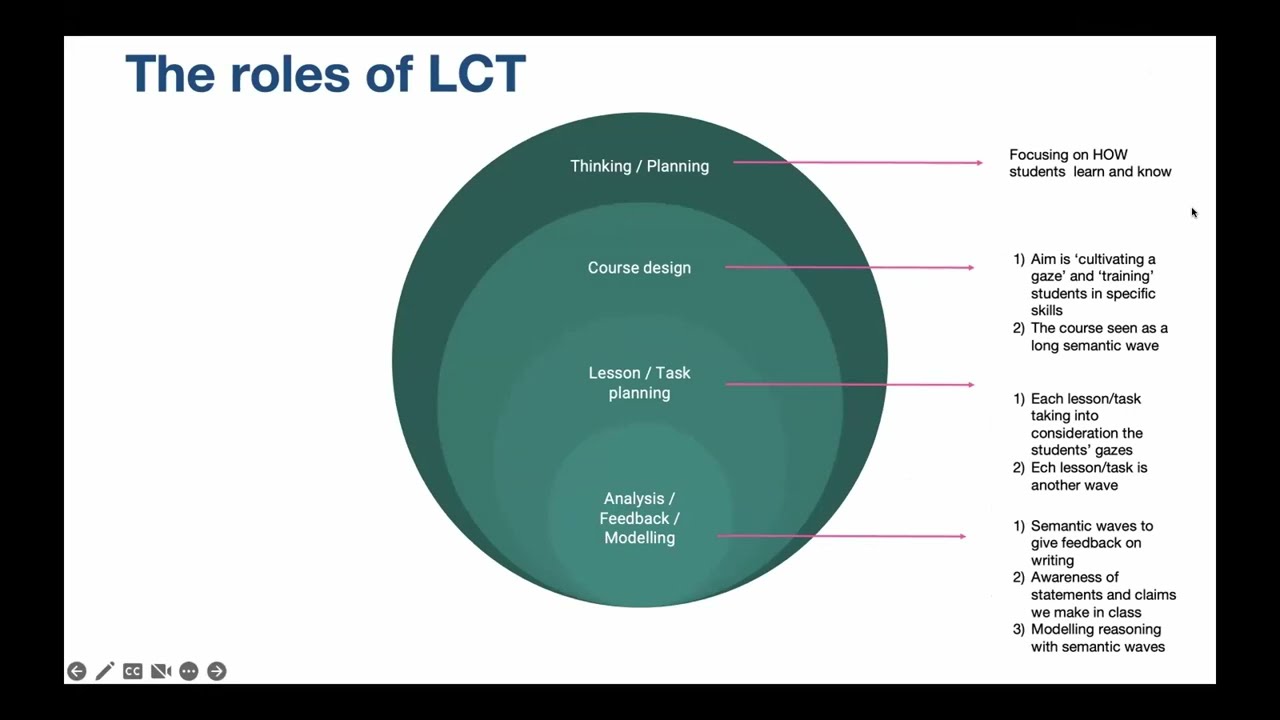
practical work is And offers a language it gave me a language to help chat about curriculum design with Richard and it's a tool to support thinking to say how could we design our curriculum more mindfully and with mastery but the warning that I that Carl is definitely this idea that teachers require a different version perhaps of LCT than what academic researchers would require so they probably require a less specialized Version or less in-depth or detailed version [Music] um so what I did is I kind of thought about what that might look like and again please
feedback or critique or anything on this but I wonder if this is a recontextualized version which may help teachers think about um active science and if teachers wanted to do active Science and they wanted to develop the cognitive component well they might want to use the different tools they mount use threshold Concepts they might want to use conceptual cross-curricular links or if teachers wanted to get students more engaged in science they wanted students to feel um or involved with science well they could develop thematic cross-curriculum links or a science Capital teaching approach So this re-contextualized
version is is kind of comes along from the specialization plane but using different language that perhaps teachers might be more comfortable with but help them consider how they could change their practices to strengthen the cognitive element or strengthen the effective elements of their curriculum when it comes to designing practical work there's some key questions here That and for teachers they might want to consider and what form of practical work um or what what form of knowledge is the Practical work designed to develop it's the Practical design to emphasize this and if it isn't designed to
emphasize that knowledge well how could we change it how could we design a practical work to make students learn the substantive stuff that I want them to do and not the disciplinary or if I want students to learn the Disciplinary how can I design practical work for that so again I've got a recontextualized version of the epistemic plane and where I've got substantive knowledge on the y-axis and disciplinary knowledge on the X and sometimes I guess teachers might want to use this to look at their practical work and think have I got a balance or
is all my practical work around this substantive knowledge or is All my practical work around disciplinary knowledge or is it all a mix of everything but if I wanted a practical and I want to teach electrolysis I want them to get the concept well how do I design it better so students learn the concept and teachers talk to me about this they said you know we could use simpler equipment because electrolysis is so messy and the specialist equipment we Could do micro scale practicals we could use simplicit and to help students focus on the concept
and not the doing we might want to think about where practical work is sequenced so students have the prior knowledge that's necessary and we might want to think more carefully about how we link the concrete and the abstract but if we want students to develop these Better skills this disciplinary knowledge well how do we do that well we might want to teach procedures explicitly or sequence it across the year and often practical work sometimes teachers want to do both and what I suggest here is that not all disciplinary knowledge needs to be taught in every
practical so we don't want to do a hypothesis methods data analysis for everything but We should be really selective of where substantive and the disciplinary can be woven together best these Knowledge and Skills and so an example of this a teacher said food tests I want teachers to learn I want students to learn the facts of food tests starch and if I add iodine and starch is present it goes black or blue but I also want students to learn the methods of science I want students to Learn about categoric and continuous data and that example
of that practical really helps students understand categoric data that it goes from Orange to blue black and it's not continuous data so where can we choose the right practicals and the right forms of knowledge and weave them together where does the Knowledge and Skills where can they fit best I'm going to finish off by just sharing That there's a few dangers of kind of what I've suggested here before you do Robbie can I just ask like um um uh about because you're suggesting that LCT could be useful for sort of PD professional development of teachers
or teacher Trend um it is it is being used that way yeah so I was just going to say like it is so You can build that's not that doesn't undermine your claim it means you can strengthen your claim by going then we already see that for example in the work of Sharon Clarence or Lee's enormous course or um in teacher choices in action or the various other things that people have done with teachers so you can draw on those so it's like it doesn't undermine what you're arguing it's more kind of actually provides it
with you know Strength you'll be able to say and it was being done in these various domains and there's various areas at various levels in these various ways and the other thing I was going to suggest which I I'll send an email anyway is that you can um you can also draw on people like um Kareem wolves where they kind of recontextualized things like the epistemic plane into quite much simpler language we're working with engineering and Educators so there's a lot of stuff That you can draw on to of really mattress there's um these suggestions
I think you've just Frozen Rubio or does it mean thank you Carl I think we just lost you at the end there yeah I thought all of you had Frozen and then realized that the that may be my problem yes so so I guess what I'm suggesting is that we don't want any of this to be reductive and that this is a guide for thinking and not a how-to guide it step By step oh well let's add in threshold Concepts or let's add in a narrative or let's do this and it'll make my curriculum more
an emphasis on knowledge and more of an emphasis on the nowhere um but hopefully some of these ideas could be helpful for teachers and and yeah absolutely thank you to Lee and and everybody else for their fantastic work and in influencing lots of the kind of things that I'm doing So I'm going to end there and if anybody wants to share more ideas about the work that they're doing and re-contextualizing and LCT for teachers that'd be fantastic but thank you so much for having me and for sharing um for sharing your ideas and your critique
and your questions I really appreciate it Robbie hi I've I've so enjoyed your presentation um because I think that there's it's Very rich and there's so much to think about um especially in terms of how you're moving between so many different parts of LCT um the one thing that I think is incredibly powerful of these kind of um tools but um I I don't see it coming strongly through but I think it's there implicitly in in what you've presented and that is the shifts between so that It's not necessarily like that the curriculum is always
you know um dominated by a knowledge code or a lower code or or Elite or so on but that there's the possibility for teachers just to say I'm gonna start with the no you know with um something dominated by a NOAA code and then I'm going to shift to the knowledge code and I think that that to me um instead of just looking at kind of boxes and categories the shift between What when is it when is it best when is it appropriate to base a part of the curriculum you know deeply in the knowledge
code or deeply in the knower code or shift between them or you start here then you move to there then you move to there and you put it together I think to me that's where some of the the the possibilities for avoiding a reductive um approach come in so that would be my big Um you know just something to to think about um so that you're not just setting up categories but that you're looking at the possibilities for movements between I want to just I just want to add on to that to say I think
that's extraordinarily important because um what makes LCT valuable valuable uh in the context of educational debates of this kind is that it doesn't fall back into the trench Warfare uh that so many educational debates do there's I mean I I really have no time for manifestos and Futures and so on that then set up yet another do this or do that and it's the universal Panacea I think that's all snake oil salesman tour I mean what are this LCT is dynamic it's fluid and it says and it's totally about the problem situation so it's like
there's no answer at all there's just a set of tools to Say what is it you want to do and then okay if you want to do that then this is how you can do it and if you want to do this other thing this is how you can do that thing instead so it doesn't say this is the right way to teach it just says if you want to achieve those ends these are the ways in which you can get there and then you know to provide the kind of level of um respect of
the autonomy and the professional uh abilities of Teachers and particularly because they're the ones in the classroom doing the stuff to be able to then you know decide what what from this toolkit they want to do and how they can get there so what you know their aims should be what they're in what they're going to be and then they can just pull on that and so that would then be the proper professional base of a teacher rather than just following this usual uh oh it's this one or this one or this one And we
choose this one and then that becomes the universe of Panacea which never is because it's just that you know then there's just this the pendulum swing back and forward back and forward I mean which pads out the CVS and the the status of the the intellectuals backing those positions but does absolutely bug a role for the teachers and the students so I think one of the things you can really push on this is that it is fluid and it is dynamic and It is totally problem-centered it's like what is it you want to achieve just
as Lee said what does it want to achieve teacher and then like well if you want to do that then you might consider using this stuff that gets you there you know but still allowing that autonomy and that respect for the professional nature of teaching you know what I mean it's like because teachers know their students in the context better than some you know somebody else who's writing From a distance so um and I just think that's I think that's a really powerful for me that's a powerful aspect of the way which LCT deals with
this sort of thing rant over hi Robbie can you hear me yeah hello I just think that your conclusions are very very uh insightful and enlightening especially in terms of the curriculum Design I was just wondering whether um I mean you your study is dependent upon the interview data and and and the and those who are uh and those who were interviewed were were teachers right so I mean uh if you if you could uh incorporate more more data for example the the data from the students and the data collected during the classroom observations and
your conclusions can be even more convincing thank you I think it's just like it's kind of a ethnographic study at ethnography ethnography stuff ethnographical study can I prompt you to uh can I know a little bit more about your study um is that you might tell people about the survey the large scale in the two phases of your research design I know you've given us you've finished the honor today of encouraging us to think about and discuss the ideas that emerge From your study but what people often concern themselves is what where does this come
from what the result you did a you did a large scale survey before the interviews could you say a little bit about that because that would answer the question that bintang has just has just asked and yes so I did a study really to find out a little bit more about teachers design practices about how they thought about curriculum design some of their Attitudes towards curriculum design to really get some of that background [Music] um again thinking about what Active Learning means to them in science and and what it looks like um I think there's
something that there's definitely something there that I need to go back and think about and I think coming back to what Paul raised earlier Is about how how can we make these kind of underlying principles of curriculum design how how do we make them visible um and and how can we look at them and see them and I guess that's what you're alluding to isn't it that perhaps with the observations and and talking to students perhaps that would make it richer um so thank you I think it's just more for me to think about but
thank you Bobby did you want to tell us about that thing that Richard mentioned what did I just miss it the survey yeah so I mean so the survey um was sent out to over 50 science teachers um and it it just asked teachers really to give different examples of active learning the way they used it in their classroom um what they thought about curriculum Design um and what kind of what might have been important to them completely in design and possibly some of the differences between things like um when when they use knowledge or
when they emphasized interest and engagement to different points in the curriculum and so that that was a little bit more background but again it's it's based around what Teachers said um rather than again rather than me actually seeing um what they did there's nothing wrong with that I mean like PhD like any study is is is is more about what we don't do than what you actually do it's like being very clear about what you're not doing because you plan to do everything in a PhD you're joining in an ongoing conversation an ongoing discussion on
the field and people you know and you Kind of like just have to find your space in that ecology uh to contribute to that big debate uh but as um as people say you know as I said earlier on it's just watch out for people then going well actually you didn't do that so you just have to be very careful about saying you know I'm studying this um and then this can this study can then Connect into other studies or um watching them know Doing surveys of the students and doing interviews with students or seeing
them in action or whatever it might be a can connect with all those other things to answer other questions for just being very careful I always think a PhD is X number of years three fourth ten whatever it might be years in search of the question you're answering so the question becomes repeatedly crafted and recrafted and sometimes totally Rewritten Um as you go along and as you get nearer and it's only when you get to the end of the thesis you can actually answer the end of almost right almost having finished the PHD writing process
then you can find the answer what it is you are asking and about what so it's a kind of continual kind of honing down exactly about what your um what your what you're looking at so don't take any of this stuff this criticism it's more a case of like just be careful about what you are Saying you're looking at and connected in with people who are looking at other things as well and as I said you call this existing research and active interventions and collaborations with teachers that you can actually draw on to buttress your
your claims and the least Point as I said in my I call it rant but I'm quite serious about this it's a very weird different way of thinking um to think of An approach as a toolkit rather than as a set of guidelines and that is empowering rather than imposing um and that's that's a different way I think if that's another contribution to this sort of debate because it's usually you know trench warfare between positions so there's sort of lots of great things there but in terms of like you know your focus you're focusing on
How teachers uh talking about designing the classroom curriculum and how there may be issues with that and how you might get you know LCT might be the useful way of providing them with tools to shop in their thinking and focus and so on I think that's what I'm saying isn't it Yeah yeah and then you can say after that you can then say and the next step is to do this or this or this yeah our next step is so is is the next stage is to do the study of this and the study that
will try it out in this way and so on so you can like um and a romantic when I said you can draw on the work that already exists it doesn't have to be in the literature Review only it can be right at the end where you're kind of saying and there are studies that suggest that this could possibly be useful and they can build on those um so yeah there's a ways of always taking these things and turning them into positives yeah I think I think that that you've spoken about and that Lee shared
about the shifts is something that I really need to emphasize a lot more in my study So thank you for that yeah yeah it's really important to think LCT uh to think differently it is dynamic it is about movement about process is about change it is never about just states that stay the same but it doesn't just do that same unstructured thing of just uh or a spouse per structural thing of just saying everything's changing all the time so we can't say anything about it Except that it's changing all the time we can we can
analyze the states through which change occurs but if we only analyze States then we don't get to the change group and that movement around is really important the movement around the contextual appropriateness of different kinds of strategies as well so I think they're really key things to to emphasize is there's a kind of different way of thinking involved in this as well we go No okay cool well then I will say thank you very much to Robbie uh for uh needing this round table it's always a courageous thing to do although I think this is
very um supportive friendly and and uh and smart communities so uh it's not as scary as like it could be but I still think it takes courage to do it particularly when you're in the middle of doing your thesis and um thanks to everyone else for being here that's Really great I hope to see you all in season two if there is one because it depends upon people wanting to do these things and also get in touch with me if you do and also um I hope to see you all in person uh lct5 in
January 2024 so please look up about that on the LCT conferences website but thanks here's one of those I find that very awkward bits the kind of Silence clappy thing which is very Very unsatisfying but well done the silent happy thing um that really needs a name um thanks very much everybody I hope that um you know I see you soon and and feel free to be in touch with the Forum and with other people and with myself this is a community we're much stronger and smarter together