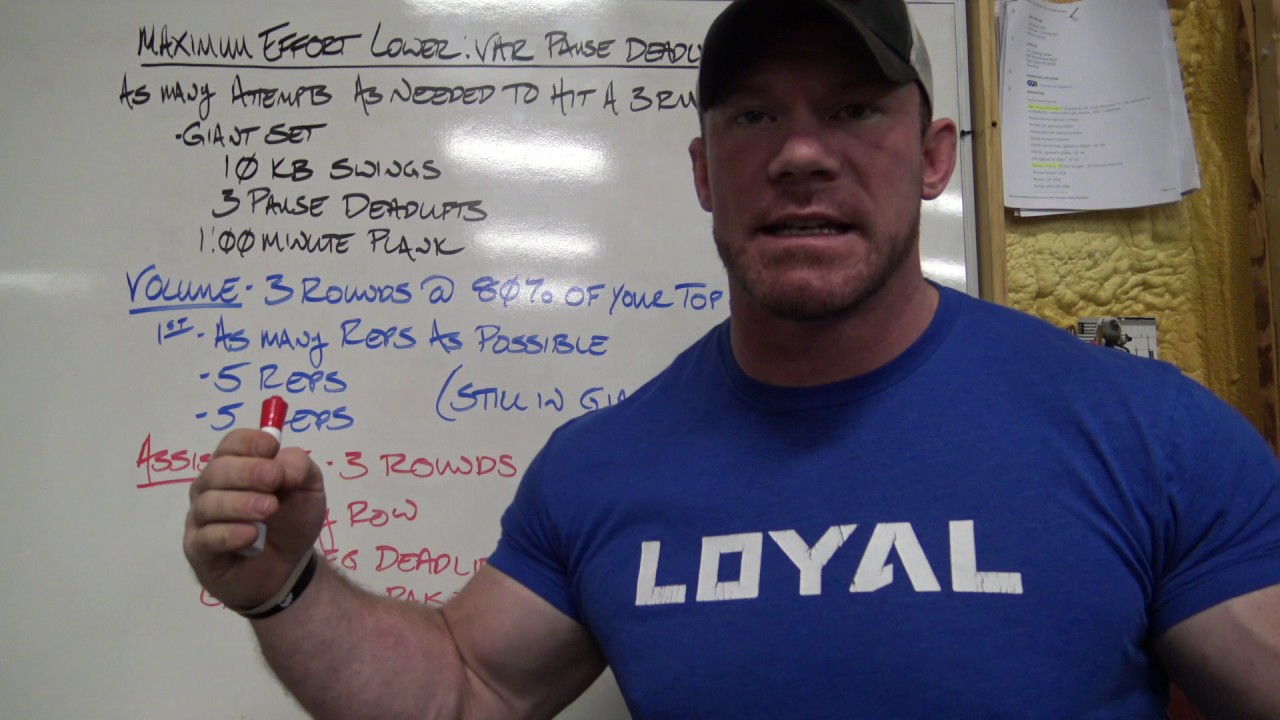
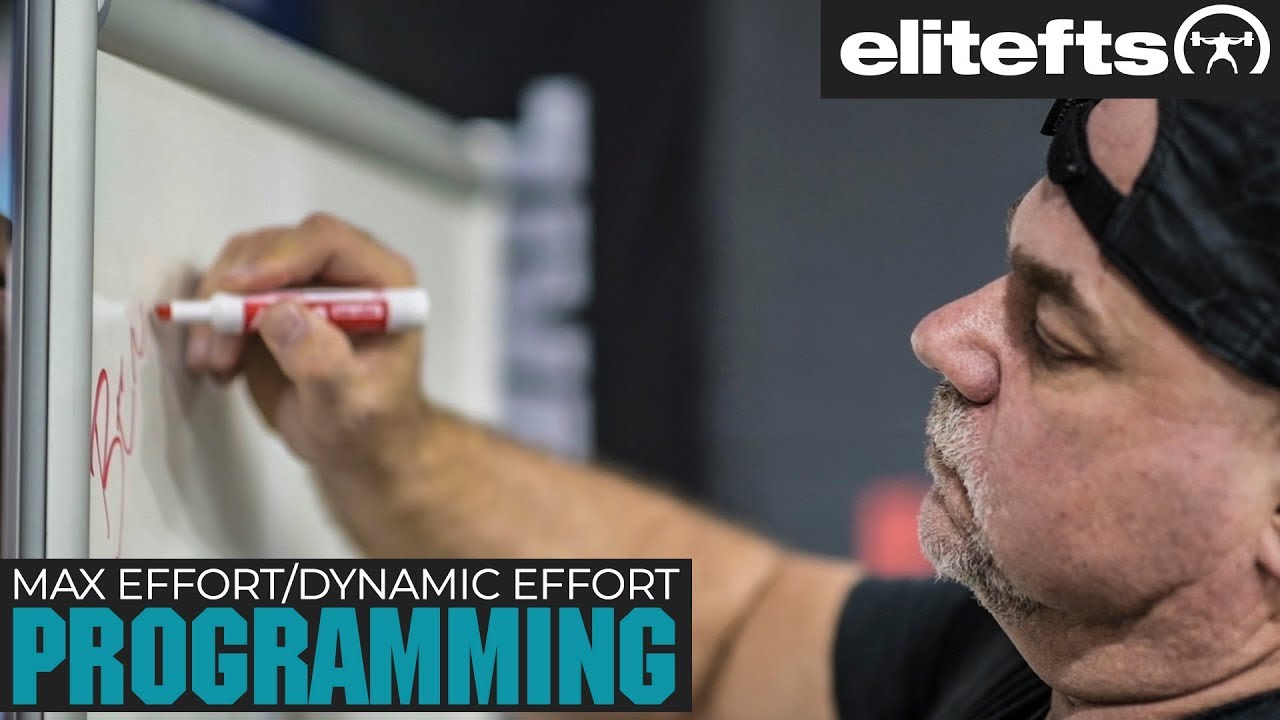
So with conjugate training it's basically the coupling right it's combining different methods of training so it's combined or different methods of muscle tension so it's it's taking the method of max effort so the max effort method the repetition method and the dynamic effort method and combining them all together thus conjugating coupling those methods when I speak about the repetition method I'll speak about it in regards to repetition method men heartburn came back from years ago so I'm gonna have a monster drink that's you're gonna [ __ ] help I'm gonna speak about the repetition method
as its defined but also what I call a modified repetition method which is your you'll see I do feel there there's they are still the same thing but so you're gonna have max we're gonna label the days instead of just having day 1 day 2 day 3 day 4 it's Easier to understand to say okay here's a max effort lower body here's max effort upper body here's dynamic lower body here's dynamic upper body that doesn't necessarily mean that max effort work is going to always fall on max effort day that's where a lot of people
are getting confused it would be easier if I could go back in time and it'll explain this all over again I would say you got a heavy upper body day and you got a fast upper body day or Maybe even a slow upper body day and a fast upper body day a slow lower body day and a fast upper body day and kind of go that route or heavy and light instead of max effort and dynamic effort because when people ask me about the max effort method well that's working up to a max and the
question then is well what if I do a triple well it's not max effort then it's submaximal well so-and-so says that's what max effort You see where the confusion starts to become it's because the days are called max effort day so the method that might be used could be a max Arthur effort method or it could be a submaximal method so submaximal is just max effort intensities are gonna be 90% above all right submaximal is going to be you can kind of say pretty much anything that falls underneath that so you're gonna have max effort
lower and let's just say this is Monday all right and then Wednesday max effort upper Friday dynamic lower Sunday dynamic upper I always forget to put warm up in there warm up really should be before the max effort exercise the warm up that I have them do and I'm not saying that this is the best it's a series of you know five or six different exercises which is performed in a circuit which means there's no break between the exercises the exercises are light they're not performed to any type of failure or Close to failure but
and they may go through the rotation once if they go through once and feel good that's all they need to do if they don't feel like they're ready to actually do the next exercise which would be the max effort or dynamic work then they'll go through twice you know so I think I have it programmed two to four rotations but if one works it's fine if it takes four it takes four but even with the four rotations it's Not going to take more than 10 minutes and some of the exercises that are included in there
are hanging leg raises because in that we using straps so not hanging on to the bar but using hanging hanging leg raises using the straps or this this harness straps because I want the lower back to distract you know that's the main reason for that is I want the hips to open up and the lower back to distract and then if they have to do a knee raise with you know a hip Tilt and that's the best they can do that's where they start the goal is to get it to where they can actually bring
their feet up leg straight and kick the bar at the top that's what I would like to see repetitions I don't even program so it's 4 or 5 10 whatever they want to do is whatever they want to do I just want the biggest goal there is to open the hips up and to get a little ab work it that's from then from there the next is a it's a bent knee reverse hyper so It's not really using the weight it's some of them will use the weight and use the pendulum reverse hyper but it's
just getting in the back and getting the glutes firing so it's more getting the glutes firing that I'm looking at that's why I like the Bettany reverse hyper because it's not loaded and it's just focusing on squeezing the ass to get it to fire then the next movement maybe pull down abs which I've done videos on you can search google to be able to find It make sure you're doing it right you're not planning your ass against the table and you're letting the cable pull you up so the the cable machine and the strap is
basically held under your chin so in the top position it's pulling you're spying apart so it's again it's distracting your spine then it's forcing you to at the bottom I want the lower back to round over to stretch the spinal erectors then to come back up again so By doing this basically bending over and standing up you know with weight we're getting that distraction we're getting the hamster stretch and again we're getting the ABS activated from their next movements like face poles band pull parts you know include ham raises so the glute ham raises might
be one rep and maybe three reps it could be ten reps it depends upon there's their strength and that's it so it's it's enough to get everything Activated and firing it's enough to get a little bit of a sweat going it's better than them walking on a bike or walking on a treadmill or riding a bike and get some moving sometimes if they're late they don't do it they just jump right into the mix and that's I like that I don't like them not doing it all the time but I like them being conditioned enough
to be able to jump right into the mix because that's the whole point of doing warm-up Work in the first place is to warm you up but to also prepare you to be able to do whatever you need to do if you the warm up can't be done and I don't think it has to be any more complicated than that so let's just take this day by day so with the max effort lower body exercise you want to change this you want to change it every week I've done it every way possible you know I've
had people say you know what my guys do real good doing fives on one week and Then threes on the next week and singles on the third week and if they're a beginner you know that makes sense you know they get acquainted to the exercise on week one they do a little bit of strength work on week two it leaves them a little bit of you know strength left to hit it on the last week I think that you can still change it every week we regardless of the skill level of the athlete you know
you just you're gonna have a if it's a beginner you're gonna Have less max effort exercises that you're gonna rotate through you may only use six to eight total where if it's a highly advanced lifter it's somebody that's done conjugate training for ten years they may not repeat the same max effort exercise for a year they're gonna keep rotating it through because they need that different stimulus over and oh you know all the time we're a beginner still has to develop that neural efficiency and the coordination skills And the skills on lifting heavy weight so
you want to keep the movements down a little bit I would say with this you want to use a mix of good morning type movements squat type movements and deadlift type movements so and if I was to put a percentage on this you know what I used to say yeah I think I used to put like 10% of the time a deadlift 40% of time a squat 50% of times some type of bend over you know a good morning so now with The good morning are you gonna do a single I found over a period
of time know the good mornings are gonna stay submaximal so they're gonna stay you know like three to five s are you know what you're gonna work up to one to two sets you know with the squat it's definitely gonna be a single with the deadlift it's definitely going to be a single all right so with the max effort exercise you're gonna rotate through each week either some type of good Morning squat or deadlift now you're not going to be doing good morning you know you're not gonna do week one good morning week to squat
week three deadlift week you're not gonna repeat through that same rotation over and over and over and over what I find works best is if you're working with a group of lifters let them pick okay or if it's just you training by yourself decide when you get to the gym don't try to program this [ __ ] out Trying to program this [ __ ] out as I'm gonna try not to curse here it's not smart all right so it's [ __ ] it's [ __ ] stupid trying to program this out it's just [
__ ] stupid you know this has got to seriously be Auto regulated based upon how you feel and the best time to make that decision is after you've walked into the gym and you've done your warmup so if you're thinking that night man I want to hit that you know low box safety Bar sois I'm gonna kill that record tomorrow you can think that all you want then you walk in the gym that next morning you're like man [ __ ] this thing gonna happen you know I got to do some kind of pool I
got to do a high pin pull cuz you know [ __ ] don't feel right you know my hamstring whatever just doesn't feel it's on point you want to train things that feel like it's on point you want to train things that you're Excited to do you're gonna first off you're gonna put more effort into it you're gonna enjoy it more and the number one goal of this whole movement is to strain and to teach you to strain so you can learn the ability to strain with heavy weights for different periods of time say three
to five maybe even seven seconds that's the main goal so you want to change the exercises around enough for variety but and the reason why the deadlift is lower is unless You're built to deadlift the deadlift is really hard to recover from so if it's somebody that's built to deadlift yeah they can do this way more frequently than somebody that's not most people aren't you know so the percentages are really irrelevant if you want some type of variation of a good morning a squat or a deadlift for that max effort work now there's search delete
FTS calm lower body max effort variations I believe an article will pop up that's got over a Thousand different variations with just a freakin barbell so you'll find the ones that you like and then that's what you stick with now how do you work up to it you you know go through your warm-ups and as you're warming up start with the bar you know that was one of the things I learned from Westside which was kind of a wake-up call for me as most of the gyms I trained at before that you would think that
a plate was welded on every bar that was in the gym because it was Always there was never less than to play that's there was a play at least in the gyms I trained at there was a plate on every bar and every rack and every bench so that she just started with the plate you go plate plate plate and until he had your training weight really [ __ ] me up when I came into Westside and everybody started with the bar the guy I don't get this and you know over a period of time
I started to understand why in You do the reps with the bar until the bar feels like a bar and then you'll go if it's a bench you'll go to 95 pounds if it's a squat or a pole you'll go to a plate and kind of go from there and then every time you jump up it's based upon the set that you just did so if you did 135 and that felt good and it's you're doing triples to warm up or whatever you decide you want to do for your warmups doubles triples singles doesn't really
matter I mean you do want to get some Type of work done so I wouldn't suggest doing all singles on your warmup I'm more inclined to like doubles and triples as for all the warm-up sets just to be able to develop more workload when you start to get to the heavier heavier weights towards the top then five to five ten percent jumps you know probably more along five percent jumps all the way up until you get into that striking range of where your PR is or where you think your PR is and then knock out
the PR by five pounds or if it's been a long time and you haven't been in that exercise you know I'm not a big fan of hit you know hitting the PR but if you want to hit the PR hit hit this you know it hit the same weight that you did before you know whatever it is but you want to try to get somewhere between two and four total repetitions above 90% when you look back so after you're done with your max effort exercise and you look back at what you did there should Be
at least two reps that have been done over 90 percent so that could be 90 percent for a single 94 percent for a single and then that's it you know you start to get over the four and you're starting to push the limits of what you're going to be able to recover from but that's the same with any max effort exercise that you decide the second grouping of movements so we say the warm-up is the first category the max effort would Be the second category the third category is what I call supplemental movements your supplemental
movements are going to be the movements that make these movements stronger so your supplemental exercises are the exercises that are going to make your max effort exercises stronger or your dynamic exercises nor they're gonna make your main lift stronger to make it more easily defined they're typically always going to be a compound movement of some Sort and the repetition range is usually going to fall somewhere between three to five and the set range can also fall you know in the three to five range there so let's say it's the low box squat was done for
the max effort work the supplemental work you know what's your weak point you know that's where weak point development comes in there most people have no idea what their weak point is so they're like [ __ ] I can't do this I don't know my weak points that's Fine just assume ature just assume it's your hamstrings you know most lifters as their hamstrings depending upon I mean now you got a lot of guys that are squatting closer and their knees are coming you know the shin angles pretty much right where the toes are so you
can start running into quads being the weak point so it squats style depends on this a little bit so I still say even even if you're that type of lifter hamstrings Are still a giant glutes and hamstrings are a giant driver of the the power lifts so if you don't know what your weak point is just assume it's your it's your hamstrings so for the supplemental exercise you're going to be looking at some type of hamstring movement like a glute ham raise an RD L stiff leg I'm not really a fan of a manual leg
curl as a supplemental exercise but it can be basically a manual leg curl is The same thing as the glute-ham race except your knee doesn't drop there is a difference between a glute/ham raise and a manual leg curl they're not the same a glute ham raise your knee and hip flexes at the same time so the muscles contracting from origin and insertion you know it's the same kind of this same way that you would squat you'd pull and so forth if you're doing a manual leg curl your knees fix to the floor you know or
to a bench and it's not dropping So the only thing then that's moving is the hips so it's a great hamstring exercise but it wouldn't be one of my top rated you know I've put the glute-ham raise over that or an RDL over that but it can still be done here especially Luise machine the whatever inverse yeah the inverse curl that's a really good one especially if they're not strong enough to do the glute-ham raises so now the reason why I put the glute-ham raises is a warm-up movement Because even if it's a bodyweight movement
so even if they can just do negatives or have to have somebody help them or have to you know do reverse band work or use a pole or whatever they have to do to get the reps up they're gonna get them up so that's my goal is to be able to get them to where they can do glute/ham raises here weighted or eccentric only or dynamically or you know there's we have another article on the website which is sixteen or twenty Ways to master the glute/ham raise which you can rotate through those and keep the
glute-ham razón is a supplemental movement pretty much all year round that's how much I believe in the glute-ham raise from that standpoint so the supplemental movement is basically going to be that movement that works on your weak point but also has a impact on the movement working up the ladder right so under that the fourth group is accessories price Spell this wrong for them an idiot that's my way to spell accessories on if it's right or wrong but it's accessories same thing alright the accessories now this is where your your ab work is gonna fall
and must fall this is where the reverse Hyper's or low back work is gonna fall and must fall you know these things have to be done here you know I don't like to have them done early on because you don't want to do all these other Exercises with your abs and lower back in a fatigued state I understand that reasons why you would at certain times but I'm putting a basic template out there right now this is it the simplest that you can possibly make this so the ab work would be something like the pull
down AB something that's gonna be standing you know what's standing ab work well can be pull down abs with the cable can be pull down the apps using AB and it can be the Paleo press it can be You know there's a host just search standing ab work there's a host of things that you can do for your abdominals in a standing position why do we want to train them in a standing position we want to reinforce the routing of the foot of the foot into the ground and when you're training your abs in a
standing position that weight or that cable or whatever you're doing is going to want to try to knock you off your feet So you have to grasp into the ground with your feet so it's it's indirectly training something that needs to be trained that's one reason the other reason why you have to develop your core you the core I know Nate's laughing right now you have to develop this [ __ ] out of your torso you know I've always said the thicker the torso and the thicker the head the bigger the lifts so you have
to develop the torso so and you lift in a standing position you know a Lot of sports are done in a standing position laying on the floor doing crunches isn't going to do you [ __ ] you know so you want this understanding I'm a big fan of the reverse hyper because I've seen it you know I've seen the benefits of it for 30-some years maybe even more than that now and I've not seen maybe one I've seen maybe one person that couldn't do them because it hurt their back to that and even with that
one person I question if that's Because their lower back was just too weak but I'm not a doctor so I can't make that decision so I've seen more positive out of it than negative for it to not be there right so the one of the arguments that goes against conjugate and against Westside type training is the box squats are terrible for you because they're gonna [ __ ] up your lower back okay let's just assume that's true then obviously the reverse Hyper's are keeping our lower back from being [ __ ] Up well no the
reverse Hyper's are terrible for your lower back well then obviously the box squats aren't that bad for your lower back so it's it's it's the application of the movement guys so all the movements you want to make sure that you're performing with the best technique you can possibly use that you're aware of so you just you can be ignorant you know on how to do something but do it to your your best ability your best ignorant level that you can you Know so you're always trying to strive to make the technique better on all the
different movements where where technique begins to break down is where joint issues start to happen we're overuse issues start to pile up a little bit more in the fifth category somebody just said how long are those phases before you would rest and change the weight I don't know if that's too general the question I understand what he's talking about okay so for the Supplemental exercise and for the accessory exercise you always want it you can stick with these exercises for as long as you like the max effort exercise you want to change every week for
me personally when I was training you know my maximum for my squats at Westside for eight years I don't think I changed a single exercise except the max effort exercise now I did change the dynamic waves which we'll talk about that my Supplemental exercise was always glute/ham raises pulldown abs and reverse Hyper's never ever changed I might do other things after that but those never change but how I did them always did so the glute-ham raises one time might have been just pure volume and this was all based upon feel so if after I may
have a max effort squat day that just kicks my ass and after that movement I'm already [ __ ] sore well then obviously I'm not going to go balls out on glute-ham raises I'm gonna go volume so I'm gonna say okay how many reps can I get over two sets or how many sets will it take for me to get a hundred reps you know and kind of go volume from that approach and then the next time I would do it it would be med ball he Centrex so I come to the top so my
hands me 100 pound med ball you lower it to come back to the top do three to five reps that Way next time maybe putting the a box underneath the front end or underneath the back end to make it higher so it changes the the angle which makes it way harder to do that one we did a lot of sometimes it was you know holding a yoke bar I mean we just mix it up so it it always change I changed it every single time I think with intermediates or beginners if you're gonna keep the
same exercise keep it for three sessions which means keep it for Monday keep it For Friday and then keep it for the next Monday and then switch it to something else and then over those three rotations or the three times did you do it try to either lift more weight or get more reps and with the accessories same thing you know the accessories you can actually cycle longer I would say with that one you can probably run out for like five weeks four weeks you know it's once again it's dependent upon how you feel but
the accessories I the Accessories again for me I never I kept that the same year route it's just the only difference was I max effort dad did volume on the ABS and the reverse Hyper's we're on Friday on the dynamic day I made it really really really [ __ ] heavy so on the reverse hyper on Monday it was it was tight I called it tight and right so I did I'm really strict and really tight so the repetitions were like 10 to 15 but man it burnt like crazy and then on Friday It was
it was loose and heavy so that's where you loaded the [ __ ] out of that thing and then let it swing so it really distracted you know the lower back at the bottom and then flex your ass as hard as you can you know to get it up and that would usually fall in the 5 to 6 range so those are just examples there but the accessories can run and phases of I would say you can take that out to six to eight weeks is that can you see that yep six to eight weeks
we're on the Supplemental maybe three three times and then this is one time you know for that and this will be the same as we kind of go through here at the the last part of the training is what I call free time and sometimes I'll give suggestions on exercises that can be done sometimes I'll put a time period on it but you know every every person I've ever worked with every litter I always know or I've always known No no however you want to say it they all have their exercises that they like to
do and some of them as long as it's not hurting them you know there's no reason why they can't continue to keep doing them you just throw them at the end of the workout and say dude you got 15 minutes do whatever you want if you want to do preacher curls just [ __ ] knock them out you know one arm preacher curls knock them out don't give a [ __ ] do whatever you want but it's got to be Done during the free time what happens most of the time is that they're gonna do
not they're not gonna do anything sometimes they will but it will be half of what they thought they were going to do so it's just it works really good for it actually it works really good for kids and it works really good for athletes that really are not and I'm not talking this whole thing I'm just talking having a free time period works really good for athletes that are doing Their weight training as their GPP because they're they're going to do they're going to do curls they're going to do push downs they're gonna train the
[ __ ] out of their arms I'm telling you that right now if you're a coach you already know I'm right okay if you don't have benches in your program and you're a strength coach they're still gonna bench they're just going to do it and they're buddies garage you they're gonna do it in the Rec center so build somewhere in there for them to be able to do it and then at least it can be supervised and they're in a fatigued state so they're not gonna be that strong so they're not even gonna be strong
enough to do that much damage you know and it's not gonna because you're putting in a time limit on it which I like 15 to 20 minutes and I definitely think you have to put a time limit on it because if you get somebody that's super motivated on some day they May be in the gym for four hours all right which just [ __ ] up the whole rest of the week so you put that time period on it let them do whatever they want as long as it's not something that's going to aggravate a
pre-existing injury or something that stupid for them to do so that's I don't need to go into what all those things are it's just anything that causes pain you don't want them to do that can also be a time to put in I really don't like the word but Prehab movements if they're you know if they're an athlete or a lifter that does external internal rotation movements and think that that really helps their veg well that's where it goes you can also have you know post-workout restoration time which would be here but that's not part
of the 15 to 20 minutes so I could say here and keep an eye on that screen there did okay post-workout restoration but that's not always necessary because that can happen On the days in between it can happen at different times so that obvi just put a question mark there the free time I don't have to put how often that's going to rotate because you're not gonna program anything in there for them you know um so that's that's a basic max effort lower body okay things are gonna start moving really quick now all right now
the max effort upper body works the same way every week you're going to use some type of you're gonna use some type Of press you know I can say horizontal mean okay man I'm gonna give you overhead press guys here a little break eighty percent of time and then vertical twenty percent of the time so you have board press floor press pin press you guys know all the max effort upper body movements everybody knows those you know it's again you can search those lead fts calm except for an upper body I have also videos that
we've done only Speaking about the dynamic effort method I have articles that long-form articles on that long-form articles on the max effort method and long-form articles on the Supplemental exercises which when this is posted you know I will when we post it on the site at least as an article or I post it in my blog I will put those articles as links you know sometimes we say that we're gonna put them as links in the videos and we forget because we just we want to get The video up for you guys as fast as
we can so sometimes we forget to go back and do that stuff but it's always going to be on at least in my blog I'll always make sure to keep them in there so they're kind of together and this will probably end up going on my IG bio link tree because I think this is going to be a video that I'm gonna be referring up a hundred times a week to people when it comes to kanji a training so again you're gonna work up exactly the same Way like we talked about with the max effort
lower body you know just start with a bar five percent jumps you know if you got to go a little bit lower a little bit lower you know work up slow try to get the you know two to four reps over the 90% for that top and you kind of roll from there I mean it's the same thing now if it's a vertical you know where it's an overhead if you know how to do it you know how to brace you know how to keep your core you know tight Then a standing overhead press is
fine you know I prefer a seated back supported pin press from different levels you know it's I like the forehead I like the nose I like to chin they're easy to remember you know so you got you chin level nose level forehead level and then you can work up to and that's usually gonna be a single anytime you're pressing off a pin cuz things get really funky when you start trying to do multiple reps off of pins Because the bar moves around and stuff like that so single is definitely the way to go there once
you get through the max effort exercise we're gonna fall into the Supplemental oh the warm-up exactly the same I used the same warm-up for the lower body as I do the upper body because the upper body's got the face pulls it's got all that crap in there too and it's two more times per week that we get to get on the abs and get on the hip flexors and hit the lower Back so same same principle with warm applies to all training days supplemental exercises okay same thing man three to five sets working sets of
three to five reps and it's gonna be working your weak point what's your weak point benchpress man it's gonna be ninety percent of time it's your triceps so the it's gonna be some type of modified extension you know or some type of close grip bench so it can be a JM press it can be a modified Tricep extension it can be I'm not big on tricep extensions as far as being you know like tricep barbell extensions as far as being you know four five reps but rolling dumbbell extensions most definitely anything that it is a
close grip or an extension would fall into this category here so close Close Grip or an extension now yes your shoulders could be your weak point but I'm telling you 90% of the time it's not Alright so we're keeping this simple and effective and that's where I'm going with so I'm going with the vast majority accessories now we're gonna be dealing with lats and I'm gonna talk a little bit more in depth about the lats here in a second but for now we're just gonna put lats but then we're gonna put shoulders and it doesn't
have to be heavy shoulder stuff you just have to work your shoulders you got to get a pump in your shoulders because if you're Gonna be doing the OHP you know up here then the shoulder work here can be I mean the lifters out here use the American angled press bar for overhead presses for sets of six to twelve very very frequently and they still use the freaking prototype bar which drives me nuts but I think they do it just because they know it drives me nuts so they're using a bar that's basically duct-taped together
but the shoulders don't have to be that heavy type of work it can be Side raises it can be front raises rear delt raises I like the battle ropes you know doing circuits with the battle ropes from that standpoint just pump the [ __ ] out of the shoulders you know it's especially the rear delts you know so this is where somebody asks earlier about DC training when you're dealing with the accessories then you can use bodybuilding methods I cest you do use bodybuilding methods where you're using slower tempos peak contraction Strips at rest-pause stuff
like that because it's fun it's something different and what you're really trying to do down here is to build muscle that's kind of the goal this whole section is to build muscle and also build stability so that kind of comes hand-in-hand with the rep ranges that we're talking about which down here and the accessories we're talking about 8 to 12 from rep range and the sets you can run as High as you want can be for he you know doesn't really matter keeping it like in very very simple well now when I'm talking about lats
I do believe that the lats should be trained every training session if you're a power lifter now how you want to do that and when you want to do that is up to you the way I did it is I trained it on Tuesday through I trained it on my off days that's personally how I did it and then did it is a little bit of warm-up work on the Upper body days that seemed to be what was effective for me what I suggest people do is to do all vertical point have to vertical point
sessions a week into horizontal point sessions a week so that way it allows the muscle to kind of recover a little bit better than the contrast being doing a lower I want to pull down both on the same day I'd rather you have like a row day and then a pulldown day and if the row day preferably would fall on the bench days To better you know but it depends on how you're training and if you're doing deadlifts and stuff like that so the lat should be trained somewhere even if it's in the free time
so if I put it down here so it could be in the free time where it could be in the warm-up but they have to be hit four times a week so it's a it's an exception where a lot of times I will stick it in the warm-up but all that really does is stretch out the lats and stretch out the shoulders which I don't want to do before they're going to squat and before they're gonna bench so I really don't like having it in the warm-up because that's a muscle I want to have tight
when they're doing the basic heavier lifts so I'm not a big fan of that but if if that wasn't the case you know and it wouldn't create more in then-then-then benefit then I would do that but or if there was no other way then I would do it but probably down into the Free time or in the accessories I guess you can put lats and then lats now Friday so the dynamic day here's the thing all right so you're gonna have the speed work which is going to run on a three week cycle three week
wave okay there are hundreds of three week dynamic effort cycles that you can go look and find so this is one of the biggest causes of confusion is what percentage should I use here's what I do is I'll take a lifter that if I'm not sure where Their strength is that and I can't make a judgment on a perceived max I never want to use a competitive max I don't want to do that lifter sometimes can get too far away from that especially if they're injured and if it's too far away from the meat and
other variables that are associated with that I don't like to use a training max because I don't like to have lifters work up and actually max out on those movements in training if I have to I will but I don't want to I Like to use more of a perceived max but for the speed work it's even easier than that because what you can do is take one training session that you're gonna focus it's gonna be your the very first dynamic training session and let's say you don't know what speed work you should be using
now your next dynamic effort session start with warm-up you know do your warm ups all that kind of stuff use the bar warm-up to your training Weight start with for 45 percent hit hit triples you know hit three as fast as you can it's probably gonna feel way too light like you can throw it through the ceiling okay add five percent all right so now it's 50 percent do that for a triple see how that feels and go 55% see how that feels at some point you're gonna hit a weight that's gonna feel like wow
this is this is I'm producing some force here and the speed is good and this field this feels good This is you know this it's not too light it's it's still kind of easy but if I had to do 30 sets of this I probably wouldn't be able to do it my triceps maybe you would but your triceps would just be on fire all right so that's the weight that you're looking for so let's say that happens at 55 percent right so go to the next percent up I forgot where I left off so 55
percent then 60% 65 70 so you're gonna keep working up 5% for each speed set until you start to notice That the bar speed is really slowing down or your training partner says whoa [ __ ] that's way off you know where you started yes fatigue is gonna play a factor here but that's fine there's room for air fatigue can play a factor it's fine wherever that begins to fall off let's say it falls off it 70% I know I don't want that on screen all right so let's say it falls off at 70% now
you know you can't do 70% and you Know where to start so you're gonna go and you're gonna start at 55% and then go 60% 65% and right there is your 3 week wave and that will be say 8 sets a 2 it could be 10 sets of 2 I mean there's there's there's a lot of different like I said there's a lot of different dynamic cycles you can search that again I got a whole video just on that but just the basic dynamic effort squat cycle with straight way is a three week cycle of
eight sets of two reps on The squat so this right here using what I just said is the most optimal way for you to figure out what the best dynamic effort training percent is for you okay so you don't have to ask me questions like well dave says you should use you know 55 to 65 percent Louie says you should use 40 to 50% Matt Wenning says you should use 50 to you know 60% you know Mark Bell says you should use 70 to 80% and da da da da da da Nate Harvey says this
to this this is This this this you know I respect all those guys but I don't give a [ __ ] about that what I care about is what's gonna work for you all right so and you can use a Tendo unit and measure the force output if you really want to get you know geeky and technical about it and where the force output is hitting you know right around 8 meters per second or whatever the hell it is you know it's I never relied on those things so it's I'm not a big fan of
those so It's kind of hard for me to talk about be legitimate about it but they do have they definitely do work extremely well for a lot of people so I just have a biased against it because it can be gamed and I've seen athletes game it too many times that if you're gonna use it you're gonna use it the way it's supposed to be used and I think it's a great tool and I think most power lifters would but if you're a strength coach or if you're Somebody working with athletes it's it's [ __
] it just becomes you know a dick-measuring contest and their form goes to [ __ ] so this is very simple especially now you can even film it and look to see if it's faster slower or whatnot so you do your speed work now we're into the supplemental again I'm starting to find out this is not exactly fast explanation of this effective not simple yeah it's it's it's it's actually simple at least I think it's simple and It's effective but it's not quick so that part was [ __ ] I left that other title and
okay okay the supplemental is gonna be the same as Monday man so it's whatever your weak point is so it's the hams right so it's the hamstrings so you got a glute ham you know RDL stiff leg you know the choice of all the things that we spoke about before any other things that could kind of fit into that category we already talked about how to rotate it if you want to hit it Monday Friday Monday or if you want to change it every week you know it's just you have to have some kind of
progression progression on it to where you're always striving to get better at it so if I'm changing it every single session then when I come back to the glute/ham rays of the style that I did the next time I come back to that style I want to be stronger at it or be able to get more reps at it so and I was switching the glute/ham rays very frequently and I was Also extremely fortunate that I didn't have to ever write anything down the Louie was like a mastermind of that [ __ ] so I
didn't have to his brain with numbers is something that I've never seen before in my life so I could simply ask him you know look with the hundred pound med ball what's my best on you know eccentric only gluten raises and I mean a hate okay I'll do [ __ ] night and that's kind of how it works you didn't I I didn't you don't try to bite Off more than you can chew you get the nine and hopefully you get the nine you know you get the nine and that's it if I could have
done 10 [ __ ] it I then do 10 I did the night you know that way I know I there's still something left in the tank I could have done 10 maybe you know maybe not that will happen next time it's still better than what it was and that's the whole thing is you need to move forward you know with your training progression being better than What you were and that's way harder to do than what people realize but when you're a beginner and intermediate it's coasting it's not that hard you just stick to
the basic rules don't bite off more than you can chew and just keep progressing forward taking the little chunks here and there and after a few years you're so much further than that you ever thought you were gonna be then it gets hard then it gets complicated this is still me trying to keep it as Simple as possible and it's even if you're more advanced in con Gia it's going to be a very good reminder on what the very basic part of this all is and accessories action it's the same thing man as reverse Hyper's
you know lats changed the exercises change the sets change the wraps change how you do it change something but it's it's essentially the same thing it's I mean these are almost just carbon copies except for the the Emphasis the first movement it's pretty much the same [ __ ] you're just changing you know the exercises but the main blocks are kind of hitting all the same stuff you know in the free time you know it's kind of the same for all the days you know went for the dynamic bench you'll have your warmup and might
come with me you're gonna have the speed work this one here you can run a three week phase or not and you can come up with it the same exact way that I just told you How to come up with it with your squat so say this ends up being a little bit heavier say this is like 60 65 70 or you can just take one and use the flat wave which is what I did the whole time I was at Westside is it never changed so it was always the same thing and actually the
percentage over time went down and I think this is an important point to drive home that if you're doing let's say you have I'll keep it simple keep it simple and stay with the flat wave let's Say you have a flat wave of 65% for your speed work and for your bench and now it's taking down let's say it's let's say it's 60% so if you're a 300-pound bencher it's going to be lower than 60% let's say you're a 300-pound venture it's 180 pounds so you use 180 pounds for eight triples so instead of doubles
or going to be troubles you know time under tension is gonna be a little bit different if you are using that one Hundred and eighty percent and it's a flat wave and you're using it for twenty weeks leading into a meet and then you go to the meet and you hit three twenty five and it's easy you left 20 pounds on the platform don't change the percent or don't change the weight keep it at 180 and get the 350 next time let the percent drop the stronger you get because you're becoming more neural efficient what
we found when I first got to Westside I was doing straight way Speed work with 365 for half my sets and 405 for half my sets and this was having a 540 raw bench okay when I left you know or yeah I want to get I want to stay out of when the gears started to get crazy several years later when my bench had gone up it was a 520 raw bench I'm wrong my bench went up to 585 with the shirt and the shirt might have 25 30 pound carry over it wasn't a great
shirt I was using 245 and two chains per side for Four sets and 275 for four sets so basically what happened with with all of us that were training there is over a period of time the as we got stronger if you went to a meet and the weight was easy then there was no need to change the dynamic work he just had you just had to repeat what you did and go get what you left on the platform that made it easier to recover from it made it easier to mentally prepare for the meet
because you weren't Gonna really train dynamically with anything that you have used before and this is before the the bands came on bands changed everything so as far as far as that kind of stuff went pants changed everything but a lot of people are gonna be doing this crap you know without bands and if they're using bands it's going to definitely change the percentages okay so if you're using bands the way it changes your percentage is the weight of the the Weight of the band tension at the bottom has to come off to the bar
so you can still use whatever these speed percentages are you can still use those but if the band tension at the bottom is 40 pounds 40 pounds has to come off of the bar okay with the chains that doesn't have to come off the bar okay so because the chains D load onto the there's no tension at the water so there's the difference with the chains In the bands to keep it very simplified there are other videos to be able to direct you to that as well supplemental wise difference going on here is it's going
to kind of be the same but the volume is going to be higher and it can flip-flop this could be the higher volume this could be the lower volume so it's still going to be you know some kind of Close Grip and extensions but instead of the three two fives this might be you know the 10 to 15 rep range or vice versa you can swap it however you want just so you're not pounding it all the time in that same range so it's allowing you to better recover and build more muscle and not beat
the [ __ ] out of yourself and then the accessories same thing so it's the shoulders it could be push downs you know just light Lightbody billing stuff as the accessories and then the free time if this is if this is being done and your And I train in groups of two I mean there's Louie and I were in the same group for a decade so it was basically us together and then an accessory that the max effort worked the group might be four or five but for the dynamic work it was two we'd get
through all this in an hour easy easy you know it was I had no problem with getting back to work and I only had an hour and 45 minutes you know to to be away you know to actually be in The gym so I did have time to get there do some warm-up work hit this kind of [ __ ] do sled work and then get the [ __ ] out all right things that are a layer over top of this are the the recovery work which would happen on the off days it can happen
at the end of the sessions as well but say the Tuesday Thursday the Saturday the biggest takeaway that I got from that is your body will adapt to restoration methods actually the same if not faster Then it will adapt to training modalities so those have to also change as well so the sled dragging and stuff like that I had a basic sled driving routine that I used a lot but I had to break from it a lot too because just the movement you know and flushing the muscle was great for the recovery in the restoration
because a lot of the sled work is concentric only but after after a couple weeks it wasn't doing [ __ ] for me anymore so I had to a week on a week Offer I used Louie had the rule of 60% so I used that where you were starting so it was actually hard the first time and then you would reduce by 60% of everything for each session for three sessions and take one off and then go back up to the start again and then reduce down by 60% so if it's a hundred pounds you
know the first session then it's gonna be 60 pounds a second then it's going to be you know 30-some pounds to the third you Know if it's ten trips the first time it's gonna be you know six trips the next time then it's gonna be four trips the third time so the distance the everything dropped by 60% and so that was one of my main forms of of restoration on the off days the other thing was if I was able to find a decent parking spot at work then I would walk on the treadmill or
and if I thought if yes if I found a decent parking spot then I would walk on the treadmill for Ten minutes at a very easy pace pretty much everyday and not even enough to even sweat you know just a very easy pace because I was 300 pounds you know so I wasn't doing it so much for the cardiovascular benefit I was doing it so my aerobic base would not fall because he all all gains in recovery are based upon your anaerobic capacity and your aerobic capacity so if your aerobic capacity as a power lifter
on a scale of one to ten is only a three and it falls To a two you're [ __ ] all right if it's a three and you decide you want to take it to a five it's gonna provide zero benefit it's just gonna become something more you have to now recover from so you got to find what's optimal for you from that standpoint and if it does become you know higher than what you need you just back off of it and you let it D train and then bring it back up again the key
thing is how well you recover from the things that are hardest for you To recover from so earlier on somebody was asking about you know being more explosive than they were strong so for me the max effort work was by far the hardest thing for me to recover from it felt like I got hit by a truck you know before I left the gym and waking up the next morning was not fun you know so that whole next day was hell and there was a lot of restoration recovery hot cold contrast yeah I had access
to a lot of things because I was In a health club whenever I needed to do to be able to make sure that by Tuesday night when I left work at 10:00 I was at least able to move like a normal person and sometimes it took three or four sessions because that beat the [ __ ] out of me the dynamic work was also very hard on me but usually all that made me do was puke so it wasn't muscularly hard on me because I was more genetically suited for that all the recovery type stuff
are And all the accessories and supplemental type stuff I really didn't have that hard of a time recovering from that because I was always used to doing a very high volume very high workload from a training standpoint so that was more of that my problem there was more not listening to Louie when he was telling me to do less you know exercises you know were optimally he wanted it to be around three or four for me and I still would have been pushing like six eight You know stuff like that just I thought I had
to do it you know so it was maybe I did maybe I didn't you know in hindsight I don't think it really made that much difference you know so not down there I think that when you're on the top end of this spectrum with you know the the max effort work and the supplemental work those are your most important things those are the things that matter the most you get those right I'm not telling You to do that or to do this but if you get those things right you can blow everything else off I've
seen [ __ ] I've seen people blow off everything they know I've seen lifters that I trained with it was I'd only do the max effort and the dynamic work and leave and blow everything else off and gain like crazy but they were also you're more genetically suited freaks that didn't have to do that stuff you know so others had to you know Some like myself had to do even more so than that so it's a delicate balance when you have to do more than everybody else and it's not about being the [ __ ]
hardest worker in the room that I don't like that statement I like to be the most effective worker in the room because that way you you're you optimize and you recover and then you kick ass when the meat comes around anybody can be the hardest worker in the room and then not make it to the [ __ ] meat you Know so that doesn't really make any difference I guess I can go to questions I don't think I left anything out that that's the quick summary but this is actually guys it's if you take the
time and you go through here and you digest this this is the simplest way to explain this and the article that I wrote for T nation [ __ ] when I was coming out of the gate for T nation it might have been the third or fourth article I wrote was called the periodization Bible part 1 in Part 2 there they're also listed on elite FTS calm so just searching periodization viable part 1 part 2 you're gonna find pretty much this exact template on there to give you like a study guide and I think the
periodization part 1 outlines all the negatives of the linear periodization so it's the periodization bible part 2 and if i'm wrong which which can be the case because i'm wrong a lot of the times then the article you want to look for is Called the eight keys [Music]