hello and welcome back to Franklin Cy's twice weekly podcast on leadership with Scott Miller I'm your host each week and your interviewer where for six plus years nearly 400 episodes taped and 350 aired never having missed an episode all through the pandemic and through the world's troubles we've come here every week to shine what is Franklin CV's super bright Spotlight onto thought leaders from all walks of life some of them are experts on leadership marketing entrepreneurialism culture trauma tragedy communication you name it we try to bring you great conversations from some of the world's foremost
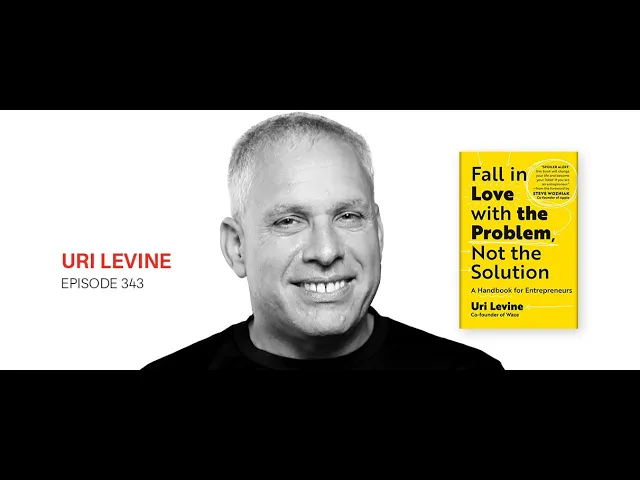
thought leaders on the topic of their expertise today we have the renowned twice unicorn genius his name is Yuri LaVine he's joining us from Tel Aviv Israel where he is going to impart in US water skiing if you will not scuba diving but water skiing across some of the best lessons we all need to learn around what it means to be a problem solver in fact his new bestselling book is called fall in love with the problem not the solution a handbook for entrepreneurs now everyone may not self-identify as an entrepreneur some of you are
entrepreneurs some of you are solar preneurs but all of us I think have an innate need to disrupt to invent to create to offer value no matter what role you are in and yorri is a master at teaching us that in his new bestselling book Yuri welcome to on leadership thank you great to have you here now Yuri great branding and by the way between your T-shirt and your background the book is phenomenal I I would love it if you would take a few minutes and maybe check your humility and talk about your role your
journey as an entrepreneur some of the companies that you were responsible for leading and developing and selling and then we'll de dive into a lot of the ideas in your book fall in love with the problem not the solution so so thank you for the opportunity and I would say that most people probably would know me as the founder of ways the driving app that actually serving about 700 million drivers around the globe um and helping each one of them to save time to figure out their um arrival time and uh and really an application
that everyone use and love um the way Journey like all entrepreneurship journey is a journey that I can Define in probably three or four dimensions the first one is that this is going to be a roller coaster Journey with ups and downs and ups and downs and look if you'll tell me that all the businesses in the world have ups and downs I agree but the frequency of those when you're are building startup way higher I think that I heard the best quote on that from Ben hor Ben hor which is one of the founders
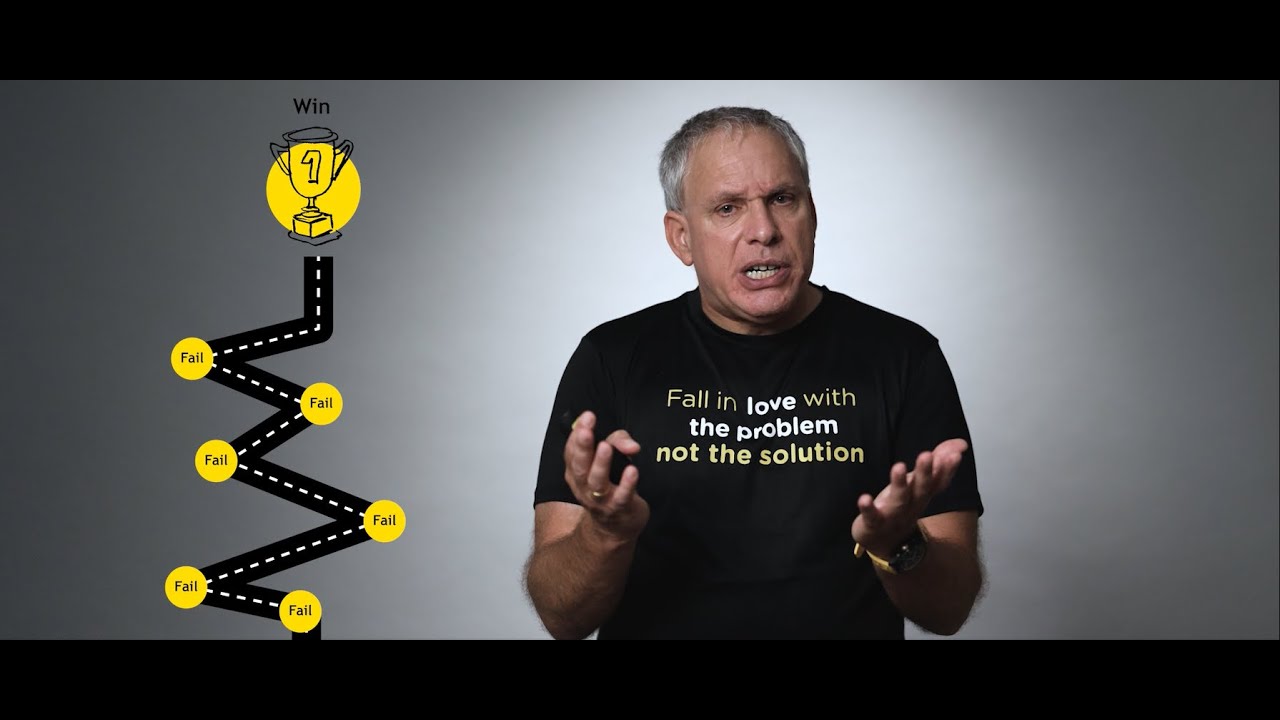
of AD and horage Venture Capital firm and before that he used to be a CEO of a startup and he was asked whether or not he was sleeping well at night and he said oh yeah I slept like a baby I woke up every two hours and tried and that's really the reality so one dimension roller coaster Journey the other dimension is that this is going to be a journey of failures look we're trying to build something new that no one did before and we think that we know exactly what we're doing but the reality
is that we don't so we try we try one thing and it doesn't work we try another thing and it doesn't work we keep on trying different things until we find one thing that does work now if you realize that this is going to be a journey of failure then there are two immediate conclusion the first one is that if you're afraid to fail in reality you already fail because you're not going to diey this is one of the biggest challenges of many corporate DNA is that there is a high fear of failure and people
are not trying and when you're not trying something something new then obviously your ability to innovate or discover something new is very limited the other conclusion is that look if this is going to be a journey of failur then fail fast because the faster that you fail you actually have plenty of time to make another attempt and another attempt and another goto Market approach another version of the product and so forth and the more attempts that you have you essentially increase the likelihood of being successful now the last element this is going to be a
long journey this is going to be way longer than you think it is and the longest part of this journey is to figure out product Market fit and product Market fit is really simple this is when you create value to your customers or to your users right and um in reality I would say look if you did not figure out product Market feed you will die as simple as that you never heard of a company that that did not figure out product Market feed they simply died that's it once a company did figure out product
Market feed they don't change that anymore no we are searching Google today the same way that we search Google for the first time in our life or we are using ways or Whatsapp or Facebook or Netflix or Netflix may be a little bit different or Uber or whatever it is the same way that we it for the first time for a life so once you figure out the value that you create to your customers you don't change that anymore what we usually don't know is how long did it take companies to get there and it's
a long journey it's a matter of years it was four years for ways it was um 10 years for Netflix five years for Microsoft even for open AI that last year we all get to know the chat GPT they're seven years old so it takes time to create value now if you are in a business you know that it takes time to create value and it's no different in the startup world it's exactly the same Yuri let's start there uh you use this phrase product Market fit this may not be a common phrase that everybody
understands especially perhaps those that are have been in maybe in a corporate job for many years and now they're thinking of entrepreneurialism or a startup will you take a few minutes and re-explain to everybody what product Market fit means how do you know when you've achieved it when do you Tinker with it what are the questions you ask walk us through a master class quickly on product Market fit so it's way simpler than you think because at the end of the day product Market Feit have one metric really just one retention and that's really simple
look if you create value they will come back that's it if they're not coming back that means that you're are not creating value now it's possible that you are creating value but it's too complex to get to the value which is part of the journey of figuring it that out at the end of the day and this is going back into the name of the book um people often ask me why fall in love with the problem and not the solution and look we we're trying to make an impact we are trying to create value
the simplest way to create value is solve a problem so by education I'm engineer right so um I'm always looking for the simplest way and the simplest way to create value is solve a problem but when you actually think of the problem and you fall in love with the problem what's going to happen is that the problem is going to serve as the north star of your journey and all the time you would be looking into uh am I making progress in getting this problem problem eliminated and when you have an nor star you're going
to make less deviation from your course and this is pro for everything that you're doing if you know where you are going then you increase the likelihood of getting there the other part of it is that your story is going to be way more compelling just imagine that we will be here in 2007 and I will tell you I'm going to build an AI crowdsource based navigation system you're going to say oh yeah very interesting but you don't care if I will tell you I'm going to help you to avoid traffic Jets then you do
care and when your customers care when your users care they're going to help you to become successful going back into product Market feed product Market feed figuring that out which is the value that you create to your users and in return they are coming back they are willing to pay and so forth it's an iterative process you might start with something that is not good enough and people are leaving because there is no value or it's too complex or they don't like it and then the process is really simple all you have to do is
speak with those that have left and ask them why what happened and they will tell you oh this didn't work for us this didn't work for we expect that to this one and it didn't do that and so forth and through this iterative process every time that you get new feedback uh it makes it gets you closer to figuring out product Market Feit and and this is where you are going to win because you create value look at the end of the day if you create value you will be successful if you create a lot
of value then you will be very successful and if you create a little value you will be somewhat successful but if you are not creating value guess what you are not going to be successful Yuri I want to read a passage from the book and then have you expand on it you write companies that fall in love with the problem ask themselves every day are we making progress towards eliminating this problem they tell a story of quote this is the problem we solve in quote or even better they narrow it down to quote we help
XYZ people to avoid ABC problems in quote whereas for companies that focus on the solution their story will start with quote our system or we if the focus is about you it'll be much harder to become relevant if the story is about your users and a focus on the problem it will be much easier to gain relevance I think this permeates web copy emails social media PR templates it's the mind set of leaders it's very easy for organizations to think about their competence their mission their passion remind even for entrepreneurs that are entrepreneurs and companies
how important it is to almost constantly reorient your mindset against yourself away from yourself and towards your customer and your employee I think there's a magnetic draw towards what is your person person what are you passionate about your mission people can fall in that trap pretty easily they usually do look I get hundreds of emails from different entrepreneurs and 95% of them will start with uh our system is right and no I don't care what you're doing I care why you are doing that right and this is the value that you create and and I
think that the world will become a better place if we start to adopt this approach and we think about the value that create and we in particular think about whom do we create this value um because that is going to help us to become more successful Yuri I want to take some time and just sort of water ski across some key Concepts and ask if you would just opine on a few of these one is you very specifically talk about firing and hiring and in that order why did you name the chapter and why is
that order important around firing and hiring and what is the responsibility of leaders of owners to make tough choices when it could very well be eroding value and morale amongst the team so um so you were right I call this chapter firing and hiring and when I send the book proposal to many of the publisher they told me oh no no no it should be hiring and firing I said no firing is hard decision hiring is easy decision first of all you have to learn how to make the hard decision now the inspiration from this
chapter came from many dialogues that I had with entrepreneurs that their startup fail and I asked them why what happened and about half told me the team was not right and I kept on asking okay what do you mean the team was not right and they told me you know we had this guy not good enough and this guy not good enough and so not good enough was the main reason another reason that I heard quite often is that we had communication issues right something that I actually call ego management issues and then asked them
the most interesting question when did you know that the team is not right now the answer was scary all of them told me within the first month and you said wait a minute if you knew within the first month that the team is not right and you didn't do anything the problem was not that the team was not right the problem was that the CEO did not make hard decision making hard decisions is hard making easy decisions is easy this is why most people don't like to make the hard decisions and a small place like
a startup or any team in that sense it will go to the top now the nature of the Beast is even worse than that look just imagine that the co knew within a month that the team is not right what about everyone else everyone knows that something is not working if there is someone that shouldn't be there everyone knows and this is the nature of the Beast everyone knows and the co doesn't do anything the result by the way is always the same the top performing people they would leave they would leave because they have
a choice now building a startup is a very very challenging Journey it's hard work through a long period of time it's hard to be successful even if you have the right team if you don't have the right team this is going to be nearly a mission imposs now if you take that and you take the most significant key takeaway everyone knew within a month if this is the case and you are a hiring manager then every time that you hire someone new what I want you to do is mark your calendars for 30 days down
the road and ask yourself one question knowing what I know today would I hire this person now if the answer is yes then go to this person and tell them that you are really excited that they' have joined and they are exceeding your expectation and if this is a small organization or you can give them more Equity this is exactly the time to do that to buy their loyalty because they are exceeding your expectation but if the answer is no you should fire that person immediately because this person is set on a trajectory of not
being successful and they deserve to be successful but they're not going to be successful here so from this point on the moment that you know you create damage to your team because they also know to that person and obviously to you in terms of establishing your leadership look at the end of the day the most important behavior of successful CEOs is making hard decisions with conviction now if we go to Startup cosos then it's slightly different the the most important Behavior will be never give up no matter how hard it is never give up and
the second one is going to be make hard decision with conviction and if you don't know how to make hard hard decisions you have to learn you cannot lead without the ability to make hard decisions Yuri I think you also write in the book a lot about making sure that when you are obsessed with a problem that you're bringing in other people to validate your perceptions the language you use are other customers calling it by the same name talk about how easy it is to insulate yourself out of fear perhaps fear of someone stealing your
idea someone disputing your idea someone telling you it's wrong remind entrepreneurs leaders product creators creators period how important it is to uh get out into the market and test and make sure that you're not just in a in a in a room of mirrors so um it's it's interesting because um a lot of people tend to think that okay wait a minute if I'm going to tell someone about this they are going to copy that right let me ask you the following how long are you thinking of this problem it takes time to actually get
engaged and leap make the leap frog or the leap of faith into saying this is what I'm going to do right and sacrifice pretty much everything else so if you're going to tell someone they're not going to copy that they don't care they have their own issues they have their own things and they it the time the amount of time that it took you to basically fall in love and decide that this is what you're going to do it's going to be the same for them so every time I will tell you this the start
is always the same think of a problem a big problem something that it's worth solving something that the world will become a better place if you solve that and then ask yourself so who has this problem now if you happen to be the only person on the planet with this problem go to a therapist way cheaper and faster than building a startup but if a lot of people actually have this problem what you really want to do next is go and speak with those people and understand their perception of the problem now occasionally people ask
me so how many people do I need to speak to and the answer is really simple it's 100 and the 100 number is in order for you not to speak with your closest friends and family only but go and speak with people that you don't know but the reality is that you will never get to 100 because what's going to happen is that look if you tell someone this is the problem I'm going to solve and they start to argue or they say I I don't even have this problem I don't know anything about it
then they disqualify this problem but if you speak about a problem that is relevant for them the dialogue is going to be very different they will tell you oh no no no no no this is not the problem the problem is and they will give you their version of the problem when this happened go and solve that problem now if you start with the problem and validate that with the users and only then go and build a solution and your solution works it's guaranteed that you're creating value and your journey is going to be way
faster and more impactful because you remain focused on the prodct Yuri let's pivot to raising money and managing investors every entrepreneur for the most part at some point is going to get to a point that's a point of inflection where they either have uh invested their own time and money and they're out although you talk about how important it is to kind of quit your day job and go all in I'll leave that for the book because that was a profound opening about really are you in this as a hobby or are you in this
to make this work some great questions that you pose to the reader what what advice would you give the entrepreneur who's going to face that crucial moment of finding and raising money there's different kinds of money Angel Investors and private equity and Venture Capital that kind of stuff what would you tell us we need to know about that so um you know if we Define building a startup as a roller coaster Journey then fundraising is a roller coaster journey in the dark you don't even know what's coming and it's a completely different ball game but
let me start with the following I spoke with many investors um and and I asked them how long does it take you to decide if you like the entrepreneur or not and the one story that I remember the most is that we were sitting in a small meeting room and the the partner is looking at me and looking at the door and looking at me again and says before they sit down so you realize that the first impression is really dramatic and it might be a matter of seconds and then maybe you have few more
minutes to either let that first impression solidify is or change that now if this is the case then you have to start with the strongest point in your story whatever it is maybe it's about the team maybe it's about the problem maybe it's about the traction maybe it's about but whatever it is start with the strongest point at the beginning Because by the time you'll get there it's possible that they already made up their mind the second part that is really dramatic is that I spoke with many investors that invested this you know SE round
so first money into the company occasionally this is based on the CEO in the slideware right so just a deck of slides that they presenting their concept it asked them why why did you decide to invest in this company and this company what I heard was really consistent I like the co I like the story that's it I like the co I like the story now if this is the case then there are two immediate conclusion the first one is that Co goes by herself to the meeting no one else because they need to shine
and it's harder to shine if there are other players around you and the second part is that you have to learn how to tell a good story and a good story is not about facts it's not about numbers it's about creating emotional engagement you want the listener to make believe that they're part of the story you want the listeners to want to be part of the story and then when they will tell the story further what they will tell is what they actually felt and not what they heard and this is exactly what you want
now at the end of the day and this is really the most important part to realize is that fundraising is a different ball game in particular for firsttime entrepreneurs that this is their first funding round and they think that it's uh you know it's it's a football American football but it turns out to be European football right very different game even though that they have the same name I want you to get the following perspective right if you are a partner at a venture capital firm you're likely to see maybe one or 200 companies per
year and you're going to invest in one or two about 1% now if you tell me no it's actually this this is very active fund they invest in 2% that means that 99 entrepreneurs are going to hear no you need to prepare yourself to hear a 100 times no now this is really frustrating because you go and you sell your baby your passion your dreams and they say no you get you need to get used to it it's part of the game and you keep on improving in telling the story you keep on improving in
creating engagement meanwhile hopefully the company or your journey is making progress significant enough progress that you can tell them after six months or so look 6 months ago I told you XYZ and guess what I achieved XYZ and now I'm moving further and and the fact that this is a different ball game that you have to learn how to play um if you don't get it you will lose now fundraising at the end of the day this is refueling your vehicle for the journey but the car will no will not go anywhere without Fu Yuri
you are responsible for leading and creating two unicorns companies with billion dollar valuations one of them of course you sold to Google you tell a really interesting story about the acquisition process with Google will you maybe just walk our listeners and viewers through that you introduced this concept of I think it was the toothbrush that I thought was interesting as a lens through which they see Acquisitions talk us about that how that process went and what is what is there to tease out of that for others to learn about the exit process you know I
have today about 10 different startups and obviously all the C and I mentor and Coach the CEOs and obviously all of them read the book and none of them cared really about chapter 12 that speaks about exit because if it's irrelevant for you right now it's uh it's irrelevant and what I've seen is that people are refer going back to this chapter when dialogue becomes relevant um and for a second I would say I would leave it up to the readers to read and and get the story behind the scenes of uh of exit in
general or acquisition in general uh but I would say uh three things that you need to take into consideration and and this is really whether or not you should be taking an offer and um and and I would say think about three things right so number one whether or not this is going to be lifechanging event if it is then start to consider it favorably if it's not then keep on creating value the second one is that whether or not this is going to be lifechanging event for your entire team the people that help you
you to create this value and if it's yes then think about it even more favorably and if it's not make sure that you negotiate a deal that makes it lifechanging event for all of your team and um and the third one is um is that company once in a lifetime for you if it is then maybe you would like to consider to keep it if you think that you're going to build more companies and create more value through other ways then this is a good opportunity to live regardless what you're doing the difference between the
founding and the management team versus every every other shareholders is significant and the difference is really simple for all other shareholders there is a deal and there is no day after they walk away with their money after the deal and that's it for you it's it's a beginning of a new journey and what you need to make sure is that the new journey is something that you connect to that you like the vision that you believe that you can work with the team of the acquirer that um you know your management team remain in place
that you can actually go and execute the same way that you would execute beforehand that you like the new Journey because if you don't like the new Journey this is going to be a nightmare for everyone else there is no new Journey they simply walk away you you can tell by the set behind me that I like books I read a lot of books hundreds of non-fiction books a year this is my job uh I've authored books myself how I can tell if I like a book is where I read it if I have to
escape up into my bedroom and close the door because our three sons are you know distracting me then it's one kind of book your book I have walked around my home in Salt Lake City holding it in my hand in my living room and kitchen with the boys playing pingpong around me because I have found the book so riveting that's a good sign when I can actually read the book while my boys are jumping on me because I have found this to be a phenomenal book uh I'd love to end what's the most precious Wonder
two lessons that you have learned in your journey as a startup entrepreneur Beyond patience Beyond Market fit Beyond Having the courage to Fire and hire all those very valuable pieces in this book what's the one or two bits you've learned that you want to impart to our listeners today as they prepare to buy and read this book so so I would say probably two things one is um throughout building startups and um and um you know writing a book and by the way you know people know me as an entrepreneur but I have another very
strong personality of me which is a teacher and this is why I wrote the book to fulfill my destiny as a teacher and share my know how with other people and hopefully um make them more successful I have a mission in life I have a purpose and this is about value creation and when you have a purpose then your life is going to become way easier and I can create values from multiple ways I can build startups that help people I can U coach and Mentor CEOs I can teach students I can write a book
and share my notes how but it's always about value creation when your journey is about value creation when your purpose is about value creation then your life are going to be easier better and more successful and this is something that I've learned throughout my journey my multiple Journeys it's about value creation um and the second part and you know my my children are the age of 22 to 33 so they are a little bit older and obviously most of them are throughout the beginning of their career and what I tell them is that I tell
them two things or maybe three things one is at the end of the day it's not what you're doing is whom are you doing it with this is how your days are going to look like if you enjoy the environment if you enjoy the people that you work with if you enjoy your direct manager then you're going to have fun then you're going to like it and if if you don't then you are going to suffer and you don't deserve to suffer so this is the first thing the second thing that I tell them is
look look for something that you really like and that you are really good at this is the beginning of your career now in particular if someone is willing to pay for that as well right this is this is going to be the sweet spot if you find this then you are going to be happy and the last part is is um and this is for all the parents and in particular for you that your kids are still running around the house you want to teach your children to fail because when they do and there is
no judgment then they will get up and every time that they get up they get up stronger so if you want them to be happy they need to discover what happiness means for them and they need not to be afraid to fail and if you can teach your children to fail and if you can encourage them to try new things and if you every time that they fail you encourage them to get up and try the next time then you are way more likely to have children that are happy who knew it was also a
parenting book in fact it is fall in love with the problem not the solution by Yuri LaVine twice co-founder of two unicorns uh focused on solving problems for people highly recommend this book this is not the kind of book you read on a weekend you read it over the course of weeks taking notes self-reflection asking yourself how good am I at this am I facing that thoroughly enjoyed this investment at your heart you are a teacher you are a mentor you talk about that as being part of your mission Yuri LaVine thank you for joining
us today thank you and we'll see you back here next week for a new conversation on leadership [Music] [Applause] [Music] oy