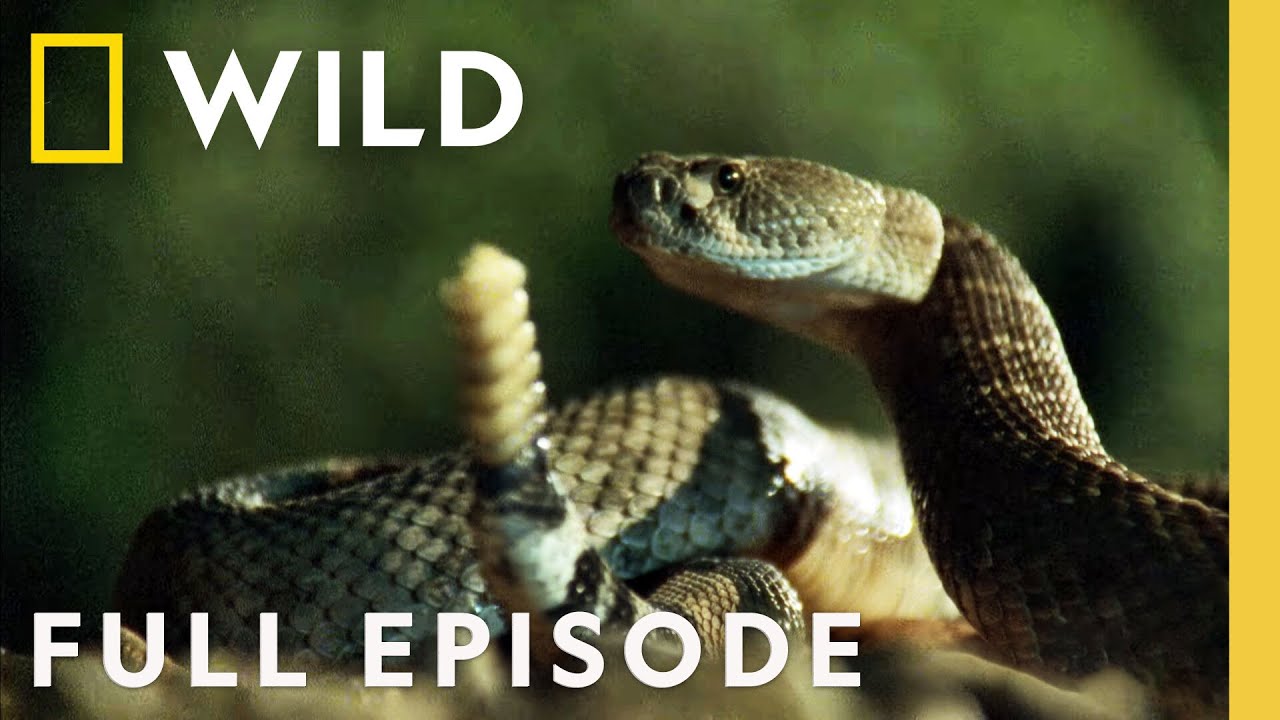
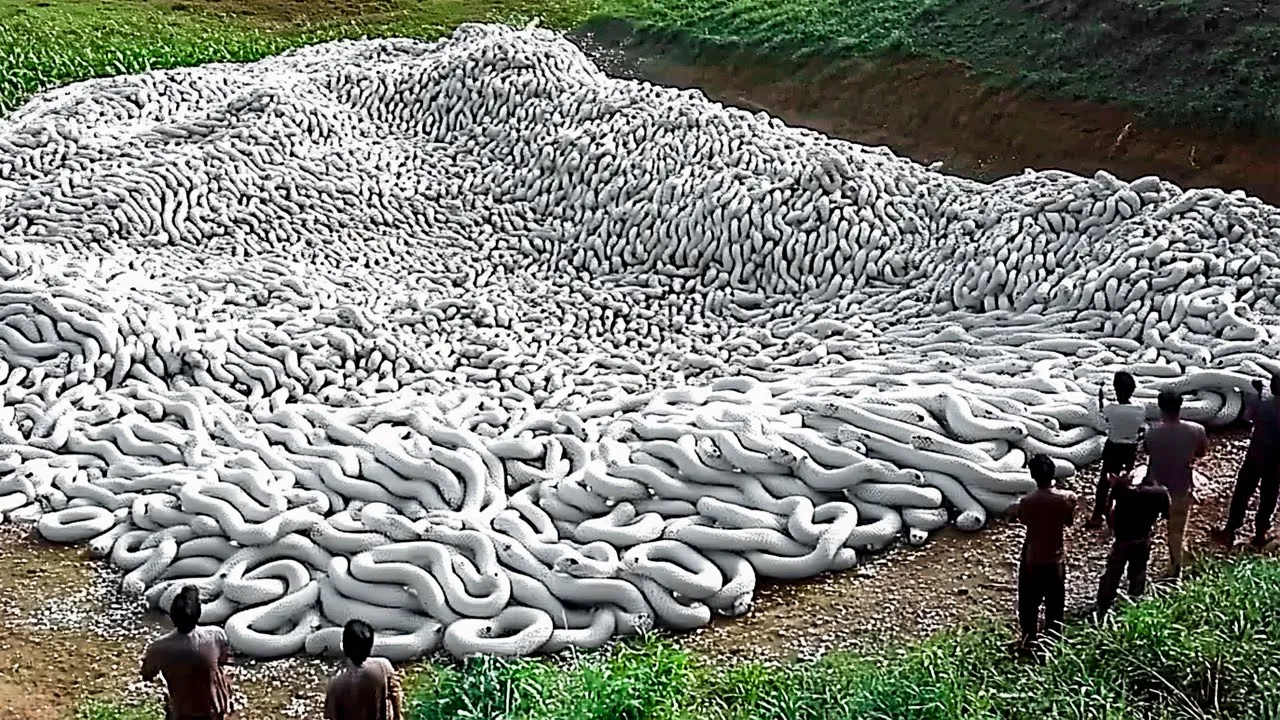
bit is one thing get bit in the face is a whole another thing he got it he got it that is really in the late 1970s Japan faced a serious problem with venomous snakes especially in rural areas there was also a problem of stray cats in some parts of the county to solve this the government brought mongus from outside hoping they would help reduce the snake and Cat population and keep people safe but instead of solving the problem it's led to an even bigger mess over the next 25 years the Mongo's created a whole new environmental crisis let's dive into this unexpected turn of events that Shock the World the Habu snake dilemma for years venomous Habu snakes caused big problems in some parts of Japan these snakes didn't just scare people they were dangerous back in 1980 alone around 400 people were bitten and sadly some of those bites were fatal Japan has its share of venomous snakes but the real troublemakers are the bigger ones like the Habu and its relatives the Eastern pit vipers they're part of the same family as rattlesnakes and puff adders with distant cousins like coral snakes and cobras living near these snakes wasn't exactly a walk in the park and the chances of getting bitten were pretty high Habu snake bites were especially bad because for a long time there wasn't any antidote even when one was finally developed it wasn't the easiest thing to use the antidote had to be stored as a liquid meaning it needed Refrigeration that was a problem since most snake bites happened in rural areas with no electricity or refrigerators installing power lines to those areas cost a fortune and took ages coming up with a new antidote that didn't need Refrigeration seemed like a long shot too so Japan decided to get creative they thought why not bring in an animal that eats snakes and isn't affected by their venom it sounded like a genius plan on paper of course things didn't go exactly as planned because when do they ever but don't worry they worked it out in the end and yes if you're thinking of Mongo's you're absolutely right want to know how it all went down stick around and we'll tell you the rest of the story monges The unintended Invaders in 1979 about 30 small Indian were brought to amami Oshima Island the idea seemed brilliant at the time these little Hunters would help control the Habu snake population and as a bonus deal with the Island's rat problem Mongo's are native to places like India and Pakistan so Japan's local Wildlife wasn't quite ready for this unexpected guest unfortunately their arrival caused all kinds of problems nobody saw coming by 1993 the mongooses were thriving and by 2000 their population had skyrocketed to around 10,000 that's when the ministry of the environment stepped in you'd think more mongooses would mean fewer snakes right not quite while the mongooses did help reduce the number of rats they weren't doing much about the Habu snakes turns out they weren't eating them they preferred easier meals like mice rabbits and even local birds so the snake problem continued leaving locals still at risk of dangerous bites at first monges seemed like the perfect fix they're fast fearless and skilled Hunters they've even got special Venom resistance which helps them survive cobra bites making them seem like a natural fit to take on the Habu snakes but there was a catch mongooses are active during the day while Habu snakes come out at night basically they rarely crossed paths and when Mongo's did encounter snakes they weren't great at hunting them why put in all that effort chasing a snake when there was plenty of easier prey around meanwhile the monges were multiplying like crazy by 2000 things were so out of hand that Japan had to step in with a plan to remove them over the years around 32,000 mongooses were captured and the last one was caught in April 2018 since then no new ones have been seen experts officially declared amami ooshima Mongoose free and the ministry of the environment celebrated a job well done so how did Japan manage to get rid of the mongus that's a whole other story but it's safe to say the mongus didn't end up celebrating along with them the Mongoose crisis a threat to Native Wildlife at first traps were set up along roads to catch the monges but they didn't work well the mongus just weren't interested it quickly became clear that a better plan was needed eventually special traps toxic bait and strong smelling attractants were used instead these did a much better job of drawing the monges In Search dogs were also brought in to track them down and this multi-step approach worked wonders in reducing their population if you looked at a graph showing the Mongoose population you'd see their numbers dropping steadily over time meanwhile the number of traps being used went up these traps were specially designed for mongus so other animals wouldn't accidentally get caught in them local people played a massive role in this effort starting in 2005 teams of mongoose Hunters made up of locals and volunteers worked hard in the forests and mountains to trap the animals their dedication was a big part of why the eradication program was so successful you might wonder why go through all this effort couldn't they have just left the Mongo's alone after all they weren't native to the island but was removing them really worth all the trouble the answer is definitely yes instead of taking care of the Habu snakes as planned the mongooses started hunting the Island's unique native animals one of their main targets was the amami rabbit amami Oshima is a subtropical Island and a UNESCO world heritage site filled with rare species the Mongo's put the amami rabbit which is already endangered at even greater risk removing the Mongo's became essential for saving the Island's Wildlife the amami rabbits are sometimes called living fossils because they're the last of an ancient group of Asian rabbits long ago these rabbits lived on the mainland but now they survive only on two small Islands Mongo's also harmed other species like the ryuku rats which are now close to extinction in total about 15 native species were affected by the mongooses so what started as a solution to one problem ended up creating a much bigger one the long battle eradicating the Mongoose Invasion the farming sector also had its struggles thanks to the Mongo's these animals were quick to hunt Farm Birds steal fruits from Fields And even spread diseases to livestock even though they didn't eat them over just 20 years the habitat for small animals shrank by 40% it became clear that bringing Mongo's to Japan's small Islands was a huge mistake Islands have delicate ecosystems with animals that aren't used to dealing with predators and don't know how to defend themselves adding a new Predator especially one as hungry as a mongoose made everything worse the damage caused by Mongo's on amam yoshima was a strong reminder of how important it is to think carefully before introducing new species to fragile environments getting rid of the Mongo's wasn't easy it took nearly 25 years to completely remove them and almost 50 years to finish the entire project while it might seem harsh to remove so many animals it was the right move to protect the Island's native species invasive species can cause a lot of damage if they aren't dealt with early the longer they're left alone the harder sometimes even impossible it becomes to remove them later Japan's success in removing Mongo's from amami Oshima is actually pretty amazing it's one of only nine cases in the world where Mongo's have been completely eradicated even more impressive it's the only time this has happened on such a large island the effort was a long and challenging process but it shows what can be done when people work together to protect the environment amami oshima's delicate ecosystem now has a chance to recover and the native species can finally Thrive again snake bites and invasive species here's some good news Habu snake bites are much less of a problem these days by 2020 the number of bites had dropped to around 60 per year surprisingly this Improvement had nothing to do with the mongooses instead people started taking better precautions and antidotes became easier to access which also helped prevent fatalities in fact there hasn't been a single death from a Habu snake bite since 1992 a graph would show this clearly with black bars marking the cases where antidotes were used it's a huge Improvement and shows how important proper Medical Care and education can be the Mongo's didn't fix the snake problem but the community's efforts made a big difference in keeping people safe even though amami oima is mongus free now the fight against invasive species isn't over mongus are still a problem on other islands and the lessons learned from amami Oshima are helping conservation efforts elsewhere in Japan for example Specialists are preparing to tackle the Mongoose population in Northern okanawa where these animals have also been spotted there's a real concern that Mongo's from okanawa could make their way back to amami oima undoing all the progress and forcing Japan to start over Mongo's have been in Okinawa much longer than on amami yoshima they were introduced during the Magi era about 70 years earlier when 17 mongooses were released okinawa's warmer climate and habitat are a better match for the Mongo's natural range so they Thrive there with higher birth and survival rates controlling the population is even more challenging while the success on amami Oshima is inspiring the ongoing battle in okanawa reminds you that conservation work takes time persistence and a lot of effort the dangers of biological control Lessons Learned right now the Mongoose population in Northern okanawa is under control but they're still thriving in the central and southern parts of the island to stop them from spreading fences have been put up and so far they seem to be working these fences aren't very tall but they have an l-shape at the bottom to keep Mongo's from digging underneath since Mongo's don't usually climb over them the fences help keep their numbers in check however just like on a mosima the survival of three native bird species in okanawa depends on controlling the Mongoose population if this idea of bringing in Mongo's to control pests sounds familiar it's because it's part of something called biological control this is a method where one species is introduced to manage another it's actually a whole field of science usually it starts with studying the pest and its natural predator then scientists research whether releasing the Predator could harm other species in the area only after lots of careful studies do they release the Predator to handle the problem biological control has been around for a long time and can work really well for example Farmers often use predatory insects to protect their fruit trees and Gardens but as you can see from the Mongoose situation in Japan this method needs to be used very carefully if it's not handled right it can lead to unexpected problems like harming native animals so while biological control can be helpful it's always a balancing act to make sure the benefits outweigh the risks the Mongoose mistake Hawaii and Beyond m gooses have been introduced to places like Cuba Croatia Jamaica Haiti Puerto Rico bise and Panama and in some cases it worked out but when Hawaii tried it in the 1800s things didn't go as planned back then sugar cane was Hawaii's biggest crop and rats were a huge problem because they kept chewing on the stalks plantation owners were desperate and in 1872 they heard about how Caribbean sugar producers used Mongo's to control rats it seemed like a great idea bring in mongooses from India to eat the rats and problem solved in the 1880s Planters brought 72 mongooses from Jamaica to the Big Island their offspring were sent to Maui molai and aahu but some people on the big island weren't convinced and felt more research was needed to see how Mongo's had worked in the Caribbean unfortunately their concerns were brushed aside and soon the plan's big flaw became clear rats are active at night but Mongo's are active during the day this meant they hardly ever ran into each other so the rat problem didn't go away instead Mongo's turned to easier prey like native Hawaiian Birds and turtles they ate eggs making things worse for Hawaii's Wildlife as native species started disappearing the Government tried putting up barriers to protect reserves but it was too late mongus have been blamed for the extinction of at least eight Hawaiian bird species including some on the endangered list this has been devastating for Hawaii's unique Wildlife interestingly Hawaii doesn't call the Mongoose introduction biological control because no one assessed its environmental impact beforehand Hawaii isn't alone in this mistake in 1872 a British colonist brought Mongo's to Jamaica to control rats but instead they caused bird and reptile populations to drop and triggered a tick out break when he complained British officials dismissed him thinking nature would balance itself out spoiler it didn't Hawaii's story like Jamaica's shows how important it is to study the effects of introducing new species without proper research and planning what seems like a good idea can create huge problems for local ecosystems out of lizards on four small islands in the Caribbean Sea Saint qua ground lizards Dart through the fallen leaves foraging and fighting to survive sadly these lizards no longer exist on St CA the island they're named after they were completely wiped out there because of of two major threats the arrival of Mongo's and Land Development on two nearby Islands only about 400 lizards managed to survive lucky ones that escaped being eaten thankfully conservationists stepped in Just In Time the remaining lizards were relocated to safer areas where they could live without the constant threat of predators these efforts paid off and their population has now grown to nearly 3,000 scientists are still hard at work to ensure these lizards liards don't disappear entirely their ultimate goal is to reintroduce the lizards to S qua giving them the chance to return to their original home this mission is a critical step in preserving the unique wildlife of the Caribbean and protecting these incredible creatures for future Generations a 4,000-year-old idea in a recent study of 4,000-year old Egyptian tombs researchers found something amazing a drawing of a person leading what looks like a Mongoose on a leash it's the only image like this ever discovered in Egyptian art and it clearly shows a collar and Leash On the animal while mongus have never been fully domesticated through controlled breeding some cultures have kept them as pets mostly to control pests like snakes rats and mice this ancient drawing gives us a peak into how valuable Mongo's were in the past what's even more interesting is why the Mongoose might have been leashed scientists think it could have been trained to scare off Birds making hunting easier for humans there's even some debate about another leash in the same drawing some believe it's tied to a dog While others argue it might belong to a hornless goat this artwork opens a small window into the daily lives of ancient Egyptians and their unique relationships with animals officer here's a wild idea that almost became reality in Sri Lanka where dogs usually handle the job of sniffing out illegal substances someone thought why not try Mongo's instead after all locals have relied on these feisty creatures for generations to chase away cobras from their Farms so a pilot project was launched with a $50,000 Grant and a specialist was hired to see if monges could take on this surprising new role the National Zoo even offered its grounds for training the plan release a few Mongo's into a cargo container filled with car parts if they sniffed out anything illegal their tails would puff up as a signal Believe It or Not Mongo's can be trained and they totally aced the test sadly despite their success the project was shelv due to changes in leadership and political hurdles it's a real shame because the idea of mongus is working as Customs officers is pretty amazing just picture them on the job sniffing out Contraband with their sharp noses and noons attitudes it would have been a GameChanger until now we have learned about the snake killer but now we will learn about some of the most dangerous snakes in the world saw scaled vipers the Indian saw scaled Viper usually produces very little Venom when it bites it can inject around 0. 2 o of Venom which is enough to kill an adult if you get bitten you'll likely feel pain and swelling right away at the bite site and in some cases the swelling can spread throughout the whole limb within 12 to 24 hours sometimes blisters can form too the amount of venomous snake produces an in effects can vary so the effects can differ from bite to bite around 20% of people bitten by this snake have serious symptoms but thanks to antivenom fatalities are less common now the most serious problems often involve bleeding and clotting you might also experience things like vomiting blood black stools coughing up blood or nose bleeds none of which are things you want to deal with many people also face urinary problems such as not being able to pee or even stopping urinating completely for up to to 6 days if kidney damage happens dialysis might be needed as for what these vipers eat they're carnivores and like to Feast on mice frogs lizards and insects including scorpions and centipedes king cobra the king cobra can come in a range of colors including yellow green brown or black and has some cool patterns like crossbars or Chevrons in yellow or white baby king cobras are usually all black but they have the same crossbars on their heads and yellow or white stripes on their bodies and Tails but don't let their pretty looks fool you this snake is huge and its size adds to its intimidating reputation the King Cobra's fangs are really sharp about 3 to 4 in long they're relatively short though because if they were longer they'd pierce the floor of its mouth when the snake pulls its fangs back they help push food down into its stomach king cobras live in areas ranging from Northern India to Southern China including places like Hong Kong and and hyan they're also found in Southeast Asia like the Malay Peninsula Western Indonesia and the Philippines these snakes like places near streams or in forests bamboo thickets farmlands and mangrove swamps they prefer areas where the temperature and humidity are stable spending about 25% of their time near streams in terms of Senses King Cobras have better Vision than most snakes and can spot movement up to 330 ft away their hiss is also unique sounding more like a dog's bark than a regular snake his it comes from tiny holes in their esophagus and gets Amplified by their lungs male king cobras also have wrestling matches to show who's in charge these battles are more about showing off than actually fighting with the winner being the one to tap the other's head first Philippine Cobra the Philippine Cobra is a venomous snake found in you guessed it the Philippines it has a short rounded snout and large nostrils with dark brown eyes and round pupils if you spot one of these snakes don't get too close because they don't play around the Venom of the Philippine Cobra is a potent neurotoxin that targets the nerves capable of paralyzing the respiratory system this happens when the Venom attaches to neuromuscular Junctions blocking nerve signals the Venom is purely neurotoxic and doesn't have necrotizing or cardiotoxic effects which is the good news the bad news this snake can accurately spit its venom up to to 10 ft away if bitten you can expect symptoms like a headache nausea vomiting abdominal pain diarrhea dizziness and trouble breathing local symptoms are usually minimal but the neurotoxic effects can be severe and Rapid in a 1988 study involving 39 bite victims neurotoxicity was the main issue in 38 cases with complete respiratory failure occurring in 18 of them often very quickly in three cases apnea la of breathing set in in less than 30 minutes after the bite tragically two fatalities were reported with the victims already deceased upon arrival at the hospital when bitten by a Philippine Cobra victims experience severe neurotoxicity that comes on fast but the local tissue damage is usually mild Malayan crate or blue crate the blue crate also known as the Malayan crate is a snake that's often called The five-step Snake because Legend has it you can only take five steps before dying if you're bitten by it while its venom isn't the most potent out there it's still extremely dangerous and without medical help a bite can be fatal in just 12 hours even for young blue crates that said some people take the risky approach of handling them which is definitely not a good idea visually the Malayan crate is quite striking with its Vivid black and white bands though some can be all black a bite from this snake is said to be almost painless which makes it even more dangerous the Venom can cause serious damage before symptoms even appear its venom is 15 times more powerful than a regular Cobra's and is mainly made up of neurotoxins that affect the nervous system symptoms of a bite can include nausea vomiting headaches abdominal pain dizziness and diarrhea as the venom does its work neurological issues like paralysis or seizures can develop without prompt treatment the person affected could die within 12 to 24 hours luckily there is antivenom available for this snake's venom making it possible to survive if you get the right Medical Care in time mosambique spitting cobra the Moos beak spitting cobra is a highly venomous and downright terrifying snake found in Africa it's considered one of the most dangerous snakes in the region these cobras can be slate to Blue Olive or brownish black and are often spotted with black Edge scales they have a varied diet eating everything from other snakes to birds eggs small mammals amphib Ian and even insects they're also known to scavenge munching on partly decomposed bodies of different animals one wild thing about them is that they can eat venomous snakes like the black mamba in fact they've developed immunity to the black mambas Venom yeah you heard that right this snake is so tough it Chows down on black mambas even if you're immune to Venom eating one of those must be one spicy meal when threatened mosambique spitting cobras can rear up to 2third of their length flare out their narrow hoods and give you a very clear warning to back off true to their name they're excellent at spitting Venom which they can accurately shoot up to 6 to 10 ft if the situation calls for it they might bite instead of spitting or even play dead to avoid danger Eastern Diamondback Rattlesnake the Eastern Diamondback Rattlesnake is found in the Southeastern us with its range stretching from Southeastern North Carolina down the Atlantic coast to the Florida Keys and across the Gulf Coast up to Southeastern Louisiana during droughts you can find them in wet prairies swamp forests and salt marshes among other places normally though they prefer habitats like longleaf pine forests turkey Oak areas Sand Hills and Coastal Maritime hammocks often considered the most venomous snake in North America the Eastern Diamondback is large and Powerful but generally not aggressive the Venom contains an enzyme called crotaline that can clot fibrin which is not a good thing while clinically significant bleeding is rare the Venom also has a low molecular weight peptide that can block nerve muscle communication potentially leading to heart failure as for their diet Eastern Diamondback Rattlesnakes are carnivores they mainly eat small mammals like rabbits and rice rats but they'll also go after birds and large insects beaked sea snake beaked sea snakes are active both day and night and they can dive as deep as 300 30 ft staying underwater for up to 5 hours before needing to resurface these snakes have special glands that help them excrete excess salt some snake experts describe them as both contentious and Savage due to their venomous and aggressive nature just a tiny amount of their venom is believed to be fatal to humans the Venom contains powerful neurotoxins and myotoxins beaked sea snakes are found around the world and they account for up to 90% of all sea snake bite fatalities they give birth to live young often in lit of 30 or more the young snakes usually stay in Shallow waters for 6 to 12 months before venturing into the Open Sea by 18 months they're mature enough to reproduce with females typically having their first batch of babies at around 24 months the main threats to this species include pollution accidental capture in fishing nets and hunting for their venom and skin booms slang booms slangs are venomous snakes with powerful Venom delivered through large fangs at the back of their jaws when they bite their jaws can open a wide 170° the Venom is primarily a hemotoxin which interferes with blood clotting leading to internal and external bleeding in severe cases there can even be bleeding in the brain and muscles other symptoms might include headaches nausea drowsiness and mental confusion the slow acting nature of booms slang Venom can be tricky on one hand the delay gives victims time to seek antivenom treatment on the other it can create a false sense of security making people think the bite wasn't serious sometimes the snake will deliver a dry bite with no Venom at all if symptoms don't appear for a few hours those bitten might mistakenly believe they're in the clear Venom effects can vary between individuals as each snake species impacts the human body differently antivenom for booms slang bites was developed in the 1940s by South African vaccine producers and is highly effective in treating the Venom however if antivenom isn't administered within 24 to 48 hours a full blood transfusion may be necessary to save the victim yellow bellied sea snake yellow bellied sea snakes are found in warm oceans around the world except in the Atlantic they're venomous and are among the most widely distributed Snake species as their name suggests they have a distinctive two-tone color pattern pattern with a yellow underbelly and a brown back making them easy to tell apart from other sea snakes while their colors can vary they usually have a mix of black on top and yellow or brown on the bottom some have black spots or bars on their yellow or brown underbelly or the yellow might stretch halfway up their back leaving a thin black stripe or crossbars these snakes are perfectly designed for life at Sea they have features like smaller ventral scales a paddle-like tail and a horizontal Ally compressed body all of which help them swim efficiently their nostrils have valves and they have a special seal in their mouth to keep water out one of the coolest things about them is their skin which can absorb oxygen allowing them to meet up to 33% of their respiratory needs this lets them stay underwater longer another interesting feature is their salt gland in the lower jaw it was once thought to help filter out salt from ocean water but it turns out these snakes only drink fresh water the Black Mamba the Black Mamba is often considered Africa's most feared snake thanks to its size aggressive nature and Incredibly potent Venom this Venom leads to Rapid and intense symptoms the first specific antivenom for mamba bites came out in 1962 but without it a bite can be life-threatening unlike other venomous snakes black mamba Venom lacks the protees enzymes that typically cause local swelling or tissue damage so bites may not result in the usual painful reactions instead the first sign of a bite is often just a tingling sensation at the sight a single bite can inject an average of 0. 035 to 0.
42 O of Venom with the highest recorded dose being a massive 0. 14 oz to put that into perspective that's nearly the amount you'd find in a shot glass black mambas are carnivores and mostly prey on small vertebrates they prefer warm-blooded animals like birds particularly young ones as well as small mammals such as rodents bats hxis and bush babies they're also known to eat other snakes when available Inland taian the inland taipan is renowned for being one of the most venomous snakes on the planet known for its speed and precision it's capable of striking multiple times in Rapid succession with pinpoint accuracy while the maximum amount of Venom it can release in a bite is 0. 4 Oz the typical dose is about 0.