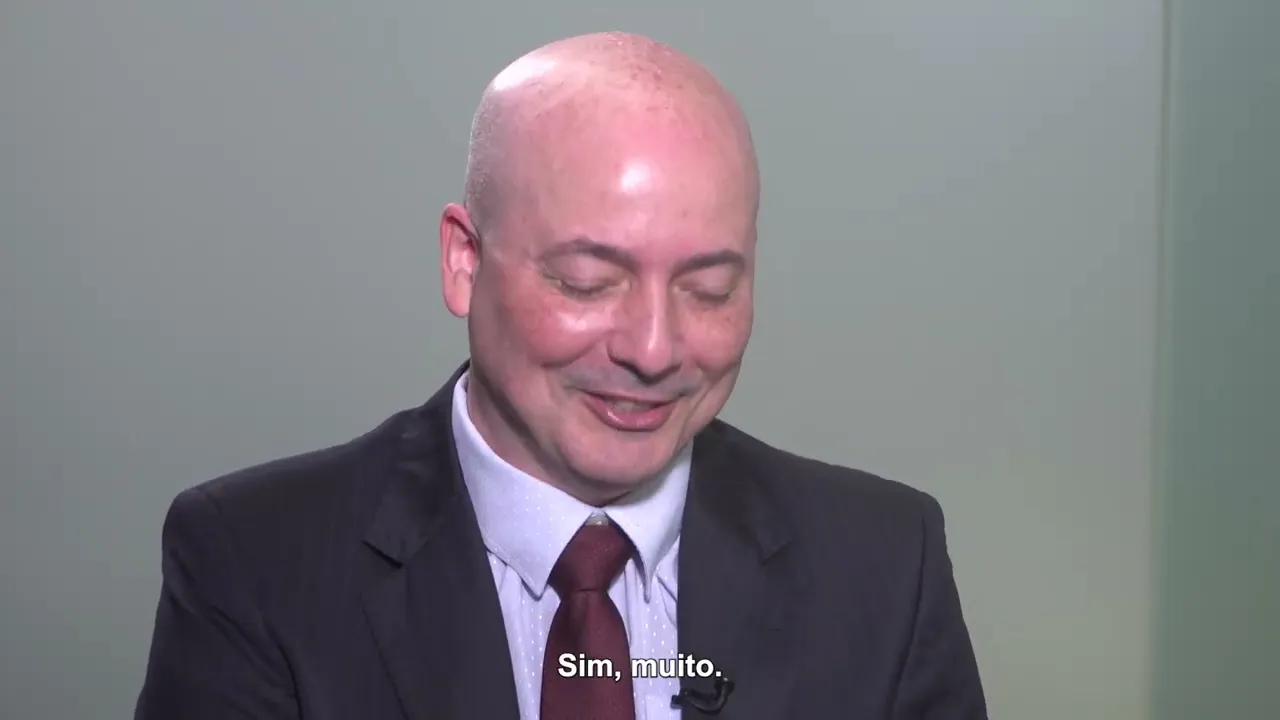
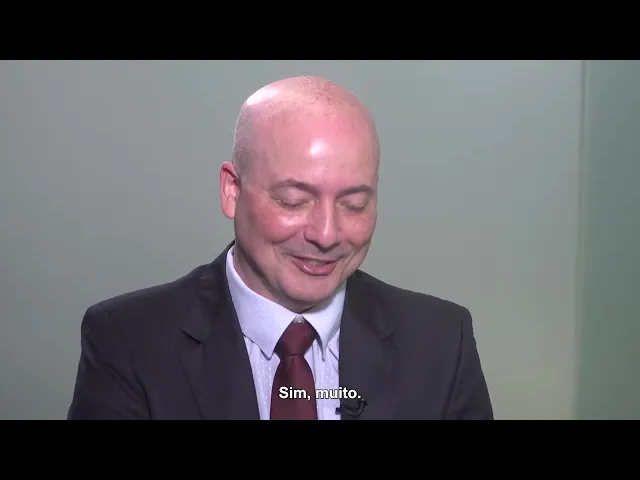
[Music] mruz thank you very much for being here with us very very pleased to be with you here Mr Del Cruz uh let me start with a with a big picture what you think should be the priorities for the governments of Latin America to uh increase development growth economic growth in the region yes well that's that's the main question for Latin America of course we have been lagging um for many many years in productivity and and general economic growth uh that's the main challenge no no doubt so there are uh something that has to be
said immediately is that in Latin America we had to big uh public sectors that have been investing for for a long time providing uh public services that are very important of course but also uh you know trying to be a an entrepreneur to trying to be business people too and the and the government don't know very well how to do that that that that's something that is important to to to say in the first place Latin America we like a lot of that type of things but it's proved that uh is is not really a
great idea so uh main thing is to improve to to increase incentive for the private sector to invest uh in uh in certain countries though uh it is very important the investment public investment in infrastructure and public services uh one of the studies we made at the idb at a given point a couple of years few years ago uh clearly showed that one of the reasons why productivity didn't grow in Latin America was because of problem with infrastructure uh at this point it's not only roads and seaports and airports and bridges Etc it's also digital
infrastructure so this is something that uh the public sector has to do and the public sector has done that in all the developing country so it's not something that is not known in in history so there is a reason why the um investment the public investment has to be made because of it's going to eventually increase productivity let me tell you this productivity in Latin America has grow zero practically for the last 30 years yes growth in Latin America depends basically on Capital and labor you know all the capital and labor that gets into the
economy makes the economy grow but one very key aspect of growth which is productivity in not La America is really lacking that and again there are many reasons for that there is also education there are all type of different constraint but the infrastructure constraint is extremely important so if we could invest massively and for a relatively long period of time uh in infrastructure that would be a big boost to the economy in two ways the first one you are going to have a clear know typical Gan effect which is the creation of the demand that
the that the government is doing you know with with this type of investment but also most important is that over time is going to increase productivity so you are going to have an economy that is more healthy because it not doesn't only grow because of capital and labor but also because of productivity so that that's something that is that is very important for the for the to do as a public investment but at at the same time we don't need that all this public investment infrastructure has to be public part of the investment can be
and should be actually uh provided by the private sector okay so uh as there's after covid-19 was a tightening of the fiscal constraints of of the so the what are you telling us as that yes there is this constraints but the the Govern government must spend more that's smarter uh so you you choose several areas and there are areas that states should be um diminished uh that you have to to give to the private sector some sectors that in most Latin American countries are controlled by the government well the thing is that the governments spend
a lot of uh in Latin America government spend a lot of subsidies yes so uh in this sense it's it's not always lack of financing that you have is where you put your effort so in our opinion uh the idea would be to reduce a little bit the subsidies and increase investment one of the main things that you can see everywhere in in Latin America when you analyze the public uh expenditure is that the investment is always very little in Latin America typically you get 3% of GDP investment M as an average um uh and
then you get sometimes 10 15 20% of GDP on on all sort of subsidies some of them are subsidies that you need for example Social Security but then you got many subsidies that are actually really bad for the economy and really bad for the people actually uh so and in that sense there is a balance that you have to make a little bit you know how much you want to support with subsidies certain priorities certain political priorities and how much you want to actually invest in the future investing more productivity invest in more wealthy and
healthy economies in the in the region yeah we we um nowadays in a a transition of the this new technology that are are taking shape um in probably unpredictable ways what will be the future with this new technology how you encourage um Innovation through new technologies in Latin America our countries the first thing is property rights no doubt uh people without property rights don't that they don't feel incentivized to to to innovate or or do anything particularly because uh you know Innovation typically is more um it's not Material it's it's intellectual and you need a
lot of protection on that many countries in Latin America has done a lot trying to to increase the the protection of property rights uh for for for innovators the second thing is being open being open to ideas uh there to do things that are different uh many business people in Latin America has done fantastic jobs fantastic uh uh uh companies you know um but some of them are very traditional they they they think that you know my my business is doing well why why should I innovate well Innovation is always the key for growing more
so uh in that in that sense there is something that it has to do with being in there to be open to to to new ideas this is this is something I would say very important because our our business people in the in the region uh needs a lot of that there are there are some extraordinary good examples right now actually in the whole region know Latin America that tends to give more importance to to to Innovation but there I think that a change of of mind trying to to being open is is very important
and I would say a third thing Capital you need a lot of capital yeah you order to do that here in the United States you know very well you know you got all this risk Capital that you can investing 100 startups and probably one or two only really are are able to to thrive uh but this one or two make up for the whole other failures you know so so that the the growth that that that two uh you know give to the economy is extremely important and any capitalist that has invested on the 100
that most of them fail has a return one hon return return from from the one or two that actually are are uh successful so in that sense it's again it's it's something about because we don't have lack of capital in Latin America we could have more of course but we have a lot of capital in Latin America but the point is where do I put my Capital people investors that that want to do things where do I put my capital and uh we should learn from the experience in other countries particular here in the St
of course where you have uh clearly a um people that understand that the future is not like the past so you need to again innovate and invest on that Mr delu you have long advocated for uh the decentralization of government to better attend the public um how decentralization uh increase growth in in in every country but focusing in in Latin America why decentralization might be a good way to development uh more um accelerated Pace yes well the the the key of decentralization is to give to lower level of government States and municipalities the power to
actually decide on what they need in order to have good governance on the one hand but also to grow on the other hand to have a wealthy and healthy economy and uh if we go back a little bit on what we were talking about about infrastructure it is very difficult to for minister at the federal level you know to think about every single thing you know that is needed in the whole country in terms of infrastructure for example the same point that we were making before but this is something that is easier for a governor
or a mayor in touch closer touch with the business community in this areas and with the people in this area to understand exactly what is needed so in that sense uh I would say that if we bet uh on uh investment infrastructure investment Public Services we should bet also on decentralization because you're going to have of course project that are National it's called it was a national scope that's very important those projects are are key but there are many projects that are at the regional and and local level that uh it's extreme extremely difficult for
a national government to understand and to to get into that so in that sense talking about not only governance which is also a very important part of the centralization you want people to feel that their uh government is close to them and that's extremely important in order to improve and and strengthen democracy uh there is this other aspect that you rais that that I like very much which is the the way to um LED regional and local governments to actually contribute to to grow through smarter uh investment in in their cstrs [Music] madur Venezuela and
Mr Del I would like to ask you on the way that your country is now there was an election and internationally it was not recognized as a fair election and what are the position of the uh opposition in Venezuela uh in this moment when the the actual government in Venezuela are not U allowing the verification of the election as it was held um a couple months ago yes well it is very clear I think for everybody in the world that our candidate amundo Gonzalez UIA won the election by a very you know by a land
flight that that that's where it is uh the Maduro regime themselves they know to there simply denying us uh denying the the popular will uh denying the Constitution uh so what we are doing now is to first of all um putting in place a broad International Coalition uh in order to recognize that uh our candidate won that Maria Corina Mach is the leader actually of the democratic forces in Venezuela we are not calling ourselves any more opposition we are a government in waiting we are a government elect uh and uh and we are trying to
as I said trying to put together this uh this broad International Coalition we are very happy that that's something that is happening and actually we we want to recognize the the contribution of Brazil and Colombia that has been a very straightforward and saying that they are ready to intermediate in uh in whatever uh kind of negotiation we can establish with the regime we have said very many times that we are open for negotiation to uh perform a orderly and peaceful transfer of government unfortunately the regime is not up to that at this point um however
the regime is cracking internally it's cracking there are different fractions in the in in in in the government and different fractions actually in the military I have to say it's it's extremely complicated the situation that they have and what we are doing right now is putting pressure literally putting pressure on these structures in order for them to understand that they cannot normalize the situation they lost total legitimacy with the election they would expect normalization after the 10 of J which would be the chance of government we are putting all the pressure possible internationally and nationally
to let them understand that there is no way to normalize in the future so if they feel that they think that they are not going to be able to normalize because of this broad Coalition that we have they're going to be probably more able to start negotiations and this is where Brazil or Colombia president Lula and president pet uh may play an important role as intermediaries uh we understand that the the reging is not going to reach out to us directly we need somehow people that are in the middle that are able to talk with
the two the two sides so in that sense again given that this is a program that is going to be seen in Brazil I want to to thank president Lula directly for their his role on this and in general the Brazilian Society we know that all the parties in in in Brazil and the people in Brazil are with Venezuelans H in our fight for freedom in our fight for democracy mrus what's the situation on the ground for uh people uh in the opposition for the regime and there is uh a perception that there there is
a closing of the regime more oppressing it it is it how is the situation on the ground for people who are members of the oppos it's really bad it's really bad we got more than 2,000 people in prison after the 20th of July which was the election day uh there's people that had been killed about 30 people that have been killed there are people in prison there are kids and women that have been abused um they this is State terrorism what they are applying to to our own population but again uh we think that this
sacrifice is worth it we think that we are close to to to reach our goal which is restablish uh the rule of law restablish the rule of the Constitution and uh uh getting uh gonalez to to be inaugurated as a president on 10th of the 10th of January so you know I don't can think easily about countries that can uh you know get rid of a dictatorship like this without a lot of sacrifices and the Venezuela we are you know uh doing the same that many other people that many other courageous uh nations in the
world have done before so that that's uh that's something that we do with a lot of pride uh we we uh this is a Venezuelan problem we are going to resolve this but we need no doubt uh the support of our International Partners in order to achieve that objective of Freedom yeah this uh regime that that's becoming more uh oppressive unless it was for some time now but I feel that uh in the region Latin American region they the other countries neighbors of Venezuela uh there there's a kind of consensus now in the recent past
the pressures come from here from the United States from Europe it is it's a my perception is correct there is now uh you think a consensus you mentioned Colombia and Brazil uh but there's a consensus that is regional too now and it was not like that five 10 years ago consensus you mean about about the legitimacy of the government absolutely absolutely I mean uh all the democracies in the world all of them has rejected the the fraud the K actually that madur is trying to perform right now uh denying you know our our Triumph uh
nobody believe that they want and that means that they don't have the legitimacy they lost that and the point here is since they know that they are not going to regain their legitimacy because they lost the election and they lost it by humongous margin actually let me tell you let me make a little parenthesis here five million Venezuela weren't able to vote I couldn't five million four outside the country and one in the country because the different tricks that they made in order to prevent us from from voting you could not vote I couldn't vote
I won was of the five Millions uh so uh if we all all these 5 million that weren't able to vote because they the regime prevented us from doing that would have voted it would have not been 30 30% 70% it would have been 9010 so they know that and the world the world know that so uh no doubt that they lost legitimacy what they want is to normalize the regime they're going to say well okay you know I stay here the 10 of January I'm here I put on my my my own band you
know presidential band with the people that are not independent Congress is not independent the Judiciary is not independent anybody nobody there is independent except for you know all depends on the on the government on the regime so I stay here and then you know Venezuela is an important country we got you know we are the first reserve of oil in the world etc etc so they will will they will need to somehow normalize the situation the relationship with with with Venezuela and what we are trying to do and we are achieving this goal is to
say no you are not going to be able to do that and again as I said before this is a way for the cracking inside the government to actually collapse and our hope is not that there is a collapse of the of the regime our hope is that when they see that this is unsustainable that their regime is unsustainable they come to us to negotiate a peaceful and orderly transfer of government transfer of power and again there countries like Brazil and and and Colombia might be useful at that point uh to try to you know
make sure that this situation is resolved in a peaceful Manner and and in orderly manner nobody it is in nobody interest to have an implosion in Venezuela that would be a really Venezuela is already a threat for the region at this point a security threat to the region imploding Venezuela will be even worse so what we need to do is to make sure that this can be done in an orderly manner there was an election here uh presidential elections here in the United States Donald Trump was elected for a second term will there be any
change because President Biden was a Critic of of of the Venezuelan regime uh do you expect some kind of a change in the uh United States position or they keeping pressuring as they are pressuring the Venezuelan regime now well gallano what I can tell you about this is that we have been very grateful to both parties in the United States that we have been able to com transform the Venezuela issue into a b bipartisan uh policy uh there are many scenes where the United State parties are not in agreement but Venezuela is one of the
few I would say that happily the two parties are uh in agreement uh yes there might be some things that the Trump Administration can do that the Biden Administration didn't or since that the B Administration did that the Trump Administration might think that they should do it in a different way but I would say that both Administration has been extremely useful um and I I would like to also recognize something that the Trump Administration president Trump President elect Trump has uh nominated Marco Rubio as Secretary of State and appointed uh Mike wals as National Security
coun advisor uh both uh person that both from Congress one is the senator the one is a representative for the US uh has been extremely uh um helpful to to to our cause because they are very knowledgeable about what's going on in Venezuela in general in Latin America that this this is probably the very good news is that we are going to have two people in in in very high positions in in in the new Administration that know very well Latin americ understand the importance of Latin American to the United States by the way and
particularly in Venezuela regarding Venezuela they know very well the situation in Venezuela they have been in touch with us all the time we we got a very fluid conversation with with them uh with their teams Etc and and we we are um sure that the the support of the United States of the new Administration as well as the ER administr Biden Administration is going to be extremely helpful for establishing democracy in Venezuela Mr Cruz uh you have a personal relationship with Marina mashad probably Gonzalez too how are these people uh living in a situation like
that what is like to be the leader of opposition of a regime that is becoming um more oppressive u in the last um decade but is a it's a phenomenon it's it's a it's something that it's a person that uh uh with an Incredible strength with an incredible determination with an incredible capacity to sacrifice herself uh to make sure that Venezuela gets back to a democratic uh setting uh that we get our freedoms back uh she has been in hiding for for a few months now um but she's being extremely active uh we have uh
daily meetings actually ER and she's in touch with with different uh with many governments with many presidents and um and really is impressive how she have been able to symbolize this this uh determination of the Venezuelan people for freedom and democracy uh people believe in her a lot I mean uh we had a the last survey that we that we had um basically Mar is supported by more than 80% 80% of the population even after all this situation that we we seen this state terrorism that we have been seen in Venezuela H so so I
would say that um um if there is somebody who can you know lead this uh until the end as she likes to say is her so so I am privileged to to to really know her and and being able to work with her and Mundo Gonzalez Rua is a is a hero of of of Venezuela he's a person that didn't have any idea you know any any any interest in in becoming president uh the situation that everybody know I'm not going to go through all the details how finally instead of Marina it was edmundo gonut
who had to run for president so he has been sacrificing a lot actually he was a you know a very well considered the person you know Diplomat distinguished Diplomat in Venezuela and now doing all this and risking basically his freedom his life even uh is something that has to be recognized for by by everybody uh they have a fantastic relationship between them a lot of coordination and now that Mund Gonzales is outside Venezuela he's helping a lot on the relationship that we are having International uh he's been doing a lot of tools in in Europe
so uh we we think that this is contributing a lot to fortifying to strengthening the the this International Coalition that we are working on hopefully we can bring Mundo vonz also to the at a given point uh in the next few week we will see that we are discussing that with the the outgoing and the incoming Administration one let question uh Mr deluz is there a change of uh the way you do things there was the the the initiative to to try to make the International Community to accept uh guo as U president um some
years ago is there a a different approach to trying to to increase pressure in the Venezuelan regime now with the election with the consensus among Neighbors in the whole world about the illegitimacy of the the last elections a change of approach we are seeing now well what what what change were the are the circumstances and the and the legitimacy of of the president elect guo became a president intering president because of a constitution technicality since uh we didn't recognize and 60 countries in the world didn't recognize the fraud that Marudo performed uh didn't recognized what
he said that he was won actually he performed a fraud uh in in the previous election uh well the constitution in Venezuela basically appoint the president of the Congress as a president intering president and then they have to typically there should be elections organized presidential election that should be organized in order to have a new pres um at that point uh the chavismo was stronger than it is now there were less cracking inside and again now what we have is a president elect by a large margin that extremely weak cracking is bigger if you apply
pressure on a on a healthy tree tree is very difficult to to take it down right but if you have pressure on a tree that is you know an old tree that is your cracking well you can probably T it down and this is what we think is happening right now um basically what we we expect again is that the government the regime in Venezuela they understand that they are not viable anymore and they understand that we are ready to give them uh guarantees and we want to know what guarantees they need in order to
consider them in order for them to change for Change and Order change of government yes thank you very much for the time with us on the contrary really gallano very very nice meeting you here and and with your audience in Brazil okay thank you thank you


![Ludovico Einaudi [relax, study, sleep, soft, calm, inspired piano medley]](https://img.youtube.com/vi/DIvewN35QT4/maxresdefault.jpg)