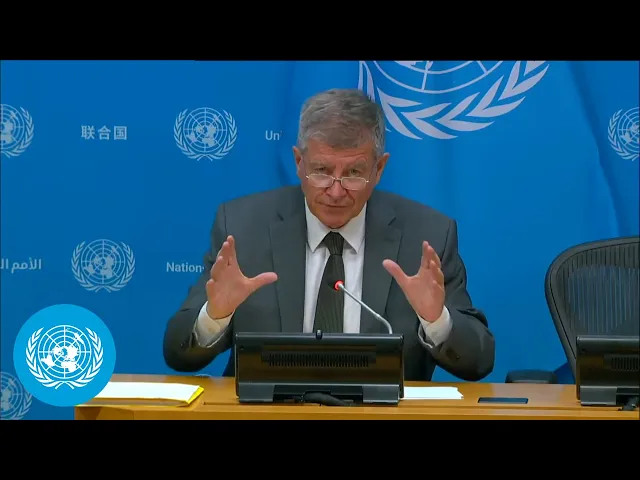
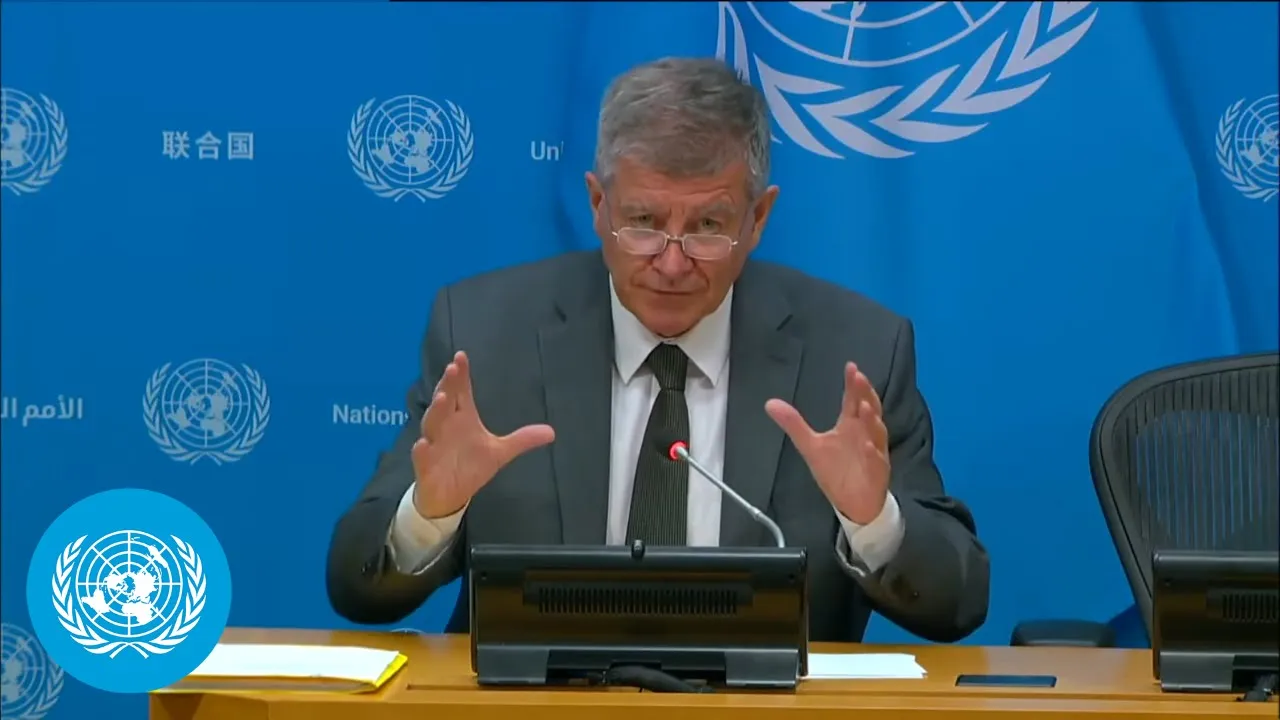
all right good morning everyone thank you for joining us today um we have with us the under Secretary General for policy and he's also the UN lead for the summit of the future Mr guy Ryder thank you for joining us um as you know he's here to brief you on the summit of the future I'm sure you have a lot of questions um on that and uh he will start with some introductory remarks and then uh we'll turn it over to you guys please Mr ryer thanks very much fencia and uh greetings to everybody here
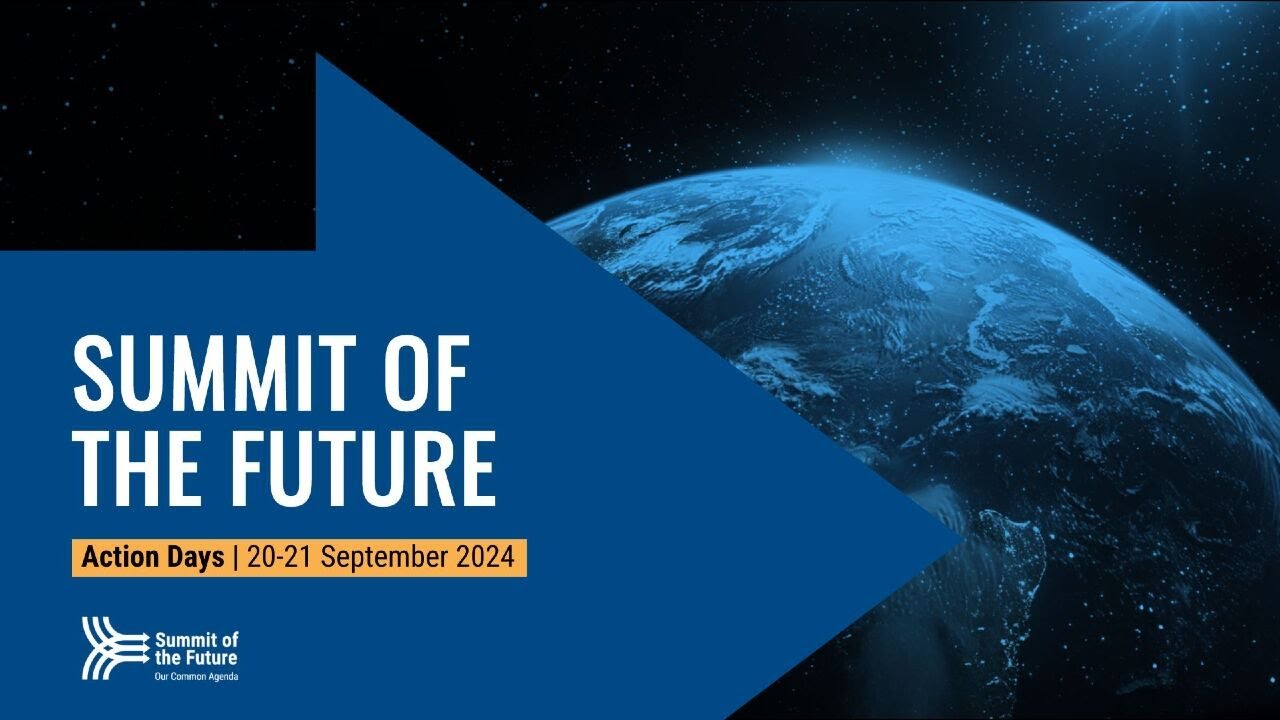
thank you for your interest in the summit of the future let me give you a brief um sort of state of play on The Summit and why we think it is so important you know the Summit is a matter of days away now takes place on the 22nd and the 23rd of September preceded by a day and a half of action days where we're bringing uh stakeholders uh into the uh into the building uh to discuss the relevant issues we're expecting uh in excess of 130 heads of state heads of government uh to attend uh
the summit and in the action days we have registrations for in excess of 7,000 uh NOS academics private sector Representatives we think this is indicative of a very high level of interest in the summit and let me turning to the substance of the summit say that we believe that the stakes are high uh that the issues on the table of the summit are of the greatest importance to not just the UN system of multilateralism but uh to the future of Our member states as well and let me uh tell you where we stand in the
negotiating process with a reminder that the summit will be adopting three outcome documents a pact for the future to which will be annexed two other documents a Global digital Compact and a declaration on future uh Generations the overall objective of the summit and people ask this question quite frequently is very simply stated the idea of the Summit is to render the United Nations the multilateral system more effective uh in its the Fulfillment of its mandate to make it more participatory more networked this in the face of the very clear Global challenges that we face the
fact that the world has changed and is changing rapidly and the reality that many of our governance structures date back uh to the creation of the United Nations when it had 51 member states instead of the 193 member states who will be gathering at the summit itself now substantially what are we going to find in these outcome documents what are the issues being addressed in The Pact uh for the future itself the mother document if I can call it it that uh there are five chapters and I'm not going to take you through them in
grinding detail but simply to highlight what seem to be us some of the most important issues at stake we have uh a a major section on sustainable development and financing of sustainable development very clear signal that part of the objective of this Summit is to complete and to improve our business around the 2030 agenda this is an accelerator for the 2030 agenda for sustainable development with an important access on financing which is a recurrent theme I would say throughout the summit process secondly we have a section on peace and security designed in accordance with proposals
presented by the Secretary General under the title of a new agenda for peace to address the whole Spectrum the whole Continuum of Peace conclusions that would address root causes place an emphasis on prevention look at a an update of our peacekeeping peace building operations but also address critically I think new and emerging conflict domains so think of the application of new technologies in Lethal uh weapons think of biological hazards think about the dangers of the militarization of outer space all of these are being addressed a third chapter uh is on science technology and Innovation and
of course this is where the annex on the global digital combat comes into play if I could put it in a word or a sentence the objective of the global digital compact is to make technology work for Humanity equitably uh we are aiming at closing digital divides expanding inclusion in the digital economy creating an inclusive open safe and secure digital space working on uh Equitable data governance and also and this has perhaps ATT attracted more attention anything else uh creating the systems of governance of artificial intelligence that will benefit Humanity uh a fourth section is
on Youth and future Generations there is a very strong emphasis on youth throughout the summit and in the action days that preced it and the sections on Youth and future Generations two quite distinct groups I would underline to you is firstly to increase the participation opportunities for youth in decision making nationally and the new UN system and to address the key social economic challenges facing young people a declaration on future Generations is intended to codify what is happening in many of our member states the need to ensure that decisions we take today take into full
account the needs and interests of future Generations and the last chapter and it captures a lot of different issues is around the transformation of global governance this is a very wide ranging area uh of The Pact IT addresses Security Council reform and we have the potential to take important steps forward on Security Council reform IT addresses a revitalization of the general assembly and eoso critically it contains extensive language at the current state of negotiations on reform of the international Financial architecture I would say one of the most um uh most important and certainly one of
the most contested areas of the act for the future and goes on for example into the governance of outer space Issues new approaches to uh Outer Space Traffic uh a debris and of course this issue of militarization I think you will see from this that we have a very ambitious agenda the Ambitions for this Summit have always been high what I think is very encouraging 10 days out from the Summit is that the negotiations which are continuing are continuing on documents which meet that high level of ambition now the negotiations are incomplete uh the uh
member states are working hard to reach the necessary con consensus on these documents we need consensus for adoption but I think there is good reason to be confident that the successful conclusion of these negotiations will will produce a pact with two annexes that will truly make a difference this is something which is not only worth having it is something that we need to secure uh for the future a last word and I will conclude the action days uh that precede the um Summit itself uh in consonance with the efforts we have made from the outset
uh to ensure the involvement of multi-stakeholders in this process there was a major Civil Society conference in Kenya in May but I would include also private sector Academia the scientific Community we're bringing them together for a day and a half on the Friday before the summit we will have a quite deliberately kicking off with a youth Le um session and then going to a session which reflect the main themes uh of uh the summit and messages from these action days will be brought to the attention of the summit as well so we hope this creates
a CO iive set of events that will lead us where we need to get I will leave it there florenci and of course very happy to try to respond to your questions okay so I'll start by taking questions in the room and for those asking online yes we will take questions online as well we'll start with Emily please thank you very much for the briefing uh am bolier from AFP news agency uh you said that the stake are High um and the event has a big name Summit of the future the document has a big
name impact of the future but objectively reading the outcome document even if you say that it could be improve a little bit uh in the next 10 days it's a list of commitments that are commitments to thing that already exist um recommitment to previous commitments and a lot of experts observers and diplomats basically describe it uh as not as a v Visionary document so how do you expect it to make a real change well respectfully I disagree uh disagree with that characterization of the document and it doesn't correspond to what's on the table it isn't
a simple recommitment to things that have been done in the past look at the uh language on uh draft language everything I say is caveated by the fact that negotiations are incomplete the language on International Financial architecture reform has not been on the table before just not the case the language on Security Council reform is seen by those who have formulated it in the IGN uh process as groundbreaking as potentially the biggest step forward since the 1960s uh the commitments around uh peace and security uh clearly a a review will be coming on our peace
operations but we are addressing a emerging new domains of conflict in ways which they've not been addressed uh before it's simply not the case uh so the idea that we're just you know going back over ground that's already been covered I just don't think stands up to examination um but we have to secure these results so I'm going to repeat what I said this is a document which retains I think uh a very commendable level of ambition there were things everybody would like to have not everybody but some people would like to have more of
some people like to have less of that is the nature of multilateral negotiations but I think that what we have before us is something which is potentially very important if I look Beyond The Pact itself to the global compact artificial intelligence governance has not ever been addressed in the way that's addressed in the global digital compact commitment to Future Generations has never been addressed this is not simply covering well trodden ground it's not the case okay uh Dei yes M Ryder uh first question I ask everybody so you're the next one um can you can
you explain what some I think this is totally good the question for you can you explain what the summit of the future is to our audience in a very in a very interesting way because we know you just explained it but how to attract PE uh I mean normal people attention not the politicians and secondly I I disagree what respectfully with your disagreement but well we we saw all the we saw all those uh agendas and actions SG acceleration agenda new agenda for peace we heard a lot of those of Reform of the security Council
but let me put that aside if we we if we have this pact of future how how much do we can we expect the implementation of this very important document and third this is obviously a water down compromised version of pact of the future how far away is this from Secret General's imagination or I mean expectation thank you I always try to say things in an interesting way not just for the people in this room but for the world in general um look there is always is there not this thought that whatever happens in this
building and in multilateral negotiations is rather distant from people's realities everyday life I mean that's the nature of multilateral negotiations so you have to scratch beneath the surface you have to go underneath the formalities and sometimes language which is not easily accessible but if we succeed in getting agreement from 193 member states on actions that will secure governance of new technologies so that will spread benefits much more widely through inclusion through connectivity through the governance of artificial intelligence if we're able you've heard it before to accelerate sdgs if we're able to revamp the United Nations
uh peace operations if we are able to initiate the changes that will make the security Council more effective yes this will influence people's lives will it happen the day after the PCT is gaveled no it needs and you pointed to the key here it needs implementation it needs implementation and I think I have to recognize looking at the content of The Pact which I still want to commend to you as a very positive thing uh that a great deal depends on what happens with the commitments that are made the implementation so I follow entirely that
everything depends on the level of of implementation you've made the point Security Council reform we've heard it before yes we've heard it before but it's not the questions it's the answers there are new answers to the questions contained in this PCT and that is what makes it not just worth having but very important to have ah sorry you can judge for yourself by a very easy process last year the Secretary General published 11 policy briefs which were his proposals to the summit this this is what he ideally would have liked to see and he was
very clear he said these are what I believe are the proper Ambitions we should reach for and he made those proposals in full cognizance of the fact that not all of these would meet with the agreement of member states I leave it to you to take those policy briefs look at the pack for the future as we hope it will be adopted in 10 days time and measure the Gap they are not identical it would be futile to say that they are but what is interesting is that the Contours and structure of The Pact follow
very clearly the content of those policy briefs so the SG has set the content agenda uh in a very very I think successful way okay um next question afhra and then Gabriel thanks Florencia thank you Mr Ryder uh could you please uh two quick questions um uh you just said that there's been groundbreaking language on Security Council reforms could you please say what is groundbreaking about the new language um last time I checked I I may be completely mistaken but the only thing that came out in the document is that there will be an office
here at the Secretariat um uh that deals with Security Council reforms and um is there something else what is groundbreaking about it and second you said um uh and we know that the negotiations are not over yet uh could you say something about what this remaining sticking points are and the hurdles to the unanimity which you say is very needed thank you yeah let me take your questions in reverse order um by definition we need a consensus because that's what our modalities resolution this is not a matter at the discretion of anybody we need to
have everybody on board and that is of course a high bar uh to get over negotiations on all three of the outcome documents are continuing they are quite intense I think there's a strong focus on different parts of the pact for the future uh where uh I have to recognize there are a significant number of issues that have still to be resolved now it would not be helpful uh for me to go into the detailed of areas of contention because it might Prejudice I think the process in a way I would not wish to do
but we are aware that there are issues that from the beginning partly because they are so important are very difficult uh reform within International Financial architecture is one the manner in which climate and climate Finance is addressed because we're meeting on there's a contextual problem we're meeting on the eve of cop 29 and we're not trying to do the job of cop 29 and that creates a contextual uh complication some of the areas of disarmament nuclear disarmament in particular are also difficult that's not an regrettably that's not an exclusive list of difficulties but what I
can say is that the co- facilitators on The Pact that is the governments of Germany and Namibia um are convening very intensive negotiating processes as we speak by the end of this week we hope to have another uh draft of of The Pact and the intention would be for that to to meet with uh the type of consensus that we require now very properly and understandably you want to know a little bit more about why the language on uh Security Council reform is important now let me say ground bre groundbreaking I think groundbreaking is a
word I I I will stick by um the uh it's not just about creating an office it's not about that that's not even part really of what matters um there is a commitment to addressing historic Injustice against Africa improving representation of Asia Pacific Latin America on the council new language there is a commitment to the enlargement of the council to be more representative of current un membership uh there is commitment to intensify efforts to find an agreement on categories of membership and the intention to develop a Consolidated model of Reform now this might sound rather
esoteric this would be one of the difficult things to explain to the person in the street but for those engaged in this type of process since the 1960s and I think that the co- facilitators of negotiations Austria and Kuwait recognize this as groundbreaking language which appears appears at this point to have the uh broad consensus subject to confirmation of Our member states so I think it is fair it's not hyperbole it is fair to say that this is breaking new ground okay we'll go to Gabriel and then I'll take a couple of questions online thank
you Florencia uh thank you Mr Ryder for the briefing it's very helpful uh two questions Gabriel Londo from alaz English two questions um one is uh when the Summit is over how will you Jud judge if it was successful or Not by what parameters will you use and my second question is on AI I wanted to follow up on that can you just flush out a little bit more on the language related to Ai and specifically why the AI issue is so important to be put in the agenda thank you your first question which is
a good one and almost impossible to to answer uh is I mean how would we judge if this has been important uh I would say that if judging from where we stand today the key issues that I've tried to outline to you which have been sort of built into the P process from the outset um are able to be adopted in something close to the form they are in now that will be important and and worth having but there is a caveat attached to all of this that language has to lead to action now it
is not by accident that The Pact has been framed in terms of areas of action I would underline the word action but adopting a document is not an action in itself it's a commitment to action so the success of the summit I would say would be difficult to evaluate more than provisionally as as a gavl comes down on the end of the summit I think we ought to have this conversation one year on from there to see the extent to which uh this has influenced the uh behavior of member states and the Dynamics of the
multilateral system an artificial intelligence uh and yes it's probably been the part of the global digital compact which has attracted most attention um there are a number of very concrete and I think uh important uh proposals on the table one is the establishment of a scientific panel on the governance of artificial intelligence um you can think of perhaps some precedents in the field of climate change when the notion of scientific uh opinion being codified uh is important and also the notion of establishing a global dialogue very much a conversation a convening by the un uh
of a global Dialogue on the future of AI proposals as well uh to uh establish or rather to build upon the existing uh tech enoy office and make this an office for coordination of un system efforts around the emerging Technologies if you put these things together I think you will see uh that these are important areas and let me just perhaps quote one statistic at you uh which comes out of the high level Advisory board on artificial intelligence which has already met and will be reporting on the Eve the secretary General's high level advisory panel
on AI uh in its mapping of existing AI initiatives it has reported that of the I think seven International initiatives on AI which it has looked at seven countries seven of Our member states are involved in all seven of those initiatives 118 of Our member states are involved in none of them the only Locust where you can have Universal involvement in governance of AI discussions is this place and that is why we believe uh that establishing an agreed role for the UN in this area is so very important great I'm going to take a couple
questions on line we'll start with Maya plant from the UN brief yes thank you very much for taking my question secretary uh General uh it is really a pleasure to see you Mr rder um I am asking a question that has been um asked at the in several instances is why this focus on youth when women have been under represented Ed is a demographic that is under represented at the in many Forest still and why is this of late this is almost obsessive focus with the youth only when we have half of the world's population
that are women I'm I'm tempted to thank you for your question I'm tempted to paraphrase it by saying it's not so much why youth but why not women in a sense and uh you give me a proper opportunity to say something which I fail to say at the outset gender issues empowerment of women and girls uh as well as human rights issues are designated and have been from the modalities resolution as crosscutting issues uh in the uh pact and in its annexes so it is not that The Pact is silent or gender blind uh women
and uh uh human rights issues are very much part of The Pact uh and you I can quote different are where that is the case including women in peace and security and uh the access of women to new technologies obsessive attention to youth I would contest the notion of obsessive but a very determined focus on youth uh not accidental uh springing I think from a strong conviction of the Secretary General without excluding any other constituency which merits our attention that we need to do more to involve young people uh in uh un processes and National
policy processes and the section of the pack relating to youth uh addresses both of those things and the action day will kick off with a session led by youth led by the new still relatively new assistant Secretary General for youth who is already an advanced byproduct of the uh pack for the future process uh the summit process appointed by the Secretary General let's face it we're in a world where there is a danger not only that because of their economic and social challenges young people feel disillusioned and marginalized uh from political public life but also
where um paths to their participation are often closed or unsatisfactory the Secretary General is absolutely determined to redress those deficiencies and that's where I think the very strong accent on youth participation uh Springs from uh but I repeat this is not to the exclusion for example of women's and girls empowerment and gender issues in equality issues thank you uh we'll take yoshita from press Trust of India thank you thank you so much and thank you Mr Ryder for this uh briefing um Yosh Singh from press Trust of India I have a question on un Security
Council reforms as well the UN will be 80 years next year and there have been negotiations on the UN Unity reform we all know where they are headed or how far they've come how do you think the summit of the future and language on Unity reform will Propel action on this is there a timeline will there be stocktaking assessment after the summit to to point out how much the needle has moved in the Years or will it be another endless weight thank you well obviously I empathize with the the sense and intent of the question
has been a very very long process and results have not yet been forthcoming at least not in the nature that a number of Our member states rightly wish uh I can only reiterate there aren't timelines attached to the language currently under the negotiation I have to be quite explicit about that but at the risk of repeating what I have already uh said in answer to questions there is a genuine sentiment and the fact that the language apparently has the consensus of all parties is testimony to what I am saying that what is being agreed or
hopefully will be agreed in the pack for the future uh in 10 days time does open new uh doors does offer the hope that this will not be as you phrased it an endless quest for results it is not the result in and of itself it is not the end of the road it's proper to recognize that but hopefully it represents progress towards uh those results great we'll turn it back back to the room uh over here and then we'll go to Dy hi Mr ryer Jam sh from Brazil good to see you um my
question is about the link between climate change and security uh some countries are not extremely happy with this link uh why do you think a pact of the future needs a link between security and climate change and whether this would perhaps undermine the Mandate of other institutions that actually have the manate to deal with climate change and then last one since you're talking about Security Council do you think the Security Council is the correct place to talk about climate change thank you well the question is absolutely right good to see you again uh that the
the question of the interaction between climate change peace and security issues is a matter of contention it is still being discussed it is still being negotiated so I have to acknowledge that this is not one of the easy I EST areas to deal with and that there are Divergent opinions uh in relation to this relationship so I don't want to get in the middle of a a discussion where member states are still looking for for common ground but um even if the relationship and knowing the country you come from you can imagine some of the
conversations that I've had um I I think there is a feeling that we don't need to simplify this relationship there isn't an auto automatic nature of relationship but we do I I think in many uh areas have a strong body of opinion which says that we are seeing that climate change the displacement of people through climate change is a contributing factor to to to conflict is a contributing issue when it comes to addressing peace and security Now however you wherever you fall in answer to those questions I think determines whether or not you believe the
security Council is the right place to address uh climate change issues and I I really can't Venture further than to recognize that logical consequence of the discussion now underway great doy uh thanks very much I have a uh technical question when is the deadline for the PCT of the Futures uh to be def confirmed or firmed up the intention is that The Pact itself and its annexes will be adopted at the outset of the uh of the summit at the opening of The Summit so we are and all efforts are being directed to securing uh
consensus around the documents in time for the opening of The Summit okay and and how would you uh there there is some uh anxiety among some diplomats uh primarily in the west that Russia will uh obstruct um consensus on the pack for the future um particularly on issues related to um IFI uh and climate insecurity apparently uh so uh I know you don't want to weade into this kind of uh discussion but H how would you characterize uh the uh possibility that The Pact does not get off the ground thanks until we have the consensus
in the bag that possibility always exists and it's good to operate on the understanding that we have to work very very hard uh to secure a consensus which I repeat on is not yet there on any of the three outcome documents but I remain of the view uh that you know there is a very very strong sentiment amongst our membership not withstanding areas of continuing Divergence that um it is important and it is the will of member states uh that successful outcomes are secured and I of course we're here to to help the things along
in the Secretariat I remain confident that the level of commitment to this process is such that it will not be beyond our capacities uh to secure uh the consensus required and yes uh you've mentioned a number of particular obstacles in our way they are real and we are trying to address them great I'm mindful all of the time so we'll take one last question thank you for the briefing Mr Ryder uh this is austa IA from Lumberg news a couple of questions so you said we should ask you uh a year from now about how
successful the summit was so in terms of the implementation should we expect to see any mechanisms in place to track that um and then a second question if you could just speak a little bit more about the importance of also focusing on long-term goals when we have so many urgent issues that need our attention right now look in terms of followup thank you I think it's very important I think you can categorize these sort of in two ways one is that there are already in the future calendar events and processes into which the outcome of
the pack will naturally feed so when it comes for example to reform of the International Financial architecture we have the financing for development conference mid year in Spain we are moving towards a world social Summit uh at the end in November of next year there are processes into which these things will naturally feed but there will be other processes if the pact is adopted in something approaching its existing form that will create processes of their own so for example on outer space governance we could be putting in place a whole new process to discuss those
matters in some of the disarmament areas a similar Point could be made uh on peace and security uh we will have um a the secretary General's been asked to initiate a review of Peace operations if the global digital compact uh is adopted in something like its existing form we will have whole series of processes around artificial intelligence and the like so and I think this is an important point to make when it comes to implementation this pack sort of presses the button on a whole series of processes that would be initiated and I think that
uh I'd rather pulled out that one year ahead rather randomly uh but I think it is not a bad time frame in which to to look at these things the other point you raise is something that's been there from the beginning does it make sense to look at problems of the future when there are so many uh pressing problems of today I have to say I don't think that that dichotomy uh really exists in reality because it's addressing the problems that we have before us today in ways which are sensitive to the more uh longer
term future Generations uh perspective that we're going to come up with credible uh and sustainable uh Solutions so you know this this dichotomy was raised even when the summit of the future was first being conceived that really we should keep our eye on the ball of today's problems the sdgs and not sort of look over the horizon to things that might happen to the Next Generation but it's not like that it's not like that and I think what I've said about the summit of the future being consciously directed into Alia delivering on today's 2030 agenda
issues I think uh is evidence for the way we've reconciled not had to reconcile because it's just like that uh the current and the future okay great I think that's a great note to end it um thank you very much Mr Ryder thank you everybody