[Music] do welcome again christian friends to our continued study of women in the new testament in the last times we have looked at the theological use of symbolism for god in the old testament and some of the great women who themselves occur there and the place that women were given in the old testament community we observed the fact that they fell considerably between the two testaments and then we looked at the remarkable place that women were given in the top rank of leadership in the early church today we want to pick up a theme that
i think is as critical on this topic as any theme we have yet discussed and my introduction to a concentration on this question that we will examine today came when a few years ago i was invited to speak at easter time to a village community a small church in a village high up in the mountains of lebanon in the middle east preaching in arabic i one night talked about the people who denied our lord on in holy week and then the next evening i spoke on those who had believed in him and i talked about
john i talked about simon of cyrene who carried his cross i talked about nicodemus who sort of sort of kind of tried to help him out in the council and who was willing to give his tomb for him and i talked about the thief on the cross and finally the centurion afterwards one of the people of the congregation came up and said dr bailey you took us to the cross and you talked about the believers around the cross and you never mentioned mary his mother why not well i sat there and i didn't have any
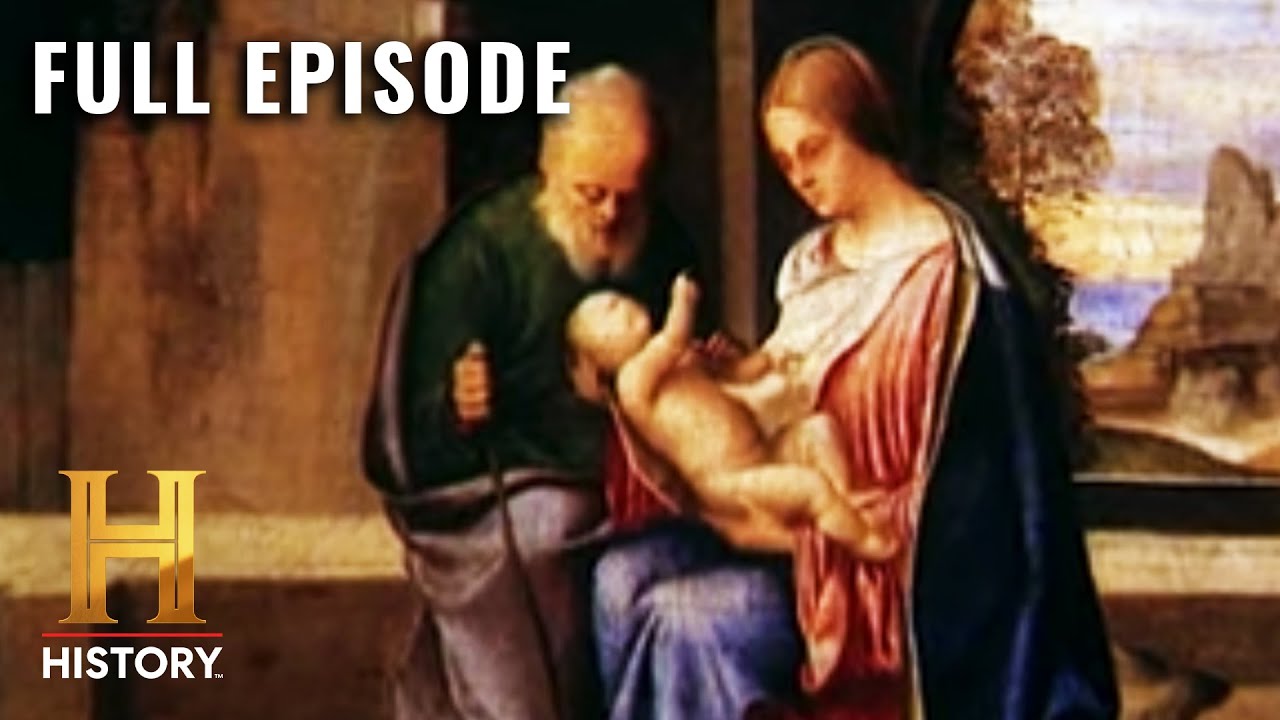
answer and i was stunned well why didn't i i said to myself and after some reflection i decided that unconsciously i was conditioned to treat her as the invisible lady of the new testament that after the birth stories in which she necessarily occurs sort of mute and silent sitting there in the beautiful pictures at chris at easter at christmas time and then after she somehow shows up in the story on the way to jerusalem that she drops out of our consciousness and even she's a part of the backdrop in both of those texts and that
i had unconsciously been trained to whenever she occurs in the text quietly let a little mist come over your eyes until you get past her and then keep on reading now if we say to ourselves there are those who make more of her than the text allows that's not our problem our problem as inheritors of the protestant reformation is to make as much of her as the text allows if we take the text of the new testament seriously we have to look seriously at this lady who is in fact without any question of a doubt
the first woman of the new testament and so here we have her in the picture and we have her in our consciousness and we have her in our text and so very briefly let's try now to pick up the high points of what the text itself in fact says about this remarkable woman of faith often neglected perhaps by us perhaps out of fear of the fact that there are those in the history of the church who have made out of her that which we do not find in the text of the new testament now the
first collection of texts that we need to look at occur in the birth stories in the book of luke and so to these we will now very briefly turn to do that we have to observe first of all the first story of the first visitation of the first angel and this is in luke 1 verses 8 to 23 and what happens again we have one of these inverted texts an angel appears to zechariah tells his story to zechariah about a miracle of a birth to zechariah's wife who is beyond the cha age of childbearing zechariah
says you know i really can't buy this unless you give me some proof okay so then there's a second mural miracle and the second miracle is judgment because he couldn't understand or couldn't bring himself to believe the first one and finally at the end the angel leaves so in the story we have two miracles the first one then evidence of a lack of faith on the part of zechariah and the second miracle which clobbers him over the head he struck dumb until the birth occurs because he couldn't quite absorb the radical nature of this which
was for him a great blessing and which for him cost him absolutely nothing so the first man if you please blows it now let's turn to the second account and of the visitation of the angel and this is the angel who appears to mary and this is in luke 8 luke 1 chapter 18 to 38. turn to that if you will please and let's see what happens in this text in this text we have a move of ideas very much like the first one in which an angel appears a miracle is announced married mary does
not say hey that's too much i can't buy that you've got to prove it to me she merely asks for information as to how this is possible this is explained to her and a new miracle is announced namely the miracle of the birth of her of the coming birth of john the baptist and then finally we find her quiet acceptance at the end the man in the story could not believe and the woman in the story does her faith is greater than the faith of zechariah but let's look at a few details of this great
text the angel appears and says to her hail o favored one the lord is with you now unfortunately in the history of translation we have had the latin translation of the fifth century that says grazia plina which means o full of grace as though she is like a cup that has been filled to the brim and it's so full that of course there's a little extra that perhaps can overflow to others with the full awareness that this idea comes to us in the tradition of the medieval church starting as early as the 5th century in
this latin translation in fairness to the reality of the greek text in front of us this translation in latin is not correct as roman catholic scholars themselves famous amongst them raymond brown the great the great jesuit new testament scholar affirms that this is not what the greek tells us the greek tells us that mary is one to whom the grace of god has been given what she is saying what the angel is saying is o thou one to whom god has extended his grace this is exactly the same breathing that we have in the book
of daniel in chapter 10 verses 18 and 19 o man greatly beloved beloved fear not peace be upon you we have a similar greeting extended to gideon in judges chapter 6 verse 12 ruth has a similar greeting in chapter 2 verse 4 and in the inter testament book of judith chapter 13 verse 8 judith is greeted in a similar fashion hail o favored one and so we find that now mary with this angel visitant is frightened and the first thing she does is she thinks mary is a woman with a keen mind and the very
first time she surfaces we get a real personality of somebody with some very sharp brains and she sits there thinking pondering wondering and we admire first of all her brains as to what sort of not a word but what sort of a greeting in greek this is a big word as basmas what kind of a unusual greeting is it that is now being extended to me and so what happens next is she's told by the angel that you are going to have a child and that the child will be called great and he will be
called the son of the most high and he will be he will reign over the house of jacob forever and his kingdom will have no end the language is right out of psalm 89 starting in verse 27 in which all of these things are said about david and so as she as a simple peasant woman hears this she understands that the child is going to be the great son of david who is going to come and fill the throne of david and do the great things that the expected son of david was to do now
she is a simple peasant woman and this is incredible because she's not married and so if she accepts this there is a very costly discipleship will be laid upon her which is the village will think of her as an immoral woman and immoral women were usually dragged in front of the village magistrates and stoned to death now she can go to her family and to her fiance and tell them you know i had an angel in the night and the angel told me this and this and this and their response will be yeah sure that's
what they all say who is going to believe her angels have visited other people but not with messages like this this is something far beyond anything that the sort of earthy village mentality could possibly incorporate and it is not only amazing for her it must be frightening and the cost of caring of of accepting this responsibility for her will be enormously high and may even require of her her life did you ever wonder why joseph decides to take mary with him when he goes for the registration in bethlehem in the middle east from the first
century clear to our day you don't take the women to the court and to official places the men go i don't take my wife with me to get our work permits renewed and our identity cards remo renewed in modern lebanon i take her papers and show them of course the women are not expected to show up in public places of this kind mary is now great with child as we're told in the birth story but she is taken anyway and i think the reason is joseph is not real sure exactly what will happen to her
if he leaves her behind back in that village a village that probably still doesn't believe the story which now he because the angel has finally visited him as well are that that he and she and the family are telling so mary doesn't say no you've got to prove this to me like zachariah did but she says how is this possible she's then she's told that the child will be the son of god she's been told he's the son of david and now she's told he's the son of god a miracle of god's grace will come
upon you and through the miracle of god's grace this great event will happen now what is her response going to be she quietly at the end says after she's been told of the second miracle which is not now judgment as it was with zachariah it is also blessing she says let it be to me according to your word she quietly accepts a very costly discipleship and we discover that for her faith is obedience and in the acceptance of that obedience she gives evidence of the reality of the faith a remarkable woman indeed who thinks who
believes and who at great cost obeys all right the birth stories are not over she then goes to visit her cousin because the miracle for her cousin has been told her and i trust you have the page in your hands to which we will now turn on the screen let's look at it for a minute and you will see here in luke 1 41-45 that elizabeth receives mary and elizabeth has a little song and she starts off blessed are you among women and blessed is the fruit of your womb and the greek word that is
used here we have printed in the text it is the word eulogy mene and the word eulogy from which we get the english word eulogy is a word for blessed in the new testament but it's a little word it means the word blessed when you're asking for a blessing which you don't have then there are two phrases that talk about elizabeth and then at the end there are two lines which go back to mary and again we have the word blessed but it's now another word makaria now in english we only have one word blessed
and we have it in this verse and up at the top we have it in this verse but the greek as with the hebrew behind it there are two words eulogy which is which is one word in hebrew and makaria which has which represents this greek word represents another word in hebrew and the makaria is the big word and the makharia is reserved for something else makaria blessed we are told is she who believed that there would be a fulfillment of what was spoken to her from the lord now let's talk for just a minute
about these two words and the difference between them the one is eulogy which is used when we're talking about mary as being the mother of jesus and the other word ma makaria is used when we're talking about the faith of mary who believed that there would be a fulfillment of what was spoken to her by the word by the lord the two words the first one is the word blessed when you're saying oh lord bless the meeting oh lord bless so and so he's not feeling very well oh lord give us of your grace and
mercy for the trip we're now going to make oh lord bless us as we gather in your name you're calling for something you don't have that's yulo gaming but the word makaria is an announcement of a re a spiritual reality already achieved the blessing of those who have new faith who have the new reality of the spirit of god in the participation of the new age in jesus christ and so for example in the beatitudes we have the great word makaria makarius is the fellow who this and this we're not talking about his ethics we're
talking about somebody who has this incredible stature of having the reality of the life of god through the spirit in his or her own life and thereby they act in such a fashion and thereby they are given such a reality as is there described now the phrase blessed are you amongst women and blessed is the fruit of your womb was the kind of phrase that we find half a dozen times in both the old testament and in the inter testament literature it was nothing particularly unusual because this is what you said to any jewish woman
who got pregnant may the lord bless you and may the lord bless your child so you're invoking a blessing you're calling upon god to bless this woman and to bless the child that's the eulogy but the big word at the end is the word makaria in which elizabeth says this woman has a rare quality of spirituality she is makaria because she believed that the message would be fulfilled in this text the low praise is there is a call that she might be blessed of god in the giving birth of this child but the big word
is reserved for the faith of mary now i submit to you in the history of the life of the church for what has the church blame praised mary has she primarily been praised because she is the mother of jesus or has she primarily been praised because she is a woman of great faith and intelligence and courage i will leave you to answer that question but i will ask you to realize that in the text itself elizabeth calls upon us to praise mary for her own worth and in fact as the women in the church are
telling us today which offers the highest praise to a woman to praise her because of who her famous son is or to praise her because of who she is in the qualities of her own life all right then after these great words of elizabeth mary now responds in a magnificent hymn indeed we have called it the magnificat let's turn back to the page which i trust you have before you and let's look at its style and then we will talk a bit about its content so i trust you have this sheet also in your hands
and perhaps even if the words aren't clear on the screen you'll be able to follow them what mary has done is to divide her song into two halves the first half represented in these first six lines is all personal the second half is all talking about the community in exodus chapter 15 we have exactly the same thing with the song of moses where he talks about the crossing of the red sea the first three the first three verses talks about moses himself personally and the rest talks about the community but more than that in the
first half mary is talking about individual lines she begins talking about praise and she ends with an ascription of praise she then talks about salvation it rejoices my spirit in god my savior and this line is about salvation the great things he has done for her is to save her and in the middle she talks about lowliness being exalted as in exodus 15 she then turns to talk about the community and we have two lines about mercy to those who fear him and at the end there are another two lines about mercy to the believers
only this time they're specific the believers are our father and abraham in the middle mary talks about the good guys are aided and the bad guys are clobbered the good guys up the bad guys down the first pair says he made mighty deeds with his arm and the phrase is talking about the exodus and the mighty arm of god upraised to save so he saved his people and he scattered the arrogant in the thoughts of their hearts and that's the bad guys down then we have another pair he put down the mighty from their thrones
and exalted those of low estate the bad guys down the good guys up again another pair he filled the hungry with good things and the rich he sent away empty again the good guys up the bad guys down but the last pair has one line omitted he aided israel his servant and of course we're being specific now so the other line has to talk about the gentiles and it has to say and he clobbers the gentiles or drives them out or something like that the literary form tells us what the subject is and who it's
all about but the line is missing now in that missing line friends we have the beginning of the gospel aside from the awareness that mary has deliberately left out a line in which we expect some harsh phrase against the gentiles of which there were many in in exodus 15 which she could have chosen the form from which she got many of her ideas in the leaving out of that it is clear that the message of this text is not merely the endorsement of economics and politics of the world around her the zealots could have endorsed
all that she wrote except for them god aids his people and he clobbers his enemies and this we do not have and thereby the beginning of the breaking in of a new vision of a new community comes loud and clear in this marvelous hymn which mary has given to us which luke records and thereby she becomes the first christian theologian now what happens to mary after this the birth story of course we know in which she does not say or do anything in particular except give birth to jesus but shortly after that we find her
on the way to jerusalem there in the temple area and a very special word is given to her by simeon and mind you simeon and anna are there to receive the child a man and a woman and the woman is a prophetess and she is married to be sure we know that she is not less because she is married and mary is told a sword will pass through your soul also that the secrets out of many hearts shall be revealed a wise saying a very puzzling saying and what does it mean i was once obliged
to watch a group of evil men join hands and join spirits in order to try and do an evil deed to a good man and when that happened to my amazement and sorrow the bottom line out of the hearts of the community that was out to get him all of a sudden surfaced the secrets out of many hearts were suddenly revealed when a group of people gather around christ to send him to a cross the liar starts telling lies and the betrayer begins to betray and the man who cares only to preserve his own turf
starts preserving it and the man whose chicken starts betraying his friends and the man who cares only to assess for himself power begins to do so the bottom line of soul after soul begins to surface and mary is the one in the middle of it who sees all of this happen as the sword also passes through her heart where do we see her next we see her in a story in luke that we must examine briefly in luke 11 27 and what happens there someone cries out from the from the multitude and says makaria blessed
is the womb that bore you and the breasts that you sucked mary is makaria because she is your mother and jesus answers no makaria are those who hear the word of god and keep it and who is first on his list of those who in the new age heard the word of god and kept it it is mary he is not saying you shan't bless her he is saying you must bless her for who she is and not because of who i am she is a woman of great courage and faith and deserves this phrase
but as elizabeth said she is makaria because she believed not because she is my mother we then find her again talking to jesus at the story in cana of galilee in which she comes in and says jesus you've got to do something they don't have any wine and jesus is very formal and very courteous to her and says woman what have i to do with you which is an idiom which we still use in arabic in the middle east which means you let me solve this problem in my own way and she turns immediately to
the servants and says whatever he tells you to do you do it and so jesus is saying you surrender your will to me and she does so and because it becomes an example of the believer who surrenders to the will of christ and finally we see her with great courage standing at the cross a courage beyond that which most of us can even imagine to be able to stand there and endure the pain of her oldest son as she watches him there in agony die and finally the last place we see her is in acts
chapter 1 verse 14 as a woman of prayer with the disciples so what do we find about this great woman by way of summary we find her as an example of faith which is obedience a very costly discipleship which she accepts second we find her surrendering to the will of christ in humility third we find her with great courage at the cross fourth we find her as a type of the exaltation of all believers for this is what she is really saying at the deepest level of the hymn which we examined she says the lord
exalted me that's the first half of her hymn and the lord will exalt the believers what happened to me through faith also potentially happens to all who believe and then fifth we see that she is to be honored for her own faith not because of her famous son sixth we find her as a thoughtful disciple she thinks she reflects she remembers she theologizes and finally we find her offering praise and as a woman of prayer in her own thankful praise and piety indeed of the great heroes of faith of the new testament we can talk
of peter and of paul and of john and of mary you