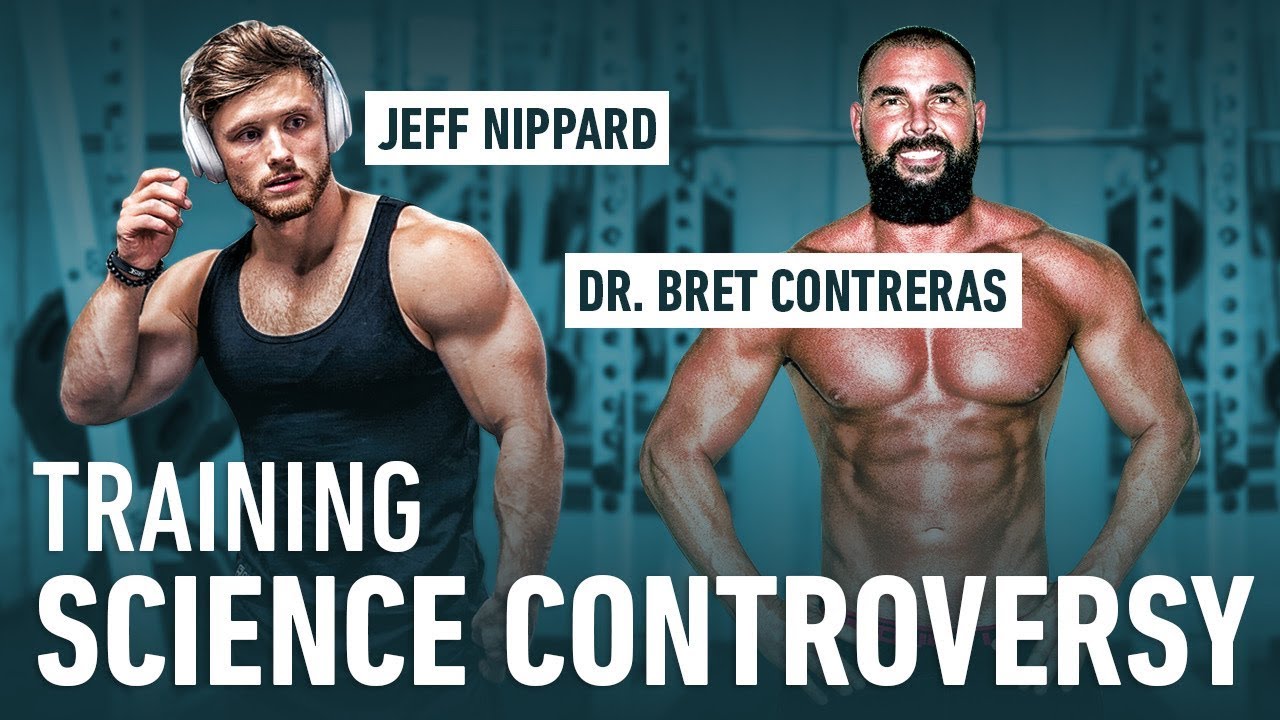
Okay so guys in this video I'm going to be speaking with dr. Brad Schoenfeld about some pretty interesting and cutting-edge topics around exercise science and its application to training for maximum muscle gain but before we get into that I want to give a huge thank you to Squarespace for sponsoring this video Squarespace is the all-in-one website platform that I've been using to run my Own website since about 2015 and I also use them to run my own online store where I sell all of my training programs and they have sleek designer custom templates in 24
hour customer support which I'll use any time if I run into any issues and I always find them to be really helpful in the whole process of getting your website up and running is actually really simple so if you guys are looking to get started with your own website for Creating your own online store I definitely recommend using Squarespace and if you go to Squarespace comm forward slash Nippert you can save 10% off your first purchase and I'll have that as the first link in the description box below as guys I was lucky enough to
actually teach a guest lecture at dr. Sean Feld College in New York over Skype a few weeks ago and then he agreed to come on my channel and podcast for an interview the next day so I would say many of you guys are probably familiar with dr. Schoenfeld and his work and he's actually one of the most prolific researchers in exercise science worldwide he's published over 150 scientific articles in peer-reviewed journals so it was a real honor to get to pick his brain for an hour and he's written articles for just about every health and
fitness magazine that you can imagine and he's also the author of several Best-selling fitness books including the Max Muscle plan and I know many of you guys are probably already familiar with his written work so I figured rather than rehash topics that we both covered elsewhere I wanted to explore some new territory so for example I asked dr. Brad his opinion on the mountain dogs training style because we both trained with John in the past I asked him about training technique and my technique Tuesday series and we discuss what the Role of technique might be
for hypertrophy and of course we discuss his new and controversial study on training volume that showed benefits to higher volumes than had been previously recommended and we also talked about some other really cool stuff about modifying the resistance curve on certain exercises whether internally rotating on a lateral raise is a good idea or not and we ended up having a really good Conversation and I think it's one that you guys are really gonna learn a lot from so without further ado I hope you guys enjoy my discussion about exercise science and its application to training
for building muscle with dr. Brad Sean Phelps all right guys so I'm here with dr. Brad Schoenfeld Brad thanks so much for coming on so it was interesting yesterday we hopped on skype and I noticed I got the notification saying over one year ago you had your last call And after we spoke I was thinking about it and I was like it must have been at least three years ago because I remember where I was recording that and I'm two apartments ahead of that place where I was at the time now so I guess it's
been a pretty busy three years further both of us actually put a really good interview but hopefully this one will go good fruit yeah I'm sure it will for whatever reason just for the listeners who don't know we actually recorded an Interview I guess it was probably two or three years ago now and we just kept having those connection issues but it wasn't it wasn't a total waste of time I still managed to learn a bunch of stuff and hopefully we'll be able to quickly recap most of that here now and then get into kind
of the newer stuff that you've been up to so Brad what I wanted to start with is I guess the most fundamental thing of all so what I've been noticing lately as I've started to Hit more of like a mainstream audience is I'll get this sort of sentiment that just expresses skepticism towards science in general so it'll usually come in the form of well Jeff why are you trying to apply science to this like do you really think that Arnold ever cared about science did he ever need that to get the results that he got
or it'll be like you don't need all this science just train hard eat right and you'll get the results do you ever get that Criticism and if you do how do you respond to that yeah I do and in some respects that you chew and in some respects it's backwards thinking so there's no question that you can get the majority of your results up so the sort over by just doing the very base you don't need science you know you can within reason you could just do a basic type of program and for the vast
majority of people they'll respond fairly well the question is can you Obtain your can you maximize your genetic potential by just doing that and I would certainly say the answer to that is no that's where science comes dead it number what helps you to maximize your own potential I think it's particularly important for people who are hard gainers for people who are starting to approach their genetic ceiling or have been training for very long periods of time and hitting plateaus so this is when it becomes much more important but Certainly if you say or know
first of all did you so science so that the fact that that's kind of a I think a misnomer that bodybuilders are total bros I mean they do to some to varying extents but Kedarnath have potentially gotten better results if he had of applied more science that's the thing that people a lot of times are not looking at my to that I would say yeah right I think that a lot of people who see us communicating this science think that we don't in like It's there's no engine it takes the enjoyment out of training or
something but like I love to just get in the gym and get after it myself and sometimes I'll train with the intensity that a bro would or I'll use some flick some bro methods into a training program or what people might think would be bro methods and I think that you're sort of the same way like I've seen some of your training with John Meadows which will maybe we'll talk about later but when you actually Get in the gym and kind of get after it I feel like there be maybe more common ground with the
bros then maybe people might expect based on your writing and so on and so forth so I think that's just a really good point to to expand upon that first of all an evidence-based approaches often misunderstood because an evidence-based approach is not simply looking to science it's a three pronged approach it takes the best current evidence and that that involves Synthesizing the entire body of current evidence looking at the limitations the generalizability of it which I can touch on in a minute and and basically drawing the opinions that you have to know how much evidence
is there it was there strong evidence is it weak evidence then you take your own personal expertise into account and then the needs and the abilities of the individual there's a lot of limitations so science and research will never tell You what to do basically research is going to provide general guidelines to to use as a foundation so you're not kind of fishing in the dark I like to use that analogy if you just go without sonar and you go fishing you might catch fish but there might not be fish there so you're kind of
getting into that ballpark you're giving yourself general principles but if you look at a study that I carry out the individual responses to every group Is going to be hugely varied sometimes people are gaining 20 percent muscle and one person's getting 20% muscle another one's getting zero on the same exact program so genetics are going to enter into it stressful everyday stress levels nutrition sleep so many factors that has to be taken into account and you have to realize too that at the especially when you start getting more and more the lead if you will
like elite bodybuilder levels like You so studies are carried out in people like like you so we carry that trained individuals trust me they're trained but they're not Jeff nippers or they're not John Meadows or they're not they're not high-level bodybuilders that are at different levels in terms of their ability to push to recover to push to the level of their genetics ceiling how close they are so all of these factors need to be taken into account and that's why a true evidence-based practitioner Is going to train pretty much everyone differently they're training everyone based
on their own needs and they're gonna not research is going to be the foundation by which they get their general principles but they're gonna be then taking into account practical experience and if they don't they're not going to be optimizing results right right sometimes you'll see people who they'll be like well if there isn't something on PubMed that that supports This then it's no good or whatever and I don't think that that's a truly evidence-based approach you just have to take in but there's certain things that you'll learn from coaching clients or being in the
gym yourself that you just can't get out of a study sometimes yeah well I would go as far to say that that is just as bad as people who completely show in science that the people who are just like showed me in a pubmed citation on that First of all if there's not good evidence you then revert back to lower levels of of a hierarchy of knowledge but as you just said I mean I had before going into academia that was personal trainer for eighteen years I own my own facility you see things when you're
training people and I tell my students were potentially looking to be professors if you want to do what I do apply the research at least have a couple of years under your belt to be The personal training strength the conditioning experience whatever so you understand how the individual responses are and you get a sense of the gym I think one of the primary reasons that my research has become quite popular is that I'm invest I'm a kid in a candy store that I'm investigating all the things that I wanted to know when I was a
trainer I'd be carrying out training and saying well how come this has not been studied well or whatever and anyway I think it goes to the point that the people who are pure you know I'm not going to believe it unless there's a study on it is ultimately just as short-sighted as those who dismiss science there's a marriage and that's why the core bridging the gap between training and between science and practice with science from training right on the point of training status which is something you mentioned that that's a criticism I'll sometimes get of
Studies in general it's like well you know this is all fine and all for people out there in the general public but once you start to get more advanced you can't really apply this and well I think that from a practical research perspective it could be that if you were to do a eight-week study or a 12-week study on me you might not get anything of significance just because I'm so much I'm so close to my genetic limit anyway so in order to detect the differences You almost need to work on untrained subjects I do
you think that that's correct what I'm saying I mean that certainly is correct so I think there's two different things at least that I'm interpreting here so that you're certainly correct there but that doesn't necessarily mean that you can generalize with the untrained yes you would it would be very difficult or harder to get a statistically significant effect on someone like yourself doesn't mean we Couldn't see something but the other fallacy there is to say that you can't try any parallel between a well-trained person or not so it's a continuum of course so you're human
so if we're going through the continuum of studies you're a cell culture study in vitro you're going to have very poor generalizability the rat study is going to be better than the in vitro study but not so as you start going a human is human so now yeah You're gonna you're gonna start to see differences can you get 0 different is there zero you can take out that's ridiculous to say that you can't take anything out but you do need to look at the generalizability so if I'm carrying out a study and sarcopenia elderly women
in a nursing home the generalizability to someone like yourself is going to be much lower than if I carried it out let's say just on an untrained 22 year old male subject yeah and really that's Where the continuum comes in and this one I'm talking about is one of the problems that we run into in today's where people call themselves evidence-based practitioners many people who are not have not done research don't appreciate it obviously you do which is kudos to you but they don't appreciate the nuances some of them just that I'm talking about now
but others that need to be taken into account there's unfortunately I think now a lot of what I call arm to your abstract researchers basically they've they just look at the abstract with study sitting in their chair and they think they're in evidence-based practitioner it doesn't work that way right back on the point of Arnold I feel like you did touch on an important point there which is if you approach your training with I would say a rational approach where it makes sense what you're doing like you're you're you can Kind of be your own
scientist in a way you try one thing out try to control for as many variables as you can if that doesn't work switch and try something new and I think that if you can blend that with the scientific literature that may have some degree of generalizability then that's probably the best way to figure out the best approach for you I actually this actually came up in a recent podcast I did on Omari softs show and Gregg knuckles brought up the idea Of just the value in learning for its own sake it's like astrophysics podcasts may
never have any applicability in terms of like improving your life or leading to some new medicine or something like that but it's just it has inherent value to learn about science just for its own sake and I feel like that's something that's important here as well great and by the way just to touch back on what you said before you taught me an evidence-based approach That's exactly what it means is that the research is used to provide general guidelines then you become an N equals one when I'm Trey I'm working with a pro bodybuilder now
naturally classic physique bodybuilder Joe tall D to give him a shout out and we it's an N equals one so we do exactly what you said I have basic principles that I'm applying but he said he's an outlier in a lot of ways and what we I manipulate things that he does we try to control variables And say all right we're gonna now do this we're gonna just take this and see how you respond and try to do it in his control the fashion is possible specific to him because if you look at the again
the continuum of responses I mean he's he's different than the people than the means and research reports the means people are not means yeah means in the averages so the perfect segue here is you did a series of videos with the mountain dog John Meadows as I did how was that yeah John's the legend John's a good friend of mine and he's just someone in the industry not only that I respect professionally but just personally he's just a really good person and someone who was very true to the to the sport of bodybuilding and to
exercise science and and he's someone you talk about someone about bodybuilders being gross John is someone who really looks to employ scientific Principles in his training and these I mean I've consulted with him on a lot of things and he he looks at the research so John is someone that I think would be a very good example of someone not and not in it for himself but he trains tons of pro bodybuilders and physique competitors so I think that's a really good example of someone who takes an evidence-based approach yeah I think that a lot
of people have this perception of his training that it's Just all blood and gore and just throwing whatever at the wall and seeing what sticks but it's really much more thought well thought through than that and having actually trained with him I realize that the really hardcore intent stuff is reserved I feel like for when it's appropriate at least from his perspective so when we did let's say his you know leg workout for example you're really only taking that final set to failure or all-out and all the other Working sets or warm-up sets or whatever
are kind of just gradually leading up to that one and I actually really like that approach if not from a physiological perspective at least from a psychological one because it's really enjoyable that the training sessions are really enjoyable and I feel like let's just say for example you've got five sets of five to do on the squat even if it's only seventy five percent of your one rep max it just feels so overbearing And monotonous after set to you know what I'd be so by the time you get to set five you're just mentally it's
just done with it in some cases you know it whereas with this I feel like the whole way you're going you know you're improving the mind muscle connection and warming the joints up and then you're getting ready for that final set where you really go all out and that's a training style that I haven't seen too much if from will say like the Evidence-based side but it's one that I actually personally really enjoyed I don't know if you've trained with that style when you were with him at all I think that you kind of led
the way a little bit from the videos I remember but what do you think of that in general it's it's kind of more like the Dorian Yates style approach but maybe slightly higher volume than what he did he did usually the first exercise he'd warm up warm up with three sets or so and then Do a hard one but then his other ones were more like one or two sets and John is a little more but I mean I actually not only do I agree with it when I book the max muscle play I'm not
trying to give up put to my book but I mean that's a very similar approach right about your repetitions in reserve which I now talk about I used before Eric Elms that come up with that Gaza even our reps to failure or concept but I used the rpe type of scheme where it would Build up and then you're doing Canio asset to failure on most of the working sets now I think that failure is again something that can be periodized so it doesn't have to follow that I don't think anything has to follow that set
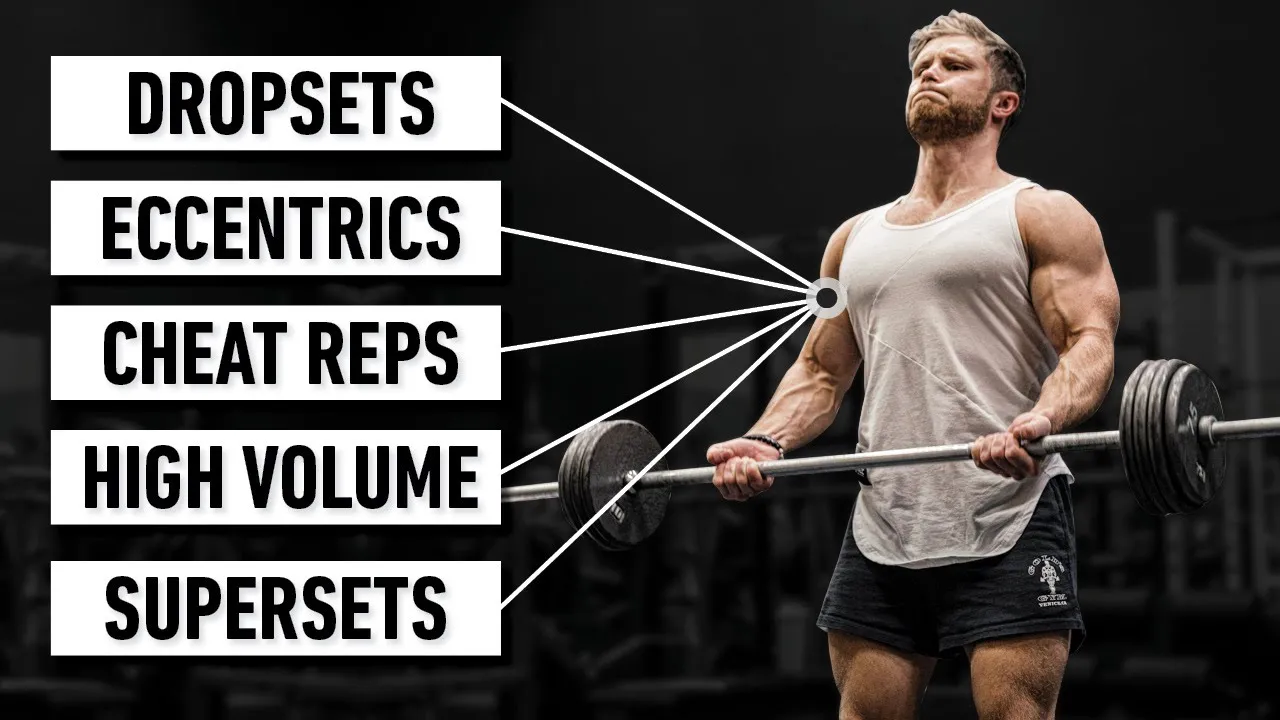
paradigm all the time so can you start increasing failure if you're getting close to a show to try to overreach I think that's something that can this is again where the individual some people respond well to that some people don't And that I don't think making that's why I always hesitate to give cookie cutter recommendations and generalizations like that we can talk about guidelines for things but then it has to be modified to the individual what do you think of the drop sets rest-pause ISO holds because he does incorporate more of that than what you
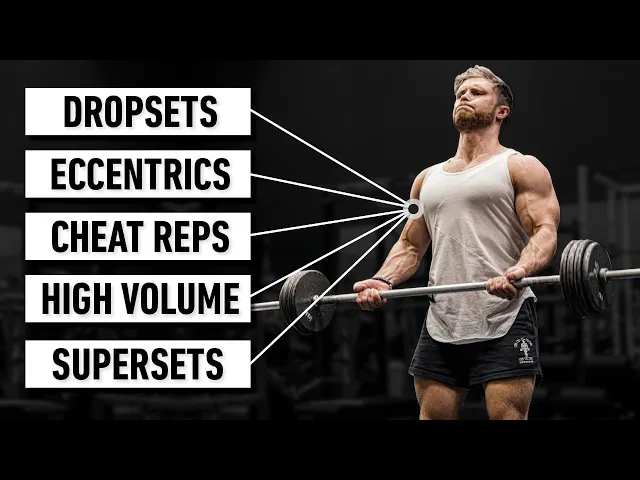
tend to see you know again from the evidence-based side do you think there's any merit in that does he overdo it at all with that stuff well I Definitely wouldn't say he over does it I think the question because I don't think we can make that determination again that would be more individual if you're asking what the research shows that I can kind of give you a better handle on and by the way there's not a heck of a lot of research on any of the specialized techniques drop sets there's been a few I actually
collaborated on a study which did show a benefit to drop sets was carried out in collaboration With a group in Japan and it was somewhat underpowered but we used MRI which is a gold standard for measurement and we did find a benefit to equalize volume of drop sets versus non drops of traditional training the other literature though there's been three other studies that I recall offhand that have been carried out and really showing no difference but again that's what volume is equated so if you're asking if volume is equated is there a benefit to It
I'm sceptical at this point like I said our study show but you have to look at a body of research you can't just be partial you know to a study you've got out carry it out but but here's what I would say that doesn't necessarily have to follow that in that fashion so you can use drop sets to add on volume number one I think that is something that without adding on a lot of time to the training session whereas if you're let's Say you do a on your third snack you do a drop set
rather than having to do an extra fourth set or even two more so that's if you do a double drop etc I think that could be a way to get more volume in at a time efficient matter and just from a time efficiency standpoint if you're looking to train in less time it's shown that it has no detriments so you're getting the same muscle growth for less time so it's more efficient some of the other specialized techniques Have not been studied well enough for me to give I think good evidence based or do research based
conclusions on that and let's draw strong evidence-based conclusions on it I would say that I think there is at least a good logical basis for accentuated eccentric training just based upon the fact that II Centrex provide different signalling patterns intracellular signalling it's been shown compared to concentric training and eccentric training also has been shown To at least differentially from a non uniform perspective have different effects at least not quite a separate or distal versus concentric which has greater mid to proximal hypertrophy so I think adding those in might enhance your response and I don't think
there'd be a given to me everything we start to look at is cost-benefit is what is the cost what is the benefit cost this time across this potentially negative effects I don't see a lot of extra time there Does it take a lot more out of you I don't think so depending upon how you structure your workout so I think accentuated II Centrex are a beneficial technique to selectively utilize it's not like it should be again I think people hear about this and they do it on every set every exercise or whatever and you have
to again think selectively right how would you set up an accentuated eccentric would you have like a training say you're doing a leg Curl would you have a training partner push down on the negative more or would you just go slower on how is that typically looked at in the literature yeah so well the literature does different things a lot of times they're using isokinetic devices that you wouldn't have access to but I mean there's multiple ways you could do it several ways one of them let's say if you're talking about a leg curl you
can lift both legs up and then lower with One leg which is a very common good that you could do the same thing on so it depends upon what you're doing you could do that leg press to do that a lot of machines to afford that capability you certainly can also just have you could just load it on a bar let's say you're doing a bench press probably one turn on squat but let's say a bench press you load up the bar with one hundred and twenty hundred thirty percent 1rm and then have someone bring
it up have a Spotter bring it up and then you just lower it under control so there's multiple ways that can be accomplished well you can't have someone actually give accentuated pushing down where you're resisting the push right right because you are stronger on the eccentric obviously like you can go down with a on a squat with more weight then you can get back up with which is why it's so difficult to cheat on a deadlift but you could like go down on the squat Half way and then manage to get right back up because
it starts with the eccentric phase so I guess from like maybe from a recruitment perspective like overloading the eccentric might be able to get everything targeted a little bit better because it seems like you know if you're maxing out your concentric strength but yet you've still got 40% eccentric left in the tank it would make sense to do that if you're really trying to fry everything I'm not Sure it would be the recruitment standpoint because you're getting pretty close to if you're training card especially as you get to a more advanced you're recruiting the vast
majority of fibers there's obviously nuances there which I'm that we need to go into now but I think it more as a stimulation standpoint like I said there's it's been shown that actually the signaling the intracellular signaling patterns are Different so the there's different pathways that are utilize which is just not only is it intriguing but it suggests that you're going to it could be synergistic in terms of the hypertrophy that you get from just doing let's say standardized right I remember you wrote a paper it might have been for the NSC a and it
was something about it was kind of like a review of all the different intensity techniques so you covered everything in And kind of covered the potential mechanistic basis for it was like drop sets rest-pause statical it was like everything in there it was a really interesting paper do you think you've updated at anything since then or do you feel like it's coming far yeah that was purely a hypothetical paper because there really was little to no research that had actually with the muscle growth so it was just more speculative it was I would call it
a hypothesis base paper Where now that we have more evidence as I mentioned though as the evidence it's generally not strong enough where I have strong conclusions I think we're now starting to get there's been an explosion in terms of hypertrophy research and I'm really happy to see that that was one of my even I came into the field one of my hobby horses was to help to drive that so it's been very rewarding in that respect but we still have a long way to go and topics like That well we can still I think
we have better hypotheses now that we can or now we're starting to be able to draw weak theories but to really get strong theories we're going to need more more evidence more research-based evidence I'm not sure how you'll take this question but is there any of those intensity techniques that you see that you feel like you can write off as like this probably isn't the best thing to do I think that comes to mind no you know I Would say that so the super sets but there's so many different types of super sets we actually
carried out a study seemed to show a negative effect that it hasn't been published yet but it seems to show a negative effect of agonist antagonist super sets and we kind of hard to figure out why but I'm not ready to write that off I just don't think there's again I have to if that's replicated with several studies then I'd start to question it but sometimes you Have a study and you see strange results and it's not replicated there's another study I remember that looked at separated versus grouped super sets and they kind of found
that the separated which I guess would be similar to the agonist antagonist but you could do like say I don't know dumbbell flyes super setted with leg press for example and that was shown to have greater benefit than doing group super sets where you would do like a leg press with A leg extension just because there's so much more carryover fatigue from the extension back to the leg press probably reduces total volume load or whatever and so I would I find that result surprising also because you'd think that the the separated muscle groups would interfere
or less with each other and then yet still give you the benefit of save at like saving time which i think is the main benefit of using super sets at all If that's the same study that I'm thinking of it was not a they didn't measure I perchick that was an acute study that looked at EMG if I recall so I don't I don't believe now maybe there's a different one I know there was one that looked at EMG and I don't recall and I seen all the literature and maybe it's just my mind is
is not on it today but I don't recall seeing one that's actually looked at the hyper hypertrophic response between those two Types of super senses if it hasn't we can find that please send that my way yeah I'll do that I know it was reviewed in the mast research review and I covered it about a year ago but now that you're questioning and I'm questioning myself so I'll link it below for the listeners and I'll send it to you after another thing I wanted to talk about is training technique so I recently started a series
on the channel called technique Tuesday where I'll take one exercise I'll do a deep dive on it I'll talk about some of the EMG research I'll look at different biomechanics of different variations and some coaching cues that you can apply to kind of make the most out of the movement I feel like in the science-based community there's so much discussion about training volume intensity frequency and these acute training variables that I find sometimes just something simple like technique can take a bit of a backseat even if it is An assumed presumption that technique really matters
but still I feel like it doesn't always get the attention I think it deserves where do you rank training technique on the hierarchy of what really matters for results as certainly so again it's somewhat of a difficult question answer is it important absolutely can you get good results and have shitty technique yeah so there's several several things to Consider in this number one there's a spectrum of bad technique so let's say I'm doing a lot of ways so that I'm doing allowing race like this where it basically becomes a front raise and you've got people
that I see they're just starting to do this well that's horrible technique where basically you're in the sagittal plane you're instead of the frontal plane and you're gonna work your front delt your interior delt instead of your middle delt now if You start coming more into the scapular plane and then here okay now you know at what point do you say okay now your technique is good so the again it's really not a binary choice there if you and look the muscle is produces its greatest force when it's directly in line with gravity so if
I do a let's say lateral raise I'm in the frontal plane but I'm lifting with an externally rotated shoulder what muscles directly opposing gravity my anterior delt So and I have I need to internally rotate how much of a difference is that going to be on your mid Dell we don't have hard evidence of that but just certainly biomechanical principles and applied anatomy dictates that that will be not the greatest thing to develop your your mid Dell how much difference is that going to make I can't quantify that with a percentage and say you're going
to get 25% more and then technique to me it also then starts to get into How much momentum where you're going to use you like are we just talking about actually doing the movement with proper kinematics we're now starting to talk about are you lifting using your back with a biceps curl or are you lowering the weight without directly about where basically the waitress just flowing down you're not directly opposing gravity so all of these sorry all of these factors need to be taken into account and they can have anything from very large Effects to
somewhat smaller effects but the better your technique is what I would say is the better your technique is the better chance you have of maximizing your genetic potential right well one thing that I think you could make the argument in favor of really keeping your technique good and consistent is that it you sense progressive overload is so important if your technique is gradually breaking down it might not be that You're in but you're handling you know progressively heavier weights you may not actually be progressively overloading you may just be progressively reducing your range of motion
cheating so you need two different muscles right yeah looking to work but what that said I mean like you said there are plenty of very jacked people who use a lot of body English you know as an evidence as a the evidence-based I what what is your Recommendation when it comes to cheating like is it how much is okay and when is it okay so again here's now where I think this is a really great point to bring up because this is again where people in general tend to think in binary terms always great form
never great forms you know high reps low reps short rest long rest and in truth we have a wide range at almost an endless number of permutations that we can carry out so what I say is there a detriment And as to doing some cheap reps absolutely not can that potentially help to get eke out some extra gains it potentially could I think that if we're looking at the body of training that the vast majority should be in in good form it's kind of like when we talk about diet you know is it just eating
all junk food skittles and Ben and Jerry's or is where can you have ten percent of your diet that's consisting of that there are There's all sorts of in-betweens there yeah I guess going back to the eccentric stuff you know one potential way to overload the eccentric would be to cheat a little bit on the concentric and then let's say you're doing a curl you know use a little bit of hip drive to get it up and then really control it back on the way down but I feel like that's probably a sort of thing
that I would reserve for Advanced trainees who obviously already Mastered proper form first and then maybe have encountered a plateau with their progression and maybe reserve it for like the last set of an exercise as an intensity technique or something like that yeah I think that your chances of injury if you're not very advanced or have a good good handle on your form on how to properly kinematics probably kind of exercises that your chances of getting injured when you're doing that would be significantly heightened and it Would not be a good cost benefit right so
I have to ask you about this because it came up I uploaded a video on lateral raises and I recommended well I didn't necessarily recommend it I said I've personally internally rotate at the top slightly so slightly point the pinkies up and as you said there's pretty good biomechanical grounds or implied applied anatomy for thinking that that would activate the middle delt more at least more than having your thumb up where You're almost government that the anterior delt is going to be right in the line of pull there my comments section was 50% this is
terrible advice you're gonna injure your shoulder or so on and so forth I even included in the video a paper that it was a I think a some kind of physiotherapy paper I forget the author's on it but it said you know there's an increased risk of impingement so you say you know use this at your own discretion if you have Shoulder pain don't do it it's you know you're getting marginal returns here but still it was still everyone was so scared to do it so I just need your take on this I can set
my conscious conscience clear colleague of mine Laurie Koller well probably five years of some go on the upright row we got very similar responses which is by the way it's very similar your internally rotating and we reviewed the literature and really our Conclusion based on it was that if you're not going above 90 degrees 80 to 90 degrees then there's the risk is very limited now well people are different if you're can I say that no one's going to get an engine for that is certain people are gonna have certain genetics where it might hurt
but it's possible I would say that the evidence does not support what those people are saying and they can go read my paper the paper that we wrote on Upright rows which is basically the same exact principle can you explain what impingement means basically just so because people are really scared of that yeah well it's where the head of the humerus which is your upper arm bone can knock into the acromion process of the scapula and basically have your supraspinatus muscle which is one of the rotator cuff muscles sits above there and it can jam
in there and cause Benjamin that can basically pinch mnye Is when the two bones are pressing onto the muscle and that just causes acute pain which over time could lead to inflammation and injury but you know it's like an acute instance of impingement is not necessarily the same thing as any an injury is that it would that be correct or do you think that they are the same thing well it can lead to fraying of the muscle of the ten minutes oh yeah I mean if it's if it happens once so it's kind of like
if You're I mean friction you want to think of it like friction against a an item that altima wears down the the item to the point where it frays and does cause localized damage the reason I ask that is just to put it into perspective because I feel like people think you know you're in you're in this position only the people watching will see it but you're at the top of a lateral raise you know going from a neutral position internally rotating 10 to 15 degrees I Mean that's all that we're talking about it just
you have to and you've got 15 pound dumbbells in your hands I mean like Tim from my perspective even though yes the risk of impingement is there and if you do feel pain it's just that's an obvious cost-benefit analysis for any trainee I think but by the same token you have trainees who are doing 600-pound deadlifts and you know the amount of shearing stress from that I would And has if you were to measure it just it has to have a greater overall potential risk than a 15 pound dumbbell with 15 degrees of internal rotation
it's just seen as I'm saying to me it's a great point I was actually just gonna kind of mention that a lot of times it's those same people who were going you know 1 RMS that fiatter were beyond 1 RMS and squats to the point where their knees can't handle it and anytime you're training there's a risk of soft tissue Injury it's just a matter of balancing and again it's risk reward I wouldn't go very heavy with with those types of movements anyway like the lateral raises and something where I'd be doing 3 reps on
it you'd want to use somewhat lighter way that probably and it's probably in general I don't advocate going below about 6 to 8 reps and usually it's more like above 10 so you're staying with lighter loads like you're saying and form there it's gonna really matter so You're not just sliding it up when I when I certainly was doing my own training my own personal training I was as for employees especially this moves like that where you start risking impingement so these are questions that are somewhat difficult to answer because we're not getting there's no
way a lot of this is based upon conceptual theory and I'm modeling biomechanical modeling so everyone is different and if you're susceptible to engagement could they I Would give the caveat that any of these recommendations were subject to the individual mm-hmm of course so Brad before we jump into the volume stuff one thing that I wanted to ask you about was your own training style something I'm just kind of curious about myself how would you describe it currently like what kind of split do you follow as someone who has probably done more research on training
splits than anyone and has it evolved over the years So it has though it's one of the issues you gotta remember I'm not as young as I once was nice because none of us are not obviously dictates I would certainly say one big differences that have become so much smarter I think my recovery you kind of mentioned not trade I tend to train to failure even less than the recommendations before or my IRA ours are generally one or so I do go to failure now more occasionally but I try not to push that so I'm
more Conservative than that well so in terms of our recovery but also I just my time schedule is so crazy now so I don't train sometimes with my ex when I'm working with this body builder and I do actually train with him sometimes I don't do the well I'm doing what he's doing I'm not going to the same intensity levels of effort that he's using but I'm like it's more eclectic I try to work each muscle group twice a week I was bro split I know actually you Kind of mentioned this yesterday earlier in my
career I was kind of big on bro splits and I moved away more to trying it to hit muscles at least twice a week now but my schedule makes it so that I get to the gym hopefully as much as I can if I when I have three days I'll make sure I get to the gym just because I might have two or three days right off I mean this just came back up in my mind again because we were just talking about lateral raises and I kind of want to Hear your opinion on different
loading schemes so for example do you think that there's any merit in doing say a cable lateral raise instead of a dumbbell lateral raise because with the cable you get more of a consistent resistance profile throughout the range of motion do you what's your take on exercise selection cables dumbbells etc I do I think that changing around the just kind of minor alterations in terms of the modalities that you use can make a Difference now are they going to make the difference between you gaining 10 pounds of muscle no but can they be 4 so
this is where again when you're asked if you're asking me for the stockbroker or the insurance salesman that's coming in and he wants to get some muscle and get more fit and it was by the fact it's not going to make any tangible difference in his physique no but for someone who wants to maximize or optimize their physique who's especially bodybuilders Or aspiring bodybuilders I think that can put kind of finishing touches on the physique and make the difference between maybe placing or not mm-hmm can you speculate on why it is the case I mean
like yes you have a more consistent resistance profile which I guess would imply maybe more time under attention so like with a dumbbell just in case anyone isn't aware with a dumbbell you have basically no tension at the bottom Because the line of pole or the the the way the weight the dumbbell is loading is directly in the same direction as gravity right so there's just no tension on the muscle whereas up at the top you've now created a moment arm and you have to work on the shoulder so there's much more tension at the
top and there would be at the bottom if you're using a dumbbell if you're using in cable because the actual cable itself is pulling the arm in at all times time Points you have more consistent tension do you think it's a 10 do you think it's a tension thing or is it something else so here's what I think I think that this strategy what you're talking about is the strength curve so yeah for the exercises and my speculation is is that that has different stimulating effects on the muscle whether what the mechanistic factors are is
kind of hard to speculate on but my least and this has not been shown through the Literature but I think at least theoretically or hypothetically that it would allow for different differences in stimulation that would potentially have an additive effect and and now look and now you're talking that's like a lateral raise which is a single joint targeted movement when you start talking about exercises let's say like a chest press on a barbell versus a machine now you're also talking about reducing stabilizer muscles so having greater muscle Involvement of the target muscle versus less the
stabilizers and that I think you start to even get more differential effects whereby it can make let's say a difference to do hammer strength presses on the day dumbbell presses which is going to have again differences in terms of balance and barbell presses so do you think it's more so it's just a good idea to switch up these loading modalities so use dumbbells for four or five weeks then use cables and Kind of go back and forth or do you think that because of the potentially more optimal resistance profile of the cables that cables usually
come out on top for these circular sort of movements I think I mean to me that what my approach has been to Gary the moves I think there's a novelty the body adapts look at I think even the soreness is not indicative necessarily just well it's a front of a good workout or not but it is it tends to be indicative of a novel Stimulus and when you change exercises you tend to it's it's a novel stimulus you tend to get more sore from it does that mean you're getting more results not necessarily but it
does tend to mean that it's working a muscle in a way it's not as is used to does that again I want to make it clear does that necessarily mean you're getting greater results no but without evidence to the contrary I don't think there's a negative to it so again that's where we talked about cost Benefit to me you take advantage of what you can and my general philosophy is is to vary your movements and does it have to be every four or five weeks not even that's so certain moves I think machines can be
varied a lot more so freeways like I think there's certain core moves that should be kept in the routine on a regular basis just because that when you stop doing them for periods of time your kinematics are off and it's just very difficult to get back so like your Squats your rows you basically you're free weight type movements but machine I can hop on a machine and have zero neural you know the deficits six month four I could not use it for six months and then basically hop on a say hammer press and and do
it six months later and not have any deficits in the way that could is so another highly theoretical question here I feel like my questions are just totally in the clouds like but let's just imagine you had someone who Was squatting for five years you had someone who does leg press for five years same frequency same intensity they're both progressively overloading you know a lot of people put squats on a pedestal maybe they deserve it in some sense but how much of a practical difference are you would you predict between those individuals so that's that's
such a hypothetical question I couldn't answer but here's what I will say there was a study done And I'm forgetting the fonseca was the name I believe the author and they actually looked at just doing squats versus doing squats oh for two weeks I think it was for two weeks then leg pressed for two weeks then I think was a lunge for two weeks and you got better growth in several of the quad muscles for the that I actually just posted about this analogy a few weeks ago where I think was the medialis and the
REC film got greater growth than Just doing squats so again that's why I think I don't think that's irrelevant even if I were to hypothesize I don't know where that would go because it's just not I don't see what the practical value of it I think the more practical value is is that by changing around their exercises to some extent will provide a synergistic effect and that it wouldn't be good I would say either way it's not going to do you best to do squats and here's what I also answer Your question because I don't
want to completely shirk it but squats are going to involve other musculature that web presses are so if you're just talking about product where it should be remember that squats involve stabilizer muscles in different areas of the body including the upper body that aren't involved in light press so if you you know you wouldn't just be looking at quite if you aren't just looking at quads I think it's a different argument Than if you're looking at overall musculature right yeah the reason I think the practical relevance of the question is sometimes people can't do squats
and they're then thinking that they're gonna lose all their gains or they're not going to get the same gains just because they can't squat and in that case I'll say you know what there's the squad is not a mandatory exercise and I just wanted to have an expert kind of speculate on what the practical Difference between a squat and a leg press might actually be in terms of outcomes like are we looking at you'll get 50% because people really put some of these compound movements on a pedestal and you know swear that you can get
way better gains doing in doing you know an equivalent machine variation and I'm just wondering like are we looking at 1% difference 10% difference half the results is something in that but you obviously gave the Science the the actual scientific answer which is I have no idea well and here's what I would say and I would be quite confident that from quad specific standpoint there would not be much you know again just looking at one versus the other on that hypothetical example I can make a case that maybe the leg press you have create a
quad development over time but certainly I agree with your point that squats are not mandatory and remember too that it's not just back Like people thinks once they have two backs what you could do there's so many thing you could do Bulgarian squats you could do I mean my favorite variation is using a it's a machine so I can have her a side backspace machine that's used for shrugs a lot and and for dad wefts I think but anyway you put a bench up behind you when you actually can do Bulgarian squats on it so
you don't need to balance like with dumbbells but there's goblet squats there's so many Variations of squats so you say people can't do squats many variations and again my general recommendation would be to at least have some variance that you shouldn't be just focusing on one move I think if you just did squats versus doing and that has been shown in that Fonseca paper versus doing a combination of moves that you will ultimately get better quad development yeah yeah that Fonseca papers when I spoke about on the channel Before and I'll link your Instagram posts
below if people want to go and read the the summary of that because I think it's really a really interesting one that actually shows a benefit to having more exercise variation like you said so Brad last thing I want to touch on is the new paper that everybody has been talking about so the the volume study I'm actually spoke about this with Brett Contreras when he was on the show so my listeners will be familiar with it So we don't need to do a full deep dive on it but just very quickly I've got the
notes in front of me here so you had three different groups a low volume group media moderate volume and high volume group the low volume group did six to nine sets per body part per week moderate was 18 to 27 sets per body part per week and the high volume group was 30 to 45 sets per muscle per week which sounds really absurdly high on paper maybe not to really highly advanced body Builders but I think to the evidence-based community it sounded really high and what you've basically found was that hypertrophy just increased with increasing
volume so the highest volume groups are the most gains in terms of biceps and quad size can you just kind of obviously I just give the quick cliff notes but can you share what you take away from this paper from a practical perspective in terms of training volume I want to back up where Your point was about that it sounds insanely high yeah what have I told you that the highest volume group trained a little more than 3 hours per week so each session was about an hour three times a week is that do you
train more than that I mean every body leader there's nothing about people so is that so here's part of the problem when people hearing this the study was not designed to look at how many sets per muscle per week should all muscles be Trained basically the design if you're looking when and this is again we're evidence-based when you try to impart what evidence-based conclusion should be it's be hard for people to understand that through through some of the nonsense that's put out on the internet you can only generalize a study to what it was designed
to show me we look to see is there a threshold for a given muscle group being trained for a given number of sets so again the overall Volume was quite modest even at the highest level the lowest I was training 16 minutes per session was 39 minutes for the entire week 13 minutes per session I think it was so again it was specifically designed study to test a given hypothesis about a threshold for a given muscle not what we should train all muscles so my my conclusions are a couple I think that the potential so
we did not find the threshold that there was not a Threshold not certainly I've always speculated it's in my all my books and certainly my new textbook that there'd be at some point there will be a inverting you which is a hormetic curve where you'll see a plateau and then ultimately you keep doing it see a regression and that would be due to just first of all not seeing additional benefits through greater volume and then seeing overtraining detriments at some point overtraining I want to step back To and say that overtraining is systemic so it
would be hard at least for me to visualize just than the type to say that we did it especially for short periods of time you can see any type of overtraining response because there systemically there just wasn't a lot of total work for all the muscle verbs you're going to be doing if I was going to do total routine that was a bodybuilding routine I'd be having so many more exercises for other muscles And that would really start to drive negative responses if we kept volume constant so the the kind of take home to me
is that there is a least of potential for greater gains with so much higher volumes some interesting factoids that weren't in the studying we actually have a paper that would be going into review pretty soon we're currently writing this up but to me one of the more interesting factors of the study was that the responses were primarily driven the Volume based hypertrophy responses by responders so there were plenty of again you look at a and we posted the and I know James Krueger as to the individual responses that we posted you see some of the
one setters they had very good responses hypertrophic responses but there were more in the one set and the three set as opposed to the Fox hood he'd filed this dose response so the three set had fewer poor responders than the one set and the 5 set tendinopathy Were poor responders than the 3 set group and the I think my most relevant conclusion that I've taken from it and I know myself and some of my colleagues James Krieger and some others were starting to employ this your concept is that for a given week muscle group or
a lagging muscle group a specialization period of using higher volumes might help to optimize the hypertrophic response in a given muscle and so you know I know we talked a Little or kind of discussed about my own recommendations we have a change in the sense that I think overall it's kind of general buying guidelines are I still recommend somewhere between 10 to 20 sets per muscle per week over time and I'm also a believer in period izing this so kind of undulating so there's a cyclical increase going from lower to higher and not I believe
in kind of an overreaching phase where it would be more towards like the 20 but you can Have these we talked earlier it brings back again your individual responses I'm going to some people are going to do better on less than 10 sets some people are gonna need more than 20 at some point I wouldn't again have people doing large volumes for long periods of time that's another thing to the study it was reasonably short term it was eight weeks and and the other important thing to remember too is we didn't do intermittent test it
so we didn't do Tests and let's say after the four with the mid period midpoint period like at four weeks could have been that most of the games were realize or all of them at four weeks and that they got nothing or maybe they even started to regress so those were all questions that that can't be answered from from the literature right another thing just on the point of tracking volume and how on paper 30 to 45 set sounds scarier than it in fact was in that study you guys counted a set Of let's say
bicep volume on both you know any any movement that involves the biceps whether it be compound or isolation whereas if I were to say you know do thirty to forty five sets of biceps it wouldn't probably be your natural instinct to think about lat pulldown or row work which you would have included in that study so you know from a practical perspective when I'm thinking about tracking let's just roll with the Biceps biceps valium do you think you should include lat pull-downs or rose or should you just include isolation work well I definitely think you
should include it the question is do they have a one-to-one relationship and that's actually another paper that we're working on to try to quantify that and it's very very difficult to quantify so there is there has been some studies that have shown that there is no difference between so if they'll they Had subjects just do like lat pull-downs and just do bicep curls and they had very equal growth there's been a several of those studies now I'm still somewhat skeptical I put it this way gun to my head you're saying to me you're training a
pro bodybuilder you're not going to do bicep curls needs bicep work no I can I do it so I don't necessarily think it's one-to-one how much less is it is it point eight is it point six is it point five you have to prove Conners have I I Don't know and and I don't I think for the purposes of this the recommendations I'm giving does include that I do think that there's less need to use a lot of I think people tend to overwork their arms with similar joint movements when they don't need to they'll
do 15 sets of bicep work and 15 cents of tricep work after doing 15 sets of chest and back work so there's 30 sets by the way and that's in one session by the way that they're often doing that and I think That that's overkill so it's a hard question to answer look I think people don't know if to think of this but same thing also for the quads I mean a squat is not just the quad exercise so is how much is it people have to think it's one to one they people don't think
of it like a biceps curl when I mean a packet says it's a lat pulldown well it's a polo as a bicep exercise but they think with a squat which involves multiple other muscle groups they just think of It as a product that's always one to one I'm not necessarily sure that they need to thinner your quasi Sasori going to be fully stimulated by the time you and this [ __ ] were or other muscles going to take over yeah a couple things I'm aware of at least one paper that showed better biceps hypertrophy when
you included isolation work as opposed to just training indirectly but I'm also aware that there are those studies that the minimalist Camp will always cite saying you know I just do pull-ups and your biceps will grow but from all of my experience as a bodybuilder I've found it to be unanimously the case that if you want bigger arms you got a curl and there is research to support that as well this is a scoop on you show and uh I'm collaborating on the paper with a group from Brazil and we got the same thing that
there was a benefit to single joint over multi-joint hasn't been published Yet so I can't cite that out but uh it has to go through peer review but yeah again I but that doesn't mean you don't include it at all so certainly there is you are stimulating the biceps how much again your guesses your opinion would be as good as mine yeah and then another thing is you know yeah I think would want to consider the range of motion that you're taking the elbow joint through so like on a row you know especially if you're
doing it like a lat Like dominant row where you're kind of driving the elbows down you're getting actually pretty like a pretty minimal amount of elbow flexion out of that so should I feel like I mean that just almost definitely shouldn't count as a set in the same way that I've heard you know a set of eight reps on a EZ bar curl should you know so there are all these variables so when you're trying to distill it down you know maybe I would say for now until maybe we have a better Formula for it
just be consistent with it like if you're counting rows count them moving forward if you're not going to count rows as bicep work then don't start counting them you know what I mean it's kind of like if you're you know tracking your macros it becomes a guessing check like figure out what amount of calories is going to have you gaining or losing at the appropriate rate and adjust from there it's kind of the similar thing with volume like it Doesn't so much matter what exactly the number is as long as you land on something that
has you progressing without overtraining so I think two things there is I kind of disagree with that but I would say that ultimately finding what works for you so again research is just providing guidelines and however you want to get to that point that's fine but I think it would be a mistake not to count it because if you're telling if you're just going Let's say alright I'm not counting it as bicep curls so now I'm gonna do 15 sets of bicep curls you are definitely getting stimulation to the to what effect anyway I think
that that has to count just like again then whereas a squat count if we're going to take that approach as a squat just the glute exercise and how much does it count for hamstrings yeah I guess I was saying you wouldn't let's say you don't count the lat or let's say You don't count rows just on the assumption that you're getting some bicep work out of it so you're just gonna reduce so let's say you'd normally do you know tend or let's say you'd normally do 15 sets of biceps well you might find that if
you're only counting the isolation stuff eight or ten is plenty you know yeah and then as long as you're consistent with it over time you're gonna realize that well okay now you know my progress is stalled on eight Sets of isolation biceps a week maybe I'll bump that to ten or what-have-you but even in that case you know before increasing volume generally I don't know I don't know how you feel about this but I would turn to other probably other variables first like you know is your technique actually good you know are you actually training
at an appropriate level of effort have you switched up exercises at all recently and then probably consider increasing your sets From there yeah I do agree with that I think those tend to be more newbie and kind of moderate when you get to the more advanced level I generated me those were kind of Givens most of the people that at least that I work with that are you know good bodybuilders with people that are more advanced those questions already answered Churchill yeah for sure and then you what you're basically left with is volume and I
guess look progressive overload you can always Jack The load up a bit or mind muscle connection you know some advanced people are kind of just going through the motions not really thinking about what they're doing that can that can actually make quite a bit of difference because even using myself as an example I found my fourarms tend to be so dominant on curls that when I did think about actively supinating a little bit more and really engaging my biceps on the curls I found I was able to shift much more of that emphasis on to
the the biceps obviously I'm not measuring that but that was kind of my personal experience with it by the way I just want to get at me and for us we've touched on this before but this is again we're binary thinking that people think about volume recommendations as a stagnant that you should be training at a given volume and again my personal approach is that should not be the case that you should look to use volume in a Periodized fashion like you would other variables and that doing high volumes for long periods of time is
going to be detrimental so our study was eight weeks and I could say maybe even at a shorter period maybe he would have gotten better results certainly anecdotally I never use high volume cyclists for more than four weeks or so usually so they're they're more targeted short term approaches and that to Meis structuring it so you're going from only then you Want to cut back and would have D loads put in there as well so I think that this is where when you especially just getting more and more advanced to optimize your growth that's where
this becomes more and more important as getting a total philosophy of training right so all things considered just for the people with short attention spans they can skip to this timestamp after all that you still tend to recommend 10 to 20 sets for the most part for most People provide per week that is some general a general recommendation yeah and that is manipulated between individuals might be a little lower than 10 might be a little higher than 20 depending on the individual yeah I uploaded a video saying because you know that all this research is
coming on the back of I think it was krieger it was a meta-analysis showing and you might have you were probably that basically doing greater than 10 sets a week was better Than doing less than 10 sets a week and now this paper was kind of to figure out where that upper threshold where it starts to taper off might might lie and I did a video at the I think it was actually but for this new study came out saying well you know as far as volume goes the best we can really say at this
point is greater than 10 sets is it seems to be better than less than that right and people in my comments were just like you Are you crazy like 10 sets a week is just so ridiculously low I mean like if you think about back right that would be doing you know three sets of pull-ups two sets of cable rows twice a week that's it I mean I don't I don't personally like out of all the people I've coached out of you know my friends who body builds like no one is training with that low
of volume it seems like a pretty low threshold to me 20 he not now you're getting more than like I think The practical zone but I think that that's what more than a safe low ball from high perspective that we have the data is looked at arm and leg hypertrophy we don't have any data on bad guy so I don't see a reason why back muscles should respond differently than the legs or the arms I was sort of you know I mean you could make a case the arms really a smaller but the thighs but
if you looking again for generalizability that has to be Mentioned there that we make these generalized recommendations based upon what we know through the literature and there are gaps this is where you try to use your best judgment right so before we wrap it up I do want to have you comment on this paper because it came up at the very tail end of my interview with Brett and so it's out of James Fisher and Steel's lab and I do think it's published now I'm not sure if it was when I interviewed Brett but anyway
So very quickly it was a 24 week study all on done on women and they basically found exactly the opposite I think of and you can correct me if I'm wrong but it was pretty much the opposite of what you guys found where they compared five sets a week ten sets a week 15 sets a week and 20 sets a week so they had four groups and measured hypertrophy amongst those and they basically found that I think at least for some muscles the 5 set per week was that the best and the 5 To 10
set both groups 5 and 10 sets per week groups were it was sufficient to max out hypertrophy so basically their conclusion was there's no further benefit from doing anything over 5 to 10 sets a week what do you think of that finding well I can only comment on what the you know what I've seen in the study so there's a couple of things number one I think it's the fact the study that we carried out Was a replica basic was a replication study of the study published in Brazil by Regis ratty Ali and Roberto so
Mayo who I know a very good group there and they used Navy personnel they did a 26 weeks though they had do a six-month study it was carried out on a ship was a Navy personnel who were they were not resistance training that was kind of where our thing was that we wanted to see people that actually were lifting but they were doing military they were Very thick so they were doing calisthenic exercises and they showed much greater ducks who talked about some people who were surprised the $0.30 well they showed like 20 more than
double sometimes triple the growth in the upper body muscles I would also say by the way I forgot to mention that in our study the lower body muscles seem to respond better than the upper body muscles to greater volumes and maybe that is because we didn't have single joint Moves that could be that we did we might have seen differential effects so so why so we now have these both these studies which showed these higher bonds another colleague of mine Cody Huang published a study Mike is riotta actually was on that study as well another
colleague of mine and they was a shorter term study but it was a different design but they kept ramping up volume and they found that the volumes started to peak around 20 sets But actually it kept going they did show it why not now a children it definitely went up just looking at the decks or results they did a an accounting of water content so intracellular water extracellular and that reduced the effect but it still was statistically significant or at least it could be practically meaningful it didn't just completely level off so there was also
kind of counterintuitive to the results I can Say the if you're asking me to speculate it seems like they were over trained it seems somewhat hard for me to imagine that because again the overall volume that they were doing wasn't that great so it was the the 20 sets it was like 60 total sets per week so that my guess would be they're training roughly the same amount of time maybe three hours per week like one hour per session but it was over six months so I definitely would for me keeping volume very high or
Very high but even that high I would do that generally for that period of time and their strength results why I would say the overtraining you can see more the hypertrophy leveled off but the strength they should have very tight correlation between the strength leveling off and the high perch with you have oh my god it was in women the one other thing that would be different than the study that we carried out and by the way so it's kind of intuitive you could Say that our study was eight weeks so that by consistently training
at that higher volume over time that had the overtraining effect but the rat ele study was six months and not only didn't they show a plateau they they showed much greater growth than we did with the highest volume with the thirty cent volume the other thing that could be a factor and this is actually something that James and I have talked about James actually ran a a statistical basically Did he not published but he did a statistical analysis and that seems to show that doing more than a ten sets or so purse per session so
that's splitting up fine when you're doing let's say thirty if you knew thirty sets you don't want to do thirty sets in one session that bro split like splitting it up over more sessions the study that you're referring to from that lab they did a bro split so they did a push at day a pull day and then a leg day and could That have potentially hasten the onset of overtraining or negative effects again you can't we can only speculate on that and each study is a study unto itself what I always say is every
study is a piece of the puzzle and I'll tell you look at the body of research over time and that's how you draw conclusions that bro split part is an interesting piece though because you can imagine doing 20 sets of quad work in one a single training Session it's not really surprising that you know that would be difficult to recover from and you probably have you know what Brett would call wasted sets in there because at a certain point just per session you're not going to get too much more out of increasing volume a kind
of like what you just said and at least over six and especially when you're doing it over six months right so yeah so one thing that I just find I don't know if I want to call it Quincy Dental but interesting is that you know these people this group has published reviews before kind of having this minimal approach where it's like you know optimize your efficiency in the gym by taking you know a couple one or two sets all out to failure and that's the best way to train and you can get your best bang
for your buck there I think they've also said in reviews that there's no benefit to training at a higher frequency and you Know that they have this kind of approach to it why is it that it was this group that got that that result is there any idea ideology behind it I'd not to accuse them of anything it just it does seem coincidental to me dude looking at it I mean that I can't answer I know they're good researchers so what I would say is that good researchers can have differences of opinions I think that
the if you just look at our main analysis which you brought up earlier The evidence is I think quite compelling I don't see how anyone could look at that and say anything of the sort so if you actually look provided what's called a scatterplot of the results which basically is each study and it's its effect size and where it's median point is if the median point is to the right of the zero line that means it favors the multiple said the higher volume' if it's to the left it favors the lower volume only one study
was shown to favor The lower volume out of fifteen studies that we looked at the chances of that happening the statistical probability that that's happening by chance is almost infinitesimal so and it just goes against you know the thought of the one set to failure which has obviously been popularized by arthur jones and then my commencer and people over time but it just goes against every individual has principle we know so to say that Everyone responds the same it's like saying that everyone can go in the Sun again it's the same suntan because we know
when I carry out a study these spread of of differences that have seen or are best so just that in itself would say that it just doesn't make sense so that's all I could say and again I think that replication is important like I said we our study was a replication of the radio a study we just did it over a shorter time frame so I don't know what Would have happened if we carried it out longer we might have seen the same results as the study the Fisher steel study you mentioned I don't know
so I can just say that it wouldn't be a way that I would advocate training so I'm not sure why I'm not sure what utility you really get out of that type of study let's do training very high volumes over one period of time at least to me brings up that it's just not a smart use of your volume right I guess from their Perspective they're just making the case that you know if you can get the same or better or you know um even almost the same results with five sets versus twenty sets a
week then from an efficiency perspective you know if you're someone who doesn't have a lot of time to go to the gym it might make more sense to do less volume but train closer to failure and that's I think their argument from that perspective no no I don't I don't necessarily agree that I Don't agree that you can get the same benefits from doing a very low but now look to say their study it was it did show at least early when I reviewed it it looked like basically was an inverted u so the five
had greater effects than like fifteen twenty but the ten seemed to come out on top the most so there was some what have been inverted you could that be because of the bro split and that ten basically they just didn't Distribute the volume well enough those are questions again that time will tell yeah yeah alright well Brad that's all that I had for you this has been a great discussion I feel like people are really gonna benefit from it we touched a lot of stuff I hadn't planned on and I think it was it made
for an interesting chat all right well good stuff I really appreciate you coming on I know you're insanely busy I can only imagine how many experiments here you're running at This very moment so I was just talking so the train to earlier today with my buddy Joe but so today I'm working with furs and I told him about you I had to get out of the gym or actually that cut out a piece that's early and you know it's when I was going on your podcast I told him to check it out I said you're
one of the guys in the industry where I really respect and to me a body builder like yourself who has a high profile that is taking science to the masses That's kind of my whole hobbyhorse when I got into this field as an educator I made a commitment to saying you know what I want to try to bring evidence-base I want to try to make people aware of the importance of understanding science they're not going to be able to go through the literature like I can or or I you can but if we can make
them aware and at least make them aware people to follow who are credible where they can trust them and not just Trust you know Elliott Hulse is talking about Type three muscle fibers and [ __ ] like that then I think that to me is is great and what you're doing is great the fact that you're crushing it that you got you know all these YouTube followers now it's just I think of the testing it's good for the industry the testament to what you doing so well it means a lot to me I probably will
have said in the pre-interview segment that I think I take your name in vain more than Probably anybody else so it means a lot coming from you and it's been an honor to chat with you so I appreciate it yeah any time hopefully we'll do this again and just let me know when the when it's well I have an obviously I promoted on my social media awesome I appreciate it Brad for everybody listening I don't forget to hit the thumbs up button if you're on youtube subscribe if you haven't already and I'll see you guys
in the next one [Music]