20 August, 1947, Luneberg, Germany. After more than 8 months on trial, 23 defendants, who either participated in a deadly Nazi euthanasia program - killing mentally ill or physically disabled people deemed “ unworthy of life “ ; or who conducted cruel, painful and often fatal medical experiments on thousands of prisoners without their permission in the Nazi concentration camps during World War II, hear their sentences read. Thanks to the gruesome testimonies of dozens of witnesses, the world finally learns the truth about these devastating and inhumane experiments.
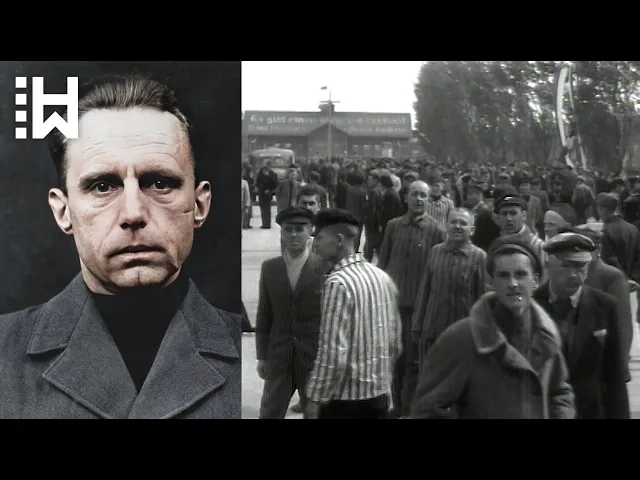
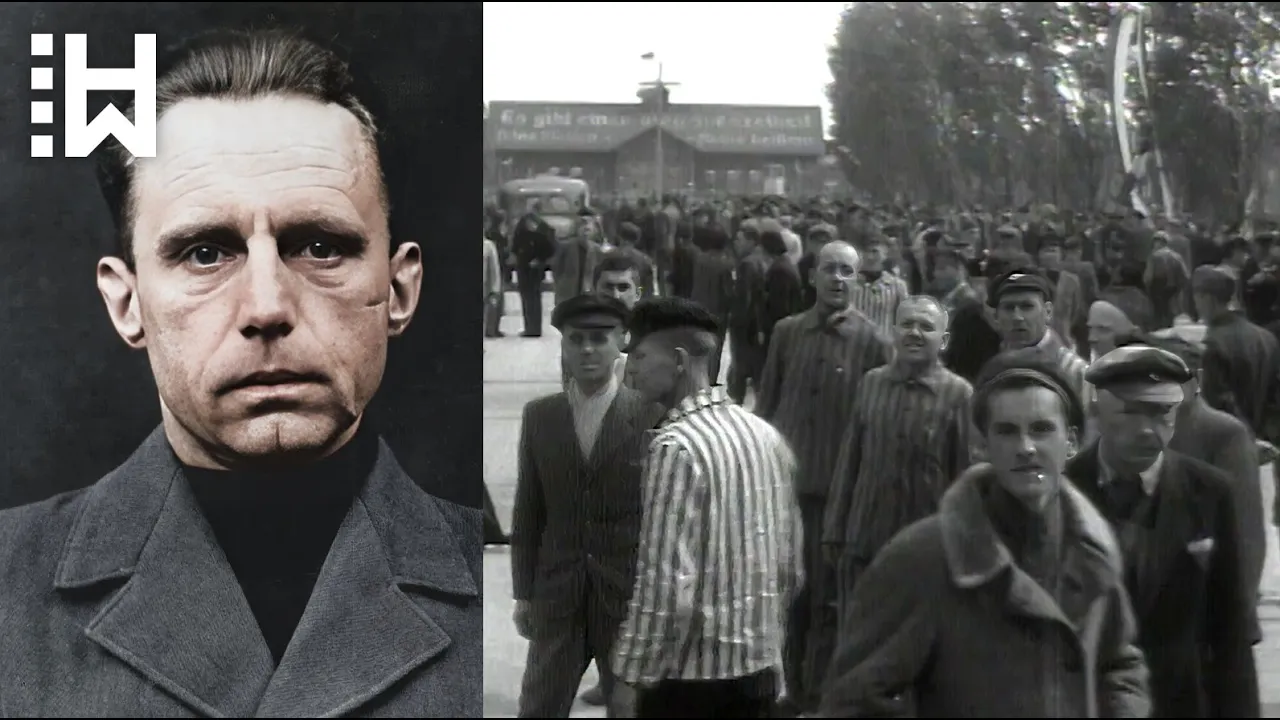
One of those who performed these pseudo-medical experiments is an Austrian physician named Wilhelm Beiglböck. Wilhelm Beiglböck was born on the 10th of October, 1905 in Hochneukirchen, then Austria-Hungary. He studied medicine at the University of Vienna and in 1933 he received his doctorate.
In 1933 Beiglböck joined the Nazi Party and in 1934 he joined the SA. From May 1941 he worked as a medical officer of the Luftwaffe – Germain Air Forces. The darkest period of his career is connected to sea water experiments which he conducted from July to September 1944 on inmates at Dachau concentration camp.
He tried to find a method to make a sea water drinkable in order to be able to rescue German soldiers of the Nazi Air Force and Navy who would be stranded at sea and would need to find a way to get fresh water to survive. Since the planned human experiments would be painful and life-threatening, concentration camp prisoners were used as test subjects. As a result, 40 Roma and Sinti prisoners from the Buchenwald concentration camp were transported to the Dachau camp.
The prisoners agreed in exchange for the promise of better food, which was of great importance for starving inmates. At first, all test subjects were divided into 4 groups and each of them received “full flight rations” which was 3,000 calories for ten days. After that, one group had to go hungry and thirsty, while the other groups were allowed to eat the Luftwaffe's emergency rations.
The first group who was given nothing to drink, the second group received pure salt water, the third group received salt water with a camouflaged freshwater taste and the last one received salt water with reduced salt content. Experiment lasted 10 days and resulted in extreme thirst, convulsions, and delirium. Since seawater deprives the organism of fluids, the prisoners felt very ill, their bodies dried out and kidneys, intestines and liver failed.
The inmates were so desperate to find the source of fresh water that they started to lick the freshly mopped floor. They also lost a lot of weight and finally got a fever and felt so weak that they could not stand up. Most of them even received punctures of the liver and spinal cord.
Somewhere between the first and second week of the experiments, all the inmates were carried out of the sickroom into the yard on stretchers covered with white sheets. Here their naked bodies were photographed and shortly after the recordings, numbers were tattooed on their chests. These experiments were conducted by Wilhelm Beiglböck.
Two or three of the prisoners died as a result of these experiences; the rest were severely weakened. In October 1944, Beiglböck presented the results of his experiments in a comprehensive report at a conference in Berlin. The result of these experiments was that the method of chemically processed sea water was useless.
In the end, justice finally caught up with Beiglböck when he was arrested by the allies and tried at the Nuremberg Doctor’s trial. During the trial one of Beiglböck’s Roma objects - Karl Höllenreiner – recognized in Beiglböck the man who had tortured him at Dachau leaving him with poor health for the remainder of his life. Höllenreiner jumped over the barrier of the dock with a mighty leap and gave Beiglböck a terrible punch in the face while shouting "This rascal has ruined my life” .
No more witnesses of experiments were present as Beiglböck had removed the names of the subjects on which he had conducted his experiments to prevent the court from locating them. Beiglböck also insisted that the test subjects were volunteers. It is also believed that before the trial, Beiglböck had changed experimental data and clinical case descriptions.
However, his lies did not help him escape justice. In August 1947, Wilhelm Beiglböck was convicted of war crimes and crimes against humanity and sentenced to 15 years imprisonment. This sentence was later reduced to 10 years and in the end, he served only a few years in prison and was released before Christmas 1951.
Because Beiglböck’s license to practice medicine had not been revoked, he became a chief physician at the Hospital of Buxtehude where he worked between 1952–1963. However, his dark past haunted him until his very end. Wilhelm Beiglböck died at the age of 58 on the 22nd of November 1963 when he was found dead in a stairwell.
Circumstances of his death suggest a suicide, but rumors of murder arose due to the threatening letters which he received until the end of his life. The main heir of his fortune was Stille Hilfe – meaning “Silent Help” - an organization for arrested, condemned and fugitive SS members. There were no tears shed for Wilhelm Beiglböck.