foreign thanks for joining me today for this edition of learning with human kinetics I'm Erin Patterson and today I'm going to discuss a topic that is very familiar to me and nearly all of my colleagues in the training and sports performance profession training youth athletes first a brief introduction and why I'm so passionate about this topic now throughout my career I have had the fortune of training athletes from eight years old learning coordination and improving motor skills all the way through Collegiate athletes working to be the best in their sport I'm certified through the nsca
and hold specialty certifications in weightlifting Speed and Agility and Tennis performance through all my studies and with the range of athletes I've coached one thing is common and current the sports industry is growing at a rapid pace and that means Junior High and high school sports are more intense than ever that includes travel and club sports as well now what that means is that training youth athletes properly is so important to help them stay healthy reduce the risk of injury and help them avoid burnout now just like sports for some athletes uh training can be
a social Endeavor for others it's an effort to gain a competitive Advantage for all athletes it is keyed in maintaining overall athleticism and for injury risk reduction according to a 2019 study by Johns Hopkins medicine the top reasons for sports related injuries included poor training and conditioning of athletes particularly physical training before the start of the Season inadequate strength training methodology that does not address the needs of young athletes this alone points to the need to have knowledgeable and certified coaches training youth athletes the 2021 annual report from the UEFA medical committee stated that 36
percent of pre-season injuries resulted from running and sprinting while 16 were from overuse what that means is while younger athletes are doing a great job of staying active and participating in sports many of them are not going into their Seasons prepared for the stress they're suddenly going to put on their bodies or they're not following a proper Sports Performance training program now many athletes begin training with the belief that it will have an immediate and lasting impact in one respect they're correct an untrained person is going to see near immediate effects of training so if
they're a brand if they are brand new to training uh they're likely to see immediate benefits where this can be misleading though is when the goal of the athlete is short-term results targeting short-term results over over a long-term plan often leads to over training loading and intensities that the athlete is not prepared for and possible injury and burnout when a parent or grandparent requests information on training their junior high or High School athlete I always recommend getting them started as soon as possible this is for two reasons if the athlete is able to start training
at a young age they will create habits along with building a solid foundation to help them progress during key periods in their athletic career for example if a young athlete begins training when he or she is 10 years old by the time the athlete's in high school he or she will have had four or five years to learn proper form and begin creating good habits that will carry with them into the high school years that's the long-term recommendation as for a short-term recommendation I always suggest that even if the athlete is already in high school
they start training well before the beginning of the season I've seen numerous cases where an athlete will begin training a month or two prior to their season and expect to be the same level as their peers who have been training for the entire year now certainly progress can be made but not usually at the rate they desire thinking uh think of this as craming for a test not only are you unlikely to learn everything you need to know for the exam in a short period of time your failure to plan ahead could have detrimental effects
like a low test score in training in sport the negative impact might not be on your grade but it could mean add a stress to your body leading to injury that will keep you on the sideline for an extended period of time by focusing on long-term athletic development the athlete can progressively develop both a body and mind to achieve long-term success rather than immediate success that is typically followed by burnout so what is long-term athletic development long-term athletic development refers to the process of preparing young athletes for proper progression and long-term success well into adulthood
this means developing a variety of fundamental skills developing motor abilities and becoming good overall athletes before beginning to trade in a sports specific way uh this purpose is to help young kids sometimes as young as six years old learn proper form on basic movement patterns enhanced motor development and improve overall athleticism and preparation for the high school level at this stage it is also important to allow young athletes to experience a variety of sports and activities not only will this help them develop their overall athleticism it'll reduce the risk of burnout and overuse injuries a
2003 study found that youth specialization limited overall motor skill development and promoted imbalance in joints particularly the knees such as tightness and inflexibility because muscles and tendons did not increase in length at the same rate as the bones more recently a 2013 article in the British Journal of sports medicine argued that early specialization in one sport can lead to numerous practical and physiological implications including a decrease in motor skill development because this Focus system General development to sport specific programming increased risk of injury to the cardiovascular and musculoskeletal systems because of the intensity and volume
of training early burnout caused by the high number of hours of dedication and early injury from overuse in a separate study of 1 200 youth athletes Dr niru jayanti found that athletes who specialize were 70 to 93 percent more likely to be injured than athletes who played multiple Sports he also recommended that youth athletes not surpass an amount of training or practice hours per week equal to their age for example if an athlete is 10 years old he or she shouldn't practice or train more than 10 hours total per week this isn't to say that
specialization can never occur generally with a good foundation and after building a base of overall athleticism athletes can begin to specialize at around 15 or 16 years old according to longtime Sports scientists and Professor tutor bumpa in his book training and conditioning youth athletes bompa suggests that specialization should usually take place after the athletes have developed solid multilateral foundation and when they are mentally ready to specialize in a particular sport so what does long-term athletic development look like think of this as a form of long-term periodization now we periodize training for our athletes throughout the
year to prepare them for from off season to their competitive stage long-term athletic development is a periodization model that takes them from a very young age as you the athlete all the way through high school and Beyond while all athletes are different and certainly develop at different Paces for purposes of this discussion we'll divide them into age categories athletes who are 12 years of age and younger athletes aged 13 to 15 and finally athletes 16 to 18 years old if we relate these ages to grades in school the categories would be sixth grade and younger
seventh grade through freshman year in high school and sophomore to senior year as I previously mentioned the first stage 12 and under should focus primarily on perfecting movement patterns learning to run skip jump and be athletic training sessions are relatively low intent low in intensity with basic movements and simple progressions the intention is to train sorry to allow the ligaments tendons and muscles to adapt to a baseline of strength this stage was sometimes referred to as the rapid gains phase because kids who are active in proper long-term athletic development program will make a greater gains
than those who specialize in one sport at this age following the long-term athletic development model 13 to 15 year old athletes will answer a phase where the intensity can be increased and the athletes can begin preparing for the next phase when even more demands will be placed on the body some athletes in this stage might be going through a growth spurt and could gain five inches in a short amount of time While others might be late Developers one athlete I currently train is in this phase and he has been patient on his own long-term athletic
development plan since he first came in to train when he was eight years old almost three years ago when our gym was forced to shut down during the covet pandemic I remember him standing at about five feet ten inches by the time we reopened and he was able to resume training later that year he had shot up to a towering six feet four inches that's an impressive height for a soon to be 8th grader at the time this actually is a great example also of how strength training never prevented him from growing or developing in
his seniors when growth spurts like this happen there's sometimes an adjustment period when coordination might seem to regress a little bit and the athlete essentially has to relearn how to use his or her body in this case be patient with the athlete help the athlete region regain those skills and really help them learn how to use their body again now programming at this stage will begin to include lifts with heavier weight and a big focus on building strength and gaining explosive power this might mean progressing on lifts like cleans progressing on squats and deadlifts and
really continuing to build strength at this stage the athlete is preparing for specialization if that is the direction that he or she chooses to go this can happen only because of the foundation that was built in the previous stage as the athlete continues to develop he or she will be soon to be ready to enter the phase of specialization for the sake of age ranges I mentioned this is the 16 to 17 or 16 to 18 year old range in terms of a sport this usually means an athlete's Focus begins to narrow and if the
athlete has interest in continuing to play in college he or she might begin to specialize now in terms of training the athletes program will become more intense and more specific to his or her needs based on the sport being trained for and the specific position being played for example if an athlete is a defensive lineman in his primary sport of football he might begin to train differently than his friend who is a wide receiver or quarterback while many athletes begin to specialize toward their Junior and Senior year of high school there are just as many
who continue to play multiple Sports staying active in multiple Sports will only help increase their athleticism for those who do choose to specialize it could be argued that training in a proper Sports Performance or strength and conditioning program is even more important to help maintain that overall athleticism prevent or reduce overuse injuries and to avoid imbalances that might occur with the repetitive movements of playing a single sport keep in mind though a training program should always reflect reflect the athlete's training age as opposed to biological age for example a 16 year old athlete who has
been in a structured and appropriate training program since they were 12 years old would have a training age of about four years whereas a 16 year old who only recently began training the previous year might have a training age of one year the difference is in terms of training the athlete who started at 12 years of age will likely be more advanced than the one who began at 15 even though their biological ages are the same a quick example here I have an athlete who will turn 18 in a couple of months we focus on
a long-term athletic development plan beginning when she was 11 years old so her training age is about seven years right now on the other hand I have another athlete who is the same age yet she began training when she was 16 years old the one who began when she was 11 years old is much more advanced than the type of training program she's able to do compared to the athlete who has only been training for about two years now we can break athletes down into these training ages and phases but what does the actual training
look like there are many different ways to go about training a youth athlete but I will walk you through a general outline as an example so athletes are coming in to trade say this is a group setting once the athletes are ready to get warmed up I'll usually start with the general prep warm-up that might include minivan walks you know forward backward lateral each way followed by a dynamic warm-up now within the dynamic warm-up we'll make sure to hit as many muscles as possible moving in all directions this includes transverse lunges followed by forward walking
lunge backward walking lunge and lateral each way inchworms Spiderman crawls and monster are straight leg walks for hips and hamstrings a quad stretch followed by more movement with butt kickers high knee run back pedal pogos broad jump skips in all directions so forward backward and lateral and karaoke now once the warm-up is complete we immediately go into any type of Speed and Agility training the athlete needs to work on this leads into Power development mobility and core phase of the session this is where the athlete will build off the speed work that was just completed
and progress to power movements like box jumps hurdle Hops uh and any other type of Power movement appropriate for the athlete in his or her stage of development this is also where we might include any type of additional Mobility work that the athlete needs next will be the primary strength block of training of the training session this is where the athlete will work on major movement patterns and exercises he or she needs to improve on the basic movement patterns that should be included are a squat or need dominant exercise a lunge a hip hinge an
upper body pushing movement upper body pulling movement for more details on this I would refer you to my previous learning with human kinetics where I broke down how does to design a complete workout plan now once the string portion of the training is training session is complete the athlete will finish the session with Energy Systems development or conditioning this can be anything from a metabolic conditioning exercise anything to work on cardiovascular development or a mix of additional strength and conditioning that the athlete needs to work on typically in this portion of the session the activity
will be specific to that particular athlete uh that was a brief description on what a session might look like but how do we plan for the entire year the athlete will want to build athleticism throughout the year and a mix of strength and power development will be important and when the athlete is in the early stages of the training development like the 15 and 100 age range that I mentioned at the beginning and is the multi-sport athlete a mix of training during the week would be best for building overall athleticism this means that instead of
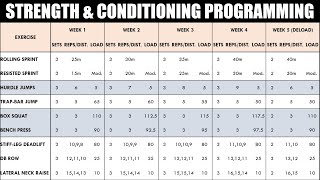
breaking down an athlete's periodization plan into hypertrophy strength or power phases the athlete might have one full body session during the week focusing on specifically on strength training and the second training session would be geared more toward speed and Power if the athlete has a relatively High training age and is beginning to specialize a full periodization cycle might be beneficial this means we would break down the training program into longer a three to four week phases and progress throughout the year between different types of training this planning process was also discussed in my previous learning
with human kinetics on how to design a complete training program but I will touch on it again today when an athlete is coming off of a tough season he or she should spend time in a post competition phase to reset the body deload and begin working on building back uh the body for the off season in this phase the athlete would work on rehab rehabbing any injuries correcting any imbalances that might have occurred during the season and begin to rebuild the muscle tissue specifically in the areas of tendons and ligaments working on stabilizing the muscles
and prepping for more intense training now depending on The Athlete's needs he or she might go into a hypertrophy phase to help rebuild any muscle or weight that was lost during the season this is typical for many athletes in the rigors of an extensive season there will tend to be a little bit of atrophy that might occur and the athlete will need to work to begin rebuilding for the preseason this is where we'll keep reps relatively high and weight low anywhere from 8 to 15 reps following the hypertrophy or strength prep phase the Reps will
gradually come down and the weight will increase as we place a larger focus on building strength keep in mind that even though we are lowering Reps for increased weight on some exercises the athlete will still need to perform Dynamic movements to continue building athleticism throughout the year this could mean in the power phase of the particular session the athlete is working power based exercises like your medicine ball slams or throws hurdle Hops and other explosive or athletic movements as a natural progression the athlete will move from a strength to a power phase this doesn't mean
the athlete can't work on power throughout the year but this phase will have a heavier emphasis on Power and speed development as the season approaches combine this with uh combined with this would be an increased focus on any specific conditioning the athlete needs in order to be in the best shape possible for his or her sport finally as the athlete moves into the season he or she will go into a full competition phase this might look different from for one athlete compared to another this is where the programming can get very specific to what the
athlete needs in order to maintain all that the athlete has accomplished building to this point something that was mentioned earlier that we can Circle back to is Energy Systems training for the particular sport that the athlete is competing in uh there are three main energy systems of the body that correlate to the demands of different sports the phosphogen or ATP creatine phosphate and Energy System this uses stored ATP and creatine phosphate to generate energy without the presence of oxygen the glycolytic energy system this primarily uses carbohydrates to produce energy without the presence of oxygen and
finally the oxidative or aerobic Energy System this uses oxygen to produce energy the phosphogen system uses a very high rate of energy production for example this system is used during quick bursts or fast explosive actions of up to 10 to 12 seconds the glycolytic system doesn't produce energy quite as fast as the phosphogen system but can produce energy for longer durations of about 20 to 90 seconds the oxidative or aerobic system has the slowest rate of energy production but does so for the longest of the three it uses the breakdown of carbohydrate and fat which
is much slower than creatine phosphate or glucose but because of that it can be sustained for hours now if we think of these in terms of sports and the demands of each sport it's much easier to train athletes accordingly sports like baseball softball sprinters and track and football will mostly be categorized in the phosphogen system if you consider the demands of the sport these athletes will have a very short duration of activity and move in quick bursts followed by a much longer rest period sports like basketball and hockey will soon to be categorized in a
mix of glycolytic and oxidative while distance Runners will draw energy from the oxidative system you're sometimes debating on Sports like soccer which is considered to be in the oxidative category but could also hover in the areas of oxygen or a mix for a much deeper discussion each position within the sport can be placed into its own category based on the very specific demands of that position now the most important thing to remember when training youth athletes is to know your athlete if the athlete has a low training age work on developing that base and building
for long-term athletic development don't give in to training for highlights or a quick fix the best way to develop a young athlete is to train and progress for all-around athleticism this is better for Health and Longevity this means not specializing too soon or in some cases not specializing at all as trainers and coaches it isn't our job to decide what sport or how many sports an athlete participates in but it is our job to keep them healthy strong and relatively injury free so that they can participate in the sports that they love remember part of
the long-term athletic development model is creating healthy and Lasting habits that will continue long after their playing days so we might not train Olympic Champions or national champions uh maybe not even state or region Champions but what we can do is help them enjoy their Sports enjoy training and build a foundation that is sustainable for the rest of their lives I hope you got something out of this that will help you in your own development or the development of your athletes until next time stay healthy and train smart foreign [Music]