In 2016, this Japanese company issued a public apology. For the first time in 25 years, they were hiking the price of a popular ice cream by 10 yen, or about $0. 06.
And they were deeply sorry. Now, in any other country, this might have been an overreaction, but in Japan. .
. Inflation is just completely alien as a concept. For three decades, the country saw stagnant or even decreasing prices, which is why a 10 yen price-hike for an ice cream was such a big deal.
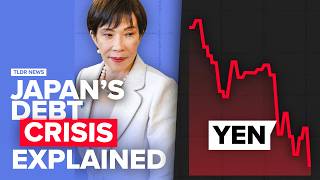
But a huge slide in the yen is helping change that picture. And it's causing a seismic shift in Japan's economy. The yen has weakened against the dollar to a level not seen since the early 90s.
The weaker yen means higher prices for all sorts of imported goods, from groceries to gasoline. It's also making it pretty attractive for inbound tourists looking for a cheap vacation. Steering the country through this once-in-a-generation cost-of-living crisis is the inaugural challenge for Japan's new leader.
Sanae Takaichi has been voted in as Japan's first female prime minister. Japan has arrived at that big moment where there's a potential transformation of the entire society. So how did Japan get to this point?
And can it learn to live with rising prices? This unassuming grain has become emblematic of one of Japan's biggest challenges. It's very much sort of entrenched in the Japanese psyche that if you go to the supermarket, eggs are going to be a certain price or rice is going to be a certain price.
You can see that here, for years the price of rice in Japan barely changed, and sometimes it even dropped. But not anymore. The price of rice has surged since 2023.
And the problem extends beyond what's on the dinner table. Prices for energy, transportation and housing have all been on the rise. If you live in the US or the UK, seeing prices rise is not as foreign a concept as it is in Japan.
This has been a terrible shock. We have a whole generation of people who've never seen prices go up. What is going on?
Well, to answer that, you've got to rewind to the 1980s. After two decades of rocketing expansion, the Japanese now enjoy the highest standard of living in Asia. Japan's economy was expected to overtake America's, but around the late 80s, there was a bubble in asset markets, and this burst.
Asset prices plummeted. Stocks plummeted. Property prices fell for more than a decade.
Deflation, layered on top of rising debt and an aging population created a drag that suppressed Japan's growth for years. Deflation is one of the biggest threats to Japan's economic recovery. The exit strategy was to stimulate inflation through extreme monetary policy.
The Bank of Japan, or BOJ, held interest rates at rock bottom for decades, even driving them negative. It also bought huge amounts of government debt that helped pour money into financial markets. Both factors helped weaken the yen sharply, but it didn't move the needle enough.
Salaries stayed put, mortgages never budged, and price tags remained frozen. Two massive forces broke the cycle. The first in 2020 when the world went into lockdown, triggering a global economic shock wave.
And then there was the Ukraine war. There was a big impact from that as well. For a country like Japan that imports most of its energy, you're going to literally import inflation.
Prices started rising and inflation became sort of a thing. Even so, Japan continued to keep interest rates at rock bottom levels, accelerating falls in the yen and fueling yet more inflation. In 2023, it exceeded 4%, double the BOJ's 2% target.
It was time to do something and finally, Japan put an end to that massive money experiment. The Bank of Japan hikes interest rates for the first time since 2007, and scraps yield curve control. All that pent up spending that didn't happen during the pandemic now comes in a big wave.
So much so that in early 2025, Japan's inflation rate was the highest among the G7 countries. And this has pushed companies great and small to reevaluate their business plans. Costs have also increased for packaging and other materials.
As prices have risen, slow wage growth has become a major concern. I've talked to some small business owners, and they want to raise wages, but being forced to do that has actually added a lot of pressure for them as well. Minimum wage has caught up or even surpassed that, depending on the prefecture.
So Masashi Miwa is faced with paying as much as 1,500 yen per hour to attract quality staff. While minimum wages have risen, they haven't kept up with prices. You can see that here.
Wages adjusted for inflation, also known as real wages, have actually been in decline. This is why the ruling Liberal Democratic Party hasn't done as well in the past couple of elections. We'll come back to what this means for the new prime minister shortly.
But first, there's something worth remembering. Japan wants inflation. Policymakers in Japan have been trying to generate inflation for over a decade.
The problem is that it doesn't want too much or for it to rise too quickly. An appropriate amount turns into a virtuous cycle. Prices rise.
People seek higher wages. People kind of consume and spend more. But that cycle hasn't arrived yet.
And Prime Minister Takaichi needs to maintain stability while society and the economy adjust. Policymakers have been trying to sustain the patience of the consumers and the voters by giving them subsidies to keep the edge off the cost of living crunch for the basics. These are kind of counter measures that have wide ranging impacts on not just the economy, but also fiscal spending, revenue, government revenue.
Because these subsidies don't come for free. They're funded through borrowing, at a time when public debt is already off the charts. Japan has the biggest national debt load of any advanced nation.
Over 200% of GDP. Pushing interest rates higher could help cool inflation. And the BOJ did just that.
The Bank of Japan raising its benchmark interest rate to the highest in 30 years. Problem is. .
. It's going to make servicing that national debt more and more expensive. The pace at which the Bank of Japan raises interest rates has key significance for the yen.
So for currency traders, companies doing businesses, exporters, importers. So it's tricky to say the least. And Japan brings other unique complications to the table.
Japan has an aging society. They're reliant on pension incomes that are not substantial enough to sustain them through after-retirement life. We've seen a large movement of money from savings into stocks.
This has been facilitated by government policy enabling people to open accounts where they get beneficial tax breaks. You can see this shift in the stock market. In 2025, the Nikkei, an index of Japan's biggest companies, hit a record high.
If growth can be restored, this means these companies are going to be worth investing in. The mindset of the ordinary person in the street is that inflation is a thing. They have to adjust their lives to it.
And Japan is probably not going back to deflationary stagnant prices anytime soon. So the key question for Japan's inflation story is can the economy recreate the innovation and the vibrancy it saw in the late 1980s? Or is it risking the stability and security it's had for a future in which households can't keep up with prices, and we see growing inequality?