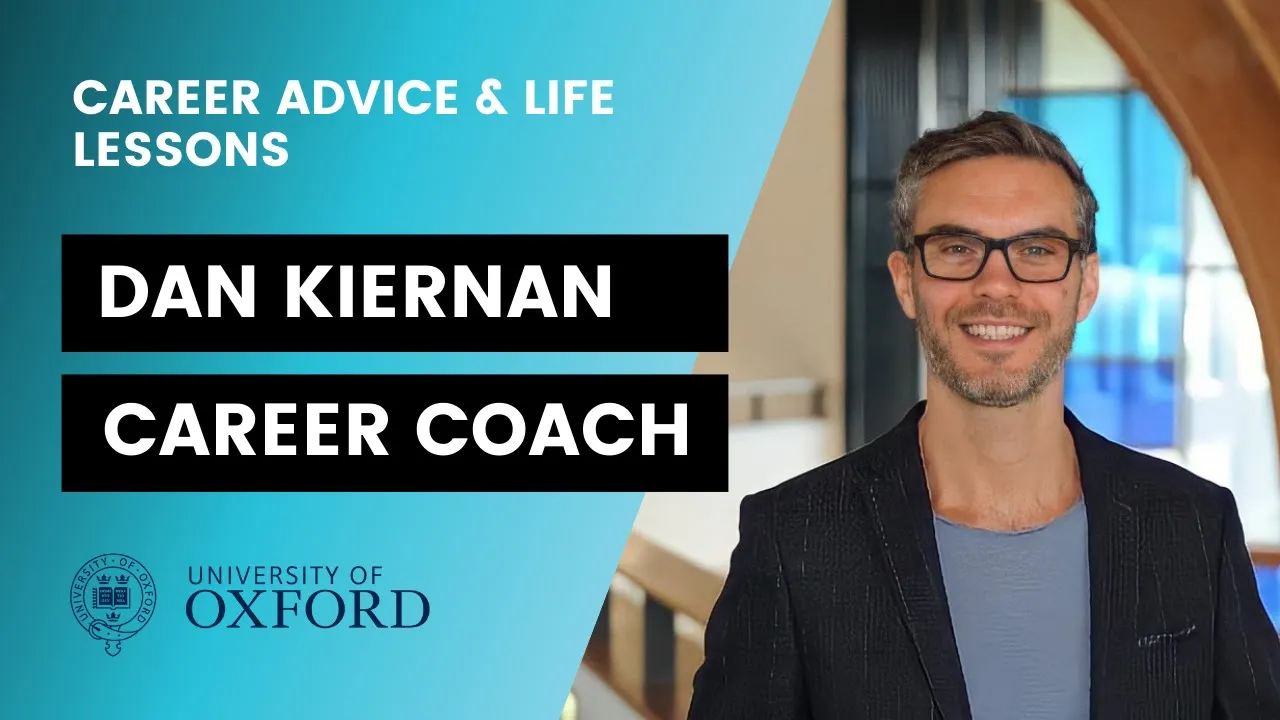
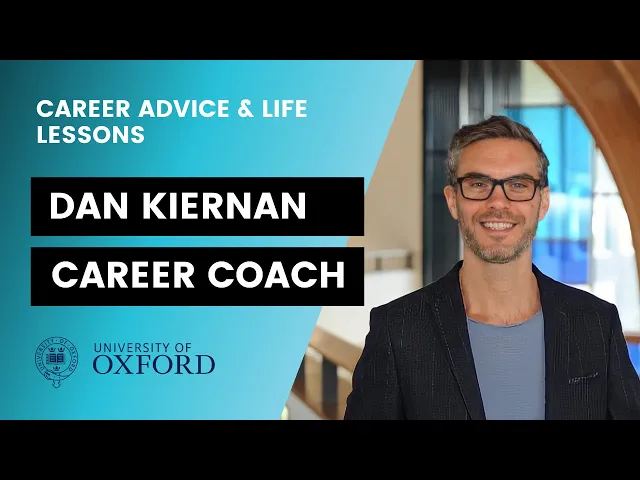
welcome to illuminate universe's podcast the cast get it the cast okay let's dive right in my name is cindy jano i'm a project manager intern at illuminate universe in this episode of illuminate universe's podcast illuminates director of business development rochelle knightlet and illuminate leadership academy student aaron sun interviewed dan kiernan a career coach at said business school listeners this week will enjoy hearing dan's story on how he got to where he is today he discusses one of his fundamental life lessons which is following your interest instead of your passions he provides insightful advice on how
to deal with change in your professional journey and gives advice to aspiring business leaders before further ado let's get into today's podcast so much for coming to speak on our podcast so i thought that we could go back to the beginning of your journey when you were going into university did you already know what you wanted to do what did you study and how did your post-secondary decision relate to your goals so at that time if i'm honest i was very very unfocused and i know i didn't have any idea what i wanted to do
and perhaps even worse than that i didn't even know what i wanted from work and i didn't really know what my options were and that's because i i grew up in a working-class background and everyone i knew worked in factories or worked in shops or were tradesmen and i was the first person in my family to go to university i didn't know anyone else who'd been to university so i didn't really know what people did for jobs after university i didn't have any idea what the possibilities were so i i just followed my interests and
i studied history because that was the subjects i enjoyed most at school and nothing happened at university that enlightens me about the world of work um career services weren't as big in those days um university wasn't such a vocational thing in those days so when i left university i sort of bummed around and did a few odd jobs and then eventually i was i was lucky enough to take a job in financial services where over a period of years i was able to build a career so i you know i think reflecting back on all
of that i take two lessons away from it so one was the following my interests was a good thing and that's something that i've applied throughout the rest of my career so i knew a lot of people who didn't finish their courses at university or really struggled with motivation or had to change courses and i really enjoyed what i was doing and so i was motivated all the way through university and that lesson stuck with me about following my interests and that means i can stay motivated and you know there's a bit of a sidebar
conversation here as well because i'm choosing my words quite carefully when i say follow my interests and not do what you love or follow your passion which is is often advice that young people get well-meaning advice but i think it'd be quite dangerous sometimes because with very few exceptions i think when you're young it's it's hard to know exactly what your passion is and it sets the bar very very high for what you're going to get out of work so i often counsel students to instead follow their interests and then within whatever the parameters are
with within your job or your organization or where you find yourself in your career it's much easier to follow your interest than to try and follow your passion and so that worked out well for me and that's that's a lesson i've applied throughout my career now the other lesson i take away is trying to understand your options so as i said i had no understanding at all of my options which meant i had a very unfocused start to my career and i now cancel students or anyone who's going through any kind of career transition and
to take some time to really explore and discover all of the possibilities and discover what your options might be before you make a decision before you follow a particular path and that's a lesson i learned the hard way um at university but ever since then i've always tried to be very curious and go on this path of exploration and discovery every time i'm thinking of making a change in my career so not a conventional start to a career um but there were some important lessons in there for me yeah for sure and that's really interesting
to hear especially since i'm also starting out in my career and i'm starting to explore my options as i'm sure many of the illuminate students are so it's really great to see how far you've come in your journey yeah and i do think that's wonderful advice that if you follow your interests you can make a career out of it if you just try to decide a career and go with it you're going to have a much more difficult time yeah and um that you know you kind of you saw some people who had to change
their course of path who didn't follow through with their education and that feeds in really well to what i would like to ask you next as much as we try to set clear plans for ourselves we know that things don't always pan out as expected how did your professional journey compare to the plans that you originally may have set for yourself and what's one piece of advice that you would offer someone currently trying to attain their dream job so as i said i i had a very unfocused start to my career so i didn't really
have a plan um but some things emerged through the early years of my career and some guiding principles and i think these have served me well and again this is now something that i counsel students rather than having a very clearly defined plan which is going to be very hard to execute because careers play out over a long period of time people are very complex and what they want changes and the world of work is very complex and there are many things that happen that are outside of our control so i followed my interests i
continued to do that and so for example when i was working for the bank i had several possibilities for how i could develop my career i could have developed myself as an analyst and been a subject matter expert i could have got closer to the clients and been a client relationship manager i could potentially got closer to itd and been a business analyst but what i was really interested in was people and so i developed as a people manager so i was following my interests again i also continued to explore and be curious and always
tried to understand a lot of what was going on around me in tangential areas in areas that weren't perhaps directly to do with me because that helped me generate a lot of options and so that served me well for getting onto new projects or opportunities to travel or opportunities to develop in my career another principle i applied was identifying and playing to my strengths so i said earlier i studied history which is not a very vocational degree and you know on the surface of it doesn't have much to do with the world of work but
it did teach me to make decisions based on incomplete information and come to conclusions based on incomplete information and it taught me empathy and trying to understand people's motivations for doing things it taught me strategic thinking and thinking through why are things this way and how could they potentially have been different um it taught me communication skills you have to create an argument and be able to make a very strong argument on paper or in conversation and at the time that i studied history you had to be a good self-starter as well because you only
had a couple of hours lectures a week and a couple of hours of tutorials and the rest of the time you were essentially responsible for yourself and how to teach yourself and i discovered all of those things were strengths in the workplace and so i played to those strengths and they dovetailed quite nicely with my interest in managing people so those were two principles that i continued to apply through my career and i think they served me well so it wasn't really a plan as such but by applying those principles i was able to adapt
to changing circumstances and even though i started right at the bottom because i'd had this unfocused start to my career i was able to work my way up um by spotting opportunities and then being able to take advantage of them yeah for sure that's an excellent piece of advice i'll definitely keep that in mind when exploring my options as well so we know that now you are an incredibly successful career consultant for the university of oxford so what brought you into this field of career coaching given that you also have a background for finance well
i suppose it was um building on some of the things that i've just been speaking about so i continued to follow my interests and played to my strengths but after about 10 years at the bank i could see that i was you know never really going to be anything more than a mid-level manager i was going to be a small cog in a big machine and so that you know became a little bit boring and a little bit limiting um and so i thought you know it would be good to have a change and i
suppose this is another principle that follows that when the time is right be courageous enough to make a change and that was the point at which i switched to working for a startup and i went to work for a fintech startup so i was still using some of the strengths i had some of the knowledge and experience i built up from my career in mainstream finance but in a slightly different environment so it wasn't like a complete leap into the unknown it was a career pivot that was built on things that i'd already developed in
the first part of my career um and so i really enjoyed my time there i was six years in a startup um and then after six years there um again i felt like it was time to make a change it had been a lot of fun it also been very stressful i was feeling a little bit burned out i'd also moved out of london and so i was getting a bit sick of commuting into london every day and so that was another driver for a change and i thought back again through my career and realized
i'd always enjoyed i'd always been interested in working with people and in particular helping young people develop in the early years of their career so following my interests and i think i've been good at it you know i'd had a lot of good feedback for it i'd been on some coaching courses as part of my development as a manager so i was playing to my strengths and i thought perhaps a career pivot again into coaching in higher education would make sense but again i was building on what i'd already developed so i pivoted into working
for a business school and my primary role in my first career coaching job was looking after students who were studying finance they were doing masters in finance so again i was building on knowledge and experience that i'd already developed in the first half of my career so that's what led me into career coaching it's been a good move i really really enjoy my work and it feels like it's a bit of a culmination of the the first 16 years of my career developing these people management skills it's so interesting how you say you started with
an unfocused beginning and as you've gone through your career you've taken bits and pieces of things that you were interested in and paired them with your successes to ultimately funnel into what seems like the perfect job based on your experiences in the background yeah i i feel that's probably true and you know i said earlier follow your passion is dangerous advice but i do feel like perhaps career coaching is is a kind of passion for me but it's taken me you know 16 20 years to develop this passion and so i think you know that's
something to bear in mind your passion isn't something that's sort of already crystallized when you're 20 or 21 and you know you can just uncover it and there it is and you know what you want to do for the rest of your career it's probably something that's going to develop through the early years of your career and that's why it's important to be curious to explore lots of options and to take an active role in managing your career so don't let it be something that just happens to you you've got to play a role in
managing it and thinking through things like what am i interested in where do my strengths lie what are my options for applying those yeah that's amazing advice and i think it is just such a great point to make that while you are passionate now about your work it's become something you are passionate about but it didn't start off as your passion so to speak so that kind of you've you've given some wonderful advice i'm going to ask you for some more advice would you have for aspiring business leaders to be successful in both their careers
and in life um in general but also in this very strange and dare i say unprecedented that we are currently in um well i you know i suppose the advice i would give um would build again on everything we've already been talking about i'm i'm kind of suspicious of um very rigid plans or very rigid specific pieces of advice because you know we as you've pointed out we live in a very uncertain world um a very ambiguous world it's very hard to form a clear picture of how things are going to change in the future
and what works going to look like in the future for lots of different reasons so i think you know my overarching advice would be to to manage your career but manage it in a way where you can be agile and flexible and adaptable because that's probably going to be really important over the next few years and so i think things that we've been talking about now know what your interests are and follow and build on your interests explore and be curious and think really broadly so you're really aware of all the possibilities for you now
identify and understand and play to your strengths and then when the time is right be courageous enough to to make a change or make a move or pivot your career in some way and i think that's an agile strategy that most people could apply for most of the time in their careers and then i suppose perhaps one last piece of advice is uh to keep your career in perspective so you know it's it's not all important it is important we spend a long time at work and so it's important that you find work meaningful and
you get a lot out of it but there's more to life than just working um and so you're always going to have bad days in the office or bad months or even a bad year at work and you don't want to get that that's to get you down too much so keep your career in perspective um it's only one part of life and and don't become too obsessive about it well thank you so so much dan for that great advice i'm sure that myself and the rest of the illuminate community can take away so much
valuable insight from your experiences no it's it's wonderful to have the opportunity to to share some thoughts and share some ideas thank you
![React Tutorial For Beginners [ReactJS] | ReactJS Course | ReactJS For Beginners | Intellipaat](https://img.youtube.com/vi/9vZ8ELqerPo/maxresdefault.jpg)


![Excel to Power BI [Full Course] 📊](https://img.youtube.com/vi/gjnnqsdvAc0/maxresdefault.jpg)
![[LIVE PANEL] Logging with Fluent Bit & Kubernetes](https://img.youtube.com/vi/tLNMXp1iTS8/maxresdefault.jpg)
![Visual Calculations in Power BI - DAX Made Easy! [Full Course]](https://img.youtube.com/vi/JITM2iW2uLQ/maxresdefault.jpg)
![Power Automate Beginner to Pro Tutorial [Full Course]](https://img.youtube.com/vi/1p5kI7SYz4Q/maxresdefault.jpg)
![Beginner to T-SQL [Full Course]](https://img.youtube.com/vi/cACat4KNncg/maxresdefault.jpg)