Some people walk into a crowded room and feel alive. Others walk into that same room and immediately want to leave. Not because they're antisocial, not because they're awkward, but because something about all of it feels pointless, shallow, exhausting.
Arthur Schopenhau understood this well. He believed that the more intelligent a person becomes, the less they care about social activity, not out of arrogance, but out of clarity. Because once you begin to think deeply, you lose the ability to engage in small things.
And most social life is small. This video is not about superiority. It's about solitude, about depth, about why the smartest people often walk alone and how that's not a weakness, but a mark of quiet power.
Let's begin. The average mind craves stimulation, distraction, noise, movement. But a thinking mind, a mind that truly questions, contemplates, reflects, can't function in chaos.
It needs stillness. Schopenhau believed that the more active the inner world becomes, the less value one finds in the outer world because surface level talk, forced laughter, meaningless rituals can't compete with the richness of solitude. To someone with a refined inner life, social life often feels like a bad trade.
Why would I give up my clarity, my freedom, my silence for noise I didn't ask for? To be intelligent is to constantly outgrow your environment. What once entertained you now feels hollow.
What once made you laugh now makes you cringe. What once felt like connection now feels like performance. Schopenhau believed that the more a person matures intellectually, the more aware they become of the emptiness of most conversation because the crowd doesn't want insight.
It wants validation. It doesn't want depth. It wants distraction.
And when you bring your full presence, your full mind, your full self, you begin to feel it. They don't really want you. They want a version of you that's easier to digest.
So, the intelligent person pulls back, not out of contempt, but out of necessity because their energy is no longer negotiable. The average person dreads being alone. The intelligent person craves it because they understand something the world avoids.
Solitude is not a lack of company. It's the presence of self. Schopenhau saw solitude as the breeding ground of thought, of creativity, of true independence.
Because when you're alone, you're not performing. You're not adapting. You're not reacting.
You're thinking. And thinking is what keeps you real in a world that constantly tries to pull you into the false. So the intelligent person retreats not because they hate people but because they refuse to lose themselves in them.
Social life often promises connection but rarely delivers it. You scroll, you swipe, you show up, you laugh, you nod, you drink, but then you leave and you feel nothing. Or worse, you feel drained.
Schopenhau believed that most human interaction is entertainment, not fulfillment. It fills time but not the soul. It occupies attention but not awareness.
And the more intelligent you become, the more you sense this and stop being satisfied by it. You stop pretending that every invitation deserves a yes. You stop chasing validation from people you don't respect.
You stop fearing being alone because what you gain in solitude is far more valuable than what you lose in shallow company. Arthur Schopenhau had no patience for small talk. He considered most conversation to be a kind of noise pollution, a shallow defense against silence.
To him, idle talk was a way people avoided themselves. And the more intelligent a person becomes, the more painful this kind of talk feels. Conversations about gossip, endless commentary on nothing, performative opinions with no real thought behind them.
It's not that smart people are antisocial. It's that their mind can't tolerate mental clutter. They crave substance.
And substance is rare. So they withdraw, not from people, but from pointlessness. Because every word you speak costs energy and the intelligent mind is deeply selective about what it spends.
In public, everyone is someone, not themselves, but a role. The confident one, the agreeable one, the fun one, the smart one. And deep down, intelligent people feel the weight of this artificiality.
They see the subtle competition, the performance, the hidden desperation for approval, and they don't want to play. Schopenhau wrote about the discomfort of social masks, noting that the wiser a person becomes, the more they value authenticity over popularity. The crowd wants you to perform.
But intelligence is allergic to inauthenticity. So the wise retreat inward, not because they are cold, but because they have no tolerance for pretending. There's a crucial distinction that Schopenhau made, one that many people still confuse.
Loneliness is the pain of wanting others. Aloneeness is the peace of needing no one. Most people chase company not because they enjoy others, but because they fear being with themselves.
The intelligent person doesn't fear themselves. They have learned to sit in their own silence, to listen, observe, and reflect. They understand that not all empty rooms are lonely.
Some are liberating. Some are sacred. When you're constantly surrounded by noise, you lose the signal of your own soul.
But in aloneeness that signal comes through clearly, powerfully, undeniably, and the intelligent mind follows it. The more people gather, the more they conform. Ideas flatten.
Individuality dissolves. Truth is replaced with trend. Schopenhau saw this as a kind of spiritual decay.
To be intelligent is to question, to rebel, to stand apart. But social life in its mass form punishes those who stand apart. It rewards agreement.
It celebrates sameness. So the intelligent person becomes a quiet outsider. Not out of misanthropy, but out of refusal to conform.
They would rather sit alone in truth than stand together in delusion. They are not above the crowd, but beyond it. The intelligent don't hate people.
They just become highly selective because when your mind is sharp, you see through facades. You hear what others don't say. You feel the intentions behind words.
And once you see through people, you can't unsee. You can't pretend. You don't notice the manipulation, the ego, the posturing.
So instead of trying to fit in, you start to filter out. Fewer friendships, fewer conversations, fewer distractions. And in that reduction, you find peace.
Because intelligence doesn't crave popularity. It craves truth. And truth rarely lives in the crowd.
Arthur Schopenhau once wrote, "A man can be himself only so long as he is alone. " Why? Because only in solitude can a person connect with their inner world.
That vast and private universe of thought, intuition, creativity, and reflection. The more intelligent you are, the richer this inner world becomes. And as it grows, you need less from the outer world, less approval, less stimulation, less distraction.
The average person seeks fulfillment outside. The intelligent person knows that meaning begins within. They don't chase dopamine.
They seek depth because their mind is not a passive receiver. It is an active generator. And once you realize that your richest experiences come not from the crowd, but from within your own consciousness, you no longer feel the urge to chase what others chase.
You become content, and more than that, you become free. Nearly every great thinker, artist, writer, and philosopher had one thing in common. Long stretches of silence and solitude.
Schopenhauer believed that creativity is the fruit of contemplation and contemplation cannot grow in noise. In solitude, the intelligent person hears things that can't be heard in crowds. A new idea, a deeper insight, a breakthrough realization.
This is why intelligent people don't just tolerate being alone, they protect it. Because social life, as it's commonly lived, is interruptive. It pulls your attention in 100 directions.
It scatters your focus. It dilutes your vision. And creation requires undivided presence.
So if someone pulls back from the social world to write, build, paint, study, or think, it's not isolation. It's creation. In a world addicted to attention, the intelligent person guards theirs.
Schopenhau would argue that attention is the most valuable resource a thinker possesses because it determines the quality of everything else. Where your attention goes, your energy follows. Your mind follows, your life follows.
and shallow socializing, constant interruption or meaningless stimulation is attacks on your deepest work. So the intelligent person becomes selective who they talk to, what they watch, what they say yes to. Not out of superiority but out of selfrespect.
Because when your thoughts have weight, you can't afford to waste them in hollow spaces. There's a cultural myth that says if you're not surrounded by people, you must be lonely. But the intelligent person knows that the deepest loneliness is not being alone.
It's being with others who don't understand you. In the wrong company, you feel more invisible than if you were by yourself. You edit yourself.
You shrink. You pretend. But in solitude, none of that is necessary.
You get to be fully yourself. And over time, that becomes intoxicating. Not because you hate others, but because you finally love being with yourself.
And once you've tasted that kind of peace, you no longer chase shallow connection. You wait for real resonance. And you're willing to wait as long as it takes.
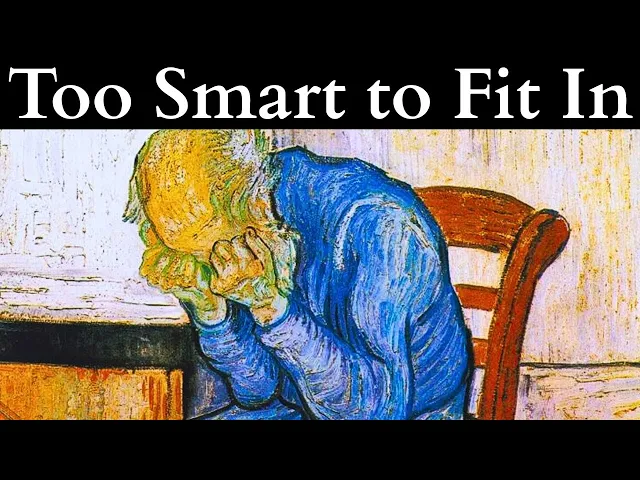
The final reason intelligent people often distance themselves from social life is simple. They've outgrown it. The jokes don't land.
The rituals feel robotic. The roles feel fake. The expectations feel heavy.
And the intelligent mind, always evolving, always shedding skins, no longer fits in places that demand sameness. So they begin to walk alone. And in that solitude, they begin to thrive because they finally have room to grow, to think, to become.
And in Schopenhau's world, that's not a loss. That's [Music] liberation. Schopenhau didn't just admire solitude as a lifestyle.
He saw it as a sign of spiritual development. He believed that people who can't be alone are still tethered to the world for their identity. They need attention, praise, distraction, not because they enjoy it, but because they're afraid of what they'll face without it.
But the intelligent and spiritually mature have already faced that fear. They've endured the silence. They've listened to the inner noise.
They've met the truth beneath it. And as a result, they've stopped chasing stimulation. They've stopped clinging to groups.
They've stopped needing to be seen. Because when you no longer need to prove anything to others, you finally come home to yourself. And that home, it's quiet, but it's unshakable.
When intelligent people pull back from social life, they're often misunderstood. People assume they're cold, distant, uninterested. But Schopenhau would say they're not disconnected.
They're detached. And there's a difference. Disconnection is apathy.
Detachment is power. It means you can observe without absorbing. You can witness without needing to control.
You can engage without being consumed. This detachment doesn't mean you don't care. It means you no longer depend.
You've stopped seeking wholeness through others because you've built it within. You've stopped outsourcing meaning because you found your own. And once you've done that, you stop clinging to every invitation, every conversation, every fleeting sense of belonging because you belong to yourself.
In the social world, everything is about optics. Who you know, how you're perceived, what you post, how you fit. But for the intelligent person, this game grows tiresome fast.
They don't want to perform. They want to be. And that requires self-possession.
Self-possession is the quiet power of knowing who you are and needing nothing from anyone to confirm it. Schopenhauer valued this above all because once you possess yourself, you're not moved by flattery. You're not shaken by rejection.
You're not chasing placement in systems you no longer respect. You walk your own path. And even if it's a lonely one, it's yours.
And that authenticity is worth more than any amount of applause. One of Schopenhau's most subtle observations was that the crowd isn't necessarily malicious. It's just misguided.
Most people aren't evil. They're distracted. They're reactive.
They're caught in survival. And once the intelligent person realizes this, they stop trying to wake everyone up. They stop arguing.
They stop performing. They stop resisting what is. Instead, they step aside, not because they're better, but because they're different.
And they accept that difference without guilt or shame. That's the beginning of peace. The intelligent person eventually accepts a hard truth.
Most people will not understand them, not because they're superior, but because they think differently. They value silence. They crave depth.
They prefer honesty over comfort. And most social life doesn't support that. So instead of forcing connection, they become patient.
They wait for resonance, for real recognition, for rare moments of alignment. And in the meantime, they walk alone, not bitter, but whole. Because it's better to be alone in truth than surrounded in pretense.
In the final chapters of his philosophy, Schopenhau didn't suggest retreating from the world out of bitterness, but out of wisdom. To withdraw is not to abandon, it's to reprioritize, to know where your energy belongs and where it's wasted. The intelligent person doesn't flee from people.
They simply understand where meaning lives. In truth, not in trend. In silence, not in spectacle, in self-nowledge, not social status.
And when they withdraw, it isn't defeat, it's alignment. They stop looking for themselves in others. They stop handing their identity to the crowd.
They stop trying to earn a seat at tables where no real nourishment is served. that kind of withdrawal. It's not weakness, it's freedom.
Intelligent people may not always be visible. They don't flood every room. They don't need attention.
But when they do show up, they carry weight because they've developed something rare. Selective presence. They don't show up because they're expected to.
They show up because they've chosen to. Their words are measured. Their gaze is steady.
Their presence is whole. This kind of person doesn't need to be loud. They are felt.
And that impact comes not from how often they're seen, but from how deeply they've seen themselves. As the mind matures, it begins to hunger for peace more than anything else. Not recognition, not stimulation, not approval, just peace.
Schopenhau saw this as the ultimate goal of philosophy, not theory, not complexity, but stillness. The intelligent person no longer craves constant dialogue. They've learned that most answers arise in silence.
Most clarity arrives in solitude, and most wisdom blooms in the absence of noise. So, they simplify. Fewer opinions, fewer arguments, fewer distractions.
And in that subtraction, they gain something priceless. Inner [Music] peace. There is a quiet pain that intelligent people carry.
The pain of being misunderstood. But over time, even that fades because they realize you don't need to be understood to be whole. The world may never see your depth.
It may never reflect your truth. It may never speak your language. But if you understand yourself fully, honestly, courageously, then nothing is missing.
Schopenhau's invitation was simple. Be alone. Be still.
And let the world do what it does. Because once you possess your own mind, the world can no longer take it from you. So, if you're someone who's always preferred solitude, if the noise of the world drains you, if you felt guilt for pulling away from what others chase, this is your reminder.
You're not broken. You're not cold. You're not failing.
You're thinking, you're evolving. You're listening to yourself. And that's rare.
In a world addicted to noise, you chose depth. In a culture obsessed with visibility, you chose silence. In a time of imitation, you chose truth.
You are not alone in walking alone. And if this video resonated with you, let it be a marker in your journey. Drp a comment below and write, "I choose depth over noise.
" Let others see that solitude is not emptiness, it's clarity. And if you're walking this path with us, subscribe. There's more to uncover, more to remember.
Until next time, keep shining. Not to be seen, but to see.