a couple years ago patent attorney Vanessa Otero ran into a problem that just about anyone who's active on social media will recognize it really started in 2016 in the run-up to the last presidential election I just started becoming very alarmed about the kind of quality and bias of information that people would use to support their arguments to their friends on Facebook so it might be helpful to just kind of map it like better worse left and right so I just started piecing it together on my own and just to explain to my friends we've had
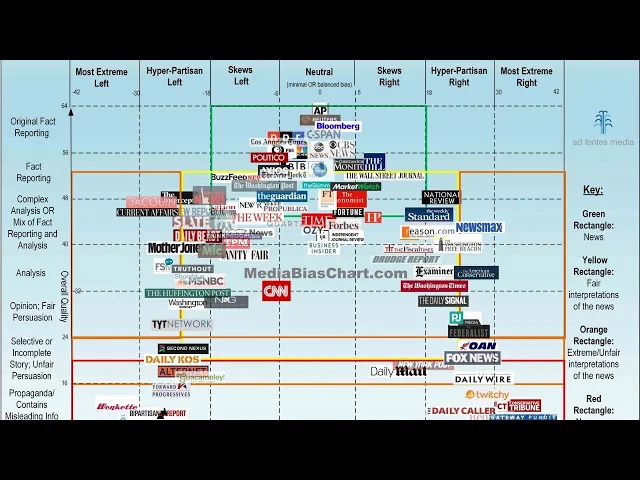
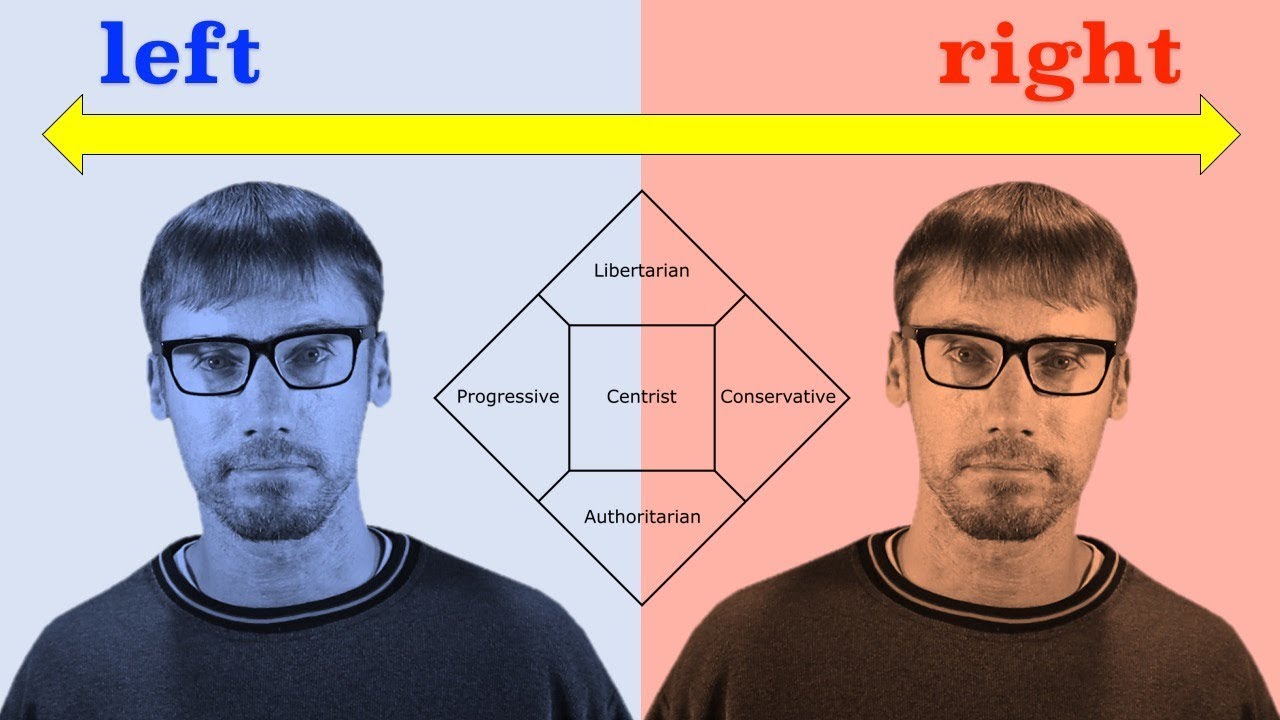
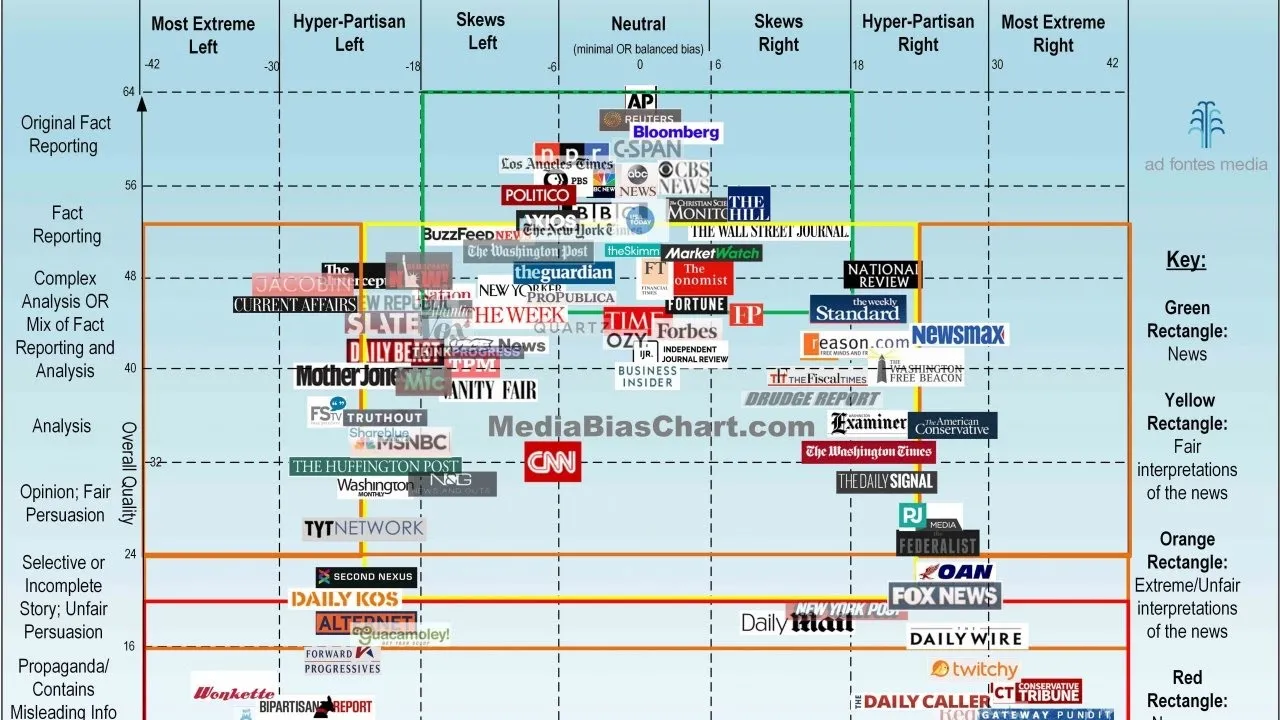
is overabundance and proliferation of online news sources and most of it is in the area of analysis and opinion if people understood that the sources they're consuming are actively making them angrier and polarizing them and they may choose to consume less of that Otero's chart categorizes the media landscape using two domains facts versus editorializing and left versus right leaning views it's a two dimensional taxonomy so the vertical axis is quality so in general the better quality best quality stuff is at the top and the lowest quality stuff is at the bottom the horizontal axis is
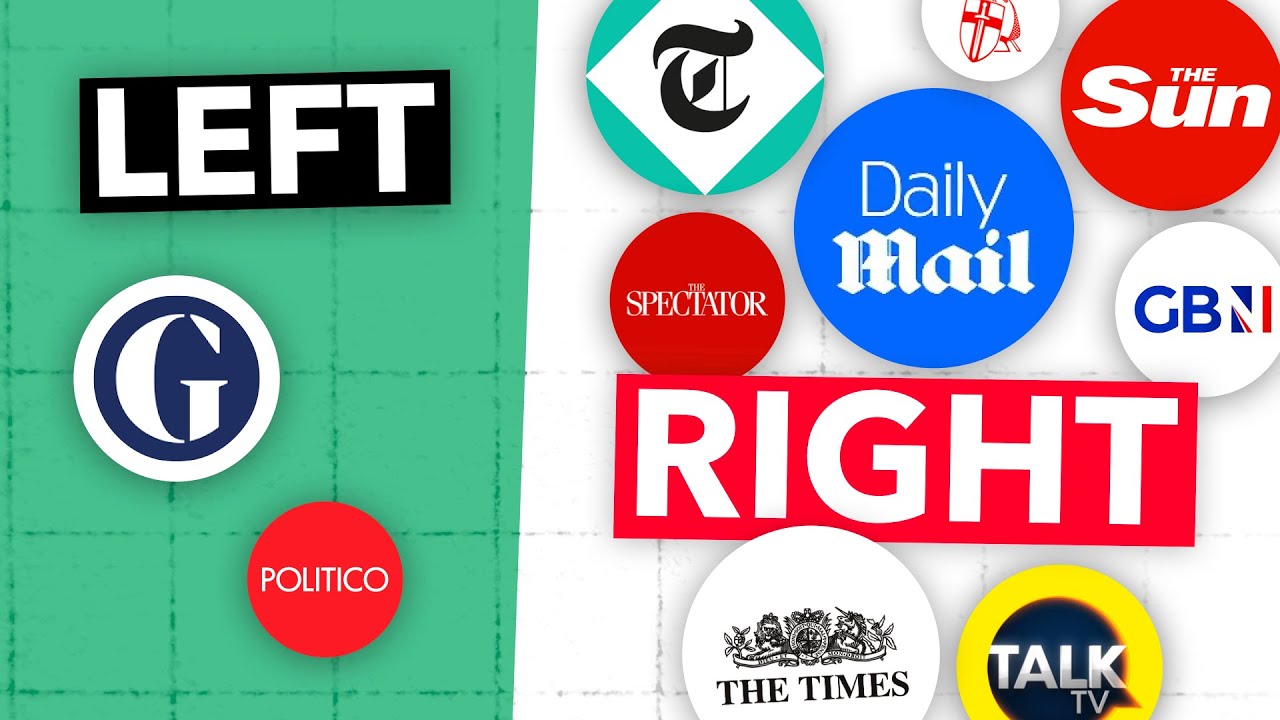
bias so you have your neutral or balanced stuff in the middle viewers will recognize big names like CNN and Fox News but Otero says she's starting to get request to add smaller outlets to extreme partisan sources like Breitbart and Wong ket appear at the ends of the axis as a whole the chart provides a frame of reference for a news industry that is growing increasingly partisan so much of the you know the content that we consume right now is you know telling you how you should feel about a subject the stories like when they break
and then what they are the spin on them that takes on them 24 hours later are really revealing Believe It or Not social scientists don't think the polarized media climate has done much permanent damage to democracy yet but it's not exactly harmless either an analysis of Nielsen data from the knight foundation shows a widening gap between liberals who they trust the media and conservatives who say they don't the Pew Research Center finds that the most partisan among us are more likely to be steering the broader political conversation a comprehensive chart of political media then could
serve as a sort of guide for those who want to make up their own minds or to hero taro tell it what the media bias chart is is an anchor of course Oh taro is just one person with her own biases and blind spots I've taken into account certain criticisms I have actually made adjustments to certain sources especially from some of the really earlier versions if the sample was really unfair that I selected and they can go back and look at that and you know take those comments into account especially if I get those comments
from a lot of the readers of that source and other sources until now Oh taro has mostly managed the project herself but she recently finished crowdfunding more than $32,000 to hire more analysts vet more sources and make her charting process more transparent right now there are a hundred and four sources we'd like to include you expand to 200 300 400 sources pretty soon on the an interactive web-based version but there's a limit to what I can do on my own I've developed really robust methodologies really granular methodologies the headlines a picture graphic the lead or
the chyron I mean the individual sentences for quality and bias I've just started recruiting a team of analysts to help me do that I just really felt a responsibility to improve that as much as I could because people are relying on it and I just fundamentally feel that if you're going to put out information that influences people which this does then you have a responsibility to make it as good as you can in the future Otero hopes her chart could be a sort of Consumer Reports for media ratings both in terms of its comprehensive reach
and its reputation as a reliable guide I want to make the news consumers smarter and the news media itself better and those things are both really lofty but I think it's doable there are folks who just if they had this information would make better choices as consumers of media first and then citizens