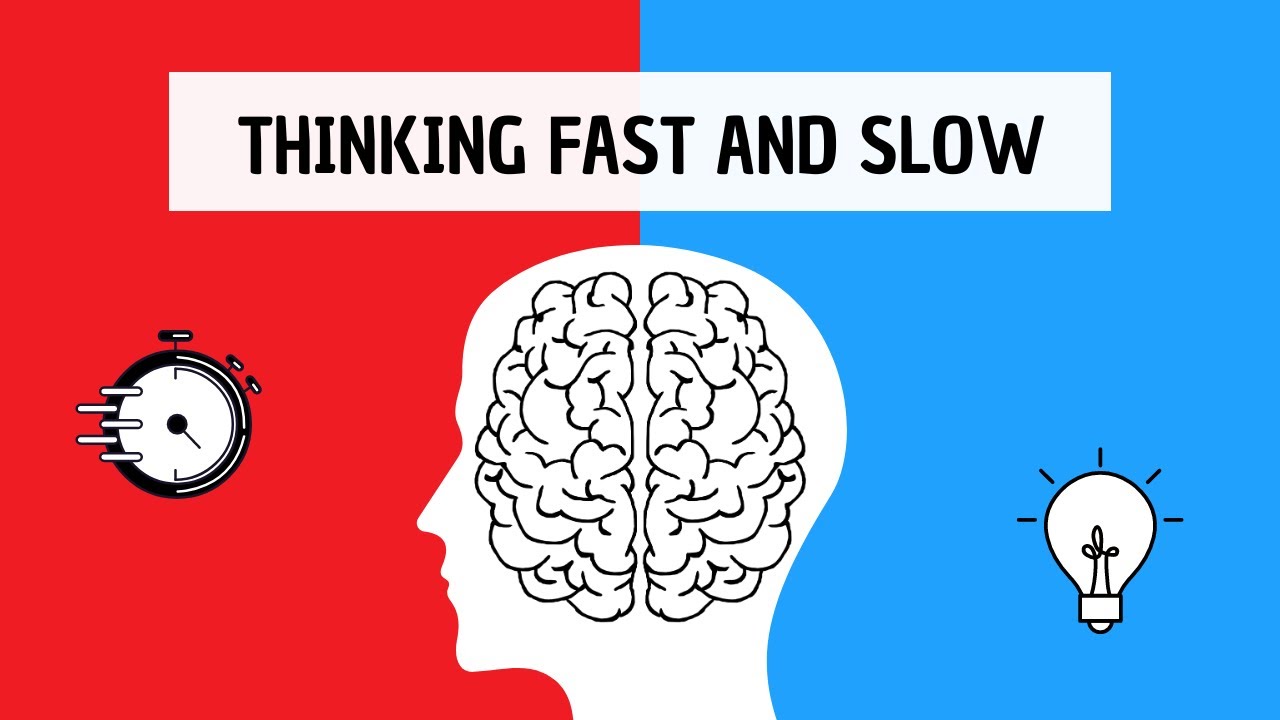
[Applause] all of us are familiar with two ways ideas come to mind so if I say 2 + 2 something came to your mind if I say 17 * 24 then nothing came to your mind and you probably would have to produce it you'd have to generate it in a slow and effortful process so some thoughts are like 2 plus two and this is in some cases how a physician would make a quick diagnosis all of that is what I call fast thinking or system one thinking the 17 * 24 is one of many examples
in which we reason slowly and effortfully and that is slow thinking or system two thinking and when I speak of system two I speak of that of effortful computation and also of monitoring and control because self-control is another effortful op operation system one the automatic kind of thinking is something that clearly grew out of our animal Heritage I mean animals uh uh perceive the world and they perceive causality and there is a great deal of understanding of the world that that is shared system to is distinctively human and and it is our ability to reason
and our ability to delay gratification and to control ourselves there's a great deal and that is evolutionarily late and you know it allows us to do great things but system one is mostly in charge of what we do most of the time whenever people remodel a kitchen uh now they and and they have an idea of how much they're willing to pay and they have an idea of how much it will cost they may also know that for most people it costs on average about twice as much as they originally planned but you don't feel
that the supply to yourself so you have that knowledge which somehow is disembodied and is part of you know it's it's available to you you know it but you don't apply it and that is that failure to apply it is characteristic of the system one it doesn't use statistics very well and it doesn't apply statistics to specific cases a great deal of prejudices you know is built in and and to some extent is uncontrollable I mean it's something that we have to that we have to accept as a fact of life we have stereotypes about
everything we have stereotypes about tables and certainly we have stereotypes about about social groups now here is clearly a case where you would want system 2 uh to be in control and because you may not want to say everything that's on your mind and you may realize and try to confront your your own stereotypes and indeed in in some cases people people can improve themselves by thinking can improve their stereotypes by thinking more deeply so that even their initial reactions will be modified organizations and institutions can improve the way they make judgments and decision making
by searching for biases and by trying to reduce the impact of biases on their decisions and that is a process of self-critique I call it quality control over decisions which I think is feasable within reason you want you don't want too much of it because you don't want what is called paralysis by analysis but within reason there is room for many organizations to improve what they do by a form of quality control if you ask what is the role of biases in the crisis of 2008 there's one place where we certainly can can see it
and this is the overoptimism of people who bought those mortgages that they could not afford so they were making a classic mistake then there was a lot of optimism among the bankers who packaged those things but that is more explainable by standard economics because they had an incentive to do those things but the people who bought the mortgages they were biased they were wrong they were making a mistake


![Daniel Kahneman - The 4 BIGGEST BIASES That Are Blinding You From Reality [w/ Nassim Taleb]](https://img.youtube.com/vi/EDyOS69w720/maxresdefault.jpg)