Hi, I'm Professor Timothy Moore. This is the course Christian Spirituality. This is Unit 10 on a gospel-shaped, gospel-ready life.
When I was putting together this course on Christian spirituality, I thought about three different essential pieces of the Christian life and the sections that I wanted to speak about to cover those three essential sections. The first thing is what Christ has accomplished for us. This is just by way of recap.
We had four lectures on what Christ has accomplished for us. We talked about our great need for Christ, then rescue and restoration, and the prophetic promises. We talked about four human responses to God, and then we discussed what happens the moment we receive Christ into our lives.
In this second section, we focus on what Christ wants to accomplish in us—that's our transformation. The first section is salvation, and the second section is transformation. We had four lectures there: a new identity, a new outlook, a new relationship, and a new purpose.
Then, the third part is what Christ wants to accomplish through us. Last week, we looked at a Spirit-empowered life; today, it's a gospel-ready life. Next week, it will be how to unleash hope, and the fourth lecture in section three is about a life of kingdom impact—a meaningful life of purpose with God.
So, we're talking today about a gospel-shaped, gospel-ready life. What I'd like to start with is the nature of the gospel. I want us to refocus on the nature of the gospel.
In order to have a gospel-shaped, gospel-ready life, we have to think about the nature of the gospel. As I've said before, the gospel is not good advice; the gospel is good news. From the very beginning, when the angels came to the shepherds in the field, the announcing angel (we assume that's Gabriel) said, "Do not be afraid; I bring you good news of great joy that will be for all people.
Today in the town of David, a Savior has been born to you; he is Christ the Lord. " I want to read you something that Dr Timothy Keller said about the gospel as good news, not good advice. He said, "Advice is counsel about something to do, and it hasn't happened yet.
If somebody gives you good advice, that's something that you can do in the future. News is a report about something that has already happened; news is about something that happened in the past, while advice is about something that is a potential in the future. But with news, you can't do anything about it; it's already done.
All that you can do is somehow respond to it. " Think about this: A king goes out to battle against an invading army to defend his land. If the king defeats the invading army and he sends back to the capital city messengers, they're a very happy group, a very happy envoy.
He sends these messengers back to convey the good news that the enemy has been defeated. They come to the town square and say, "The enemy has been defeated. The battle is won; it has been accomplished.
Therefore, respond with joy and go about your life in peace. " So, the victory, the accomplishment, the joy, and the peace—that's something that has been done for the people; it's not something that the people have to do for themselves. It's good news.
But what if it was good advice? If it were good advice, we would assume that the invading army has conquered the king and his armies and broken through. Instead of having those bearers of good news, there would be military advisors who would go back and say, "If you can fight with a sword over here, if you're an archer and can shoot a bow, get over on that side.
If you're a horseman, come over here because we're going to have to fight for our lives. " Dr Martin Lloyd-Jones said that every other religion besides authentic biblical Christianity sends military advisors to people, not heralds of good news— not messengers of joy and peace and good news. In essence, he says every other religion says, "Here are your rights, here are your rules, here are your rituals, here are your laws, here are your regulations.
So, it's swordsmen over there, archers over there, horsemen out there. Get ready to fight for your life. " There is a vast difference between good news and good advice, and it touches on our motivation in our lives with Christ.
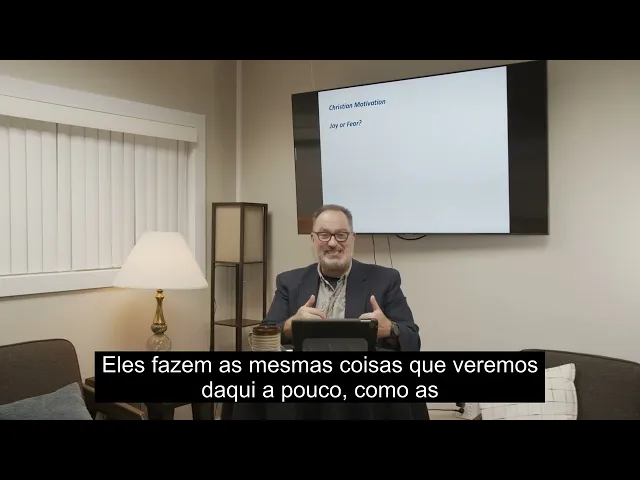
Our motivation, our Christian motivation, is either joy or fear, because there are Christian churches that operate like military advisors, and people literally live in fear. They do the same things we're going to see in a moment as the people who are living with good news and joy and peace; they do the same things for completely different reasons. Timothy Keller says we send heralds; we send messengers, not military advisors.
Isn't that clarifying? It doesn't mean there's nothing to do. My goodness, both messengers and military advisors get an enormous response; however, one is a response of joy, and the other is a response of fear.
As Dr Jones says, all other religions give advice, and they drive everything you're doing on fear. So, when you hear a truly gospel message, the word gospel—it's the Greek word "euangelion. " U (epsilon) or Upsilon in the Greek language is good, and "angelos" is news.
A message: "So, 'yalan' means good news. It's good news, and so if someone is truly preaching the gospel, it's not about good advice; it's good news. It is the message that our salvation has been accomplished, the enemy has been defeated, and we can live our lives with joy and peace.
We may want to obey the Ten Commandments, we want to pray, and we want to please the one who did this for us. However, in military advisor-type churches, they're saying in essence that you're going to have to live a really, really good life if you have any hope of being accepted by God and going to heaven when you die. So what are you going to do?
You're going to want to keep the commandments, you're going to want to pray, and you're going to want to try to please the one who has done good things for you. So it looks the same; it looks exactly the same. But they're doing it for radically different reasons.
The first one is doing it out of love and gratitude; the second set of people are doing it completely out of fear. So, in the end, in the short run, they look alike, but in the long run, one type leads to burnout and the other type leads to peace. If we're in a military advisor-type church or a group of people who claim to follow Jesus, we're eventually going to burn out because He did not come and shed His blood so that we could have a long list of what is required or forbidden.
He came and shed His blood and conquered Satan, hell, death, and the grave so that we could be free, so that we could have joy. He said, 'I've come that you might have joy and that your joy might be full. ' He said, 'I've come that you might have abundant life.
' He talks about hope and joy being pressed down and running over. This is why I came; this is the message of Jesus. We're not supposed to live our lives as Christians in a way that burns us out; we're supposed to live our lives in a way that brings us peace because we believe what has been accomplished for us.
We believe the good news. So that's the nature of the Gospel. The nature of the Gospel is that it is not good advice; it's good news about what Christ has accomplished on our behalf to reconcile us to God, to give us a future that is certain in heaven, and to have this growing relationship with God that brings peace, joy, and hope in our lives.
Now, let's look at how the gospel shapes our lives. The gospel teaches us to sacrifice for the well-being of others. We don't naturally operate that way; we need the example of Christ and what He did for us to teach us how to love others well and even how to love God well.
In 2 Corinthians 8, verse 9, it says, 'You know the generous grace of our Lord Jesus Christ: Though He was rich, yet for your sakes, He became poor so that by His poverty, He could make you rich. ' Now, it's not talking about your billfold or your bank account. What it's talking about is Jesus leaving the indescribable riches of heaven to come to this earth, to be humbled to the dust, to literally to the womb of a virgin maiden—the one who spoke everything into existence and held it together by the word of His power gave up even His ability to speak and became dependent on a virgin maiden.
That is the incarnation of Christ—God coming in the flesh. So, He gave up indescribable riches to become poor. Jesus didn't come to New York City in 2024; He came to a backwoods town in the Middle East, to a young virgin maiden, at a time when there was no electricity or indoor plumbing, and His earthly father was a carpenter.
He left heaven to come to that so that we, through His poverty, may become rich. Every single person who receives Jesus receives forgiveness, and heaven is indescribable riches in the presence of God. So it's through His poverty that we are heaven-bound; it's through His poverty that we have the Holy Spirit in us; it's through His poverty that we have His teaching and the truth that sets us free.
Okay, so how does the gospel shape a life? I have two illustrations that I want to focus on. The first one is a true story.
There was a corporate executive who went to a church of a mentor of mine. He was very competent in his field, highly respected, and had tons of credibility. He hired a young lady who had some experience but not in the particular methodology of his company, and she made a huge mistake her second week on the job.
The other executives of that company wanted to fire her, but her boss, who hired her, said, 'No, blame me; I should have trained her in this right off the bat. It's my fault. Give me another chance to equip her for this; she'll do great.
' When she heard about that, she was amazed that he took the blame for her. She told him that in the other two companies that she had worked for, the executives were very happy to take credit for the successes of those under them, but no one ever took the blame; they always shifted blame away from themselves. She asked him, 'Why did you do this?
'" A bit nervous to explain because he had not been a follower of Christ very long—uh, less than a year—and so he said, "Don't worry about it. " And she goes, "I cannot worry about it; I need to know why you did what you did. " And so he said, "Well, I just want to remind you, you're being persistent.
You asked, so I'm going to tell you. " He said, "My church teaches that you're supposed to live the gospel, and the gospel means good news. I chose to believe it, and I'm trying to live it.
It’s all based on Jesus Christ taking the blame for me so that I can be forgiven and accepted. Since he did that for me, I'm supposed to do that for you. " You know what her response was?
"Where do you go to church, and what time does it start? " That Sunday, she was in my mentor's church. The executive didn't tell the pastor that story; this young lady told the pastor that story.
She explained how him living out his faith resulted in her wanting to know more about Jesus and coming to church. So that's a good example of a gospel-shaped life. How do we live out what Jesus did for us?
Another example is from my past. I don't even remember how I heard about these needs, but I found out that there were two homes for battered women and children. They kept these homes a secret because they had to protect the women and children from the abusers.
Someone who had worked with these homes told me that they were in disrepair. So I mobilized some groups of people I knew I could trust and who had some experience building. We approached the people who ran the homes and said, "We want to fix everything that's broken in these homes; we want everything to be in good condition.
" The home that I went to and was working on was one where I was rebuilding the deck. The deck had rotten boards; they couldn't even step out that door without it being extremely dangerous. I had on my church t-shirt that had our church logo, and on the back, it just says, "Serving our community.
" I was being watched while I was building the deck. Eventually, a young lady stepped out and said, "Why? " I said, "Excuse me?
" She said, "Why are you doing this? " My response was along these lines: "We believe that our faith is demonstrated through the way we love, and our love is demonstrated through the way we serve. We want our faith to be visible through our acts of service.
Our faith in God, His love for us, motivates us to love others, and that’s why I'm here and the other people are here doing the repairs on this house that’s serving you and your family. " She responded in a way that I did not anticipate. As soon as I said that, she lifted her face toward heaven, raised her hands, and said, "Okay, God, I'm listening.
" Then she looked back at me. I said, "You really want to know what God would say to you right now? " She said, "I desperately want to know what God is saying to me.
" I shared, like I've mentioned, the three circles. I just had a gospel conversation because I was gospel already. I had a way to share the good news of Jesus, and after I shared what Christ had accomplished for her and the fact that she could respond and receive that gift that He wanted to give her, she prayed to receive Jesus.
Then she said, "My sons,"—she had a son I think that was 10 and a son that was 12—"my sons really need to hear this from someone like you. " What I think she meant by that is, you know, their father, her husband, was their abuser. She wanted her sons exposed to a good man or good men.
I ended up sharing with the two sons, and they too prayed to receive Jesus. The following Sunday, I baptized all three of them at the church. Deciding that we're going to live out our faith in a way that serves others was a sacrifice of time and energy.
All of us were contractors, and we were giving up a day that we could have been making money to invest and demonstrate our faith, meet needs, and heal hurts in the name of Jesus. Living that way opens doors for the gospel, and that's exactly what Jesus taught in Matthew 5:16. He said, "Let your light so shine before men that they may see your good works and glorify God in heaven.
" Ephesians 2:10 that I mention often says, "We’re God’s masterpiece, and He created us for good works that He marked out long ago for us to do. " God has some works for us to do. The works are works that demonstrate the gospel; it is serving and sacrificing for the well-being of others, which is what Jesus did.
Jesus’s entire life was about serving us. He said, "The Son of Man has not come to be served but to serve, and to give. .
. " His life, a ransom for many; and so, serving and sacrificing is living a gospel-shaped life, and it opens doors like nothing else—like nothing else. Um, people almost always, in the context of serving and sacrificing to show the love of Christ, almost always have people asking why we're doing it.
That's 1 Peter 3:15, which says, "Always be ready to give an answer to those who ask about the hope that is in you. " And that "ask" in 1 Peter 3:15 is earned through serving and sacrificing for the well-being of others. Then, we have to be gospel-ready.
Being gospel-ready, um, for me personally, I can say this, and for many others that I've trained, we need some methods for sharing the gospel, or we need at least a method that makes sense for us personally to share the gospel. One of the first methods that I was exposed to, which I used often, was the Four Spiritual Laws. Um, I believe it was John Wesley who developed the first set of the Four Spiritual Laws.
They are four questions that guide a conversation about the Gospel of Jesus. Then, Bill Bright, um, who started Campus Crusade for Christ—it's now called Crew or Cru—refined those questions, and they're published as the Four Spiritual Laws. Lots of people are still using the Four Spiritual Laws to share the gospel today.
The second method that I learned, um, because I was a teacher at the Billy Graham Training Center, is Dr Billy Graham's process called Steps to Peace with God. Uh, it is also a series of statements and questions with the illustration of a bridge because, um, 1 Timothy 2:5 says there is one God and one bridge between God and people: the man Christ Jesus. Steps to Peace with God, as you go through it, actually builds a bridge out of the cross and talks about how people can cross that bridge to God by faith.
Um, a method also that I used in the past is called the Faith Method. Faith is an acronym for Forgiveness Available; it's impossible to come to God except through Christ. We have to turn from our sinful ways to Christ, and we have the promise of Heaven.
Um, the methodology that I have landed on and that has lasted um, a very long time—the methodology that I still use regularly—is called the Three Circles. Um, the other methods of sharing the gospel that I have learned focus on putting our faith in Christ and basically getting to Heaven because we put our faith in Christ. The Three Circles is different because it is more Great Commission-focused.
The Great Commission is Matthew 28:18-20, where Jesus told us to go and make disciples of all the nations. And so, it is the only guide that I have found that speaks to our purpose and growth as disciples of Jesus Christ. So, it talks about why we need Jesus; it talks about what Christ accomplished; and then how to grow back toward God's design for our lives.
Then, go back into brokenness, serving and sacrificing to meet needs and make our faith and love visible and valuable through our service. And so, um, I like that particular methodology best because we're always— we're not just saved from something; we're saved to something. We're saved from the effects, the damning effects, the destructive effects of our sin, but we're also saved to something.
And what we're saved to is a growing and going relationship with God. So, the gospel is about relational reconciliation to God, and that relationship is designed to grow like any other good relationship grows through communication and quality time. If you boil it down to its minimums, you grow in your relationship with God through good communication and time with God, doing things together—not just having a devotional time, but literally walking through your day with an awareness of God with you.
So, you're doing your day with God, and your prayer life becomes as natural as breathing because you're consciously aware that God is with you at all times. You can begin talking to Him at any moment, because that is reality. The Holy Spirit comes into our lives when we receive Jesus, and the Spirit of God, the third person of the Holy Trinity, is living in us.
He's God's presence, power, and counsel in our lives. And so, He's not just beside us; He's within us, and you can't get any closer than that. And that's part of the beautiful blessing of the gospel: we get the Holy Spirit.
So, why should we live a gospel-shaped life and a gospel-ready life? Three reasons—at least three reasons. The first is love; the second is gratitude; and the third is compassion.
So, um, why should we let love motivate us? Because we've received it. We've received love, and the Bible says what we receive from God, we return to God.
1 John 4:19 says we love God because He first loved us. The second reason to live a gospel-shaped life is gratitude. Colossians 1:12-14 says, "May you be filled with joy, always thanking the Father.
" There's the gratitude! He has enabled you to share in the inheritance that belongs to His people who live in the light, for He has rescued us from the kingdom of darkness and has transferred us into the kingdom of His dear Son, who purchased our freedom and forgave our sins. When the truth of that passage, Colossians 1:12-14, works its way down into the gears of our lives, we should.
. . Well up with gratitude toward God and always thank the Father for what He has done.
That love and that gratitude should be motivation to share what Christ has accomplished, not just for us but for everyone. The third thing is compassion for others. In Matthew 22:37-40, we actually see all three motivic motivations: love, gratitude, and compassion.
In verse 37, Jesus replied, "You must love the Lord your God with all your heart, all your soul, and all your mind. This is the first and greatest commandment. A second one is equally important: Love your neighbor as yourself.
The entire law and all the demands of the prophets are based on these two commandments. " So love, love, love—compassionate love, loving your neighbor as you love yourself. The word "neighbor" in the biblical languages is not just the person who lives next door to you, as we use the word today.
The word "neighbor" refers to anyone and everyone around you. The Bible says to love your neighbor as you love yourself. If we love our neighbor, then that level of compassion and concern for our neighbor should compel us to want to share the good news that Jesus has died for their sins.
He has accomplished their salvation; they can be reconciled to God and have a relationship with Him—a growing relationship through communication and quality time with God. They can also have the assurance of heaven when this life is done. So, are we ready for that kind of life?
Are we ready for a gospel-shaped life, a gospel-ready life? Let's pray that we can have that kind of life. Father, thank You.
Thank You for loving us first. Thank You for demonstrating Your love for us, as Your Word says in Romans 5:8. It wasn’t because we were righteous; it was because we were sinners and needed a Savior that You sent Your Son, and You did it out of love.
Your Word in John 3:16 says, "For God so loved the world that He gave His only begotten Son, that whoever believes in Him shall not perish but have everlasting life. " Thank You for demonstrating Your love for us by sending Jesus to be our Savior. We're grateful, God, for that.
Fill our hearts with compassion and concern for people around us who don't know You. Help us see them with great worth and value because they are created in Your image for Your glory. Let us help them have the opportunity to know You and to live out Your purpose for them in this world.
I pray this in Jesus' good name. Amen. When we train missionaries, we use this phrase: "Earn the ask.
" What we're talking about is 1 Peter 3:15, which says, "Always be ready to give an answer to those who ask about the hope that is in you. " The answer, the message that makes the difference, is verse 18, which says, "Christ suffered once for sins, the just for the unjust, in order that He might bring us safely home—safely home to God. " He was put to death in the flesh and made alive by the Spirit.
That's the gospel: the death, burial, and resurrection of Jesus. And why? So that you can be forgiven—the righteous taking the place of the unrighteous, so that we can someday go safely home to God.
Man, death statistics are alarming: it’s one out of one. The death rate never increases; it’s one out of one. Jesus came so that your sins could be forgiven, so you could be transferred into the Kingdom of Light, so that you could know, as Ephesians 2:10 says, that you are a masterpiece of God.
Oh man, that’s a beautiful word in the Greek language: "poema," and it’s where we get the word "poetry. " I was visiting with Jeff Gallagher in the hospital—by the way, he’s having surgery tomorrow, and it's his birthday today. He’s probably listening to this.
Happy birthday, Jeff! We were talking, and he asked me what I was going to be preaching on Sunday. I started talking to him about "poema," the masterpiece.
To understand the etymology of that word is to recognize it has imaginative beauty. Some translations translate the word as craftsmanship or workmanship; we are the workmanship of God, the craftsmanship of God. I thought about the mission work we had done in Asia, especially in Thailand, where every piece of wood is an opportunity for them to carve something beautifully magnificent.
They carve all these elephants and flowers; everywhere is carved. There would never be a wall like that in some place. It’s poema—it’s imaginative beauty.
Why am I talking about that? I’m not yelling at you; I’m yelling for you! You are the imaginative beauty of God.
That’s who you are. That’s what you are. You’re not just a fearful failure in life that is going to end in finality; you are the eternal imaginative beauty of God, and your soul is going to last forever and ever.
That’s Ephesians 2:10: you are created for the good work that He has for you. Remember, we said that together: He has good work for you to do. It’s good work—translating the Bible for people, living the gospel.
Finish with this quick anecdote. Dave and Wanda Hofer are not here; they're on vacation. They're probably listening to this.
Forgive me, guys, but I'm embarrassing you. They raised their granddaughter, and their granddaughter was horribly, horrifically murdered by three men. I was with them in their home through that night when they were informed of that and cried with them, sitting on the floor in their living room.
Can you imagine how it felt in that household? Dave was having trouble getting out of bed. These are people who love Jesus, man—they love the Lord.
Dave was having a lot of trouble just getting out of bed, so I would go by regularly and just sit on the bed. I would sit on the bed and talk to him, pray with him, listen to him if he wanted to talk, or be silent if he needed to be silent. One day, I went, and Dave was out of bed with a smile on his face.
I said, "Dave, I didn't know if you'd been drinking. I didn't know what was happening; you're a different person! " He said, "I gave this to God, and He gave me an assignment.
" I said, "What's the assignment? " He said, "The Holy Spirit told me to forgive the men and share Christ—share the gospel with these men. " I asked, "And you're happy about that?
" He replied, "I wasn't at first, but I said, 'You're going to have to do this in me and through me; I can't do this. I want them to burn. '" He said the Holy Spirit just came in, and all of a sudden, he started finding joy in the assignment.
Guys, Dave and Wanda went to the courtroom with these three men, and Dave shared the gospel with them in a courtroom full of people. There was not a dry eye in the courtroom. These men have given their lives to Christ—the men who murdered his granddaughter.
Dave has met with them several times. Only God! That is a gospel-shaped life; that's the work of the Holy Spirit.