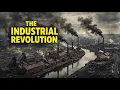
For 10,000 years, the rhythm of human life was dictated by the sun and the seasons. Tools were extensions of the human arm, and power was limited to the strength of a horse, the flow of a river, or the direction of the wind. A merchant in 1700 lived in a world fundamentally similar to that of a merchant in ancient Rome.
Everything was hand produced, local, and finite. But in the late 18th century, in the damp mineral-rich landscape of Great Britain, that ancient rhythm began to break. Humans learned how to extract power from the earth itself and scale it beyond anything seen before.
We call it the industrial revolution. Beginning around 1760, spreading to continental Europe and the United States, this event marked the transition from hand production to machines. It was the moment humanity unlocked the stored energy of millions of years and used it to drive the gears of a new civilization.
In the mid- 18th century, Great Britain was the leading commercial nation on earth. It controlled a global empire stretching from the Caribbean to the Indian subcontinent. It was a nation of merchants, entrepreneurs, and thinkers.
But more importantly, it was a nation sitting on a literal mountain of coal. This single resource, combined with an unprecedented entrepreneurial spirit, would spark a fire that would consume the old world and forge a new one. To understand how this revolution began, we must look at the five pillars of industrial supremacy that allowed Britain to outpace the rest of the world.
First was high agricultural productivity. The British agricultural revolution had already begun using mechanical seed drills and iron plows to produce more food with fewer workers. This freed up a massive labor force that was now looking for work.
Second was political stability and the rule of law. Unlike many of its neighbors, Britain had a legal system that protected property rights and encouraged the formation of joint stock companies. The third pillar was a geographic windfall.
Britain was an island with extensive coastlines and navigable rivers, making transport easy. Fourth was the scientific revolution of the 17th century, which had created a culture of experimentation and discovery. And finally, there was the unique combination of high wages and cheap energy.
In Britain, it was expensive to hire a man, but incredibly cheap to buy coal. This created a massive incentive to build machines that could do the work of humans. Before the factories, there was the putting out system.
In small villages across Lancashire, families worked in their own homes. Women would spin raw wool or cotton into yarn and men would weave that yarn into cloth on hand looms. It was a slow domestic life.
But the demand for textiles was exploding. Britain had developed a taste for white gold. The cotton initially Britain could not compete with the delicate handwoven fabrics coming from India.
Indian labor was five times cheaper and their quality was unmatched. The British government even passed the Calico Acts to protect domestic wool and linen from Indian imports. But instead of stopping the trade, these laws forced British entrepreneurs to innovate.
They needed a way to make cotton cloth faster and cheaper than anyone else. The first domino fell in 1733 when John K invented the flying shuttle. This simple device doubled the output of a weaver, but it created an immediate crisis.
There wasn't enough yarn to keep up with the looms. It took nearly eight spinners to supply a single weaver. The imbalance remained a bottleneck for decades until James Hargreaves stepped forward with the spinning jenny.
This wooden framed machine allowed a single worker to spin multiple threads at once. It was small enough for a cottage, but it was the first step towards the factory. Then came Richard Arkwright, a man who nurtured inventors and protected his patents with a legal iron fist.
He developed the water frame, a machine that was too large for a home and required the power of a rushing river. Arkwright built the world's first true cotton mill, proving that production was no longer a family affair. It was now an industrial process.
Within a few years, Samuel Crompton combined the best of both machines into the spinning mule, which could produce thread finer and stronger than anything made by hand. The result was staggering. In 1750, Britain imported 2.
5 million pounds of raw cotton. By 1850, that number had skyrocketed to £588 million pounds. Manchester, once a modest town, earned the nickname Cottonopolis.
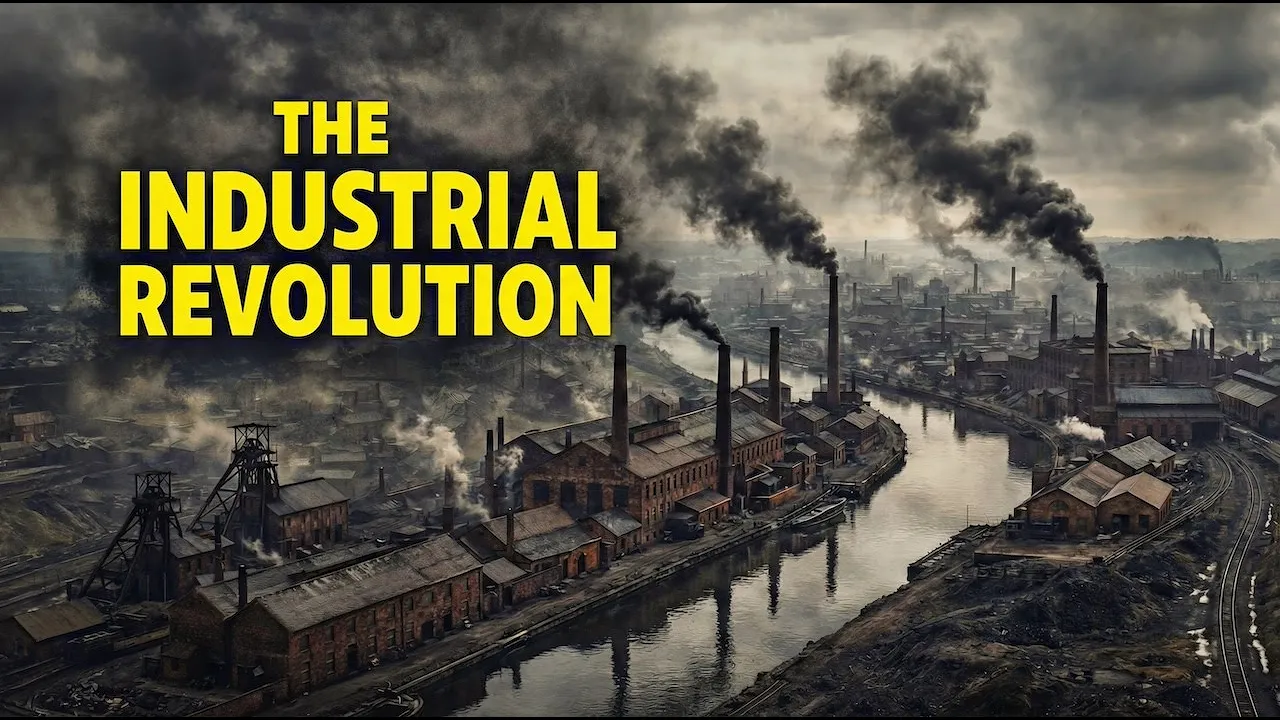
It was a city of 900 factories, a place where the sky was permanently bruised by coal smoke and the air hummed with the sound of thousands of spindles. But as the cost of cloth fell, the human cost began to rise. The quality of handwoven Indian cloth remained superior for decades.
But British machines were so productive they eventually undersold Indian artisans, destroying an entire industry and leaving millions without work. While the textile mills were spinning the world's clothing, another revolution was happening underground. As coal mines grew deeper to meet the demand for fuel, they faced a enemy, the water.
Mines were constantly flooding and traditional pumps were too weak to clear them. This necessity led to the birth of the steam engine. At the turn of the 18th century, Thomas Newcomen introduced the first successful piston steam engine.
These were massive hulking machines that sat at the mouth of mine shafts. They were incredibly inefficient by modern standards, wasting massive amounts of energy. But because coal was cheap at the mine, it didn't matter.
They opened up a great expansion in mining, allowing workers to go deeper into the earth than ever before. The true turning point came when a Scotsman named James Watt realized that the Newman engine was cooling its cylinder during every stroke which was a massive waste of steam. Supported by his business partner Matthew Bolton Watt perfected an engine that used a separate condenser.
This single innovation increased efficiency so much that his engines used only a fraction of the coal required by older models. By the time the Watt engine had been fully developed into a rotative type, it could be used to directly drive the machinery of a factory. For the first time in history, mankind was no longer dependent on the wind, the tide, or the muscle of an animal.
A factory could be built anywhere, not just next to a river. Steam was applied to everything. It blew the bellows of blast furnaces.
It hammered iron. and it drove the looms. The invisible army of mechanical workers was growing by the thousands of horsepower every year.
Steam also transformed the iron industry. For centuries, iron had been smelted using charcoal, which meant the industry was limited by the available wood. But earlier breakthroughs by the Derby family had shown that coke, a purified form of coal, could fuel blast furnaces.
This allowed for much larger furnaces and an explosion in production. As cast iron became cheaper and more available, it became a primary structural material. A famous early example is the iron bridge, a structure that signal to the planet that a new material had arrived.
New manufacturing processes such as puddling and rolling allowed for the production of structural iron at a fraction of the previous cost. Puddling was backbreaking, dangerous work. Few lived to see their 40th year, but their labor built the bridges, the factories, and eventually the railways that would knit the world together.
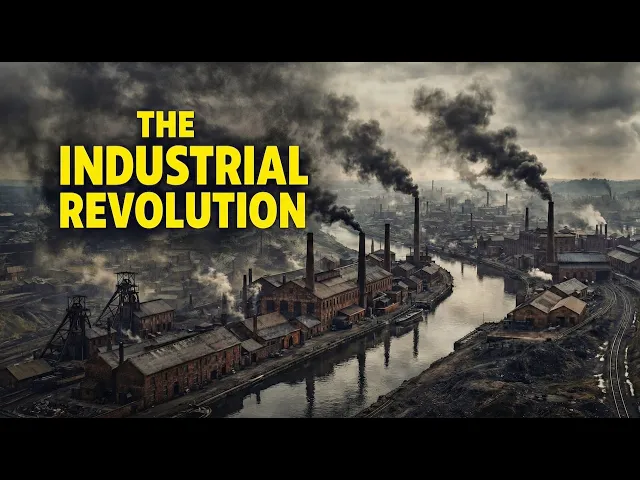
As the factories grew, the landscape of Britain changed forever. This was the era of massive urbanization. In 1800, only 3% of the human population lived in cities.
By the end of the century, that number was approaching 50%. People flooded in from the countryside, pushed by the enclosure of common lands and pulled by the promise of steady wages in the mills. Manchester was the template for this new world.
Its population exploded from 10,000 in 1717 to over 2. 3 million by the early 20th century. But this growth was chaotic and unplanned because people moved in so rapidly.
There was not enough capital to build adequate housing. Families were squeezed into overcrowded slums living in shanties with dirt floors and no sanitary facilities. Friedrich Engles in his observations of the English working class described the back streets of Manchester as a stony desert.
He saw rivers turned green by chemical waste and raw sewage. The stench of progress was a reality of daily life. Clean water was a luxury and diseases like cholera and typhoid were endemic.
In the mid 19th century, life expectancy in these industrial centers plummeted. In some districts, more than half of all children died before the age of five. Inside the factories, a new kind of discipline was enforced.
In the rural world, work followed the sun and the seasons. In the factory, work followed the clock. The factory system demanded that humans adapt to the pace of the machines.
Shifts lasted 12 to 14 hours, 6 days a week. Most of the workers in the early textile mills were unmarried women and children. Child labor was not new, but the industrial system made it more visible and more grueling.
Children as young as eight were employed as scavengers, crawling under moving machinery to pick up loose cotton or pieces who stepped into the frames to repair broken threads. They were paid a fraction of an adult's wage, sometimes only 10%, and were often preferred because they were small and easier to manage. This created a profound social crisis, leading to the first general laws against child labor, the factory acts, which eventually limited the working day and began the slow process of moving children from the factory floor to the schoolroom.
Yet despite the hardship, the industrial revolution also created a massive new middle class. For the first time, there was a growing population of businessmen, clerks, foremen, and engineers. These people lived in comfortable homes with carpets, mirrors, and the latest consumer goods.
They were the drivers of a consumer revolution where luxury items like sugar, tea, coffee, and fine Wedgwood china became affordable for the new urban elite. As production increased, the old system of muddy roads and slow river barges could no longer cope. The industrial revolution needed a way to move bulk materials, coal, iron, and cotton quickly and cheaply.
The answer was a massive expansion of infrastructure. First came the age of canals. High-profile projects like the Bridgewater Canal showed that moving coal by water was far more efficient than land transport.
The success was so great that coal prices in major cities fell by half almost overnight. This success inspired canal mania, a building spree that linked major manufacturing centers and allowed a single horse to pull a barge carrying tens of times more weight than a cart. But the canals were soon eclipsed by the most iconic invention of the era, the railway.
Railways were made possible by three things. cheap puddled iron for the rails, the rolling mill to shape them, and the high pressure steam engine. Innovators like Richard Trevithick and George Stevenson realized that if you put a steam engine on wheels and ran it on iron rails, you could move weight at speeds the world had never seen.
The opening of the first intercity railway between Liverpool and Manchester was a sensation. It linked a rapidly expanding industrial town with a global port. Passengers could now travel between cities in hours instead of days.
The railway broke the isolation of the rural world, allowed ideas to spread at the speed of steam, and provided a massive new source of employment. On the oceans, steam was doing the same. While improved sailing technologies had already boosted speeds, the arrival of the steam ship meant that global trade was no longer entirely dependent on the wind.
The world was shrinking. A merchant could now track the movement of goods with a precision that would have been unthinkable a generation earlier. For decades, Britain tried to keep its industrial secrets to itself.
Laws were passed to prevent the immigration of skilled workers and the export of machinery, but the fire could not be contained. British entrepreneurs were eager to expand and other nations were desperate to catch up. Belgium was the second country to industrialize thanks to its rich coal deposits in Wallonia.
The region transformed rapidly. transplanted English engineers built massive integrated factories that handled everything from raw materials to the finished steam engines. By the middle of the 19th century, the landscape mirrored the industrial valleys of northern England.
In France, the revolution was slower and more steady. French historians argue that the country didn't have a single takeoff point, but rather a gradual evolution through the 18th and 19th centuries. Germany, however, was a different story.
Divided into dozens of small states, Germany lacked a unified market. But the construction of railways acted as a catalyst. The railways linked the major cities and created a massive demand for steel.
By the time of German unification, the Ruhr Valley had become a powerhouse of heavy industry, eventually leading the world in chemical research and production. Across the Atlantic, the United States followed its own path. Initially, a producer of natural resources, the US began to industrialize.
After the arrival of skilled workers who had memorized the designs of British machines, the Americans added their own innovation, the American system of manufacturing. This was the development of interchangeable parts. Instead of each item being made by hand, machines produced precision metal parts that were identical.
This allowed for mass production on a scale never seen before. Even in the east, the revolution was taking root. Following the Meiji restoration, Japan made a deliberate decision to catch up with the west.
The government built railways, improved roads, and funded model steel and textile factories. Thousands of students were sent abroad to learn modern science and technology. By the end of the century, Japan had transformed from a feudal society into a modern industrial power.
Not everyone welcomed the new age. For many craft workers, the industrial revolution was a disaster. Skilled weavers who had spent years mastering their trade suddenly found themselves unable to compete with machines.
This despair led to the lite movement where workers began breaking into factories and smashing the machines that had stolen their livelihoods. The government responded with force, protecting the new industry at all costs. In the countryside, laborers destroyed the threshing machines that had made their labor redundant.
These were the screams of an old world dying. But from this unrest, a new kind of organization was born. The trade union workers realized that while one man was powerless, a thousand men could halt production.
Despite early laws forbidding them, unions slowly gained the right to strike, forcing improvements in wages and working conditions. In the world of ideas, the revolutions sparked a massive philosophical debate. Thinkers like Karl Marx witnessed the factories of Manchester and saw a system of exploitation that he believed would lead to a total social transformation.
On the other hand, the Romantics, poets, and artists recoiled at the dark satanic mills. They mourned the loss of nature and the traditional rural life, stressing the importance of the human spirit over the monstrous machine. Even the environment was beginning to push back.
The origins of the modern environmental movement lay in the response to the smoke pollution of the 19th century. Laws were eventually passed to regulate the toxic gases given off by chemical plants. Scientists began to trace the link between polluted water and disease, leading to the construction of massive new sewage systems that diverted waste away from the rivers that had become open sewers.
By the middle of the 19th century, the first industrial revolution had matured. But a second wave was coming, one that would be defined not by iron and steam, but by steel, chemicals, and electricity. The invention of the Bessemer process allowed for the mass manufacturer of steel, which was stronger and more flexible than iron.
It allowed for the construction of skyscrapers and giant industrial corporations. Petroleum began to replace coal and the internal combustion engine opened the door for the automotive industry. Electricity brought a new kind of magic.
Gas lighting which had allowed factories to stay open late into the night was replaced by the electrical grid. The rhythm of the city became permanent 24 hours a day. The age of mass consumption had arrived.
Shopping became a cultural activity with grand department stores offering a dizzying array of goods. The world was now connected by the electrical telegraph and literature for the masses was being circulated on an unprecedented scale. Looking back, the industrial revolution was the most important event in human history since the invention of agriculture.
It brought sustained growth and lifted the material advancement of the western world. For the first time, income and population began to undergo sustained growth. But it was also a revolution that demanded new ideas for managing human society.
It created an enormous economic division in the world and shifted the center of gravity from the east to the west. The landscape of our planet would never be the same. The quiet green fields were replaced by the grid patterned cities and iron arteries of a new era.
The legacy of the 18th century is embedded in the very DNA of our modern lives. We are the direct descendants of that first coal fired spark. The industrial revolution didn't just build our cities.
It fundamentally redefined what it means to be human, shifting us from a species that followed the slow rhythm of the seasons to one that demands the world move at the speed of a machine. We have inherited a world of boundless convenience and breathtaking speed. But we also carry the weight of the environmental and social shadows that progress left behind.
The industrial revolution began as a solution and ended by changing more than it intended. Revolutions arrive silently and by the time we notice we can't imagine life without them. I'm Tim watching the past so we can understand the present.
And together we keep history reborn. I see you in the next era.