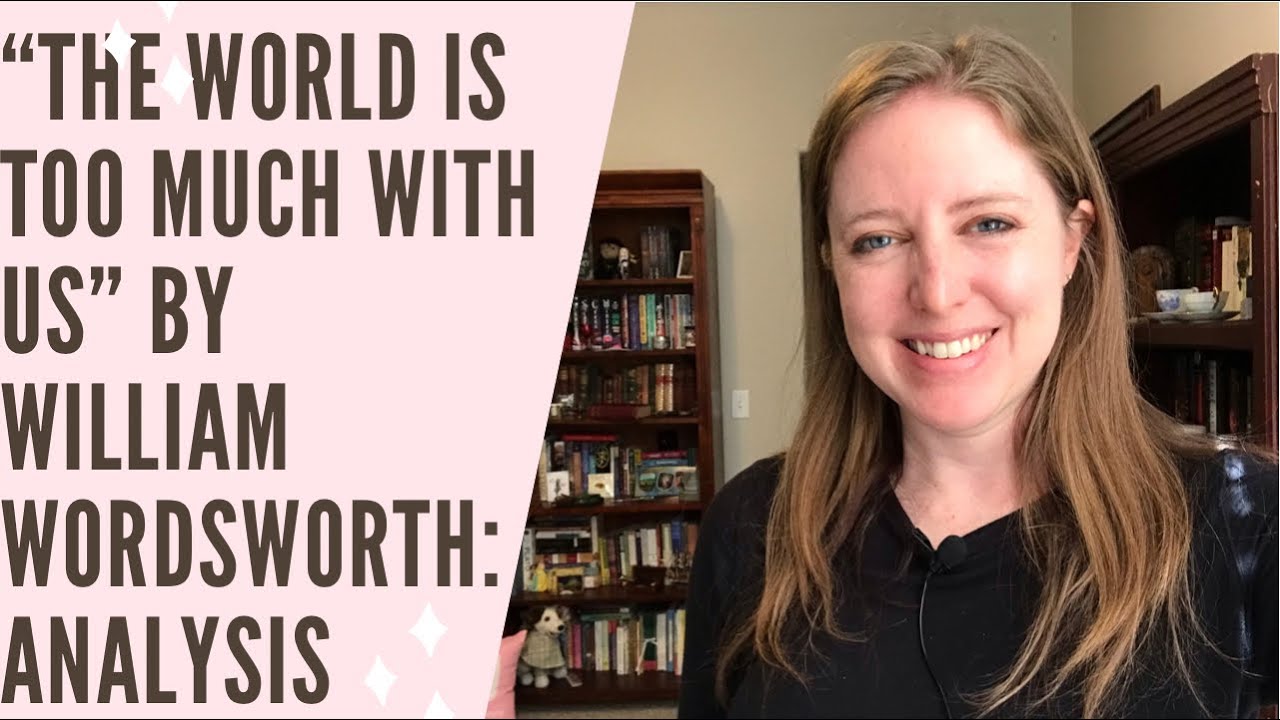
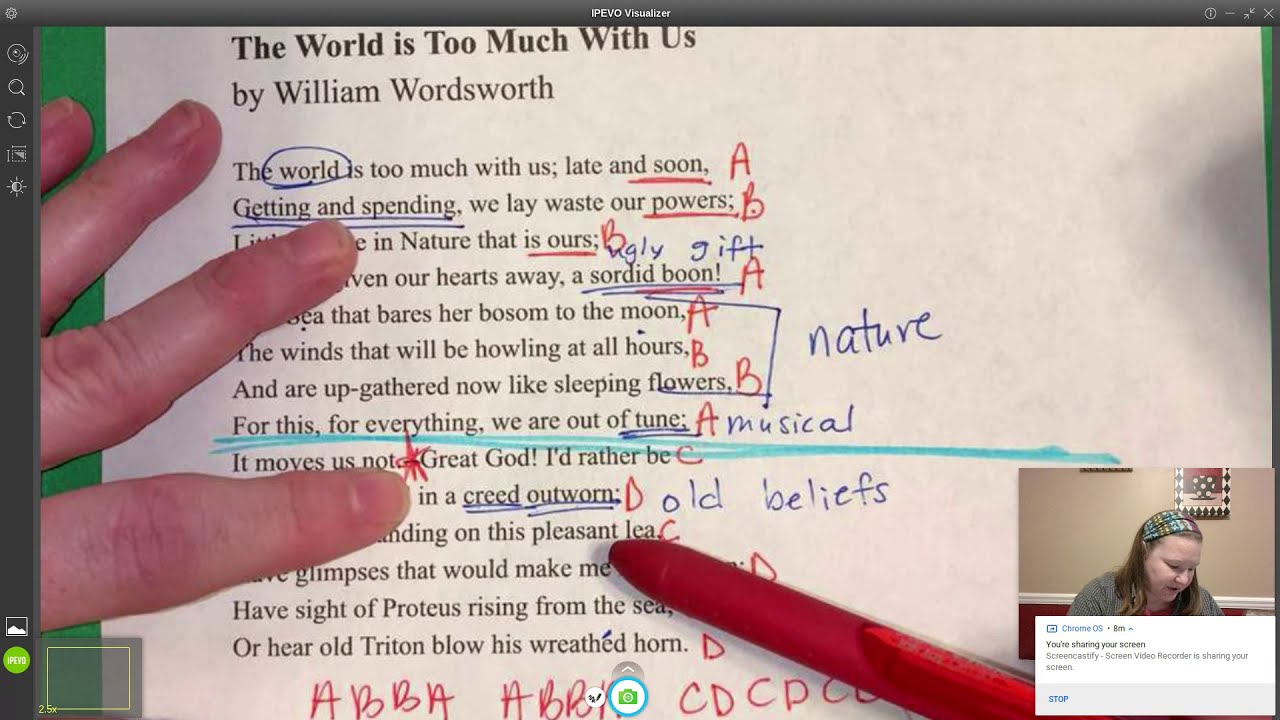
[Music] the world is too much with us is another one of William Wordsworth's Petrarchan sonnet s' composed of eight lines in a BBA a BBA form followed by a sestet of CDC DCD first published in poems and two volumes the poems speaker complains of his dissatisfaction and alienation from his own life wishing instead to have lived in a different moment when belief would be more possible he feels his life within the context of a modern economic system dominates and destroys his powers by substituting getting and spending for all of nature the poem begins the world
is too much with us late and soon getting and spending we lay waste our powers little we see in nature that is ours we have given our hearts away a sordid boon the first-person plural we and us in the poem indicate a shared alienation of people in general from simple truths and natural ways their hearts have been captured by the commerce of life around them and with nothing left of nature the powers of the sea and air have become lost people unmoved by life around them feel forlorn he can only imagine having lived in an
earlier time by a Creed outworn like that of pre-christian pagans the poet would have found inspiration solace and truth in visions of ancient gods and men in their ever-changing Majesties this poem contains some ideas and specific lines for which Wordsworth is most famous the opening lines are often quoted as an essential rejection of contemporary life by the Romantic poets modern life the poem intimates is crass and commercial paying no attention to truths that previously mattered this idea expresses deep alienation and even pain and having to live in a time that holds none of the ancient
beliefs and collective human knowledge that once acted as a beacon of hope for people the phrase we have given our hearts away makes it clear that the poet feels deep sadness and loss at living in this the poems time period Wordsworth's youthful idealism was based on his love of nature and hopes for human betterment during the French Revolution idealism that led him to conclude that the first years of the new 19th century were injurious for the well-being of mankind excessive industrialization and spoilage of the land convinced him there was little to rejoice over or hope
for he says that both Laden soon people have become powerless to recapture meaning for lives that are perilously out of tune yet the poet still stands in some pleasant maybe even unspoiled place near the wind and the sea where he can yearn poetically for ancient truths and beauty's he wishes he had lived to believe in the eternally changing powers of Proteus that ancient god of rivers and seas and Triton was another sea God who held the power to calm waters both figures being invoked by the poet shows a sliver of hope that better news may
yet come though surely it won't easily [Music]