We have gone over a great deal of history over the past month or so. We started with the Templars and then moved into the period of the Renaissance, a period in time which brought about great change in the world. That history was important in order to set the stage for these important subjects that need to be reviewed and discussed.
While I'm still compiling that history to discuss more history that should not be ignored, we are going to shift gears a bit and go back to a series that needed to be continued. When I first started this hijacker series, I explained from the beginning that the problem that most believers in this world face is that they have been exposed to the faith by liars and hijackers. Because of these frauds, the foundation of the truth and understanding of Yah for many people has not been fully seen nor accepted.
In part one, we started with the foundation from which the lies were started, which is the Roman Catholic Church. I explained that even though most people don't recognize it—despite not being Catholic and not following the doctrine of the Catholics—most of their doctrine has been influenced by the Roman Catholic Church. In that part one video, I explained that the Roman Catholic Church is a major influence in Christian doctrine, even though throughout history there have been splits and reforms in other groups that took the lead in regards to influencing the doctrine you may now currently hold on to; the Roman Catholic Church was the foundation of it, and their influence is always found tucked away in the faith of Christianity, regardless of your denomination.
Be clear and know this: to be prepared for our Father's Kingdom, the faith that you hold today must remove the falsehoods and foundational errors from the Roman Catholic Church. So, part one went into the foundation that the Roman Catholic Church laid, and they were properly identified as tares— the tares that Satan planted. Now, in part two, we went to the next hijackers, which were the ones who the world calls Jews today.
From their history, we saw that they hijacked and took on the identity of true Yasharel in order to be a part of the deception that leads the world to the beast. That video did go into the history of this, but you will not find it on YouTube; I removed it off of YouTube and placed it on my website in case you have not seen it. That was part two.
It's time to move on to part three, which will lead us in a lot of different directions. After this subject is completed, we must start to discuss the next agenda in the hijack because of our faith. This will deal with the long overdue subject of the Protestant Reformation.
This subject is such an important topic regarding our history, but like many other things, it is a subject most people avoid and do not discuss. Our indoctrinated education has taught us key concepts and key points about this period in time, but for the most part, most of us do not know what really went on. We know that the Protestant Reformation is the reason we are not Roman Catholics, and we know that this is the reason why people have taken on the label of Protestant Christians, but we really do not know all the details of the Reformation.
Now, this time period is looked at as one of the biggest events in the history of the world, but yet, ironically, it is a period that most people cannot provide many details about other than the name "Protestant Reformation," Martin Luther—who is noted as the leader of this Reformation—and that, as a result of this event, Protestant Christians began to grow. But after these points, you won't get much detail aside from this. The truth is that this event is an extremely important point in our history, and all of us who have been influenced by the doctrines of Christianity have been influenced by this event in history.
With that type of large influence, don't you think that it is something that we should all know the details of? Ask yourself sincerely: why do you think it is something that we do not? I want you to get this clear: when our enemy wants us to be against the truth, he aggressively attacks it with his own narrative in a way that we only know his side of the story.
On the flip side, when he is involved in an agenda, he will always point to it but always give us a small amount of information so that we cannot see him in the details. The Protestant Reformation is an example of this. The truth that every believer needs to deal with is that Yahusha prophesied that Satan would plant tares in the same field where Yahusha planted his good seed, and then they would grow together until the time of the harvest.
If you want to be a part of Yah's Kingdom, you must recognize the tares and make sure you are not being led or influenced by them. When I speak of hijackers, other than who I spoke of in part two, the hijackers are the tares that Satan has planted. It is important that you identify them.
So, we're going to discuss this long overdue topic and understand the Protestant Reformation and why you should understand this movement as another point of infiltration and hijacking of our faith by tares. We will first start with understanding Martin Luther. Let's begin.
Okay, so the Protestant Reformation—this is a subject I have prayed about getting to for a few years. I take this ministry very seriously, and I do not like dealing with topics that I have not studied. In depth, so I never wanted to rush into talking about this, but we are at the time when it must be brought out.
Now, before I discuss the Protestant Reformation, I think it's important to go back to part one and reinforce what I have said. If you have not watched this video, or you do not remember all that was said, I encourage you to go back and understand the Roman Catholic Church as the tares that they are, and understand why, as I said in that video, you have to understand that the foundation that the Roman Catholic Church built their faith from is tainted. It was a political move to bring back control over Rome; it was a practice of religious syncretism merging Rome's already pagan beliefs with that of what the apostles have spread in the faith of Yah.
They took control over the faith, and like I said many times, this is the beginning of when Satan planted the tares. If you do not recognize this, then you need to truly reexamine your faith. The foundation that the Roman Catholic Church was built upon was far from solid ground, and because of this, so many people's faith is tainted, and they are not aware because they rely more on the traditions and teachings of men rather than the Scriptures, even though they know that all Scripture is given by inspiration of Elohim and is profitable for doctrine, for reproof, for correction, for instruction in righteousness (that's 2 Timothy 3:16).
Your faith must be planted in good ground. The foundation that the church was built upon was not from Yahweh, for His majesty, nor His power, or His glory. Over the centuries, their influence has spilled into modern religion.
When you go over the history, people don't like it when you mention Christianity and Catholics together, but if you yourself have a problem with this, it's only because you have a problem with history, and you don't clearly know it. Back during these times, there was no distinction between the Roman Catholic Church and Christianity; it's the same thing—tomato, tomato. Please know the difference that you see today is a modern difference after the Protestant Reformation, which was just another ploy that tried to separate Roman Catholicism from Christianity, but this was for the modern-day deception.
Christianity should not be separated from Roman Catholicism because it was the Roman Catholic Church that established it. These are the tares that Satan planted in the same field Yahusha planted His good seed, and maybe in order to hold on to all your traditions and your mindsets that you have had all your life, you try to find a way to separate from it. But I strongly suggest you do not kid yourself; the Roman Catholic Church is the first hijacker of "the Way.
" The true faith is "the Way," and the Roman Church hijacked its authority, and they have been the main representatives of the faith of Christianity. The only reason your belief may differ is because Satan evolved his tactics for the new world and created more groups that were able to create more division, which is why we even have denominations. We're going to go over that, but we have to get through all of this first.
The point I am making is that if you mix your faith found in the Scriptures with the traditions of men, you are Catholic, which simply means universal. You may call yourself a Christian, but your label does not matter; it's your doctrine and principles of your faith that matter. And you see, that was what was spoken about in part one, and it's important that you understand this point as I discuss this topic because if you don't recognize the problem with the foundation, then everything else that I'm going to present to you will fly over your head.
Now listen again, I’m going to repeat this: I understand that many people cannot deal with the fact that I am labeling Christianity with Catholicism; you're trying to protect this label because you see the word "Christian" used in the King James Bible. Please understand this in regard to this ministry: I am not trying to protect your label; I am trying to protect the actual true faith that the apostles referred to as "the Way. " Christianity is a label; it has been used and abused, and it means a great deal of things that completely contradict the Scriptures and the faith that I am trying to protect and uphold.
I don't have a label for the faith besides it being "the Way. " This is what I'm trying to uphold, and if you have a problem with me attaching your label to this history, you might want to do some personal reflection because all I am doing is going over history and how it has been told for centuries. When the rest of the world hears about Christianity, they know of the wars, the conquering, the lawlessness.
Most don't actually know of the true faith. I separate myself from those labels, and I am following the Scriptures and practicing "the Way," and I'm following "the Way, the Truth, and the Life. " So listen, if you're caught up in labels and not the actual doctrine and beliefs of your faith, it is you that has the issue and the problem.
But okay, now that that's out of the way, let's discuss the Protestant Reformation. Now, like I said, I have been doing research on this topic for a few years, trying to put it all together in a way that makes sense. Through all the books that I have read on this subject, I will say that Eric Metaxas' book, "Martin Luther: The Man Who Rediscovered God and Changed the World," is probably the most in-depth and thorough book I have read on the subject.
It is longer than I would. . .
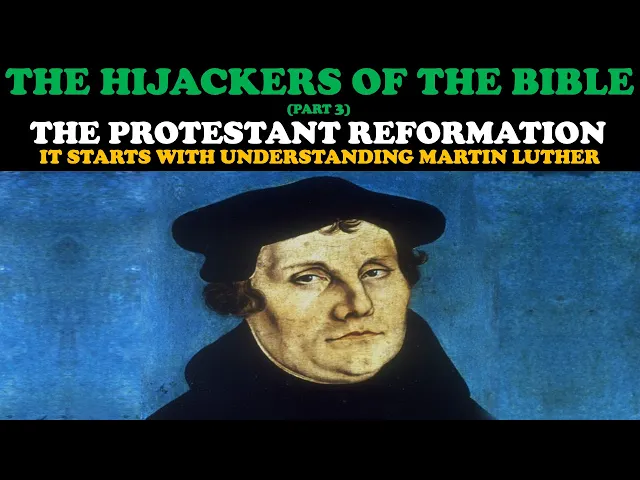
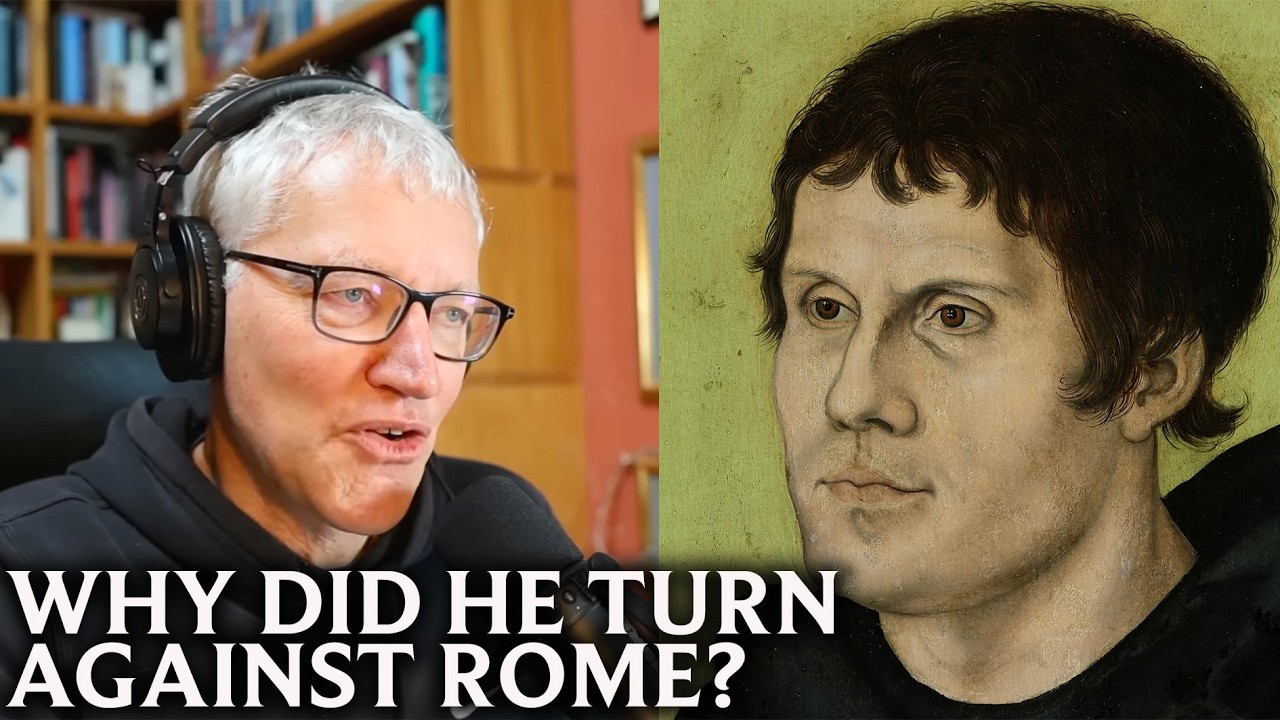
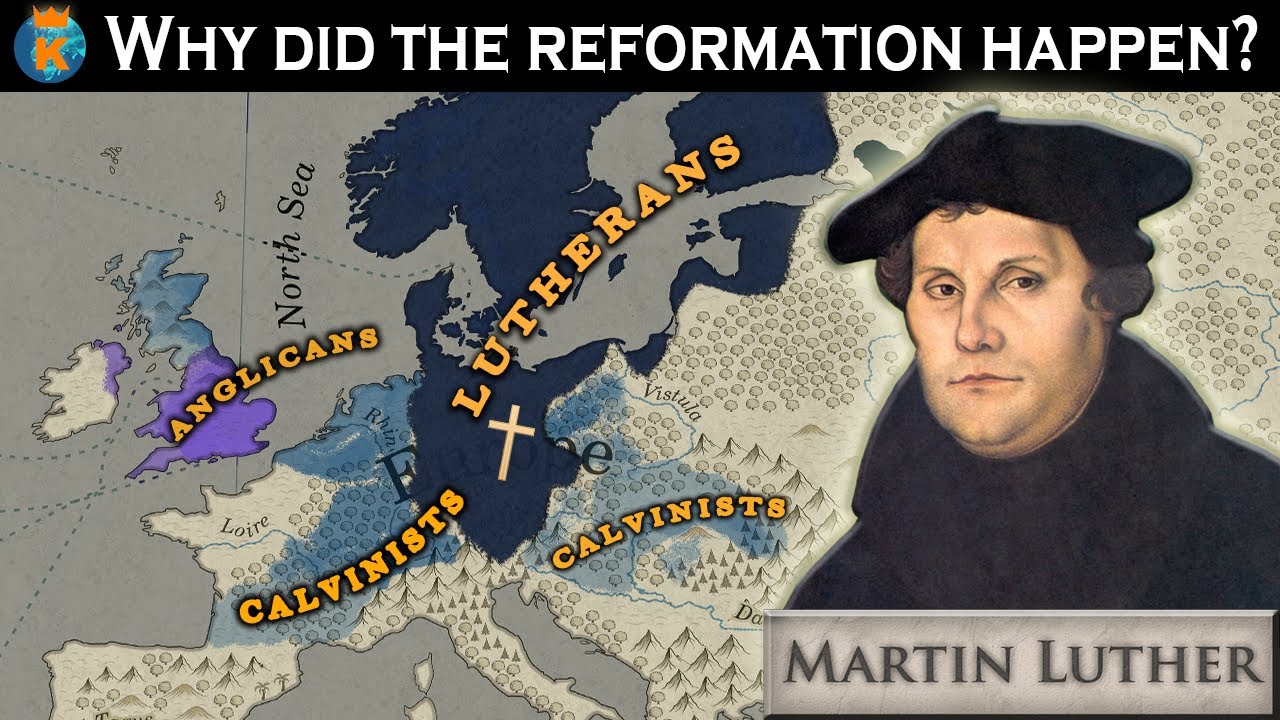
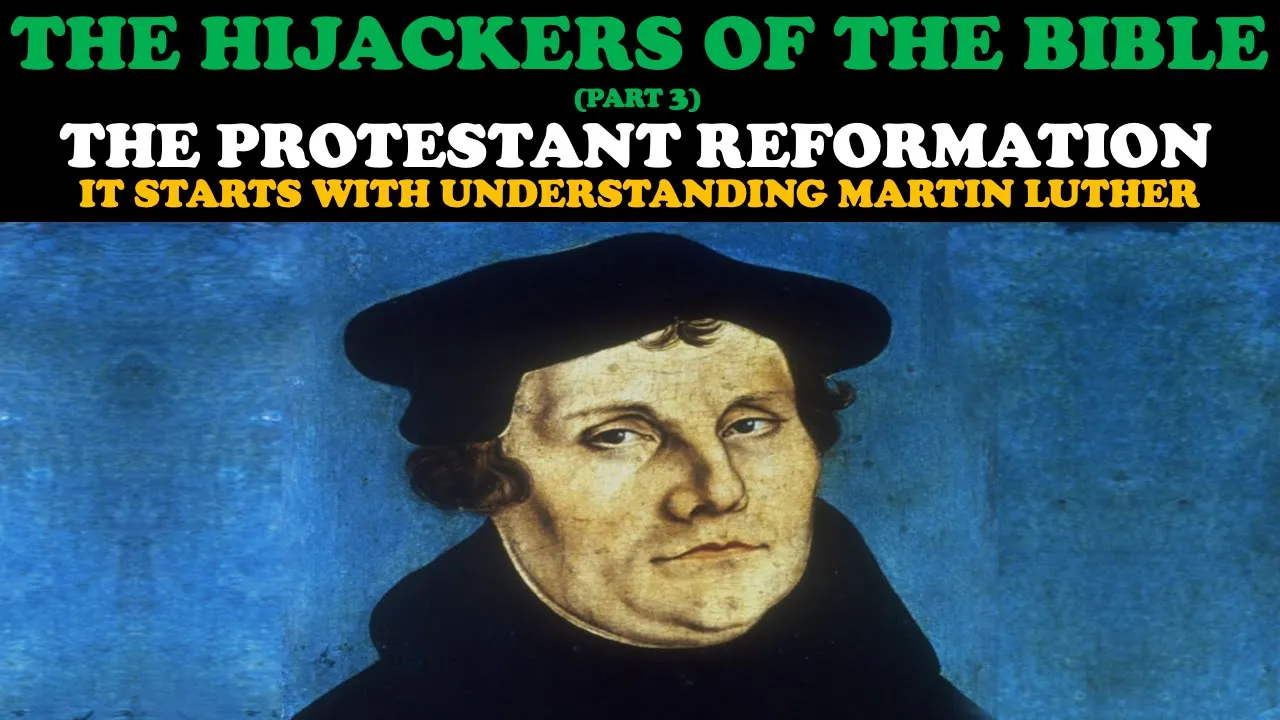
have liked it to be over 400 pages, but like I said, he is thorough. It is his book that I will be mostly quoting from as I explain the history. So let's discuss the Protestant Reformation, and we, of course, cannot do this without discussing the key figure, the man who was said to have changed the world: Martin Luther.
As the book starts, so will I. I just added one little small point that I highlighted: in 1934, an African-American Prince Hall Mason Baptist pastor from Georgia made the trip of a lifetime, sailing across the Atlantic Ocean, through the gates of Jalita, and across the Mediterranean Sea to the Holy Land. After this pilgrimage, he traveled to Berlin, attending an international conference of Baptist pastors.
While in Germany, this man, who was named Michael King, became so impressed with what he had learned about the reformer Martin Luther that he decided to do something dramatic. He offered the ultimate tribute to the man's memory by changing his own name to Martin Luther King. His 5-year-old son was also named Michael K.
, and to the son's dying day, his closest relatives would still call him Mike. But not long after the boy's father changed his own name, he decided to change his son's name too, and Michael King Jr. became known to the world as Martin Luther King Jr.
The father-and-son name change is just one dramatic measure of the influence of Martin Luther. Martin Luther's writings and actions altered the landscape of the modern world; much of what we now take for granted may be traced directly to him and the Protestant Reformation. So who is Martin Luther?
In many of my videos, when exposing figures, I often prove their insincerity or that they are attached to agendas because of their influence and connection with secret societies. When discussing Martin Luther, this is not something that I am able to introduce or make a connection with. Now, I do have some quotes and information given by Freemasons in regard to Luther, but they are not what I consider to be valuable enough evidence in order to draw that type of connection and make that accusation regarding Luther.
What I can say about him is that he seemed to be a man that was highly convicted. I do not believe that his intentions or motives were diabolical or conspiratorial. Now, I could be wrong about that, and if there's any information that anyone has that shows direct connections to the secret societies, I will be happy to review that information.
But this is not the direction I have been led; from what I have read of the man, I personally do not believe he was sinister but just convicted and used. Now, it's important to note that this does not change any of my conclusions, and it does not shift guilt or blame. I just wanted to be understood that what I have read on this movement, I have not found to be conspiratorial by him.
Now, there are events and conspiracies about this Protestant Reformation that, at this time for me, are a little sketchy, like the point where Luther was sentenced to death, escaped, and was taken into hiding, or the fact that the pope at the time he was beefing with was Leo X, who was a Medici. But to be transparent and fair, I have not found evidence of the hidden hand. However, I personally do believe that the evidence is only lacking because it is at this time when the secret societies were the most hidden.
So, if you're thinking I'm going to expose him being a Mason or something like that, that's not where I'm going. I just wanted to put all that out there. Let's discuss him, though.
Martin Luther was a man who lived during the time of the Renaissance, born on November 10th, 1483, and died on February 18th, 1546. This was right in the middle of the period of the Renaissance, of which I was speaking a great deal in my "History That Should Not Be Ignored" series. During this period, the Renaissance is truly when secret societies were actually hidden.
The Renaissance is the period between the fall of the Temple LS in the 14th century and the coming out of Freemasonry in the 18th century. During this period, we know the influence of the secret societies existed, but we are not able to document it because they truly were working in secret. Though some of these events with the Protestant Reformation that I will speak on later suggest to me that these secret societies may have had some influence, being that I am not able to show any connections, I am not making the conclusion that the Protestant Reformation was put forth by the secret societies.
The thing is that this does not matter in the end because the Protestant Reformation was not about turning back to Yah in truth; it was just a disagreement with the foundation set from the false foundation of the Roman Catholic Church. We will see in the end that the Protestant Reformation was not a clear break from Rome in regard to the foundation of the faith. The faith that stems from the Roman Catholic Church, you will still see, is still the foundation of the faith that comes from the Protestant Reformation.
The main difference is that certain doctrines were removed, changed, and the pope was no longer the authority of the faith. Now, I don't want to jump ahead, but I do want to say, as we get to the English Reformation, from which we got our King James Bible, we will later see that the authority of the Protestant faith was led under the authority of the King or Queen of England, and to this day, most of the denominations that people. .
. "Hold on to today. I am under the authority of England, Charles III, by the grace of God, of the United Kingdom of Great Britain and Northern Ireland, and of my other realms and territories; King, Defender of the Faith.
I do faithfully promise and swear that I shall inviolably maintain and preserve the settlement of the true Protestant religion as established by the laws made in Scotland in prosecution of the Claim of Rights, and particularly by an act titled 'An Act for Securing the Protestant Religion and Presbyterian Church Government,' and by the acts passed in the Parliament of both kingdoms for the union of the two kingdoms, together with the government, worship, discipline, rights, and privileges of the Church of Scotland. So help me God. But again, that's speeding up through a lot of information, so we will slow it all down and discuss Martin Luther.
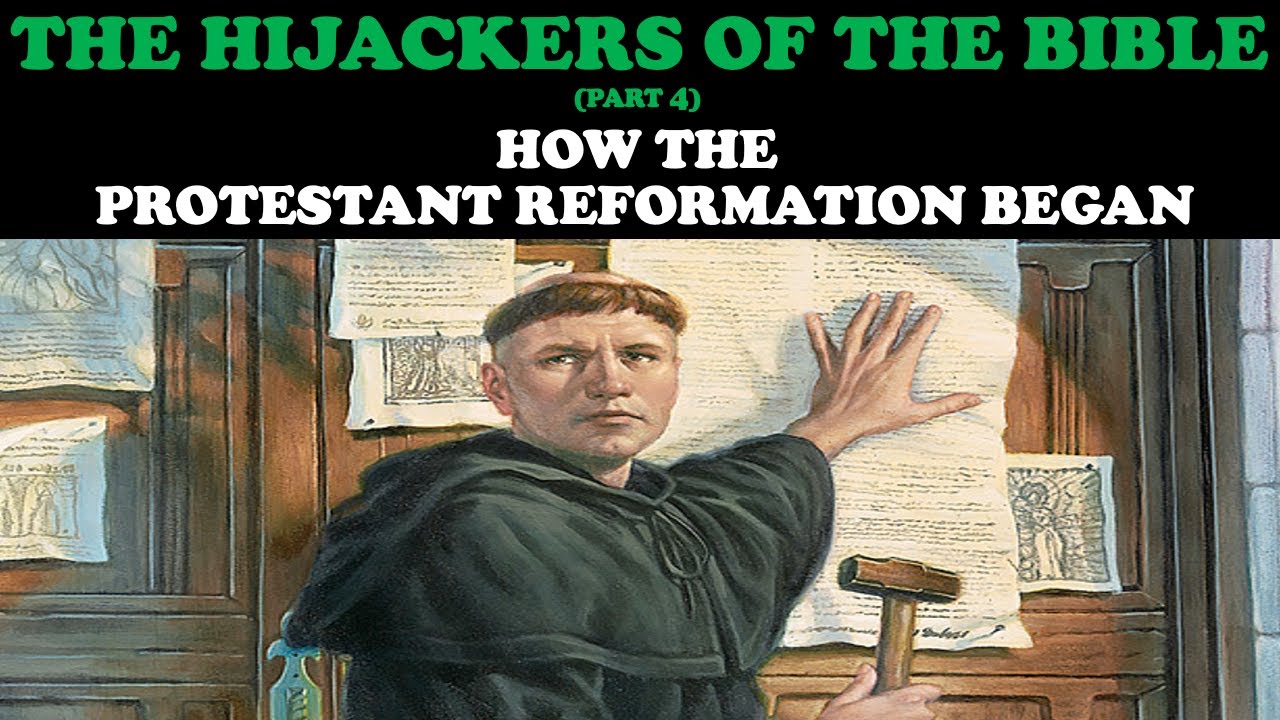
Luther is most known for two major events that started the whole Protestant movement. The first one was in 1517 when he posted his 95 Theses on the door of the Wittenberg Castle Church, which criticized the Roman Church practice of indulgence. The second event was his speaking at the Imperial Diet, which is a formal assembly; this Imperial Diet was held in the city of Worms in 1521.
He stood before the Holy Roman Emperor, Charles I, and other German nobles, and most importantly, a representative of the Pope, and made the statement that historians claim brought about the change: 'Here I stand; I can do no other. ' There are a lot more words than this actually, but the point he made at the Diet made it clear that he feared God's judgment more than the judgment of the powerful figures in the room. They say the statement changed the world.
This was because it now brought about the idea that suddenly, the individual had not only the freedom and possibility of thinking for himself but the weighty responsibility before God of doing so. These two events were said to be the major events that sparked the Protestant Reformation. You see, the world that Luther was born into was a world that had existed unchanged for many centuries.
But during Luther's time, the world was beginning to change. This was the Renaissance period. For instance, during Luther's time, Christopher Columbus was sailing and trading along the West African coast and, within a decade later, crossed the Atlantic and took claim of finding the land that was already found.
Also, during Luther's time, the printing press was in its early infancy, having been invented 40 years earlier by Johannes Gutenberg. Now, I will also speak more on this later, but the technology of the printing press could be said to be more influential than Luther was, and without the printing press, the Protestant Reformation would not have happened. Things were changing in the world, but before this period, the biggest thought that was unchanged by the time of Luther was the idea that the Holy Catholic Church, which was led by the Pope, could be challenged.
The idea that it could be challenged was non-existent in the minds of the masses. Now, in the other series, this is why I took a great deal of time going over the Templars, the Medici, and the secret societies, because this is exactly what they did: they challenged the Church, but they did not do it publicly in a way that seemed like a direct challenge; they just infiltrated it. And it's not a coincidence that the main enemy that Martin Luther was against during the Reformation was Pope Leo X, who was, in fact, a Medici.
I don't think any of this was a coincidence, but being that I cannot prove it, I'm not using it and basing my conclusions off of it. But more on that later. Martin Luther was born in the final year of the reign of Pope Sixtus IV.
If you remember, this was the pope who was financed by the Medici and who started the rebuilding of Rome during the Renaissance. If you recall, in part three of my 'History That Should Not Be Ignored' series, I explained how the churches of Rome, like the Vatican, were rebuilt. It was Pope Sixtus IV who was responsible for the beginning of this construction.
Luther was born during this period, just so you can recognize how all this aligns with what I'm speaking about in the other videos. The difference, though, is that Martin Luther grew up and lived in Germany. The Protestant Reformation started in Germany, in case you were not aware of this.
Luther's father, Johannes, also known as Hans Luther, was a successful entrepreneur in the mining business. His wife, Luther's mother, was from a well-established, prominent Lindaman family. Many people like to claim that Luther came from humble beginnings, but that is not the case.
Martin's father, Hans, planned for an education for Luther in order that Luther would begin a legal career to be a lawyer. It is said that Luther's family was a typical religious family during that era—no more or less religious than most of the people of their time—which is to say they took God and the church very seriously. They almost certainly had a shrine in their home to St.
Anne, which, not in the Bible, but Christian tradition declared was the name of Mary's mother. This St. Anne became the patron saint of miners.
The reason for this is that her womb was said to have borne two jewels: from her own womb had come Mary, and then from Mary's womb had come Jesus. This is just another example of that false foundation from Rome that I was speaking on earlier. Anyways, we cannot discuss Luther and the Protestant Reformation without discussing humanism.
Luther was a philosophy student at Erfurt when he first encountered the new intellectual movement called humanism during his time at school there. " There were a number of professors and students devoted to it. One of the students he knew at the time was George Burkhart, who, in a few years, would do what most humanists of that time did: they changed their name and took a Latin or Greek name.
Burkhart chose to Latinize his name, taking on the name of his village, Latinized it to Spalatin. He was a very close friend of Luther later on, and he was a humanist. You need to note that, and I want you to note this practice again.
In humanism, they adapted their lives to fit more with Greek and Latin culture. They were Germans, but they adapted themselves to Greek and Latin culture. This is what they have done with our Messiah and his name; they have identified him with their culture.
This is why the Hebrew influence of our faith is no longer found. People want us to identify the Hebrew faith by following the Greeks, and we should never do this. Anyways, these movements adapted their faith to their culture, and this was humanism.
This was happening during the time of Luther. Erasmus, another key figure during the time of Luther, was also a humanist and he was definitely connected to Luther. He was responsible for translating the New Testament to Greek from Latin.
These are all important figures in Luther's life that need to be introduced. Anyways, Luther obtained a master's degree and was going to study law to become a lawyer, but in 1504, while traveling home for Easter, he badly cut his leg from a sword that he carried and he severed an artery. Knowing that he could die, he cried out to St.
Anne in prayer, begging her to spare his life. The injury was apparently very severe. I bring this out to highlight again the foundation that Martin started from.
Understand the foundation: he's crying out to St. Anne. Anyways, the next year, in 1505, a blast of lightning struck crazy close to Luther and he collapsed to the ground in terror, crying out loud again to St.
Anne, "Help me, St. Anne" and then called out the words, "I will become a monk," making a vow that if St. Anne helped him to survive, he would repay her great mercy by devoting the rest of his life to being a man of God, to taking holy orders and leaving the world behind that he was engaged in.
This is the story that is told of how he became a monk. The story is told that he vowed to the holy mother of a holy God and therefore vowing to God himself that he would become a monk if she saved him. So let's just stop right there.
As I introduced this topic, I went to great lengths to explain the main issue when dealing with this topic of the Protestant Reformation. That issue is the foundation on which this Protestant Reformation was founded. Now, this information I'm giving you right now does not prove anything, because I know you may want to assume that later on he grew from all this and changed, and that's fair, because we have not got into it yet.
Let's be clear that the story of how this man went into ministry is due to him praying to St. Anne. I don't know St.
Anne; I don't pray to her; I don't recognize her. I also don't recognize Mary either, in reverence or prayer, but Martin Luther did. This is how he entered into ministry.
All of this matters and I'm being meticulous about these details so that it can remove that part of people's rationalizations—those who like to play devil's advocate and want to ignore his foundation. Let's keep going. So, without talking to his father, Luther joined a monastery.
He presented himself to the door of the Augustinian monastery in Erfurt to take what they call holy orders. He was 22. He worked to become a monk.
His path was the same as all the monks at the monastery. He was awakened by a bell at 2 a. m.
, making the sign of the cross and then quickly putting on his white robe and scapular before hustling out of his cell to the chapel, where he prayed at the high altar and took his place in the choir stalls to sing and pray Matins. Matins consisted of singing hymns and psalms and lasted about 45 minutes. At the end of the Mass, the monk prayed the Salve Regina, which is Latin for "Save us, O Queen.
" They sang this to Mary. I'm not going to say it, but it's a prayer to Mary. So, after singing the Salve Regina, the monk sang a Maria, which is "Hail Mary," and asked our Father.
Then they rose and filed out of the chapel. You should know that during this time in Christian doctrine, Jesus had mostly been ignored. He was then thought of as every bit as distant and remote and terrible as God the Father had ever been.
That's how they thought of it. So only Mary, his entirely human mother, could comfort them, and not only that, but she could appeal to her harsh and perhaps indifferent son as only a dear mother could. This was the faith of these Roman Catholics during this period in time.
This is why they pray to Mary. This is, again, a completely pagan faith that they mixed up with the Scriptures. It is not a Biblical faith.
Okay, so at age 23, Martin Luther was a monk and an ordained priest, and this really is where the story begins. Now, before we go more into Luther, it's important that I deal with an important subject—that was the whole basis and reason for the Reformation—which is people trying to get to heaven. We need to deal with indulgences in the times before the Renaissance and medieval Christianity.
Life there was a strong implication that one could not earn one's own salvation outright, but that we must save ourselves. It was up to the sinner to redeem himself. Let me explain the penal system that the church had worked out over the centuries.
It was a bit complicated, but what was clear was that the priest had the authority of the church, and the church had the authority of God. So basically, the priest had the authority to determine what one must do to be forgiven by God, to clear one's slate of sins. The first thing one must do is go to confession.
This was not optional but absolutely required; it was a sacrament of the church. So one must go to confession, and when one went to confession, they must confess every sin one could possibly recall. Once the priest had heard this one's confession, he would then assign penance.
Penance is voluntary self-punishment inflicted as an outward expression of repentance for having done wrong. So, for example, the priest might say that one was obliged to say 20 Hail Marys and 40 Our Fathers or pray the rosary a certain number of times. That's an example.
The effect of this was to give the faithful a way for forgiveness. The way was to get people's sin back to zero via confession and then penance. Penance wipes their slates clean.
This is what gets them back to zero; the sins will be repented of, forgiven, and forgotten, and they could start anew. Do you get that point? If you don't, go back and hear it again.
Now, beyond this concept was another concept the church had called the treasury of merit. The church taught that some people, such as the saints and Jesus, had not merely been able to get back to zero but had, in their lives, sinned so little and had done so many good works that they had, in fact, amassed a surplus of merit. So by the time that they went to heaven, they had put these merits in the Heavenly bank, and far from being in the red, they were actually in the black; they had surplus.
So the collected merits of all the holy people in church history amounted to this tremendous treasury of merit. This is real doctrine; I'm not even kidding. It sounds crazy, but this is what the church was selling.
So, anyway, who do you think controlled that vast treasury of merit but the church itself? In fact, it was called the treasury of the church. The church believed that Jesus had given the keys to the kingdom to Peter, who is believed to be the first pope, and that those keys had been transferred from pope to pope down through the ages so that the church and the pope had these keys, which gave them access and authority to dip into that treasury of merit and make a withdrawal whenever they deemed it necessary.
And that's what brings us to indulgences. Hope you get that. Again, if you don't get it, rewind it and go back to it.
The idea of indulgences comes from the treasury of merit. Let me provide you with more of an example so you can see how it works. Imagine someone like you in confession telling the priest you had done this, that, and another thing.
The priest might assign your 20 Our Fathers and suggest that you do some good work for the church too; that was the standard. But at some point, the church came up with the idea of indulgences, and if someone purchased an indulgence from the church, it was just like doing a good work and could be counted towards one's penance. And, of course, giving money to the church to build a cathedral, which would be considered buying an indulgence, was set up for this purpose.
By giving money to the church, this was the indulgence, and it only made sense that the church could count this as a good work, and it would go into the merit category. If you were able to give ten times as much money, you should therefore be able to get ten times as many merits. But those merits didn't go into a Heavenly treasury; they were yours to keep and spend as you saw fit.
So with your money, you can buy an indulgence that granted you forgiveness for a certain sin. So if you were to sin, and the priest assigned you certain prayers and good deeds as a penance, you could pull out your indulgence certificate and show him that you had already paid your penance for that particular sin. Like, "Yo, I know I cussed the mouth, but I got this; here's a certificate.
" This is really what they were selling, and it's not like people had access to the Bible at this time to know that this was not what the Bible had said. Remember, during this time, the Bible was not in the hands of the masses, but just the priest and the church. They believed these people would lead them into heaven, so they followed them, and indulgences were a big deal at that time.
Of course, you can see how this was able to be abused and led to trouble. The church created a market, and going to heaven became linked to the monetary world of debts and surpluses, and so this became abused. The church put itself in the position of using indulgences to raise money.
For instance, if money got tight because the pope happened to be spending a lot, it was too easy to turn to indulgences to solve the problem. This is exactly what happened; indulgences became a guaranteed income stream that, in time, became an absolute necessity. The problem got much worse in 1476 when Pope Sixtus IV realized that the market for indulgences didn't need to just.
. . Be confined to those millions who were alive and who were sinning, but these indulgences could extend to those multiplied millions who had already left the land of the living and were languishing in purgatory.
Purgatory is a place or state of suffering inhabited by the souls of the sinners who are atoning for their sins before going to heaven. This is all Roman Catholic doctrine; it has nothing to do with the scriptures, by the way. Now, before I continue, let me tie this back into what we spoke about in the other videos, because by this time, with Pope Sixtus, please know that the Medici Bank was the bank of the papacy—it handled the papal accounts during this time.
The Medici Bank was an intermediary between this indulgence money and the pope. Whatever money went towards indulgences, it went through the Medici Bank. History credits Pope Sixtus as coming up with this next leg of indulgences for the deceased, but I believe the suggestion or idea likely came from the Medici family, who profited the most from this indulgence system and how this new Rome was built.
The money kept cycling back through the Medici. You see, the people worked and earned a living from rebuilding Florence and Rome, and they were paid by the Medici. From that income, the people were making from rebuilding Rome and Florence, the church taxed them with their tithes and then with these indulgences, and the money went right back to the Medici.
It was a complete cycle. So, back to indulgences: Pope Sixtus decreed that the infinite treasury of merits they had could be sold not just for sins committed by the people living, but to people who wanted to use them to alleviate the sufferings of their relatives in purgatory. Basically, every deceased parent or grandparent, brother, aunt, or uncle was now someone for whom an indulgence could be purchased.
And think about it: what son would not want to relieve his old mother or father of the agonies they suffered on the other side? Maybe if things were tight, you might not have paid for the indulgence for yourself, but how could you not pay it to help your mother and father out while they're in purgatory, if this is what you believe? This was a major part of the times that Martin Luther was involved with.
The medieval Church's penal system led people to believe they could earn their way to heaven and that they must try as hard as possible to do so. This is the situation that sparked the Protestant Reformation. Martin Luther was said to be completely obsessive about earning his way into heaven, and then he started finding contradictions.
So what we will do right here is stop at this point and discuss what happened next in the next part because there will be too much to discuss. This video was an introduction to Martin Luther, in understanding where we are going in reference to this hijacker series. This is a huge subject, and I do not want to rush through this.
I want to make sure that those who follow this ministry are educated in history that we are not being told. This is a major subject that needs to be dealt with. As you review this information, you should be able to see a bunch of lies and falsehoods that have been at the foundation of Christianity since interception by Rome.
You may be tired of hearing it presented as Christianity, and if you call yourself a Christian, I get it. But please know that in all the books I have read, this is exactly how it is presented. When you detach yourself from these labels and you attach to being exactly what the scriptures call you to be, you will find that emotion of being offended will go away.
I'm not going against our biblical faith; I'm going against the tares that Satan planted that have obviously been distorting and putting forth a false application of our faith—selling people ways to get to heaven, praying to Mary, calling on saints, and helping their family in purgatory. This is just a small list of the practices, but for many of you, you probably have dealt with the fact that in your head, this Roman Church is false. Yeah, you get that, but you probably don't truly understand how the Protestant Reformation fits with the creation of all these new denominations.
You, now being a Christian—Baptist, Presbyterian, Lutheran, Methodist, Seventh-Day Adventist, or whatever you are—you probably don't realize how you got there. We are going through the history so that you can have an understanding, so that you can move through the power of knowledge and not just blind optimism, hoping that things were really okay. Revelation 12:9 says that Satan deceives the whole world.
You must understand that's a big accusation, and maybe it's hard to really fathom it, but when you actually review the history and recognize how many lies we have been told, or just how much information has been kept from us, the actualization of the scripture can begin to make more sense. What I want to happen from this series is that it starts becoming more plain to see that most of the Christian church has received their doctrine from the foundation of the Roman Catholic Church, with some variations that were added. Most people don't want to deal with this because it requires them to take charge of their faith and repent, and walk in humility, perhaps realizing they have been deceived, and now they must do something about it.
Most people don't want to do all that, so instead of breaking away, people use their indoctrination. Lessons from the church for the validity of their actions will only lead to more separation from Yahweh. The point I am making to you is that if you're trying to get closer to the Messiah and be ready for Him, you must identify the falsehoods and deceptions.
Romans 16:17-18 urges us to note those who cause divisions and offenses contrary to the doctrine which you have learned, and avoid them. For those who are such do not serve Our Adon Yahusha the Messiah, but their own belly; and by smooth words and flattering speech deceive the hearts of the simple. It is time that you recognize where your doctrine comes from and why you do certain things.
Let's be clear: for the most part, online readings of scriptures are not justifications for full doctrine. The Hebrews had a culture and a way, and it is taught about many times in the scriptures. Yes, Yahusha brought clarity and explained many other things and showed us that it was all about what was in our heart, but He did not change the way of the Hebrews.
The hijacker did, and this is why the Christian faith does not resemble the faith of the Hebrews at all. This is why the Christian faith does not observe most of the commands in the Old Testament. If you are a Christian, you have been directed by a foundation of the universal church.
And listen, you don't have to share all their doctrines and beliefs in order to be steered away from Yah. What I've seen since I made part one is that now that we've dealt with the Roman Catholic part, the deception still remains because people have just moved on to the next leg of the deception, which are the Protestants. So this is what we're dealing with now.
I'm not here to uphold your traditions and your doctrines of men; I'm exposing falsehoods and calling on those who truly desire a Father to set yourself apart from this world and be what a Father truly desires. There is a reason why the faith that we see in Christianity today looks so different than what we find in the scriptures. You have to make the decision whether you're working to uphold the doctrines and traditions of men or if you are working to uphold the doctrines and teachings from the scriptures.
We are all warned of this in the scriptures. Therefore, beloved, looking forward to these things, be diligent to be found by Him in peace, without spot and blameless. Consider that the longsuffering of Yahweh is salvation, as also our beloved brother Paul, according to the wisdom given to him, has written to you.
As also in his epistles, speaking in them of these things, in which are some things hard to understand, which untaught and unstable people twist to their own destruction, as they do also the rest of the scriptures. You, therefore, beloved, since you know this beforehand, beware lest you also fall from your own steadfastness, being led away with the error of the wicked. But grow in the grace and knowledge of our Adon and Savior Yahusha the Messiah.
To Him be the glory both now and forever. Amen. (That’s 2 Peter 3:14-18).
You see, we were all warned. It is your decision if you listen to the guidance of the scriptures and are not following people who twist things to their own destruction. Do not be led away with the error of the wicked, but grow in the knowledge of Yahweh.
So please, on your own time, daily, continue to read the scriptures diligently and grow. This ministry will continue to expose the falsehoods, Yah willing, that have been hidden and not dealt with yet. As we all continue to strive towards the mark, please continue to commit your life to Yahweh and serve Him fully.
He is calling us all to be ready for Him. Make sure you answer His call and seek Him out, worship Him sincerely in truth and in spirit. Be blessed, everyone.
Hallelujah, praise Yah! Okay, thanks again for watching. If this has blessed you, please make sure to like it and share it with others.
If you haven't done so already, please make sure to subscribe to this channel. Yah willing, I upload every Friday. Also, please don't forget to subscribe to this channel on Facebook and Instagram, as well as on my website, truthunedited.
com. As always, I'd like to thank all who donate and contribute to this ministry. Your donations are truly a blessing to this ministry, and they help very much.
Thank you for your love and your support, and for letting our Father use you. You are truly a blessing, and I really appreciate your support. Be blessed!
Okay, thanks again everyone for watching. I love you all.