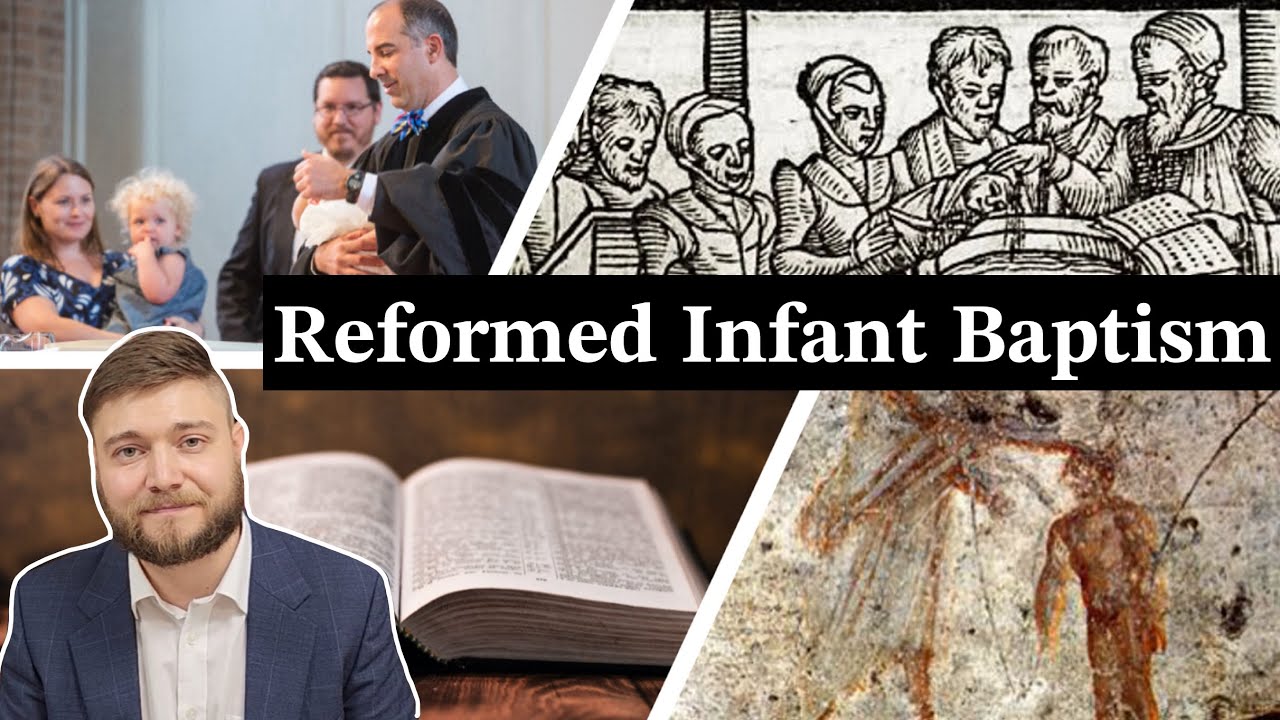
hello my name is Don Baker I'm the pastor of Soul Covenant Church we are an English-speaking Presbyterian church located in Soul South Korea if you want any information about our church I will leave our websites in the description down below and you can go ahead and check us out there now in this video I want to talk a little bit about baptismal efficacy from a reformed perspective if you saw our last video we talked about infant baptism specifically we talked about the reformed argumentation for infant baptism and also the history it of that argumentation showing
that many Christians from the beginning have argued for infant baptism the same way that Presbyterians and other reformed Christians do today now that's a very popular argument in fact if you've ever been a part of the broader reformed World you've probably engaged in that argument on whether or not babies you know children of Believers should be baptized however there is another subject of debate that doesn't get talked about enough and that is the subject of baptismal efficacy not only who should be baptized but for those who receive that baptism or hold the sign of baptism
in faith what does baptism do for them or if anything at all that's what I would like to talk about in this video what I want to do is make this video so that anyone who wants to understand baptismal efficacy from a reformed perspective has a place to go where it is spelled out clearly and precisely from scripture now at the outset of this discussion we have to admit that this is a very difficult topic Godly men on all sides of this discussion have disagreed with one another entire Traditions that have been greatly used by
God are Traditions that I disagree with on this subject I'm sure at times it's going to sound like I'm going after the Baptist tradition but I want to make sure that I am doing my best to do so respectfully while still even showing my appreciation I think it would be very wild to think that God has not used the Baptist tradition or other cradle Baptist traditions in his kingdom I myself was saved and discipled in the Baptist tradition and it would be wrong of me to not show my gratitude to those men and women and
ministers who have raised me in the faith and discipled me essentially from my birth however I do think that it is important enough of initi you to make a video on even for the reason that many are confused on this subject it would be good to have a place where they can understand what the Bible is saying when it talks about baptism and its efficacy now jumping into this video there are many different things we could talk about and I've you know I've wondered where should I start this discussion and I think at the beginning
there's one assumption that people have when they're coming to this issue that cloudies the entire discussion and I think it's important that we first establish what baptism is not in this assumption that cloudies the discussion is the assumption that baptism is a work of the law to be performed or an act of obedience again this is what baptism is not and many assume this and so it cloudies the entire discussion I'll say it one more time the assumption that baptism is a work of the law to be be performed or an act of obedience this
is the fundamental difference between those Protestants who reject any saving efficacy in baptism or even in the Lord's supper and those Protestants who do hold to some sort of efficacy in baptism in fact often when people bulk at the idea that baptism saves or that God can even use baptism for our Salvation they are trying to protect something they want to protect the doctrine of Sola that we are justified by faith alone apart from any works of the law in fact there's a very famous website called got questions in fact maybe you at one time
have searched something on the Internet and you have found this website got questions and there's an article where it talks about whether or not baptism is necessary for salvation something that we will talk about later in this video but notice the way that the writer talks about baptism m in this section he says here requiring anything in addition to Faith in Jesus Christ for salvation is a Works based salvation to add anything to the gospel is to say that jesus' death on the cross was not sufficient to purchase our Salvation to say that baptism is
necessary for salvation is to say that we must add our own good works and obedience to Christ's death in order to make it sufficient for salvation jesus' death alone paid for our sins jesus' payment for our sins is appropriated to our account by faith alone therefore baptism is an important step of obedience after salvation but cannot be a requirement for salvation now again notice what he's wanting to protect in the way he talks about baptism he is trying to protect faith alone this is a doctrine that all of us agree with as Protestants we all
agree with the Apostle Paul in Romans 3: 27-28 when he says this then What Becomes of our boasting it is excluded by what kind of law by a law of Works no but by a law of faith for we hold that one is justified by faith apart from works of the law we are saved by grace alone through faith alone in fact this doctrine of justification by faith alone might be the doctrine of the reformation and both Lutheran and reformed Traditions uphold the doctrine of Sola we all agree that we are saved by grace alone
through faith alone and yet both of these Traditions whether Lutheran or reformed if you look at their documents their confessions somehow both consider baptismal efficacy not to contradict this Doctrine in it all goes back to a difference on that assumption if you assume that baptism is a work of the law then it follows that it can have no part in your salvation you see when we look at the Bible we see these two different categories there is the law and there is the gospel we understand that we are not justified through the law but we
are justified through the gospel faith in Christ this is the call of the gospel and our Salvation cannot be found in the law our Salvation can only be found in the gospel and so we must ask ourselves which category does baptism fall into does baptism fall into the category of law or does baptism fall into the category of gospel now we see this distinction in scripture uh for example if we look in Mark chapter 10: 17-22 we have the rich young man who comes up to Jesus and ask asks how he can be saved this
is Mark 10:1 17 it says and as he was setting out on his journey a man ran up and knelt before him and asked him good teacher what must I do to inherit eternal life and Jesus said to him why do you call me good no one is good except God alone you know the Commandments do not murder do not commit adultery do not steal do not bear false witness do not defraud honor your father and mother and he said to him teacher all these things I have kept from my youth and Jesus looking at
him loved him and said to him you lack one thing go sell all that you have and give to the poor and you will have treasure in heaven and come follow me dishearted by the saying he went away sorrowful for he had great possessions now think about the way Jesus responded to this young man imagine you and I were walking out on the streets and someone came up to us and said hey are you Christians what must I do to inherit eternal life now imagine I said here I'll answer that and I said similar to
what Jesus said obey the law right honor your father and mother do not lie do not steal do not commit adultery and I gave the law and that man went away well You' probably look at me saying what are you doing you didn't give him the gospel you gave him the law you gave him something that he can't be saved by you should have given him the gospel Jesus gave him the law to show him his need for the gospel the right response that he should have had was not sir I have kept these from
my youth he should have said sir I have not kept this from my youth I have sinned have mercy on me when we respond to the law correctly we go to the gospel in the law we cannot be saved we can only be saved in the gospel and so that is why Paul Comforts Us in Romans 3: 21 he says but now the righteousness of God has been manifested apart from the law what Jesus gave that man to show him his need the righteousness of God through faith in Jesus Christ for all who believe now
again do you notice those two categories that we have seen in scripture law and gospel law do this gospel it is done in Christ once again we cannot find Salvation in the law we can only find Salvation in the gospel but once again this brings us to the question into which category does baptism fall under if I were to say to you be baptized am I speaking the law or am I speaking the gospel well it is our conviction that baptism is not a work of the law to be performed it is the offering of
God's grace in the gospel to be received now let's look at a few places in scripture and test this idea let's go to acts chap 2 looking at verses 37 and 38 here Peter has preached at Pentecost and he has pointed out the people's sin right he has shown them where they have broken God's law in murdering their Messiah but now it is time for him to give them the gospel it says now when they heard this they were cut to the heart and said to Peter and the rest of the Apostles Brothers what shall
we do and Peter said to them repent and be baptized every one of you in the name of Jesus Christ for the Forgiveness of your sins and you will receive the gift of the Holy Spirit now what do we have in this section do we have law do we have gospel do we have a mixture of both well again let's test this imagine if Peter had said this repent and be obedient to the law every one of you in the name of Jesus Christ for the Forgiveness of sins now that would be ridiculous this is
not the time to bring people to the law but the time to bring them to the gospel and that is what Peter is doing baptism is not a work of the law to be performed it is the offering of God God's grace in the gospel to be received we see how unfitting it is when we substitute obbey the law or fulfill this act of obedience in the place of baptism in fact let's look at another place Mark chapter 16 verse 16 if we go here it says whoever believes and is baptized will be saved but
whoever does not believe will be condemned now later in this video we'll talk about the role of faith as baptism will be of no saving use without faith but for now once again let's pretend that baptism is a work of the law we as we did in the last text what if the text said this whoever believes and performs this work of obedience will be saved but whoever does not believe will be condemned now doesn't that just stand out so weirdly right why would baptism even be placed in this gospel declaration this gospel call if
were an act of obedience well again baptism is not a work of the law to be performed it is the offering of God's grace in the gospel to be received another one acts 22:1 16 here the Apostle Paul is recalling his conversion and his baptism with ananas and at that time ananas said to him and now why do you wait rise and be baptized and wash away your sins calling on his name once again let's swap out that language and now why do you wait rise and perform this work of obedience to the law and
wash away your sins absolutely not ananas says be baptized Paul needs to receive something because there's nothing he can do be baptized receive this washing once again baptism is not a work of the law to be performed it is the offering of God's grace in the gospel to be received one more a well-known one first Peter 3: 18-22 for Christ also suffered once for sins the righteous for the unrighteous that he might bring us to God being put to death in the flesh but made alive in the spirit now as a side note if you
watched the last video there's that circumcision of Christ that we mentioned the putting off of the Flesh and being made alive in the regenerated Spirit but we go on in verse 19 in which he went and proclaimed to the spirits in prison because they formerly did not obey when God's patience waited in the days of Noah while the ark was being prepared in which a few that is eight persons were brought safely through the water baptism which corresponds to this now saves you not as a removal of dirt from the body but as an appeal
to God for a good conscience through the resurrection of Jesus Christ who has gone into heaven and is at the right hand of God with the angels authorities and Powers having been subjected to him baptism saves you now we'll get to the next part of that verse but I'll say now that it explains how baptism saves it doesn't explain that baptism does not save but here as we're looking at this verse would we say that the that the salvation of Noah and his family through the water corresponds to an active obedience to the law which
now saves us again no baptism is not a work of the law to be performed it is the offering of God's grace in the gospel to be received now I have repeated that line multiple times because we need to have it engraved on our mind if we're going to understand how the Bible talks about baptism if we think of baptism as being a work we're going to have a hard time with these passages in fact I know that even for myself whenever I read these passages as a Baptist I sort of just ignored them and
I kept reading I said well it looks like they're making baptism part of salvation but it's a work of the law right it's an act of obedience so it can't be and I simply moved on but we don't want to do this with the Bible we must confront our problem passages when we come to a section that we don't understand we must try to understand it in light of of all of scripture we cannot simply dismiss it and say it can't mean what it seems to say we need to be able to speak the way
that the Bible speaks and when the Bible speaks of baptism it speaks of something connected to our Salvation as something connected to that gospel call and so it is important for us to see what baptism is not baptism is not a work of the law but okay that is what baptism is not but what then is baptism uh we've talked about what baptism isn't we should now say what baptism is uh here on this desk I have some water but is this bottle of water a bottle of baptism if I were to open this water
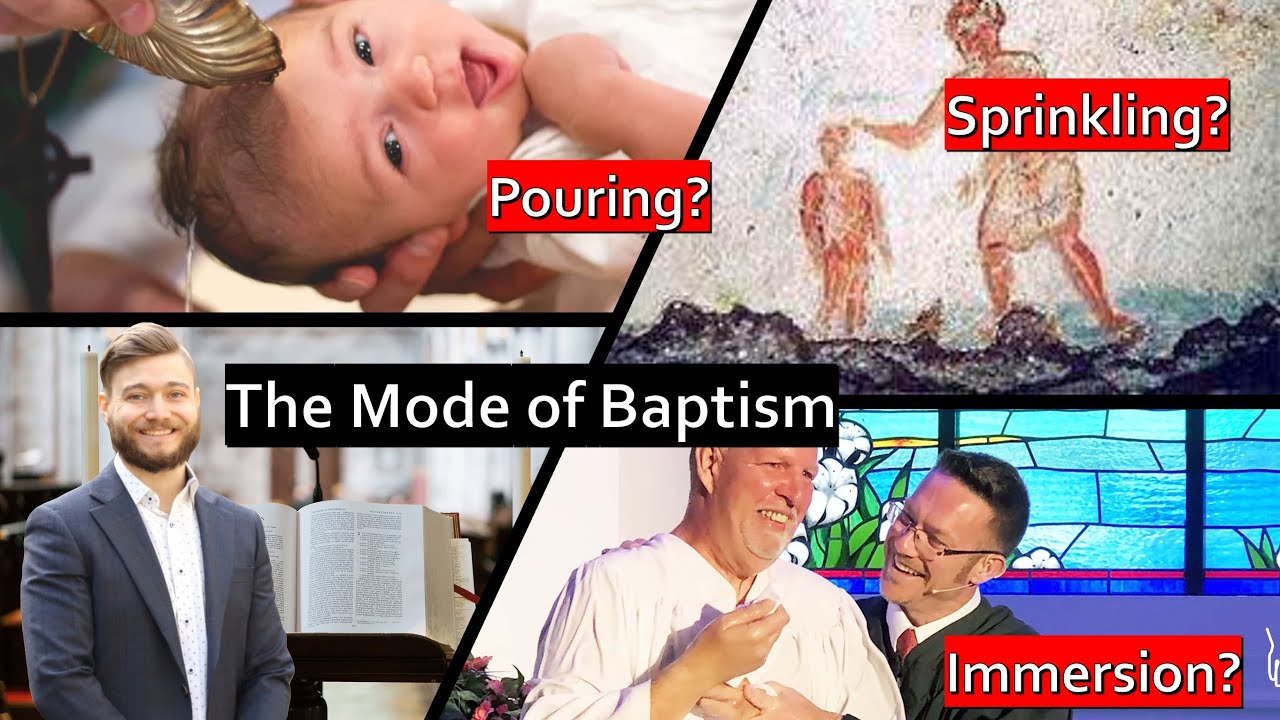
bottle and take a drink would that be a baptism if I were to open this water bottle and pour it all over the desk would that be a baptism now perhaps you say no because it's pouring it must be by immersion uh perhaps in another video I can talk about the mode of bap ISM uh whether sprinkling pouring or immersion but even if that's you know your position if I were to run outside of this building and jump into a pool of water as great as that sounds because of how hot it is today uh
would that be a baptism well no that would be just water but many times that is how people talk about baptism uh you might say in the Bible it shows that God uses baptism for our salvation and people might say to that's you can't be saved by water you don't get saved by just getting wet but we want to emphasize that baptism is not just water this right here is just water but this is not a baptism what is baptism what makes just water become baptism well as this video is a video about the reformed
perspective of baptismal efficacy let us go to some of the reformed confession and catechisms and see from a reformed perspective how we talk about baptism this is from the westmin larger catechism here in question 163 and it asks what are the parts of a Sacrament answer the parts of a Sacrament are two the one an outward and sensible sign used according to Christ's own appointment the other an Inward and spiritual Grace thereby signified and so in baptism there are two parts first there is the washing of water that's the outward insensible sign you can see
it you can feel it but baptism is not only the sign it's not only water there's also the inward Grace that's being signified the inward Grace signified in baptism is our being united to Christ in his death and Resurrection our regeneration our remission of sins are giving up unto God through Jesus Christ to walk in newness of life and there is what is called a sacramental union between the outward sign and the inward Grace that is being signified properly speaking they are connected to each other now we can distinguish between them but we must not
separate them it's very common for people to say something like this water baptism doesn't save spirit baptism saves and in a sense that is true if what they mean is that the outward sign by itself doesn't save it's what is being signified that saves now nobody believes that the Water by itself saves us it is the work of the spirit that saves us however we should not separate the two as scripture holds them together when ananas says to Paul rise and be baptized washing away your sins call in on his name he isn't thinking of
mere water he knows that Jesus instituted baptism he knows that as Paul receives the sign in faith calling on his name the spirit will use the sign to seal the thing signified to Paul when ananas says be baptized in his mind is both the outward sign and the inward Grace received by faith now we'll get to this later uh when we we talk about the role of Faith but suffice it to say for now that what is signified is only received by faith and so if you receive the sign or if you bear that sign
without faith then you do not have what is signified nobody is saved by just water when the Bible speaks of baptism salvific it is holding together both parts of that Sacrament both the sign and and the grace that is signified both received by faith but what is the relationship then between the sign in the thing signified in other words how does receiving the sign of baptism connect to giving what is being signified in baptism well in this sense we need to talk about the sacraments as being both signs and seals these are the or this
is the language that you will hear the reformed tradition used when talking about the sacraments signs and seals but where does this language come from well we bring this from Romans 4: 11 where Paul is speaking about Abraham and the sign of circumcision now if you haven't I encourage you to watch my previous video where we talk about the historicity of reformed infant baptism uh in that video I show the biblical connection between both baptism and circumcision along along with the historical witness to that connection but here we get information on how the outward sign
in the signified Grace work together and we apply this to the other sacraments as well Paul says concerning Abraham he received the sign of circumcision as a seal of the righteousness that he had by faith while he was still uncircumcised now notice what is the inward Grace well it's right rightousness the removal of uncleanliness washed made clean declared righteous but how was that received by faith alone Abraham is declared righteous now how does circumcision relate to this notice his circumcision it does something it is a seal of his righteousness it's not only a sign of
the righteousness but the Bible says that it is a seal of a righteousness and being a seal it seals it to him now when talking about a seal this might be you know this might get kind of confusing uh when we use the word seal we are thinking of that seal that you might see on a college degree right that stamp from the school that makes that degree authentic and using a college degree uh might be helpful how do you receive a college degree how do you become a graduate uh you can even ask this
question when when do you become a graduate or a master of such and such well in a very real sense you become a graduate by sufficiently completing the requirements of the program right the second you turn in that final paper or the second you finish and pass that final exam you can in a sense say I'm done right I did it I'm a graduate I am finished but how does the school officially recognize you as as a graduate how do they make you one of their alumni well it is with a piece of paper called
a diploma and on that diploma is a seal and with that seal the school says with authority we give you this degree you have received your degree now does that diploma create the degree can you get a college degree simply by receiving a piece of paper well no the diploma can only confer a degree that's been earned or that has been earned it seals by simply receiving a piece of paper even with that seal but not meeting the requirements you will not receive that degree on the diploma in fact you might be in trouble for
having that sealed degree if it's shown later that you earned it falsely and even baptism has this aspect to it but this is similar to how God uses his Covenant signs such as circumcision under the old Covenant and we believe in baptism under the New Covenant in order to be a Christian a true Justified Christian what do you need well you need the righteousness of Christ you need his death and his resurrection you need your sins washed away by the blood of Christ that is what makes you a Christian in fact in some sense even
before receiving the sign and the seal if you have these things things that are not earned through a four-year year program but things that are given to you by faith if you have trusted in Christ for your salvation you are a Christian but what then is the purpose of a seal well like the diploma it is God's way of officially declaring that you are a Christian and officially giving you the benefits earned by Christ the skull or the school calls you a graduate at the graduation ceremony God calls you a Christian at your baptism it
is when you receive the seal and that seal signifies seals and applies our confession of Faith words it in this way in chapter 18 verse section or section number six it says there the efficacy of baptism is not tied to that moment of time wherein it is administered yet notwithstanding by The Right Use of this ordinance the grace promised is not only offered but really exhibited and conferred by the Holy Ghost to such whether of age or infants as that Grace belongeth unto according to the counsel of God's Own will in his appointed time now
there is a lot in that section and in fact for the rest of this video we will essentially be breaking down all of those sections so that we can understand what the reformed churches teach concerning baptism but I understand again this might be confusing uh maybe even up to this point there's something that has confused you again I say rewatch sections of this video you might need to rewatch it again and again if you can bear it uh but once again remember this is an area where there has been a lot of debate but I
have faith in you so I'm sure you can follow along and you can go along with this uh you can go along in this with me looking at this section here we have in this section of the confession the statement that the grace promise is not only offered but really exibited and conferred by the Holy Ghost now just to clarify again not the outward sign right not simply the water but it says by the Holy Ghost when that sign is is in the hand of the Holy Ghost then we have baptism and it says the
grace which is exhibited in in or by the sacraments rightly used is not conferred by any power in them neither does the efficacy of a Sacrament depend on the piety or intention of him that doth administer it but upon the work of the spirit in the word of institution which contains together with a precept authorizing the use thereof a promise of benefit to worthy receivers it is the power of the Holy Spirit to those worthy receivers those with faith in Christ nonetheless we do believe that the Holy Spirit uses baptism to confer the grace that
is signified this is what our confession teaches and this is connected to those sacraments being seals remember the illustration that I use as a of a um a college diploma in the seal that is present on it well in academics there's actually something called conferral uh here is a definition of conferral from the University of Tasmania uh why did I choose this University uh well because it was the first result that Google gave me but you can find this on many different University websites but it says here conferral or conferred means you have officially been
awarded your degree by that sealed diploma the school officially gives you what you deserve through your work in a similar way speaking of the sacraments as being seals again this language coming from Romans 4 by The Right Use of baptism God officially gives you what you receive by faith in Christ because of his work not your own but the works of Christ that seal doesn't create your salvation it seals it to you it doesn't even create Faith but it seals to you what is received by faith and this explains to us that baptism is not
a work that diploma is not a class that you took right when you were starting your program at that school the graduation ceremony was not a part of your syllabus you didn't have to prepare for your graduation to make sure that you passed your graduation ceremony it's not a class it is the place where you receive what you have earned from your class and so it is as if Christ has gone to purchase our righteousness through his perfect life through his death and through his resurrection and then he comes to us and says here receive
what I have earned for you and he offers it wrapped in a gift wraping called baptism you don't earn or contribute to that gift by receiving it in the way that Jesus has chosen for you to receive it when we come come to baptism we are not performing a work that contributes to the Salvation Christ has purchased for us we are coming to the gift wrapping that Jesus has ordained it is a baptism for the Forgiveness of sins when you receive your baptism through faith when your arms reach out to that gift in faith then
you receive the Forgiveness of your sins offered by Christ baptism only saves because it is attached to all the blessings that it signifies now in your mind you might be listening to this and you might be asking well okay uh baptism is salvific as the means through which your salvation is sealed and applied and it is only received by faith but what about infants right how does an infant receive their baptism by faith well here coming to the next chapter of our video we must remember that baptism covers all of life and so the efficacy
of baptism covers all of life let's go ahead and talk about this do you remember in the confession where it says the efficacy of baptism is not tied to that moment of time wherein it is administered well what does it mean by that here we must make a distinction and it's always good to make these distinctions there is a distinction between the sign itself in the administration of that sign let me ask you a question are you a baptized Christians now hopefully you said yes if you are not and you profess faith in Christ you
should be baptized go receive the sign but if you said yes I am a baptized Christian well is the water on you right now are you being baptized right now well no the water isn't on you but the sign of baptism is upon you it is not that you were a baptized Christian during that time when you are being baptized but you are a baptized Christian right now the sign though we cannot see the water upon us the sign of baptism is upon you now and if you receive that sign if you hold that baptism
right now that sign of baptism if you hold it in faith then that baptism is sealing your salvation to you right now but talking about this distinction let me give an illustration using the word clothing we can use the word baptism and clothing in a very similar way if in the morning I clothe my son that is his clothing at 7 a.m. I clothed my child I had ministered a clothing upon my son right to use this language that was his clothing when I clothed my son however later in the day when he spills some
food on himself and we say wh he got some spill on his clothing what did I mean by that did I mean that he spilled food on the moment of time when I clothed him no he spilled food on the clothing itself there is a distinction between the clothing as a moment of time when the administration is being taking place and the clothing as the thing that was as administered and similarly in baptism there is a distinction between the baptism as a moment of administration in the baptism as the sign that was administered and that's
why we say that the efficacy of baptism is not the moment of time wherein it was administered when we talk about the efficacy of baptism we are talking about the sign itself that covers all of life and just like that clothing continues to cover my son from the moment you receive your baptism you bear the sign of baptism it continues to cover you there was an error in the early church that thought of baptism as only covering past sins in fact in a lot of these conversations about uh baptism and infant baptism uh the man
tulian is often brought up historically speaking the first opposition to infant baptism that we see is in this very influential Christian named tertullian and he says this the Lord does indeed say forbid them not to come unto me let them come then while they are growing up let them come while they are learning while they are learning whether to come let them become Christians when they have become able to know Christ why does the innocent period of Life hasten to the remission of sins for no less cause must the unwetted also be deferred in whom
the ground of Temptation is prepared alike in such as never were wedded by means of their maturity and in the widowed by means of their freedom until I until they either marry or else be more fully strengthened for cont for continents if any understand the weighty import of baptism they will fear its reception more than its delay sound faith is secure of Salvation now what is tertullian's reason for the delay of baptism notice he says not only in the in the case of infants but also for those who are unwed and also for those who
are widowed don't let them receive baptism wait until they are wedded or until they have reached some level of maturity well his reason for withholding baptism is he believes that baptism forgives past sins and so delay it until later especially for those who are likely to commit great sins and possibly Fall Away there were many who thought of baptism in this way and so they put off their baptism until later in their life in fact some of them even putting off their baptism until their deathbed because they viewed it as only forgiving their past sins
now some might respond to tulan or some might respond to tertullian in his error and say that his error is connecting forgiveness of sins to baptism however what was the response of the Protestant reformers well the answer might surprise you uh Calvin actually talks about this subject in his institutes if you were to go to book four uh chapter 15 and section 3 this is what Calvin says concerning this idea he says nor is it to be supposed that baptism is bestowed only with reference to the past so that in regard to new lapses into
which we fall after baptism we must seek new remedies of experation and not so-called sacraments here he speaking of penance just as if the power of baptism had become obsolete to this error in ancient times it was owing that some refused to be initiated by baptism until their life was in extreme danger and they were drawing their last breath that they might thus obtain pardon for all past against this Preposterous precaution ancient Bishops frequently envey in their writings we ought to consider that at whatever time we are baptized we are washed and purified once for
the whole of Life wherefore as often as we fall we must recall the remembrance of our baptism and thus fortify our minds so as to feel certain and secure of the remission of sins for though when Once administered it seems to have passed it is not abolished by subsequent sins for the purity of Christ therein offered to to us always is enforced and is not destroyed by any stain it wipes and washes away all our defilements remember the illustration of the clothing the purpose of the clothing is to clothe the child before the administration of
the clothes of the clothing the child is unclothed but once they are clothed they are now clothed and they remained clothed afterwards as well they they are not only clothed when the clothing is being put upon them right they are clothed even following their clothing and baptism is similar to this the purpose of baptism is to apply the benefits of Christ to the one receiving it it is to apply that washing away of sins however these benefits can only be received by faith and so that means that at whatever time time the recipient has faith
that sign of baptism existing on them at that moment signifies seals and applies the benefits of Christ this is one reason why we are so against rebaptism rebaptism is especially common when the validity of baptism depends on the person being baptized right we ask questions did I have faith enough was my faith genuine enough uh was this an actual conversion or do I get it right now but the validity of baptism doesn't depend on the person being baptized when we are baptized it is God placing his mark on us and at whatever time we look
to Christ in faith that baptism does what it is supposed to do it is the Seal of our Salvation And so every time you sin and fall in your walk with the Lord as Christians we repent and look to Christ and when you do we are forgiven with Christ as our Advocate and our baptism is the Seal of that forgiveness look again at 1 Peter chap 3 21-22 baptism which corresponds to this that is the Deliverance of Noah and his family by water now saves you not as a removal of dirt from the body but
as an appeal to God for a good conscience through the resurrection of Jesus Christ who has gone into heaven and is at the right hand of God with angels authorities and Powers having been subjected to him now some will take this phrase not as a removal of dirt from the body but as an appeal to God for a good conscience and say look it's not baptism that saves but it's the appeal to God for a good conscience but that's not what the text is saying the text does not say baptism doesn't save and appeal to
God Saves we shouldn't read it in that way we should read it in this way baptism saves not mechanically but with an appeal to God for a good conscience baptism saves you it is not saying baptism doesn't save it is saying baptism saves in this way we should be able to talk about baptism being salvific as long as we speak of it in the way the scripture says when we say that baptism or that baptism is salvific we are not putting it over and against faith we are putting it with faith because that's what the
Bible does and it does that over and over and over again remember what we said at the beginning that is so important baptism is not a work of the law to be performed it is the offering of God's grace and the gospel to be received baptism saves when it's accompanied with faith Acts 2:3 38 repent and be baptized it doesn't say repentance not baptism it's repentance and baptism Mark 16:16 whoever believes and is baptized will be saved it's not whoever believes not who is baptized it's belief and baptism Acts 22:16 rise and be baptized and
wash away your sins calling on his name it's not calling on his name not baptism it's be baptized calling on his name it's not baptism versus Faith it's baptism with faith that's what saves this is the way that the Bible talks about baptism remember what baptism is it's a washing but who is doing the washing who is the one getting washed God is the one who is washing we are the ones who are being washed we are receiving this washing it is not a work to receive the Gospel or to receive the washing offered to
us in a gospel rather it is the expression of our faith receiving baptism is an expression of faith not a work of the law now with that said and we're coming very close to the end so thank you for staying with us all this time while we see that the Bible does connect our receiving of baptism to our receiving of the Forgiveness of sins we do notice that receiving the Forgiveness of sins is not so tied to baptism that you cannot be forgiven without it and this question comes up a lot do you need to
be baptized in order to be saved or in other words is baptism necessary for salvation well here is what our confession says to that very question although it be a great sin to contemn or neglect this ordinance speaking of baptism yet Grace and salvation are not so inseparably annexed unto it scripture does connect the two but not so much as that no person can be regenerated or saved without it or that all who are baptized are undoubtedly regenerated and that's important too by the way if you have the sign but have no faith then you
do not have what is signified however we do recognize that while it is normative to receive both the Inward and the outward there are exceptions and in fact in this discussion we haven't talked about him but it wouldn't be a discussion of baptismal efficacy without bringing this man up let's talk about the thief on the cross we have to talk about the thief of the thief on the cross if we are going to talk about baptismal efficacy however the thief on the cross does not exist to separate the sign in the grace signified however in
him we do see an exception and that's why even from you know the ancient past even before the Reformation people have gone to the thief on the cross to ask the question how connected is the sign in the thing signified well one thing we notice about the thief on the cross is that he is not refusing baptism he doesn't say I want the kingdom but I refuse to be baptized into the body he has genuine faith and as Jesus said he would be with him in Paradise uh Augustine actually comments on this and he says
as in the thief the gracious goodness of the almighty is supplied what had been wanting in the sacrament of baptism because it had been missing not from Pride or contempt but from want of opportunity the thief on the cross did not have baptism he didn't have the seal and he didn't have what is normally given to apply the benefits of Christ to him but God fulfilled what was lacking and gave it to him as an exception because he wasn't refusing baptism he wasn't refusing that gospel call repent and be baptized and so the Lord to
use Augustine's language made up what was lacking and so is baptism necessary for salvation well first first of all again not as a work it has nothing to do with contributing to the righteous requirements for justification this is not a question for whether or not baptism merits or earns our justification in any way all that is required of the law is merited by Christ in his perfect life and in his perfect death the question rather is this is it necessary to receive the forgiv foress of sins in the way that Jesus has ordained for us
to receive the Forgiveness of sins and the answer to that is yes if someone says they want to Worship the Lord but they refuse the sign of washing that he has commanded they refuse connection to the church the kingdom of God if they refuse participation in the Lord's supper if they refuse corporate worship among the baptized on the Lord's day they have not received Christ as he is taught in in the scriptures in fact I cannot imagine the apostles welcoming someone to the Lord's Supper being brought into full communion with the church you know declare
to them the Forgiveness of sins while they refuse the sign of baptism but there are exceptions of course we see in people like the thief on the cross those who are unable to be baptized not those who refuse baptism but th those who are unable we understand that there can be exceptions and all Christian Traditions recognize these exceptions uh to go back to using the illustration of a college diploma imagine you are inter or interviewing for a job and part of the requirements of that job is a four-year diploma and they ask you to submit
your degree they want you to submit your diploma and you ask well is it necessary for me to submit a diploma and they say well yes this is the way that we normally do it and then you say no I'm not going to do that well then you probably won't get the job however if you were to say to them hey um I did finish my degree um you can even call the school and check you know check it out everything is in order however my diploma is in the mail and there's been some problems
I don't have it you know in my possession can we make an exception well obviously in times like that an exception can be made what the sign in the seal points to is more important than the sign in the seal in itself there are going to be many people in heaven who were regenerated by the spirit to love their God who did not receive the sign of baptism now that's not you watching this video uh unless you are dying on the cross or you are on your way to your baptism and know Lord forbid you
get an accident um you know drive safely but this is not you watching this video if you are trusting in Christ and you're looking to Christ you must go and join his body you must go be baptized and brought into the church and have that salvation sealed to you the way that Christ has ordained it to be this is what you must do in order to receive the Forgiveness of sins the way that Christ has ordained it but understanding these exceptions does help us understand these things now as we close this very long video we
said that the sign of baptism covers all of life and if you are watching and if you have been baptized that means that presently you are baptized and so I want to leave you with this how does that baptism that sign of baptism benefit you now I want to leave you with question 167 of the Westminster larger catechism here it asks how is our baptism to be improved by us now here the word improve means to make use of and so how can we make use use of our baptism and it answers the needful but
much neglected duty of improving our baptism the sign by the way not the administration is to be performed by us all our lifelong especially in the time of Temptation and when we are present at the administration of it to others by serious and thankful consideration of the nature of it and of the ends for which Christ instituted it the Privileges and benefits conferred and sealed there thereby in our solemn vow made therein by being humbled for our sinful defilement our falling short of in Walking contrary to the grace of baptism in our engagements by growing
up to Assurance of Pardon of sin and all other blessings sealed to us in that Sacrament by drawing strength from the death and resurrection of Christ into whom we are baptized for the mortifying of sin in the quickening of Grace and by endeavoring to to live by faith to have our conversation in Holiness and righteousness as those that have therein given up their names to Christ and to walk in brotherly love as being baptized by The Same Spirit into one body the point of baptism is to direct you to Christ all your life the circumcised
of the old Covenant were to circumcise their hearts and so to the baptized be baptized within every time you see your sin and know that you need washing hit your knees and confess those sins to Christ you have been washed you have been set apart to the people of God and this is the promise given to all of God's people 1 John 1:9 if we confess our sins he is faithful and just to forgive us our sins and to cleanse us from all unrighteousness that word word here for cleanse is the word karito it is
the same word that we find in Ephesians 5: 25 through through 27 here it says husbands love your wives as Christ loved the church and gave himself up for her that he might sanctify her having cleansed her by the washing of water with the word so that he might present the church to himself in splendor without spot or wrinkle or any such thing that she might be holy and without blemish you have been washed by water but not just water as the text says by water with the word in that word is the word of
the Gospel whoever believes and is baptized will be saved baptism received and held in faith is not just water properly speaking baptism is both the sign and the grace that is signified and by faith we receive that one baptism for the Forgiveness of sins and so this has been a look at the reformed understanding of baptismal efficacy and I hope this video if you have watched this point has been helpful to you uh remember once again many people have had problems with this subject many Traditions are divided on this very subject of baptism why well
because it is not the easiest to understand and it is even less easy to understand when you are discussing it and not understanding what other Christians mean when they're talking about baptism and so hopefully this video has helped you to understand at least what the reformed are talking about when we say that baptism saves remember I have all of the topics all of these sections of this video divided into chapters and so if you need to review one section uh go back and rewatch it and hopefully it'll make some it'll make some sense and if
you have any other questions you can go ahead and leave those in the comments I would love be to be able to get to you and talk about this as I know that many of these things might even need further clarification but it has been a blast a scripting and preparing this video um I hope again it helps you understand baptism in this salvation that is offered to us and given to us in our baptism and I hope it helps us understand and love Christ even more and if you did like this video and if
and if it was a help to you uh please go ahead and like the video and even share it with anyone that you think it might help as well uh also go ahead and look at the description of this video check out our Church's website uh and come visit us next time you're ever in Korea uh and we would love to to uh be able to meet you but until then thanks for for watching and I'll see you in the next video and God bless