What if we talked about something else in this rather depressing period? For example, I don't know . .
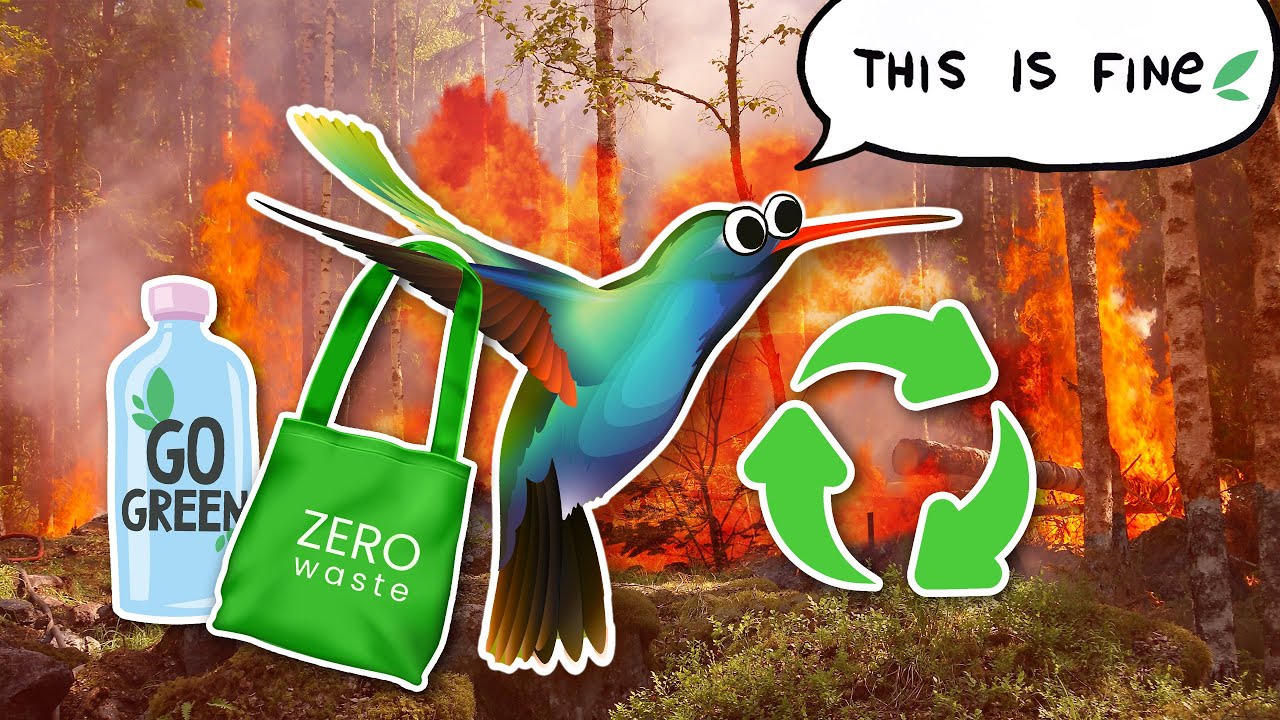
. global warming! And more specifically let's talk about individual efforts for the climate If I go for a ride in an SUV on a Sunday afternoon, just for fun when I know very well the effects of greenhouse gases on global warming .
. . Is this is wrong?
Should I be held morally responsible for my personal contribution to global warming? And can a causal link be traced between my actions and the suffering caused to someone somewhere in the not so distant future? And if so, can we estimate how many people in the future will experience the effects of my greenhouse gas emissions?
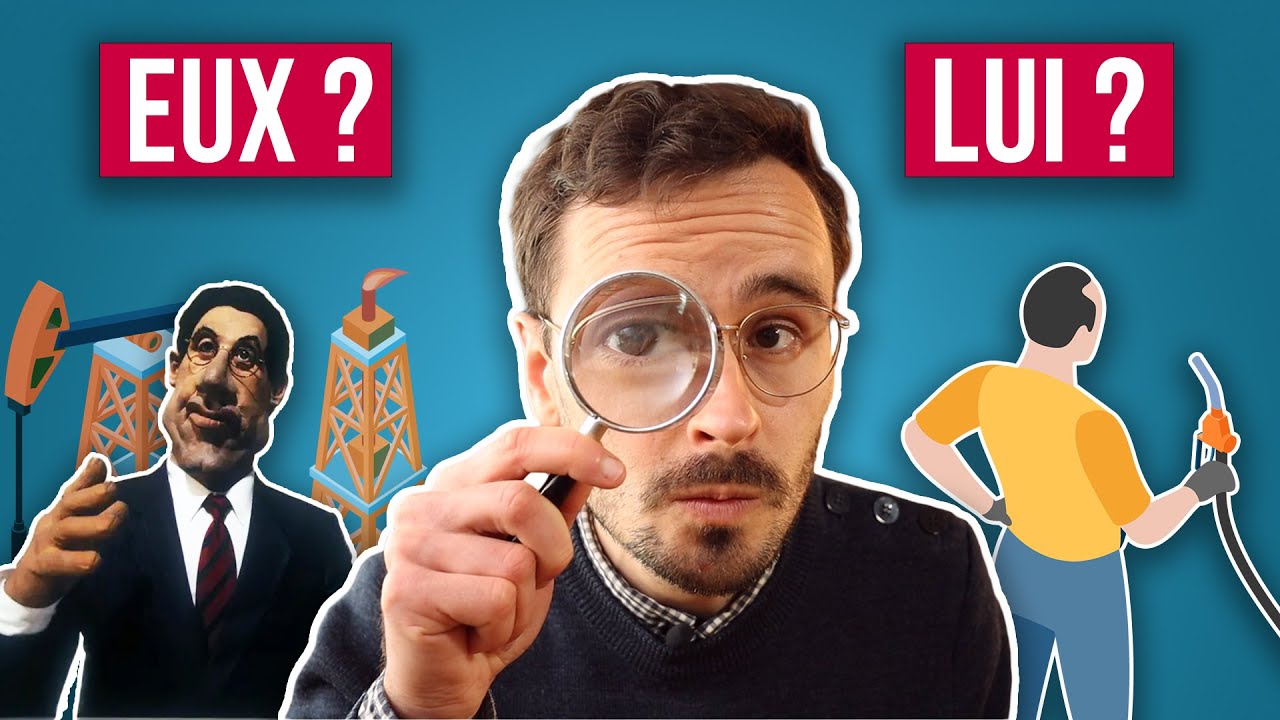
Or does saying that mean unnecessarily making individuals feel guilty and falling into the trap of over-empowering consumers, which creates a diversion from those who are really responsible? idea that the consumer is primarily responsible for the ecological crisis. This self-guilty and individualistic vision of ecology is blessed bread for big manufacturers.
" And then, greenhouse gas emissions are the result of so many innocuous behaviors that we perform every day. Don't I just have a right to live my life and consume the resources necessary to do so? In this series of videos on ethics and the climate, we will discuss this famous debate between individual action and collective action.
But before asking the question of whether focusing on these eco-gestures is the best thing to do, or if it is up to us to do it, or even if it will be enough to save us, we will first ask yourself a much simpler question: Is emitting greenhouse gases bad? Does it amount to causing harm to others? What is interesting about this question is that if we manage to show that contributing to global warming, as an individual, amounts to causing harm to others, it implies a much more demanding individual responsibility .
Indeed the question is not only to know if reducing your emissions is something good, or desirable, if it makes you a good guy. "You are a good person Monty, you are still laughing and putting your hands together! " The question is whether by contributing personally to global warming we adopt morally reprehensible behavior, contrary to the obligation not to harm others admitted (at least implicitly) by most ethical approaches: both consequentialist approaches for which this that matters are the consequences of our actions (eg.
utilitarianism) that ethical approaches that consider it important above all to respect some absolute moral constraints If the issue (eg libertarianism, Kantianism, . . .
. ) carbon dioxide this amounts to harming others, so even purely deontological ethicists, who consider that we have only negative obligations towards others, and not a duty to do good, should recognize that we have a duty to stop harming others by contributing to global warming. The little ivory tower point: details for my philosophical friends: in what follows we will not take into account the famous problem of Parfit's "non-identity", not really relevant in cases of individual ethics.
I explain why in the description "Especially since it uses the over-relative against employment! " (laughs) Back to the case of the SUV: In an article titled "It's not my fault" the American philosopher Walter Sinnott-Armstrong argues that while those who work for the climate deserve our admiration, people do not have it. moral obligation to reduce their carbon footprint.
And he gives the following example: let's imagine that I go for a ride in an SUV on a beautiful Sunday afternoon. I quote: "Not out of necessity, just for fun. Aah, the feeling of the wind in your hair, the scenery passing by!
How spectacular! Of course you could drive a fuel efficient hybrid car but the fuel efficient cars have less of that feeling of power and speed. So let's consider a gas-hungry sports vehicle.
Ha, the feeling of power! The excitement . .
. ! " He adds, “You might not like going for sports vehicle rides on Sunday afternoons, but a lot of people do…” Sinnott-Armstrong basically makes three arguments that my SUV ride doesn't.
cause harm to no one. The first one is a bit light, but allows for an interesting point to be discussed: it says: "Drving my SUV for fun doesn't harm anyone, because global warming will happen anyway. My individual action is not a cause.
. sufficient nor necessary for global warming Behind this argument, it seems to find the idea that the effects of global warming are not continuous but the phenomenon operates as a tipping point: if we stay below a certain threshold emissions, climate change will not happen, but if we exceed it, it will happen. We can compare the case of a person who emits greenhouse gases to a walker who decides to take a shortcut through a lawn, when he knows that if enough others do like him the lawn will be ruined.
What difference can it make if I take a short cut just this time? My steps on the grass are well below the capacity of pel resistance ouse. And it is true that there is such a tipping point: the biosphere has a gigantic capacity to absorb carbon and the carbon cycle brews hundreds of gigatons of carbon every year .
But we have long passed that tipping point. And it is estimated that 50% of the 36 billion T of human CO2 emissions accumulate in the atmosphere each year For information, our carbon budget to stay below 2 * for global warming is around 1000 billion T of carbon. And we are currently at 64% of that budget.
And on this site: trillonthtonne. org You can see that if the trends continue as in recent years, we will reach 1000 billion on June 28, 2034. [it got closer by the time I put the video o_O] And so our collective lawn eh well, it looks more like this .
. . As it seems clear that we will not succeed in limiting the warming to 1.
5 ° as recommended by the IPCC, or even to 2 °, as the Paris agreement aims , it's cooked. And if the situation is hopeless, why still mope? And why not enjoy life, like Nero playing the lyre while Rome burns.
Why not take a short drive, a city trip by plane, since we're screwed anyway? Is it because some of us sometimes think? However, this view of things is caricatured: if we consider the dangerous tipping point linked to potential feedback loops, such as a decline in the Amazon rainforest, the melting of permafrost releasing immense quantities of methane, or even the shutdown of the thermohaline circulation, global warming also produces continuous damage, which can still be reduced: the more we manage to limit warming, the more we will be able to stem rising water levels or desertification, for example.
This will cause less harm to inhabitants of the coasts or countries of the South. And even if we imagine a final tipping point, the Collapse, or the extinction of the human species, it is still possible to delay the deadline. Second Argument Sinnott-Armstrong makes, the consequences of some actions are so trivial that they can be considered to harm no one.
Global warming and climate change are happening on such a scale that my individual driving makes no difference to anyone's well-being Indeed while driving my SUV I emit a certain amount of CO2, in average of 2. 5 kg / l, but these emissions obviously only represent an extremely low share of global emissions: around 36 billion T per year. In any case, it seems that the consequences of my broadcasts are in practice imperceptible and negligible.
How then could one still say that I am causing harm to others? Does this argument make sense? Can we consider that the infinitesimal effects would be below a threshold of nuisance which would make them so insignificant that they would not be attributable to their authors.
To answer this question, some authors have proposed: The parable of the beans. Imagine a village where 100 villagers each dine on a bowl of 100 beans. As they prepare to sit down to eat, 100 starving bandits raid the village and each band seizes the dinner of a villager the nameless bandits and each of them has caused harm to one.
member of the village by inflicting on him to have to sleep hungry the following week the bandits are about to raid the village again but this time they have the moral scruples to steal and starve import these poor villagers to annoy everything the bandits come to the conclusion that it is preferable that each bandits do not want more than one bean per villa days indeed the theft of a bean certainly reduces the quantity fed only in a bowl but by an amount so insignificant that 'they do not help to become direct or noticeable at the end of the village days following this brilliant idea each of the 100 bandits grabs an apricot from the bowl of each of the 100 villagers and they leave after having eaten all the beans happy to n 'to have does no harm to the villagers because each of them has experienced less than the threshold of nuisance it's a it's a beautiful story can we still say that some wrongs are too insignificant to take into account? Isn't it counterintuitive to consider that the aggregate of greenhouse gas emissions causes considerable harm but that none of the individuals who contribute carries any responsibility? Sinnott-Armstrong still has one last argument up his sleeve: even admitting that my ride in an SUV raises the global temperature in an infinitesimal way, to prove that I am causing harm to others it would still be necessary to succeed in identifying catastrophes such as droughts or heat waves that can be traced back to my individual action.
But the causal link is so complex and so distended that it is difficult to hold me responsible for a particular wrong done to a particular person. To make the comparison between emitting greenhouse gases and the fact of not respecting health containment measures and exposing others to an infectious disease such as the coronavirus: if we are certain, in the state of scientific knowledge, that the the fact of emitting co2 contributes to immense damage , even existential, the causal link is extremely diffuse, and the potential consequences of an isolated action appear infinitesimal, whereas in the case of the coronavirus, a person who would not respect the confinement only causes a risk of damage, but the consequences of an isolated action can be very serious since it can lead to an exponential chain of contamination, killing thousands of people. In both cases, however, our brains bug.
According to the philosopher Derek Parfit, this could be a vestige of our previous existence in small human communities where if we cause damage, we can easily trace the cause, and where none of our actions are likely to affect thousands, even millions of people. Perhaps we are simply not equipped to measure the consequences of our actions in an era of pandemics and anthropogenic climate change. If this overly stretched causal link objection is well founded, then it would pose a problem for consequentialist theories : how do I make decisions to maximize good or minimize evil in a situation of radical empirical uncertainty about the consequences of my actions?
How do I decide what is the right thing to do if I'm not sure that an action will have good or bad consequences? However, consequentialism has an answer to this kind of objection: the theory of expected value, which could inspire a response likely to titillate our moral sense. Thus, although it is difficult to trace the causal link between my SUV ride and its real consequences, it is quite simple to calculate the expected utility of the resulting co2 emissions, by averaging the different possible results, weighted by their probability of occurrence.
In addition, Sinnott-Armstrong undoubtedly makes the task a little too easy: it is obvious that the consequences of this or that particular action over a long period of time will obviously give insignificant results. What is more interesting against it by reasoning from the usual behavior of an entire life following an approach of this kind which could estimate the damage caused on average by an individual because of his gas emissions effect greenhouse, part of which will accumulate in the atmosphere for several centuries. A few studies have been working on this in order to give a more meaningful view of the consequences of global warming.
And I won't surprise you if I tell you the result is a little creepy. Thus assuming (more than plausible) an anthropogenic warming of 2 degrees, which could increase the many causes of early mortality for the next two centuries, by the destruction of agricultural land due to the rise in water levels and desertification, by the The increase in natural disasters, the increase in heat waves, the increase in malnutrition and famine epidemics, but also by the increase in armed conflicts due to the scarcity of resources. In a recent article , Parncutt estimated the death toll from two-degree warming over the next two centuries.
As he says himself, this is an estimate which obviously makes no claim to precision and should be taken as an order of magnitude. But it seems to me that this is one of the most supported estimates that exist. How many deaths due to warming then?
At first glance, the estimate oscillates between an optimistic scenario of 300 million deaths due to warming and a pessimistic scenario of 3 billion deaths. Taking the median scenario, anthropogenic global warming of 2 degrees could double the number of predictable poverty-related deaths in the world and be responsible for the deaths of a billion people. That sounds like a lot, but this figure is probably still quite optimistic, because it is based on the predictions of the IPCC, notoriously optimistic; the author assumes a linear increase in warming as a function of emissions, with no runaway effect linked to the triggering of a tipping point; and above all, we assume that the warming will be limited to 2 degrees, whereas in view of the current trajectories, we have rather gone towards a warming of at least 3 degrees.
Let's come back to our macabre calculation: if we divide our global carbon budget of a trillion tonnes by this figure of 1 billion deaths, we can make the (again rough) approximation that on average when a thousand tonnes of carbon or 3600 tonnes of co2 are emitted into the atmosphere, it will cause the death of a person in the future. Based on these assumptions, Parncutt estimates that the average American who emits 20 tonnes of co2 per year for 80 years contributes to the death of about 0. 5 people in the future.
And that's just the death toll. In another article, John Nolt estimates that the average American contributes to the suffering or death of one or two people. So it's not true that our individual shows only have an infinitesimal impact .
If we transpose to the carbon footprint of a French or Belgian, both of which fall around 12 tonnes of CO2 equivalent per year, we arrive at an order of magnitude such that an average French or Belgian contributes to death of approximately 0. 25 person, or suffering or death of 0. 5 to 1 person in the future.
So driving an SUV is wrong? It depends on your ethical approach. For example, according to Hiller, acts that emit co2 are prima facie unfair if there is an easily accessible alternative .
According to others like Vanderheiden, we all have an equal right to a certain level of CO2 emissions. And he distinguishes between subsistence emissions, necessary for our survival, for which we have a fundamental right to a certain level of emissions, and superfluous emissions to which we would have limited rights, or no rights at all. To go further in full knowledge of the facts, yes that would be committing an injustice.
So be careful, all this does not mean that individuals are the only ones, or even the main ones responsible. The idea is not to place the full weight of the consequences of industrial capitalism on individuals . But if we reason from habitual and long-term behaviors, knowing (and now you know it) that our individual shows will significantly contribute to the suffering or death of at least one real person in the world.
future, and despite everything not to change their habits to try to reduce this impact. Well that is reprehensible behavior from the point of view of just about any ethical theory. I insist all that does not mean that you should become obsessed with these numbers, and feel guilty for each of your actions and each of your little cracks.
On the other hand, the long-term lifestyle habits that you adopt, your modes of travel or consumption, can significantly reduce the suffering of at least one person in the future. And that is still not nothing. Of course, there are limits to the realistic possibilities for an individual to reduce their carbon footprint , due to political or economic constraints.
Paradoxically, the individual has very little weight in the organization of this society. Most of the strategic choices that govern our life and that of the community are taken at other levels to serve often economic, political or geopolitical interests which go far beyond it " And we can also ask questions about the effectiveness of actions and whether they really make a difference. And what is the responsibility of the State or of companies in all of this?
We will discuss all of this in the rest of this series of videos on the ethics of global warming, which promises to be quite long. There you go, thank you, if you want to follow the next videos don't forget that you can subscribe, by clicking on the badge that should appear somewhere here. And if you have any criticism , remarks, objections, the discussion continues in the comments just below.
It's nice to read you and I try to answer them fairly regularly.