Europe [music] 100 years ago. Superpowers in their alliances rule the continent. The Triple Antant consisting of Great Britain, France, and Russia controls East and West.
Between these countries lies the Triple Alliance, Germany, Austria, Hungary, and Italy. For years, these countries have been arming for war. A war for supremacy in Europe.
In 1912 and 1913, regional conflicts break out in the Balkans. The Ottoman Empire declines and new nations are created in the spheres of influence between Russia and AustriaHungary. The Balkans are a volatile mix of languages, religions, and cultures.
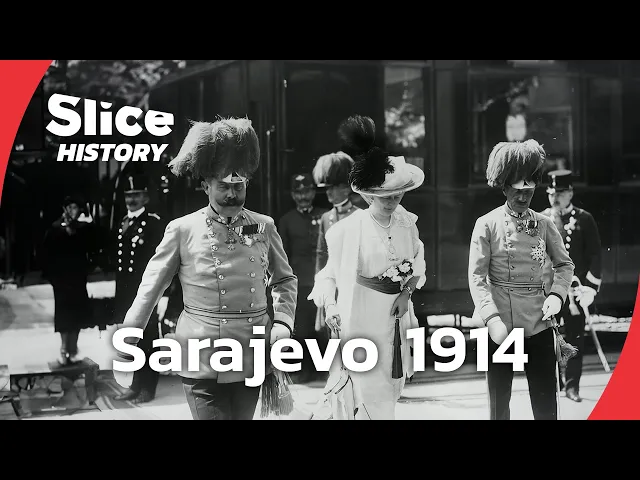
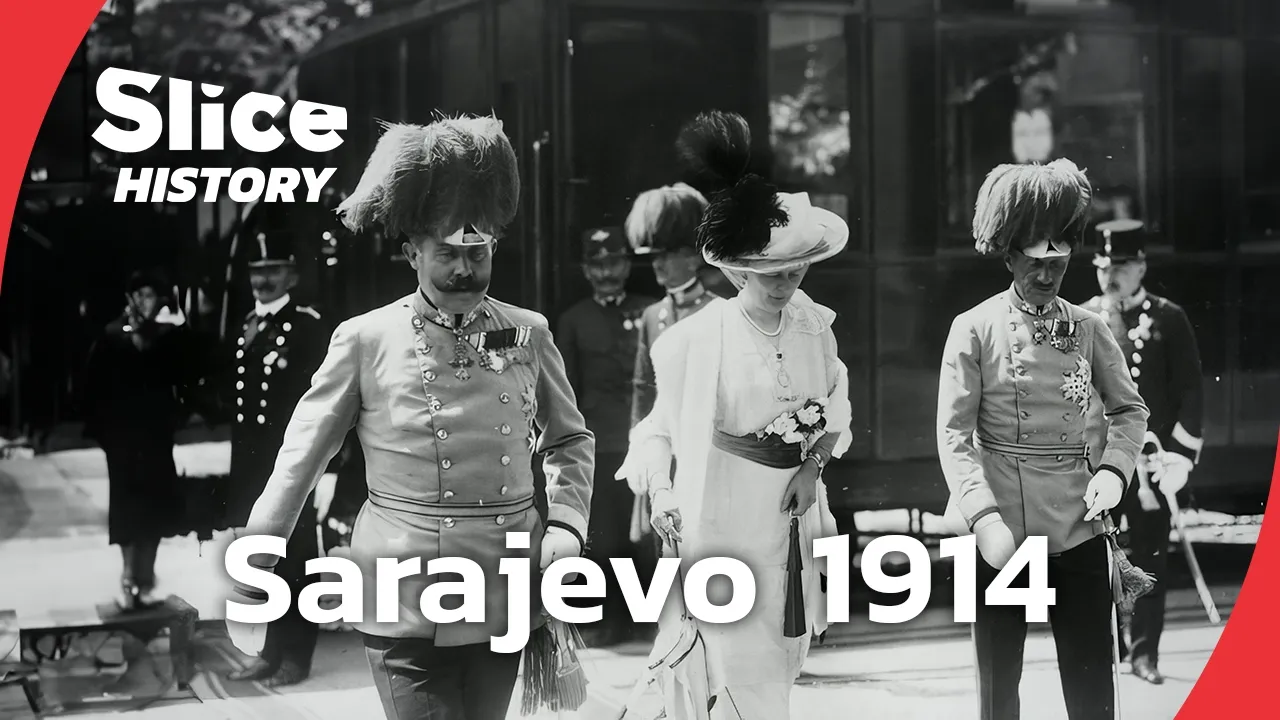
Here in the Bosnian city of Sievo, the story of Europe is altered forever. It's Sunday, the 28th of June, 1914. France Ferdinand, heir to the Austrian throne, is visiting with his wife to observe the army on maneuvers.
Many Bosnians are furious as they consider AustriaHungary an occupying power and the Habsburgs tyrants. A few months earlier, for more than 600 years, [music] the Habsburgsburgs have ruled from the imperial city of Vienna. However, the dynasty's golden age has long passed.
In the early 20th century, the Austrohungarian Empire faces economic [music] and political problems. AustriaHungary was described as the sick man of the Danube and as a stagnating superpower. This was unique within Europe.
>> The world saw the Austrohungarian Empire as rather an amusing sideshow to the business of being a [music] superpower. The Habsburg Empire consists of more than 10 nations. The Slavic populations are disadvantaged, particularly compared to the Austrians and Hungarians.
>> Almost 50% of the empire's population was Slavic. And there was this fear that the empire could fracture. As nationalism grew, every nationality within the monarchy asked itself why it did not enjoy the same rights as the Germans in Austria or the Hungarians in the Hungarian half of the empire.
>> The people demand more say and even democracy, but are unable to compete with the rigid state structures and the strict social hierarchies. The social order dates back to the Middle Ages. [music] I think this monarchy was an anomaly in a Europe that was gripped by nationalism.
However, this does not mean its end was inevitable. >> [music] >> At court in Vienna, time appears to stand still. The empire is ruled by the world's oldest monarch, Emperor France [music] Yosef.
>> Emperor France Yosef knew he had reached the end of his life. He had no ability or even will to change anything. And this [clears throat] was probably the most significant factor in what followed.
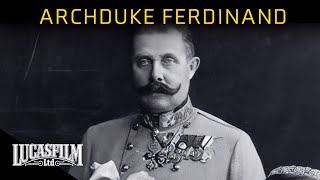
The future of the monarchy will be decided by the Archduke France Ferdinand. France Ferdinand. >> I think it is very hard to judge France Ferdinand.
He was such a complex temperamental character that few people could claim to have been unaffected by him. We know of the many problems of this enormous empire and he was not a stupid man. >> The suicide of France Joseph's son Rudolph establishes France Ferdinand as the heir to the throne.
A man previously impervious to the responsibility and etiquette of power. >> He traveled the world. Of course, a lot of the travel was for hunting, particularly in India.
They shot many tigers and many other animals besides. >> France Ferdinand is obsessed with hunting, killing more than 270,000 animals in the course of his life. The future heir is driven to persevere, to overcome obstacles, and to win.
And life as in hunting. He had exceptionally good judgment and was an excellent shot unlike many of his contemporaries. He spent most of his time at Achetan Castle.
From some of the early photographs that remain there, it appears to have been a comfortable home. >> Here in Lower Austria and at Connor Castle in Bohemia, France Ferdinand keeps his distance from the hostilities of the court in Vienna. His vision of a union of southern Slavic states within the empire, equal to the Austrians and the Hungarians is unpopular in Vienna and makes him many enemies in Serbia.
>> Emperor France Yosef was opposed to his nephew France Ferdinand's marriage to a lesser aristocrat, Sophi Kotek of Kotkavar, but eventually relented. >> [music] >> To fight for a woman like that, to wait and be patient, it really was true love. >> Sophie was awarded the title from Hornber, but France Ferdinand was forced to renounce the right of his children to ascend to the throne.
He is therefore more intent than ever on becoming ruler. Europe's kings and emperors congregate here to pay their last respects to one of their own, England's King Edward IIIth. It is a family affair as all the ruling dynasties are somehow related.
And yet before long they will pit the people of their nations against each other in [music] a bloody bitter conflict. >> The funeral of King Edward was an incredibly symbolic [music] moment. uh you know the death of a an emperor if you like and uh the death of an age.
>> Among the mourners representing [music] the 81-year-old France Ysef is France Ferdinand in a white dress uniform. It reminds me a little of that scene in the Godfather film where all the the dawns [music] come to together somewhere upstate of New York. Still imagining that the world was theirs to carve up whereas in fact that was very shortly coming to an end.
At the time, Great Britain is the world's greatest economic [music] and military power. London rules over colonial empire of almost half a billion people, a quarter of the world's population. We have, you know, the whole of India, half of Africa, [music] we have the uh the plantations in the Caribbean.
It seems like the world is ours. Britain likes its position as the uh the world's superpower and uh it was very aware of its position and it was very determined that it should maintain that position. >> The German Empire is determined to put an end to Great Britain's predominance.
Just a few decades before in 1870 and 1871, Emperor Wilhelm had united the German states under Prussian leadership. >> After the unification, Germany expanded rapidly. >> The German economy booms and the German army increases in strength.
>> The country was so successful that it is hardly surprising that the neighboring nations became nervous. Germany's oldest rival on the continent is France, the only democracy among the superpowers. After the war of 1870 [music] and 1871 and the defeat against Prussia, the relationship with Germany was of particular significance to France.
>> In 1871, France lost Alas Lorraine to Germany. The alsign question continued to overshadow the relationship between France and Germany. >> Russia is continental Europe's largest empire.
>> Surfom is still well established and social and economic conditions continue to decline. >> At the outset of 1914, the situation in Russia was extremely complicated. Russia provokes a war with Japan as a distraction from the empire's internal problems.
After the defeat in the Russia Japanese war, tensions in the Balkan countries increase rapidly. When AustriaHungary annexes Bosnia, Russia is forced to return its attention to the Balkans. a memorial mass in the small Serbian town of Shabbats.
>> Here and in every church across the country, the anniversary of the long battle for Serbian independence is celebrated annually on the 14th of February. The uprising against the Ottoman Empire began in 1804 led by Karta Georgia. He had fought for Austria against the Turks.
Serbia was liberated in 1804 by an army of rebellious farmers. The Serbia of today was therefore built by Serb farmers and rebels. The Kaj Georgia revolution gave Serbian society an egalitarian even democratic character.
At the time, AustriaHungary supported Serbia in its uprising against the Turks. Austria and Serbia had actually had a very good relationship since the 18th century. Almost all the doctors and architects in Serbia were students from Munich, Vienna or Gratz.
>> However, only a small portion of the Bulan Serb population live in independent Serbia. The fundamental aim of the new Serbian kingdom is to free all Serbs from foreign rule. >> From Norway to Greece, the flags of European nationalists demanded liberation and unification.
And the Serbs demanded the same national unification incorporating Bosnia, Herzuggavina, Kosovo, and Montenegro. >> This is destined to lead to conflict with AustriaHungary as the empire is home to many Serbs. The Serb king Peter I intends to establish a greater Serbian Empire which includes those regions populated by Serbs currently under Hapsburg rule.
>> However, following the Congress of Berlin and Austria's invasion of Bosnian Herz governor, Serbia found itself surrounded by Habsburg territories and allies. In 1908, the Imperial Army annexes Bosnia Herza governor. The province has been administered by the empire since 1878.
Serbia is offended and seeks out allies. Russia and Serbia were traditionally very close. This was not just because Serbia was a Slavic and Christian Orthodox country, but because the Serbs had always been loyal allies on the Balkan Peninsula.
The Serbian army on parade. In the Bulan Wars of 1912 and 1913, Serbia significantly expands its territory and Serbia continues to recruit allies against AustriaHungary. From the moment the relationship between Serbia and AustriaHungary began to deteriorate, Serbia sought out new partners, particularly France France.
AustriaHungary's Balkan policies have failed. Great faith is placed in the Imperial Navy to maintain regional superiority in Southeast Europe and in the Eastern Mediterranean. The AustroHungarian Navy was one of the most modern in the world.
On the whole, however, the Imperial Army was falling behind other European forces due to lack of money. >> The Hapsburg monarchy continues to lose ground in the arms race between the superpowers. For example, balloons are still used for military reconnaissance rather than airplanes.
The difficulty was to face up to the consequences and say clearly, "We cannot fight a war because you will not provide the resources we need. " The biggest mistake was not admitting that to themselves, to state officials, and to the emperor. [music] >> October 1913 in Vienna, celebrations marked the 100th anniversary of the Battle of Leipzig.
The future is ignored, the past revered. The glorious victories over Napoleon are remembered, as is the Austrian-led establishment [music] of the new European Order at the Congress of Vienna. If solutions to the problems of the empire are not found rapidly, Emperor France is in danger of passing a monarchy without a future onto his heir, France Ferdinand.
>> The idea of war surfaces repeatedly in domestic and foreign policy. Germany also celebrates victory over Napoleon with the opening of a memorial to the battle of Leipik. The German Empire ruled by Emperor Wilhelm II plans to build on the successes of the past and continue to defeat France in battle.
>> The tragedy was that people believed these successes could be repeated again and again. In fact, there was even this sense that one owed such repeats to those who had gone before. Emperor Wilhelm believes his army to be the best in the world.
He's determined to use it to achieve German supremacy in Europe. Russia and Great Britain are also in his sights. >> In fact, Vhim II was essentially the last person who should have led this blossoming German Empire with its established military traditions.
Germany's most important ally is the Hapsburg Empire. Wilhelm II and France Yosef hold joint imperial army maneuvers to ensure that they can defend their predominance in Europe if it becomes necessary. [music] >> France Yorsef was old, perhaps even ill, but he was still alive.
As long as he was still able to draw breath, the choice between peace and war remained his decision. >> His heir, France Ferdinand, is opposed to war. His primary ambition is to solve the conflict between the nations of the empire and give the Slavic regions more say.
>> He did not want to continue France's policies. And he was probably right. France Ferdinand also wants to reform the army, a task he entrusts to Lieutenant General Oscar Pierrek.
Pierrek governs Bosnia governor with a heavy hand. As a display of strength, he plans significant army maneuvers. France Ferdinand is to take part.
One could also interpret it as an attempt by France Ferdinand to check up on Pochure to keep him on his toes as he was a potential successor to the position of inspector general of the Austrohungarian army. >> The maneuver is to take place on the 28th of June in Sievo. People think that [music] history is uh something that's planned and and takes place in a very organized way, but uh it's like life.
It's very haphazard and doesn't quite fit the [music] patterns that we like to try and make of it. It was entirely logical for France Ferinant to observe the maneuvers in Bosnia. They were the biggest army maneuvers of 1914 and their successful [music] completion removed any obstacle to the appointment of Oscar Poturik as inspector general.
Everything had gone entirely to plan and he was very [music] satisfied. While France Ferinand was on maneuvers, his wife made several visits to SVO where she went shopping and visited an orphanage. >> There was an official reception in Sievo planned for the next day, the 28th of June.
In recent years, there have been several assassination [music] attempts by a Serb resistance group, Mada Bosna, young Bosnia. >> Mada Bosna [music] is part of a European phenomenon. Europe's crowned rulers are being hunted.
He was advised to cancel the event, but at the same time, Governor Potier told him that the people would be offended if his imperial highness did not appear. Of course, it isn't a Serb city. It's a city with just as many Muslims and Croats and some Jewish inhabitants.
And they welcomed Ferinant almost enthusiastically. >> On the way to Sva's town hall, a chain of unfortunate events that will alter the course of history begins. First, there is an assassination attempt with [music] a bomb.
The bomb bounced off France Ferdinand's car, >> but it blew up just [music] as he passed and it caught the car behind and one of the officers was injured. >> The mayor awaits his guests in front of the town hall. >> France Ferdinand is furious and coarse and is actually very impolite to the reception committee.
Inf committee. >> Nobody knows whether there are more assassins lying in wait. The rest of the day's events are cancelled, but France Ferdinand does not leave.
>> He wanted to go to the hospital and see the victims of the first attack. >> There are more assassins on the streets of Sievo waiting for an opportunity to strike. There's a famous photograph of the Arch Duke's car at the very moment before the [music] assassination.
You can see the wheels just beginning to turn. That is a wrong turn. that the Archie's [music] car is making.
>> The chauffeur has not been informed of the changes to the route. The car is forced to reverse. >> He has absolutely no idea how many of these young people are still in the vicinity.
One of the assassins just happens to be standing on this very corner. And this miserable youth fires >> and hits my great-grandfather in the neck. My great-grandparents die.
It is an unmititigated disaster and the city is completely unprepared to deal with the situation. Anti-Serb riots break out throughout Sievo and Serb homes and businesses are looted. The Serb population and the Kingdom of Serbia are blamed for the assassination.
>> The Austrians went looking for hard evidence that they could pin on Serbia. In the end, they invaded anyway cuz they couldn't find any. The role of Serbia in the assassination is very tenuous at best.
>> [music] [music] >> The bodies of the Arch Duke and Duchess are embarmed and brought to Vienna via Trieste. [music] >> They were then taken to Ashtetan Castle and placed in the crypt. >> [music] >> The marble sarcophagy that can be seen today were installed much later.
and Sophie. [music] His name is Gabriillo Princip. He and his co-conspirators are captured and charged with treason and assassination.
Princip states that as a [music] Bosnian Serban revolutionary, he intended to kill an oppressor and a tyrant. >> Princip was born in the Hapsburg Empire, not Serbia. He was one of France Yosef's subjects.
Princeip had nothing against France personally. >> He was simply the heir to the throne. He and his friends who included Muslims and Catholics saw the Hapsburgs as a colonial power in Bosnia governor.
>> For many Serbs, the date of [music] the visit was an additional provocation. On the 28th of June 1389, they had lost their independence to the Ottoman Empire at the Battle of Kosovo. Now they were once again occupied, oppressed by the AustroHungarian soldiers, the assassins wanted to fight and die for Serbia as their ancestors had done in Kosovo.
>> They were naive, uh, very young, incredibly young. Two of two of the people who lined up to shoot the arch duke were only 16. They were still at school and Princeip himself was only 19.
He knew that the assassination would have serious consequences and result in the death of the arch duke, but he had no idea of the tragic events he would set in motion. >> They'd made a plan for sure, but it's not really much of a plan. They're just, you know, let's line the street and then let's uh, you know, who will be the bravest to fire that pistol?
He is a tragic figure. These youths were turned into fanatics and taken advantage of in the worst possible way. A secret Serb society, the Black Hand Gang, provided weapons, but the assassins deny receiving any official Serbian support.
There is absolutely no proof of any involvement by the Serbian government led by Nicola Parich. Nothing that would suggest they even knew of the plans. >> Three of the adult conspirators are executed.
Prince dies in a dank cell in 1918. To the end, he maintains his regret at the death of Sufi. They had no intention of murdering Sophi.
They actually intended to kill Pure the military governor of Bosnia. Two targets. First France Farinand, second Pure.
>> I assume that Gabriel Princip simply fired at the people sitting in the car. And the two sitting upright in the back, the arch duke and his wife just happened to be the closest. >> Oscar Purek has been a soldier all his life.
Yet he has never experienced war or indeed people being shot. >> The assassination was a huge shock for Poturk. Witnesses at the time claimed he was completely confused and barely responsive after the attack.
He may have wondered what this meant for his career as the attack had shaken the very foundation of his existence. Essentially Pure was responsible for the security measures in Sievo. One can of course blame the chief of police or the mayor or other people equally, but there is no doubt that the final responsibility lay with him.
>> Pierre spends the weeks following the assassination doing everything he can to shift the blame for France Ferdinand's death away from his failings and onto Serbia. I think it was certainly in his interest to deflect attention from the events to make people forget. It's an obvious course of action.
>> Emperor France Ysef is at his residence in Bad Ishel when he hears of the assassination. He returns to Vienna immediately. He will have to decide how Austria Hungary will react.
By the time of the funeral for France Ferinand, Emperor France has already expressed his intention to find a military solution. >> However, a war with Serbia could also lead to a war against Serbia's ally, Russia. Yosef was fully aware that Russia would support Serbia and that there was a distinct possibility of war with the Russians.
>> If Russia becomes involved, AustriaHungary will need Germany support. Emperor Wilhelm vows to stand by his ally. >> He simply repeated the same thing he had told the Austrians many, many times before.
His highness emperor France Yosef is a Prussian general. He need only command and the entire Prussian army will follow. Vienna must have fully expected this unconditional support.
The intention to go to war was not limited to the emperor. It also played a significant role in politics. Even the foreign minister Count Behold shared this enthusiasm for war.
Vienna is convinced that there will never again be such a perfect opportunity for war against Serbia. Foreign Minister Bhdold is among those calling for hostilities. The militants hope that Germany's blank check will win over the last remaining opponents to war.
The Hungarian Prime Minister, Count Tiza, is initially opposed as this could increase the numbers of Slavs within the empire. His Austrian counterpart, Count Schu, is an early supporter of the war. Finally, it is decided the implementation of Operation B for Balkans in Serbia.
People are unaware of the impending war. >> Shabbat, a Serbian city on the border of AustriaHungary. The lively town is also known as the Paris of Serbia.
>> The song recalls the prosperity of the merchants of Shabbats before the First World War. Following the assassination in Sievo and the accusations leveled at Serbs and Serbia, the immediate reaction was, "What now? Dear God, please not another war.
Following the two Balkan conflicts, the Serbian population is tired of war and the Serbian army is exhausted. [music] In the border town of Shabbats, the people hope that all will remain calm. The spectacular double murder of an heir to the throne and the wife he fought to marry for so long.
This is the version of the assassination that is repeated across the world in international news reels and beyond. The assassination is primarily depicted as a crime story. In Russian newspapers and within the government offices, the assassination of the heir to the throne in Saro was considered an internal matter for the Hapsburgs as it had occurred on Austrohungarian territory.
[music] At court in St. Petersburg. Several voices clamor for war, but Zar Nicholas [music] II initially opposes any idea of conflict, fearing that it could increase political tensions in the huge Tsarist empire.
However, on the 2nd of July, foreign minister Sesonov receives word from Serbia. AustriaHungary has demanded it be allowed to conduct investigations within the territory of the Serbian Kingdom. It is immediately clear that AustriaHungary is beginning to put pressure on Serbia.
The Russian Secret Service also reports on preparations for war in Berlin and Vienna. The Russian side is therefore largely aware of what is occurring in Vienna and is absolutely determined to support Serbia this time. >> You could say that Russia like AustriaHungary chose to go to war.
From the very beginning, France has promised Russia unlimited support in case of war against the German Empire. >> The alliance with Russia was extremely important to Paris as it ensured some security from Germany. >> So, one can see the steps by which everyone's gradually, inexurably, been drawn to war.
Great Britain is determined to resist involvement in any conflicts on the continent as the country's political interests [music] lie primarily with the colonies. However, London is at pains to maintain the balance of power in Europe to ensure that Germany does not achieve supremacy. Britain was very well aware of the gathering storm.
I don't think that anyone could not have been and I think there were frantic diplomatic maneuvers going on behind the scenes to try and prevent what was rapidly becoming uh the inevitable consequence of the uh the assassination in Sievo. Lieutenant General Oscar Pierrek prepares for war with Serbia. Despite the responsibility he shares for France Ferdinand's death, he demands an immediate commencement of hostilities on an almost daily basis.
In the middle of July, he even threatens to resign in a letter to France Ysef's military authorities if war is not declared. It is one of the century's hottest summers in Vienna as in Belgrade and across Europe. People are unaware of the plans being developed at the courts and in the chancellaries of the superpowers and how close war really is.
The German Empire and AustriaHungary hope to take advantage of the element of surprise and appear to conduct business as usual. >> The generals and admirals behaved as though they were unaware of what was going on. They all went on holiday because they had to [music] keep up the appearance of normality.
On the 25th of July, they all returned one by one. >> On the 23rd of July in Badishaw, Emperor France Yosef signs an unconditional ultimatum to Serbia, giving it just 48 hours to comply. >> Ysef France Yosef bears significant responsibility for unleashing war.
He wanted a conflict with Serbia. He did not want to start a world war. On the 28th of July, war is declared on Serbia, although it has agreed to almost everything in the ultimatum, but refuses permission for imperial delegates to investigate the assassination on Serbian soil.
This is presented as justification for a war described as a punishment for the murder of the imperial couple. The Serbs were aware of the prevailing mood in Vienna that all of Serbia was to be held accountable for an assassination carried out by a single Serb from Bosnia. declared war on Serbia.
>> Oscar Poier has achieved his goal, a war that will erase any trace of his failure on the 28th of June. >> Oscar for Oscar Purek. This was a revenge campaign, a campaign he was prepared to conduct with everything he had at his disposal and at any cost.
He was prepared to accept incredible losses. >> [music] >> To the strains of the imperial anthem, the trains roll towards the Balkans. AustriaHungary's ally, the German Empire, observes the reactions of Russia and France closely.
>> The war that the German army had prepared for and that they hoped for was the war against France and Russia. The planned campaign was to take four to five weeks at most. It wasn't just the German emperor who believed in a short war.
This belief was shared by the German and the Austrian generals. Within a few hours, the fate of Europe is decided. If Russia mobilizes its troops, Germany is prepared to declare war.
[music] And then you have the Russians mobilizing and the Germans saying step back and then the Germans declaring war and then the British [music] saying uh you know let's leave Belgium neutral because they know that the Germans first act will be to try and get into France and so then Britain is bound to come in. This is the terrible logic of the alliances. >> It was the same for the other side when the German Empire signed a blank check for the Austrohungarian Empire.
ends the spark that set Europe on fire. Gavillo Princip's bullets. They provided AustriaHungary with a pretext to punish Serbia and caused a world war.
I've always [music] found it completely incredible that the nations empires would speak like that about one another. And Europe was riven with these kind of jealousies and rivalries and we're talking about uh you know feelings that one might ascribe to a bunch of spoiled children and they're about to lead to this terrible war. The first hasty operations began on the 12th of August 1914 and the first entry in Poturik's journalist today my war started >> began in creek.
They believed they were incredibly well prepared, not necessarily in terms of arms, but because their soldiers were particularly good. In the first days of the war, they suffered terrible losses. The troops, even inexperienced soldiers, were thrown to the lions.
The inexperienced officers and generals had no chance against the battleh hardened Serbs. The strength of the Serbs had not been underestimated. Rather, their own strength had been terribly exaggerated.
>> The Serbs reacted with professionalism and fortitude. It soon became clear that Austria had gravely underestimated the resistance they would face. Kept a detailed journal during the first months of the war.
He writes about the weather, about the temperature. His entries are shockingly insubstantial. He's simply not prepared to accept that he's fighting a strong and experienced opponent rather than an easily vanquished inferior adversary.
>> The Serbs have a special relationship with their nation. They see it as their property. This is why they fought so hard to defend their Serbia in the war against the Habsburg monarchy.
history class at a secondary school in Shabbat. The great victory of Serbia and its population of 4 and a half million over an empire 10 times its size remains a source of pride. Unexpectedly, Oscar Pierrek does not attack from the Danube in the north.
Instead, the attack is launched across the Sava and Dina rivers in the west to surprise the Serbian forces. AustriaHungary's first offensive lasted less than two weeks. Then the Imperial troops were forced to retreat.
Shabbats and its surroundings were completely destroyed in the brief conflict and the Paris of Serbia became the Von of Serbia. Shabbats really did look like Verdon. The Habsburg troops that entered Shabbat were from the second army based in Hungary.
There were lootings, abuses of the civilian population, mass executions and murders. Anyone who can escapes from the areas held by the Imperial troops. The war against the Serbian army has become a war against the Serbian civilian population, and racism, summary executions, and the brutal punishment of partisan fighters are rife.
The less success they had on the battlefield, the more their assaults on civilians increased. The civilians were hanged and put down, as it [music] was known at the time. >> [bell] >> Across the region, civilians are taken as hostages.
Approximately 120 women, children, and old men are imprisoned in the church in Shabbats. >> Before the retreat, all the hostages are shot in front of the church and hastily buried in a mass grave. [clears throat] This is massac.
>> The massacre in Shabbat was just one of many that occurred in northern Serbia. The Shabbat's massacre was the largest, but similar events happened throughout the neighboring towns and villages. There were no houses where we are walking now.
The train station was here and here were the train depots. I am from Prinyavo. My great-grandfather was shot and killed here.
My father was also brought here to be shot. I have been coming here since I was a child. I am 75 years old.
>> Almost every family in Serbia lost someone as did the family of Peter Shivkovitz. Dear friends, dear young people, it is your responsibility to preserve the memories. >> Preserve the memories of those who lost their lives here.
My father was here. This is where he survived thanks to a hole dug for a telephone mast. He was lucky that he could hide in the hole, that he survived, that they didn't execute him.
My father watched everything from there. This is where they were moaned down. This is where they were buried.
>> The executions happened like this. The firing squad was on the tracks and the people who were to be executed stood here. The firing squads liquidated everybody from over there.
[bell] [music] Some people hugged each other. Others huddled together. [music] They grew up together, lived together, and wanted to face death together.
I think I have described the situation back then to you as well as I can. Observers stood around silent, powerless, [music] in tears. [music] >> Oscar Potier launches two more attempts to defeat Serbia, but without success.
In autumn of 1914, the emperor's army is forced to admit defeat. >> The Serbs have defended their country by summoning up all their strength, but they have paid a heavy price. Oscar Potier never visits the front lines.
He remains at his headquarters in Sievo. As his soldiers fight, he has a minor accident. The entry in Poturik's journal is almost sniveling.
Or is he in fact proud that he has a war wound? In any case, this was the only injury he received during the conflict. >> Poture certainly remained unmoved by everything that happened around him.
Even the failure of the third offensive could not compel him to admit any culpability. On the contrary, he considered his removal from command unfair. After all, he had already made plans for the fourth offensive.
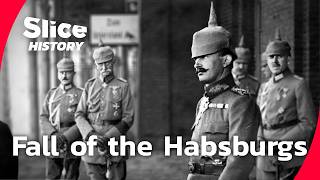
>> France Ferdinand had hoped to reform [music] the empire. Instead, his death marked its downfall. >> I don't think my great-grandfather can be held responsible for the millions of dead because the decisions that were made [music] later were completely wrong.
>> Emperor France Ysef started a war that would destroy [music] the old order of Europe. >> I don't like to use the term war guilt. Although, like any intelligent person, I am furious.
But the blame for the war clearly lies here in Vienna and over there in Berlin. [music] The enthusiasm for war was followed by total hatred of the enemy. >> It was a biological disaster for the Serb people.
Serbia is the country with the highest percentage of military and civilian casualties in the First World War. A quarter of the Serbian population, more than 1 million people lose their lives in World War I. At the end of 1914 and the beginning of 1915, nobody knew how this great war, this world war would continue.
>> At the end of the first world war, more than 17 million people lie dead. An age of violence ensued and it left its mark on the history of our continent. Many soldiers who fought in World War I and far more of their sons [music] would return to fight in another world war just two decades later.
>> One can say that those [music] things probably would have happened anyway. The world was heading towards war. But it just so happened that it was triggered by the shooting on the street in Savo that changed the course of [music] history for everyone, for all of us.
Heat. Heat.