you know what they say about quantum physics no one understands it and those who say they understand it are either lying or crazy well back in the days leading up to the discovery of the field that couldn't have been more true I mean in the late 19th century everyone thought the world was purely Newtonian so proposing an idea like quantized energy seemed both unnecessary and straight up crazy however there were a few things that Newtonian physics could still not explain at the turn of the 20th century the first topic I explain in this video where
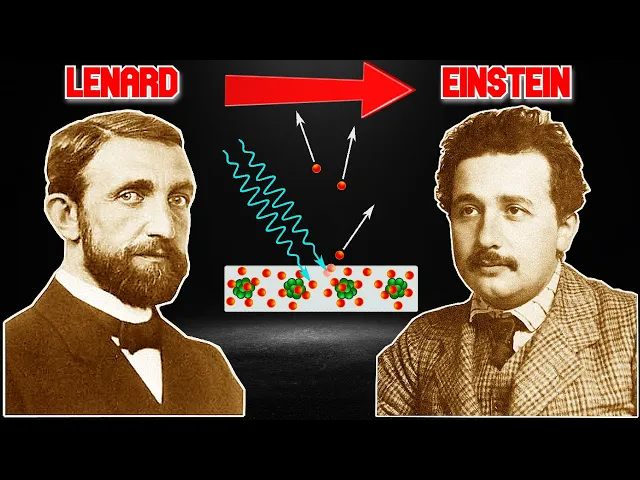
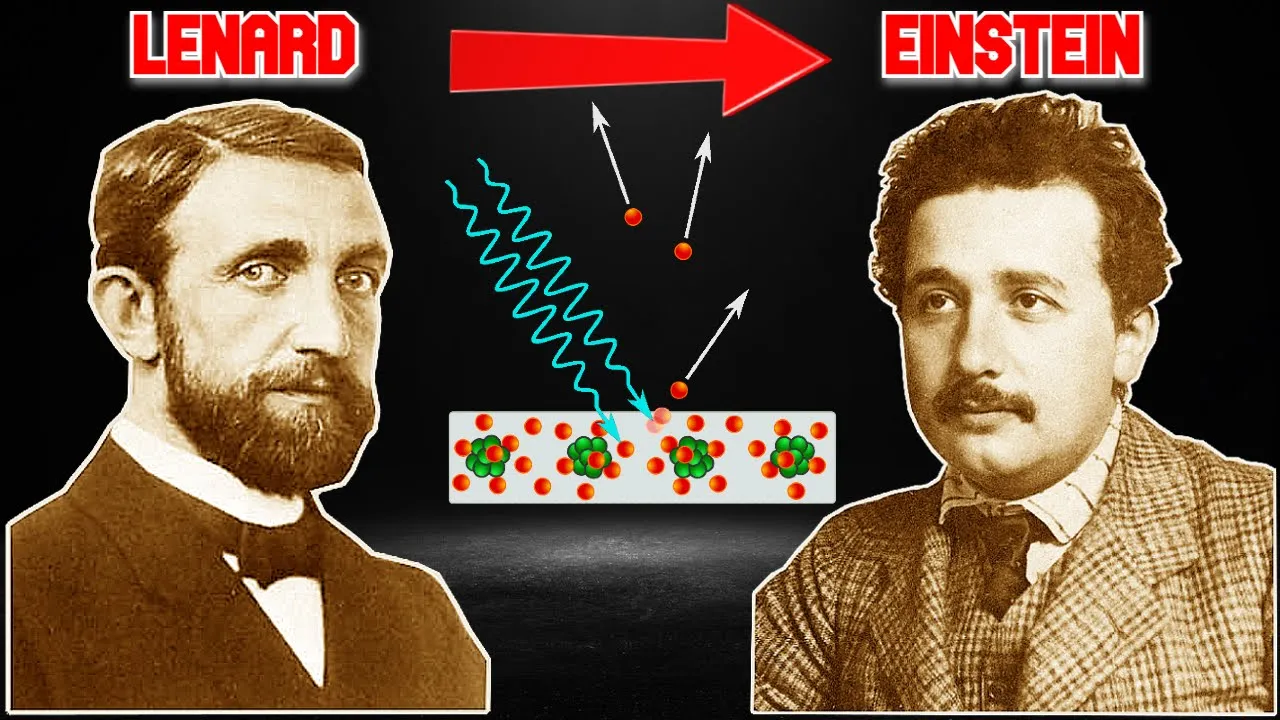
the ultraviolet catastrophe was stumping physicists on understanding black body radiation you should check it out but only after you watch this video the second topic that was still causing a lot of head scratching was something called the photoelectric effect this effect essentially is just when electrons called photo electrons in this case are emitted from an object when highfrequency light such as ultraviolet light is shined on that object the reason this was confusing to so many was because the effect could not be explained mathematically when light was assumed to behave as a wave which was the
widely accepted View at the time and also so because no one knew that it was electrons being emitted when the high frequency light was beamed on the material the photo El electric effect was first discovered in 1887 by Heinrich Herz but it wasn't successfully explained until 1905 by Albert Einstein explaining this effect was actually the work that put Einstein on the map and won him the Nobel Prize but for more than 15 years there was no answer for it and many were trying to make a name for themselves by figuring it out one man who
made great leaps towards figuring out this problem was a Hungarian physicist by the name of Philip Leonard from 1888 until 1902 Leonard conducted a variety of experiments on these things called cathode rays to determine their nature see there was a big problem with cathode rays at the time the problem was that they were sealed inside what is called a Crooks tube which essentially is just a glass tube made into a partial vacuum coated with a phosphorescent material and with a cathode and anode stuck in it since the Rays were produced inside this tube there was
limited access to them and therefore they were more difficult to study so to fix this problem Leonard made a small window in the tube cutting out the glass at one end and replacing it with a thin sheet of metal thin enough to allow the Rays to pass through but also thick enough to withstand the pressure differences between the crooks tube and the atmospheric pressure outside the tube this window later became known as the Leonard window using this modified Crooks tube Leonard was able to learn a lot more about the nature of cathode rays he used
paper sheets coated with phosphorescent material to capture and measure the intensity of the Rays that would escaped the tube through the window using Metals with differing densities for his windows he was able to come to the conclusion that the absorption levels of the Rays on the paper sheet was directly proportional to the density of the window this led Leonard to believe that the Rays were not made of electromagnetic radiation since they were affected by the density of the metal windows he also conducted experiments in which he let the Rays pulse through the window and into
the atmosphere when he did this he found that the Rays scattered after seeing this he came to the conclusion that the Rays were made of of material that was tinier than the air molecules which lined up with JJ Thompson's previous experiments with cathode rays that ended with the proposal of the idea of the electron Leonard's most ingenious work however Came In 1902 when he proposed the idea that the photoelectric effect was really the emission of electrons just like cathode rays he then devoted a lot of time to studying the effect itself the first thing he
discovered was that the effect wouldn't happen at all for lower frequencies of light but once a certain threshold was reached the effect would immediately happen like turning on a switch as opposed to a gradual increase in the effect the second thing he discovered is that the maximum kinetic energy of these photo electrons was not determined by the intensity of the light shown upon the metal plate but rather determined by the frequency Leonard got awfully close to explaining the photo electric effect but unfortunately was limited by the equipment he had he was not able to record
quantitative data on these relationships rather was only able to notice the trends that happened this lack of numerical data from Leonard is what kept the window open for Einstein to come along 3 years later and mathematically explained the photoelectric effect with quantum mechanical ideas regardless Leonard still won the Nobel Prize in 1905 for his work with cathode rays and was a vital figure in both helping confirm the existence of the electron and in helping to determine that electrons are the cause of the photo electric effect along with determining the nature of the emitted photo electrons
if you enjoyed this video please consider liking and subscribing click here if you want to see more content on developments and science around the same time thank you for watching and I'll see you in the next video