the material i just gave on the high achieving low-achieving teachers is part of the sage study in fact the report that i sent you contains the achievement data but almost all the report contains the is on the highest the high achieving and the low achieving teachers well that's where it's found c-e-r-a-i sage and that's where it's found um as i was browsing for some other reason i came across this module on staff development based on effective teaching at you out of utah and it's very good i've looked it over and i'm saying you know if
you want it or want to give it to someone or want to use it it looked like a it was one of the few things you know it was very good you know i i wrote the author saying hey you know i never heard back but it's a it's a very good thing someone asked me questions about preschool before we we go on to the next one and i just thought i'd sort of catch up uh the research and i have a piece at the end but i'm making you may be too sleepy the research
on on you just can't beat the research on the advantage of beginning reading in kindergarten or earlier it's consistently coming out that way the chicago study where they began it was an academic preschool and these kids were doing better at the end of sixth of sixth grade dolores durkin just a wonderful researcher who was at illinois decided 15 years ago to identify to find african-american kids from from low-income families who were reading at grade level and she went to decatur a little town 50 miles from champaign to find these kids and she said she thought
you know they'd be in one school one teacher one principal she found 27 african-american kids poor who were reading at grade level at the end of sixth grade so what school is the first thing she found was none of these schools none of these kids were in any of these schools all uh through sixth sixth grade they all they were gonna there was this circuit from the decatur to chicago went back none are the same teachers under the same principle didn't seem to be any of that what happened she found that for every one of
these kids someone in the family mother aunt sister grandmother taught them how to read before they came to first grade and this focus on by the way the iqs were not exceptional 102 now that that these kids had had that systematic reading and focus on reading uh right from the start and here they were at grade level or above at the end of sixth grade so again more more evidence for this the important and and no loss the notion that childhood gets lost etc just just has not been borne out by the research that's it
we're now into the third part when we're teaching math when we're teaching spelling math when we're teaching spelling when we're teaching computation we teach kids an algorithm algorithms for math algorithms we teach kids algorithms for these skills for writing algorithms and the instructional practices the high achievement practice focus all these the teacher uses to teach the algorithm which the kid applies oh that'll do it okay sorry the teacher with my voice you don't need something the teacher uses these procedures to teach the algorithm which the kid uses now in reading comprehension there's no algorithm there's
no algorithm to come up with the main idea there's no algorithm to come up with a summary there's no algorithm to teach kids how to write an essay there's no algorithm there are what you have are general rules but no algorithm so in place and this is where the word scaffold comes in what you do is you support the learner through and we're going to be talking about these supports and they're all written up in my handout you support the learner through these supports and the learner somehow constructs the higher level and this is higher
level ability in the area okay so what we're giving the kid is concrete prompts like a question like use concrete prompts to enable one of the studies has taught kids to ask themselves questions to ask questions about the materials this is part of reciprocal teaching um they get passages paragraphs and the kids practice looking at the material and asking a question about it and the kids go back and forth study after study has found that when kids okay in order to ask questions we give them some support so we say a question will begin with
who what why when where that's the scaffold that's the concrete prompt um your book your hand has 50 is almost 100 concrete prompts that the other two presenters have have assembled and they're listed and they're laid out there and many of them are excellent and what they do is they serve to support the learner in essay writing in overlays just like who what why when where and these they all serve to support the learner that's one piece and in the bottom what we the teachers do is provide them with general strategies such as modeling thinking
aloud models uh hints i'm going to be talking about all we provide them with these general scaffolds which they use through the cognitive strategies push it down no and this is where construction comes in the student the student constructs the ability for example we have found that teaching kids to generate questions that when when one group is taught to generate to ask questions about the material and practice they're superior in reading new material they're sometimes superior on standardized tests why would asking a question about a passage on alaska lead to superior performance in a passage
about pennsylvania we don't know because we can't investigate but the the current guess is that having to ask questions having to practice this led to the generation inside of an approach a structure of way of doing things that leads to the um the improved comprehension let's see and okay now the notion of all the way up the notion of and so during the 1980s many investigators developed these supports like who what why when where and taught them and the successful ones have been assembled in a number of books some of them are in your book
there was a wonderful book by by michael presley which i reference in my handout on the teaching of cognitive strategy simply a superb book okay there is this in wisconsin they put out strategic learning in the content area you see well let me go back to the first one the first overlay the the effective teaching literature which i talked about earlier really fits in here but it wasn't sufficient for teaching writing it wasn't sufficient for teaching reading comprehension there we learned that we have we have to turn to and combine indeed this new literature with
the scaffolds and with the strategies and i'm just so excited and now i'm going to talk about some of these scaffolds that are available actually ellis and kozlov also talked about them but now go you've seen it with yeah give the wisconsin sort of handout so they can see it give the wisconsin overview the heading and i guess wisconsin state department of education you go to that on google and you get it if you're teaching kids to identify sequence then this scaffold this support is one they use you have in which you take the sequence
and using all the sequence develop the uh develop the topic it's a support now hopefully when this is removed the kids are able to have developed the competence and are able to to act on their own another one is when an outline that they can set up for a compare and and contrast uh procedure i once some of you may have heard of the the five step essay where you the the five paragraph essay from the romantics hate it uh i think it constrains writing uh i was in an advanced class taught by i had
heard about ray gulak who was identified as an inspiring teacher i was looking for those and i went to this classroom he was teaching he was teaching an advanced class that had just finished studying macbeth and he was going to teach them to use macbeth to develop an argument on using the scaffold of the five-step essay and the first the first thing is you you come up with a good with a good topic sentence a catchy sentence and you provide the support second paragraph is argument one support third paragraph is argument two argument three and
then there's a closer kind of thing and he modeled that he did the first one but the whole period essentially writing that essay by himself i mean with support from the class here's my first argument now what can i use to support it and he the class helped him and but he was modeling the second one and support because he were all his the third one and and support and then the conclusion so he spent the class period modeling with it using macbeth to develop an argument about a theme in macbeth and working his way
through obviously i came back the next day the next day he and the class mainly the class came up with arguments the class came up on a different topic from macbeth the class came up with the headings for the three paragraphs and the class worked together to do it third day clearly i came back each kid in the class was working on his her his own and ray was walking around supervising so here was model support and this guided practice that worked through all the way through and this was the advanced class we asked them
often well ray you know the do these kids need now presumably because they had gone through this step these kids are now better able to apply whatever new learning is to uh to writing and this frequently comes out very well um i someone said ray you know do the bright kids need this he says the bright kids learn this use it a few times and put it away the average kids use it and tend to use it when they need to and the slower kids use it all the time never depart from it so that's
sort of an example of of a scaffold and how it works next okay now yeah this didn't okay now what what i did and this is in your in your in my handout i went to these studies these experimental studies and i found 50 or 60 of them i went through the studies and said how did they do it and i took out of those studies the methods they used and put them together in a paper it originally was 40 pages and by working hard i managed to get it down to like 15 now parts
of that thing someone once said i'm sorry this letter was so long i didn't have enough time to make it shorter and so i got it down to 15. and it is i i i sort of loved doing it i thought carla meister and i helped me because there was such genius there was some i mean like looking at a work of art there was some such genius such thoughtfulness in in developing this sort of thing and what we have here by the way is a similar sequence to what was going on in the effective
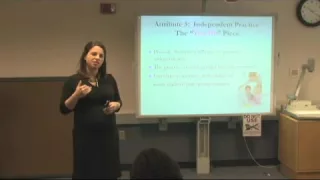
teaching research in other words first this is the overview okay number one is your your demonstration you provide the prompt and then you demonstrate it and here is where things like models and thinking aloud comes in thinking aloud is a type of model i'll come back to it and then you guide practice provide feedback but sometimes ingenious feedback was was provided and finally independent practice but there are things in these studies and they're in there that you never would have seen just by going into the classroom but many way but if you will see many
of the teachers then use this in this in their own teaching and and these are beautiful lists and they're there they're written out in the paper a list of lovely ideas about teaching that i think can be used by teachers now i wouldn't go in and tell a teacher hey i went to this conference and rose and john gave me 15 things here's the here's the do it you know what i'm trying to do is just you know we don't want to overload two or three of these ideas they might find useful and that's sort
of you know let's go over some of them um models if you're teaching in this case they would teach the kids to ask questions the teacher would model first model of the asking of the uh question okay the teacher would model the five step essay uh model um how to there were there were scaffolds on how to summarize the teacher would would model the the the the how to summarize with the model number two think aloud that's new that sort of came out in the uh eighties uh and i find you know it's very useful
um oh there was okay where you sort of if a teacher is trying to write a summary the teacher will think aloud the procedures he or she is using to come up with a summary i'm looking at first now here's a here's an example in in my text of val anderson who sort of modeled summarizing she says i'll summarize this part of the article so far it tells me this since the title is the spanish and clinton then i think that this must be important i'll sum up by saying and then you'll say well they
didn't say this they didn't say that it's it's modeling the procedure either for writing or for math problem solving or for or for comprehension nope that's model in the guided practice what these people would do would come up with techniques that would simplify the task i don't know why they say regulate the difficulty why change that and now it's reduced the difficulty okay um for example when palance are taught the kids to write questions she'd start with a single sentence and they would practice writing a question about a single sentence and this was fun after
that and she would model trying to generate a question about two sentences or about three in teaching kids to summarize they begin by writing a summary of a single paragraph and then move up to the next there was this one study where they were teaching kids to summarize and they began with material that was two levels easier than where the kids were at and then you know then moved it up so it was providing for that okay they also this is this is is a common thing uh where the teacher would know where the kids
were going to have problems and and and talk about that to the kids so that um parents are anticipated the inappropriate questions that the kids would ask you say now here's a question that's too broad and they have an example here's a question that's too narrow and they'd have an example effective teachers always know where the kids are more likely to make errors but this is this is sort of a way of of adding to it um provide a cue card kind of i go in schools cue card if kids are learning to ask questions
they have the who what why when where okay if it's a five step essay they have the cue card if kids are learning to summarize there's a cue card of the steps you go through in in summarizing i'll be in classrooms sometime where they'll they have the cue cards on everyone's desk and always the teacher points me in the cognitive strategy cute i'm not sure how effective some of those cue cards are they they look good but but but they're wrong okay um a checklist some wonderful examples of a checklist that came out of of
these studies uh how well did i identify important information these are studies that work by the way how well did i link information together then i use good signal words a good question to give the criteria of a good question frequently there was comparison of course with models of expert work the students did the essay and then they would write a summary and they look at a model of a summary they look at a model of good questions they look at a model of essays again we have the chance of the kids to learn that
from the thing uh fix up strategies you can't use them all but this was a good one where what do you do when you're having problems some of the comprehension stuff focuses on this and here we have in some of these studies this was one by brighter first of all reread difficult portions of the text read ahead to see if the problems clear up and then the most independent practice uh with new examples in the thing now if i was working with with teachers i would certainly you know work with them on the scaffolds but
you can't leave it there you see the question is which of these additional supports and prompts in yours would you emphasize when you're talking to them or when you're supervising a lot i wouldn't give the whole list certainly thinking aloud models fix up strategies are three that i would recommend but feel free to you know to select uh the ones you feel more appropriate but my advice would be you know don't push too many at once okay and they're all summarized nicely uh in in this article next over now when you put this one up
okay there's some numbers you have put it up there's some numbers on the side cover the numbers real fast fine not bad oh now open it up move it a little there you go okay this is a review that carla meister and i did we got a hold of 50 studies that had taught kids to ask themselves questions and then the the in the studies they looked at student achievement on new material as part of the post test and what we saw was well there were different ways in which they taught the kids to ask
questions one group taught them to use the who what why when where in another group they were taught well there are there are three types of questions there's literal there's a search to text and there's outside the text so they were taught those three another group was taught to ask questions that focused on the main idea fourth they gave the kids questions and said use these questions on the material the fifth they talked this was they thought the story grammar uh the story has a a um you know the characters and the characters conflict and
the resolution and it's a beautiful the story grammar thing is a lovely pers scaffold for for organizing the materials and the last one we don't know what they were doing now place your bets which was the most which one when and what we did is we did the hocus pocus with the effect sizes to see which one had the stronger results in that the people in the control group beat the people in the experimental group beat the control group the most on new material it was always a new material they hadn't seen before which was
the best place your bets don't tell me tell your neighbors at least you're committed and which is the worst and which is the worst okay and the answer is number four the teacher didn't teach the kids the teacher gave support to the kids next one next overhead please yeah okay that's it this is what allison king did this is the scaffold this is the prompt which she passed out to her she did this in sixth grade and she did this in college they had to they use these prompts to develop questions and ask them to
each other so the prompt enabled them to search but notice notice the the level of these prompts now you know this is something which the romantics would say you should never do there's too much direction here but this scaffold turned out to be one of the more powerful ones because it directed their thinking better better meaning higher scores next one valerie anderson did this when she was teaching she was teaching kids who were able to decode but just had no sense of comprehension and they worked in groups and these were the kinds of questions they
asked each other in the group they did this this val's val anderson's stuff these kids did better on achievement tests standardized achievement tests than any other group you see what's you see what's happened i think what do i see what's happening they're asking bet they're asking questions both in the king and in the anderson they're asking questions that require the kids to do a deeper level of search than they would have had because it's more support than they would have had only what the who what why when where and what we care about is not
do they generate questions but the level of search that they're going in and whether or not that level of search generalizes to their independent reading and so what's happening here is questions that promote uh a deeper search okay let me leave this up for a while when i was one of the things i also do is look at schools where 75 of the school is on free or reduced lunch and at the end of third grade they're reading at grade level there are two of these schools in southern chicago both of them require uniforms and
one of them i barely got in because they didn't have a tie and so the teacher had a kid give me his tie so i wore that the day i was there i now have a tie in my car and when i was in one of these schools one of the teachers said that she sort of didn't really say but it was rather clear from her manner that i had better be in her room at 10 15 to see the lesson she was going to give in junior great books and i was there in the
back of the room and i had my book and what junior great books is and i i it's been studied and it works out well is high level great good literature where someone else has developed the higher level questions for it and the teacher then asks these questions and the kids have just a lovely discussion based upon the quality of these questions and there were questions there i never would have thought of you know industry and this was you know good that was it was a langston used story uh the one that i was that
i was directed to and there's something i believe something to be said for the importance of these um a provide of these questions and and providing this rather higher level uh kind of thing uh in the uh learning and so that's that's that's sort of where it is one of the topics i almost decided to study as soon as i uh retired was if was those schools where kids from who have 70 percent or higher free and reduced lunch are reading at grade level and there are lists of these schools and i'm looking for more
of these schools and when i can i go out and study them and visit go to the school i was in the famous wesley school in houston uh which for me since i also enjoy going to art museums was just a gala time because they had these wonderful art museums down there too and i then um of all people the the heritage foundation not my friends uh came out and listed uh high achieving schools and there were two in southern chicago and i uh went out and visited them and then i've been reading about this
and the question is what does it take to achieve this at this point right now i'm not happy with what i'm going to say because what i'm going to say is that it was an extraordinary effort by principals and teachers to make this achievement and what and i'm going to be giving you more of the extraordinary effort what bothers me is this isn't sufficient um if it takes we cannot expect a nation to demonstrate this extraordinary effort where i'm but instead i'm looking for examples and they may be coming okay of places where they brought
this program to the schools and the schools because in these effective schools the principals began it the principal said i want this you go into schools you meet those principles you know and they're powerful what i want is this ordinary principles can can do this now there are some studies in progress in fort worth and in baltimore city where the schools are doing well at the there are numerous schools some using open court some using reading mastery and some using other materials in in baltimore that have excellent results at the end of second grade but
we know to be very not to be we we just don't we know to be very very cautious about anything that isn't the end of third grade or the end of fourth grade because as frequently you will see in these schools that their higher high above grade level than first grade drops and then by third grade they're not reading above grade levels you cannot extrapolate from one to the other but i'm told that sort of the new open court has both comprehension and the other and um so i'm waiting uh if there's the things i
want to see that may come out of baltimore may come out of fort worth or it may not you know so let me because the issue is not can we talk about and identify and praise these extraordinary schools which deserve praise but how can we convert this into work with ordinary schools okay so i'm going to talk about the extraordinary schools and but remember that's that's not sufficient okay the teachers each school developed a unique program to raise achievement in their school i asked this one what basil are you using and he said we know
what are you using we're changing it over the summer so they were busy you know developing and and changing their own material but this development was done by exceptional teachers and exceptional leaders of course they aligned instruction to meet the state test and the standardized test i mean i never knew that there were workbooks for the iowa there were workbooks for the california and they had these workbooks and these worksheets i happened to be there with days when they were going down that and they're going through it and they were using the worksheets for the
state test of course you teach to the test you know it's going to make more sense what they frequently find is a sawtooth effect but if you're using let's say the iowa each year you use the iowa scores go up and then if you shift to the california scores drop of course of course i mean the format changes the content changes you're learning the skills that are asked for by the iowa and they you get better at teaching them and then there is a variety another variety in the california so it was a line to
the test they were um one of one says you have one teacher said you have an opportunity to be creative remember the milwaukee teachers were creative you but you shouldn't spend a lot of time on latitude and longitude if it's not on the test um a great deal of time was expected from the teachers the teachers participated in decision making but were also expected or willing to work long hours and as a result many in one school the one south chicago school he pretty much got rid of the whole staff he said i want teachers
who are going to be dedicated i don't want them going home at three o'clock you know with a smile and a couple of sheets i want these hard work and dedicated teacher he had him and the ones i saw were just beautiful wonderful hard-working people we sat you know there was but this was not the first group the first group had left and they had him in each case there was turnover until they found the people who were who were willing and able to do this now many of the schools provided for additional instructional time
and times expensive they got the money through foundations or through special programs in their school district for example there was time after school after school lighthouse in one case where they stayed there they stayed in these activities and studied until five o'clock on weekends one school had saturday school after school tutoring programs additional tutoring during the school day the the support personnel the librarians the secretaries acted as tutors during the lunch hour three specific after-school programs were mentioned in in these reports but no two schools mentioned the same after school program now clearly if we
want kids reading at grade level they need the background knowledge which will enable them to construct meaning uh from these texts providing the the thought skills that that we mentioned obviously is important but it's it's not going to be sufficient without the background knowledge which comes from extensive reading there's almost no substitute for this extensive reading and the middle class kids get it at home are doing it all the time what these after school programs do is provide for this extensive reading you know it's time and so but it's money and i don't know if
we can think that you can do and get all this extensive reading without providing for for the after school time but there was a lot of this after school activities uh in these schools in most of these schools certainly the ones i was in they were all reading in first grade i mean they i whatever was in the first grade reader or basil or whatever they were using that was begun in kindergarten and and these these kids would finish in one case i was like you know half the books half the half you know a
half of but they every one of them began formal teaching of phonics in kindergarten or earlier at least or earlier the in houston they had a four-year-olds and they they started teaching him decoding in in four-year-olds so there we are with with the problem of replication you see we know how to do it but um but but it's going to cost money and it's going to take dedicated teachers and it's going to take time at least that's that's where it is as of today okay uh the third grade results will be coming in in another
few months in baltimore and ohio and we'll see uh we'll see what what turns on or now but i sort of wanted to give you where we are now