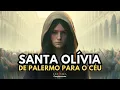
Santa Olivia was born in Palermo, around the year 448 AD and died in 463. She was a young woman of the Italian nobility who decided to live her Faith intensely. And because of her decision, she was persecuted, kidnapped, sold into slavery, and even so, we see that her message managed to deeply touch the most hardened hearts.
Sicily is the biggest island in the Mediterranean Sea, and what people say there is really "crazy". Owner of an ancient culture, Sicily preserves its roots in the center of its families, and this is a very important point - I would even say crucial - in Sicilian life. And Palermo, its capital, is really an incredible place for those looking to be surprised by the culture, be moved by the traditions and taste the delights of gastronomy in a special way.
The island also presented us with other great heroines of Christianity, such as Santa Águeda, Santa Luzia, Santa Rosália, Santa Cristina, Santa Ninfa. And so many other noble souls who recorded their history in space and time and left us their legacy of Faith, Hope and Charity. Olivia's life entered the popular imagination from an early age, and many accounts of her life only reached us thanks to oral communication, which was transmitted from generation to generation, then conducted by the thread of Memory.
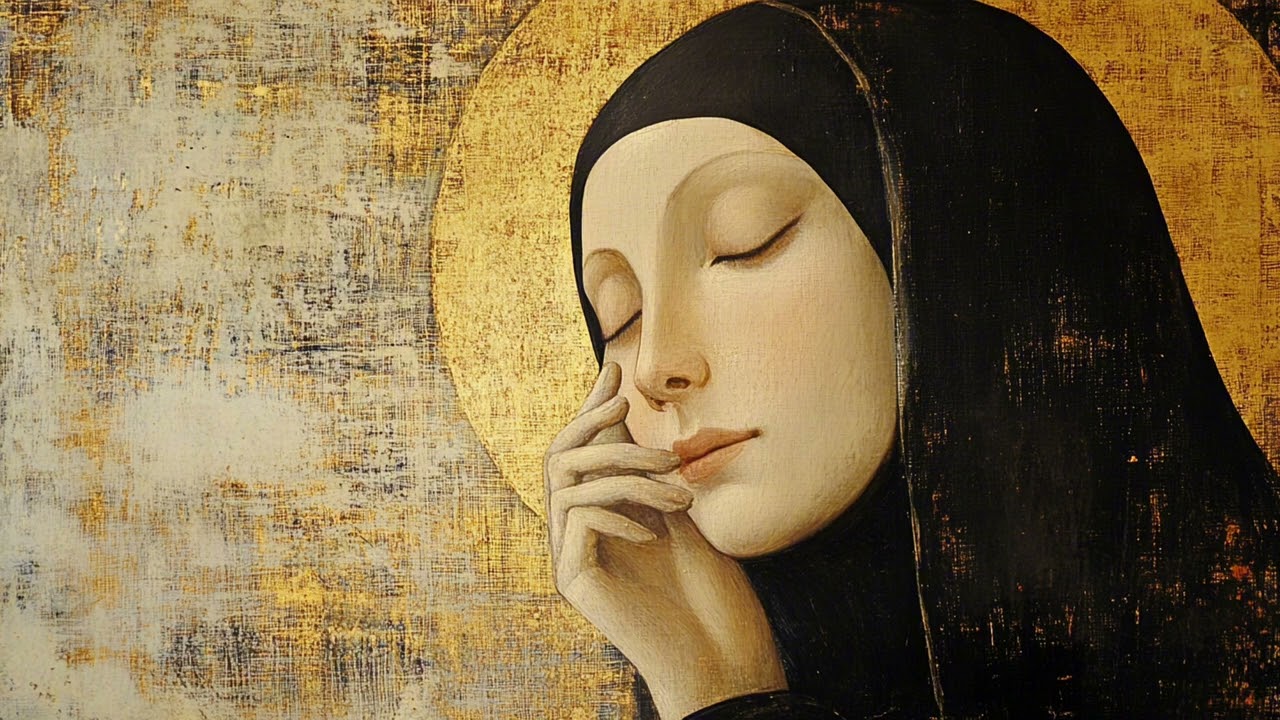
Among the oldest sources of his Life are a Breviary from the twelfth century, which is still preserved there in Palermo. There is also a document written in vulgar Sicilian in the 14th century, which was found in Termini Imerese, this is a town located in the metropolitan area of Palermo. There is also a venerable icon of Olivia, perhaps from the 12th century, where it depicts Santa Olivia with Saints Elias, Santa Venera and Santa Rosalia.
There are also references to a church being dedicated to her in Palermo from 1310 onwards, at her supposed burial site. Today this is the Church of São Francisco de Paula. In addition, numerous biographies of this Saint were published in Sicily, both in prose and in verse, and also in the form of sacred representation until the end of the 18th century, thus reflecting the importance of her veneration.
Olivia was 13 years old when Sicily was invaded by the Vandals, who, as soon as they took control of the city, began to persecute and martyr Christians. And Olivia was a very beautiful girl, the daughter of a noble Sicilian Christian family and from her earliest years she devoted herself to the Lord. Unattached to honors and material riches, she always found a way to use her possessions for the practice of charity, especially towards the poorest of the city.
The young woman liked to visit prisons and there she began to console prisoners, urging Christians to remain firm in their faith, without being discouraged. And the vandals were impressed with the strength of her spirit, and summoned many pagan sages to try to convince the girl to abandon her Christian ideas. But these wise men of the world saw that nothing could prevail against Olivia's faith.
But her presence in prisons began, in a way, to bother the pagan authorities and so she was kidnapped and as a prisoner, she was taken to Tunis, the current capital of Tunisia, there in North Africa. Exiled, experiencing all the hardships in a strange land, Olivia was forced to live among beggars, suffered hunger, thirst, cold, nakedness. And with his prayers, he healed two cripples and baptized them in the name of the Holy Trinity.
When these men began to publicly testify to their faith, they too were arrested and died a terrible death. And there in Tunis, Olivia performed many miracles and began to convert pagans. The governor of the city ordered her to be abandoned in the desert, so that there she might be devoured by some wild animal or that she might perish from hunger and thirst.
But Olivia managed to survive all of this and built a shelter against the elements there. She went on to live there, devoted to prayer, penance and meditation. And the wild animals that appeared there looked more like domestic animals, because they did not harm the young woman, on the contrary: they began to live with her in a peaceful way.
One day, a group of hunters found her and, seduced by her beauty, tried to abuse her; but Olivia also converted them with the Word of the Lord and they were baptized. And living like a hermit, even against her own will, Olivia began to receive many people who came to her to hear a word of consolation, ask for prayers, advice, and also to seek relief from body aches. After miraculously healing many of the sick and suffering in that region, Olivia converted many pagans to the Christian faith.
And when the governor learned of these things, he immediately ordered the young woman to be captured and led to a prison in the city, in order that through humiliation and suffering, she might apostatize from her faith. And arriving there in the city, she was flogged in the public square. And after suffering various cruelties and tortures, they took off her clothes and placed her submerged in a cauldron of boiling oil.
However, to the amazement of all those present, these tortures did not cause her any harm, nor did they make her renounce her Faith. Astounded by so much demonstration of supernatural power, many people converted to the Faith immediately. But Olivia's enemies were determined and willing to take her life.
Therefore, on June 10, 463, Olivia was brutally beheaded. That day, the young woman's soul was finally freed from that life and flew like a dove to Heaven.