[music] And welcome back to the Gentleman's Gazette. [sharp inhale] In today's video, we're going to be discussing classic men's pajamas and sleepwear and talk about how you can be classically and dapperly styled both day and night. ♪ Gentleman's Gazette Theme Song ♪ Sleepwear is an often overlooked part of clothing and style.
This is perhaps because it's usually only worn in private and more relaxed settings, where you're unlikely to be seen by others outside of those whom you're closest to. But, there's no denying that putting on a comfortable and dapperly styled pair of classic pajamas, a dressing gown, and a pair of slippers are going to help you feel more comfortable and relax in style. In fact, as a potential added bonus, the right pajamas may help you get a better night's sleep as you'll be even more comfortable in bed.
It should come as no surprise then that we believe that, with the right set of pajamas, you'll be able to look as good as possible day and night or, at least, mostly look your best considering bed head. So, let's begin today's video as we usually do with an historical overview of pajamas and sleepwear through the centuries. There's not actually much documented history on sleepwear prior to the 16th century.
Historians attribute the lack of documentation mostly to the social attitudes of these earlier times as what one wore in the home was considered a very private matter. Therefore, it's commonly believed that, up until the 16th century, most men either slept nude or simply in their day shirts. [wolf whistle] Wealthy noblemen, though, could often afford sleeping attire and this would often have details such as being trimmed with lace or embroidery and be made from fine fabrics.
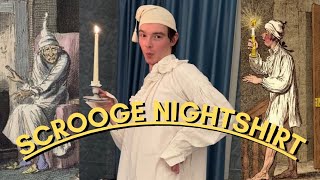
Later versions would have turned down collars, much like day shirts, and thus, would come to be known as "night shirts. " [Scene from Schitt's Creek] David: "What are you wearing? What is that, a nightgown?
" Johnny: "It's a night shirt, David, and that's not the issue. " David: "You might want to rethink the nightgown first. There's a whole Ebenezer Scrooge thing happening.
" Alexis: "Oh, my God, that's who I was thinking of. " Johnny: "You know what? I'll do it myself.
" David: "My best to Bob Cratchit. " They would also then evolve into a form of loungewear known as "the nightgown. " The word "nightgown," recorded as early as the 1530s or so, referred originally not to a garment that was actually worn while sleeping, but rather, for simply lounging around the home.
When the East India Trading Company first arrived in India in the 1600s, they began to influence Indian politics and soon there would be a large British presence in India. The word "pajama" actually comes from the Persian and, later, Hindi word "paijama. " Both of these originally meant "leg covering" and were later anglicized to "pajama.
" In their earliest form, these were loose, baggy trousers that were brought around the waist with a drawstring and were worn as part of regular day wear. Picking up these comfortable trousers and bringing them back to Britain then, pajama trousers became popular in the UK in the 17th century. Eventually, the British crown would take direct control over India by dissolving the East India Trading Company in 1874, but just as the British were influencing India.
So, too, were Indian items influencing British culture. As one example, pajamas would return to England in the 1870s. This time in their now familiar orientation of matching tops and bottoms, and now worn as sleepwear.
At this point in time, the trend would catch on and they would spread from Britain throughout Europe and also to America. And if you're wondering about the differences in spelling, whether "pajamas" is spelled with an A or a Y, you can thank American lexicographer Noah Webster for the change. However, outside of the US, pajamas is usually still spelled with a Y.
At this point, in the mid to late 1800s, both the pajama set and the traditional night shirt were still worn often with the night cap and dressing gown as accompaniment. By the way, the usefulness of the night cap originated in an age when regular bathing wasn't quite the norm yet as it protected both hair styles and pillowcases for longer in between washes. It's no surprise then that the night cap has largely fallen out of favor as our attitudes toward hygiene have changed.
But, the dressing gown is another story. Humans have been wearing robes and soft wrap-around styles of clothing for hundreds, if not thousands of years with the Japanese kimono being one of the best known and earliest examples. While the kimono often features most of the typical features of a robe, such as a long body, loose fit, wide sleeves, and is tightened or fastened with a fabric belt, in the Western world, a modern day dressing gown can be traced back to the mid-17th century banyan.
As you can see, this garment more closely resembles the dressing gown that we know today, being crafted from fabrics such as silk, linen, or cotton with sleeves fitted closer than on a kimono and a distinct collar and lapel area. With that said though, there are also historical examples of a banyan with a tighter and more tailored fit, as well as a higher buttoning point, thus resembling something closer to a house coat of sorts. Indeed, this is the intended purpose of both the dressing gown and the banyan before it; an extra more refined layer of clothing used for warmth, modesty, or both at different points in the day.
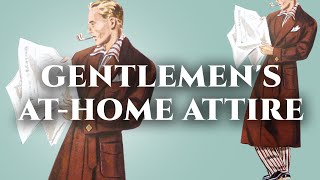
The dressing gown, then, would continue to be refined, taking on wide shawl lapels as well as turn back cuffs and was often quilted for warmth and comfort. It would also come to lose its buttons in favor of a sash belt tied at the waist and would typically feature two hip pockets as well as, sometimes, others including a breast pocket. It was around this time that the garment would come to be known as a "dressing gown" as men would either wear it while getting ready for an evening out or put it on after taking off their clothes from a day of work.
Unlike pajamas themselves, a dressing gown would never be in direct contact with the skin, so it was worn as a layer for both warmth and added protection. One of fiction's most famous adopters of this style was none other than Sherlock Holmes, who, in the original novels, possessed no fewer than three gowns and has had countless more on television and in film. And, of course, we can't talk about Sherlock Holmes fondness for sleepwear garments without also mentioning where he hides his tobacco stash; in none other than a rogue slipper.
Holmes' slipper of choice was a distinctively pointed, curled toe Persian slipper, but, all in all, the styling of it isn't too dissimilar from the classic Albert slipper, which we'll cover in greater depth today. Essentially, what differentiates a slipper, also known as a "house shoe," from other types of footwear, is its softer construction and its lack of lacing or fastening. After all, the name "slipper" immediately suggests that they are designed to be slipped on and off with ease as they are an element of at-home loungewear.
Throughout history, slippers have been seen in various configurations, including the backless style known as a "mule," the aforementioned loafer-like Albert slipper, and the hybrid model of sorts known as the "Grecian slipper. " And, interestingly, where pajamas and dressing gowns have both evolved quite a bit over their own histories to the formats we're most familiar with today, these styles of slippers have remained largely unchanged. The most revered of these three sleepwear shoe styles, though, is undoubtedly the Albert slipper.
The style is named after Queen Victoria's husband, Albert, Prince Consort and whether it was actually he himself who developed the slipper style or not, because that isn't entirely clear to historians. What is clear is how the style evolved from the formal opera pumps to the softer slipper that we know today. Velvet slippers caught on as an alternative to patent leather evening shoes, and this is a choice that continues among black tie wearers to this day.
Now, since the mid-20th century as the casualization of clothing and menswear in particular has continued, many men have decided to forgo traditional matching pajama sets in order to simply wear sweatpants and t-shirts or, indeed, to go back to sleeping au naturel. [wolf whistle] And, of course, we've got nothing against this. Indeed, using myself as an example, I've worn everyday casual wear to bed for far more of my life than I have a traditional set of pajamas.
But, if like us here at the Gentleman's Gazette, you are traditionally-minded and looking to add a dapper touch to even what you wear to bed, then today's video is for you. Accordingly then, now that we've covered the history of the various elements of pajamas and traditional sleepwear, let's look toward the quality hallmarks you can explore when buying some of your own, and we'll start here with natural fibers. As in almost all cases here at the Gentleman's Gazette, we would recommend that you look for natural fibers in your pajamas as they're going to breathe better, wear better, and keep you more comfortable over time.
After all, this is just what sleepwear is designed for. But, then, which natural fibers are best? Starting off with a classic choice, silk pajamas have always been considered the most luxurious choice for men's sleepwear.
The fabric is hypoallergenic, meaning that it's good for sensitive skin. It's also fairly breathable and, of course, there's no discounting that soft and, well, silky feel. Silk will also wick away sweat, which means that it will keep you cooler.
But, on the flip side, you will have to launder your silk pajamas more often. A silk dressing gown, though, shouldn't give you quite as much trouble. Typically speaking, silk sleepwear is also going to be the most expensive choice on average; with pajama sets running at around $600 to $800 for a quality pair and silk dressing gowns running anywhere from $1000 to $2000.
Perhaps the only fiber to top silk in terms of upfront cost, though, would be cashmere; with a cashmere dressing gown, on average, running in the range of $3500. Now, that's what I call luxury. There's no denying cashmere's properties for feeling beautifully soft and also keeping you warm.
But, it's also more delicate, which is why you're typically only going to find cashmere in dressing gowns and not as much for pajamas themselves. Instead, cashmere will typically be blended with cotton to create a smooth, soft cloth that is more hard-wearing than pure cashmere, but softer than pure cotton. Speaking of cotton then, we'd go so far as to say that it's probably the number one choice when it comes to men's sleepwear today.
This is because it's a comfortable, breathable fabric, which is much less expensive than silk or cashmere, and it can be bought in thicker weaves or in lightweight, softer weaves. Therefore, depending on your climate and temperature preferences. It should be easy to choose the right, specific weight of cotton for you.
Cotton is also marvelously versatile when it comes to crafting various different elements of sleepwear including pajama sets, dressing gowns, night shirts, and underwear. But, more on all that in just a moment. Finally here, linen sleepwear is usually more popular during the warmer months of the year and it is less expensive than silk or cashmere but, typically, more expensive than cotton.
Linen is a very breathable fabric that is prized for its ability to keep you cool and, since staying cool while you sleep leads to a more beneficial sleeping environment, chances are that you're going to wake up looking and feeling better. For some, the naturally wrinkly quality of linen may detract a bit from its appearance. But, the particular way that linen wrinkles is prized among menswear aficionados.
Indeed, the wrinkles will actually help to soften the structure of the linen over time, meaning that your linen pajamas are only going to get more comfortable wear after wear. Now that we've covered all of the main fabric choices available to you, let's look at the most common styles of sleepwear. First, if you love an extremely classic or, indeed, a vintage style, then the night shirt is probably no stranger to you.
The style is somewhat self-explanatory as it takes the overall form of a traditional dress shirt with long sleeves and a long body and is usually constructed in a tunic or pop-over fashion, where a button placket runs down from the neck, but doesn't actually reach the bottom of the night shirt. Typical options are going to be around knee length, though you will find some long enough to come down to the ankles. Models may come with or without a breast pocket and with or without a collar depending on the manufacturer.
Whichever details you go for in your night shirt, the primary objective in wearing one is greater freedom of movement while still retaining a modicum of modesty. And before you ask, there are no hard and fast rules on whether you should or shouldn't wear underwear beneath your night shirt. After all, it's not a kilt.
So, wear it as you please. [Scene from The Simpsons] [Willie exposing himself while wearing a kilt playing basketball] Perhaps the most well-known of all sleepwear styles, though, would be the classic two-piece set of pajamas. It dates all the way back to the 1870s, as we mentioned before, and it's one that you'll probably have seen in various movies or television shows, using Downton Abbey as an example here.
Over its long history, it's remained a solid favorite among men for its practicality, comfort, and style. You can see examples here from the 1890s, 1950s, 1980s, and today. You'll note also that the style has remained mostly unchanged throughout this entire history.
The style is characterized by separate shirt and trouser portions. Unlike a night shirt, the buttons on a pajama shirt, do run the full length of the garment, and the shirt will also, typically, feature a collar, often cut in a flat style, where the top button can or can't be fastened, leading to greater comfort while you sleep. Other features include optional pockets at the breast and at the hips, which are comfortable to put your pockets in -- [outtake] Comfortable to put your hands in.
Yeah. [chuckles] Other features include optional pockets at the breast and at the hips, which can be helpful to keep your hands warm or house a pencil and spectacles for the morning crossword. Some models will also sport decorative contrasting piping along the edges of the shirt and trousers to differentiate it to a greater degree from a typical day shirt.
The pajama trousers are typically straight cut and will gather at the waist using elastic, a drawstring, or both. Some models will feature a fly and you may also see hip pockets. Although, these can add bulk while you sleep, which is why pockets at the hips of the shirt are the more traditional choice.
And, of course, the two-piece pajama set is available in both long sleeve and short sleeve varieties, depending on your own personal needs for temperature and comfort. Moving on to the outer garments of sleepwear then, we again revisit the dressing gown. And while it's tempting to think that the fluffy terry cloth style would be a comfortable choice to pair with your pajamas, this style is really only meant to be worn in environments where water is present.
[Scene from The Man with the Golden Gun] Bond: "We'll find out about that next time I meet her. " So, it's great for use at the pool, gym, or in the bathroom, but it's not the best choice to wear with your pajamas. These fluffier styles are most regularly called "bathrobes" for a reason.
Instead, we'd recommend that you look for a more classic design, featuring details such as a shawl collar, turn-back cuffs, patch pockets at the hips, and a sash belt for keeping things closed. Some styles will incorporate contrasting piping in two-piece pajama sets, and it's also possible to find contrasting quilted cuffs, collar, and pocket welts as well. These are often hallmarks of a high-quality dressing gown and can be found more readily on vintage dressing gowns, which, by the way, are probably going to be easier to find than our vintage pajama sets.
And while there's no denying that having a dressing gown featuring a lining will feel that much more sumptuous, whether you go with a lined or unlined dressing gown is largely up to your own preferences on temperature and comfort. Bear in mind that aligning is likely going to increase the price of your dressing gown, but will also increase its wearable lifespan. And one thing that should be a given when searching for a dressing gown is its length, which should reach past your knees by a good few inches as having a too short dressing gown will not only be uncomfortable, but also inelegant to say the least.
And, unlike your night shirt or pajama set, which should have a looser, more relaxed fit, your dressing gown can be cut a bit slimmer for a more elegant look overall. And, if it's got suitably formal details, you can even wear your dressing gown as a rough approximation of the traditional house coat. Last but not least here, let's turn our attention back to the feet and discuss what to look for when finding classic slippers to wear with your sleepwear.
As we mentioned before, classic slippers typically take on one of three forms. Those being the mule, the Albert, and the Grecian. Typically, both the mule and Grecian styles will be made with soft leather soles, whereas the Albert is going to be made with harder leather soles, similar to a traditional dress shoe but thinner.
Also, we'd be remiss here not to mention a more dressed-down style of slipper, that which comes in a style more similar to a moccasin. Whichever style of slipper you choose, comfort should be paramount. So, remember to look for lightweight construction overall and choose the style that will be most comfortable and wearable for you.
Albert slippers are most typically finished in velvet, whereas Grecian and mule styles are typically finished in soft leather like deerskin. Keep in mind as well that stiff and tight leather, as well as sweaty synthetic materials, should be avoided. A quilted lining is a wonderful classic touch to your slippers, which will help set them apart from your regular day shoes, and you may also see more rugged styles that are lined in wool or other materials.
Whatever the lining is made from though, keep in mind that it will make your slippers warmer. So, if you prefer a cool foot or live in a hot climate overall, you'll probably want to go with an unlined slipper style. Another design element for Albert slippers, in particular, is the addition of embroidery, which traditionally displayed a coat-of-arms or monogram, but can now use any design that is of some significance to you.
And, looking at all of these slipper styles overall, with the exception of the moccasin style, there isn't a hard and fast rule about which one is most traditional. So, simply choose the one that appeals most to you. Finally today, let's answer the question of where you can buy traditionally styled pajamas.
Although sleepwear can typically be found in most department stores and other stores that carry clothing lines, you'll be hard-pressed to find much if any in the traditional style that we've been discussing today. These types of retailers are increasingly focusing on putting out novelty and more casually-styled pajamas. What we would suggest then is looking toward companies that have long histories of making quality menswear garments and we've got a few that we'll highlight for you here today.
As an aside here, we noticed a trend when researching this video. It's quite easy to find traditionally-styled pajama and sleepwear offerings from English manufacturers, particularly those who have a history making shirts. That being said, if you do know of any other brands of sleepwear that fit into the classic menswear mold, please feel free to let us know of them in the comments.
First up with a history of creating quality menswear items that dates back to 1926, Derek Rose has given particular focus to pajamas and sleepwear. Arguably one of the most comprehensive brands when it comes to classically-styled pajamas and dressing gowns, the brand offers many different options of sleepwear in a variety of fits, fabrics, and finishes. Derek Rose is also well known for its selection of luxury dressing gowns with Benedict Cumberbatch's Sherlock Holmes being a particular fan of the Woburn 8 model among others.
Their offerings in wool are a great choice for wearing both with your pajamas and, more generally, around the home that put a similar focus on classic styling as well as quality of construction. Next is Turnbull & Asser, the famous London shirt maker and a favorite of celebrities and royalty alike. Their unique sweeping collar design adds a touch of refinement to their two-piece pajama sets, and the attention to detail continues with things like angled, jetted pockets on their dressing gowns.
As a fun fact here, Turnbull & Asser also created a set of pajamas and a dressing gown for use in the Kingsman films. So, if you're looking to be as suave as a super-spy, look no further than Turnbull & Asser. Only a short walk from Turnbull & Asser to London's Piccadilly Arcade, you'll find Budd Shirtmakers, who has a history of supplying some of the finest dinner shirts in the world.
Featuring similar styling details to both Derek Rose and Turnbull & Asser, Budd features a range of classically-styled pajama sets and dressing gowns as well as traditionally-styled night shirts. Perhaps the most noteworthy feature of the Budd nightwear range is their use of cotton batiste, a featherweight fabric that is luxuriously light and comfortable. For another example in pop culture, Daniel Day-Lewis wears a lilac-colored pair of Budd pajamas in the 2017 film "Phantom Thread.
" And, at the other end of the Piccadilly Arcade, you'll find New & Lingwood, who are home to classic menswear styles with an eccentric twist. Here, you'll find an entire store dedicated to a wide range of dressing gowns in cotton, linen, silk, velvet, and cashmere. And, along with this impressive repertoire of dressing gowns, comes an equally full selection of pajama sets either in similarly flamboyant styles or in more muted ones.
And unlike Turnbull & Asser or Budd, New & Lingwood also feature slippers in the Albert, mule, and Grecian styles, though, again, with their signature flair. For a pair of quality slippers with a more classic, toned-down feel, you can turn to Bowhill & Elliot. Based in the UK city of Norwich, Bowhill & Elliott have been situated on the same site since 1874.
Although they started as a manufacturer of standard shoes, their focus turned specifically towards slippers around about 1960 and all of their slippers are still made on-site in the factory below the store. As a result, you can also venture into customized designs with Bowhill & Elliott. So, if you want something made using a specific color or fabric or to have a coat-of-arms added, this could be a good option for you.
As just one example, our script supervisor Jack Collins lives nearby to Bowhill & Elliott and can vouch for his pair of Albert slippers. So, all of these retailers boast an impressive range of quality men's sleepwear with prices ranging from $300 to $400 for pajama sets, $1,400 to $2,800 for dressing gowns, and $400 to $500 for slippers on average. Though, you do get what you pay for.
Meanwhile, for a more budget-friendly option, you can turn to the retailer Uniqlo and, indeed, you can see me wearing a pair of their pajamas here today. Specifically, these are part of Uniqlo's Airism line, which features a patented fabric designed to help keep you cool in the warmer months. As a result of this specially patented fabric, the pajamas are predominantly made out of cotton, but 27% of the weave is polyester.
These pajamas do tick many of the boxes we've covered today including having a pleasant and comfortable fit, a traditional collar, and a drawstring at the waist. And, at just under $40 you'll probably be hard-pressed to find a pair of pajamas that look as good as these at such a low price. Uniqlo does also provide cotton flannel pajamas, which are ideal for colder temperatures, and both the flannel and Airism models come in traditionally-muted menswear colors like gray, khaki, and navy.
Specifically for the flannel range, some checked patterns are also available. Similarly, if you're looking for a pair of traditional slippers that won't break the bank, you can use the ones I'm wearing here today as an example, the Baron model from Herring Shoes, priced at around £80 or $110. They're considerably cheaper than most of the other footwear options we mentioned today, but all of the classic styling details remain.
They have a soft, suede sole, a smooth, leather interior, and boast uppers made from soft and smooth kidskin leather in a Grecian style. Finally here and as usual on the Gentleman's Gazette, we're advocates of also trying to find vintage items wherever possible. As we mentioned previously, finding vintage pajama sets in wearable condition can be difficult, especially in your specific size.
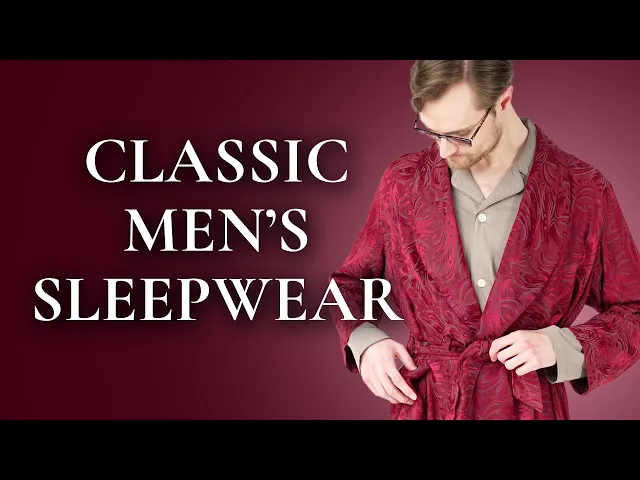
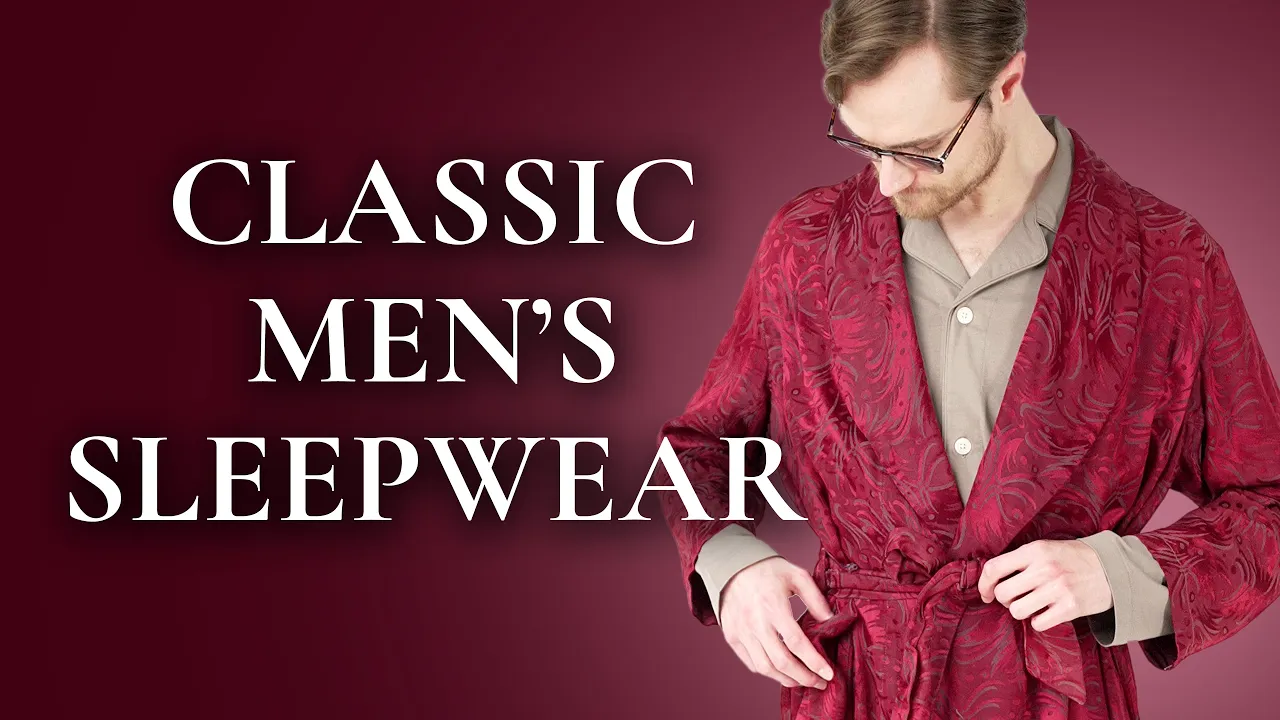
Vintage dressing gowns, on the other hand, are going to be easier to come by overall and are usually just going to need a bit of spot treatment to look good as new again. The vintage dressing gown I'm wearing today is a model in burgundy silk featuring a bold paisley-esque design. It features only one hip pocket, did need a bit of laundering after I bought it, and has sleeves that are a bit short for my build.
But, overall, I'm a big fan of the look. For a more modern and slightly less bold option, I do also have a dressing gown in simple navy blue cotton featuring a motif of small white sailboats. In conclusion, then, good quality sleepwear is a great investment to put into your wardrobe and, if you know what to look for, you'll definitely be able to rest easy.
In today's video, as previously mentioned, I'm wearing a pair of Airism pajamas from Uniqlo. They're in a khaki color as I thought it would pair equally well with both my vintage burgundy dressing gown, as well as my navy cotton one. Given that I am wearing the burgundy dressing gown today though, I thought it would harmonize well with a pair of socks from Fort Belvedere.
Specifically, there are shadow-striped models in burgundy and light gray. And as also mentioned previously, my slippers are the Baron model from Herring Shoes in a Grecian style and a color they're calling "wine calf," which is a dark burgundy shade that goes well with both my socks and my dressing gown, as well as the brown tones of the pajamas. With that said, there really isn't a whole lot else to my outfit today as it is quite casual.
As such, I've also decided not to shave and didn't put any product in my hair. So, I'll leave it to you commenters to tell me what you think of this hyper-casual look and, of course, for the socks I'm wearing in today's video, as well as a wide variety of other colors and styles and other classic menswear accessories, you can take a look at the Fort Belvedere shop here.