car manufacturers are in a constant race against one another to create the most appealing designs to sell to customers around the world occasionally car designers will think far outside the box come up with rare and unusual design concepts so with that in mind let's take a look at 15 of the strangest cars ever made [Music] number 15 dodge deora the a100 truck was a popular series for dodge between 1964 and 1970 while there was nothing particularly special about the production version there was one that became one of the strangest vehicles you'll ever see mike and larry alexander from detroit michigan wanted to display something unique and special at the 1967 detroit autorama so they took a 1965 dodge a100 and turned it into a customized version that they called the deora they chopped sectioned and changed it as well as adding a back hatch of a ford station wagon to create an undeniably futuristic and one-of-a-kind design something that would go on to win nine awards including the one for best in show even chrysler was impressed enough with the aura that the company leased the vehicle for about two years to put on display with other concept cars and after being in storage for 30 years it was restored in time for the 50th anniversary of the detroit autorama in 2002. selling in 2009 for the equivalent of around 410 thousand dollars you may not ever see one of these on the road but they are quite common elsewhere the deora was part of the first ever hot wheels line in 1968 and has been re-released as a miniature several times since number 14 ferrari 512 s modulo whenever you see a ferrari driving past you you can usually tell from quite a distance that it was built by the legendary italian manufacturer but there's one concept that was produced by paolo martin from pinon farina to display at the 1970 geneva motor show that possibly gave a glimpse of what to expect in the future the ferrari 512 s modulo began life as a ferrari 512s and was originally converted to the spec required to race in the canadian american sports car racing series the engine and transmission were then removed and the chassis was stripped down to its core the builders at pin and farina came up with a completely different body for it that looks unlike anything else with an unusually low and wedge-shaped profile and a canopy glass roof that slides forward for the driver to get in and out the wheels are all partly covered and the ferrari v12 engine was installed incredibly this produces up to 550 horsepower means that the modulo had a top speed of 220 miles or about 354 kilometers per hour and could accelerate from 0-60 in just 3 seconds originally painted black but subsequently re-sprayed white the modulo has won countless design awards and has recently been restored while this design may not be so practical for use on public roads if the supercars in the coming years are going to look anything like this the future is surely something to look forward to number 13 reliant bond bug the reliant motor company from staffordshire in england was best known for a model called the robin but while this itself was an unusual vehicle the strangest the company was associated with was one that was built between 1970 and 74 and it was called the bond bug best described as being a wedge-shaped micro car it was inspired by a previous design the company felt would be too strange and risky for the brand to actually be released and was combined with elements of a future model they planned on putting into production that wasn't fully ready the three-wheeled car was essentially a motorbike with a car chassis around it there were no doors however instead a canopy lifts up to gain entry the original versions came with a 700cc engine that produced up to 29 horsepower there was barely any room inside for two people with very few creature comforts amazingly though the bond bug could reach a top speed of 76 miles or 122 kilometers per hour and it was said to be extremely fun to drive because of the relatively low riding position the company would go on to sell less than 200 of them so ceased production because of poor sales there's a reason why it might look familiar to you a bond bug chassis was the basis for one of the models that movie designer tom karan produced when designing luke skywalker's land speeder in the original star wars [Music] number 12 sebring vanguard city car electric cars may well be becoming mainstream today but models have been available for decades with limited success but because of the technology available and the unusual designs that they became associated with produced by sebring vanguard a manufacturer based in florida between 1974 and 1977 the city car was one of the earliest production electric cars in the united states and it was not exactly hard to see why it never really took off the idea for the city car came on the back of the fuel crisis in the early 1970s and the company took inspiration from golf cart designs that were already being used around the country taking on a wedge-shaped design which involved a flat diagonal front a flat roof and an almost vertical rear three different iterations were available during the production run each one incrementally improving on performance and features in total the company produced around 2300 of them with the main problem other than their aesthetic being that they were only useful for short distances despite having a 48 volt battery on the second version onwards that would allow for a top speed of up to 38 miles or 61 kilometers per hour they only had a range of just 40 miles or about 64 kilometers and it would take the rest of the day to recharge number 11 fiat multipla fiat is one of the best known car brands around the world and has developed a reputation for producing reliable family vehicles at an affordable price this means that their designs aren't always the most beautiful to look at there's no better example of this than the fiat multipla that was first released by the italian manufacturer in 1998 described by one journalist as looking like a psychotic cartoon duck and that owners would soon become tired of the sarcastic sneers and laughter of their neighbors friends and schoolmates there's no doubt that the original version of the multipla had a particularly unfortunate front to it and one that's hard to like amazingly though everyone was in agreement that fiat had got everything else about the multipla just right it was comfortable offered plenty of space was reliable and easy to drive leading it to be hailed as the best family vehicle for a number of years in a row initially fiat stuck to its guns and kept with the multiple's odd styling but in 2004 the company finally fixed the appearance and it went on to sell really well in markets around the world who'da thought number 10 chevrolet ssr built by chevrolet between 2003 and 2006 the ssr which stands for super sport roadster was meant to be the company's new flagship vehicle to take command of a rapidly developing market inspired by the classic designs from the 1940s and 50s the retractable hardtop convertible pickup truck was originally fitted with a vortec 5300 v8 engine which offered competitive performance with the ability to accelerate from zero to 60 in 7. 7 seconds the interior was full of modern features that made it a comfortable and fun vehicle to drive there was no avoiding the fact however that the ssr had a strange and unusual aesthetic on the exterior the company had gone to extreme lengths to make it look this way even relearning an old production technique that hadn't been used in decades but the result was something that didn't exactly inspire potential customers even with a promotional campaign that saw the ssr being used as the pace car for the indianapolis 500 in 2003 and taking part in a land speed record attempt sales were far below what chevy had predicted and by the time the model ceased production only around 24 000 had actually been bought meaning the company barely made back the costs of designing it in the first place number nine volkswagen thing volkswagen initially designed the type 181 for use by the west german army in the late 1960s looking to the success of dune buggies in the united states as showing the interest in fun off-road vehicles by the early 1970s they were being sold to customers across europe and the americas where it was called either the trekker the safari or the thing in the united states the two-wheel drive four-door convertible vehicle was designed to be adaptable as possible something that meant that its doors could be easily removed and changed its windshield could fold flat and its roof could be fully removed if wanted the inclusion of vinyl covered bucket seats drain holes and perforated rubber mats meant that it was suited to any weather condition but its rugged pedigree often didn't quite match its overall design and strange color schemes it was offered in 50 000 of them were delivered to nato troops during the decade that they were produced but civilian sales were far less successful thought to mainly be the result of poor branding and marketing as well as being nowhere near as comfortable as similarly priced alternatives at the time vw decided in 1975 when new safety standards were introduced in the u.
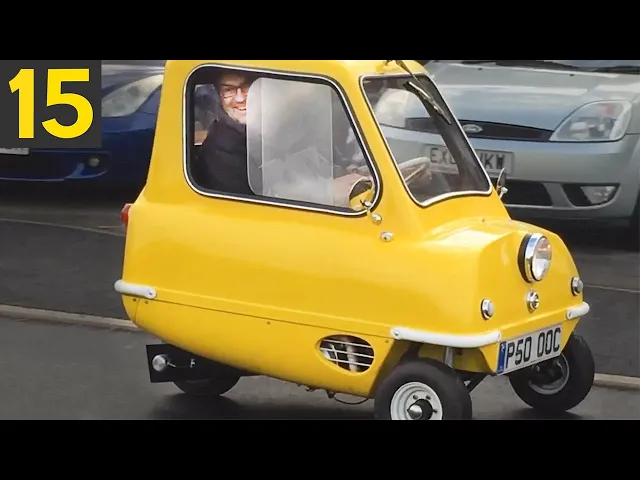
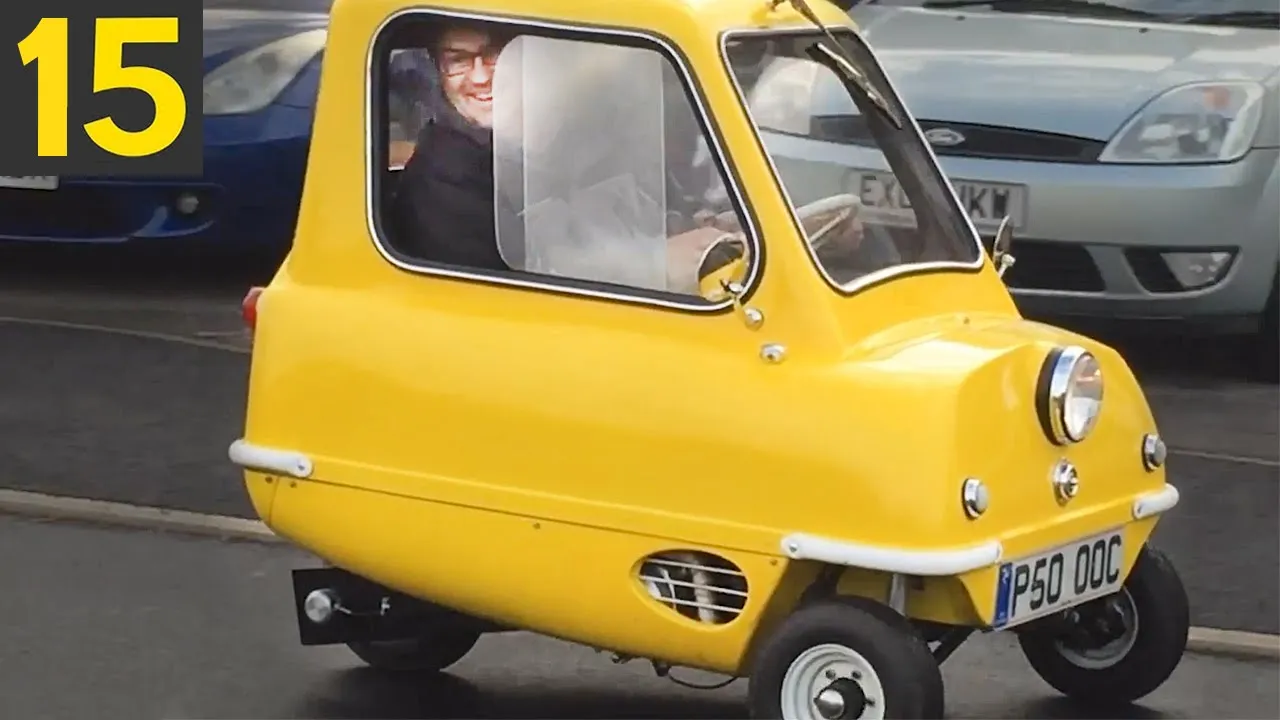
s that it would be best to pursue the sales of newer models as opposed to redesigning the thing to meet all of the new requirements it continued to be sold two militaries for a further eight years after this and while the type 181 was a popular vehicle for these uses it'll go down in history as one of the strangest cars offered to the civilian market number eight luff electrique one of the earliest fully electric vehicles to be built was first revealed all the way back in 1938 and while it didn't offer anything like the performance that can be found with the evs of today it'll surely always be remembered because of its futuristic appearance and strangeness especially when compared with anything else that was available at the time known as the loof electric which means the electric egg it was inspired by french designer paul arzens the egg-shaped bodywork was inspired by the cycle cars that had been popular in the 1930s across europe and was made from extremely light materials like aluminum for the main body a duralinox tube frame and curved plexiglass for the doors and windows in all it weighed 770 pounds or only 350 kilos something that when combined with the electric motor gave the car a top speed of 44 miles or 70 kilometers per hour and a range of up to 62 miles or 100 kilometers only one was ever made but it remained the main personal car for paul arzens until he died in 1990 now on display at a museum it's been credited with inspiring the designs of several vehicles since particularly recent models by peugeot and even one made by google number seven the peel p50 many places in the world have wide open roads to drive along but particularly in urban areas space comes at a premium both because of narrow streets and a lack of places to park there's a market for small and compact vehicles probably the strangest and most unbelievably tiny one of all is the peeled p50 it was originally produced between 1962 and 65 by the peel engineering company which was based on the isle of man which is in the irish sea between ireland and great britain explicitly designed as a city car the p50 was just 52 inches or 1. 3 meters long 38 inches or just under a meter wide and 39 inches or about one meter tall making it the smallest car to have ever gone into production a record it still holds to this day advertised by the company as having space for one adult and a shopping bag the 4. 2 horsepower engine gave it a top speed of about 38 miles or 61 kilometers per hour it didn't have a reverse gear though so if you ever wanted to turn it around you'd have to use a conveniently placed handle on the rear and simply lift it up and spin it yourself despite being so legendary as a strange design only 50 were ever built with 27 of these known to have survived they're now such a collector's item that having originally sold at a price that's equivalent to around 8 500 today a pristine condition p50 sold at auction in 2016 for a massive 176 thousand dollars number six subaru brat sold by subaru between 1978 and 1994 the brat which means by drive recreational all-terrain transporter was a four-wheel drive utility vehicle that was known as the brumby shifter or simply the 284 in other markets despite being made by a japanese company it was never officially sold in that country which led to it becoming a popular import model this was also the main reason why it was such a strange car it was specifically designed to target the market in the united states and canada for small trucks which was a segment that was performing particularly well for competitors like toyota and nissan but subaru's lack of experience in designing these types of vehicles ultimately is what made the brat so unique unlike others in the category all brats were four-wheel drive and there were several other unusual features such as an optional t-top split roof a spring-loaded hidden door carpeting and welded in rear-facing plastic seats in the cargo bed this allowed the company to classify the brat as a passenger vehicle rather than being a light truck and despite seemingly being a strange design choice enable them to be sold significantly cheaper than the competition because they weren't subjected to the chicken tax on imported light trucks number five cadillac cyclone the 1950s and 60s were a time when car manufacturers actively tried to develop new models fit for the coming technological future and one of the most incredible designs to emerge from this period was the cadillac cyclone it was a concept car that the company built for display that year and it looked unlike anything else anyone had made at the time it's almost a shame that it never became a production vehicle because it would surely have changed the face of car designs ever since it was fitted with a powerful cadillac v8 engine and had a rear-mounted automatic transaxle all-wheel independent suspension and in an unusual design twist an exhaust pipe that released the fumes just ahead of the front wheels this was also one of the first cars to feature technology that we take for granted in modern times as it had radar sensors mounted into the twin nose cones that fit into the automatic collision avoidance system also with a bubble top canopy covered with reflective silver paint to provide uv protection and with large tail fins the cyclone was unashamedly inspired by aviation and rocket designs and it's hardly a surprise that this concept car is now highly sought after by collectors around the world number four chrysler streamline x the incredible and extremely unusual looking chrysler streamline x was first shown by the company as a show car at the salon de torino in 1955 also known as the gilda it was created by the italian coach builder ghia and inspired by the rocket age of american design as can be seen by the huge tail fins that begin at the front of the car using a two-tone paint scheme to further highlight its curvaceous form the cockpit was unusually small to enable the designers to prioritize aerodynamics and the original idea was to power it with a gas turbine engine something that would give it a theoretical top speed of 140 miles or 225 kilometers per hour in the end though this never happened and it was fitted with a standard engine but despite being a working prototype it wasn't ever officially driven in the early 2000s this dream was finally realized when a collector bought the streamline x and installed an ai research gas turbine engine which produces 70 horsepower at 54 000 rpm and used a custom designed hydrostatic transmission to translate this power onto the road as a one-of-a-kind car the streamlined x was last offered for sale in 2008 for around a million dollars and it's likely to only increase in value as a collectible going forward number three nissan pulsar nx first designated as the n12 internally nissan designed a new sports car in the early 1980s that the company planned to be a special edition but later went on for a limited production run it was only sold in japan at nissan cherry stores where it was marketed as the pulsar exa but for ones that made it to north america it was renamed the nissan pulsar nx sharing a number of common parts with the nissan sentra the first versions were fitted with a turbocharged engine that produced about 113 horsepower and was said to have a top speed of 115 miles or 185 kilometers per hour what became unusual about this car though were the number of variations that became available mainly because of the use of parts from other designs it had a strange upright styling for example thanks to the regular pulsar's tall windshield and cowl despite having a lower ride height and the convertible and sportback iterations further added to the boxy appearance in later years nissan would release further limited versions of the pulsar nx such as a turbo a twin cam and a coupe and both for its style and performance it's regarded by many enthusiasts as the best car the company's ever produced number two norman tim special norman tims was a legendary car engineer most famous for pioneering the use of ground effect and race cars which is a technique that uses negative pressure beneath vehicles to increase their grip his success in the race circuit took him around the world and it was when he was in europe that he was inspired to create a brand new design based on the v16 powered auto union streamliners that were commonplace in the 1930s he supposedly first started sketching the plans for what would become known as the norman tim special in the mid-1940s before making several clay models and finally building the final thing the 17 and a half foot or 5.
3 meter long body was crafted from wood and then covered in 100 individual sheets of aluminum that were welded together and to make it as aerodynamic as possible there was no hood trunk or door openings and instead a single gap separating the front and rear section that lifted by hydraulics the astonishing looking vehicle was finished off with chrome bumpers a grill tail lights from a 1938 ford packard headlights and a basic windshield and was powered by a mid-mounted 1947 buick straight eight with a custom dual car manifold then it was covered in a coat of gold flake maroon paint it's arguably one of the most beautiful cars ever made sadly though it was found in a barn in 2002 in a terrible state and after being fully restored was then destroyed again in a fire in 2018 the chassis survived however and attempts are currently underway to return it to its former glory as even today there's barely anything else that could confidently stand side by side with it number one firebird one xp 21. the 1950s saw a number of different designs being drawn up for what manufacturers believe the cars of the future would be like but by far the most radical of all was gm's firebird 1 xp 21.