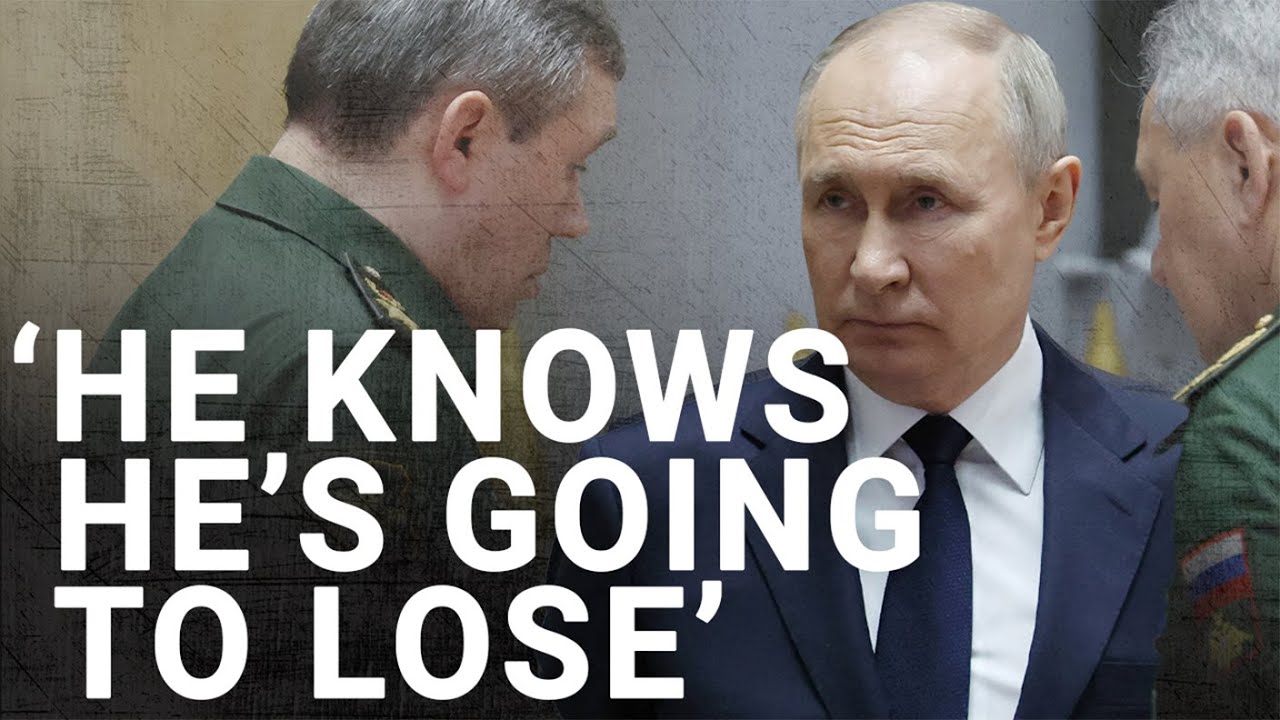
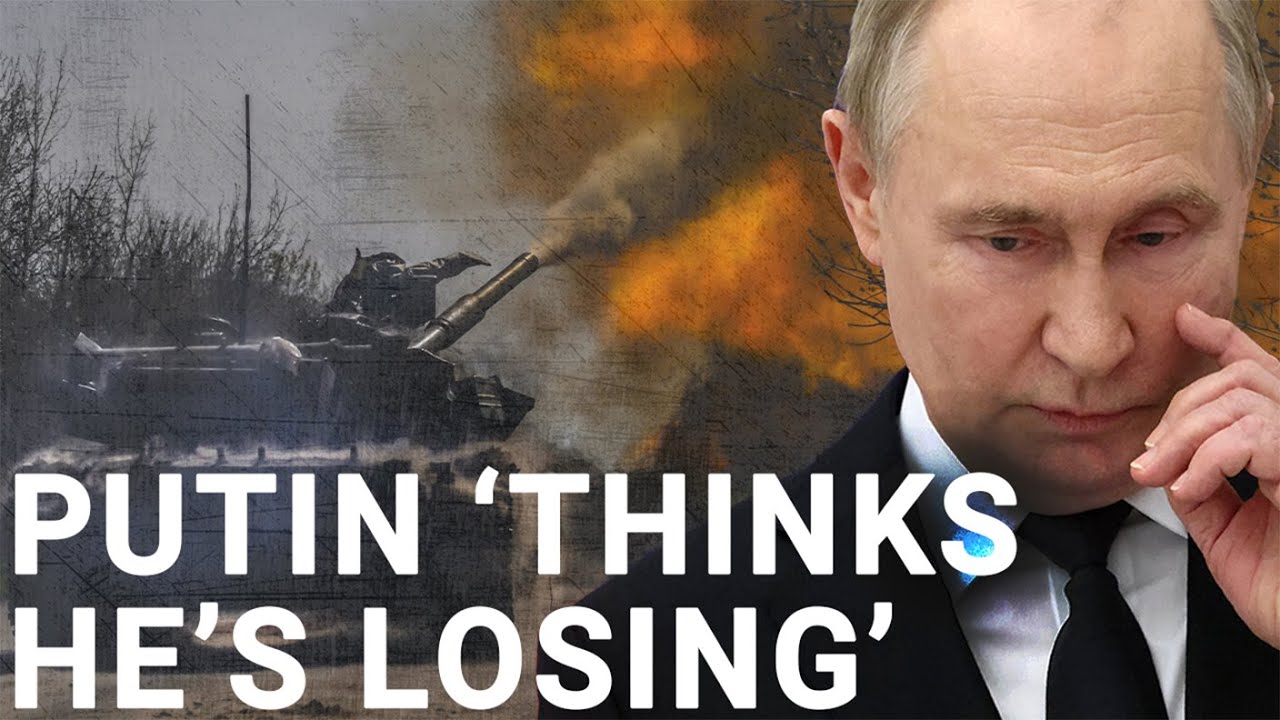
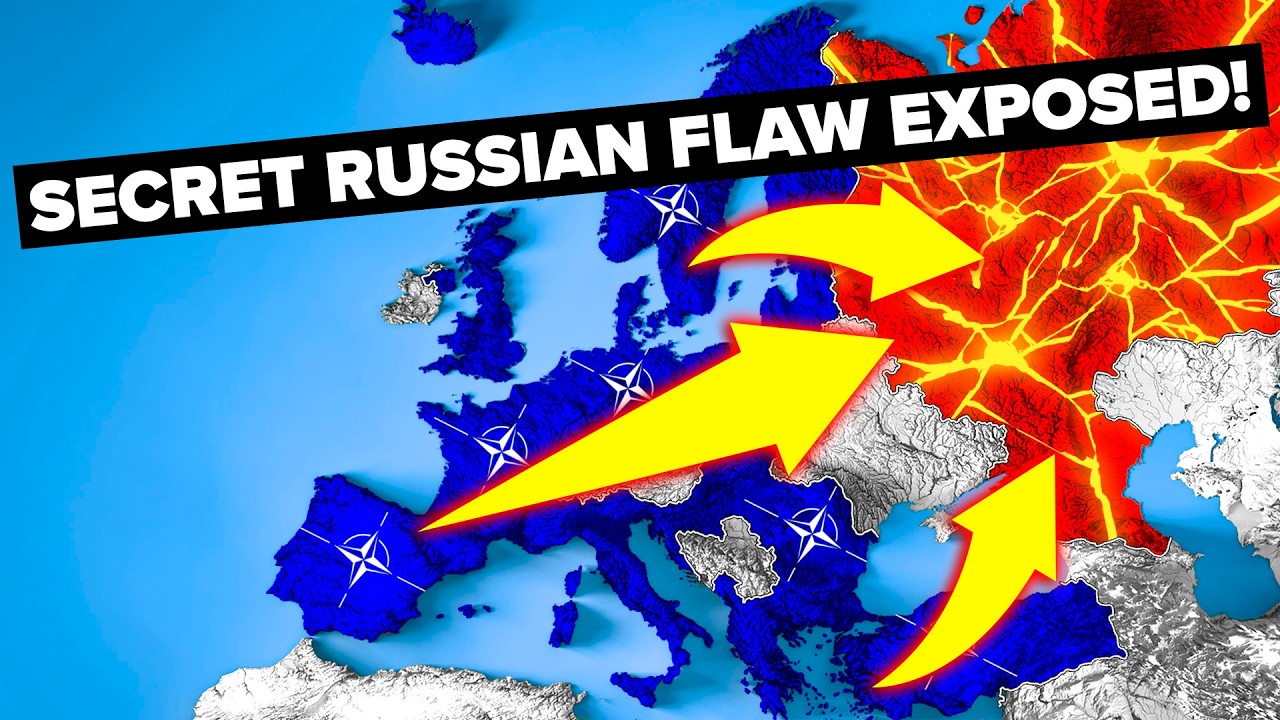
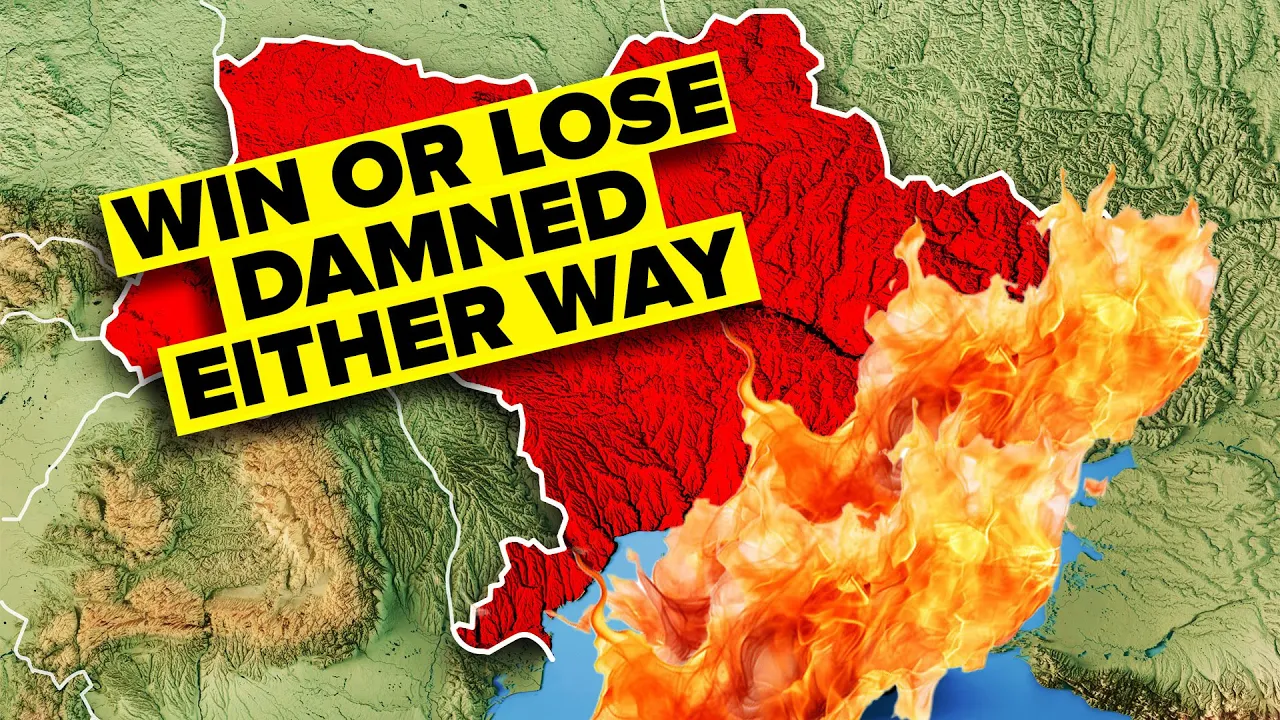
We are officially into the third year of Russian President Vladimir Putin’s invasion of Ukraine. This wasn’t how it was supposed to go. Putin intended to storm the country in February 2022 and have it under his control mere months, if not weeks, later.
And it almost worked. Within a few weeks of the invasion’s beginning, Russian ground troops had advanced through Ukraine, even reaching the suburbs of Kyiv. It was only thanks to a rapid response from the international community – which started funneling aid into Ukraine – that Putin didn’t realize his ambitions within weeks.
Ever since then, Russia has been engaged in a war of attrition with Ukraine. Early on, Ukraine managed to push Russia’s forces back and was even able to launch a counteroffensive, albeit one that ultimately failed. In more recent months, Russia has slowly advanced deeper into Ukraine aided by constant missile barrages and the sheer volume of soldiers it can throw at the war.
The highlight of that advance was the taking of Avdiivka, though Russia has also taken other, less strategically important, scraps of territory throughout 2024. It looked like Ukraine might be on its last legs. Then, the United States came to the rescue.
After months of political wrangling and infighting, it finally approved a $61 billion aid budget for Ukraine, providing Kyiv with a much-needed injection of military equipment right when it needed it most. Where has all of this left Russia? Right now, Russia finds itself in a Catch-22 situation.
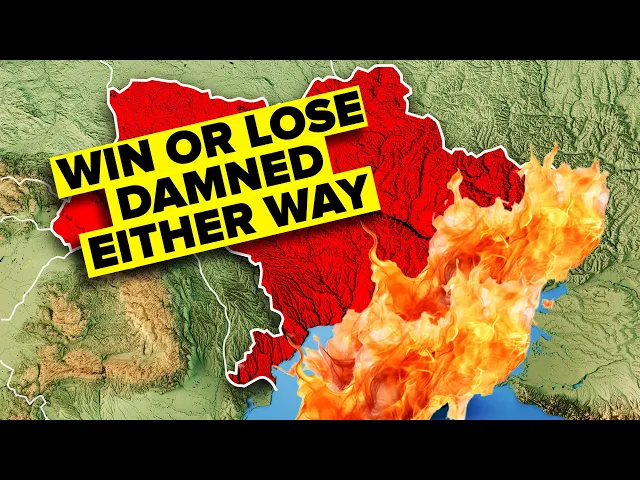
It absolutely can’t afford to lose the war at this point, having invested so much into fighting it. But the worrying thing for Putin is that Russia may also not be able to afford to win. What does that mean?
We’ll explore the answers to that question throughout this video, starting with explaining why Russia absolutely can’t afford to lose the war. The main reason is simple – it’ll be stuck with the bill for rebuilding Ukraine. At least, that’s the opinion of The Atlantic Council, which says that it’s almost impossible to escape the financial aspect of Russia’s invasion.
Beyond the loss of life and damage to Ukraine’s social structures Russia has caused, it has also wreaked havoc on Ukrainian infrastructure and supply lines. It’s expected that the bill for rebuilding will be at least $500 billion, with that money likely going toward replenishing Ukraine’s depleted war supplies following the war, in addition to rebuilding its shattered infrastructure and simply keeping its economy somewhat afloat as the country tries to get back to normal. Having Russia foot that bill would be the most logical solution.
The Atlantic Council points to the possibility of using the $300 billion of frozen Russian assets spread throughout Europe, Asia, and North America to foot some of that massive bill. It highlights that initiatives and ideas are already being proposed by the European Union, or EU, and the U. S.
on how – and if it’s even legally possible – to use that money. However, that idea may not hold water. Seizing Russian assets comes with legal problems that those holding the assets may not be able to navigate.
Plus, the United States saw a bill pass through its House of Representatives in April 2024 that could lead to the unfreezing of the assets it holds to support Ukraine’s war effort right now. That money would naturally be unavailable for rebuilding if it’s going toward supplying Ukraine as it fights. Still, that would leave about $240 billion – the U.
S. holds about $6 billion of Russia’s frozen assets – to pay for the rebuilding effort. But even that approach comes with danger.
After all, it’s not like Russia doesn’t hold assets from other countries. In December 2023, the Kremlin claimed that it had a list of Western assets it could seize if its frozen assets were used to support Ukraine. It wouldn’t say how valuable those assets are, with a Kremlin spokesman named Dmitry Peskov simply pointing out that there is a list ready, should Russia feel that it has to use it.
The problem Russia faces if it loses is that it may not have the power to seize those Western assets for its own use. That would just cause further problems with a Western world that already has it on the back foot, inevitably leading to Russia having to ensure the safe passage of those assets to their owners, all while losing its own. But let’s assume the asset seizure doesn’t happen.
Even then, Russia would likely have to pay for what it did in Ukraine as a condition of any peace treaty it signs. And that could present a problem if the West chooses to further punish Russia by tightening sanctions on the country. That could be a legitimate tactic in the event of a Russian loss, as those sanctions could prevent it from rebuilding its military to try another attack, at least in the few years following the loss.
Russia has adapted well to the sanctions already placed on it during the war. According to Econpol in a report it published on the effect of sanctions in the first quarter of 2024, even before the war only about a third of Russia’s exports were fully sanctioned. And it’s found innovative ways to bypass the sanctions it faces now – imports have risen 17% even as exports decreased by 32%.
Econpol points out that 61% of the sanctioned products Russia imports come from China, showing that Moscow has supply routes in place that could help it overcome the economic burden sanctions place on the country’s economy. Though that may seem like good news for Moscow on the surface, there’s no denying that sanctions have still had an impact. The value of the ruble has dropped by about 30% since the beginning of the war, with the sanctions imposed by the West also likely to cause long-term technological setbacks and labor shortages.
The latter issues will only be exacerbated as the war goes on, with Russia potentially losing more people that could strengthen its industrial capacity. In short, sanctions haven’t been as effective as the West may have hoped, but they’ve still had an impact. And in a scenario where Russia loses, they could be maintained (or even strengthened) to make it even more difficult for Russia to dig itself out of the financial pit it would be in as a result of paying for the rebuilding of Ukraine.
It would also become increasingly reliant on China – a point we’ll come back to later – to prop up its economy. We mentioned labor shortages earlier. Russia has a population crisis that we could argue is going underreported.
According to a January 2024 article published in The Moscow Times, Rosstat – which is Russia’s national statistics agency – believes the country’s population could drop to 138. 8 million in 2046. That’s 7.
3 million fewer people than it has right now, with a “worst-case scenario” picture from the same organization suggesting the next 22 years could even see a 15 million-plus decline. Its outlook suggests that deaths in Russia are outpacing births at a rate of 854,000 per year, with immigration into Russia failing to account for that number. Only 154,000 people move into the country per year – less than a fifth of the natural decrease numbers.
All of this suggests that Russia has an increasingly aging population, with younger people being less likely to have children than ever before. Why does this matter in the context of the war in Ukraine? That mention of younger people not having children should give you a clue.
Thousands of Russia’s youngest people have already been lost to the war, with thousands more likely to die if Ukraine can drag the fighting out long enough to force Russia to give up. According to the General Staff of Ukraine’s Armed Forces, Russia has lost 469,840 troops in Ukraine since the beginning of the war – a huge number given that the country already has a population crisis. That’s nearly 500,000 soldiers who won’t be having the children who could strengthen Russia’s economy in the future.
It’s also 500,000 people who won’t be able to contribute to Russia’s industry when the war ends. And who knows? If the war rages for another two years, it’s possible the number could be closer to one million, exacerbating the problem even further.
Simply put, throwing so many people at a war that it ends up losing would have massive repercussions on Russia’s economy for years to come. Add sanctions and the cost of rebuilding in Ukraine, and a Russian loss now would cost hundreds of billions, perhaps even several trillion dollars over the next few years. But what if it wins?
At the beginning of the video, we said that Russia can’t afford to win or lose the war against Ukraine. You see how losing would be such a major issue, but surely a win wouldn’t be as problematic. Not necessarily.
Even if Russia wins, it will still face many of those costs. The population issue still exists regardless of whether Russia wins or loses. It’s still also lost 460,000 soldiers – according to Ukraine – with more to come if the war drags on.
And while Ukraine’s population of around 38 million people would go some way in supplementing the labor workforce issues, it would be a short-term fix to an ongoing demographic issue. As for sanctions, the West is unlikely to drop them just because Russia won. After all, the sanctions imposed on Moscow are built upon pre-war sanctions that were already in place.
They may not have the same impact – or be as extensive – as they would be if Russia lost, but they’d still be there to cause issues with Russia’s economy. Then, there’s footing the bill for rebuilding. Putin doesn’t want to reduce Ukraine into rubble.
He believes the country is part of Russia, with this war fueled by his desire to control the territory, not destroy it. Even if he wins, he’ll have to pay to rebuild Ukraine into a part of Russia that’s able to sustain itself economically, meaning the bill for rebuilding will be just as heavy in the case of a Russian win as it would a Russian loss. In fact, it may be even heavier.
If Russia were to lose, that would mean Ukraine would be an independent nation that would continue to receive support from the West. That support may come from the unfreezing of Russian assets that are then filtered into Ukraine. But it’s also likely that loan programs would be created to help Ukraine get back on its feet and stimulate its economy.
Those sorts of loans wouldn’t be offered to Putin if Russia wins the war. The West would have no interest in seeing Ukraine prosper, not least because a strong Ukraine under Russian control would represent a threat to the rest of Europe, so there would be no support incoming, at least from neighboring countries. Then, there’s the challenge of keeping Ukraine.
Russia would have to install a constant military presence in the country just to maintain control, and would likely find itself spending money to fight off resistance movements. The country wouldn’t simply return to what it was before the invasion, only with Putin as president instead of Volodymyr Zelenskyy. Instead, we could see a situation akin to the one the United States faced in Afghanistan – Russia would be an occupying force that would have to spend heavily just to maintain control in the years following the war.
Timothy Noah of The New Republic highlights that this is the same problem the old Soviet Union faced before its collapse. The financial burden of maintaining an empire was the main reason for the Soviet Union’s collapse, according to Noah. And that was despite the fact that the Soviet bloc accounted for about 10.
5% of the global economy in 1991. Which brings us to another issue that Russia will face if it wins the war: Its economy may not be strong enough for it to rebuild Ukraine and maintain a presence in the country if it wins. Building from what he shared about the financial issues the Soviet bloc faced, Noah highlights that Russia’s share of the global economy amounted to just 3.
5% in April 2022. Its gross domestic product, or GDP, per capita, has also been on the decline for over a decade. From a $16,000 peak in 2013, it’s dropped to just $12,200 as of May 2023.
Globally, that puts Russia in 78th position in terms of per capita GDP – another sign of its labor issues as well as being indicative of a nation that can ill-afford to spend half a trillion dollars on rebuilding a country that it has conquered. Russia has already spent upwards of around $211 billion on waging the war already. It’ll spend more if the war rages for another year, as is looking likely now that Ukraine is set to receive substantial aid from the U.
S. and its European allies. The true cost of the war for Russia could be closer to the $2 trillion mark, once you factor in rebuilding and what it’ll spend in the coming months, which could leave it very weak economically even after Putin achieves his goal.
Add to all of this Ukraine having an even worse GDP per capita than Russia at the time of the invasion – the World Bank marked it as $4,534 in 2022 – and you also have the financial burden of population absorption to consider. Trying to build that up even to the current Russian standard would require heavy investment in Ukraine’s businesses and people – more costs that Russia would have to absorb if it took over the country. None of this would seem evident if you looked at recent Russian economic growth figures.
Business Insider reports that Russia’s GDP in the third quarter of 2023 rose by 5. 5% compared to the same period in 2022, suggesting that the country is doing well economically even when waging a war while under Western economic sanctions. It’s even set to spend $386 billion on defense in 2024, making it the second-highest military spender in the world.
On the surface, that makes it seem as though Russia’s economy is stronger than ever. How could it not be when the country has such spending power? But that figure isn’t all that it appears.
None of that growth has come from what Russia produces and sells to the rest of the world. As an article published in The Conversation in February 2024 puts it, Russia’s economy is now almost completely driven by the war in Ukraine. The article digs deeper into factors that should have caused the Russian economy to tank.
Sanctions, as mentioned previously, have had an effect that, though not as extensive as many Western powers would have hoped them to be, still has resulted in Russia recording a GDP of around 7% lower than pre-war forecasts suggested. Russian airspace has also been shut down to most Western planes, with the same going for its ports – both resulting in a loss of revenue for the country. And there’s even a cap on Russian oil – The G7 is limiting the amount of barrels they buy for over $60 per barrel at a time when the price of oil is fluctuating between $80 and $110 per barrel.
Yet, despite all of this, Russia has managed to record economic growth while at war with Ukraine. Its central bank is playing a role. Since the outbreak of the war, Russia’s bank has repeatedly hiked up interest rates in the country to the point where they’re now at 16%.
Despite this, inflation is still at 7% in the country, with the interest rates benefitting lenders and banks more than the average person. We highlighted the per capita GDP in Russia as a sign that its economy was struggling earlier, and this combination of high interest rates and high inflation only devalues the money Russian citizens have. Less money means less spending power – bad news for Russia in general and especially bad for a Russia that’s looking to absorb Ukraine.
Government-imposed controls designed to keep as much Russian money inside Russia as possible have also helped to prop up the country’s faltering economy. The Conversation suggests that the only reason the ruble hasn’t collapsed yet is because Russia is actively preventing foreign companies operating in Russia from taking money out. Given that foreign businesses operating in Russia made a combined $213.
9 billion in 2022 – paying around $3. 5 billion in taxes inside Russia in the process – you could argue that they’re helping to finance the war, however unwittingly. But even all of these factors can’t explain why Russia’s economy has managed to grow while it’s at war with Ukraine.
However, the war itself can. The Conversation highlights that public spending in Russia in 2023 reached unprecedented levels, with the country dedicating about 40% of its national budget to the war in Ukraine. Its spending on its military reached 10% of its GDP in 2023 – and looks likely to go higher in 2024 – with all of that money contributing to its seemingly strong GDP figures.
Every ruble spent on military pay, tanks, planes, ammunition, and even compensation for wounded or dead soldiers feeds into the war-based economy Russia has created and, ultimately, improves its GDP. What happens if the war goes away? Russia wins and no longer needs to fund a vast war machine.
But in the process, its manufacturing base could be destroyed. Business Insider expands on the labor shortage issues mentioned earlier, claiming that five million able-bodied workers have already fled Russia, resulting in wages rising even as GDP per capita declines. Throw disgruntled Ukrainian workers – who are as likely to rebel as they are to work toward rebuilding Russia – into the mix and you’d have a severe labor crisis that would only get worse if Russia wins and ends up adding over 30 million people to a population to which it’s already struggling to provide jobs, living wages, and a stable cost of living.
Then, there’s the problem with China. A win for Russia would mean that it’s increasingly isolated on the global geopolitical scale. We’re already seeing evidence of this isolation as the war rages on, thanks to sanctions and the near-total condemnation of Russia’s actions within the Western world.
That isolation forces Russia to look outside the West for trade partners, which is where China comes in. Beijing has been selling a lot to Russia since the beginning of the war. The country now stands as the largest buyer of Russia’s fossil fuels, spending $8.
79 billion in March 2024 alone – a sum that accounts for 49% of the fossil fuels Russia sold during the month. Reuters reports that 2023 also saw China export seven times the number of cars into Russia than it exported in 2022, with the value of those exports being about $10 billion. All told, it says, trade between Russia and China rose by 64%, reaching $240 billion for 2023.
Again, none of that seems like a problem, on the surface. More trade with China is one of the ways that Russia has been able to circumvent the sanctions the West placed on it in response to its invasion of Ukraine. But look a little below the surface and you see why this is such an issue for Russia: It gives China leverage.
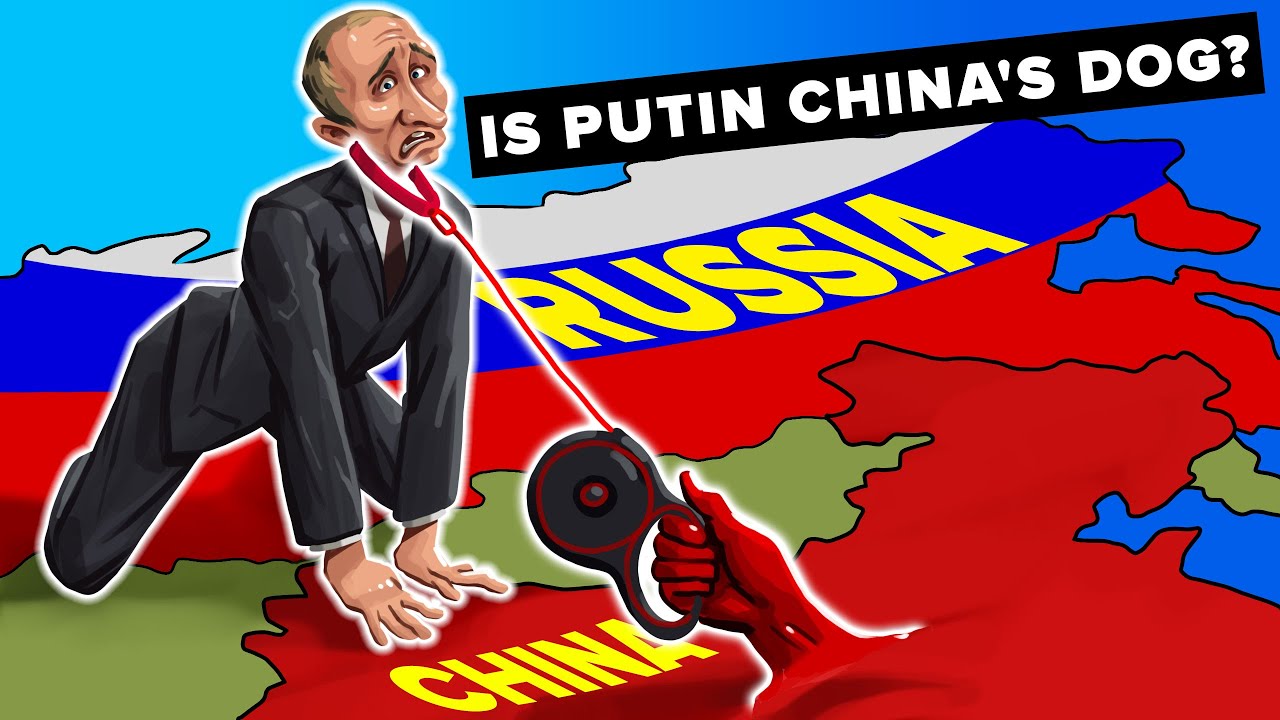
As Russia became increasingly isolated due to its Ukraine war, China stepped in to fill the void left by Western countries that implemented sanctions. If Russia wins, those Western nations aren’t likely to come back, at least not in the short term, leaving China as Russia’s primary trading partner. All Beijing has to do is experience a change of heart, pulling the rug out from under Russia in the process, to strengthen itself while weakening an already war-weary Moscow.
And if you don’t think that’s possible, April 2024 brought with it some interesting developments. In response to the U. S.
reportedly drafting sanctions that will take aim at Chinese banks doing business with Russia, Reuters reports that Chinese firms are “going underground” with respect to their Russian payments. China’s largest banks are already pulling back from financing Russian consumer-related transactions, forcing Chinese companies to rely on small banks and cryptocurrencies to keep trading – an approach that comes with heightened security concerns. “You simply cannot do business properly using the official channels,” claims an appliance maker identified only by his family name of Wang when speaking to Reuters.
He says that China’s biggest banks now take months, rather than days, to clear any payments made to Russia. Such is the cost of economic isolation. Isolation that, if China plays its cards right, could benefit Beijing as it balances the tightrope between supporting and controlling Russia with trade.
So, where does all of this leave Russia? It can’t afford to lose the war in Ukraine because it would likely face harsher sanctions, the loss of frozen assets, the cost of rebuilding Ukraine, and the fallout from an increasingly dangerous labor shortage in the country. But it also can’t afford to win for the same reasons.
Russia would still have to rebuild Ukraine. It would still face sanctions, increasingly isolating it and making it more reliant on Beijing. Either way, the slowing down of its war machine would have a terrible effect on Russia’s economy.
Its only solution is to keep the war machine churning. Writing for the Sunday Guardian, former British diplomat John Dobson points out that Russia’s military volunteers are earning $2,000 per month – four times the average wage in the country – with those who have family members who are killed on the front lines receiving $75,000 payouts in compensation. He says that poorer classes in Russia are now profiting from the government’s wartime spending, increasing their spending power to the point where Russia’s positive economic growth is being propped up by the deaths of its soldiers in Ukraine.
Consumer spending rose by 6% in Russia in 2023, a figure Dobson attributes to these wartime salaries and compensation payouts. The question he poses is: Will Russia be able to quickly transform its economy back to a civilian-based one when the war ends without causing massive unemployment that destroys the economic benefits that war has brought? It seems unlikely.
As a result, Russia has two options. It can keep the war in Ukraine going, effectively fighting in stalemate conditions for several more years just so its war machine can carry on churning. Or, if it wins the war, it could immediately turn its attention to a war with another country – such as Moldova – so its war machine doesn’t have to slow down.
What it can’t do is lose the war or win the war and then shut down that war machine. The sheer economic impact of either situation could so severely weaken it that Russia would become easy pickings for China or a West that wants to punish it through sanctions. But what do you think?
Is the situation as dire for Russia as it seems, regardless of whether it wins or loses its war in Ukraine? Or, do you think that it will be able to keep its economy chugging along, even in a situation where it wins and is rebuilding a Ukraine that hates it while trying to prop itself up? Let us know what you think in the comments and thank you for watching the video.
Now go check out Ukraine is Just the Beginning - Russia's TRUE MOTIVE Behind the War or click this other video instead!