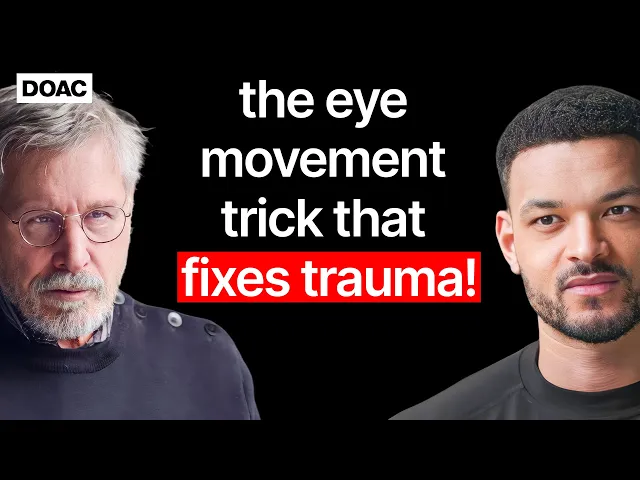
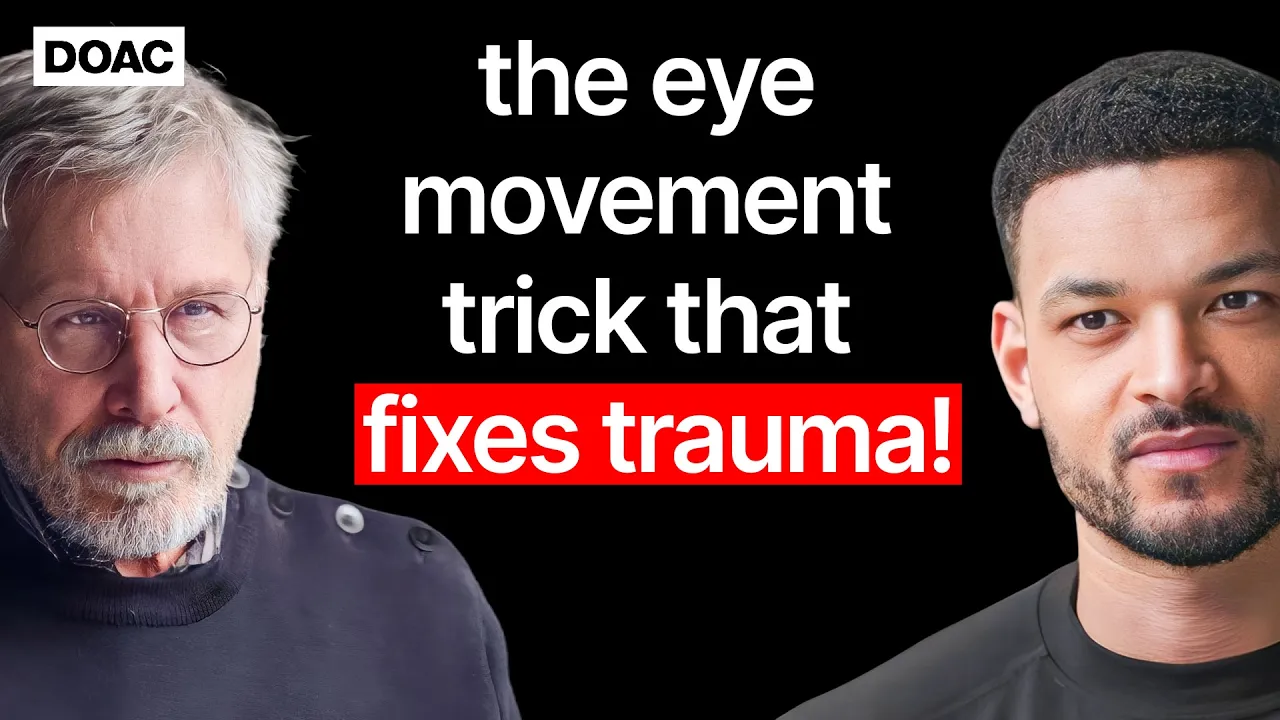
I've proven how helpful EMDR can be for PGSC and depression, why, and how well trauma is a being lived, and whatever you're feeling is real as opposed to feeling like a memory, but in our research you discovered that if you move your eyes back and forth as you recall a traumatic experience, your brain is able to say this is what happened to me in the past, and 78% of the people we studied who had adult in time were completely cured. Can you do it on me? Good, what do you see?
Vessel Vander Kulk has been described as maybe the most influential psychiatrist of the 21st century, and for over 40 years his clinical research has revolutionized how we understand trauma and its impact on our brain and body. Your early childhood experiences create who you are, and how many of the people that you treated in your practice have childhood trauma about 90%. And it's very difficult to change; are they changeable?
Yes, that is the great news. But the problem is the focus is not on helping people; the focus is on funding successful financial organizations, and even though [was] the first person who started yoga for PTSD, which was very effective, and then there's psych development and neurofeedback. Our results were stunning; people are so conformists, we already know the answers, let's not explore anything new, but let's do the science and see how it works for home and what about psychedelic therapy?
It's very effective. Have you ever done a psychedelic truck? Yeah, of course.
What did you learn that my quest for understanding trauma had to do with my own childhood trauma? All the pain your suffering earlier on, I asked if people could heal from their trauma; have you healed from yours? This has always blown my mind a little bit.
53% of you that listen to the show regularly haven't yet subscribed to the show. So could I ask you for a favor before we start: if you like the show and you like what we do here and you want to support us, the free simple way that you can do just that is by hitting the Subscribe button. And my commitment to you is that if you do that, then I'll do everything in my power, me and my team, to make sure that this show is better for you every single week.
We'll listen to your feedback, we'll find the guest that you want me to speak to, and we'll continue to do what we do. Thank you so much, DrBessel van der Kolk. You've been described as maybe the most influential psychiatrist of the 21st century by the financial times.
What is the mission you've spent your life pursuing? I have been interested in how people survive extreme situations, how people can overcome the history of people doing terrible things to each other and how we can create a better world in that regard. Actually, so the mission has been rather social but the investigation has been very much based on what we are learning about brain science, what we are learning about psychological functioning, etc, and this word trauma seems to be central to your work, and when I looked before this conversation at the rise in the use of this word online and people searching this word it's pretty staggering what I found.
There's this graph that shows a huge jump and people using the word trauma; what is your view on the subject matter of trauma specifically, how we've misunderstood what it is? Well there has been evolution which is quite striking, and when I first started to study trauma I was on the research floor at Harvard, um and my colleagues said why are you studying trauma Bessel when you croak nobody ever talk about trauma again like it is a completely alien subject um and now everybody talks everything is a trauma and so from being non-existent has become a total explanatory mode as so we have gone as we always do from one extreme to the other, and my primary interest these days is not so much into trauma trauma started it but somewhere along the line I got to realize that trauma is to a large degree a breakdown of connection between human beings and synchronicity between other human beings and these days I'm much more focused on how we can help people establish a relationship to themselves and to the people around them, when people are suffering from some kind of psychological disorder whether it's depression anxiety um PTSD what is it that you disagree with with the traditional view of how to treat them people are being taught methods that they say can cure people in eight sessions which they count and so there still is there's what people learn in school these days although no good CL I know actually practices that is to help people thinking out to straighten out people's thinking and to make them not think these crazy thoughts like and um that really is no evidence that can do that is that cognitive behavioral therapy yeah yeah yeah cognitive restructuring s of thing or you get people better by blasting them with trauma and then before long they get desensitized with trauma and they see both of these methods are just they don't get it that completely doesn't get the issue at hand actually why I cannot talk into being a reasonable person people are not reasonable people and trauma is as unreasonable as she can be that's really at the core if you understand trauma is that your brain and perceptual system gets rewired so you see things almost entirely through the life the past experience rather than current experience okay so if I'm if I'm traumatized talking about my trauma doesn't necessarily fix my trauma trauma is a speechless experience so we did the first neuroimaging study about people reliving their trauma and we saw that the entire cognitive part of the brain disappears that when you're in your trauma you're just one ball of emotion and there's no thinking so you're confused you're befuddled it is uh as Shakespeare says you suffer from speechless terror you become dumbfounded so the whole traumatic experience is just beyond belief and so you stay in a state of confusion and agitation and then finding language for yourself in this point is terribly important to help you to begin to organize your relationship to yourself it's not enough but it's but language and the finding your in experience is terribly important the word tumor as you say has been thrown around a lot um and it's become a bit of a cultural joke to some people when you say you know something happens to you you go oh I feel triggered um I'm traumatized Etc what actually does count as trauma trauma really is an overwhelming experience of oh my god when something happens and you're completely helpless and there's nothing in you that knows how to deal with it people talk a lot about small t trauma and Big T trauma fan of that okay so explain why not uh well this you need to be more accurate the but but the small t t is is very real trauma when your environment about you doesn't acknowledge Your Existence most people for example after natural disasters do very well because people get together after natural disasters do very well because people get together they help each other and you get a sense of cohesion actually and a sense of meaning we're doing this together the small T traumas have to do with um not acknowledging that what's going on with you saying to kids stop crying I'll give you something to cry about no you don't matter okay okay okay okay okay okay okay okay okay okay okay okay okay okay okay okay okay okay okay okay okay okay okay okay okay okay okay okay okay okay okay okay okay okay okay okay okay okay okay okay okay okay okay okay okay okay okay okay okay okay okay okay okay okay okay okay okay okay okay okay okay okay okay okay okay okay okay okay okay okay okay okay okay okay okay okay okay okay okay okay okay okay okay okay okay okay okay okay okay okay okay okay okay okay okay okay okay okay okay okay okay okay okay okay okay okay okay okay okay okay okay okay okay okay okay okay okay okay okay okay okay okay okay okay okay okay okay okay okay okay okay okay okay okay okay okay okay okay okay okay okay okay okay okay okay okay okay okay okay okay okay okay okay okay okay okay okay okay okay okay okay okay okay okay okay okay okay okay okay okay okay okay okay okay okay okay okay okay okay okay okay okay okay okay okay okay okay okay okay okay okay okay okay okay okay okay okay okay okay okay okay okay okay okay okay okay okay okay okay okay okay okay okay okay okay okay okay okay okay okay okay okay okay okay okay okay okay okay okay okay okay okay okay okay okay okay okay okay okay okay okay okay okay okay okay okay okay okay okay okay okay okay okay okay okay okay okay okay okay okay okay okay okay okay okay okay okay okay okay okay okay okay okay okay okay okay okay okay okay okay okay okay okay okay okay okay okay okay okay okay okay okay okay okay okay okay okay okay okay okay okay okay okay okay okay okay okay okay okay Okay.