Principle. >> All right. >> Your knees should be lower than your hips. >> Oh, what the hell? >> I don't think the couch lets me do that. I'm too busy. >> Exactly. So, the reason that you hate sitting up straight is because no furniture is designed for you to sit up straight. So, I'll teach y'all something Cool. I'm a freak. >> So, I'm going to sit like this. So, this is easy for me to sit up straight. You guys may not be able to do that. >> No problem. >> If you sit on the cushion
>> Oh, on the cushion. >> But put your put Yeah, like that. >> I got it. >> So, half and half is right. And notice what happens to your back. doesn't feel weird anymore. >> It doesn't feel weird or it does. >> It doesn't feel weird anymore. >> So, isn't that weird that sitting up straight no longer feels weird? There's a really simple test that you can also do where if you sit at the edge of your chair and you put your feet out in front of you and you cross your legs, your back will
naturally be straight. >> So, edge of the chair, feet. >> Yeah. So, scoot back just a little bit and you notice the difference now. >> Yeah. Yeah, definitely. I can feel it in like my lower back. >> What causes narcissists to become narcissists? Were they born that way or exposed to trauma that caused them to become that way? What a great question. So, where does a narcissist come from? Basically, the way that a narcissist forms, you can call it trauma, but I would say it's a very specific thing. A narcissist forms from conditional love. See,
when we unconditionally love Someone, we teach that person that there is something within you that is good, that is independent of how you act, how you look, how you behave. When you are not unconditionally loved, and when you are conditionally loved really, really, really hard. are not so much the love but when the conditions are huge. When your whole life is about conditional responses then what happens is someone becomes very attuned to things outside of them. They become focused on the Outside focused on the outside. Focused on the outside and that leads to narcissism. But
the other thing is if you grow up with a narcissistic parent, they're narcissistic, right? So the way they feel about themselves depends on how you behave. And then in turn, I don't know if this kind of makes sense. I'm going to try to draw this. They'll do something that then makes you do something behave in a certain way which then then makes them feel proud. And if They feel proud that means that they are a good parent. So this behavior that you do determines whether they feel proud or they feel good. And if they feel
good then they love you. So what happens then? You learn that love depends on this behavior. If you do this behavior then you get love. If you don't do that behavior you get punishment. You're growing up in a conditional love situation, which is really common when your parent is a narcissist. And so that Will make you narcissistic. What if I told you there's one thing that you can do that will lower your depression, your anxiety, your sense of hopelessness, help you form connections and cut back on unhealthy coping mechanisms like going to your goon cave
every single day. What if I told you there was one thing that would do that? And you'd be like, "Yeah, sign me up. What supplement is it? Is it a course? What is it? Meditation? It's not meditation. It's Not journaling. It's not therapy. It's actually being nice to other human beings. And the mechanism this of this is fascinating. So if you give someone, this is a really cool study. If you boost someone's serotonin transmission, they become more empathic. And the reverse is also true that when we become more empathic, our serotonic circuitry actually gets buffed.
Which is why we see that people who are empathic have lower levels of depression and anxiety. And what is the treatment that we use for depression and anxiety? It's giving people serotonin, selective serotonin reuptake inhibitors, we basically boost their serotonin transmission. Right now, like so many people are taking advantage of these like traditional work environments. And as more people take advantage of it, we have a generation of people who are just checking out. They're like this doesn't work for me. Like this is not worth it. You know, if You look at things like, you know,
wages, like for example, teacher wages. So teacher wages have not kept up with inflation at all. And then on top of that, we have this like growing technological crisis where kids are becoming more disregulated than they've ever been. We also have all kinds of like fear of lawsuits. So teachers cannot discipline kids. And so we're we're seeing an absolute collapse. I don't know if like people are seeing it Like economically, but I'm seeing it on the level of like teachers who are burnt out and like students who are really struggling, like parents come to me,
no one knows what to do, and like the school systems in the United States are getting absolutely screwed. So I think what we're seeing is a whole scale failure of our traditional institutions. Where do the thoughts in your mind come from? >> I don't know if I have the answer to That. >> Where do you think [music] >> neurons blood flow firing creating action potentials? >> Okay. So neurons blood flow firing creating action potentials are all the same, right? >> Okay. So BSOD, how you'all doing, chat? Welcome to another Healthy Gamer GG stream. My name
is Dr. Alo Kenoja. Just A reminder that although I'm a psychiatrist, nothing we discuss on stream today is intended to be taken as medical advice. Everything is for educational or entertainment purposes only. If y'all have a medical concern or question, please go see a licensed professional. Hello everyone. Welcome to another Healthy Gamer GG stream. It's been awesome uh being with y'all this year. We are celebrating something that we're going To talk about in a hot second. But before we get started, um I have a quick announcement. So, we did a game jam at Healthy Gamer
and there are um let me see, these are the three winners. Uh and so let's see real quick who these people are. So, this is super cool. We did a a game jam. These are the three winners. The devs are Color Drop Games, Mystic Whisker, Art, and Alex. So, let's play Ruby's Resolve. Complete household [music] chores. Okay. Ruby has [music] eight hours to do things, then she must end day. Each card you play costs a certain number of hours as shown in the top left. Oh my god. Stress maintains from day to day. Oh my
god. This is like real life. This is a horror game, chat. I think I think it's supposed to Oh, this is so cool. Actually, hold on a second. You guys see this? The streaks like [music] at the end of the day, the next obstacle bar moves forward Depending on how much stress Ruby has. Oh no, dude. This is actually kind of terrifying. Um, completing a project also grants a reward depending on the type of project. Creativity inspires actions, manipulate the deck, wisdom, mindful healing, resolve, persevering, gain permanent resolutions. Dude, this is actually amazing. Hold on.
Sleepdeprived. [laughter] This is great. Okay, hold on. So, I've got grind. Oh, okay. So, that costs three. Dude, this is terrible. On draw, [music] increase stress by one. What happens if we play this? Can't play this. Okay, so we're going to get rid of some sleepdeprived. Dude, this is amazing. Wait, stress five. How did I get stress five? Touch grass. Lower stress by one. Okay. Grind. We're going to design a wardrobe. Okay. Strong start. Progress a project by two. Okay. This is actually I think I'm going to play this game. I can see why this
one. This is amazing. This is a deck building. Okay, hold on one second. Revision. Remove the progress of a project and divide it among all other projects. Progress a project by three. If this project now equals the progress of any other project, draw three cards and gain three [music] hours. Um. Ooh, strong start. Here we go. Okay, I'm going to play like one or two turns of this cuz I want to see what happens when we hit Okay, let's end day. We're going to procrastinate. Stress four. End day. What happens if we hit stress 10?
I'm procrastinating chat. Compare. Oh my god, dude. Comparison. On draw increases stress by two then automatically progress random project by This is actually amazing. Okay, so we have to do like a play through and illustrate these psychiatric principles, right? Comparison. Feel bad, stress myself out, but actually get work done. Um, anxiety. Oh god, I have anxiety chat. All right, we're going to do We're going to grind. Okay, one more turn, chat. One more. Oh no, forgot my lunch. Draw effect. The next card you play costs double. Oh Oh no, chat. Let's try to wait. Cost
double. Oh no. It's all falling apart, Chad. It's all falling apart. Oh no. [laughter] Stress is going up. Sleepd deprived. Strong start. No. Okay, we got to Okay, we got to play this. We got to play this Right. Okay, [music] so we're going to finish one overcome. For each obstacle card in your hand, gain two hours. Let's do that cuz we're up our run. Okay, then we're going to strong start. This is like real life where you finish one task and it's like let's get started. Um and then should we touch grass or sleep be
sleepd deprived? Okay. I don't know. Lower stress by one stress 10. I think we got to lower st we Got to touch grass. Okay. So this is also like real life where touching grass is stress minus one and is woefully insufficient. And we're out here comparison, right? Write a song for your partner completed. Okay, so you know what is actually kind of terrifying about this game. So first of all, this game is amazing. Secondly, what is terrifying about this game is how realistic it is, which is like, oh my god, if you are actually Grinding
and completing what you're supposed to be doing in life, it's like you're still getting screwed. That's that's number one. Second thing is two days of sloth puts you so far behind. Like that's insane. I I love this game. Okay, let's let's look at the next one. Dude, this is lit. Okay, gaming stream chat. Okay, a game about catching up with yesterday's debts and taking Responsibility for tomorrow. Help Morgan break the doom scroll spiral. rediscover the joys in the mundane and get their life back on track. Let's see if this one is as day by day
as depressing as the Okay. [music] Yeah, sounds about right. Dude, this is some [music] tasks. Clean room. And what? Oh, that's pretty cool. [music] Doom it. [music] Press and hold D to scroll. Hell yeah, dude. Let's go. [music] My partner pronounces February Faraday's law. This is great. Nurture confirmed as greatest. [music] Oh my god. Wait, how does this end? When does this end? [music] Chat. Chat. Wait, can I [music] go up? No, only scroll down. Okay, this is torture, dude. Home screen. [music] I can't stop. P rapidly press Z to put down the phone. Oh
my god, dude. Minus 5 mental. Oh no. Okay, wait. It's almost sunset. Okay, so that's great. [music] So we made our bed in the morning and we do have scrolled. Mental Is plus zero. Physical is okay. Diary [music] tasks. Wash dishes. Oh my god, dude. [music] Sponge. Okay, this is great. Now, instead of actually [music] putting together my life doom. [music] Oh my god, it won't let me wash more than one dish. Grandma passed a year ago today. Miss You not on a rough day, but [music] maybe. But at least I made my bed. Oh,
that's interesting. So, it paid attention [music] to what I did. Clean [music] room. Wash dishes. Let's wash dishes. Let's see if I can do more than one. This is great, guys. Now I can fix [music] my virtual life and wash dishes in here. [music] Oh no. Dr. G video. How to be more [music] Okay, chat. Quick question for y'all. How many of y'all [music] Okay, be honest now. How many of y'all are being perfectly productive throughout the day? And when you get a notification that there's a new Dr. G or Dr. K video that dropped,
you guys stop being productive and and watch this instead. H Okay, let's let's do one more. These are The winners. These are fantastic, [music] by the way. Glitching sound. Now playing what? [music] Okay. What? What is happening? What is this? [music] Ah, what the [music] What is this? Okay. Is this Are we just Is this DDR flow level screwed up? Okay. Rhythm game With a minor inconvenience. Desperate for she learns how to flow state. Oh, this is cool. Okay. So, in order to in order to do this, we have to enter flow [music] state. Okay.
Let's try. We're going to try zooming out. I'm going to try zooming out. I don't know if you all understand what that means. [music] Oh no. [music] Nice, dude. This is great. Oh, we're at flow 100 chat. [music] Wait, so if we mess up, does it get stressed? Let's see. [music] When does it go fast again? expecting a time anomaly. Okay, let's see if we can beat one level. Okay, I'm actually trying to win now. No. Oh my god. Okay, cool. All right, these are awesome. So, I just want to say this is lit, dude.
So, you know, we um started this a few years ago, this whole healthy gamer thing. And someone asked me recently, so you know, our average age of the average age of our audience in 2020 was 24. The average age of our audience is now 32. And so someone asked me recently, you know, are you guys attracting older people or did people grow with you? And I think people grew with us. Like we've had like coding stuff on the Discord for years now. And like this is pretty good. Like I'm actually going to go play some
of these games. I like the deck building. I've been looking for a deck building game. So, I tried playing Monster Train 2 and It just wasn't hitting in the way that like Monster Train one did for some reason. It feels too complicated. I don't know what it is. Um, yeah, I saw a lot of people are in the top.5% of listeners. So, thank you guys very much for supporting the channel. Um, and we're going to just react to like one or two things real quick, but like this is awesome, dude. Okay. And then we have
like, you know, we have things that we're going to do. >> Hold on. Um, let me just turn this up. >> And number they will not change for anybody but themselves. And number three, and this is a truth, and there's a lot of research from this amazing expert, Dr. K. He goes by the healthy gamer online. He's a Harvard trained psychiatrist that specializes in gaming addiction. and we don't understand our own motivational circuitry. I certainly didn't until he explained this to me. He Basically said, "Our brains are wired >> to move toward what feels easy.
That's why we sit on the couch. That's why we scroll on our phone even though we don't want to spend six hours a day on our phone. That's why we avoid working on a resume. That's why your dad avoids doing what he needs to do, whether it's walking after dinner to lower, you know, his his, you know, or taking the insulin or wearing the monitor or doing whatever he needs to do. >> Um, >> we default to what's easy in the moment. >> In order to change, a human being, >> let's hear what she has
to say, >> has to be willing to do the thing that's hard now. And the only way that you're willing to do the thing that's hard now is that when staying the same becomes harder than the thing that you're avoiding. You know, when we were researching a lesson theory book, >> this this is actually brilliant. So, What I love about Mel Robbins is >> she will take things that other people >> talk about and she will make it more accessible. She's very good at cutting to the root of stuff. So I I was I don't
know if you guys have have heard of Let Them Theory. It's an excellent book. And so when I was looking through it, I was like, "Wow, this is something that I've been talking about for a while, right?" So we sort of talk about Vayiraa here on the Channel, but Mel has an amazing ability to make things accessible. I think she's truly gifted at this. And I I heard that she was mentioning us again. So, let's take a look. >> Circuitry inside of us. >> We don't really understand it. And the person that that explained it
to me the best was Dr. K, the healthy gamer guy. He's unbelievable. >> Okay. Don't know him. >> Oh my. You have to get him on. He is so Fantastic. He was a guy that got like a two three in college >> and came from a family needed to be a doctor >> and then he'll have to tell you the story but he ends up applying to 93 times like to medical school gets in and then gets his clinical uh training at Harvard's MLAN hospital and he specialized in gaming addictions and so now what he
does is trains other therapists on >> treating people who have gaming addictions and he does a ton of right now. >> So, he's so freaking cool. But here's what he basically said. The human brain is wired to move towards what's easy. That's why we lay in bed. >> Yeah. >> Yeah. >> You know, that's why we >> You know what I'm really amazed by in this is how much she remembers About the story. So, like Mel is Mel is an amazing human being. Like I I think she's Yeah, she's amazing, dude. And and not just
cuz she's glazing on me. It's I mean that's easy to, you know, I'm great. But I I mean I think it's quite remarkable what you know what really sinks in when you sit with her. I it's it's huge. Like she's very good at this stuff. And I'm I'm amazed that she remembers these details like 93 versus 120 like big Deal. But I mean that's crazy, right? To remember this much about someone's and and and I've sat with her once like we had one conversation like years ago now. It's been like two years. and and for
her to remember that like that's that's truly remarkable. Anyway, it's it's a it's a huge shout out. So, thank you guys very much. I I I hope you guys enjoy being here, too. Um and then let's do a couple of quick announcements and then we're going to dive into the actual Um stuff. So, you guys may have noticed we have uh some stuff here in the background. Okay. Um, and here's what's going on. So, we launched HG memberships two years ago. So, two years ago, there were a bunch of videos that we wanted to make,
a bunch of lectures that I wanted to do that we did not think would perform well. And so What we did is we started memberships where all the stuff that like is people don't have an appetite to to the general YouTube audience doesn't have an appetite for. We wanted to be able to make content for people that really wanted more depth. And unfortunately that's not what the internet really selects for. So we started this memberships thing. It was a chance for me to sometimes talk about stuff that I just feel like talking about. Um that
Doesn't have to be titled, doesn't have to be thumbnailed. My favorite part of the the the memberships lectures actually I don't know if this is my favorite but this is one part that I like a lot. So I I did this lecture called the weird stuff part one which is just it's like all the weird meditation stuff and then we did part two and then we did part three and then we did part four. It's funny. I was about to do one section of part four When my internet went out. And this is what's really
weird is I was talking to one of the memberships people, like one of the people who manages it, and we were talking about the number of times that I'm explaining a weird spiritual concept, and my internet goes out. So, my internet has gone out. I've been streaming for about seven years now, six years maybe, and my internet has gone out four or five times. And my internet goes out when I'm sometimes talking About weird spiritual stuff. It's really weird. Like, I don't know how to explain it. Anyway, it's been 2 years. It's been an awesome
ride. Um, we're actually doing a discount right now. Um, so we're going to go over So, tomorrow we're doing uh uh like kind of a a celebration stream where we go over favorite videos. Um, they're going to share some stories from behind the scenes apparently about how difficult it is to work with me. So, you all can tune in for that. Uh, we Have a cake. Actually, hold on. Oh, god. We have a cake chat over here. Oh. Oh no. Oh, almost fell. I have to tilt it for you all to see. But it almost
fell. Oh my god. Butt clenching moment, chat. That would have been that would have been an actual live stream. You know how LSF is like not really fails anymore. It's drama. That would have been a true fail. Um, so there's a cake tomorrow, which apparently I guess I'm eating by myself. Um, and so anyway, it's it Memberships is now 2 years old. We have an awesome content library that has over 200 additional videos. Um, we get to talk about a lot of cool stuff over there. If you guys are interested, we've got a bunch of
stuff. You guys, everything is available. All the VODs are available. And we're offering a promotion right now. So, if you guys sign up for the AoE healer tier, which is normally 15 bucks a month, if you sign up for a whole Year, uh it's only 150. And then not only do you get access to all the content, you get a big thank you from us. Um and then access to tools that we're going to be developing, we have some cool features that we hope to be launching uh in the next few months. So, this is
where we're trying to build stuff. I don't know if this makes sense, but we're trying to build stuff that actually helps y'all more. You know how We talk about, you know, watching things on the internet and how insufficient that is. So, we're trying to build things that are that are a little bit more helpful. And so, I don't know if y'all have noticed, but we're careful about the sponsorships we take. We don't take a whole bunch of sponsors. Um, we don't do subathons and things like that. We basically are going to try to build value
for y'all. We're going to ask y'all for money, and you're going to get Stuff in exchange. And then the rest of it is all free. So how much stuff we build for your benefit depends on how much you all support us and we're grateful for that. That's a model that helps me sleep at night. I don't have to take sponsors that I don't dis that I don't entirely agree with like CBD companies that want to pay us millions of dollars and things like that. Um and so that's just the model that I think helps me
sleep at night. We hope that it Helps y'all. And for those of y'all that are not in a position to financially afford things, that's why we still make, you know, we have well over a thousand videos on our on our YouTube channel. We still live stream and we understand that not everybody has disposable income and so we're still here to help. We're going to be talking a little bit about career today. So if you guys want to join, um, it's awesome. It's fun. I think the people really, really, really like it. I Think the content
is sometimes a little bit more like old school in the sense that it's a little bit more random. It's it's things that I feel like talking about. The other cool thing about memberships is that basically people vote on topics. So it's like the the community says, "Hey, we want to do a lecture on this or we want to do a lecture on this." So one one great story about that is um people wanted a lecture on the heart Chakra. And I was like, I don't talk much about heart chakra because heart chakra is not my
thing. We're going to get to that in a second. Um and so I was like, okay, I don't know if I can actually teach all about heart chakra. And then I was meditating one day and I was like, "Look, I don't know. These people want me to teach about heart chakra, but I don't know. So, you know, can you help me out?" And I was meditating and I was like, "Oh." And Then I got some cool info and then I gave a lecture on it. I think it's a great lecture. Um, so there's some cool
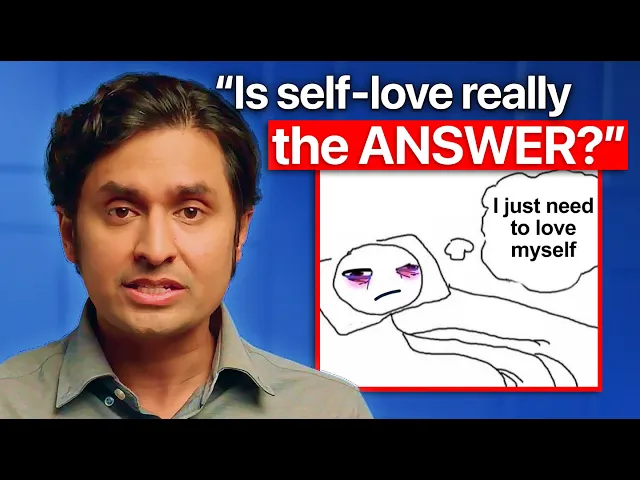
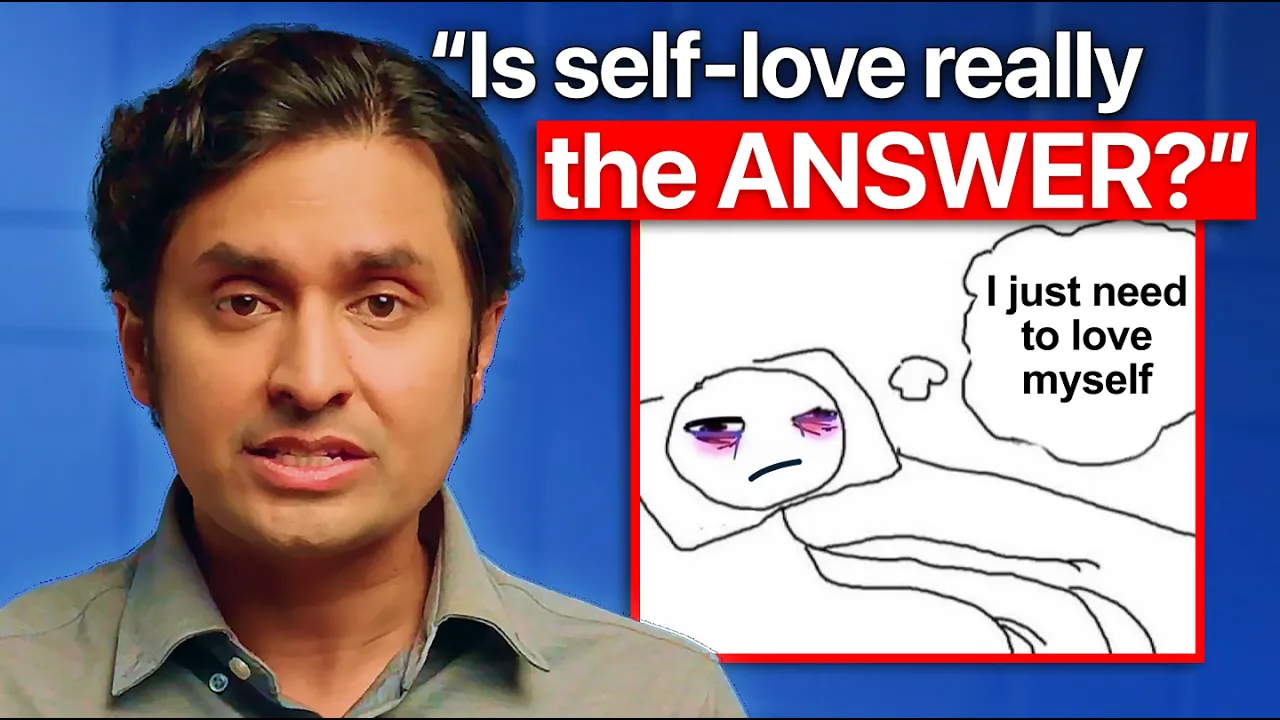
stuff that happens over there. It's it's a it so if you guys are interested, check it out. All right, we have a lot of stuff to get through and let's start with this. Is self-love really the answer? I just need to learn to be happy by myself. Be happy by myself. Be happy alone. Be happy alone. Be happy alone. And then Are you okay, bro? Yes. I just need to learn to be happy by myself first. Seems like when it comes to the topic of loneliness and dating, you always see self-love being brought up. Love
yourself first before getting into a relationship. If you don't love yourself, then how can you love others? I understand the rationale. If you're miserable and get into a relationship, it won't solve your problems. Instead, it'll just spread your misery to your Partner. It'll drain them constantly. G give you validation and support without receiving anything in return. However, when I see the topic of self-love online, it feels like you must be an enlightened monk who has achieved self-actualization before you even enter the dating market. Just taking a walk outside, you'll meet tons of people who are
conventionally unattractive or have horrible character, who are in relationships. It could be loving or abusive. It doesn't matter. What matters is that they are in one despite have not having looks max or being a kind person. My conclusion from all of this is that dating, just like many things in life, boils down to a game of luck. Your attempts to gain wealth, status, and improve your l looks and skills are all to increase your luck of finding someone attractive, but that outcome will never be guaranteed. Some people will lose. I'm not implying a blackpilled rhetoric.
Um, that you shouldn't work on yourself, but it seems like everyone tells you you must be comfortable alone, and I want to prepare myself for that life path. I just don't understand. This isn't even about dating. Humans are inherently social creatures. How can you possibly feel content living through life without connections and people who love you for who you are? Friends, family, community, children. Okay, So we're going to talk about So team found a clip that I want to show you guys. This is hilarious. Okay, at >> the new norm of capacity, right? So now
I just have >> 10 pounds I carry. >> How do you deal with that? >> [laughter] >> Yeah. H >> how did you get down to just one pile of Paper? >> Love for yourself. [laughter] Um yeah, I it starts with um >> that was actually hilarious >> with so much love for [laughter] like I I love that that is not the answer and that's what we say to ourselves and that doesn't help us. This is me thinking self- loveve is not the answer. >> It helps in the sense of like it it frees up.
It allows you to to actually do things. Like I feel like when we are So angry and mean to ourselves, we get really paralyzed, right? So that like perfectionism of like I'm never going to be exactly what I need to be cuz I'm so messed up is like >> then [snorts] I'm not going to try, right? So like I tongue and sarcastic that that's actually >> I was I wasn't um and I don't think you can start there, >> which is hilarious. Okay, so that's Dr. Michaela. If you guys don't know Dr. Michaela, she's awesome.
She teaches us many things. She is an awesome compliment to my perspective because she's one of these people that understands self- loveve, right? So, she was like, "Oh my god, with so much self-love and I was like, [laughter] that's hilarious cuz I I don't get self- loveve." So, let's let's dispense with a couple of things. Is selflove really the answer? Okay. So, first thing is people will say If you don't love yourself, how on earth can you love someone else? And I will say so easily. It is so easy to love somebody else, right? Cuz
other people are decent human beings. Other people are productive. Other people are kind. Other people have going on. So, this is like the first thing that I don't get. I find that it is actually way easier to love somebody else than it is to love yourself. It's like you can be the worst Human being on the planet and if you see a kitten outside in the cold, you can love that kitten so easily. You can love your kids. You can love your spouse. Like, if you fall in love with someone, it is so easy to
love other people. So this is the first thing that like I don't get that perspective. We're going to talk a little bit about how relationships with self-love without self- loveve can be a problem. So we'll get to that. But like I think sometimes we forget that the reason that often times you're the hardest person to love. And I think sometimes people who haven't felt this internal sense of self-loathing like don't understand this. Right? So, a lot of people will be out there and they'll be like, "Learn to love yourself first, bro, and then you can
love someone else." And I think there's like two kinds of people. There's people who sort of needed to discover self-love, And then there's people who have self-loathing. And those aren't quite the same, right? There's some of us who are like don't really know how to love ourselves, but we're somewhere in like the neutral, like somewhere around zero. And then you have to learn how to love yourself. And then there's those of us who self-loathe. Those of us who go to bed every night saying tomorrow will be different and then waking up tomorrow and repeating The
same day over and over and over again. And then there's like people like the reason that it's so hard to love yourself is because you know you right like you know like this person really could be doing so much better and they kind of choose not to because many of us live lives of like not self-love but like self appeasement where it's like this thing that I'm waking up with today is really not having a great day so I'm going to just I don't know I'm Going to order a Philly cheese steak with a side
of fried high rice and I'm going to play Ruby's resolve until [snorts] I fix this artificial life on the internet instead of fixing my own. So, this is where like I I get it. I I think that self- loveve is hard to do on your own. It's really something that I'm starting to sort of get it, but I still really don't. So, first thing is when people say, "Look, it's hard to love Other you can't love other people unless you learn to love yourself." I don't think that's true. I think it's actually way easier to
love other people. I think the other really scary thing is that self-love cannot be learned by you. It has to be taught. This is what's so scary. And there's so much data to back this up. Like so this idea, right, of like being in a room trying to learn learn self-love is almost impossible to do. We'll give you guys a path at the End of this section. Like, so I'll share with y'all how you actually do this, but this is not how self- loveve is actually learned. You don't learn self- loveve by sitting in a
room by yourself. The sad truth is that most human beings on the planet learn selflove through social conditioning. And there's tons of this doesn't mean that you can't do anything about it, but I I hate this because sometimes I'm I'm left in a situation where someone is like, "How do I learn Self-love?" And then I look at all this pile of science, and we'll get to that in a second, and I'm like, "Look, learning self-love by yourself is hard." And then people hear that and they're like, "Well, looks like I'm because there's a lon loneliness
epidemic. No one cares about me. I'm socially isolated." And it's like, I'm not trying to tell you that you're screwed. We're going to tell y'all how to try to fix this problem. And I think There is a lot that you can do. But I hate to be the one to say that human beings are biologically made to be social creatures. And if we really look at the science behind self-love, it is something that is socially conditioned just like many other things. So let's get into this for a second. So I don't know if you guys
have heard of something called attachment theory. So this is a a very very um prominent theory in psychology That talks about how human beings form relationships especially and how our relationships are determined by our earliest caregivers. So there are three kinds of attachment. Okay? There's secure attachment which about 50% of the people on the planet have. There's anxious attachment which we'll get to where people are worried that other people don't like them. So even if you're in a relationship you're kind of you're you don't feel comfortable in That relationship. And then there's 20 about 25%
of people have anxious attachment. 20% of people have something called avoidant attachment. These are people who have learned that emotional bonds are scary things to be avoided at all costs. And so about 20% of people are avoidant and they try actually to try to distance themselves. So then 5% of people have disorganized attachment. That's when people have very serious problems Growing up. But there's a really good way to sort of understand these three forms of attachment. And I think about it um in terms of sex and intimacy. So if you're securely attached, sex becomes an
expression of emotional intimacy, right? So I feel a certain way about you. I'm deeply in love. I'm playful. Um I'm supportive. I feel supported. And so the sexual activity, the physical intimacy becomes a reflection of that. So sometimes love Is I mean sex is passionate. Sometimes it's playful, sometimes it's it's a chore, which can be totally fine. And then there's anxiously attached people where sex becomes a um a hook for emotional intimacy. So these people will often times engage in in sexual activity to try to pull someone in emotionally. I'm going to have sex with
you so that you don't abandon me. I'm going to have sex with you to make you happy. Please stay. I Will do whatever you want. And then avoidant attachment people use sex as a barrier to emotional intimacy. This is just a purely physical thing. There's no feelings involved. Once I bucket you into a sexual object and we're in a situationship and it's friends with benefits. Then I don't have to deal with all these emotions. I don't want any of these emotions. I don't want any of this emotional connection. That kind of explains these three attachment
styles. Okay? We've done a ton of videos on attachment. Um, so here's the scary thing. People who are securely attached tend to have the highest level of self-love. And secure attachment comes through our conditioning. It comes through the way that our parents raised us. So if your parents treat you with respect, if your parents treat you with unconditional love, right, then you learn to love yourself. If I take a kid and I bully him every day, that child will internalize the way that human beings treat them. That's what we do. Like that's like literally what
we do. So if you take a little kid and you say, "Oh my god, this winter baby is the second incarnation of Jesus Christ. Oh my god, my little baby is the best witter baby in the world. And my w baby has the best poo poos and the best smile and this is just the smartest winter baby. And anything that he does Wrong is not wrong. It's your fault. If you raise a child like that, the child will receive that conditioning and they will become a raging narcissist. They will become incredibly entitled. If I abuse
a child growing up, they will internalize a negative sense of selfworth. So the first thing we got to understand for the majority of human beings on the planet, the way that they determine their self-love is through the way that they are treated. Now, this Creates a huge problem because if you were mistreated growing up, if you don't love yourself very much, if you have some degree of self-loathing, which is usually deserved, let's be honest, and I say this to someone who had a lot of self-loathing towards myself. And and basically like I think a lot
of it was justified, you know? I think that's the kind of thing that really like frightens me as a psychiatrist. Like sometimes I have Patients who come into my office and they're like, "I suck at life and I don't do this and I don't do this and I don't do this and I don't do this." And I'm kind of like, "Yeah, I see what you're saying, man." Like I actually like I get what you're saying. Now, what Dr. Michaela said is really really important because she says even if that's true, having all that anger towards
yourself doesn't help you. Right? So this is Where like there's a lot of subtlety here. But if we're talking about self-loathing and self-love, even if the self-loathing is justified, is it productive? And that's what's so hard about this, right? Because if you've been conditioned in this way, you can't just wake up one day and fix it. So, how do So, what do you do about it? Right? So if we're in this situation where there's like a lot of Self-loathing, maybe there's an absence of self-love, we're also stuck because self-love is is largely something that we
learn from other people. We can gain it by ourselves. There are certain things that we can do. So how do we gain it? And this is where, you know, I kind of say this as a psychiatrist. This is where like therapy works really well, right? Right? So if you think about what therapy is, therapy around self-love is first of all Observing your patterns. What is the way in which you talk to yourself critically kind of analyzing them? Does this actually help you or not? The problem with self-loathing is that when we listen to it, we
don't actually improve our circumstances at all. And this is the really really scary thing. I see this in so many patients where there comes this like critical point that it's really hard to dig yourself out of which is if you have self-loathing to The point that you deserve not to be happy then things become really hard. It's almost like this psychological event horizon where once you deserve to be unhappy then it's like congruent. Does that make sense? Then it's like, oh, I deserve punishment. This is my punishment, right? Like, I deserve this. So, there's this
weird kind of like martyrdom that I see in some patients who have a lot of self-loathing where it's like, okay, Other people, you know, deserve way better than I do. I don't deserve a whole lot. I'm pathetic. I'm a loser. I screwed up. Right? And then the moment that you stop deserving something, then you don't strive for it. like you don't feel entitled to it. So whenever there's this spark that could turn into a fire of motivation and change, you tend to quash it down. And this is what really gets people in trouble in Relationships.
And when people say you have to learn self-love before you enter relationship, I think this is what they're talking about. Because if you don't love yourself and you enter a relationship, you are entering a minefield. You're entering a war zone. Because if you don't love yourself, there are a couple of really terrible things that can happen. The first is you you're vulnerable to abuse, manipulation, and being taken advantage Of. And we see this all the time where often times people with anxious attachment, people who are afraid that you're going to leave will enter into relationships
with people who are avoidantly attached. So the very person that you shouldn't be dating is exactly who you're attracted to. We also see this in cases of borderline personality disorder dates person with narcissistic personality disorder. So the person who thinks I'm the best thing on the planet Ends up dating someone who will absolutely mold to them. So the problem, the reason people will say, "Okay, you have to learn self-love first." Is because if you don't have self-love and you enter into a relationship, if you're not careful, the person that you enter into the relationship with
will be able to take so much advantage of you because when they mistreat you, you don't deserve to be treated well. Right? So when people Say this, they're not I mean I think it's challenging but they they're absolutely coming from a valid place which is like if you don't do this people are going to take advantage of you. The other problem that happens when you don't have self-love and you enter into a relationship is like we said this is social conditioning. So you're looking for love and approval from someone else and then this can be
very subconscious Even on their part. they can discover that if I give you approval, you're happy and if I don't give you approval, you'll do whatever I say. So, I tend to see the worst relationships in terms of abusive, manipulation, being taken advantage of where at least one partner does not understand self- loveve. Because if you don't understand self- loveve, then you don't understand boundaries. you don't understand what you truly deserve. And in some really Messed up cases, they get these martyrdom complexes where they're like, "Okay, since I'm so pathetic, I might as well sacrifice
myself for the sake of other people." And if I sacrifice, then I will be worth something, right? So, they end up putting themselves last. They end up sacrificing a lot. Often times, they end up in relationships where people become dependent on their sacrifice. And then since I'm a pathetic person, at least I have some value. I Have some identity. I have some ego over helping someone else. At least I'm worth something in that way, right? My sacrifice helps me feel worth something. And that too is something that's like evolutionarily like deeply baked in. We're generally
speaking somewhat altruistic as human beings. We're community oriented, right? So we all value sacrifice. And even if you aren't worth anything in here, you can still be worth something by Sacrificing for someone else. So, how do you fix this? Right? So, if you're someone who struggles with self- loveve and you're trying to find it by yourself, I think there are a couple of things that you can do. So, the first is focus a little bit on appeasement versus love. When you look at the way that you behave with yourself, how much of what you do
is to appease Yourself? Cuz people say like, "Oh my god, it's so hard to leave the house and I feel so uncomfortable." Like, think about if you loved yourself, how would you behave? And if you wanted to appease yourself, how would you behave? And a lot of times, this is where kind of like tough love comes in. And I had an awesome patient who came up with the system. We were working on this. They were from the south, too. And so we sort of bonded over that and they came up With like what we called
the what they they made this up so credit to them. The okay buddy system. And what the okay buddy system is is when they when we were trying to learn a different way of self dialogue they like would say like okay buddy. Like they'd be like okay buddy I understand you're feeling hard. Like I I understand that it's hard buddy. Okay. It's okay buddy. It's okay. I understand that it's tough. Right. But you can handle it. It's okay, buddy. They would say like they they would be like there's just this way that people talk to
when there's a slightly younger person than you and they're struggling, right? When you're kind of like, "Okay, buddy." Like, "You got this." Like, "It's okay. It's okay." They treat themselves in that way. Does that make sense? I don't know if that makes sense explaining it. I don't know if this is like, you know, outside of the Context of the therapy room if this makes any sense, but that's the way that they would talk to themselves, right? It's okay, buddy. Like, I know it's hard. I know it's tough. You got this, buddy. And so, we have
to learn how to change the way that we speak to ourselves and think a little bit about how much do you do that appeases you, that appeases the part of you that's a little bit whiny and a little bit too tired. We don't Really push ourselves and I think a lot of times people have difficulty with self- loveve because they think that it is like it's kindness absolutely but it isn't appeasement right so when I like love my kids I don't spoil them all the time like sometimes it's spoiling sometimes it's appeasement and sometimes it's
like okay buddy I know this is hard but we got to learn we got to push ourselves I know It's hard right now I know it is difficult so what really confuses people is we're really good at beating ourselves up and punishing ourselves and being still and kind of we we'll get calcified, but we don't really like love ourselves enough to do ourselves favors even if they're hard. We're going to do the dishes tonight. We're going to go ahead and set up something. We're going to cook a healthy meal for ourselves. We Don't take care
of ourselves. So I often times find that you know this is a good place to start. A second thing that's really tricky is that like we said social conditioning is really important this and now we have to talk about what makes social interaction hard and I find that people who struggle with self-love and have self-loathing do a lot of negotiating against themselves. So when I'm sitting in my office and I'm talking to someone, I look for this, Which is anytime there's a social interaction, they will negotiate against themselves. So I met a group of people,
they invited me to a thing, and instead of going to the thing, I tell myself, "Oh, they just invited me out of politeness." I'm not actually letting them dictate to me how they feel about me. I'm inventing it in my head, and I'll do them a favor by not going, "They just invited me out of politeness because I was there." you're Not even giving them the chance to actually like you. So there's a lot of like ambiguous social stimuli that get warped by your self-loathing. So to really pay attention to how people treat you instead
of making assumptions about what they're thinking and what they're feeling. If people don't like you, they will let you know in any manner of reasons, right? Sometimes they'll tell you explicitly. Sometimes they'll leave you on red for like four Weeks. But for those of us that know this, because sometimes we leave people on red for four weeks, and this is what's really right? Sometimes the reason you leave people on red is not because you dislike them, but because you like them, because they sent you a really meaningful message and they deserve a really meaningful response,
but you just didn't have the time for it right now and you were thinking about what to say. And it's so important Because you do care about this person, right? It's kind of weird. So watch out for the times where in a social interaction they're behaving a particular way and then you're negotiating against yourself. You're twisting their actual actions, their invitations, you know, whatever into being negative. Last thing that we're going to talk about is I did say that this is possible to learn self-love entirely on your own Is possible but I would say it
is very difficult. So this is where in my case like I kind of well I sort of did this um yeah this is sort of what I did sort of this it gets complicated. It's not black or white but where basically meditation works really well at this kind of stuff. And some of the meditations that I teach there's a lot of the teachings that are in the ashtavakra Which is I know a complicated thing a s h t ashta yeah v a k a r a or v a k r avakra gita. So it's it's
a a text on advant that sort of talks about a couple of different things but really it's it's leaning at one thing and and some of the things in the Ashttovakra Gita talk about okay so where is your self-loathing where is the self-love and it doesn't ask those specific questions but that's what it's leading Into and I'm going to this is this is kind of like a hard thing to understand if you guys want to do it on your own this is a way that works but it is very hard to do. It's way easier
to get socialized by other human beings. But here's how to do it. So, if you look at self-loathing or self-love, where do the self-loathing and where do the self love exist? I know this sounds kind of weird. They actually exist outside of you. And here's what I mean by that. So there's the outside world. Okay, I can see balloons behind me. I can perceive things, right? So there's like me as the perceiver and then there are the objects of my perception. Right now y'all are perceiving a dude talking on the internet. So that I am
not you, right? Like I am outside of you because you can Perceive me. So here's the really wild thing. Your thoughts, your emotions, your opinions of yourself are technically outside of you because you can observe them. Right? So when you look at your thoughts of self-loathing, who is doing the looking? Because the self-loathing is inside the mind which is the object that you are observing. It's kind of weird, I know. So, I was trying to explain this to my kid the other day where I said to her, I'm going to teach you a little secret.
So, she was having trouble with her sister and they were getting into a fight and I think the reason she was getting into a fight is because she hadn't slept well. She hadn't eaten properly. And I was trying to we were explaining that to her. I was like, you know, so how do you feel right now? And she's like, well, this and I was like, have you slept well? Are you hungry? We ate something. We had a little chat and I was like, how do you feel now? how is it dealing with your sister? And
it's like way easier. So, I told her, I was like, "Hey, I'm going to let you in on a little secret that very few people know." Your body and your mind are part of your environment. They are the environment that you inhabit more so than any physical object inside of you. I want you all to really think about this. Your most immediate environment is your Mind, right? because that is the circumstances in which which in which you live. So if you look at someone who has self- loveve and look at someone who doesn't have self-love,
how is their mind different? It's very different. The way that their mind responds to them being taken advantage of is like night and day. And then the way that you deal with that, I know this is getting complicated, but hear me out, right? So when my mind Tells me this is not okay, I respond to my mind telling me. When my mind tells me that this is okay, it's okay for people to mistreat me, I respond to that. And then my work is sometimes overcoming what the mind tells me to do. But if I am
overcoming the mind, that means that the mind is not technically part of me. There is an object that is outside of me. So I I'll want to show you all something. This is a a great clip from >> and so we can get into that, right? >> Yeah. Yeah. And and that when I'm pointing to when I'm saying be yourself, >> it is that sense of wholeness that I >> hold on your mind to function that what your what you perceive as yourself to be your mind. There is a bad way for your mind to
function and there is a I do right. So so one of the interesting things is I I I do think that if you look at it from like a clinical perspective there is a bad way for your Mind to function and there is a good way for your mind to function that what your what you perceive as yourself to be is actually a pile of like micro traumas that have built up into something that I would call ego or a humod. And I think that's the big missing step. >> So, a lot of this like
finding authenticity is about actually getting rid of your ego. >> And it's interesting because Joe keeps On using the word love. I don't know what that word means. [clears throat] >> Right. So, so I I I'm sure we're talking about the same thing, but that language has never made like the concept of self-love. If you ask me today, do I love myself? >> I I I don't know what that means. I I just am, >> you know? I I don't have a I would even say like the goal is to not even have a relationship
with yourself. >> Does this make sense to you? >> Because the moment that you have a relationship with yourself, a relationship is between two things. >> And my path to self-acceptance, I wouldn't even call it self-acceptance because that that means that someone is doing the accepting and something is being accepted. >> And that's actually duality. That's division. That's not the real self. That's a very subtle form of ego, right? And I don't know if that makes sense and we can get into that. Right. >> Yeah. Yeah. And and that when I'm pointing to >> when
I'm saying be yourself, >> it is that sense of wholeness that I am pointing to. >> It is that thing. >> So, I don't know if that makes sense to y'all, but like this is where this is like very hard, right? And I think Joe absolutely gets it. If you guys have Seen that podcast, it's it's Joe and Charlie Hudson. Uh, sorry, Joe Hudson and Charlie Hoopert. Um, but like like so you can do this. This is doable. You can sit in your room and you can grind out self-love, but it's like very hard. And
I mean, in my case, it took like years of practice, like dedicated practice of grinding every single day to like learn this stuff. So, I would not recommend It. I think it's better to find social people. Don't negotiate against yourself. Understand that if you want to learn self-love, unfortunately, other human beings are the fastest way to learn self- loveve. And if none of that works, if y'all are committed to doing it by yourself at home alone, I don't think it's like talk about things that make you feel good about Yourself or maybe do something nice
for yourself. I'm not saying that that advice is bad, but I think the real way to do it is like actually through observing that really what you are. So you can observe your thoughts, you can observe your emotions, you can have self-loathing towards yourself, but even self-loathing towards yourself is an emotion. It is a thought. It is an idea of who you are. And you can watch all of That. Okay. So let me ask y'all, I'm going to leave you all with a really important question. This question is enough. is the part of you that
sees how much you hate yourself, does that part of you hate yourself? When you see the self-hatred, here's you hating on you. When you look at this from the outside, is this thing over here that is looking at the self-hatred that it's not Here's you, here's you judging you, here's you watching you, judging you. Does that part of you hate you? And that's why they use a really beautiful word that has lost it's we don't use it anymore in the west. They say to abide in yourself, to live within that awareness, to just sit in
the place that watches you loathing yourself because I don't know if this makes sense. When you are in the Self-loathing, you are over here and you hate that person. That person's an The hatred is right here. You feel the hatred over here and you're looking at yourself over here. But the hatred is here. The hatred is a part of you. You could even step it one step further back and you can look at yourself hating yourself and that part does that part hate you first answer that question. Secondly abide within that space. So a lot
of People say what do I do? And now I'm going to explain to y'all how meditation changes you. So remember that your mind is the environment that conditions you. If I surround myself with red pill manosphere stuff, if I surround myself with pink pill feminism, whatever radical feminism, Missandry, whatever, right? If I s surround myself with a particular kind of video game or a particular community, whatever my mind Happens in my mind is the environment that I live in. And the really interesting thing, it doesn't matter. Whatever happens in my mind will only get radicalized
over time. And I know this sounds really weird. I know I'm pulling a lot of weird things, but I'm going to try to explain it. So, I'll give you all a really simple example of your mind's job is to radicalize you towards black or white. That is how the mind functions. Give you an example. Later today, I'm going to go to the grocery store and I'm going to go to the peanut butter aisle because we need peanut butter. I'm going to look at all of these peanut butters and I am going to not know. I
don't know which peanut butter I want. When I walk into the aisle, I don't know which peanut butter I want. and 60 seconds later I will pick one I did not know and then my mind does Something and then I arrive at a decision. So my mind was considering all of the possibilities and then over time as I turn thoughts over in my head I'm radicalizing myself towards a decision. I'm ending up with a decision where at the very beginning I had none. So this is what's really weird. If you spend time in your own
thoughts, you will get radicalized. Right? So if you guys have done this, right? So we're talking about self-loathing. I spel Spent so much time in my own head. And the more time I spend in my head, what do you think happens? Does the loathing get better? No. It gets worse. It get it gets worse and worse and worse and worse. Even to the point where if other people are turning to me and saying, "Hey, all look, we think you're great. What does my mind do? It says they're just saying that to be nice. I'm negotiating
against myself. I'm even I'm not even listening to what they say. So, the biggest problem that most of us have is that we spend too much time in our own heads. Now, a lot of people will say the way to get out of your own head is to go and touch grass, which is absolutely one method. But I don't know if this makes sense. Here's your head. You can go touch grass over here or you can abide in the self over here. You can go in the opposite direction and you can look at your mind
and you Can say, "Wow, my mind is really having a tough time today." And the more that you sit over here, if you just spend time over here, that is the environment that you spend time in. And then over time, that part of you will grow. And that's how you transcend the concept of self-love. Once you realize, okay, this is just a human instrument. Today, all doesn't love himself. Not that big of a deal. I'm just sitting here watching. So to abide in the self, does the part Of you that observes your self-loathing, does that
part actually have any self-loathing? And if the answer is no, just hang out there. If the answer is yes, try to go one step further. One step further back. Okay, I know it's kind of weird. Abide. Yeah, live there. Spend time. occupy yourself there. I love this. The misery trumpet is playing. Absolutely. Right. So, you can watch, you can be the one playing the Misery trumpet or you can be listening to the music. It's hard though, y'all. I'm not kidding. It's like really hard. It's so much easier to simply be loved by someone else. Okay,
next thing. I went to a career counselor. So, I feel weak within me. I destroyed my career by not doing what I wanted. Okay, Tell me more about it. I've been a person who posted various memes and posts here. Thank you so much. And you guys were awesome to reply to my weird memes. Thanks for your support. I went to a career counselor and he helped me figure out my future options. He also understood and praised me to go through my mental fatigue, or should I say my mental construct. So, interesting. He told me about
my sensitivity and I know that I'm aware. The last thing I Realized going to him, I hate myself for not being my father. Let me explain. My father is someone who will you will consider an ideal caretaker. Knows everything, deals with everything and suffers and protects. That's all good and I want to be like him. The problem is I feel weak. His choice of career, his choice on dealing with life with problems are really effective, strong and willpower, endurance focused. I feel weak. I feel incompetent. my choices. I Feel like I'm just being ragdalled by
life while he he and my other siblings choose what they do cuz they are strong and they move ahead. Um I don't know whether he feels the same. I will say this version of him is a projection of judgment of my mind onto my choices cuz he is really loving and wants me to progress anyhow. No pressure. I know I can't remove sensitivity or anything but at least I Don't want to feel ashamed of myself every time. I feel once I really grind on my career as I've already lost it but if I still if
I make it good then maybe I won't be ashamed and me a strong person in myself but I don't know whether it will help or not it's not about father or family it's about being about being feeling weak from within all the choices all the reactions not wanting to be in this world and everything okay No, if you're someone who struggles with your career because you are not good enough, right? Because there are other people out there who wake up and they love the grind set. Like, I'm I'm going to grind. I'm going to do
good. I'm going to do great. It's going to be awesome. I wake up and I feel like working. Like that's just not me. I'm weak. I'm not like these people. See, we have this idea that there are certain things, certain qualities that make us successful in careers. And we have lots of like scientific research to back this up. So I I love this paper, right? So if you're struggling with your career, we have papers like this, personality traits and career satisfaction of health care professionals. Okay. Um let's find this. Okay. Two traits that Were particularly
strong among health care workers were also significantly correlated with career satisfaction, work drive, and conscientiousness. So we have a lot of research that tells us that if you want to be successful in your career, there are certain personality traits like you have to be conscientious. You have to like what does conscientiousness mean? It means that when you have a Goal, you work consistently towards it. You have to be a hard worker. That's what it takes to be successful. Now the problem is many of us myself included were born with low conscientiousness. So what happens if
you don't have the traits that are necessary for succeeding in a career? Because there's all this research about like people who work hard and people who who Wake up every day and and are grinding, they're the ones that are successful. I'm not like them. I'm a weak person. I'm not like I'm not like my dad who wakes up and makes all the right choices and grinds. I'm I'm weak on the inside. Does that mean I'm screwed? And that's where thankfully the answer is no. And there's more research that we can get into because I've worked
with a ton of people who are lazy like I am. And we Discover ways for them to succeed in their careers. So, how do you find especially in the world that we live in right now where things are hard, jobs are being replaced by AI, people are getting underpaid, we're sold on the promise of a career and then find ourselves like in a dead-end job with no way of of getting out of this mess. So, like things are becoming really difficult. And so part of the reason that we Started this career coaching program, we have
a career co coaching program at HG and we started it. And the reason that we're successful with it is because we discovered something really important. A lot of people think that career advice is about doing the right thing, networking, resume, stuff like that. The most important thing that will hold you back in your career is yourself. The way that you deal with your internal self. What judgments do you make about Yourself? What are your hang-ups? What are the stuff? What are the things that you're trying to prove to everybody around you that causes you to
choose things? In my case, it was I'm going to be a doctor because doctors are great and they get respect. I'm going to be a doctor. I'm going to be the best doctor. I'm going to go to Harvard. And then everyone I will walk into the room and I will be the sexiest MF in the room. Everyone would be like, "Wow, look at That guy. He went to Harvard." And what did I end up doing? promptly ended up failing a bunch of classes because everything was ego- driven. If you want to succeed in your career,
you have to understand yourself. So, here's what I mean by that. So, we live in a weird society right now because success in your career, let's say, used to be 50% internal and 50% external. Like uh this person said It comes down to one one person was like it comes down to oh wrong one comes down to luck circumstances connections right? So success in a career you got to work on yourself and you got to work the system. There's something weird going on right now, which is that the world is getting worse. Which means that
the external forces that are determining your career success are actually growing. Like the economy sucks, Okay? There's inflation, there's AI, there's all kinds of problems. So, what I'm noticing for the people that we work with is that the world is getting harder to succeed in. Do you agree or you disagree? Okay. What do y'all think? So, if the world is getting to be a harder place, there's less you can do about it. Okay? Right? Because things are just so Hard. Like, it's so challenging. there's less you can do about it. So here's the really crazy
thing. The less you can do about it, the more intern the more important it is to do. So interestingly enough, I think you guys should be investing more over here because this is really the only thing that you can control. This is the real thing that you can optimize. When the world is stacked against you, you need to be 100%. Like you can't afford to be anything less than 100% internally. This needs to be optimized to 100%. Because this certainly ain't working in your favor. So interestingly enough, the harder that the external world has become,
the more important it is to fix yourself. Now that may sound once again insane, but let me show you all the converse. Let's say that I'm alive in the 60s. So in the 60s, the path to success is go to college, do a bunch of Psychedelics, waltz into an investment bank, get a job before everything became so optimized and financially like scary or whatever, right? like I could just kind of like I could buy a house for like $65,000 a year, support a family of four here in the United States with a single income with
like maybe a bachelor's degree and it was like totally fine. I get promoted because everything was everything's easy. So when the world is easy, when The world used to be easier, people didn't have to internally work on themselves. They they could just slide into a successful job. they could fall into a successful job. Which is why we get such terrible advice from some boomers. The boomers are like, "Just put yourself out there." They didn't need to do any of this silly emotional work and understanding yourself and all this like stuff that these youngans do nowadays.
You don't need to do any of that in my Day. We had to walk six miles in the snow. And then we graduated from college and we landed ourselves a vice presidential job at an electrical engineering company. That's just how it worked back in the day. You just apply yourself. You just show up. You show that you have some grit by showing up and then you show up and then you show up and people just give you piles of money. That's all it took. Kids nowadays don't know how to show up. That's their Problem. So
back in their day, you didn't have to do a whole lot of selfwork because the world was like easier, right? And I think we have good objective indicators of this things like first uh you know the housing price index compared to median income. you know, the value of a degree, how much a degree improves your earning power. There's so many strong economic indicators that this is not just someone Catering to the millennials and Gen Z like I'm trying to like get views and like, click, and subscribe or whatever the people on YouTube say, right? I
don't know those lines cuz I don't use them. Whatever. Like this this is real, right? So, like you could be that's just how it worked back then. So, interestingly enough, the easier the world is, the less you have to do, right? And this is where it's like when I'm playing the tutorial of a video Game, I don't need to have all of my moves polished because what I'm up against is not difficult. And now the problem is that the world that we're up against is very difficult, is stacked against us. This is why it is
incredibly important that you optimize yourself because the world certainly ain't coming banging down your door and being like, "Oh, please, please come to our AI startup and we will pay you. I'm going to I'm we are doing I'm Hi, I'm Meta and we're going to pay billion dollars to AI engineers. Please come and work with us and we'll pay you hundred million dollars a year. Please sir, come please." No one's doing that, right? Meta is doing it with AI engineers, but you have to be one of those people in order to get that. And I
hear that they're also scaling back. You guys get what I'm saying? So question becomes, how do you work on yourself? Right? What do you do? Now here's the big problem is That most of the advice that we get is like kind of generic. It assumes a certain kind of personality. And this is why I love being alive today because we have this cool thing called science. And if we look at science, science will give us answers about how to succeed in the career place. And I've seen this when I do my own coaching with my
clients and in the patients I've Worked with. We're going to go now things are going to get bit technical. Okay. So strap yourselves in. I'm going to make it as accessible as possible. All right. Um the main research aim was to explore at a detailed level relationships between enduring personal characteristics and a resilient approach to work and career. Very similar to this other paper, but they dug deeper. And when you dig deeper, you discover Something really interesting. Okay, so let's take a look at this. So in order to have a positive career experience and success,
you need a resilient approach to work and career. Duh. be resilient then you will succeed. But what does this mean? This means that there are situational influences. Great. We talked about this, right? These are external circumstances. How lucky you are and there are stable attributes. These two things, there's Internal stuff, there's external stuff. If you develop it in the right way, you will be resilient and then that'll lead to su success. So now let's get dig a little bit deeper. What does resilience actually mean? So these are the four things that lead to oh let
me see if I can so these are the four things that lead to being resilient. So we can take resilience and we can break it down into four things organization and career Satisfaction. How how satisfied you are with the organization that you work for and how satisfied you are with your career. how involved you are, job satisfaction and workplace pressure, how much pressure you're under, and career planning. Now, here's the really cool thing. They looked at various personality attributes like neuroticism, extraversion, openness, agreeableness, Critical thinking, conscientiousness. If we look at this paper, oh, whoops. We
look at this paper. This paper says conscientiousness good, everything else bad. This paper goes a little bit deeper. Okay. So now this is what's really really really cool. Okay. Results. Okay. Results for regression of organization and career satisfaction. This is that first box. Okay. This is This box over here. So now what this study is basically looking at is how do these things affect these four boxes? And now we're going to discover something really cool. One of these is not better than all of the others. All of these are useful if you know how to
use them properly. And that's what the study showed. Okay? So I'm going to show you guys this. If you're neurotic and not conscientious, that's actually okay. You just need to Play to your strengths. Okay? Organization and career satisfaction indicated that age was a significant predictor. So lesson number one we need to learn if you are unhappy in your career and you are 24 years old or 22 years old or 31 years old as you give it more time your satisfaction will improve. But that's not something that's actionable. It just means don't lose hope. Okay. Um
so assertiveness. So how assertive you are, aesthetic appreciation negatively correlates, straightforwardness, don't mess around and impulsiveness. Okay. So even being impulsive can lead to career satisfaction. So career and job involvement involve that achievement striving significantly predicted career and job involvement. This doesn't this is makes a lot of Sense, right? So, achievement striving. So, trying to be good. Okay. As did openness to ideas, being open-minded. So, this is cool, y'all. I want to just pause for a second and like really help y'all. I I want this to dig in, sink in. This isn't just the hardest
working people. What this means is that there are certain attributes like being open-minded, being impulsive. Both of these things have actually been shown to improve resilience when they are used in the right way. Okay, let's keep going. Um, regression for job satisfaction and workplace pressure. Hostility significantly predicted job satisfaction and workplace pressure in the negative. This is a negative number. So it more hostile means less things. And here's the other really interesting thing, not surprising at all. The more Imaginative you are, the less likely you are to be satisfied with your job, right? Because it's
like, hey, we could be doing it so many different ways. I'm not a bot. I can think of a better way to do it. Now, here's what's really interesting. Career planning. Um uh age significantly predicted career planning. Achievement striving uh predicted it. Straightforwardness doesn't predict it, which is Interesting. Openness to ideas predicts it in a positive way here. Imagination less so. Okay. So, what does this mean? I know this is a bit complicated. I'm going to try to simplify it for you all. So, if you're struggling to find success in your career, there are a
couple things you need to understand. There's external stuff that you can do. You can network, you can work on your resume, all that kind of stuff. What we found in In career coaching, which is probably our most successful program to date, it uh started off pretty slow. All the spots didn't fill up when we uh got it three or four years ago, but every year we're adding more and more spots because the demand for it is huge and it works really well. And what we learned is that first of all, you have to work on
yourself. Your own internal issues. As you get better as a human being, your career Progress will improve. Especially in today's world. Today's world is one that will take advantage of you. Today's world is one that will mismeasure you, will measure you. We'll say that we're going to give you a promotion and then not give you a promotion. Where you're you're you're trying to make your boss happy, your boss is taking advantage of you. It sucks out there. So, you need to be internally strong. Now what I've seen as a psychiatrist is That there are some
things which if you have like if you're a hardworking person that may lead to career success but in today's world if you're a hardworking person that may lead you to just get taken advantage of. I see this I had a patient who worked in investment banking and this this patient was a superstar. So, interestingly enough, went to a community college, didn't go to a super fancy college, worked really Hard, was in the military, went to college afterward, finished at a community college, did an interview at an investment bank, like a mid-tier investment bank, and absolutely
knocked it out of the park and did really, really well. Was hardworking, ended up moving to a different investment bank, ended up moving to a third investment bank. That happens in investment banking. And so he was at a top tier investment bank, one Of the best out there, does billion-dollar deals with with huge companies that y'all have heard of. And so as he started to work harder and harder and harder, he started to run into problems because his boss realized he's a workhorse. And as long as this person is underneath me and doing my work,
I will get a lot of reward. And one day he even took him aside and he said, "You're going to make me a lot Of money on this deal." That's like literally what his boss told him. Like to his face. Can y'all imagine that? So we say conscientiousness works. It does, but only up until a point. All of your personality attributes, whether you're neurotic, whether you're conscientiousness, what it doesn't matter. These can help you or hurt you. You have to understand the hand that you're dealt. being dealt a two of hearts and a four Of
hearts in Texas Holdem poker is actually not a bad hand. It's a two and a four. They're weird, but you've got flush opportunities, you've got straight opportunities, there's all kinds of stuff going on there, right? You just have to know. It's not as simple as these attributes are successful, these attributes are not successful. So, how do you take advantage of all of these attributes? What do you practically do with this? So, there are a couple of things that I think are very important. The first is planning. When I work with people who do not do
well in their careers, they don't plan. So if you take all the people who are like successful and in med school and and in investment banking and stuff, there's one attribute that many of them share, which is that they plan. This is the stuff that you can do, right? So someone decides to be premed at the age Of 15. They do a lot a lot of volunteer work, then they go to college. They major in premed. They get into a good college because they did a lot of high work in high school. They plan ahead.
Then they go to med school. They plan. They think about what's the next step. So often times when I'm working with people who feel like they're stuck in dead jobs, that's because they're not thinking about what's I feel like I'm stuck over here, but what are my Options? What comes next? Even a dead-end job is work experience for another job. This job may have no upward mobility but other jobs may have upward mobility. If I work for two years over here and I become maybe assistant manager but don't rise above that, maybe I can become
a full manager somewhere else. Maybe I can become an assistant manager somewhere else. So practically what I do with people is to ask yourself, okay, for Whatever your your situation is now, what does one step forward look like? If that step doesn't work, what's plan B? What's plan C? So, I did this exercise with someone on stream many years ago. It's one that I love a lot, which is take your dream job and reverse engineer it. So, I was talking to someone who was saying, I want to be a I want to be a developer
at Riot Games. And so, we looked at the job description for a Developer of Riot Games. That is a path. It is not an obstacle. I have to do this. I have to do this. I have to do this. I have to do this. I have to do this. That is your todo list for the next 5 to seven years. Absolutely doable. Now, if you do those things, will you end up at Riot? Who the hell knows, right? Some of that is luck. Some of that is external. Some of that is circumstance. So, to really
think about, okay, what comes next? That's the most important question you can ask yourself. What's next? What's next? What's next? Second thing, this is one that y'all are going to hate me for. Critical thinking. So if we look at this paper, I was a bit confused by this because this showed a negative result with critical thinking, which I can't believe is correct, But if you guys look over here, this is 16. So I need to make sure I'm understanding these statistics correct, but whatever. Okay, so here's a key thing. If you want to be successful
in your career, you have to learn critical thinking. Now, this is the hard part. Most of y'all don't know how to do critical thinking. Most of us, very few human beings get trained in critical Thinking. Okay? We think that we think critically, but we don't. There's a guy who won a Nobel Prize in economics named Daniel Conorman who basically showed us that most human beings on the planet don't know how to critically think. It's not a diss. I don't critically think half the time anyway. So, I'm going to tell you all what critical thinking actually
is. So, in medical school, they teach us critical thinking. And the reason they Teach us critical thinking is because if we don't learn critical thinking, then patients have problems. So, what does critical thinking mean? The way that the mind usually works is when I see a situation, my mind gives me an answer. It just floats up an answer and I believe that the answer was thought through critically, but that's not usually what happens. So in medicine, we get trained in something called differential diagnosis. And differential diagnosis is really simple, but it's hard to do. It's
actually very hard to do, which is when you see a patient, all of your medical training is going to tell you this patient has this problem. Oh, this kid comes in, looks like the flu, flu is going around, seems like they've got the flu. Oh, the flu test is negative, but flu tests are negative 30% of the time. So maybe they're the one out of three people that has a negative flu test. They've got the flu. That's when patients run into trouble. We have to do something called differential diagnosis. It could be the flu, could
be COVID, could be myoma, could be an occult cancer, could be an autoimmune disease, could be a mold allergy, could be all kinds of things. So we have to train ourselves to consider all of the things that we did not think about. That is what critical thinking really is. So there's one really difficult and Useful exercise for critical thinking as it relates to career. Write a page about your career situation. Why you are the way the in in the place that you are? What are the factors that have led you to this career situation? Right?
So where are you and how did you get here? Then what we're going to do is be critical of that. What critical means is whatever you think, you need to learn how to think the Opposite. You need to be able to steal man the argument that opposes whatever you believe. Most people are not capable of this. I don't have a job because the economy sucks. It is true that you do not have a job. It is true that the economy sucks. It is true that we are in endstage capitalism. Fine. And a lot of people
still have jobs. That is what it means to be critical of your thinking. And literally, this is what we try to do in coaching and in therapy and things like that, right? Patients will come in. If I'm a psychiatrist, a patient will come in and they will think about their life in a particular way and they have a lot of great data to support their beliefs. That is not what critical thinking is. Critical thinking is thinking in a way that is critical of what you believe and all the reasons that you believe it. It's very
hard to do to pick apart to genuinely pick apart your beliefs. If you say there's nothing I critically, how can you be critical of that thought? Very difficult to do. Now, last thing that we're going to talk about is a series of personality traits and just how I found these traits to be helpful or harmful. So, we talked a little bit about how conscientiousness and a tendency towards heart work can actually get you in trouble. I've had Plenty of patients who work really hard and just get taken advantage of, do plenty of work that is
not compensated or appreciated. They do a lot of extra, burn themselves out. So, if you're someone who works really, really, really hard, what I want you to think about, ask yourself one question. What is the ROI of my effort? What is the return on my investment? What do I get when I work hard? How much of this is truly appreciated? Another one that people have a lot of trouble with, neuroticism. So, we tend to think about neuroticism, which is the tendency toward to see problems as a negative characteristic. So, people who are high on neuroticism
have more anxiety. They have more paranoia. Life is harder. But neuroticism is very important for predicting problems. So people who end up as doctors have they're high on neuroticism and they're high on conscientiousness. So when I am afraid I'm going to fail even when I've studied so much and I sit at home on a Friday night and I study extra because I'm paranoid and I'm anxious that I'm going to fail. That's who ends up with a 4.0 GPA. Instead of partying with my friends, I'm staying sitting at home studying even studying even though I studied
enough. So the key thing about neuroticism is you need some degree of emotional regulation to not let the neuroticism Take control of you. So the way that you should treat it is this is my mind telling me that there are particular problems that I could encounter. Let me think about what those problems are. Let me make a plan to deal with those problems. I'm going to do that stuff and then I am done. That is what healthy neuroticism looks like. It's considering problems and then implementing plans to fix them. And then sometimes it gets to
be a bit too much. But often times what Happens is that's not how we deal with neuroticism. We try to shut it down. We try to distract it etc. Now agreeableness is another really really interesting one. So this is a good example of something that is both good and bad. It is not like good. It's both depending on how you use it. So people who are highly agreeable are likely to agree with other people. So it's like, okay, if you want to do it That way, that's totally fine with me. So agreeableness is one of
these things that if you're too agreeable, you'll get taken advantage of. And if you're not agreeable enough, people will dislike working with you. So it's really about understanding what are the ways that you are not agreeable and then thinking about how can I implement these kinds of things in a positive way. So I'll give you all an example. If you don't like the way that Your manager does does something totally makes sense, right? They're doing something wrong. You have to be a little bit careful about it. But often times companies reward people who want to
improve things. So just because you don't want to do it your your manager's way, there's a certain amount of skill set to voicing your concerns. You always want to tie things back to ROI. So if you're advocating for change in a system, this is where I see so many like Posts on the internet and things like that and people complaining in real life, stuff at my job sucks. And I tried to tell them it sucks and then I got fired for it. my manager is power tripping, has ego issues, but what they're doing is terrible.
And that's where depending on how you do it, there's a certain finesse. This is something that can get you punished or something that can get you rewarded. So, if you see a problem at work, first Of all, tie things to ROI. Don't blame people for it. Don't get angry about it. Go to your boss and say, "Hey, I noticed that you do things a certain way. Would you be open to talking about a slight change? I had a thought." So be differential, right? I had a thought. What do you think about it? Right? So this
is where like often times we get really really bent out of shape and we want to do things a particular way and then we go to people we're like Ah and that's what happens with low agreeableness. With low agreeableness you have no patience for other people's idiocy. And so you have to learn how to tone that down a little bit. But that low agreeableness is giving you a path towards improving things at the workplace. That's what's beautiful about it. Okay. Conscientiousness we talked about. Neuroticism we talked about. Agreeableness. We talked about this is What's really
cool. Extraversion and uh open uh openness. Okay. So first thing is openness is super cool. So I don't know if you all remember but openness for some of these factors it improved things. For some of these factors I think it may have made them worse. That's really important to understand. So openness is being open to new things, being open to thinking about things differently, Receiving new information, trying things differently. And generally speaking, when we're more open, we tend to be happier. So if you're someone who has super low openness, you should really think about, okay,
how can I see this differently? Really work on your cognitive flexibility. my mind is producing things in this particular way. How can I think about it differently? And generally speaking, the more open we are, the more the more flexible we are, the more satisfied we will be with our job. Now, this doesn't necessarily mean that your job is better or worse. It is just I don't know if this makes sense. People who are open are willing to consider perspectives that are not their own. And what I see as a psychiatrist is when people get really
stuck in their own heads. Oh, this is this is the way that my work is And this is the way that my job is and it's terrible and it's terrible and it's terrible. They don't have any flexibility around that and they just suffer as a result. So people who are low openness tend to suffer a lot because they can't once they get a a bad taste in their mouth or the bad thought in their head, they have a lot of difficulty getting out of it. Last one is extraversion. So this is where another one of
those Things where a lot of papers will say the more extroverted you are the more successful you will be in the workplace. That is both true and untrue. So there are some studies that work at a very high level will say extroversion is good in the workplace. Generally speaking that's true because what matters in the workplace is not that you're an extrovert is that you form relationships. And extroverts are like social Butterflies. They like to come over here and they like to talk to you for five minutes and then go over there and talk over
there for five minutes. I'm seeing a lot of this especially with extroverted managers who are advocating for return to office after remote work because they hate being on Zoom. They don't get the extrovert energy that they really, really, really love. Now, here's the key thing to understand. Relationships are important to advance at work, but you don't need to be have an extra be an extrovert to have a relationship. In fact, oftentimes introverts love relationships. Introverts love 3 hours with one person where we're diving deep into one particular topic. It's not that you have to be
an extrovert. It is that even an introverted relationship, I think the best networking that happens happens between introverts. And the kind of stuff that a lot of people are terrified of if you're an introvert is exactly what we excel at. Like the boss wants to play around of golf, you should absolutely go with them. I if you can't play golf, it's a different story. But that one-on-one time, which can be intimidating at first, that's where introverts actually shine. It's not that we're we're we want to be isolated. It's that we don't we get sensory stimulus
overload. So when we're at a party, we hate it. When we're at a mixer, we hate it. Right? So, this is something that I find is very helpful. So, you have some mixer where you've got some extrovert who's like, [laughter] "Oh man, like that's so funny." Like, "We're going to do karaoke and like you're like, "Oh my god, not this again. I don't want to do karaoke." Right? So, you can do something really cool after the party's over. Next day, Go talk to your boss and be like, "Hey, you know, I it was cool going
to the the party. We didn't really get a chance to talk very much. I was wondering if you wanted to grab coffee sometime. I'd love to just catch up." create introverted experiences. Me, you, one person. Form a tight relationship with these people. And you will find that when you engage with someone that can be a little bit tricky because there's also social anxiety and shyness That are technically different from introversion. So you have to overcome some of that stuff. But introverts can absolutely excel in the workplace. I often times find that the most introverted people.
So, a really good example of this is like Tyrion Lannister. If you guys have seen Game of Thrones, read Game of Thrones. Tyrion is an introvert, but he's very good at forming one-on-one relationships and having meaningful Interactions, right? So, really good example of this is like if you guys watch I think Game of Thrones illustrated this well. If you look at Tyrion Lannister's relationship with Jon Snow, look at how that develops, it's like pure introvert artwork, right? So, you can have meaningful relationships with being an introvert and those will matter more. If you do this
the right way, your boss will see the extrovert as the guy who's good at karaoke and you as the thoughtful person who focuses on their work and who really cares about the work and this other guy does karaoke. So often times what's really scary is the stuff that intimidates us as introverts that extroverts do doesn't actually help them very much. it it helps them a lot because we do nothing. That's why we think that it's So effective. But a meaningful interaction with the people that are important in your workplace and that can include in include
friends and colleagues and even people beneath you can be worth so much. So career success is not about being born a particular way. Although there is plenty of evidence that suggests that you have to do less work if you were born a particular way. That's actually true. But I think if you weren't born in that default position, there's a lot that you can do. You just have to understand yourself, understand your personality, and understand how to play the hand that you're dealt. Hope that helps. Okay, we're going to talk about ADHD. So, ADHD feels like
waiting for an email that says you're in big trouble and Everyone's mad at you. Hello, Dr. K. I really enjoy what you do and I've watched many of your videos, particularly those about ADHD. is an autistic man with an a lot of overlapping symptoms. I saw an Instagram post that read, "Add feels like waiting for an email that says, "You're in big trouble and everyone is mad at you." That line hit me harder than I expected. It captures this constant low-level tension I carry, Especially in professional settings. It rarely shows up in my personal life,
thankfully. I feel secure with the people that I care about. But in contexts where composure matters more than content, I'm always waiting for a mistake with my name on it to surface. Um, no matter how organized I try to be, there's this quiet dread that something slipped through the cracks. A form I Missed, an unanswered email, and one day it'll all come crashing down. Part of me thinks this is just adulthood. Nobody points out small errors anymore. they just accumulate until they become something big. So I overcorrect with perfectionism, not because I need perfection, but
because I can't tell what actually matters. Okay, so let's talk a little bit about this. So often times People with ADHD grow up with this sense of constant dread, this kind of like baseline paranoia that something is going to pop up and it's going to screw me over and I'm going to be in big trouble and everyone's going to be disappointed in me. So where does this feeling come from and how do we protect against it? So the first is that we have to understand if we think this way there's A good reason for it.
Okay. Now I want you all to understand what it's like to grow up with ADHD. So this was my constant state when I still have nightmares about it's it's hilarious. Like I had a nightmare about two years ago that I forgot to turn in an assignment in high school. And since I forgot to turn in an assignment in high school, I didn't pass the class. And someone found Out that I didn't pass the class, which means that I never graduated from high school. And since I never graduated from high school, that invalidated my college degree
because I never finished high school. So college is invalid. Since I never went to college, that invalidated my medical degree, which invalidated my residency, which means that I'm no longer a psychiatrist because I forgot to turn an assignment in high school. Someone tracked that down. I don't know If this resonates with y'all, but that's this is this is my experience of it. Okay? And I had this nightmare that like, oh my god. And they were like, "Okay, if you do this," and then I asked the people, there was like some judge, and I asked the
judge, I was like, "If I write this essay for my English class for my junior year and I turn it in before Monday at 8:00 a.m., will I get all my degrees back?" And he was like, "Yeah." And then I was Like, "Oh now I have to spend the whole weekend reading this English thing." And I was like reading some thick English text or something. I don't remember. So this is like some weird like what what is this? Like what is going on? So here's what we got to understand. If you have ADHD, you grow
up in a situation where you cannot rely on your mind. You cannot rely on your mind to Remember. Now technically it's not me remembering. Technically, it never goes in in the first place. So, let's remember that memory is stuff getting stored to the hard drive and being recalled to the hard drive. There's an attentional component where whether it ever gets written to the hard drive in the first place and then it has to be pulled out. So, a lot of people with ADHD think they have memory problems. They don't have Memory problems. Memory is actually
perfectly intact. It never gets written down in the hard drive in the first place. You weren't paying attention, so it didn't sink in. It's not that you forgot. It's that you never knew. Now, the practical result of this is that if you've got ADHD, you walk into school one day and you're not worried about anything and then you discover that you forgot an assignment. So, I was not worried and I'm in trouble. A week later, I walk into school not worried. Get in trouble. Oh my god, I forgot I had a test. So over time
what happens with ADHD is we learn that when we are relaxed something can go wrong. When we are relaxed something will go wrong. And so how do we correct against this? Being relaxed doesn't work for us. So we start to become paranoid. We start to have this low level of dread always at The back of our mind because we have learned time and time and time again when we are relaxed things go wrong. Now there are a couple of things that are different about people who don't have ADHD, people who are neurotypical. They too forget
things. The problem is that they don't forget things nearly as much and oftentimes the consequences aren't so severe. And I want y'all to really think about this for a second. So the Problem with ADHD is it is a sensory attentional disorder. So for a neurotypical person, the more important something is, the more it sinks in. But for ADHD, if we don't ever hear it in the first place, it doesn't matter how important it is because we never heard it. So people who are neurotypical will also forget things. They won't pay attention 100% of the time,
but they don't forget exams. They don't forget projects. They don't forget weddings, right? They don't forget like the big stuff. So some of that stuff is intact in neurotypical people. So, everyone will forget, but it doesn't happen as often and the consequences are not as severe. Once the consequences are severe and it happens often enough, we turn on this dread mode, this paranoia mode because we can't trust ourselves when we Are relaxed. When we are relaxed, we make mistakes. So, let's constantly be in a state of dread. There are a couple of other features here
that are really important to understand. two other neurodedevelopmental aspects that are important. The first is emotional regulation. So, people with ADHD experience emotions more rapidly and more intensely and have difficulty regulating their emotions. So, a neurotypical person when they feel a Little bit of worry or paranoia, their ability to calm themselves down is naturally more robust than someone with ADHD. So some people have even hypothesized that there is an emotional disregulation subtype of ADHD. So we think about attention deficit disorder, attention deficit hyperactivity disorder. There's a subtype that has that's the H, right? That has
hyperactivity or not. And There's a third subtype of ADHD, attention deficit disorder with emotional dysregulation as a primary feature. So this is not so much about the dread being justified, but your ability to control the dread is going to be impaired. The last thing is impulsivity. So I don't know if this makes sense, but the idea that you forgot something is actually an impulse. So you're going About your day d and then there's an impulse. Oh, oh my god, you forgot something. You're like, wait, what did I forget? I didn't forget anything. Let me think.
I can't think of anything. Goes away. Oh my god, you forgot something. So, I I don't know if this makes sense. It's not just that you learned that you can't trust yourself. It is that your brain is more vulnerable to repeated impulses of dread and has More difficulty regulating those repeated impulses of dread. So, how do we fix this? This is where the reason I talk about these other neurodedevelopmental aspects is if you go to treatment for ADHD, then hopefully they will help you with some of these things. So when I made the ADHD guide,
I tried to list out a bunch of stuff that you can do. Everything from organization and planning to make sure that things don't fall through the CL cracks to emotional regulation stuff. Okay? So all that stuff is laid out there. There are a couple of important things to do. The first is to recognize that. So the most important thing that I do with my patients is teaching them damage control. And what I'll do with them is we'll say they're worried about something going wrong. And so what we'll actually do is utilize a couple parts of
the brain that are actually quite robust In ADHD. Number one is your sensory circuits. So oftentimes people with ADHD will have diff difficulty with like being overstimulated. We'll have difficulty with like you know arid like symptoms where certain textures really bother them stuff like that. So sensory sensitivity is very high. We can use that to our advantage by giving ourselves sensory inputs. So literally what I'll tell my patients To do and I think this works better on pen and paper than on a on a electronic device. There's certain neuroscience mechanisms for that as well. Anytime
we write something, it slows down our thought process. We have to concentrate on that a little bit longer, which means it sinks in a little bit deeper and the act of writing somehow commits things to memory a little bit better. There's just some connections there with Just the way that our our brain works. Okay. Speaking by the way, so anytime we generate something from our mind, that thing gets locked into our head a little bit more. So if you have ideas in your head, but you speak them out loud, you're more likely to remember them.
Okay? So what we'll do is I'll I'll tell my patients, look, just grab a piece of paper and at the end of every day, write Down what you forgot. Just write down what you forgot. you're going to forget stuff. Oh, you're dreading this stuff. You're going to forget things all the time, right? Just write it down. So, we discover a couple of really important things. First is that sometimes they forget things, which is totally fine. Often times, their fear of forgetting things is actually far greater than the actual amount of stuff that they forget. Right?
Once you're paranoid about something, the likelihood of it happening is lower than what you think it is. That's very common. Okay? So, this does a couple of things. It actually is quite reassuring because now you're getting sensory input. Okay, I'm not screwing things up every day. That in and of itself is so soothing for your mind. But you will say, "But Dr. K, what about the days that I forget something?" Great. When you forget something, write down what you did to handle it. And this is what's really cool. You know, sometimes I'll have patients come
into my office with ADHD and they say, "Oh my god, my life is so chaotic. Everything is chaotic and I hate it. I can never rest. I can never relax." And what I find when I talk to these people is that they do really well in chaos. If you take a chaotic environment, you Drop a neurotypical person into it, you drop an ADHD person into it, the ADHD person will outperform the neurotypical person. The really interesting thing, what's really scary is you may be dreading that you make a mistake, but usually people with ADHD are
really fast at managing them. So, they're actually quite good at damage control. And why are you quite good at damage control? Why are you good at Writing a paper really, really quickly? Because you forgot about it until 45 minutes before class. You sat down, you started writing furiously. You have so much more practice with chaos because you're forgetting things all the time and you're creating it all around you. So, what I'll tell them to do is even if you forget something, write down what you did to fix it and what that was like. And then
we discover something really important and this is what really Gets the dread to disappear. The moment that you realize that you can handle things going wrong, then you need to be you don't need to be paranoid about it anymore. You only need to be paranoid about problems that cannot be handled. This is why we have ICU, intensive care units. What's the purpose of an ICU? ICUs are where we send the sickest Patients. They have the highest ability for something to go wrong. But we have a better nursing to patient ratio. We have constant monitors. We
have telemetry. We're doing checks all the time. There's a far larger team. There's a specifically trained someone called an intensivist, a pulmonary critical care doctor who specializes in ICU care. The only reason you need to be paranoid is if your damage control capability is not good Enough, not if things go wrong. things are absolutely going to go wrong. You will not remember everything. You will not pay attention to everything. Things will go wrong. Now, this isn't going to fix everything 100%. But if you do these things, if you actually start measuring how often you forget
things and you start really paying attention to how good you are at damage control, hopefully these two things will help you with this kind of Paranoia. What questions do you all have? degenerate chatters, dude. Come on. Here we go. Does this ADHD dread that comes from get uh from getting in and punishment can stem from trauma as well? Absolutely. So, this is what I want you all to understand. When you have um so when a patient comes into my office with ADHD, they have some degree of Depression or trauma until proven otherwise. So, if you
look at the causitive relationship between mood disorders like major depressive disorder and ADHD, what you find is that there's a one-way street. If you have ADHD, the likelihood that you will develop depression is way higher compared to if you have depression, likelihood that you develop ADHD is quite low. Okay? So what this means is that that Original thing, the original dynamic of you not being able to trust yourself, the reason you get programmed is because it's traumatic. Let's understand what trauma is. Trauma is not a disorder. This is why trauma is so hard to treat.
It's not a disorder or PTSD is a disorder. But generally speaking, a traumatic experience against the body is not a pathology. It's not something going wrong. Getting sick is damage to our body, but our body adapts. Our body's immune system actually improves after an infectious trauma. Does that make sense? I don't know what the word infectious trauma after an infection. Let's just call it that. So, the reason trauma is so hard to beat is because it is our body's adaptation mechanism. It's what it's wired to do. So, I want y'all to think about this for
A moment. If you didn't think that you forgot something and you forgot something, that's bad. And your body's like, "hm, how do we prevent this from happening again?" And then you forget something again and then you're you're like, "Oh my god, I didn't realize I forgot this. Now I'm screwed. So then our brain is sitting there and it's like, well, this guy relaxes and then forgets things. I've got an idea. How about we never let Him relax because that's what the experience is. We're constantly in the jungle. There could be a tiger behind every tree
and every bush. So we're going to be on a constant low level of alert. This dread in the back of the mind is absolutely trauma-lated in the sense that we have negative experiences that hurt us activate our negative emotional circuitry. And anytime our negative emotional circuitry activates, we're talking about the Amygdala and the lyic system. What's sitting right on top of it? The hippocampus where we learn. So learning and negative experiences are very tightly tied together. Right? If I meet an animal for the first time, if you guys have ever seen like a rescue dog
or rescue cat that have has has had negative experiences with humans, they are adapting. Trauma is an adaptation, not a pathology in its most Basic sense. It can become pathologic when the adaptation is maladaptive or happens too much. But great question. The tiger everywhere system. Well said. Isn't that anxiety? Sure. But I think the mechanisms can be a little bit different. So is the part of your brain that experiences anxiety active when you experience that? Absolutely. But that's different with um that's different With uh ADHD is different. The amygdala is active, yes, but it's not
the same as an anxiety disorder. Right? Right. So in an anxiety disorder like generalized anxiety disorder, you worry about everything. In ADHD, they have a specific worry which is that they forgot something. Do I still do therapy with private clients? Yes. I wish I did more. Um, how do I help my brother who's 13 who constantly is forgetting stuff and feels so disappointed every time? So, two things to do. Most important thing that you can do for someone who makes repeated mistakes is help them understand that it is not that it is not them that
they are broken. They lack a skill. So, they may have a weakness when it comes to remembering, but that can be fixed. The most damaging thing that I See with ADHD is that people will end up with an idea of themselves as fundamentally broken. So I think the most important thing that you can do is help them understand, okay, the reason that you're forgetting stuff is because you have not practiced remembering things in the right way. You don't have a system in place. And a lot of people will say like, okay, teach them the system,
which is great. I think it's good to teach them the system, but You have to do that emotional work, too, right? Let's figure this out. How can we improve? And you can help them a lot because showing them when something in your life is not going well, how do you deal with problems? By understanding them, by treating themselves with compassion. You treating them with compassion goes a long way. Okay. All right. We're at time, but I want to do one more. I was motivated by trauma and insecurity. Getting better through therapy vanished my motivation. Help.
Recently, I've been doing lots of de uh of development inside myself, really focusing on therapy, shadow work, etc. From this inside work, I resolved a wound that kept me trying to prove myself to others and majorly to myself. After this, my motivation to achieve things really disappeared. I do feel a lot better now, but my motivation to Strive is gone. I never had a an adult with healthy motivation to mirror and learn from. How can I start to burn other fuels to motivate myself? This is an emotional question, not a rational one. I do know
that there are lots of things worth doing and striving in this world. I just can't feel them myself. How can I become more sensitive to this new fuels for achieving? Okay, this is great. Dr. K's already covered this. Link it for me. I think we've got An AI bot that will find videos for y'all, by the way. So, someone asked, "Do I still see private clients?" Yes. This is kind of funny. So, I used to be motivated by insecurity and I went to therapy and I dealt with my insecurities and now I don't feel like
doing anything. So, my wife tells me, "All look, because I'm not Dr. To her, you should make a video about all these high performers you work with. Like, what do they do that other people don't? So, someone was asking about my private clients. So, I I do coaching and I do some executive coaching, which means I'll work with CEOs, entrepreneurs, people like that. I also work with degenerate gamers. I I love y'all. Y'all are my people. I'm your person. But I work with a lot of people who are like influencers with 20 million Followers and
people who are like, you know, heads of hundred million dollar companies. And and Griie keeps wanting, she's like, "Make a video about how they're different. Make a video about what sets them apart because people in our community are interested in that." I had this event recently at a a fang company that she'll go unnamed and hundreds of people at that company apparently watch the channel and benefit a lot from it. So, you know, we're Everywhere. So, she wants me to make this video about what separates high performers. then I'm going to make the video. But
the reason I was reluctant is like honestly what separates most of the top performers from the rest of us is that they were traumatized in the right way. So I want to tell you all a story about a client of mine. Client is second generation. So parents migrated from a developing country. Um dad worked really hard, became incredibly successful. Uh went from 0 to $32 million over the course of about let's say 25 to 35 years of work. So after about 30 years in the workforce, you know, they started from scratch and had a net
worth of about $32 million. So as this person who came from nothing Started to become more successful and started rubbing shoulders with other people who were more successful, they entered the world of the elites, right? So they they they became successful and they didn't go to Harvard, but they sure as hell started going to dinner with people went to Harvard and Stanford and went this place and that place and all these prestigious institutions and people who have vacation homes and yachts and and you Know have go go go skiing in in Germany and Swiss Alps
and all this kind of stuff. So as this person entered this world, as the dad entered the world, they started to become a little bit more narcissistic. Maybe they were a little bit sociopathic to begin with and so it became really important, right? So they started entering this world of like children as trophies and everyone is comparing and so they Started to really pressure their kids. You got to be the best. You got to do it the right way. This is the way successful people do it. We're not going to be these scrubs. We don't
care about compassion or doing good in the world. You got to be the best. You got to be the best. You got to be the best. And this is where there's another thing that I think really separates out the right trauma from the wrong trauma, which is that Parents who are hypervigilant, parents who are always up in their kids' business, parents who don't let their children get away with relaxation, those are the kids that are the most messed up. So, the really sad thing is that, you know, there's there's a uh one one of the
I think top three or top five videos in the depression guide is a a video about conditional love. And so, this is a video about Basically like we talk about unconditional love, but for many people I've worked with who are depressed, this is a good example of of this person. The reason they're depressed is because they grew up with conditional love. I'll only love you if you dot dot dot. And so they they their whole sense of self is about performance. So if I achieve, then I am worthy of love. And they'll go their whole
lives trying to make their dad happy, trying To make their dad proud. If you all want to know what separates high performers from people who are not high performers, a big chunk of them, and there's a selection bias here because a lot of high performers are loved by their parents. Arguably, I'm one of them. My parents certainly loved me and I guess I'm doing okay now. But honestly, if y'all want to know, a big part of it is parents who don't love their kids. dads and moms and who say, "If you want my Love, if
you want my respect, I want to be able to show you off to all of my friends." This is all coded, right? It's not super explicit. It's like, "Make sure you shave your pits when you come. This is unacceptable." Right? That's what really causes people to achieve. And I want you all to look at some people with very public profiles. We won't name names. Who are very successful. How psychologically happy do you think these people are? Are these people content? Peaceful? Is a billion dollars enough? Is a hundred billion enough? Is $20 billion enough? Do
people need even more money? The truth of the matter, the sad sad sad truth of the matter is that human beings as organisms are driven by trauma and insecurity. Literally, the way we're wired is to be driven by this stuff. There's a really Simple way to understand this. Why do negative emotions feel so bad? If I had to if if you ask me my opinion, I would say shame is the most painful emotion. Now, I haven't had crippling depression in the way that some of my patients have. So, arguably theirs is worse. But if you
think about why is shame so damn painful, right? So, our negative emotions hurt so much because they're designed to Induce behavior. The number of times I got bullied in my school and was like, "Never again." The shame that I felt was so profound. I wanted to change. I wanted to be a different person. I wanted to show them. I wanted to work so hard. Our negative emotions are very powerful motivation motivators. They're the most powerful motivators that we have. And there are many times, if you guys have seen some of the interviews that we Do,
you know, sometimes I'll ask people towards the end of an interview when they come in with a problem and I'll be like, do you even want to change this? And the good ones, like good good ones in the sense that like the honest people will be like, no, I actually don't. I came to you with this problem. I don't even want to change it because this is the problem that keeps me going. This is the problem that pushes me to succeed. And so if you want to know why you can't solve your problems, the first
question you should ask yourself is what is this problem doing for me? And it's scary. It's so scary the kinds of answers that you will get. The reason that I am hopeless because if I have hope, I can try and I can fail. And if I fail, that'll hurt a lot. So, I'd rather choose hopeless. I pick despair over hope because it protects me more. So, if you're someone who has been driven by negative emotions, by insecurity, I want to be someone. I'm tired of being this pathetic person. I'm going to turn myself into someone.
And then you find that you have healed that wound. Oh no, now your motivation is gone. What do you do? So there are a couple of really good things. You have a lot of good stuff ahead of you. The first is to understand Time. This is a huge huge huge problem that I see anytime I get questions, anytime people post on the internet, you will notice there is an absence of quantification. No one thinks in terms of numbers. So people will say I tried therapy and my question is how long? No one ever says that.
I've tried therapy three times. How long? What modalities? This doesn't work. I put myself out there and it Didn't work. How many times? For how long? So anytime we're talking about solving problems and the advice that we get on the internet, there's no temporal quality. People don't say you should do this for this amount of time. So the first thing is when you solve your motivational problem, let's say like you you heal yourself and you have no motivation, there is absolutely a lag period. This is the first thing to know. I would say it's somewhere
between 3 months and a year on average. So I don't know if this makes sense. Your body doesn't create a new system while another one works. You have to fix one thing and then there is a need and then your body makes the alternate system. It doesn't plan ahead. It's just now that this motivational system is gone, other motivational systems will start to grow. And a really good example of this is if you look at The research on people who go through a quarter life crisis or a midlife crisis, they have this particular period where
they have to check out. So I don't like this life. I'm going to remove myself from this life and then I will make a new life. But that period of limbo is actually developmentally necessary. There must be an intentional or even physical removal from the situation. Either you need to mentally check out or You need to physically move yourself out of the the the space necessary. So you have to have a limbo period. That's the first thing to understand. Nothing wrong with you if you if you've healed your trauma and you're like now what? Absolutely.
Because for many many years you've been motivated by this system and now that the system is gone, you don't know what to do. It's normal. The good news Is that this is when other things will start to rise. So your body, your brain, your mind is naturally designed to create motivation. Right? So, I want you all to look at how hard people have to try to be still. A good example of this is I had a conversation with Steven Bartlett. I think it was on his podcast where the thought of being still and relaxing is
like terrifying to him. Most human beings have a lot of difficulty being Still. And I know that a lot of people say, "Well, I ain't doing in life. I'm doing nothing every day." You're not doing nothing. You're not sitting there staring at a blank wall. You're doing lots of technology which you amount as nothing but it's not nothing. You're intellectually engaged constantly. You're constantly motivated to do things that are non-productive but you're still doing a lot. So the key thing here is that the positive motivators are not as evolutionary potent as the negative motivators. Curiosity
gets drowned out by anxiety every day of the week. a drive to create. Creativity gets squashed by shame every day of the week. And so once you enter this period of healing, there will be a feeling of no motivation. But the creativity is there, the curiosity is there, the joy for life And to experience all that stuff is subtle. So in the yogic system, there's a huge emphasis on subtlety. They're not like these big motivational like wallops, right? This is not like dual wielding like craghammers or whatever. These are like smaller motivational things. And here's
the key thing to understand. Just because they're smaller doesn't mean that they won't provide you with sufficient motivation. They just, how can I say this? Shame will give you 100 points of motivation. Creativity, a thirst to create will give you 20 points of motivation. But once the 100 is gone, 20 will be enough. your body will acclimatize to the 20 and you'll even start to work more. So what I tend to find is that you know what people who are very very highly negative negatively motivated they can work anywhere between 40 and 100 hours a
week and people who are creatively motivated can also work 40 to 100 hours a week. It just takes time. The last thing that makes this hard is oftentimes in the process of being motivated by insecurity, we went through an active process of shutting down positive motivation. So, I'll give you a simple example. I got bullied a lot playing video games. There was a part of me that got punished for getting excited about this. And what you will find by people who have a lot of insecurities is early on in their Lives, they were punished by
excitement and curiosity. No one cared about their excitement. No one cared about their curiosity. No one cared about their creativity. It was about shame. It was about conformism. It was about being what we want you to be. Right? And when you have a parent who's worth $32 million and is like, "You need to go to Harvard." I don't give a if you want to be a painter. Being a painter isn't a thing. You can paint in your Free time. It's not a job. There's no respect for painters. This is the real world. So, there is
a second step that sometimes we have to do in psychotherapy. I think it comes up on its own, which is to reawaken your positive things. You have desires in here that cause you to gravitate towards something. You're curious about something. You want to learn something. You want to help people. Oh my god, compassion. What a noob motivation. Let me make the world a better place. And over time, these voices will start to grow. They've been drowned out. The signals are technically smaller than the negative signals, but generally speaking, it equilibriates because your body is homeostatic.
And you know, caffeine stimulates wakefulness more than your brain does. But once you get rid of your caffeine, you'll be perfectly awake without any any problems. So you'll just equilibriate. It takes some time and then you may need to actively look at okay what am I curious about? What do I want to create? What do I enjoy about life? What is life about? This is when you get to ask those fun questions and the motivation will come. Just have to look for it a little bit and be patient questions. Can you be my gooner client?
Help with being consistent. Uh Oh. It looks like my chat was slowed for a bit and now I'm getting a bunch of. Um Okay. Uh, hi Dr. K. Someone went this I found that I I'm in a place where I still have this fire within me to ruthlessly go whatever I want. Does this mean I didn't go through it? No, not at all. So I I think you all got to understand something like every person's journey is a bit unique. And so oftentimes just Because you've been rep just because you've solved your insecurity doesn't mean
that all of your fire is gone. For some people it's gone because it's been quenched. But I I think there's another kind of motivation. And we talk about this a little bit more on the membership side, but I think there's a kind of motivation which is like karmic debt, which is not insecurity, which is not trauma, but I I Do believe I don't really know, but when I work with people like I think that we're we have some motivational system that I can best describe as karma. So we have certain karmic debts which you will
feel a natural impulse that this should be done. This needs to be taken care of. A good example is when I work with people who have bipolar disorder. Often time they're often times they're quite creative. This is something that a lot of people don't understand. So bipolar disorder is maybe around 1% of the population, but 4% of the population is hypomomanic without the bipolar disorder, which is like an OP OP build because you only need to sleep four to six hours a night and you're highly productive for weeks to months at a time. And they
don't have depressive crashes in the same way. It's like completely busted, dude. So a lot of these people are creative And if you felt that creative drive, you know there's something in you that wants to be manifest in the external world. I would lean into that 100%. And if you have a ruthless kind of drive, it doesn't mean that you haven't healed. Like maybe your insecurity is gone and what's left often times what's left is like a healthier version of that thing. And I don't know if this makes sense, But okay, I'm going to try
to explain. So you're like a human being and you have certain natural ambitions, certain natural tendencies. Let's call call it a karmic debt. Then what happens if you get traumatized or you get a bunch of shame or a bunch of insecurity? I don't know if this makes sense, but that insecurity latches on to the person that you are. If I take a hundred different kids and I Bully them and make them insecure, the kind of insecurity they have won't be the same. Does that make sense? I can chop down a hundred trees and if I
look at the rings in the middle, they're not going to all be the same. Trauma may make us insecure, but the way in which it makes us insecure is specific to who we are. So oftentimes that insecurity latches on to or takes control of a natural impulse. And here's how you kind of know, right? So when I'm insecure or when I'm made to feel insecure, there's a particular vision of what I have of of what I want to be. Sorry. I want to be this way. This means I'm healed. People are going to respect me.
Either it's on my arms or it's a fancy car or it's respect or it's being a hero or it's my dad saying, "I love me. Uh uh I love you." And that would be the thing, right? So dad Is like, "Oh, Aloc, I'm sorry. I love myself." [laughter] So often times even when you deal with the insecurity, there's a certain element that is you which is specific to you and ambition can come from that. So I I don't think it means that you're not healed or not fixed. In fact, I think everyone is unique. Yeah.
So, we had um one of our best So, someone's asking, "How do you deal with crippling shame?" We have a two-hour Video uh about shame. So, we've got a couple of other lectures on the channel, but then on the membership side, we we we did a deep dive into shame. Highly recommend you all check it out. Um you know, how do you deal with crippling shame? I think there are a couple of different ways. The first is to understand where it came from. Second is to act in spite of it and practice acting in spite
of it. I think that's hard But I think a lot of shame is like getting new experience. So I I don't know if this makes sense but you know the majority of people we'll say like okay you should go see a therapist that's a good answer but the majority of people who have problems do not overcome those problems with the help of a therapist. Most human beings on the planet just overcome problems on their own or with the support of their Social circle. And so a big part of this is if you're someone who's like
stuck with a problem, I think the most common reason why people stay stuck is that their dayto-day experience does not change at all. Like it's really hard to dig yourself out of a hole if you're like in the same environment that put you in the hole. So if your day is I get up, I go to work, I come home, I do laundry, I play video games, I go to sleep, I get Up, I go to work, I come home, I get high, I go to sleep, I get up, I I go to work, I
come home, my parents yell at me. If that's your day, that environment has produced your current state. And that's why we stay in these situations for so long because like we're in this state that is shaping us in this way. Which is why it was really helpful for me like I had to go to an ashram and and that's where like I want y'all to really Understand there are certain principles that shape the way that we perceive ourselves and environment is huge. So often times when people are really stuck I try to start with like
what is the smallest thing that you can do and I'm not the only one right people will say that and what you really have to understand is there's one very simple principle which is that the person that you will wake up as tomorrow is Influenced by the actions that you take today and the really tricky thing is there is that if you're very very ashamed or you have a lot of mental problems right I don't mean like in a bad way like as in like oh you have a lot of mental problem like I mean
literally if your mind has many different difficulties that exist within it. I want you to think about how many days have you had that contribute to your State of mind. And generally speaking, you need a lot to fix that. Now, the good news is it's nowhere near 1:1. With intentional effort, I think somewhere between 10 to 25% of the time that things have been bad is how long it takes to fix. So if someone has been depressed for 10 years, I think it takes somewhere between one and and two and a half years to fix
that. That's like my back of the napkin clinical Experience. It's a lot of work, but with intentional effort, it can be done. So, I hope that helps y'all. I got to run. It's been awesome being here. We're going to do a 2-year membership anniversary stream tomorrow. I'm not going to show you all the cake unless we actually do a live stream fail.