Okay, this is types of triangles according to sides or triangles according to sides. To do this, you're going to need the geometry box of sticks, the geometry plane, paper slips, and a pencil, and you can also have geometry nomenclature booklet E1 to um share with the children um that they could use as support for their follow-up work. But you are not going to present this using the geometry nomenclature booklet.
You will use the box of sticks. Okay. So, you're going to gather the material with the children.
We're going to need our geometry box of sticks. Uh let's make sure we have our measuring angle in there, some labels, a pencil, and our geometry plane. So, I've made my triangles here.
Um, and you would not make them ahead of time. You would do this with the children. Um, but for efficiency sake, I've I've prepared them.
Um, with the children, you're going to pass out groups of sticks so that you ensure that the you'll have the triangles that you need. The more opportunities that the children have to see you carefully using the material and working with the individual parts of the material, the better. So, this is the beginning of the presentation.
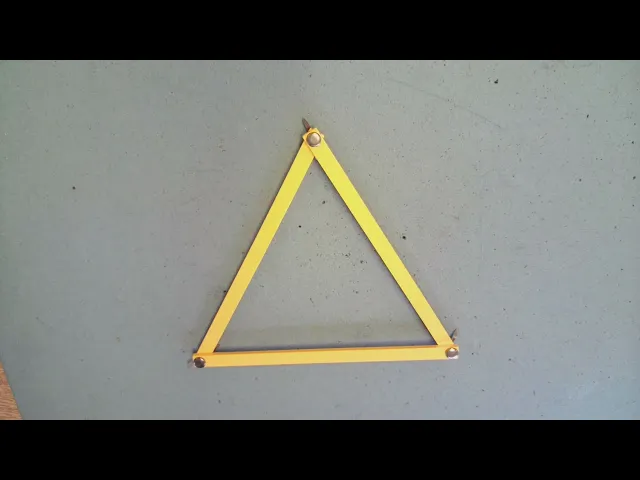
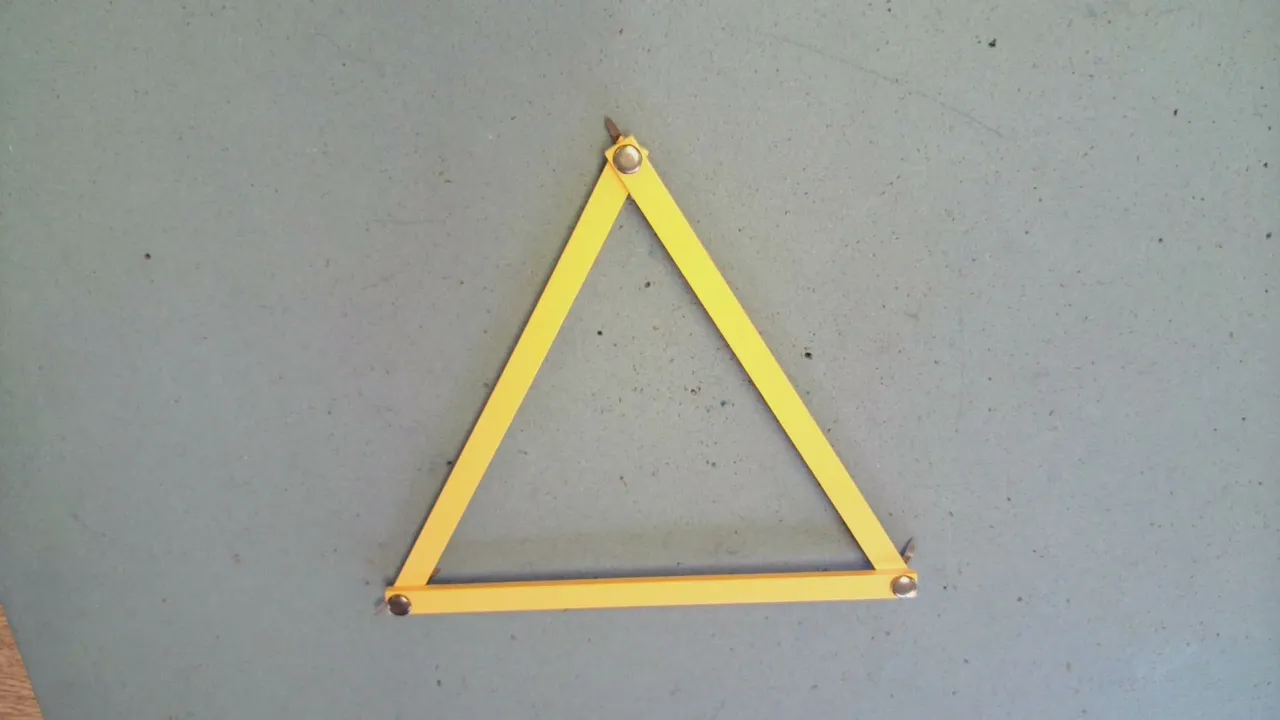
I have a triangle here. It has three sides. What do we know about each of these sides?
Yes, they are equal in length. And we know that because they're the same color. You might know the name of this triangle.
This kind of triangle, this type of triangle is called an equilateral triangle. An equilateral triangle. Equilateral comes from two Latin words.
Aquis meaning equal and latis meaning sides. Equal sides are equilateral. Let's look at another triangle.
Okay. What do we see about this triangle? It has two sides that are the same and one side that is different.
When a triangle has two sides that are the same and one different, we call it isosles. Isosesles comes from two Greek words, isos meaning equal and scalos meaning legs. In an isosles triangle, two sides are the same and one is different.
Let's look at one more. We have an equilateral. We have an isosles.
What about this triangle here? Are any of the sides the same? No, they are not.
So here we have a triangle with three different length sides. This is called scaline and it comes from the Greek word meaning uneven. Now we have three different types of triangles according to their sides.
Let's move that down. Make sure we get everything. There we go.
Scaling equilateral. And do you remember what this one is? Isoselles.
Okay. Isoselles. Um, now we have the three different types of triangles according to sides.
Let's mix up our tickets. So, you do this with the children. You mix them up, you pass them out, and you play a little game.
Who has the ticket for this type of triangle? Ah, you think it's equilateral? What makes it equilateral?
Yes. All three sides are the same. H.
Let's see who has this one. There's two sides that are the same. Yep, you're right.
It's isosles. Okay, scaling. Last one left.
Let's try again. Um, and so you mix them up. This is going to help to reinforce the definitions.
You want to make it fun and engaging. And this just helps to fix the nomenclature a bit for the children. Um, and so we'll um we'll continue on after this.