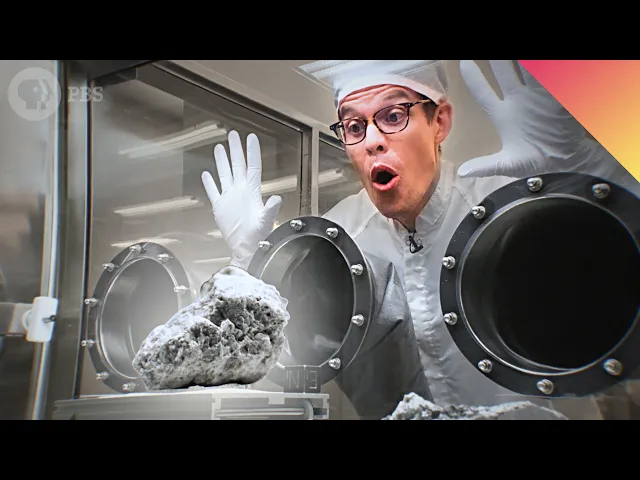
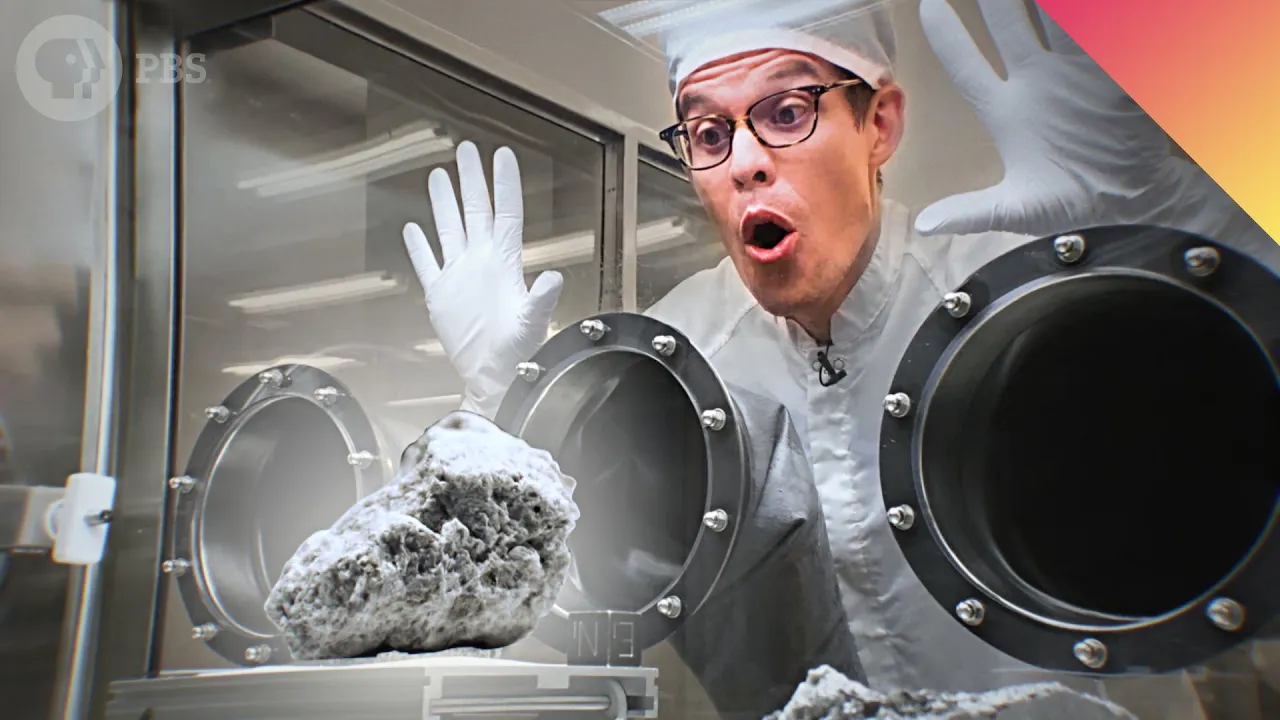
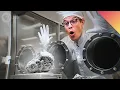
hey smart people joe here this is our planet and this is our moon this is how far apart they are to scale you might not know this but compared to other moons in our solar system our moon is weird it's 1 80th of earth's mass which may not sound like a lot but it's ridiculously big compared to the size of the planet it orbits for comparison saturn's largest moon titan is this big compared to our moon but less than 1 4 000th of its host planet's mass so how the heck did this chubby little nugget the moon we call the moon form the answer to that question is locked inside a vault at nasa's johnson space center right down the road in houston texas and i recently paid them a visit and in the process got closer to the moon than i ever thought possible does anybody have the combination to this thing this looks like a vault it turns out it is a vault yes you know so this is a u. s federal reserve bank vault from 1978. really yeah that's pretty cool what's inside is worth more than money there is no price on what's inside this seventy percent of the moon rocks on earth are inside the city seven of the moon rocks in in there that is a very important room yes can we can we go in we can you wanna you wanna open the door yes i wanna open the door do you turn that counterclockwise that's it oh my this is so cool you should have felt that this feels important oh it's this weighs as much as a truck that door weighs more than 4 000 kilograms and behind it are more than 300 kilograms of rocks brought back to earth by the astronauts on six of the apollo missions back in the 1960s even though scientists had figured out enough science to put people on the moon they still didn't know how it had formed the rocks we brought back were the key to unlocking this centuries-long mystery some scientists like charles darwin's son george had thought maybe the earth once spun so fast that a chunk just ripped off others thought the moon formed elsewhere in the solar system and was captured by earth gravity most of these original theories sound pretty loony incidentally the words loony or lunacy come from the old idea that the moon made people temporarily insane but then in 1969 during the very first moon walk one astronaut made a lucky decision that gave scientists the hint they'd been waiting for in july 1969 nasa blasted three men to the moon aboard apollo 11 and on july 20th neil armstrong and buzz aldrin touched down in the sea of tranquility they took some small steps a few giant leaps and a lot of pictures and then at the last minute right before they launched back to earth this happened these come from apollo 11 right yep this was the last sample collected on apollo 11.
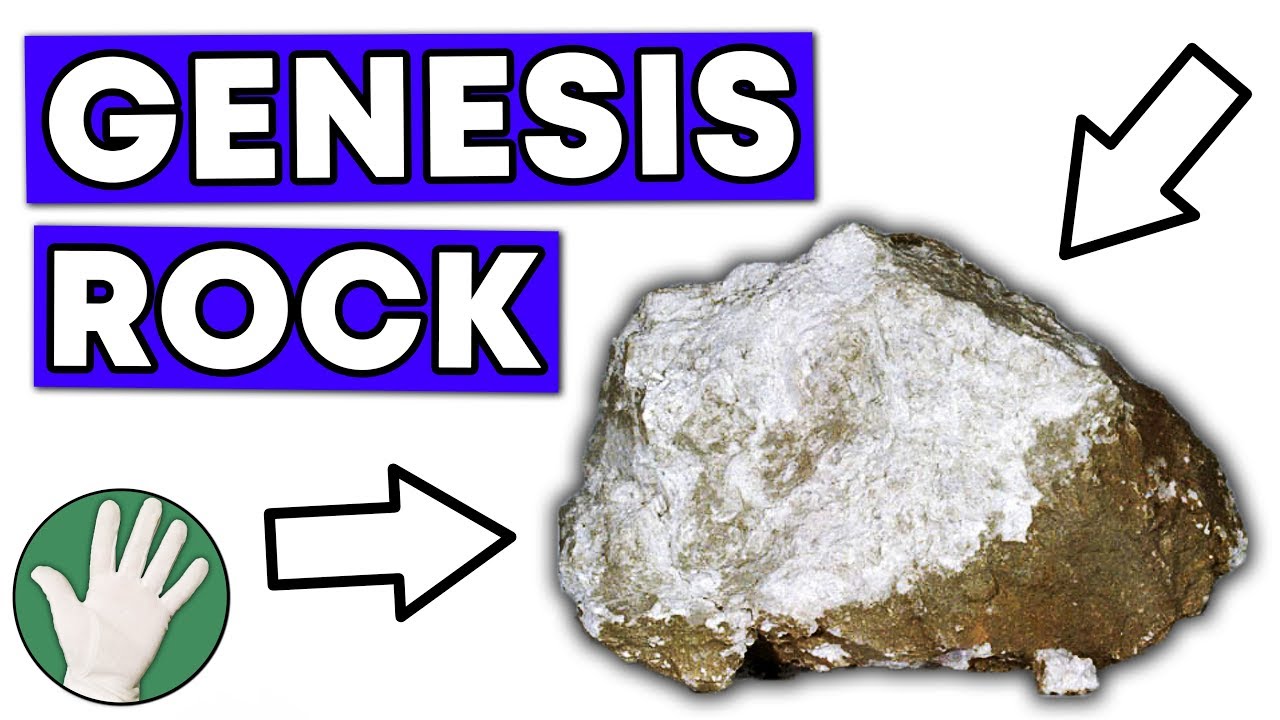
as neil armstrong's outside the the lamb the lunar excursion module getting ready to seal up the rock box he looked inside thought it looks kind of empty and so what he decided to do is just shovel four shovels of dirt into the rock box and then sealed it up and it turned out being this sample and it was the largest single sample brought back from apollo 11. and that became a really important sample because as people looked through it they found little fragments of white rock and they're like oh it's an orthocyte that's weird why would there be an ortho site on the moon an orthocyte on the moon wait why is that weird you know what to understand why this scoop of soil was such a big deal we need to back this story up a little bit to 1609 in florence italy where a guy named galileo galilei had taken a new invention called a perspicillum and named it at the moon today we call that invention a telescope across the terminator the line of light and shadow stretching across the partial moon galileo saw it had areas of high and low terrain he thought that like on earth the darker low-lying areas were seas so he called them maria apollo 11 touched down in one of these the sea of tranquility the moon's highlands on the other hand were lighter in color like this spot where apollo 16 landed and many of the shadowy shapes that galileo saw we later realized were impact craters all of this together told us that the moon was really really old and it got its butt kicked for a really long time after billions of years of impacts with space rocks the outer 5 to 15 meters of the moon's surface had been ground up into fine grained stuff called regolith and that's the sandy stuff that neil armstrong scooped up back on earth scientists painstakingly counted 676 individual grains of regolith in neil's shovelful and in that they found 84 specks of white stuff they didn't expect to find there this sent nasa scientists on a sherlock home style hunt for an explanation for that white and orthosite to get to the sea of tranquility it must have been blasted there by a giant impact like a meteorite from hundreds of kilometers away in the moon's highlands the lighter areas and if the highlands which cover most of the moon were anorthocyte that meant most of the moon was covered in that white rock elementary make anorthosite to make the main rock on the moon be this white anorthocyte you need to have a global ocean of magma that covers the entire moon that's hundreds if not thousands of years thick let's have a little rock talk from studying earth we know anorthocyte forms in a very special way it's an igneous rock meaning it forms from cooling lava or magma as magma cools and crystallizes and earth site floats to the top because it's lighter and less dense than other stuff in the magma like how ice solidifies out of liquid water it floats because it's less dense so for the moon's surface to be covered in this white stuff the moon must have melted at some point like the whole thing a moon that was all magma a magmoon but now scientists had a different mystery to solve how the heck do you melt a moon a guy named john wood came up with this crazy idea that the moon formed through a giant impact all based on these millimeter-sized fragments from one spot on the moon and everyone's like nah this is called the giant impact hypothesis earth gets smacked by another planet-sized thing the giant melted cloud of debris condenses into our moon creating a thousand kilometer thick ocean of magma that's a pretty loony story too but none of those other older theories about the moon's formation could explain all of its weirdness like why the moon's core is so small and so light compared to earth's core or why the moon has been slowly moving farther away from earth for billions of years or why the earth and moon are made of the same elements and atomic isotopes the giant impact theory could explain all of these but to convince people that something collided with the earth four and a half billion years ago and created a mag moon scientists needed a little more evidence oh man look at that twinning in there guess what we just found guess what we just found i think we found what we came for crystal and rock huh yes sir you better believe it oh boy i think we might have ourselves something close to the north side this is what we call the genesis rock it's 15415.