Not having success is not an option. I have to succeed. It's basically a matter of existence, a survival of my family. >> The world's number one male tennis player. He's won 24 grand slams in a glittering career. Novak Jookovic. >> You've been through so many injuries, losses. >> Oh, he's hurt himself. What has NovakJovich done? >> What goes through your mind when you Lose? >> I just want to be left alone. What has it taken to become NovakJovich? >> It's a consistent practice. It's prayer work, mindfulness, meditation, conscious breathing. It requires more responsibility from you
on a daily basis to prepare yourself for the biggest battle. >> When did you first become aware of that feeling of not being enough? >> I kind of get emotional about it because It's still deep inside of me. >> Do you feel like in your career you've achieved everything you set out to as a tennis player? When you reach your 30, you start counting your days to your retirement. I'm 38 this year. How far can I go? How long can I push my own limits? >> The number one health and wellness podcast. >> J Shetty.
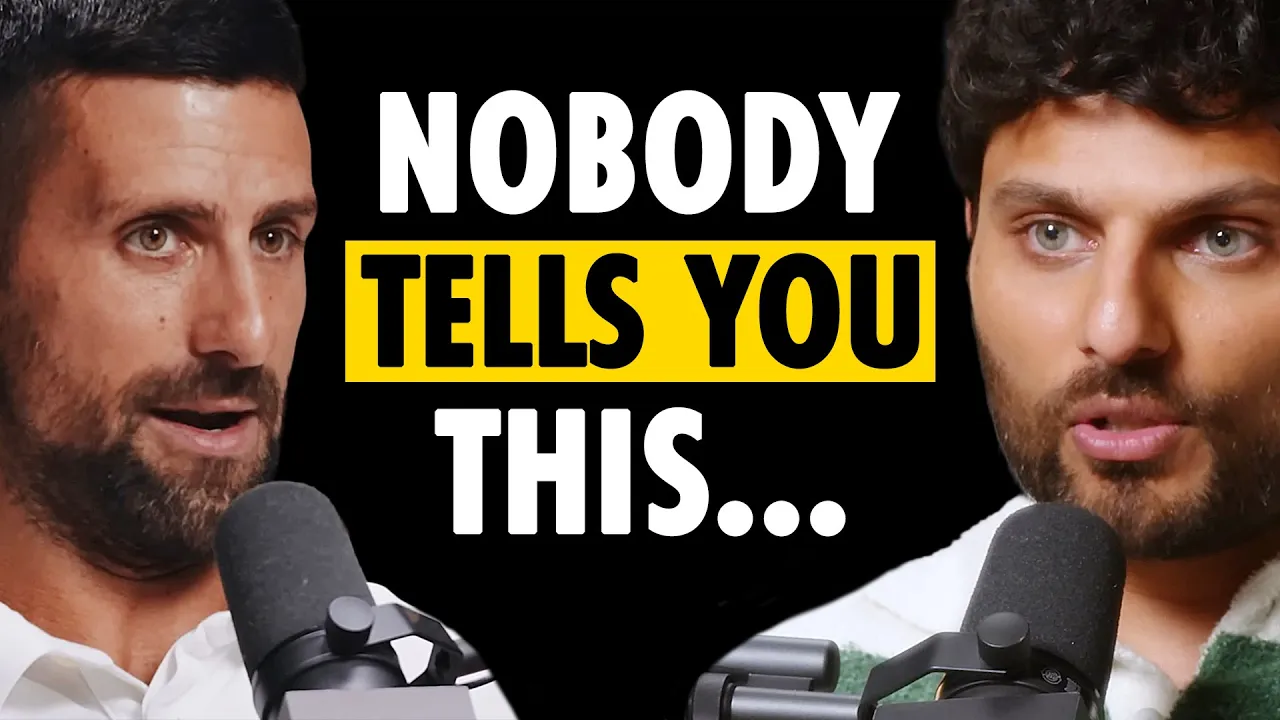
>> J Shetty, >> the one, the only J Shetty. >> Hey everyone, welcome back to OnPurpose, the number one health and wellness podcast in the world. Thanks to each and every one of you who come back every week to listen, learn, and grow. Now, this is an incredible statistic that I'm sharing for the first time. Thanks to you, we are now creating 500 million views every month. Not every year, every month. And I'm so grateful that you're part of this community. Today, I get to Welcome back a guest who has been a big part of
making that possible for me. I'm grateful to him. I'm indebted to him because he believed in the mission of on purpose even before many people did or any people did. Before this podcast was even out, he allowed me the gracious kindness to go and interview him and release as the second episode of all time. Welcoming back to on purpose, I'm so excited to have my friend, the incredible human Novak Joich. Novak, >> thank you G. You are I mean do you know what I'm so grateful to have you back and my heart is so full
because you were one of those rare people that had seen one of my first ever videos. We'd reached out. We'd connected. We were talking a lot at the time. You were going through a really fascinating place in your career. You were recovering from an injury, right? >> It was a different mindset. You were just on the cusp of becoming the Greatest of all time. and you took a chance on me in so many ways and I'm I'm eternally indebted and grateful to you for that. So, thank you for coming on then and coming back now.
>> Jay, thank you. It's a great pleasure to see you again and to be able to talk to you. Thank you for kind words in introduction and as well reflecting on our first conversation in 2019. I don't think I took a chance because we talked about it just before we started Officially recording. You know when you are connected with yourself and with your emotions and when you feel someone deeply and you look in someone's eyes and you understand instantly with your instinct with your intuition or that this person thinks good or thinks bad or has
the right intention has the heart at the right place. So I could see that from the first moment with you and that's where I felt the connection and even though we haven't seen each other For a few years, you know, I'm just so glad that we are able to connect now and you led me through the list of all the guests that you had in the last almost 300 episodes in the last 5 years and I I couldn't be happier for you and for your wife and for your entire team. Amazing. >> A thank you
man. And it's uh you gave me my first Wimbledon experience. I got to see you play on center court. It was amazing. I mean, are you kidding me? It was like and you crushed. You won Obviously. Uh but it was just such a brilliant experience to see you play after getting to understand your psychology. And I think that's what I've respected about you over time that you've really worked hard on your internal game as much as your external game. And I think you're one of those few rare athletes that have raised the consciousness by working
on your own consciousness. So today I want to dive deep into that and and I want to dive Right in. I wanted to start by asking you like what has it taken to become NovakJovich? Like what has it actually taken to become you internally? You know, you you mentioned that I took a lot of the time and attention to dedicate myself to the internal work and you know, I've been blessed and really lucky in a certain way to be surrounded with certain people at the very early stages of my career and my life that have
directed me into this direction of Self-care, of holistic approach, of multidisipline iplinary approach to the preparation to the prevention to the recovery both physical mental emotional and at that time because I was so young I didn't understand that and and it didn't need to be explained to me in depth at that point I trusted you know my tennis mother as I like to call her she passed away 13 years ago but she was the one that really introduced this holistic concept to me you know we were I was going you know obviously to school and
then I was only 9 years old and 910 and I was training with her maybe two or three times a week individually tennis and then I would have group sessions and my parents were you know were trusting her enough to allow her to participate directly into my upbringing basically. So she also educated me off the tennis court as well. So she took me very often uh at least two times per week to her house where we would look at the tapes Of all the greats both male and female tennis players. That's where my impersonation started.
You know people, you know, still to this day ask me, you know, when are you going to do the imitations impersonations? And you know, I haven't done it. I've done it early in my career and it was fun. It was viral and people liked it. And then I received a little bit of an evil looks in the locker room and I kind of felt like, you know, maybe I'm stepping over the line. Inside. That's why I stopped. But that's where it started. And I was like, I was really trying to adapt all of the great
things that I could see. And I have a kind of a photogenic memory. And I'm a very visual person. And that was something that was kind of expected that is kind of common as well, what you do with kids, you know, or or with young athletes, right? You watch videotapes, you try to analyze, you try to talk. But then she had me listen to classical Music. And she said it's very important that you do that almost on a daily basis. Listen to classical music while you are writing your journal while you are you know preparing
for bed or any time of the day but particularly those times and you know I liked it. I didn't understand the purpose of it but you know I liked it. And so we would look at the tapes and we would listen to this music and then we would read poetry and then we would do a visualization Practice. At that time she it was not presented to me as such but she would just say in a very simple way that would be understood by a a boy a 10-year-old boy just close your eyes and think about
how you want to play tennis and think about when you're your happiest. And so it started at a very early age and I'm so eternally grateful to her for instilling this in me and teaching me you know how to see life basically and understand that tennis is not as an Individual sport of course is also different because you don't have anyone to replace you if something goes bad you know during the match you have to figure out the way so I think it requires more responsibility from you on a daily basis to prepare yourself for
a biggest battle internally and also externally of course with your opponent and with everything that is happening around. But you know so it taught me to really understand that tennis is not only about hitting a Tennis ball over the net and counting score and dreaming about this achievements and winning Wimbledon as our holy grail of tennis. But it's it's more than that. And and I can use tennis as a platform to evolve into a better human being. At that point, I didn't understand that. But then as I was growing older and becoming more mature, I
I started to understand the importance of doing all of these practices and I started to expand on each of these Topics that that I was going through with her. And then, you know, I started going into yoga. I started going into the movement into Christianity or to a Christian. I'm very proud of my religion. But at the same time, I am very open to you know embrace anything that can teach me you know from other religions and from the spirituality as a whole. So I'm very curious by nature. So I was really always looking for
new ways to improve myself and improve my life on This planet, you know, and I was very lucky to be basically have that space also from my parents. It's a kind of a self-discovery through the self-care through tennis really consumed most of my life. Um I mean still does not to that extent of course I mean I have two kids I have family and other businesses and other things that interests me. So I'm you know I'm balancing right now between tennis and the other stuff and I'm kind of making that transition Slowly. you know, I
still play professional tennis and I still experience my worst self on the court and my best self. And so going back to your comment at the beginning where you said, you know, you're one of the the athletes that really have immersed himself into the spirituality, into understanding the holistic approach and so forth and and the mental health, I would say yes. But I'm still surprising and shocking myself on how much I Actually need to still work on that and I still quote unquote don't know enough about that world and it was really hard for me
to accept that you know I thought you know since 10 I basically started working on that and and growing the foundation but it has evolved and has transformed so much for me in terms of how I see myself how I see the world and I thought, you know, maybe when I was at at the peak of my career and, you know, I felt like I'm unbeatable and I I feel Like I could do anything, you know, I kind of walking on the water. We all experience that in in in our own lives in certain way
and it's a great feeling, but then the ego takes you places where it's it's hard to come back from. And maybe you shouldn't come back from that. Maybe you're trying to find a balance, find the optimal measure that really works for you. But it it took me time to really accept the fact that what I have learned, what I have mastered, and what I'm doing on a daily basis for the last 20 years or more is not necessarily a guarantee that I'll always find a way and that will always work for me in this particular
time of my life and circumstances that I'm facing. So that's a huge revelation for me because and I'm still trying to get a grasp on it and and understand all of these factors that are in play that are challenging me on a daily basis. And when I talk from this perspective, it's a beautiful journey That I'm trying to embrace. But when you are immersed in the dark moment, it's it's kind of hard to to really get out of that. >> Yeah. No, I I love what you're saying because uh in the Gita, the ancient text
of India, it's spoken on a battlefield and the idea is that you're always on a battlefield. And as you said, on the battlefield, you see the best of yourself and the worst of yourself. And often people said that to me when I Moved to LA, everyone's like, why do you want to be in LA? There's so much materialism. There's so much, >> you know, illusion here. And I said, well, actually, I feel like I'm on the battlefield here. So, I see the best of myself and I see the worst of myself. And the worst of
myself reminds me to keep going and to keep working on myself. And the best of myself allows me to share my message with the biggest megaphone in the world. And so it's that Dichotomy of actually when you're looking for spiritual growth, you want to be in a place that reminds you of your weaknesses as much as your strength. Because if you are only reminded of your strength, you just have your ego. And if you were only reminded of your weaknesses, well then you would be depressed or disheartened. I can instantly see the mistake when I
actually say it's my coach's fault or it's my physio's fault or my fitness Coach's fault or it's whoever's fault for me losing a match or me playing this way. So I always remind myself, hey, take the responsibility in your hands. Take the means in your hands. You are in control of your life. I really would love my my children to to be able to be okay with being bored because that's the time when you're actually most creative or that's the time when you can manage your thoughts and everything that you have been suppressing by distracting
Yourself with phone with whatever it is you cannot convince me that there is a single person in this planet even the monk in Tibet that is meditating 24/7 or an Orthodox Christian priest in a holy island in Greece that is 24/7 praying that is not experiencing some negative thoughts. You've probably been hearing about AI everywhere and we all need to be mindful of the tools we trust in this new chapter of technology. Claude is the if you know you know AI assistant that Just feels different. While other AIs often sound like robots, Claude has been
created with special research that informs its character. meaning that Claude just gets it when it comes to empathy and emotional intelligence. That's why millions of people are turning to Claude for parenting tips, dating advice, mindful habits like journaling, budgeting, and so much more. Claude has been thoughtfully crafted by Anthropic and its team of researchers Whose mission is to design the most capable and secure systems that place people at the center. You can try Claude for free at any time. And for a special offer on premium capabilities with Claude Pro, head to claude.ai/purpose. That's claud.ai/purpose. Do
you feel like in your career you've achieved everything you set out to as a tennis player? >> Uh, yes. And more than that, and at the same time, I still want to do more. And I know that that comes in a big part from a good place. Meaning from a place of purpose, inspiration, motivation, love for the sport, passion for the sport, passion to make people happy when they watch me. If I'm doing that, and I I have a feeling that I am by still actively being on the tennis tour and having my tennis career,
active tennis career, I'm still spreading that light by playing tennis and inspiring younger generations. That's something that that Comes from a good heart, a good place. But what comes from maybe a uh I would say not necessarily a bad place but less of a good place. I have identified that as well is my feeling of not being enough. And that goes back to my very very beginning of my life and my relationship particularly with my father and not being not doing enough, not being good enough. uh etc etc. So, so now that I'm talking about
it, I I kind of get Emotional about it because it's still deep inside of me and it's kind of the battle that I that I also go through often because a lot of people even closest people in my life ask me, you know, what more do you want? You know, you have achieved everything. What do you want? What why why do you keep going? And I tell them the the good part that I told you that I still really strongly feel it's inside of me and I feel like as long as I have the capacity
Or or ability to compete for the biggest titles in in my sport, I want to keep going. And also partly the part that I didn't mention that inspires me to keep going is to test my limits mentally and physically. Because when I was starting to break through into professional tennis, I remember when you reach your 30, you start counting your days to your retirement. Like after 30, you know, that's it pretty much. Even though there Was some exceptions like Jimmy Connor is the legend of our game. He played think semi-finals or finals of of US
Open when he was 40, you know, still still, you know, dominating the tour. So there were very but very few exceptions. Nowadays it's different. Why? Because I think the care for the body has improved so much. I mean now not only top 10 or 15 guys or girls on the tour have like multiple people in their squad to take care of them. You have top 50 people that are Taking care of them. It's due to the improvement of course of the conditions for the players and you know we earn more across the board. So, it
gives you it allows you to hire more people that would take care of your body. And I think that it's also a a kind of a a curiosity from my side. How how far can I go? You know, I'm I'm 38 this year, you know, how long can I push my own limits? And I don't feel like I do have limits. And I feel like the limits are Normally constructs in our mind. I've seen the episode you did with Brian Johnson the other day and then he talked about you know he's >> by a lot
of people's opinion very extreme but you know he dedicated his own entire life to getting the data and understanding what are the best conditions for the longest living life that he can have for himself which I think it's something that is admirable and you know I give him huge credit for That and it I understand because as a professional athlete, you know, the care for your body and your mind and the devotion to the daily habits is so tough because when you want to change a certain habit, science says it takes at least 21 days,
right, for the brain to start growing, you know, new neurons that are reprogramming. But if you don't have the right environment, that's going to be very, very challenging. So that was also one Of the things that I wanted to reflect on in your question is the environment is the one that can be very stimulative to you. It can be really supportive or it can be pulling you down. So it's super important even though we we always encourage ourselves to be independent in terms of what we do, what we eat, how we sleep, how you know
how we lead our lives and what we do and how we can live the best version of our lives possible. But at the same time, we are social Beings. >> We are very tribal beings. And even if it's the smallest community, we still want to belong to that community. We still want this community to support us. Even if it's one person or two, but it's super important in the end of the day because, you know, making tough choices. These are tough choices because society when you go out there, you know, supermajority of the places where
you go to eat or people that you see, it's a Kind of a vicious cycle and they lead their life in a certain way that maybe doesn't coincide or correspond to your choices that you want to make the new choices or maybe the new changes. So it's really hard, you know what I mean? Living in the in the big city and deciding you want to go through transformational journey on a daily basis where being exposed to >> to something that is contrary to what you're trying to achieve. >> I feel like it's it's reinventing yourself
constantly. You know, for me, I've had this kind of upbringing, had a great foundation, and you know, I've achieved incredible things. I was dreaming of becoming number one in the world and becoming a Wimbledon champion. And that was my dream. I achieved that dream within two days. I won Wimbledon and at the same same day became number one in the world in 2011 in front of my family, in front of president of Serbia Who was there. I mean it was with a welcoming of hundreds of thousands of people on the way back. It's just you
know once in a lifetime type of experience and when you do something for the first time obviously that big it's just like you're you're flying to the moon. I mean you're not you it's a kind of an old out of body experience but then I I felt like I had to set new goals and cuz I was you know at the at the time 2011 I was 23 years old 24 so Okay what do I do next you know I feel like I'm at you know peak of my powers and I want to so so
then I want to win multiple slams then I want to win all slams at once then I want to win gold medal for my country then I want to make history and so forth so forth so I think goal oriented mind particular particularly in sports but I also in business or anything really I think is super important because the clarity in from my experience is something that is Essential to have also peace of mind and to have a calm heart that you know what you're doing and that you set your goals your short-term goals your
long-term goals and you know exactly the strategy that you need to implement to achieve them and you surround yourself with the people who are supporting you but also people who are telling you what you don't want to hear, you know, giving you constructive criticism or maybe giving you non-constructive criticism and then Putting you very down. But that's also part of the journey. It's also learning how to get up >> like a phoenix and rise and and and try to develop a thick skin, so to say. So, it's it's a constant process really. I I don't
see myself fully satisfied if if that's maybe a shorter answer because I have that part of me which is like uh you know I think I can still do more but I'm the other side of me is like of course I'm fully I'm happy and I'm proud And in a way I can't wait one day for me to reflect on everything but while I'm still in my active career I don't have time. Tennis has a longest season of all sports. January starts January, ends almost end of November. And of course, I earn my right in
a way to be selective with tournaments where I play. So that's what I'm doing. I'm not playing as much. I'm focusing on the big ones. And I'm trying to incorporate all of these other things inside of my career and basically Expand the platform and use my voice for other things than just the tennis court. And I'm, you know, super blessed to be in a position that I am, but as I said, it's a constant journey and process. >> Yeah. I really appreciate you being honest about your experience with your father because I think that pretty
much anyone who goes off to do something successful externally. All of us and everyone was channeling some sort of internal inadequacy or an Internal feeling of not being enough. as you said and I wanted to ask when did you first become aware of that that you had that feeling of not being enough >> right >> and how have you helped that evolve in a in the healthiest way possible what has been that journey of almost having to live with it because it's there but not letting it be your guiding light well you're right it makes
sense because I think if you use it as the right fuel it Can actually serve as a great motivating factor right it can it can push you. It can, you know, stimulate you to extract the the most amount of necessary energy uh on a daily basis to achieve your goals and to basically live your dream. I think for me it started really as something that was inevitable as a part of the environment that I was in. I touched upon that a little bit in our conversation five, six years ago. My upbringing with several wars and
Sanctions and embargo and poverty and everything. So you know from a very young age I was basically forced to mature very quickly because I'm a I'm a oldest of the three brothers. I have two younger brothers. So as an oldest son to my father, I was basically kind of in a position where I had to be informed very early on, particularly the age of 11, 12 when when we had that bombing and the war and sanctions that state that we are in as a family or as people of of my Country, the situation, the circumstances,
my father had to bring it forward to me in a very clear and mature way. So, you know, one of the most impactful moments of my upbringing and my childhood is when he brought 10 Deutsch marks, and I've said this story many times, which is equivalent to $10, and he said, "This is all we got for our family of five as living in a super small apartment." That's where it hit me. It was like, "Okay, now I have to Take the means in my hands as a 12-year-old boy in whatever way I can. At least
what I can do is support my mother." maybe from some of the the burden that she has during the day of taking care of my younger brothers and that's where it also hit me that not having success is not an option like I have to succeed it's basically a matter of existence a survival of my family so I think it started there and then over the years it has obviously Transformed or evolved into different kind of form but I I think that and also my relationship with my father often times because of maybe lack of
patience of my father or of people around because everyone saw that I have a talent. I was coming from Serbia that had no tennis tradition, no tennis culture. We are a nation of a team sports. Uh we are definitely a sporting nation. We love sports but team sports. And at that Point during ' 90s it was about survival. People were watching sports but there was not much support for the sports. It was particularly not tennis a very expensive sport at the time. I chose the most difficult sport for my parents in most difficult time for
our nation and for my family. So often times I wouldn't travel because we didn't have money and then you know obviously as you can imagine tennis federation didn't have you know money to support me. So my Father had to go and beg and then he was also borrowing money from unfortunately even some criminals at the time during ' 90s and then they would you know they would tell him it's funny story right now but at the time it wasn't funny particularly for him but you know he would go and he said first time I was
going to go to United States to play I was 15 years old I was going to play like big junior events here like Prince Cup and Orange Ball there are the Biggest ones under 16 and under 18 and also So, more importantly, I was I was going with my father hopefully to get the sponsorship or, you know, get recruited by one of the big agencies, IMGs or or whatever. So, he went for ask for money because we didn't have so he went to ask for $5,000 and so this criminal people that you could borrow money
from because banks obviously would not give it to you. And then they said, you know, he asked him, you know, are You how much are you in rush? And he's like, "Listen, I'm asking this money from you because of my son. He's playing tennis. We're going in America. You know, I'll return this money within whatever they agreed on, one or two months, whatever it is, 3 months." He says interest rate was 15%. But because you are in rush, it's 25. So my father was like, "Okay, you know, I'll take it cuz I have no other
option." So, and I can only imagine the stress that he was Going through and trying to turn this money where people were really car chasing him, shootings in our capital town, stuff that my father went through, you know, to to really not only survive himself, but to actually allow all of us to live and protect us and to allow me to live my dream and to play the most expensive sport at the time for my country is something that I'm eternally indeed. I cannot there's no money or there's nothing that can >> return the favor
so to say. So of course my father's always my my hero for that and my champion but you know feeling of not enough because of that stress and what things that he was going through and then it was hard because he was giving me also hard time if I wouldn't play well and it's like and then I I understood but at the same time I was afraid I knew what I have to do but you know it's hard for me to deliver it when you need it's like okay you need to win No matter what
type of situation. He wasn't telling me that but that's how it felt >> and that felt like that for years. >> So that's why I say that the success that I have achieved is not only due to my father or my parents or myself. It's also the divine higher force. I strongly believe that there was an intervention and there still is. There's higher forces in power that were helping me in some of the most difficult moments in my Family as well. I am a man of faith and I really truly believe in God and a
higher spiritual force that intervenes in the most difficult moments if you open your heart, if you pray and if you believe in it. So I felt it on my own skin. Jay, to be honest, I really don't know how I won certain matches. I cannot explain it even with my team after I would finish a grand slam final against Roger Feather in 2019 Wimbledon when he was a far better player. I saved some Match points and I came off the court all stats were going his way. I won the match and I just said, you
know, and I wasn't playing well. I wasn't feeling well on the court and I was just like struggling and scrambling and trying to stay out there, stay alive. And I won in the end in one of the most epic finals in history of tennis. And then you know I told to my parents and my family and my my team I said and my wife I said I don't know how I won this match. I have No idea. At the same time I do know deep inside that there there's that connection happening and that that there's
also that help. So there there's a mix of things. It's really hard to explain. Sometimes there's this divine power that really if you allow it, if you believe it, that really helps you come out of of a trouble and and achieve things. >> What has been your point of connection or practice with That higher power that keeps you connected? What's been that for you? There's so many different traditions and different methods. What's been the method for you that you find, especially in those moments, that you're able to tap in? Because I find that if you're
able to tap in in really difficult times, it means you're doing something in good times because it doesn't just suddenly turn on when you need it. So what what has been your particular Practice, method, uh system or theory that's kept you connect? >> You hit the nail with that one. It's a consistent practice. So it's prayer work, mindfulness, meditation, conscious breathing, visualization, presence, basically many other things as well that that just NLP or you know there's a lot of different techniques that I have been practicing and triing always with myself before I Would recommend it
to someone else. And over the years, I've developed my own formula that changes dependent on the feeling, dependent on whether I'm on the court, whether I'm at home, whe practice, whatever it is that I'm doing. But I try to do it when, you know, nobody's watching. And sometimes I verbalize things, sometimes I don't. Sometimes I write things down, sometimes I just internalize. It just depends. But I think most importantly in the end is That you're doing something. M >> I'm actually reading this book uh one of the books that I'm reading currently is you know
the power of surrendering and letting go. >> Mhm. >> It is an amazing book for me at at the moment because because of my upbringing and because of my character and because of my life story hard for me to let go. It's hard for me to surrender unless it's to the higher power. But I'm Still working on how to surrender and let go of certain things in relationship with close ones or my relationship with the tennis or you know if I lose a match or tournament if I go through a crisis period and you know
how to not hold something that that pulls me down or regret or you know it's it's a constant work but I I I feel like if you devote the time on the daily basis whatever works for you you had some of the most amazing Uh guests on your show that talked about from neuroscientists to doctors, nutritionists and talked about the healthy habits. So I I don't want to be talking as them as I'm not an expert but in my fields or so to say in my own life and experience I feel like I'm an expert
because I have tried and developed so many different things over the last 30 years and and I know what works and what doesn't in a way but going back to the very beginning organization it's not Again a guarantee that it will keep on working to the rest of my life but I know what will is my dedicated time in a day to this practice. ractice, >> mental practice, physical practice, of course, activity practice that I'm doing in the gym outside and tennis court or when I'm not training, I still do stuff. I still do some
yoga practice. I still do stretching. I still do breathing. I still I love the chiong and the Chinese traditional medicine or Chinese Tradition practices. I think they're super good and important that you can do even in your chair. There's always there's ways and it's incredible nowadays an internet and I mean there's access to incredible things. All it takes is a willpower to do it and a desire to say okay I'm consciously making this decision to change my life for better. And I'm going to start with small steps. Super important. It's hard. You have so much
judgment in this Society in this world right it's it's really hard for people as as we talked about the environment. as much as effort you're putting in and then you come with your friends or or whatever with your family members or and then they start to judge you because you're starting to act weird because you're not normal. You're not conforming to the norms of the society whatever they are because it's quite relative. You know we all different but you know the norms of Society are not really healthy ones otherwise we wouldn't be where we are
as a world ecosystem as a whole and as people and what we are doing to our planet etc. there's a lot of uh awakening happening and it's great to see that change but it's not easy for people and I understand that and it's okay not to feel okay we heard that many times as well and sometimes as I said accepting and embracing for me and letting go of the fact that I cannot Find a solution to something that happens in my brain in my mind is also fine >> of being in a dark place for
as long as it requires is also a humane thing it's also part of our life. I can see there's also a narrative that I don't really necessarily like or support in our let's say wellness mindfulness space well-being space where it's presented by certain people in such way that you can only think positive thoughts >> and there's no room for negative thoughts >> that you know every picture or video they post online is smiling it's great life and so forth I mean that's not possible right I You cannot convince me that there is a single person
in this planet, even the monk in Tibet that is meditating 24/7 or an Orthodox Christian priest in a holy island in Greece that is 24/7 praying, you know, peace isolated in the cave That is not experiencing some negative thoughts. Mhm. >> And I always go back to what one uh one of my friends told me that I he's also um mental coach and I worked with him for years and one of his teachers is Zen Buddhism teachers and he goes to the temple in France often to his teacher and he asked him in one of
the first times that he was there uh doing retreats and spending time at the temple. He says, "How are you so calm? You know, how is it that nothing really rivals you or unsettles you? Like you're always so serene. Uh you don't have any negative thoughts. And he said the answer from the teacher is that he says it's not true. He says I probably have more negative thoughts and more challenging thoughts and emotions than you have. The difference between you and me is my training and my ability to not stay in that state and in
that emotion for a long time. >> Mhm. >> So I stay in it for seconds >> and you stay in it for who knows. >> Yeah. >> Right. >> So I I I think there's true wisdom in that and it's all about practice everything. I mean brain is a muscle like any other >> even consciousness that comes naturally to us. I mean we are conscious spiritual beings. We are souls on this planet in This body. But in order for us to connect with our true self, we need to go through these layers, the constructs of
the society that has developed us in a way has shaped us. And that requires practice on a daily basis. And that's not easy. Look, it's it's not easy not switching on your phone or your TV the first thing in the morning, but doing something that is maybe not as healthy, but being devoted to that practice or, you know, during the day having that Little one, two, 5, 10, 20 minute rest time and comprehension time. It's not easy to do that, especially for people that didn't develop that kind of habit. It doesn't come naturally. I mean
my even though I don't like giving advice as we talked about it but I like to share something that works as a suggestion something that works extremely well for me and then and this is crazy that even in the 21st century we are even talking about this as a hack It should be like an everyday thing that it's a natural most natural thing is to spend time in nature >> listen to the birds chirping listen to the wind feel the wind feel the I mean if you're by seaside or oceanside walk by the water or
any water or pond or lake or just be without a phone and in nature, let the nature do its job and heal you. And there's so much more power to that than we actually think. >> And and I felt like in the in the Darkest moments when I really don't want to do any of these techniques or any of the time indoors, I just go out and I just I just go out and preferably walk uphill. Mhm. >> Because I feel like when you walk uphill, your heart rate raises obviously and because of that effort,
you're even more present. >> So even less time for your thoughts to consume you. So you're like fully present. And then when you get to a Certain point high at the top, you feel good about yourself because you've done something. You're in the nature. You're dedicated time to yourself. So I feel like that's super powerful and it's often times very underestimated. The reason why I love hearing about your practice is just because I think >> I think an athletes mind is one of the most unique places on earth because when you're dealing with extremes every
day >> and every week and both extremes of Being number one and then losing a game and you know everything that goes on the toolkit you have is one of the most versatile toolkits and and that's why I asked that question was just to understand what you do. I was going to ask you like I feel like one of the most challenging things and you probably remember this when you are the new kid on the block and you're playing all the legends and today you're the legend and you're playing the new kids on the block
And it must be such a fascinating experience to go through and when you talk about the power of letting go and the power of surrender >> I wanted you to talk to us about that like what did it feel like when you were the new kid on the block and you were playing your legends that you looked up to and now you're the legend you're the goat you're the number one playing the new kids on the block. Like what does that mentally look like? >> It's a completely different feeling obviously and different perspective. I mean
when you're a teenager coming up and then you know you you're in a dreamland when you are just sharing a locker room with the legends of the game or the guys that you look up to your biggest rivals. They're becoming your biggest rivals later on. But at that point they're heroes. They're like my gosh. I mean, these guys, I've seen them on the TV, and now I'm >> Who is that? >> I mean, look, my my idol growing up was Pete Sampress. And even though Pete Pete's game and my game are quite different, I don't
know, I loved his demeanor. I loved his ability to cope with the pressure and how he was coming up with the best tennis when it mattered the most. And that was a kind of a sign of a greatest champion. I mean he was holding a record for most slams and and and weeks number one etc for a long time Until Roger came and Rafa of course and then of course paved the way and then you know looking up to them as well. Even Nadal is only a year older than me but he made a breakthrough
earlier than I did. it's already for a couple of years he was on the tour when I started coming in and he was already number two in the world multiple slam winner and etc. So, of course, it was kind of a surreal experience for me and I tried to enjoy it and embrace it, but at the same Time, I felt like, okay, it's great to share the court with these guys, but I want to beat them, you know, I want to get the biggest titles. I want to be number one. I want to dominate. So
I think that the first kind of that wave that I was riding on helped me to win my first slam when I was 19 in uh Australia Australian Open in 2008. And then I I won a couple of big tournaments and so forth. I reached the number two in the world, but You know, I still wasn't number one. And then I I had a three-year period. I didn't win a slam. I was winning some big tournaments, but I couldn't win a slam. These two guys were beating me in every big match, Feather and Adal. I
changed rackets, you know, team members. I I did everything I can to kind of find the the right formula. And I was struggling physically as well. I wasn't, you know, that's where actually I had my transformative journey Nutrition-wise where I took out the gluten and dairy products and refined sugar. Up to that point, I was eating all of the these things thinking, well, I'm I'm eating relatively healthy. I mean, relatively healthy. I thought, you know, that's what I know. But then, you know, when I started working with this with this doctor and he he pointed
out, you know, you have strong gluten intolerance. It messes up with your gut. Got to take that out. You got to take Out the dairy product because that creates a lot of inflammation in your body. You might be able to eat it later on, but not now. And refined sugar. Absolutely. No. So, that was a huge change, but I committed to it. And then I felt that affected me. In fact, my mental clarity, my recovery was much better, my decision- making on the court was better, etc. So, that helped a lot. And of course, mentally
as well, I was working on certain programs that I had From, you know, that were kind of not really very positive and not not really serving the purpose on the court of winning a match. So that year in 2010 2011 is when I experienced a huge boost of energy and transformation and that change an unbeaten run of 40 plus matches and had three slams and became number one and had one of best season of my life and that's where I everything started going in the in the upwards direction for me and learning also from These
guys and the matches that we've played against each other was something that was extremely important for me at that time. I was of course trying to consume as much as I can this energy of the center court and everything and it was overwhelming at times but I was also very thorough in my analysis of the matches afterwards even though I don't necessarily like to watch matches that I lost. But you know, Kobe Bryant used to talk about This a lot and I when I was talking to him personally about that he would cuz I tell
him Kobe I really don't like you know watching myself perform bad or when I lost and it just gives me this cramps in my stomach and I don't like it. And he said even if it's just specific intervals of the match that you lost that you want to watch that you definitely look at that and you need to analyze that and you need to go through that cramping feeling because that's Where you learn from those those mistakes and that's where you have an opportunity to rectify that the next next tournament or next match and so
forth. So that helped a lot. And I do watch the matches that I lost and highlights and certain parts, but I never watch the last point. I don't want to watch the point where my opponent, you know, fist bumps and raises his hands. I just maybe it's I don't know. It's a superstition or not, but but it's Just some some kind of a feeling that I have. But yeah, I just, you know, those rivalries really shaped me into the person I am, into the player that I am, and definitely grateful for for everything that I
experienced with these guys. >> And now the flip, now when you're playing the younger players. Well, well, now the flip is obviously an interesting experience for me because uh when Feather and Nadal and Murray, my biggest Rivals, retired actually most recently uh in the in the last year or two, part of me left with them and I and I really feel that because and I I thought, well, it's not going to be difficult for me to kind of shift my attention in terms of who are my principal rivals on the tour from them to someone
else. But, you know, it is it is tough because, you know, I'm used to these names, these guys, these faces for 20 years and then new faces come in and and it's normal uh How can I say evolution of our sport and it's normal that you have new generations that are kind of come in and dominate the tour. I'm experiencing something I have never experienced before, but that's that's also fine. you know, I'm trying to embrace this journey and but also I think what is very important to me personally and and what I have expressed
directly to all of my basically rivals currently today, the young guys who are going to be the Carriers of the tennis for the next decade is that I'm here for them to share my experience even though it's difficult because we're facing each But I still feel that in a way that's also my role. It's also my responsibility. And it's also a great opportunity for me to do that because I re it really fills my heart with joy that I'm able to convey my experiences, my knowledge, whatever that I can from my journey to a New
generations because naturally the tennis should get better and we all want tennis to get better to be better and I want somebody to break my record in the future or all of the records. Why not? I mean this is how it should be. if I can contribute in in a in a way where I can say hey aside of the the barriers that we created in a rivalry if you need help with I don't know public relations if it's you know marketing if it's dealing with the outside world as well that is Very difficult dealing
with anxiety we all have that you know we all know how it is to feel alone you let yourself down or you let other people down mental challenges in a high level professional sport are 100% present with everyone. It's just a matter of how you deal with it, who you have in your support system that can help you. So, I feel like it it was great when I was able as a kid to ask some of the the the guys who were playing at the top level, you know, some Of the questions that were interesting
me and that just hearing from them two or three sentences of how they think that they were dealing with it and how that affected them was huge to me. Even if you heard it from someone else, but just hearing it from them, it just has this resonant power and impact and it did help me a lot. I didn't have it from my top rivals at the time, but I had it from some guys like even Lubichic, for example, who was, you know, fellow Croatian tennis player, and he was a number three or four in the
world at that point. And then I was uh breaking through as a teenager and we shared the same tennis coach. He influenced me in a positive way to like change the racket or string pattern or strings and all of these small details that you might not think that are maybe relevant or but you hear them. you hear it from them and then you're like, "Okay, now I'm ready to make the decision because I trust What he tells me cuz you know he's a testament to what he's preaching basically." >> Yeah. Yeah. It's so interesting because
I love that you offered that. I was talking to Carmelo Anthony recently, the basketball player from the Knicks and >> you know, very successful Hall of Famer >> and he was telling me that in basketball he doesn't find the young players being that open >> to coaching and guidance from the senior Players. How do you find it in tennis? Is it more open? Is there Did you get people coming back and saying, "Novak, I have loads of questions for you." >> Yeah, I would agree with that with Carmelo because also in tennis because it's an
individual sport as well, it makes it even more isolated solitude sport where you are focused on your team and you create your own environment, community, and you're like excluding everything else, which is Understandable, you know, to some point. Contrary to let's say basketball, we we do share the locker room. So we sitting next to each other or warming up next to each other playing finals for the biggest tournament, which is crazy to think about it, you know, whereas, you know, obviously the the basketball or football, soccer, you know, these guys, they don't see each other
until they actually on the court. We, you know, look at each other, send each other Looks, our team members send each other looks in the locker room and stuff. And so the battle starts already there. So from that point of view, it's kind of hard to expect that they would come and say, "Hey, look, you know, give me some advice. How I how can I beat you?" But uh but that's why I'm saying like there's many more other things that can be very helpful like outside of the court. >> And yes, there are some young
players That are how can I say open, more flexible, more curious. And I think it's not maybe not so much about that, but it's it's about how shy you are or how courageous you are to really, you know, break that boundary and not be afraid of coming to me or to someone that you look up to and say, "Hey, can I ask you a question?" You know, more often I would get questions through their team members, to my team members, to me. >> Yeah. >> And so, and then I would approach them and say, "Hey,
you can, you know, you can talk to me. There's no problem." Yeah. but you know I don't want to bother you and stuff like this. So yeah I I think it's very nice if you have that exchange even if it's a a short one because the level of appreciation and respect which I think is ultimately the most important thing in sports you know yes we all want to win. Yes we all want to be the best. Yes we all want to make Records in history. appreciating what your fellow athlete goes through. Compassionate, being compassionate and
empathizing with him or her and respecting the process is something that is more eternal. >> Yeah. >> In your heart, in your soul, and in in the eyes of all the other people than any achievement or any success. I mean, that's at least how I see it. >> I love that. I I couldn't agree with you more because I always try to remind people that the only person who can truly relate to you >> is that person. Like your competitors are the only people who can actually relate >> to what it feels like to be
you because your team, they can't fully relate. Of course they can relate. They play tennis and they understand the game. >> But they don't know what it feels like To be in that locker room before you go on to be at the net when the score is not in your favor. Like even I talk about even in our industry like I like to be friends with everyone in my industry and I like to connect with anyone that you genuinely get along with because for me I'm like you're the only person who understands what it feels
like >> to interview people to get the public criticism to have the scrutiny to be Careful about what you're saying to you know whatever it may be and if I'm not friends with you I I have my friends from back home in London who I loved and my best friends but They don't know what it feels like to do this, right? >> And so in this part of my life, there's a difference. I wonder with you, you've been through and and I want to talk about some really pivotal moments. You've been through so many injuries,
losses, all of that >> at this point in your career when you've achieved so much, you've been through so much. What goes through your mind when you lose? Now >> answer that, but just want to reflect on what you said on the industry because I think it's super important. Uh um and that's the mentality the right kind of mentality and the philosophy of uh instead of division it's unity it's collaboration it's understanding it's support it's respect it's appreciation It's coming together it's growing industry together understanding that you're all yes you are competitors I mean even
in your industry you compete for the audience and so forth and there's a lot of you know podcasts out there and it's understandable to a certain point that you know there are certain formulas that you developed and tools that you want to keep to yourself which is 100% understandable but at the same time overall in a general Perspective of things we are part of the same industry we need to grow we need to grow this awareness so that's how I also see it for tennis you know in sports even more so competition and kind of
a fierce mentality is so prominent to the point where like for example in basketball I love basketball you know Serbia is a country of of basketball is our you know national sport number one and you have well intentionally maybe in a in a midst of a Battle under the rim fighting for a rebound hurt somebody and that's somebody you elbow somebody okay and that somebody's down and you can see him in pain and you don't come and give him a hand and says hey man sorry let's go I don't see how that exposes your weakness
because I think that's in the in the center of everything. It's like >> don't show your weakness, don't show your vulnerability, be strong, be tough, whatever. Of course, we have to be Tough, be strong, be whatever, be fierce in terms of like wanting to win and finding way to win. But that doesn't mean that we can be also human beings that hey if if I did something to you in a contact sport like basketball if it's a foul or something like that hey you just give him a hand one second and says whatever let's go
let's keep it going that doesn't mean that you will not battle in the next minute again. >> Yeah. So that's the part which I don't Really understand fully or don't support it but that's why like I feel like coming together and really showing that respect even if it's you know before the game and after the game it really resonates with people it does send overall a good message and I think it improves the sport and brings people more together. Now to to your question about losing a match, right? That was >> Yeah. Like at this
stage of your career, I feel like you've obviously we've Talked about it. You're satisfied. You've succeeded. You've come back from like being down on points like and I'm trying to get into your mindset just where it's at today and and how it's evolved over time. Like >> what does it feel now when you lose have an early exit? Like what does that feel like now compared to before? >> As hard as hard as it was before. Yeah. Sometimes there is no rule. Sometimes it takes me an hour, sometimes half a day, Sometimes a day, sometimes
a week to go over the loss. I mean, it just really depends. But right after the match, you know, I would uh if I have to reflect shortly about the match with my team, but I just want to be left alone. Yeah. I just have to go through my process. I don't like the the chitchat, the small talk of trying to lift my spirits up right after the match. I just like just give me some time. I need to isolate myself, go in my room, go Outside, walk, whatever it is, you know, just blow some
steam out. And then when I do that, then I'm ready to, you know, talk, socialize, and stuff like this. I don't know whether that's something that is good or not in general terms. Uh but that's just me. I feel like it's really hard for me to digest that I lost the match. As I said, sometimes takes longer, sometimes shorter to get out of it. But I do need definitely like few hours to not see anybody. Like I I hug My kids. If I see my kids, you know, my kids sometimes within those few hours, they
get me and they're like, "Daddy, we have to do this. You have to take me there and stuff." So kids have that permission to come into my space but you know anybody else I just need some some time and I >> I just feel like it's sometimes is necessary to have that and in solitude is not necessarily bad >> and I feel like we all need to learn how To embrace being in in solitude and being by and enjoy being by ourselves doesn't mean that we have to go to total extreme but it has to
be balanced and optimal but we need to create that time for ourselves because also being bored is good you know being bored this is something very interesting you know that I also see with my with my kids like particularly with my son keeps on telling me he's 10 and he's like daddy like he just recently told me a few days Ago we were at at my parents' place countryside by the lake and we were alone and he was we were playing different we were playing ping pong we were doing some uh kayaking in the lake.
So, and we played some football, soccer. So, we had a quite active few hours of first few hours of the day. And then I was doing something else. I don't know what I was doing. And then he come up comes up to me. He's like, "Daddy, I'm bored." And then I had him sit down with Me and then I said, "But son, it's okay to be bored sometimes. First of all, you had a great active morning and you did a lot of things. And second of all, you know, when you're bored, it doesn't mean that
you have to instantly take a book or a screen or anything else. You need to also learn how to be with your thoughts. And if you are not comfortable being bored indoors, go outdoors. Sit on a chair and have have some drink and just look at the sky. And I and I think That's much easier said than done. And I and I I really would love my my children to to be able to be okay with being bored because that's the time when you're actually most creative or that's the time when you can manage your
thoughts and everything that you have been suppressing by distracting yourself with phone with whatever it is. They don't have my kids don't have phones. They're 10 and seven and and that's another conversation. But you know it's It's a struggle but it's important you know I think it's super important particularly for them at this young age to understand and develop a connection with nature with outdoors with activity with all these things and then it's inevitable you know soon it will come a moment where they'll have the the screens and well they're blend into the society's norms
and but at least I'll be comfortable as a parent that I done what I can to instill some of the Foundational things in them that they will appreciate maybe not now but later on in life. I think also, you know, when I lose a match, I want to be distracted by something. I want to have my phone. I want to watch something, read something. I wanna I want to distract myself. And that's one of the bad habits that I have. So, it's it's a battle for me. And that normally how I win this battle is
just go outside. And I either don't take my phone, I'll leave it, or if I take It, I'll just if I'm in the city, I'll just listen to something, listen to Jay Shett's podcast on purpose, or I would do something, you know, just or normally I would listen to a music, >> you know, relaxing just to kind of calm myself. I would prefer not listening to anything and just being immersed in whatever is outdoors and trying to trying to find a park, trying to find anything natural, you know, and I think that helps a lot.
But I do need my time. >> Yeah, that that's reaffirming for me because if I'm having a tough time, I've always found that being alone, I have to first make sense of how I feel about something before I hear everyone else's feelings, right? because otherwise someone's feeling won't satisfy me. So even if someone said and I I assume that's what you're saying. If someone came up to me and goes, "Oh J, but everything's going to be all right." >> It's like if I don't feel that and if I Don't believe that, it doesn't matter how
many times someone says that >> and and of course the intention is good for that person. But it's hard for you to see that at a given moment. >> Correct. >> So I I agree with that. And I think to to the point of distractions, I don't think that necessarily distractions are 100% super negative. >> And I'll explain. I I I think that for a lot of people, they need a moment, However that moment lasts to it looks like they're distracting themselves like when I do it, but it what I what I do is just
bringing myself back to that center, whatever that is. Okay. And then I'm ready to do some other practice of breathing or whatever it is or I can socialize. I can start speaking with people. Yes. And do other things. So I don't feel it's necessarily bad unless you don't have any control of it. Unless it just carries you into hours and hours Of playing games or being on social media of being if it's that then it's not good. Yeah. >> Then it's not good because then you're disrupting your own rhythm. Well, what you're doing is you're
disrupting the pattern, right? >> So, instead of being there and then you're just playing the game again in your head and being down on yourself and being negative and >> and so you're disrupting that pattern With the distraction and then that's a good thing because then you don't get into that spiral and it's not like you're checking what people said on the comments about the game, right? You're dis you're disconnecting from the game. >> I'm disconnecting. Well, the thing is that if you're on social media, which I I do have a tendency to go to
social media as well, like right after, even though >> I don't want to, but part of me wants To. It's also where I find some short clips of what happened in the match and then kind of like analyze what what happened and how I why I did what I did or whatever, what could I could could have done better. >> And then I see, you know, this obviously this shocking headlines like Jookovic is out, you know, he lost. I mean, what a shock early blah blah blah. then I get pissed off and then I just
switch that off. Right? So I don't even get to the Comments or section or anything like that. Then I just leave it for whatever whatever time. And then what you're doing is you are changing that state you're in. Cuz if you are really wired in that moment, you are like almost going to burst. It's not good. I mean, how can you have a a rational conversation with anybody if you're in that state? And then normally in that state, if you start making decisions when you're hotaded, not good as well. I Think that these are the
the ways of like if you can like cool yourself down and then I mean a cold shower is something that I also do sometimes when I'm coldheaded that I think also helps with kind of biology and I feel like physiology just like helps my mind my brain calm down and then I'm able to address topics that I want to address. >> It's almost like what it takes to be to emotionally regulate. >> Yeah. And if you go straight into Analyzing the game or talking about it, you're actually heartbeat's going up, you're breathing shallow again, you're
replaying the miss shot, and all of a sudden you're just bombarded by all the same emotions again. And so you've got to sometimes just calm that down before you can do that effectively. It makes a lot of sense. But what I love hearing, which is what I love about all my favorite athletes, and you're definitely, you know, when I think about My favorite athletes, you're in tennis, Cristiano in soccer, Lewis Hamilton in in F1. Like people sometimes will make fun of Cristiano online for still crying when he loses. >> I love that. Like, as a
fan, I love that. Like, I love to see that he's he's crying after all this time. Like, you know, he's the number one goal scorer in the world. He's, you know, in my opinion, he's achieved everything he could possibly could. He's played Amazing for his country, same way as you. >> But it's like he's still crying and the game's not even It's not the Champions League. >> He cares. >> Yeah, he cares. Exactly. >> He cares and and I I agree with you. I think Well, this is the point that we discussed on particularly men
professional sports there's no room for vulnerability and because that shows Weakness. weakness exploits you and when something exploits you then you're vulnerable to you know lose the match or game or whatever it is. I mean that that's the narrative. When you're crying you are yeah you're you're often regarded as a very weak man and I have had the same view for quite a long time I must say and I changed that about 10 years ago my upbringing there was no room for emotions that was just like serious I have to do my job and I
have To be successful no room for error etc. But it also you know comes from I think my home where I didn't have that relationship where I when I would cry I would be you know with my father especially that I would feel safe I would not feel that and and so I had to not cry and be tough and then I have to I kind of close myself you know and and to the point where I wasn't able to express myself emotionally I didn't at the time when I started dating my Girlfriend at the
time my wife you you know, it was hard for me to to kind of express what I feel even though I I'm very talkative person. I'm very, you know, I like to communicate and I feel like I'm very approachable in that in that sense. But for a long time, that was that was a kind of a narrative, particularly in, you know, men's sports as we talked about it. So I I do like that about Cristiano as well because in the end of the day, you know, he's Giving his heart out on the pitch for his
team for the fans and that ultimately needs to be respected because the guy at his age 40 after everything he has achieved still going, still wants to win in a league that is far weaker than the best leagues in Europe, you know, but he still has this champions mentality and he'll always have it as long as he's playing. So, uh yeah, absolutely credit to him for that and and I do resonate with with that and I Cried many times after my losses in the locker room but also on the court particularly after Olympics like losses
at Olympic games for my country or Davis Cup when I play for my country that's like even stronger intensity of emotions that you go through because you're not playing for yourself only in that way. I mean, when I play all the tournaments, I always represent my country. But here in this official team competitions or Olympics, it's even more emphasized the Importance of your country of wearing those colors, you know, on your sleeve or in your heart. So, when you lose, you're like, you know, you're so down and the whole world collapsed. I'm very happy that
I I was able to win the golden medal for my country last year in Paris Olympics because it was a long time dream of mine and the Olympic Games are just so special. You know, every four years I know LA is the next one obviously. >> My wish is to be able to play LA. I mean hopefully I'll be still still playing to to be able to participate. >> Yeah, I hope so too. It would be fun to be able to just watch you locally for once. >> And we got the soccer world coming to
America, too. So, >> it's an exciting time. But no, it's I love hearing that as well. Just like when you're playing for yourself, you let yourself down. You let the fans Down. But when you're playing for your country, you let the country down. And you know, no one wants to let their country down. No one wants to, you know, everyone wants to represent well. And I think sometimes at a national level, athletes get it really tough when you lose for your country. Yes. >> It's it's one of the hardest feelings cuz Yeah. It's a different
emotion. And I think we forget as fans and followers, you forget the human >> experience aspect. Yeah. >> No, for sure. I mean, look, we are very blessed as athletes on the highest level to be able to play the sport that we fell in love with because if not all, but super majority of professional athletes play those sports on the highest level. uh because when they were kids they wanted to play tennis, basketball, football, whatever. They fell in love and it's a love and passion for the game that got you going. So it's Important to
state that because you know we are for sure fortunate ones but at the same time we feel that through sport we are able to connect with people and people are able to connect >> with the virtues that sport and the values that sport represents that help them in their everyday life. I think they that's not something that is has been talked about a lot. >> Yeah I agree on how why is it that our sports are so popular? Why is it that People relate to athletes? It's because of this grit, because of this battle. We
all go through internal battle on the daily basis. And in sports, we can of course admire the the features of um an athlete and the skills and the talent and the abilities, but at the same time, we also identify ourselves with those athletes. We we feel like >> wow you know that this game or a match it's in a way a condensed daily life or a condensed life into an hour or two or Three where you you start at the beginning you're even then you end up you know winning or losing but in the process
or journey of the match and the game you're going through ups and downs you're going and particularly in the individual sports you're going you mentioned Lewis Hamilton another great legend. You're going through that battle of you know trying to win that inner battle where you go through your doubts, your worries, your fears. So all of These elements are part of everyday life of everyday person and that's why I feel like people relate to sports and also they they when they go to see sport live particularly but also when they watch it on TV I feel
they're able because they they are so connected to the community of that club or that athlete or whatever it is they feel like all of their problems stop at least for those hour two three hours that they are watching >> and they feel like they can also when They're watching I mean that's my observation and experience with tennis fans for example or or I mean of course I watch basketball live as well or the other fans of the other sports is that that's where they feel like they can free themselves of the emotions and the
burdens that are kind of wearing them down and and some sometimes it really goes to an extreme level where people start really or swearing and fighting and throwing stuff at the the athletes And behaving really bad like hooligans. And that's obviously a part that I don't support. But I can see that there's a lot of people that like it's why that's why like after a game they either feel drained or they feel energized. M >> they either feel like they've kind of like collected that energy from the stadium or they feel like they're completely like
a deflated balloon because they've, you know, been through crazy intensity of the emotions and they Relate. They follow every point and every second of the game and then they in the end of course if their team loses it's it's a big difference than when they win. But it's just that identification that happens that I feel like is super strong and why sports are so important for the society and why people regarded as very something very popular and important for them. And I'm really glad you're having that conversation because I think it can have Even as
a kid like I grew up playing sport never you know good enough to play at any semi-professional even professional level but sport created discipline in my life even as someone who wasn't >> you know that prolificate sport it created discipline created teamwork if you were playing a team sport created timeliness created commitment created showing up there were so many healthy valuable masculine >> traits as well that were so important and of course for women as well. And it's interesting what you say about it going the toxic side because I think it was the last Euros
of the World Cup and there was this statistic about how domestic violence in England goes up if England lose >> but it goes up even more if England win. >> Oh wow. >> Because people drink more when they win. >> Right. >> So and that's just so shocking that you see that connection too. And that's why I think it's even more important to get these positive messages through sport out so that we don't have that kind of a statistic because and that's specifically to do with football, soccer. >> Yes, of course. >> Um but >>
no, it is a super important and I think but in in football it's far more extreme Than in tennis in terms of the >> tennis ultra fans and you know the kind of like uh >> following and and uh being such an ultra devoted fan. I mean, they literally live for that the entire year, which I think it's beautiful when you see choreographies of some fans in the basketball games or football games and and it's just it's it's arts. It's beautiful, you know, and then this energy when thousands and tens of Thousands of people start
singing together for their club. I mean, it's it's incredible feeling. That's why we all love being present to experience that because ultimately >> human beings love to experience things because that >> that fills our life >> and and then sports allow us to do that. that allow us to experience some incredible enthusiastic exhilarating type of uh uplifting Energy, joy, but it also the sadness or or anxiousness and stuff and and so all of these emotions that you go through is just an incredible school of life in some way. But you're right, you know, it also
teaches professional sports teach a great dis great deal of discipline and also the never giving up spirit that I think it's it's it's important for people because today in the society because >> a lot of people look to to conform to be Comfortable to you know there's always you know something that I can do differently they don't finish things so it's important to kind of remind yourself to be devoted and and not give up and believe that you you know, achieve something that you set yourself up to. And uh so yeah, sports sports definitely send
those values and you're right, it's important to always emphasize that. >> Yeah. One of my favorite stories Actually of that never give up mindset was Vanessa Bryant tells this story after Kobe Bryant tragically passed away. And she said that Kobe played through a lot of games, especially finals, when he was injured. >> Yeah. and she would ask him and say, "Why are you playing when you're injured? You should just not play. Like, it's okay." And he would say that if I don't play, there's going to be a fan Out there who's saved up >> to
watch this game and they can only come to one game in their life cuz it's expensive to get seats. And they saved up to watch me play. And if I don't play, they won't see me play. And so, I'm going to play through an injury. And I'm like, when you hear stories like that of athletes doing incredible things, you think, wow, like >> that's the power, that's the motivation. I was going to ask you, I mean, you've Played through and overcome some bad injuries. What's the worst injury that you ever had to overcome to be
able to come back at the top? I had a surgery of my elbow back in 2017 and I've kind of uh had that injury for a year and a half and I tried with I don't normally drink anti-inflammatories. I don't like that those tablets and cortisol shots or anything like that. I feel like that's only masking the problem. But you know sometimes if you Really you know in tennis we we sometimes play five six days in a row and you have no other option and if you want to stay alive in the tournament you have
to do it. So I've done it for like a year or something with playing uh under these pills like every single match >> to the point where I didn't feel pain anymore. Sorry, actually I felt the pain even if I was taking the full dose of anti-inflammatories and that's was the Sign for me like I have to you know operate this I have to do something different I made a kind of a a little bit of a while to myself and promise that I will not operate myself throughout my career will not make any surgery
and that was I I felt I let myself down. I cried for days that I accepted to do a surgery but surgery was done very well. You cried for days. >> Yeah, because I felt like I let myself down. I said, you know, I wanted to go Throughout my entire career without having one surgery. But it happened and I had an aroscopic intervention on my knee last year during a match in Roland Garas actually fourth round. I've won in five sets after four and something hours. But I was uh I was winning set and and
a half comfortably in the last 16 round. And then I felt a click. It was something. It was very weird. And I never had an injury of the knee luckily at least that severe. And then you know I started to play but I could not stand on my leg and I was playing through the pain. Then I invited the physio and the doctor and then you know he was touching me in this spot where my meniscus is and I felt wow and that's very painful. He's like what do you want to do? And I said
listen you know I want to I want to give it a shot. I want to try. Just give me strongest painkillers you you have right now cuz I'm on the court full stadium. I can't just I I want to try. So that's What he's they've done and after 30 minutes they start kicking in and I was kind of surviving in this 30 minutes and then the pain went down. The pain was still there but I went through it and I won the match and I actually finished the match with pretty good feeling. I still had
pain but it was pretty good feeling and I was like confident for my quarterfinals. It was coming up in two days, but the next day I went for an MRI and I saw I have a ruptured uh meniscus And basically had to be operated. So I I pulled out on the tournament and I did that operation and the Wimbledon was coming up in 3 weeks and then my team was I still remember that conversation with my team on the rooftop and on the back of that story that you told me about Vanessa and Kobe, you
know, Vanessa was telling Kobe why do you play? Don't play. like it's it's a normal protective advice from a dear person in your life. same I got from all Of my people from my family members to my team members and my I remember my physio that I'm with for the last 20 years he told me yeah you know it's normally like four to six weeks and stuff like this but you know we had some miraculous recoveries from some athletes blah blah and my my physio was sitting on the on the rooftop of our hotel and
all team was there and he said I know you do not even think for a second you'll play Wimbledon like that's out of The question >> wow And I didn't say anything. All the team members agreed. I didn't say anything. Actually, one thing I say, I said, I understand what you're saying, but please, you know, for my own mental sanity, because it's Wimbledon, because it's my always been a dream tournament, the most important tournament. Let's just see how it goes in the next two weeks because I have three weeks to the tournament and I can
pull out three, Four, five days before the tournament. So I have like two two and a half weeks to play around. At that point I was with crutches. >> So long. So long story short, I've dedicated so much time in a day to recover and it was like a task for me to prove even the closest people in in my team and family wrong that I can recover and it was really a mission and I recovered and I played finals and I I lost last year finals in Wimbledon and Then I a week after that
came to the Paris back again and played Olympics and won the gold medal. So it was the best period of my of my uh 2024 season is when I actually had a surgery a post surgery because something clicked in my head where he triggered me my physio and said do not even think and for me what I heard is okay thank you for giving me the task because now I have a challenge on my hands >> all I needed is that >> and actually that's what I need now I feel like in this phase of
my career when I'm trying to motivate myself and keep going and stuff. I need a challenge. I think athletes in the highest level after so long they they need to feel their challenge. They need to feel that they are playing a game even though it's our job and every but we need to feel like we somebody is going to say something you want to prove them wrong. Michael Jordan in his last Dance was talking about it. He's like, even if I didn't have anybody in the crowds talking crap to me, but I still picked someone
and selected him as an enemy and just because I needed to create that enemy inside of my head to get me going. So, I actually relate to that even though I don't necessarily always look for enemies in my every match in the crowd, but I had quite an experience with tennis crowds over the years in my career. oftentimes when I Would play with Nadal and Feather most of the times I would have most of the stadium against me. So I it would be challenging but that's also part of why my mental toughness is as it
is in a kind of a hostile environments played most of my matches and big matches and I kind of had to find a way to win a match and to use that energy as my fuel and not have it wear me down. >> What does that take to do that? Because it sounds like that scrutiny is worse Than an injury. What's worse? That kind of hostile environment, hostility or injury? >> Look, injury is the biggest enemy or an opponent of of an athlete. You can't do your job. You can't play your sport if you're injured.
Which proves the point of self-care even more of how important it is and how significantly you have to address that and approach that in your daily life as an individual athlete particularly. But At the same time, hostile environment is is not ideal. I mean, you always want to be playing where you're celebrated, cheered for, of course, you know, lifts you up in a tough moments when you're down and just But I learned in the somehow in the hostile environment to thrive and I've seen that, you know, with like Kobe did it as well, right? LeBron,
you know, other athletes as well in in their respective sports talked about it and and football, they Experience it a lot. >> People can relate to that. Like I think people always feel >> Yeah. Even the average person constantly feels like their work's a hostile environment or wherever. Like what allowed you to use it as fuel consistently over that time to the point where people were cheering when you finally win? Well, there are a few things. First, I mentioned that already is using that as a fuel to prove Somebody wrong. >> Mhm. And that requires
work mentally to be able to transform or transmute that energy or that cheering that is against you to convince yourself it's for you. >> So I was I was saying this years ago uh after I was playing I was playing feather in one of the Wimbledon finals and >> they would cheer Roger Roger all the time basically. So I've was convincing myself and I managed to convince myself Especially in the second part of the match that they were cheering no no in or Novak Novak. I I that's what I was hearing. >> Wow. >> And
that's cool. >> And then and then my mind was playing a games but I wasn't allowing it to play games with me that basically was like what are you talking about? I mean they're saying Roger and saying no but I was like no no no they're saying Novak Novak Novak Novak. So I was using that as my own force and my own fuel. Well, I just got chill >> and then but that's it is possible. It is possible but you you need to you need to work on that and convincing yourself in something that is
different from the reality that is actually happening or basically in another words creating your own reality >> because in the end that's more philosophical question and spiritual Whether this is all one reality or it's a different we all experience different forms of reality of what's happening. So creating your own reality and convincing yourself and basically training your subconscious mind that this is exactly what you want to hear. It is possible but it takes an effort. Uh but but it goes a long way because for everyday person you know you can tap into that subconscious mind
that basically controls 95% of your 100% daily life While you're awake. You know 5% is only I mean I was shocked and that's science. That's not me saying it's science that is saying that 5% is only conscious mind. 95 is I was shocked when I heard that. It's like how in the world are we then able to live how we want to live where we are actually on autopilot most of the time. And that explains the multitasking. That explains why we can text and drive and drink and speak and do five things at the same
time is Because of the subconscious. But subconscious is basically reacting to what you are instilling or uploading in that program. >> Mh. So I feel like when I was introduced to that uh subconscious mind science I was you know I felt like I've change myself and my own perspective on things and how I approach life and performance and relationship and I could see that and I I still make mistakes and I still do plenty of mistakes not on the tennis Court or outside in relationship and everything. I'm more conscious and more aware where it's coming
from and why I did it. And then I'm going to keep on doing mistakes, but I'll try to reduce those. And I feel like being in control is something that we all want to be in. Like we want to control our thoughts, we want to control our lives, our partners, and we want to but it's not possible and it shouldn't be the case. Like you can only control what you can, which is your Own process internally. And then how that comes across what I speak to you right now and what you think in your mind
and how you hear my words is I can't control that. >> You know I can only hope that I am emitting the right kind of energy and vibe to you and that we are creating something nice. That's where I feel like we all get trapped a lot is like no I'm going to prove you the point of what I was saying and I'm going to tell you why You are causing this in me and so forth. putting always a blame to someone else. And I mean, I can feel that with tennis is that I can
instantly see the mistake when I actually say it's my coach's fault or it's my physio's fault or my fitness coach's fault or it's whoever's fault for me losing a match or me playing this way. So, I always remind myself, hey, take the responsibility in your hands. Take the means in your hands. You are in control of your life. Maybe not fully because there's always this destiny or divine uh purpose of us being here and the karma from past lives and etc. That's another conversation. But what you can control, focus on that. The other things is
just, you know, it's in God's hands and it's in the hands of other people and how that all interacts. But I believe that when you're training yourself to think good thoughts and it comes back to you. It's the >> the law of attraction and the law of Giving and taking and it comes back. You know, you become what you think, right? And so there's there's true power in that. >> Novak, you've been so kind and generous with your time. I've got a few more questions for you. >> You know, I think you've talked so much
about health, self-care, discipline. I know that you have your new supplement out that I can't wait to try as well, your hydration. It's called CIA, which I Love the meaning of. If you can share what that means. But I love that you're finding a way to productize your mindset, like I actually am because I think people like myself who want to know what is that 0.00001% mindset and what are you discovering and taking and you were just sharing it with me earlier. I was just thinking I'm so excited about that to try it out for
myself because I try and treat myself like an athlete even if I'm not playing In the games you are because to me I'm trying to operate at that mindset that level physically, mentally, emotionally, spiritually and and I love that. So I guess where did that come from? Was that this idea of you know as you're thinking about tennis and thinking about beyond tennis like where did that come from? I was always trying to think beyond tennis you know particularly well >> particularly in the last I would say 12 to 15 years of my my career
my life I Mean I because I was hearing early on from some other not just tennis players established tennis players who were retired and and shared their experience of Paul's career with me but also other athletes and how you know the struggles they had mentally and particularly the struggles that they had if they have not prepared themselves for that transition. I believe that in some way you cannot fully prepare yourself for that transition mentally like it's going to Be a sad day for me when I leave tennis and it's going to be very emotional. I
know that. But what I'm talking about is basically the adrenaline that also needs to be filtered or re-chanled somewhere. And I know that I will play sports for the rest of my life cuz I love sports and being active is essential. But also I feel like you need a challenge. Tennis has consumed most of my life and that's what I know how to do best. But I have very broad Interest in a lot of different things. And the industry or the the sphere of of life which is called health, wellness and well-being is my biggest
passion and it's very broad ecosystem or field if if you want as you know because you're part of it. But it has been my passion for 15 plus years and you know uh always imagined the world where most of the people will take care of themselves of you know how they hydrate how they eat exercise how they manage their sleep Just a healthier world and of course it's it's hard to change everything at the same time and it of course takes a lot of different time because it's the planet is big and there's a lot
of people but I think taking small steps reps is very valuable and it has its effect. So hydration is something that was always super important for me as a professional athlete and I noticed that people who live everyday life but not only them but also athletes don't really Understand the importance of hydration and don't really understand maybe how to fully hydrate themselves on a cellular level >> because when we talk about hydration obviously first thing that comes to your mind is drink water right we drink water we have to we wouldn't survive a day without
water. So, that's normal. But then we also have all these other ingredients and vitamins and minerals and things that we're trying to take, Whether it's through supplementation, whether it's through food. Obviously, if you can get everything through food, it's the best. >> Brian Johnson, I saw the other dayund and whatever tablets that he's taking. I mean, it's I don't know how he does it. I mean amazing but I I don't think I would be able to drink and I don't want to drink that many tablets. I do have supplementation myself but I prefer trying to
take everything through food >> but it's difficult because our soil is depleted. uh the food that we are getting is most of the time comes from the other remote side of the world travels it lost its nutrients you know and it's hard you know we have a polluted air polluted water polluted soil all of these things you know play an important role in the inflammatory processes in our body or how we ingest uh uh certain ingredients and uh substances that are necessary for Optimal health. So going back to the hydration, I think hydration is probably
the easiest step towards that healthier diet or healthier life and it's something that we cannot go without on a daily basis and something that is easy as breathing. That's something that everybody can do. Diet changes are something that is more challenging I think for people and there are hundreds of different diets and I don't want to get into it because everyone has their Preference but I think hydration is probably something that we will all agree with. So since 2017 or 18 I've been working on this project and I've been thinking amazing you know and I
didn't want to come out I could have come out I've worked with few different people and I finally then agreed to come out on the market with uh it's basically a a wellness brand called sila and one of the well the first product that we come out with is hydration but we have Magnesium we are working on our sleep formula neutropic formula gut formula. So, we're going to have a line of different products and I'm doing that. My partner in that is actually my best friend uh Mark Stilitano who is also very very pass he
used to play tennis uh and we know each other since we were teenagers and very very uh passionate guy about you know wellness and hydration and healthy lifestyle. So we I found that we are very synergetic in our Mission and vision and he had something similar in his life that he wanted to do and he said let's join forces and do it together. So, we just recently started. We're very quietly uh kind of as a soft launch because >> I I don't want this product uh or this brand to be just one of the many
many out there. And when I say that, I mean that every ingredient that is in every of the product needs to be 100% best quality that is out there. But, you Know, I'm very passionate about this because it's a kind of a continuation of my passion, of my story, of my journey. It's it's what I love. It's what I drink on a daily basis. My kids drink it, my wife, everybody. And so, I'm always looking for new ways or best supplements or things that can improve my performance, that can improve my performance, not just on
the tennis court, but also in life for me to have more clarity, more energy, better sleep, And stuff like this. So I decided to do something on my own because the supplements out there that I was trying there are some good ones but I was not fully satisfied. So I try to kind of take the means in my hands and control the process from A to Zed. It's it's the way I am. It's how I do things and >> and so hopefully people will like it. I don't know you know it's it's going to be
interesting journey that we're embarking on. Uh and other than that I Have another very interesting project. It's called Regenesis Pod that I want to get you in that pod. >> It's been it's been also six years that we're working on that and we're launching later this year. >> And that that pod is like a capsule, you know, like one of those sleeping capsules that you have in a an airport. >> Mhm. So about 12 13 years ago I was in Dubai airport and I was in business class lounge and I was like look at me
You know I'm so you know lucky to be here and to be able to have a bed or have this you know sleeping pod or something like that but you know 99% of the people I mean they're on layovers they're in transit they're sleeping on the floor and uncomfortable chairs and stuff. So felt like how cool would it be if you know on the airport we would have these pods where people will go in and out not only to nap and sleep but to be go in and out in shortest amount of time Whether it's
you know 8 10 15 20 minutes and feel refreshed and feel re-energized they can reset their system and recharge the batteries and go on with their day and by that time I was already traveling with a additional suitcase of gadgets of uh near infrared, far infrared, pulse electromagnetic frequency, different plates, boards, uh you name it. I mean, essential oils, this that uh light therapies, uh vibrational frequencies, uh sounds, everything, everything that Is out there in the market that I find amusing and interesting, I take it, I try it, I try to implement it. So, I'm
still traveling with these gadgets. And so I said, "Okay." So I I partnered up with with my partner Tav Keen who is Australian and and lives in Bali. And so we we connected and then he had also some similar thoughts. And then we're like, "Okay, can we do this pod where I would have all these gadgets incorporated in one multi-ensory Device." >> Wow. >> Where they don't interfere with each other, but they complement each other. So where you go in, you're like in a Faraday cage. you're protected from harmful radiation of the the towers, the
Wi-Fi, the 5Gs, etc., and you are just giving yourselves a rest and recharging and then, you know, being stimulated with all these things, would it be possible? And so, four or five years of Of R&D and we finally created it. So, it's quite an exclusive, I would say, product because it's, you know, it's very expensive. It's big. It's not like a hydration drink. But my dream is to have that in every airport. It started like that. But then of course the corporate wellness is a big world as well. The corporations I mean people who work
9 to5 98 they're staying all day seated you know their posture all these things are affected. They don't have the The the ability to uh ground their feet and be in the nature and stuff. It's always this fast-paced modern lifestyle. On the go, on the go. Give me a quick fix. I'm eating my lunch in the car on the go. What? You know, so I understand, you know, I'm not not judging. I'm I understand we all we all part of that world. So that's why I kind of wanted to create a in a way uh
even even though I don't like that term, a healthy quick fix to a modern fast-paced lifestyle. Men or women that that live and don't have time, then come back home, they're super tired, exhausted, and they have kids, they have the spouse, they have everything happening, and they're like, "Oh my god, I'm sore. I'm this. I'm depleted. I'm not sleeping well, etc." So, it's it's quite complex, but this could be, and I hope it will. I mean, again, I'm biased and we've been doing uh >> I mean, hundreds or maybe even thousands Of people have done
it, trials, and the results are incredible. We're doing a scientific um study now, a human study in in uh one two universities in United States with a pod and so can't wait to to see the results of that and uh see how it rolls out, you know. So I'm very passionate about it. These are some, you know, I have some few other projects that I'm very uh involved in and and but I like it because it's it's in my alley. Yeah. you know, it's in the area of life That I'm not only passionate about, but
that I I feel like I have experience in knowledge to some extent and of course I surround myself with with people who are more qualified and knowledgeable about than me in that space and then we develop it together and I feel like like you trying to make other people feel better. Yes. you know, whether it's mentally or physically, uh, through supplements, through this pod, through this podcast, through Talking, through, you know, sharing the journey, sharing the maybe some hacks and techniques and stuff that they can do. >> Yeah. >> You know, in the end of
the day, that's actually what drives it. I feel like it drives you a lot, you know, because it gives the purpose on purpose. It gives you purpose in your life. It's not like only about yourself and what you do and the achievements and the fame and money And everything. It's it's really about how you make your mark in the world. What's the legacy? What do you leave behind? How do people, you know, benefit from you and what you say, what you do, what you create. So, that's a kind of a driving force. You know, one
of the best psychologists that I work with and one of the most impressive and intelligent people that I ever met in my life, his name is Dr. Jim Lair and he he was one of the founders of a human performance Institute HPI in Florida and we worked for a few years and you know he has this obviously one of the most important questions is what would you like to have written on your tombstone and would you like you know people to list your achievements or is it something else? How would you like people to remember
you? You know, but deeply think about that. And then we would go through a process of writing things down and really kind of deconstructing My personality, my life, what I'm living in the given moment and what I how I see the future self and how I see the future of the world and and whether I feel like I strongly believe that I can make that impact. So I feel this is everything that I do is related to that source of the purpose and of the light that is in the center of everything because you know
I I've also turned down many different companies in my life that wanted me to be an ambassador because I Just feel it's very hard for me to represent and advocate something to millions of people that I really don't believe in. wouldn't never drink that drink or eat that or or whatever it is. I just if it's not aligned with my philosophy, my mindset, it's not going to work. And and I've selected that journey which is for my managers and my agents, not the ideal one, >> but at the same time, I'm calm in my heart,
in my mind, because I know that I'm doing something that is right. I love that and I'm so excited to try it and I'm I'm grateful that you've said that and that authenticity is there because I personally am someone who wants to try new things and wants to know what the best are using especially when you're creating it yourself. You're not putting your name to it. It's not something you know it's you're actually saying no this is what I use. This is what I'm doing. I think that's Important. >> So Novak we end every interview
with the final five. These have to be answered in one word to one sentence maximum. >> Okay. >> Uh and then I may ask you to go over but NovakJovich, these are your final five. >> The first is what is the best advice you've ever heard or received? >> Live the life in the present moment. Learn from the past. Live in the present and work for the future. >> What is the worst advice you've ever heard or received? The worst advice. If someone does good to you, do 10 times better to them. But if someone
does bad to you, do 10 times worse to them. >> Oh, that second part is not good advice. Exactly. >> That first part's beautiful. >> Yeah. But the second it the first part is connected to the second one. That's Why I said it. But second one I don't like. >> Yeah. I think it's almost like if someone does good to you, do 10 times better to them. And if someone does bad to you, do 10 times less to them. Like just right, >> you know, that would be good advice. That's a good answer. I've never
heard that. That's that's really really good. Um, what's >> the power of having had such a beautiful Relationship with your partner, your wife, Yena? I can't do an interview without giving her credit and talking about her cuz I feel like a a good man needs a good woman. and such a big important part of all of our lives. Yeah. >> Yes. Yes. Thank you for asking me about my wife and you know we've been together since my age 18. She was 19 so very long time. We dated. We went through different stages and different phases
And basically she's the only like very serious relationship that I've ever had and and uh yeah she's my rock. She's someone that has seen the worst and the best sides of me. She has seen my evolution. She has challenged me on every level. We have grown together and we have two beautiful children and we still keep on growing and evolving and we have challenges as I guess every couple has. But I think we have a an amazing base and foundation and we Always when we have challenging times in relationship we revert to that and we
address you know why we are together who we are as people and how we've grown and and the future that we see is the future that we see together. And so we whatever we try to do we try to do it together. So all of the projects that I told you about and everything, she's been involved and it's very important for me to always hear her thoughts, her feedback, and because she's probably the Only one in my life other than my my brothers uh or my one or two friends that is able to tell me
things that I maybe don't want to hear >> and really challenge my ideas, challenge my thoughts challenge my decisions and often times her instinct or intuition was correct and mine wasn't. I have to say that but uh no jokes aside she has been an incredible partner in this whole journey professionally, privately, Emotionally, romantically as a parent as well. So I still play at this level because also of the support that she's giving to our family back home. >> And I remind myself of that a lot. You know, I've I've grown up with two younger brothers
in a very small apartment with and I've seen what my mother, you know, did and what she does for a family and what women do to keep families together and intact and bring this incredibly powerful energy to our Life and to that gives us wings and that gives us a springboard for everything that we're doing outside of home is just something that one will never comprehend unless one experiences that family life. So we've been through all these different journeys together as you know uh kids, teenagers and you know getting more serious in relationship and her
being my fiance and then getting married and then having two kids. So yeah, it's it's hard to express everything that I That I feel as as kind of love and gratitude towards her and what she means to me in my life. Yeah, I feel like when I've met her or interacted with her, she's always just operating such a high frequency and a high vibration. Like she has that natural energy and it's good for I feel like that about my wife and I feel like it's good >> to have someone in your life who's that close
to you that can call you out and check on you and, you know, realign you. I I know I value that deeply and my wife does the same for me. Question four is two as well. Uh, what was your worst day on court and what was your best day on court? >> I would say winning a gold medal for my country in Olympics in Paris 2024 would be the best moment, even better. And it surpasses me winning Wimbledon for the first time or winning Davis Cup with my country and stuff. And I have I've been
incredibly fortunate to experience some Of the I mean the greatest achievements in our sport. that one just because I was 37 at the time. I mean 37 years old and maybe my last shot at the real shot at the gold medal and everything with how it happened and how it unfolded is just you know that's the moment and the worst would be I I I would say actually also Olympics when I was when I lost the Olympic Games in Rio de Janeiro in 2016 I uh was yeah struggling a a little bit with this Injury
of the wrist and didn't know if I'm going to play or not. Uh I played I lost to Delpotro dear friend and went on to win a silver medal for his country. Uh I lost in first round in a tight two setter and two tie breaks and it was super emotional because Olympics playing for my country being supported by the whole stadium being in probably at the peak of my career overall being on a on a run and on the roll winning four slams. I held all four Slams at that point. I was just the
most dominant I've ever was in my career. Practicing several days, I was like, I cannot miss a ball. Like, this is my time. This is there's no no chance anybody beats me here. And then one day or two days before the match, I start to feel something in the wrist, start to doubt myself. I start to question whether I should go out or not. I have a very tough draw. I draw Delotro is very tough draw. first round and I lose close Match you know as I said he goes on to win silver medal but
I that was the moment where I just felt like my whole world collapsed >> yeah very very tough so it's interesting now that you ask me because I never thought about it but >> best moment and worst moment happened in Olympic games because Olympic games >> happen every four years they're so rare >> and all the other tournaments you have a chance every year to win but here you Know every four years. So, you got to be at at your top to be able to, you know, get a medal. >> That's cool. That's good. Good
memories. And I'm glad you got the gold last year. So, I >> appreciate it. >> Uh, toughest opponent mentally and toughest opponent physically. >> Toughest opponent mentally by far, myself. >> I like that's a good answer. >> By far. And the toughest opponent physically, Nadal. Yeah, for sure. I mean, the battles with him were just grueling. The longest Grand Slam finals in history in the finals of 2012 Australian Open. 5 hours and 53 minutes I think it was. So almost 6 hours of grueling battle. I won that match in the fifth set. 75 or 76.
It was just I remember the closing ceremony after that. We were standing and and listening to the sponsor's Speeches and stuff and we at one point we both simultaneously bent down and held our knees and I could see his legs are shaking, my legs are shaking and then I and then someone saw that and brought us two chairs and brought us water and we had to sit down and sit for the rest of the ceremony because we were just I went into the locker room, took out my shoes and I had blood on all over
the socks on both both socks and I didn't feel it obviously in this Adrenaline rush on the court you just go through the pain you go through everything and then you like once you cool off and your muscles are cold and everything it's just like devastating feeling you can't walk but you know obviously more satisfying when you win such battle but I had incredible matches against Radal clay court matches I mean clay is the the slowest surface and physically in our sport and playing him on clay in Roland Garas is probably the Top challenge you
can have in the history of our sport cuz he you know he was getting to every ball and I was also very very good defender and always and you know very physically fit. So we would like push each other to the very limit physically and mentally you know it was at times almost like an outof body experience for both of us where we would just everything would flow. We would play incredible points that would last so long exchanges and you know when You finish a match then you realize oh my god it's almost like you
were not playing it. It was like something took over and just all your talent the skill everything was on a scale or on the platform that we created. It's like almost like a an artist when he goes into his on a canvas into his zone and just starts drawing some beautiful. That's how it felt, >> you know, many times when I played him. >> And now when I talk about it and Reflect, it gives me, you know, a great sense of pride uh and satisfaction that I've had the rivalry that I had with him and
that, you know, I feel like not only we we both made history of the sport, but we both made each other better. And I feel like we brought so many incredible emotions to people who were watching us play. >> Yeah, you can still watch those. I love Tik Tok now because you got the highlights. >> You can just watch those highlights for ages like all the best points and people compile it and you just think, "Wow, it's it is >> it's poetry in motion to just watch, >> you know, two two artists play together." >>
Uh, fifth and final question. We asked this to every guest who's ever been on the show. Not in the beginning, though. So these all these rituals came afterwards. Uh if you could create one Law that everyone in the world had to follow, what would it be? >> Hard to pick one thing, but I I would probably create a law without punish greatly someone who just destroys our planet, throws trash in the nature or in the water or, you know, disrespects our mother nature and the planet we live on. Maybe it would be a law where
you would have to say hello to every person that Walks by. >> Mhm. >> Just trying to be more kind, more gracious, a little bit more compassionate. We need a little bit more empathy and compassion in this planet because when we when we are as people closer to each other and we are less divided, I feel like then as a positive consequence of that, we will take care of the planet we're living on. >> Yeah. Well, Novak, as always, I'm Inspired to see what you do continue to do in tennis, what you'll do beyond tennis,
and last time we covered your story of how you became and who you were and where you started. And I feel like today we've added another beautiful chapter onto that growth. And I'm so grateful to you for showing up as you do always, for living as intentionally as you always do. I still remember we finished the last interview and even today my team was saying it after the Interview last time you spent an hour talking to my team at that time and even today when you were coming in every oh my god he's so nice
he's so kind it's just it's amazing to see someone who's truly truly truly uh the goat of their sport to be that humble grounded kind at all times with everyone uh it's truly admirable >> nice and all the truly best people have it So, you know, yeah, you're >> Thank you, Jay, for having me and thank You for for spending, you know, two hours with me and I, you know, we time flew by. I mean, it's incredible and it's I feel like the the connection and the energy was was amazing as it always is with
you and I hope that for the next chapter, we won't need to wait another 5 years. >> I agree. Let's let's promise each We need to we need to we promise each other we got to we got to meet uh more frequent because I think we are both uh >> you know expanding and evolving and doing incredible things in our own fields and so many interesting things to talk about and to share. So for sure I' I'd love to uh I'd love to be your guest a little bit more frequently and not wait for a
long time. But thank you for having me and >> thank you >> allowing me to share my story. >> Thank you man. Anyone who's been listening and watching, let me and Novak Know. Tag us on Instagram, on Tik Tok. Let us know what's resonating with you, what's connecting with you. If there was a a message, a game, a point, something that Novak shared with you that is going to stay with you for some time, let us know. I love seeing what has an impact on you. That's the goal of these conversations. I want to see
what shifts you make, the habits you change, and the new goals that you achieve because of this conversation. A big thank you to Novak again, and we'll see you on the next one. If you love this episode, you will love my interview with Kobe Bryant on how to be strategic and obsessive to find your purpose. Our children have become less imaginative about how to problem solve and parents and coaches have become more directive and trying to tell them how to behave versus teaching them how to behave.