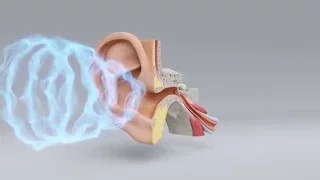
what do we hear what is hearing how do our ears work and why our hair cells so important and what happens if we lose them we hear sounds vibrations that spread an air or water and stimulate our ears here in is the result of the collaboration between the ear and the auditory brain an ear without a brain is like an unplugged microphone but without ears we would not even be able to imagine what a sound was like once captured by our external ear the vibrations cause the movement of the eardrum sound is Amplified by the
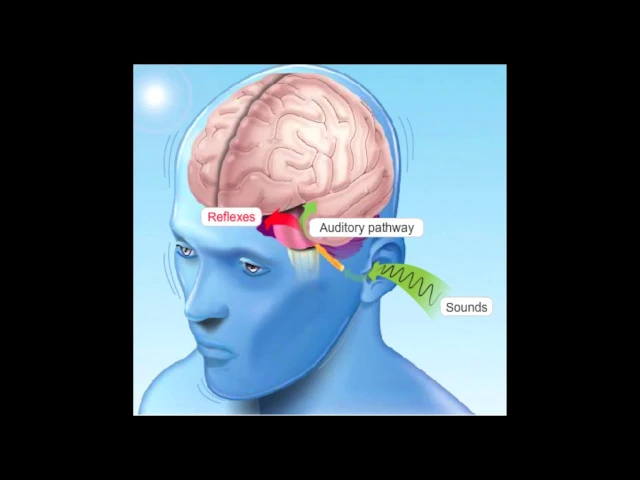
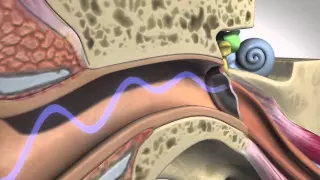
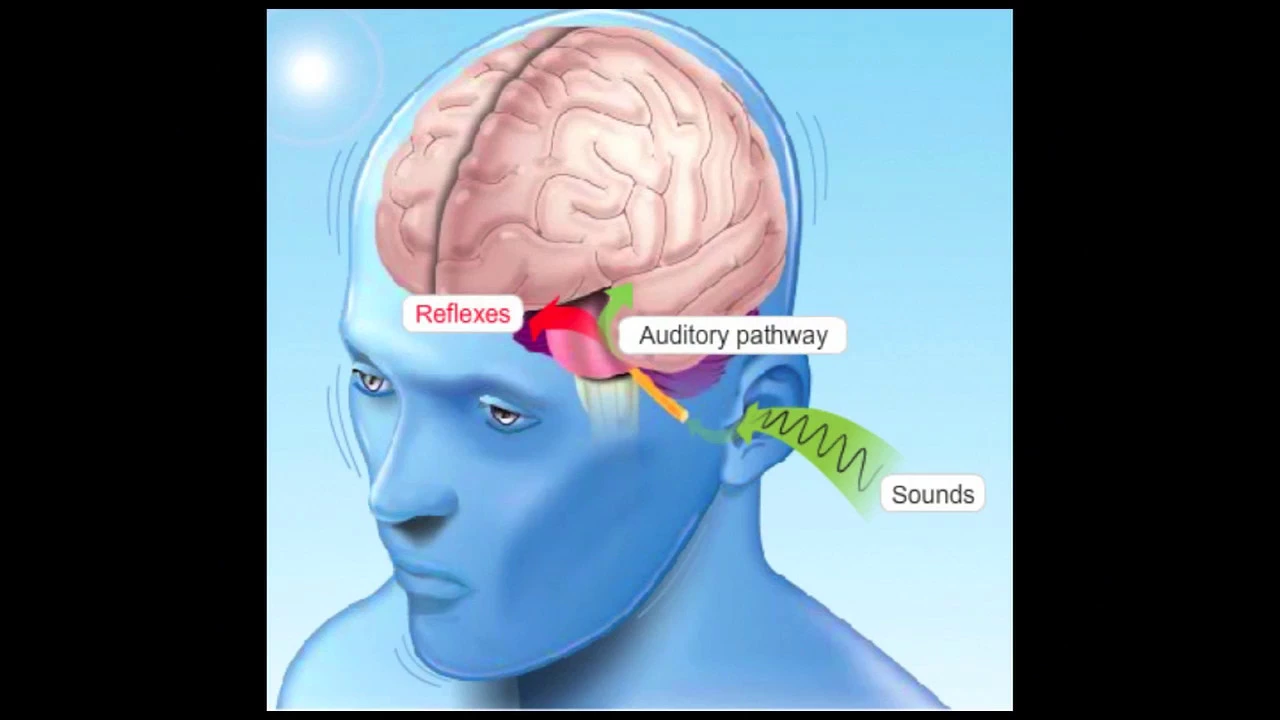
middle ear and transferred to the inner ear or CIA which transforms the sound vibrations into a neural signal the auditory nerve feeds this coded message which contains all of the sounds attributes to the brain where different structures work together to create the perception I can hear when awake the process of hearing involves three different brain levels a reflex level where the arrival of the message may cause us to jump or turn our head the auditory cortex where the sound is perceived and other brain areas which allow the perception to become conscious recognize the Sound by
comparing it to those that have previously been memorized and determine an appropriate voluntary response when asleep our ears and auditory pathways are still working and reflexes can still occur but the other brain regions involved in emotions motivations memory Etc are inactive there are therefore no voluntary responses or conscious perception the ear is composed of three parts the external middle and inner ear the ear canal is closed off by the tempic membrane or eardrum in the middle ear the eardrum is mechanically linked by the ular chain to another membrane which closes the inner ear the hearing
part of the inner ear is rolled up into a spiral called the CIA sound waves are cut by the external ear and pass down the ear canal until they reach the eardrum and make it vibrate the ular chain then mechanically transmit the vibrations to the liquid of the ca inside the CIA are hair cells which translate Sound Vibrations into neural signals by zooming in on a transverse of the CIA we can see the organ of CTI which contains the sensory hair cells and one single hair cell in its connection with the auditory nerve after the
sound has been translated by the hair cell neural signals are sent to the brain through the auditory nerve why are hair cells so important providing that they have developed normally our CIA only contains 15,000 hair cells and these cells do not regenerate we can clearly see the hair cells they are being bent by The Sound Vibrations which cause the hair cells to become excited and create a neural signal providing that the sound transmission is not altered and the brain works normally our hearing is fine in normal hair cells we can perfectly discriminate the frequencies of
sound on the musical scale what happens when hair cells degenerate in this image outer hair cells the more fragile type have degenerated however inner hair cells are still there this corresponds to a severe hearing loss and moreover a severe loss of pitch discrimination language intelligibility is strongly altered without the outer hair cells we can hear some background sound but barely distinguish the musical scale listen in this image all hair cells have disappeared this of course results in total deess prusis is a progressive hearing loss with age this type of hearing loss concerns mainly high pitches
when it affects the speech frequencies it becomes a handicap usually by the age of 80 or 90 presbycusis may be accelerated by injury such as loud noise exposures therefore the handicap may start at a much earlier age which may result in having at 40 a 90-year-old CIA this sound level scale in decb classifies The Sounds in our environment into four categories up to 80 DB there is no risk for the ear regardless of the duration of the sound exposure from 80 to 90 DB we are getting closer to the danger zone but the risks are
limited to very long exposures above 90 DB is the danger Zone the louder the sound the less time is needed for damage to occur exposure to high sound levels can cause irreversible damage to our hair cells resulting in deafness and tinitus this animation represents the Havoc caused by too loud a sound on one of our sensory cells at about 90 DB the hairs may be gradually damaged and eventually the hair cell finally dies if too many hair cells die we lose our capacity to hear by minimizing overexposure to loud noises at work and during leisure
activities you'll be able to enjoy your hearing for years to come for more information go to hearing health foundation.org and ca.org