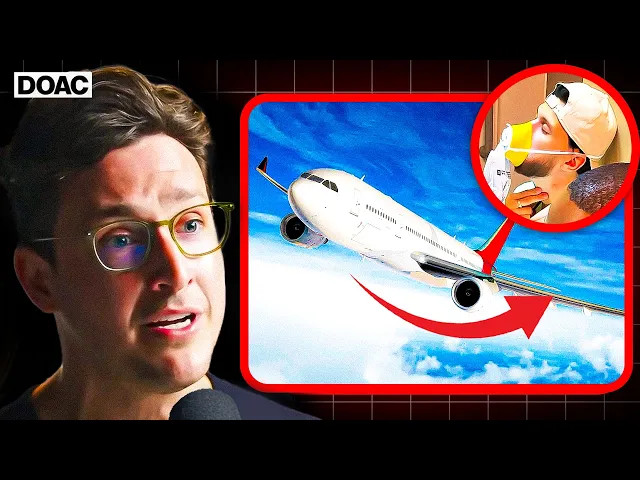
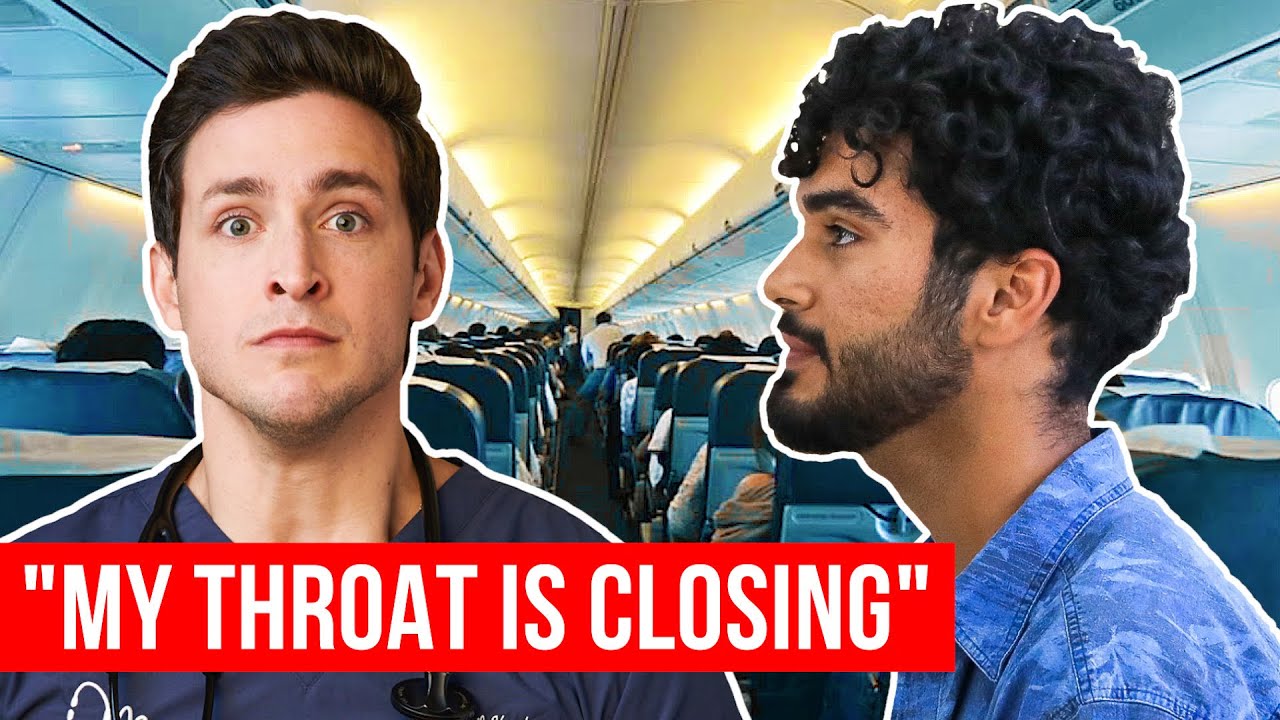
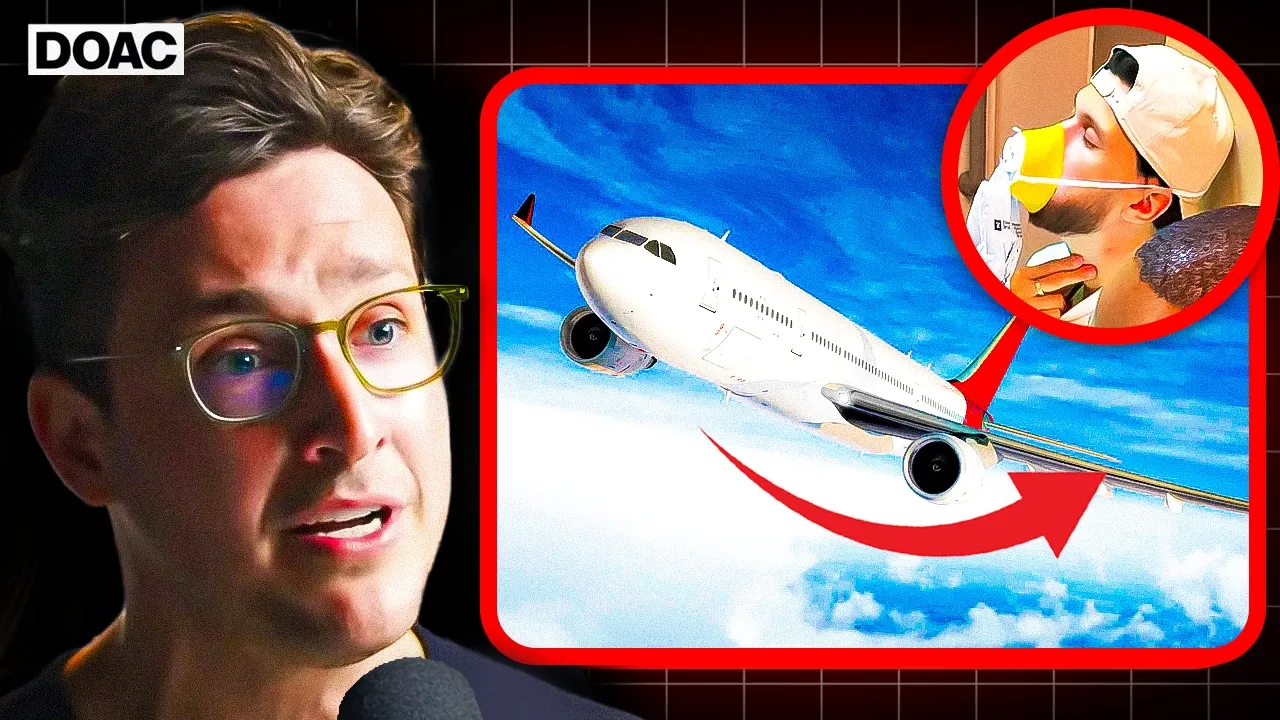
I think about medicine differently than I did when I first started I used to think medicine is doctor and patient now I view it more in a public health sense where my impact on social media goes so much further than patient interactions or viewer interactions where now I can influence policy had a medical emergency on a flight and they made that call is there a doctor on board and I was faced with a moment like okay do I volunteer do I just stay quiet I don't know what to do but I volunteered and it turned
out after some investigation that a young gentleman was going into anaphylactic shock his throat was closing up du it an allergy and I wasn't worried I said where where's your EpiPen he said I don't have one I didn't even know I had this allergy so I asked the pilot can we land pilot says well it's an hour and a half back to Canada and an hour to Portugal some Island in Portugal that's not enough time his throat's closing he's going to die in five minutes so I'm like what can I do so I opened the
plan's emergency kit thinking there's going to be some epinephrine in there or an EpiPen and there's no EpiPen and I'm like okay what do I do now there's no internet when you're over the Atlantic Ocean so there's nothing to Google but um finding that there is epinephrine which is the same medicine that is found in an EpiPen in a different formulation in a different dosage for a cardiac arrest so when someone's heart stops we also give the same medicine if they're Flatline if they have a specific Rhythm to try and restart the heart so it's
a much thicker needle much longer not those cute little EpiPen needles that just go into the side of your die and I said okay well I need to do some rough calculations here and just uh guesstimate here because otherwise he's going to lose his life and right there in the first class cabin we take off his pants we uh inject them with this huge needle he's screaming there's like a little bit of blood coming out I inject the medicine I'm praying that it's working and fast forward that story uh I stayed with him for eight
hours for the rest of that flight until he landed we didn't need to divert I checked his blood pressure and pulse every 15 to 30 minutes and uh we saved his life and you think that would be the end of it you're like look at that I did my doctor job and that's it but I went and told that story on YouTube got almost 10 million views if not more now I don't know what it's at and um the Senate Majority Leader Chuck Schumer calls from his office or his office calls and says hey uh
I'd like to get epipens on planes can you stand with us and tell us your story to the media yes we tell the story we call on the FAA to make these changes and now 70% of planes I don't know what the exact number is but something like 70% of planes have EP pens on board where that will never have to happen again that's incredible and that's the power of social media that people don't talk about that's Public Health that's helping people that aren't even needing the help yet so that's the kind of medicine I
like to think about now well you have a half a body lying over there in the corner so in the in the sake of helping people using social media um I asked you if you could bring a I don't even know what to call that it looks like a half a mannequin or something a mannequin yeah it's a mannequin um because earli in my life I got told that learning the skill of CPR is one of the sort of simplest potentially life-saving things that I could learn yeah because you never know and I've got people
in my family that died of various cardiovascular related um conditions heart attacks and things like that and so I would love to learn again again this is probably not an official certification this is official the basics of CPR and how to keep someone alive in such a situation um could jack could you bring the the what should we call him we'll call him half Mike yeah we we'll call him uh baby Mike so I'm curious before we do any kind of instruction on it what do you know thus far about CPR and all wrong answers
are acceptable here um you push on the chest roughly around the top of the rib cage and then you blow into the m and you just do that over and over again until they come back to life okay do you know what the reason of doing CPR is H that's a very good question and it's not a trick question I'm just genuinely curious because I like to know where we're starting from and no one knows this by the way this is why I do what I do so this is not it's something to do with
keeping oxygen flowing around the body through the blood you're right on target okay so the purpose of CPR is if you find someone who's unconscious not breathing is pulseless that means means their heart's not beating that means clinically they're dead so anything you do here can only potentially hurt help can't hurt right because the person's already dead so by doing proper CPR what you're doing is you're compressing the chest chest compressions to squeeze the heart which has some blood in it to circulate the blood throughout the body that still has some residual oxygen in it
to deliver oxygen to the vital organs so you're not actually saving someone's life by doing CPR you're buying them time the purpose of doing CPR is to allow time for First Responders to arrive to then give Advanced cardiac life support oh okay and that's why the first step of doing CPR has nothing to do with the person and has everything to do with calling for help okay so I call the First Responders or because that would so I you never want to do anything that will distract you from starting chest compressions cuz the faster you
can get to doing chest compressions the better your outcomes so I tell someone else to call ideally if you're alone obviously that's not happening but you can't just say out into the open hey someone call 911 because what happens everyone assumes the other person calls no one calls this happened with many medical emergencies and it's terrible when it happens there's actually criminal cases about that someone screaming for help and everyone assuming the other neighbor would call and then no one ends up calling so you have to say Hey you and the blue shirt you and
the pink hat you call 911 and they will call 911 and you immediately start pushing hard and fast in the center of the chest one hand on top of the other when you say center of the chest you mean in between the pecs correct okay so right in between the pecs one hand on top of the other on top of the other what if I break full body doesn't person's dead so I can go as hard as I want to go you want to go 2 in deep which means pretty hard because in order to
compress the heart you need to go 2 in deep and 2 in deep is pretty 5 cm deep so one hand on top of the other pushing hard and fast in the center of the chest in between the pecs and you're doing that until help arrives okay so you see how you're uh much like most people who are in really good shape you're using your triceps yeah try doing that for more than 2 minutes you will fade no matter what good shape you're in in fact when we're in the hospitals the way that we do
this is maximum 2 minutes at a time and then we tap out and get the next person in because it's so tiring the way to Max full body weight correct and you hear the click that means you're doing it to the correct depth and that way you will get less tired and you'll be able to do that for longer periods of time so that click means I'm hitting the heart for this little device yes I had to go down a long way away I had to go down so far that I would never have naturally
done that to somebody I would have thought that I was going to do more more damage correct and because of that fear that people have we unfortunately have worse outcomes with people who have cardiac arrest in the field and in fact most cardiac arrests meaning heart stopping happen not in hospital settings they happen in community settings they happen on the street at dinners with our loved ones and the important point to remember here this isn't what you do for someone who's talking and is having a heart attack this is for cardiac arrest they're not talking
they're not moving they're not breathing because if they're talking that means they have a pulse cuz I've seen in some videos online like someone's trying to talk or moving around people are doing chest I'm like no stop he's doing chest compression but if they're pulseless if they're not breathing they're unconscious start hands only CPR after calling for help I can't I really want to emphasize how hard I had to push down then it wasn't just like pushing on the surface I had to put all my weight and shove down on the chest and you know
that insecurity about the amount of pressure that you were talking about there's even worse outcomes for women who have a cardiac arrest because people are afraid of pushing in between breasts ah if the person's life can be saved when First Responders ared because you bought them time do it it's not fair that women are less likely to receive CPR from bystandard because of their bodies I thought because I think again because I've watched so many movies that when you start doing the CPR the person comes back to life it can happen okay cuz I thought
that's what you were doing I thought you were like bringing them back to life that's what I that's the notion that some people have and that's why I wanted to make sure that you're not actually bringing them back to life you're buying them time and circulating the residual oxygen so that help can arrive to try and restart the heart how long do you have to do what's the longest you've had to do CPR on someone for and then they've ended up Surviving I've been in um double digits before for young patients um because young patients
we will like if you have a patient who's elderly who's in the ICU who's already very sick when their hard stops the odds are that you'll bring them back are obviously very low but even if you will bring them back to life they're going to be in a worse quality of life than they already were so many times we actually have a conversation as the CPR is ongoing with the families explaining that and saying that this is not beneficial that even if we bring them back they might be in a worse State and that we
don't recommend it we actually have scores and guidelines that we can discuss with patients about statistics on this but when someone's very young let's say you have a 20-year-old who has an unusual Cardiac Arrest we would fight much longer because they have an opportunity to heal once we bring them back so it's very dependent on a on a specific situation and you had to have that exact same conversation when someone was operate when treating your mother of yep I that a conversation that was my first interaction with that kind of environment I actually remember um
when I was in the room and the alarms were going off and the residents or the doctors were doing CPR and I called it off I remember the next time I heard those alarms was during my training in a patient simulation lab and that was like the first moment I ever had a flashback where a sound brought back a feeling where that sound of those alarms brought me back to how I felt and how uncomfortable I felt I've never felt that before you must have heard that sound a lot since then oh yeah and I've
had some difficult conversations with my fellow colleagues because of it I remember very vividly when my mom passed away we were in the waiting room waiting for documentation forms to sign and I came out to check and see if they're finishing up and some of the nurses and doctors I don't even know what medical professionals they were they were kind of laughing in their little work area in the back not where they were patient facing but hearing those laughs got me so angry how could anyone laugh during a time like this but then I had
to remind myself these are people too these are people who are losing patients every day and if they took the loss the way that I'm taking this loss they wouldn't last they wouldn't be able to help my mom or other moms so I had to remind myself about that but what my take away from it was when I saw co-residents of mine maybe writing their notes after someone's family passed away and I see the family in earshot and they're talking about their day or they're laughing or they're giggling or saying some kind of joke not
related to the situation I I just I don't correct them that's not my place to do I just share my story of how I felt and I thought it created a really good learning opportunity if you love the dver CEO brand and you watch this channel please do me a huge favor become part of the 15% of the viewers on this channel that have hit the Subscribe button it helps us tremendously and the bigger the channel gets the bigger the guests